Paula's Choice Built a Brand on Talking You Out of Purchases. Now It Sells a Hundred of Them.
The formulation philosophy is real and the reference products earn their reputation — but the booster tier is where percentages started outrunning the evidence.
Read the preview
From the DermApproved blog, in Building a Routine: the brand that got famous telling you what not to buy. Its founder made a career talking readers out of purchases. The range now runs to a hundred — and three of the priciest carry percentages that don't match what the studies tested. One in the opposite direction. For the full breakdown, visit dermapproved.com/blog.
A brand founded on the word 'no'
Before it was a range, Paula's Choice was a critic. Paula Begoun's Don't Go to the Cosmetics Counter Without Me worked by going through the beauty aisle product by product and telling readers, in blunt terms, which ones were a waste of money. The method was subtractive. Its entire value proposition was that someone had read the ingredient lists so you could buy less.
The brand launched in 1995 out of that same posture, and for a long time the products behaved like arguments: fragrance-free because fragrance is a common sensitiser, packaged opaque and airless because antioxidants degrade in light, priced in the middle because the formula did not require a jar that felt like a paperweight. Unilever bought the company in 2021 in a deal reported in the billions, which tells you how well the position sold.
The interesting problem is what happens when a brand built on saying no reaches a hundred products. Subtraction does not scale. A range that size needs categories, tiers, and reasons to add another step — and the reasons that get reached for most easily are percentages. That is the tension worth examining, because on the products where the original philosophy is still visibly operating, the range is genuinely excellent.
Why the BHA liquid became the reference product
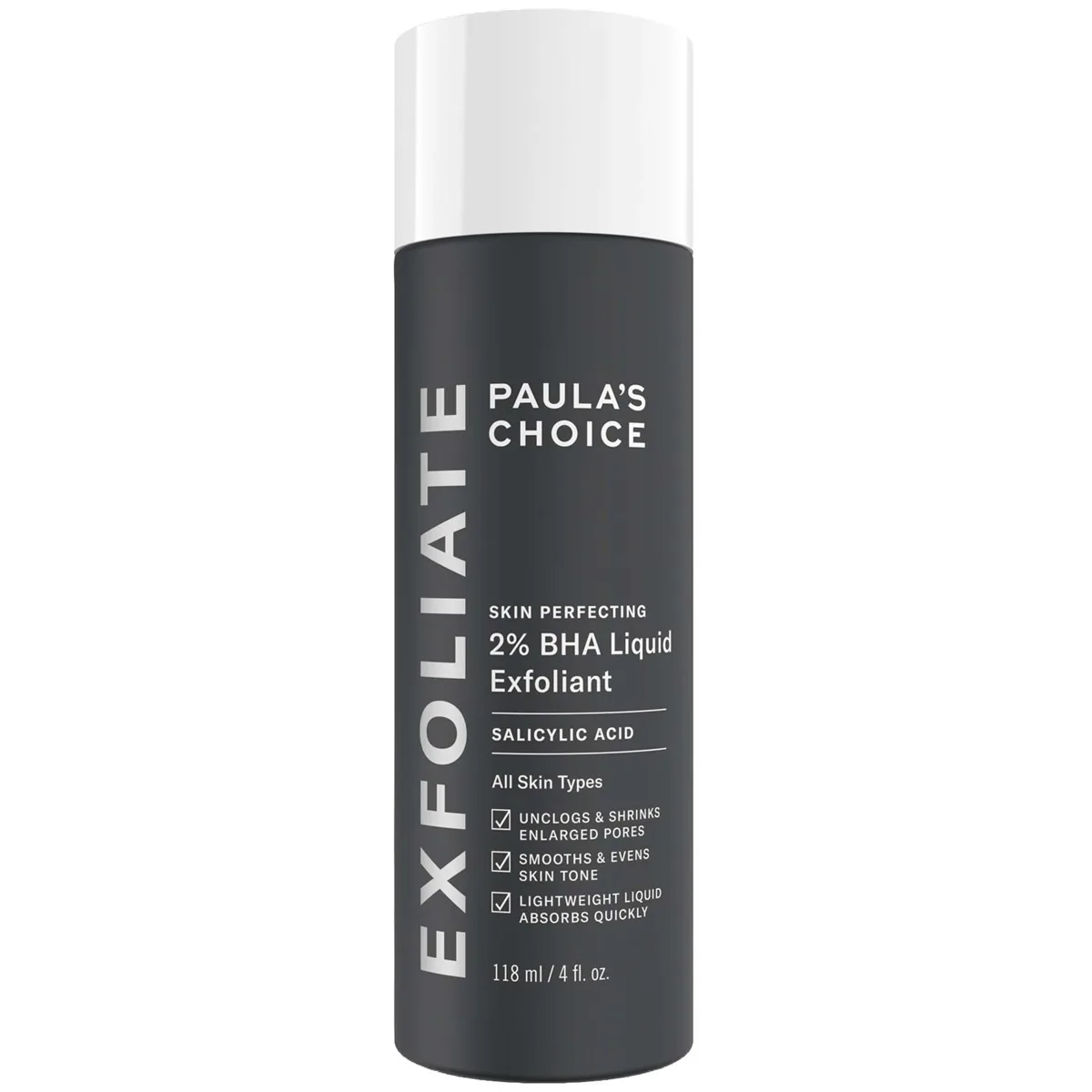
Paula's Choice 2% BHA Liquid Exfoliant is the product everything else in this conversation gets measured against, and it is worth being precise about why — because the reason is not the acid.
Salicylic acid at 2% is not exotic; it sits in dozens of drugstore products. What is unusual is a vehicle that keeps it in solution at a pH low enough to stay active, at a viscosity thin enough to spread over a whole face without dragging, with no fragrance and no denatured alcohol doing the solvent work. Salicylic acid is lipophilic — it partitions into sebum and works inside the follicle rather than only on the surface — and that property is only useful if the formulation lets it get there without stripping everything around it.
The result is a product you can use daily rather than as an occasional event, which matters more than potency. Low concentration salicylic acid has mild comedolytic and corneolytic activity; the clinical gains come from consistency. A 2019 split-face study found a 2% supramolecular salicylic acid formulation comparable to a 5% benzoyl peroxide / 0.1% adapalene combination for lesion reduction with better tolerability — not because 2% SA is a stronger drug, but because a formulation people can actually tolerate every day beats a stronger one they abandon. That is the whole thesis of this product, and it holds up.
Where the percentages started running ahead of the papers
The booster tier is the range's premium lane, and it is organised around concentration. This is where the evidence-first framing gets uncomfortable, because in three cases the number on the bottle is not the number in the literature.
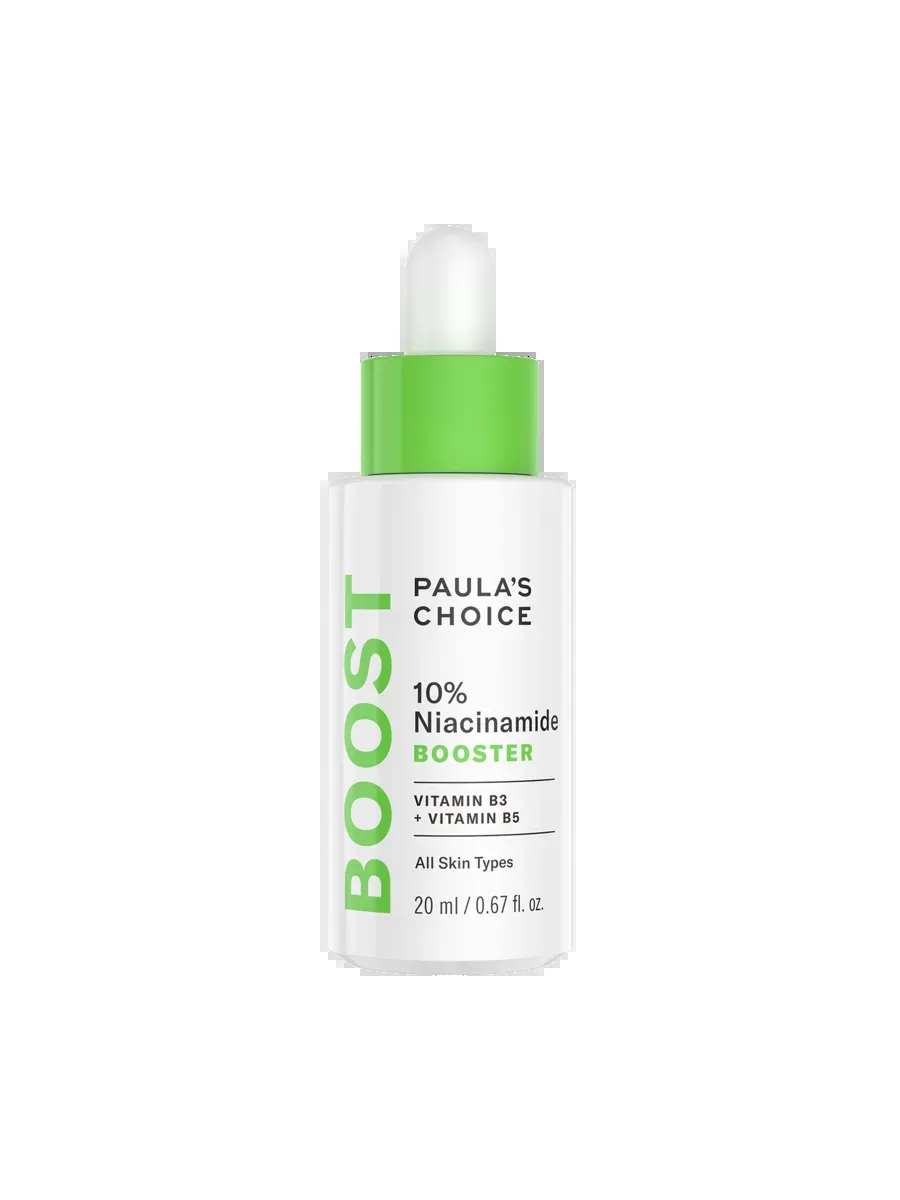
Start with niacinamide. The foundational clinical work — a 12-week, double-blind, split-face study in women aged 40 to 60 — used 5% niacinamide in a moisturiser base and found significant improvements in fine lines, hyperpigmented spots, red blotchiness and sallowness against the same base without it. That study is why niacinamide is in everything. Paula's Choice 10% Niacinamide Booster doubles it. There is no equivalent body of controlled work showing 10% produces more than 5% does, and niacinamide's tolerability curve runs the wrong way — flushing and stinging become more common as concentration rises. Doubling a dose past the point where the evidence stops is a marketing decision, not a formulation one.
Azelaic acid runs the same pattern in reverse. Here the evidence is at higher concentrations than the product: 15% gel is the established first-line topical for mild-to-moderate papulopustular rosacea, a 2025 network meta-analysis found 20% the most effective topical agent for moderate-to-severe disease, and every prescription version sits at 15% or 20%. Paula's Choice Azelaic Acid Booster delivers 10%. It is a perfectly reasonable cosmetic-tier product and it does contain azelaic acid in a well-built base, but if you are buying it expecting the results in the rosacea literature, you are buying a third less active than the trials used, at a price near the top of the range.
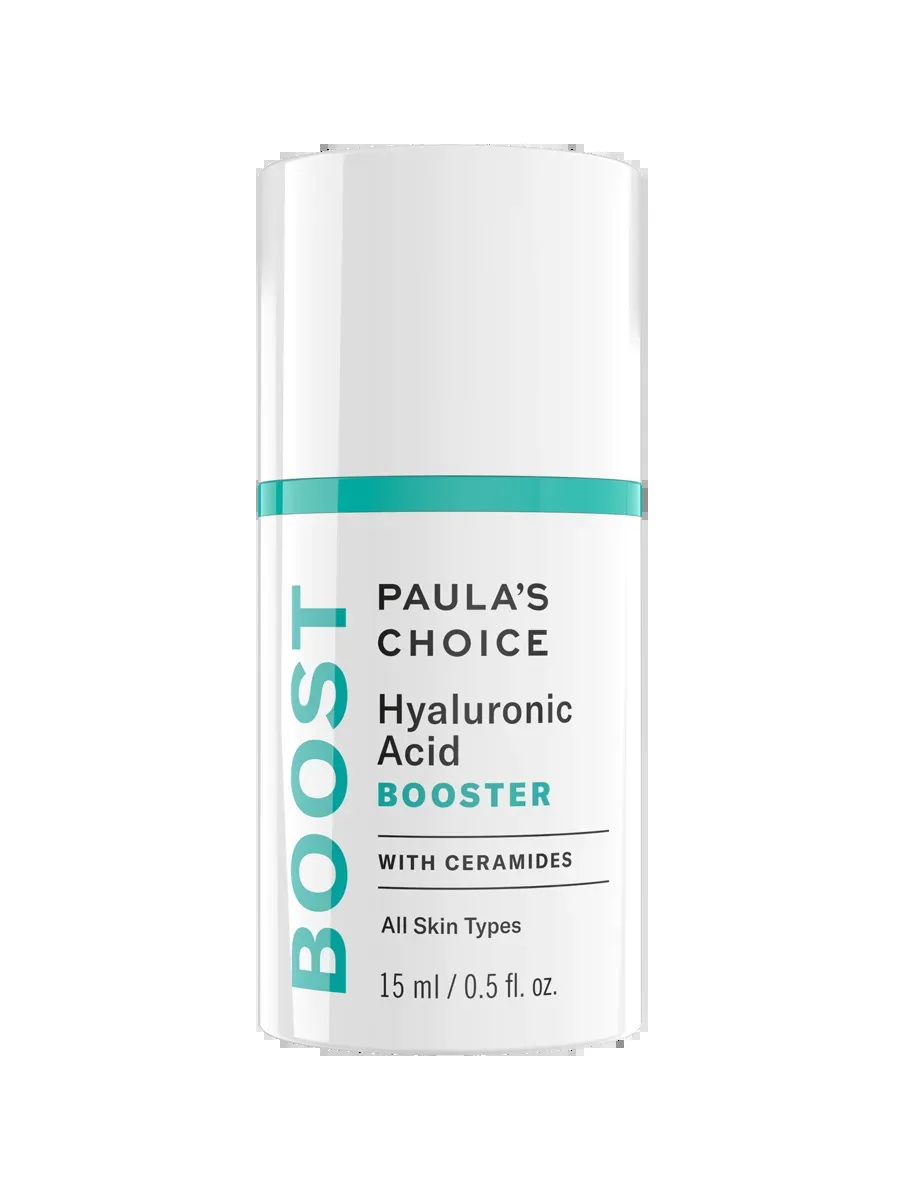
Paula's Choice Clinical 1% Retinol Treatment is the honest counterexample: 1% is genuinely high for an OTC retinol, the dose-response for retinoids is real, and the price premium reflects an actual formulation challenge. The cost there is tolerability, not credibility. And then there is the humectant tier — a hyaluronic acid booster sold at booster pricing, where the active is one of the most commercially abundant ingredients in skincare and the ceiling on what it can do is set by physics, not by percentage.
The restraint that still shows up
It would be an unfair piece that only looked at the boosters, because the single best argument for this brand sits in the acne line and it is an argument for using less.
The comparison that settles the concentration question enrolled 153 patients across three double-blind studies in 1986: benzoyl peroxide at two and a half percent reduced inflammatory lesions as effectively as the 5% and 10% preparations, with less desquamation, erythema and burning than 10%. Paula's Choice CLEAR Regular Strength Daily Skin Clearing Treatment is formulated at that lower concentration. Forty years later, drugstore shelves are still stacked with 10% washes because a bigger number sells, and a brand whose booster line is organised around bigger numbers chose the smaller one here. That is the original philosophy still operating.
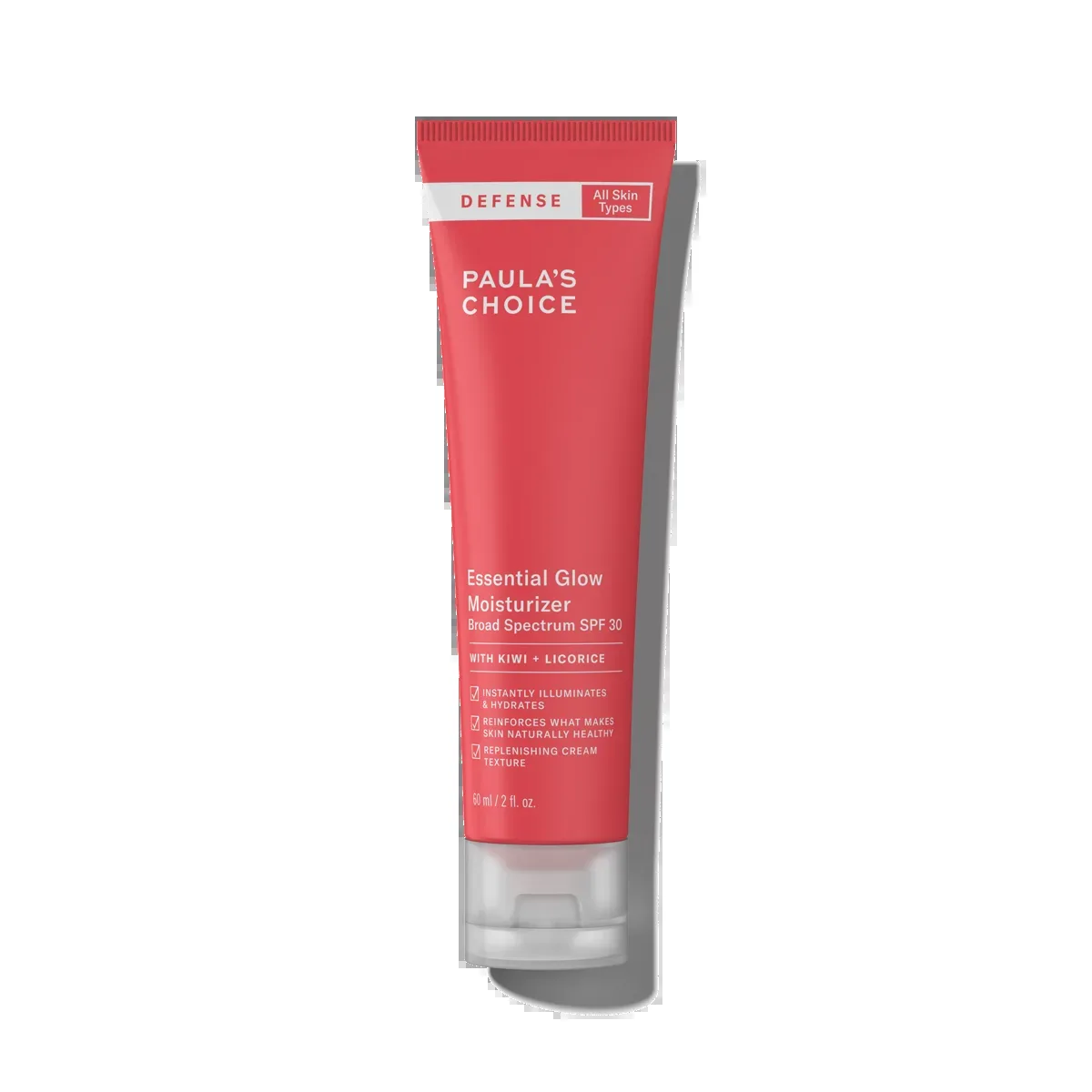
The same restraint shows in the barrier and daylight steps. Paula's Choice Barrier Repair Moisturizer is a lipid-matrix formulation built around ceramides, cholesterol and squalane rather than around a headline active — an unglamorous product that does the boring job well. Defense Essential Glow Moisturizer SPF 30 uses zinc oxide and titanium dioxide, which is a harder formulating problem than an organic-filter equivalent and a defensible reason for a moisturiser to cost more than a plain one.
What a full routine actually costs you — in decisions, not just money
The awkward truth about buying a whole range from one brand is that the cost is not really the sum of the products. It is the cost of the steps you were persuaded to add.
A complete Paula's Choice routine as the site presents it typically runs cleanser, exfoliant, one or two boosters, a serum, a moisturiser and a sunscreen — six or seven items on independent replacement cycles, each replenished before you have finished evaluating whether it changed anything. The exfoliant and the sunscreen empty fast; the boosters are used by the drop and last a long time, which quietly makes them better per-use value than their shelf price suggests and worse value in absolute terms if they were never doing anything. Anchoring on per-use cost is how you talk yourself into a step; anchoring on whether the step has a job is how you talk yourself out of one, and the brand's own founder made a career out of the second move.
There is also a real conflict risk in a range this stackable. Boosters are designed to be layered, which invites people to run an acid exfoliant, a retinol and a vitamin C into the same fortnight and conclude their skin is sensitive. The Conflict Checker exists for exactly that audit — enter what you own and it flags what needs spacing rather than removing. And where a step is genuinely doing something but the price is doing nothing, the Dupe Finder will surface formulations built on the same active at other price points, with the differences laid out rather than hand-waved. If you want to see two candidates argued row by row, Compare Products puts them side by side.
Our full Paula's Choice routine page lays out the sequencing — which steps go in which order, which ones can share a night, and what to drop first if your skin starts complaining.
The four products worth buying regardless of what else you use
Strip the range back to what would survive a hostile review and the list is short, which is a compliment rather than a criticism — most hundred-product lines would not produce four.
The BHA liquid stays, because nothing in its category solved the tolerability problem more cleanly and because it works in routines built around entirely different brands. The 2.5% benzoyl peroxide stays, because the concentration is the evidence-backed one and low-strength BPO in a non-drying base is genuinely hard to find. The barrier moisturiser stays as a lipid-replacement step for anyone running actives. The mineral SPF stays if you want a zinc-based daily filter that does not behave like a mask.
What we would not buy on the brand's reputation alone: any booster whose selling point is a number higher than the number in the studies. The niacinamide booster is not a bad product — it is a well-made version of an active whose evidence base tops out at half its concentration, sold at the top of the line. The azelaic booster is the mirror image, sitting below the concentration every trial used, and if azelaic acid is the reason you are shopping, the prescription strengths are a conversation worth having rather than a price to work around.
The honest summary of this brand is that its scepticism still lives in its formulation department and has mostly left its merchandising. Buy the products where the first thing is still visible. Treat the percentage on a booster as a claim, not a credential — which is, after all, exactly what the founder's books taught a generation of readers to do.
Products mentioned
Independently reviewed and scored — the real products behind this piece.




- Routine What a Full Paula's Choice Routine Looks Like The sequencing companion to this piece — what order the steps go in and what to drop first.
- Ingredient Salicylic Acid (BHA) The lipophilic behaviour that makes the BHA liquid's vehicle matter more than its percentage.
- Ingredient Azelaic Acid Concentration evidence for the booster comparison.
- Ingredient Benzoyl Peroxide The 2.5%-versus-10% evidence behind the acne treatment.
- Ingredient Retinol Dose-response context for the 1% treatment.
- Ingredient Ceramides The lipid-matrix logic of the barrier moisturiser.
- Ingredient Zinc Oxide Filter context for the mineral SPF moisturiser.
References
- Comparing 2.5%, 5%, and 10% benzoyl peroxide on inflammatory acne vulgaris — International Journal of Dermatology, 1986
- Topical niacinamide reduces yellowing, wrinkling, red blotchiness, and hyperpigmented spots in aging facial skin — International Journal of Cosmetic Science, 2004
- Efficacy and safety of 2% supramolecular salicylic acid compared with 5% benzoyl peroxide/0.1% adapalene in the acne treatment: a randomized, split-face, open-label, single-center study — Cutaneous and Ocular Toxicology, 2019
- Azelaic acid 15% gel in the treatment of rosacea — Expert Opinion on Pharmacotherapy, 2008
- The efficacy and safety of minocycline, metronidazole, ivermectin, and azelaic acid in moderate-to-severe papulopustular rosacea: A systematic review and network meta-analysis — JAAD International, 2025
Every cited link is verified to resolve to the paper named. Where a source could not be independently confirmed, it is listed without a link rather than pointing you somewhere wrong.
Frequently asked
Is the 2% BHA liquid actually better than a cheaper salicylic acid product?
Often, but for an unglamorous reason: the vehicle. Salicylic acid at 2% is common, while a thin, fragrance-free, alcohol-free base that holds it at an active pH and spreads over a whole face without stripping is not. If a cheaper product matches those formulation properties, it will do the same job.
Should I buy the 10% niacinamide booster over a 5% product?
There is no controlled evidence that 10% outperforms 5%, and the landmark 12-week split-face study that established niacinamide's benefits used 5%. Higher concentrations also raise the chance of flushing and stinging. Treat the extra five percentage points as a claim rather than a proven upgrade.
Why does the azelaic acid booster use 10% when prescriptions are 15% or 20%?
Because 15% and 20% azelaic acid are regulated as drugs in most markets, and a cosmetic booster cannot make treatment claims. The 10% version is a legitimate cosmetic-tier product, but it is not the concentration the rosacea and acne trials used — worth knowing before you judge it against those results.
Can I layer several boosters in one routine?
They are designed to be mixed into a serum or moisturiser, which makes stacking easy and over-stacking easier. Running an acid exfoliant, a retinol and a vitamin C in the same short window is the most common way people conclude they have sensitive skin. Audit what you own before adding another.
Is a full one-brand routine ever the right call?
It removes compatibility guesswork and makes sequencing simple, which has real value if you are starting out. The trade-off is that you inherit the range's weakest steps alongside its best ones. A stronger approach is to take the two or three products a brand genuinely leads on and fill the rest from wherever the formulation is better.