Naturium, INKEY and Good Molecules Are Not Competitors. They're Three Halves of One Shelf.
Three brands sell real actives at drugstore-adjacent prices, and each is structurally good at something the other two aren't — which makes brand loyalty the most expensive way to shop them.
Read the preview
From the DermApproved blog, in Dupes & Budget Buys: three brands, one shelf slot — and the wrong question is which wins. Read them by structure. One solved texture, one built the widest map of single actives, and the cheapest quietly carries a formula with a head-to-head trial behind it. There is a label trick separating two of them. For the full breakdown, visit dermapproved.com/blog.
The question everyone asks, and why it has no answer
"Which is best — Naturium, INKEY or Good Molecules?" is asked constantly and cannot be answered, because the three are not variations on one thing. They are three different solutions to the same commercial problem: how to sell real actives at a price that does not require a story about French laboratories.
Each solved it differently, and the differences show up in the parts of a range nobody photographs. One invested in sensory quality and body formats. One built the widest map of single-purpose products, including places the other two never went. One went after price and, almost incidentally, ended up with a couple of the most technically interesting formulas in the whole category.
So the useful comparison is structural rather than a product-by-product shootout: what is each range built to do, where does each stop, and what do you have to buy elsewhere regardless. Read them that way and the answer stops being a brand and starts being a shelf.
Naturium: the one that solved how things feel
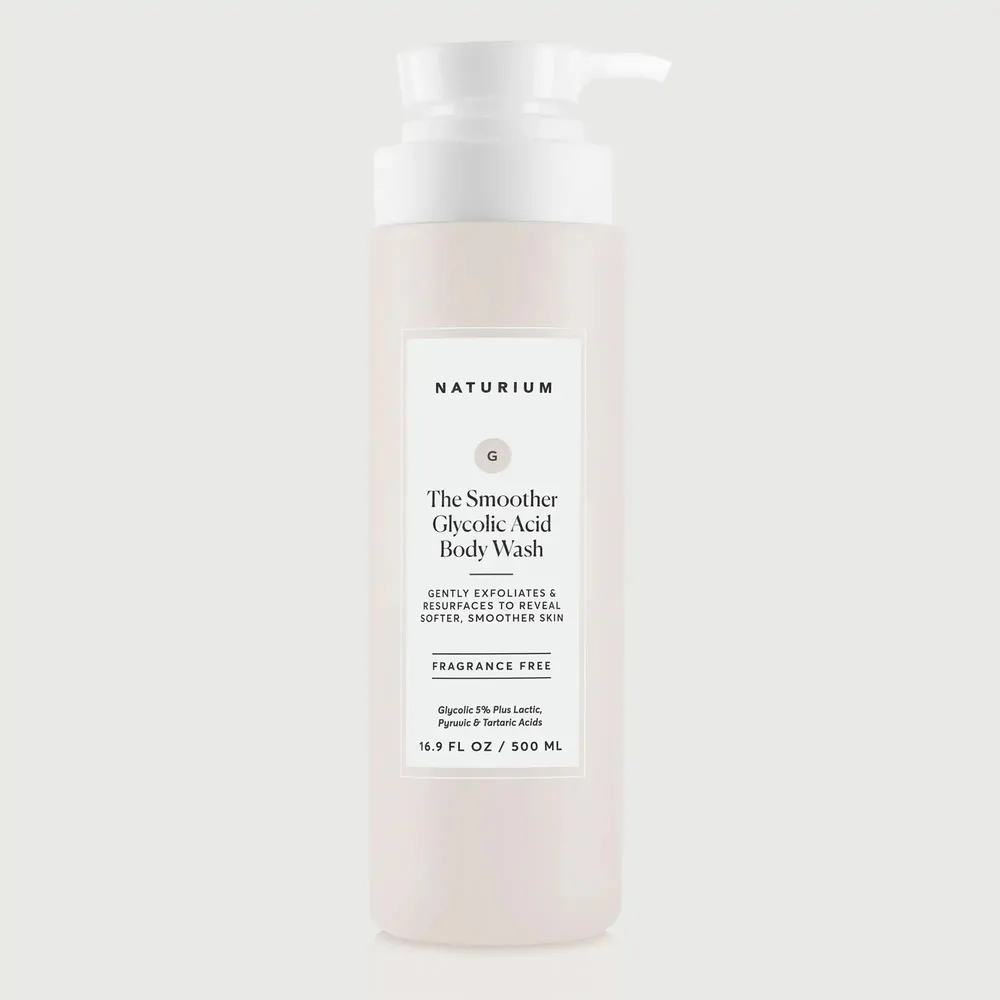
Naturium's distinguishing move was refusing the aesthetic tax of budget skincare. The textures are properly formulated — a niacinamide gelée cleanser that behaves like a prestige cleanser, mists and creams with real slip — and, more usefully, the range took actives to the body when almost nobody else at this price had. The Smoother Glycolic Acid Exfoliating Body Wash and the salicylic body spray solve problems — rough upper arms, back breakouts, keratosis-type texture — in formats that make treating a large area realistic rather than theoretical.
The cost of that ambition shows up in the ingredient decks. Several hero products are blends rather than single actives, and blends make attribution impossible: when a serum combines vitamin C with retinol and salicylic acid, a good result cannot be traced and a bad reaction cannot be isolated. Azelaic Acid Derivative Complex 10% is at least honestly named — the active is potassium azeloyl diglycinate, plus niacinamide and ethyl ascorbate — but a derivative is a different proposition from the parent molecule, and we will come back to why that matters.
Where Naturium is unambiguously the right pick is anywhere sensory quality determines whether you keep using something: cleansers, body treatments, the barrier-support layer. Barrier Bounce Serum and the ceramide creams are pleasant enough to survive contact with a real routine, which is not a trivial property — the best-formulated product you dislike using has an efficacy of zero.
The INKEY List: one job per bottle, and the widest map
INKEY built the opposite thing: a large grid of small, single-purpose products, each named after the molecule inside it. The discipline is real — most formulas do one job and get out of the way — and the breadth goes further than either rival, including a scalp line, which is the part of the body most reliably ignored by value brands.
The retinoid shelf is where that grid pays off. Advanced 0.2% Retinal Serum uses retinaldehyde rather than retinol, which sits one conversion step closer to retinoic acid, while the starter formula leans on hydroxypinacolone retinoate for people who want the category without the ramp. Being able to pick your position on that ladder, rather than being handed one retinol and told to cope, is a structural advantage.
The trade is that minimalism sometimes reads as thinness. Plenty of INKEY formulas are competent, unremarkable and small, and a few of the trend-driven launches — exosomes, PDRN — are further ahead of the human evidence than the label suggests. Buy INKEY for the specific molecule you have decided you need, and for the categories the others skip. It is a supplier of parts, and an unusually good one.
Good Molecules: the price floor, plus two formulas nobody expected
Good Molecules sits at the bottom of the price band and mostly behaves accordingly: simple, unfussy, occasionally basic. What makes it more interesting than that summary is that two or three of its products are formulated with a seriousness the packaging does nothing to advertise.
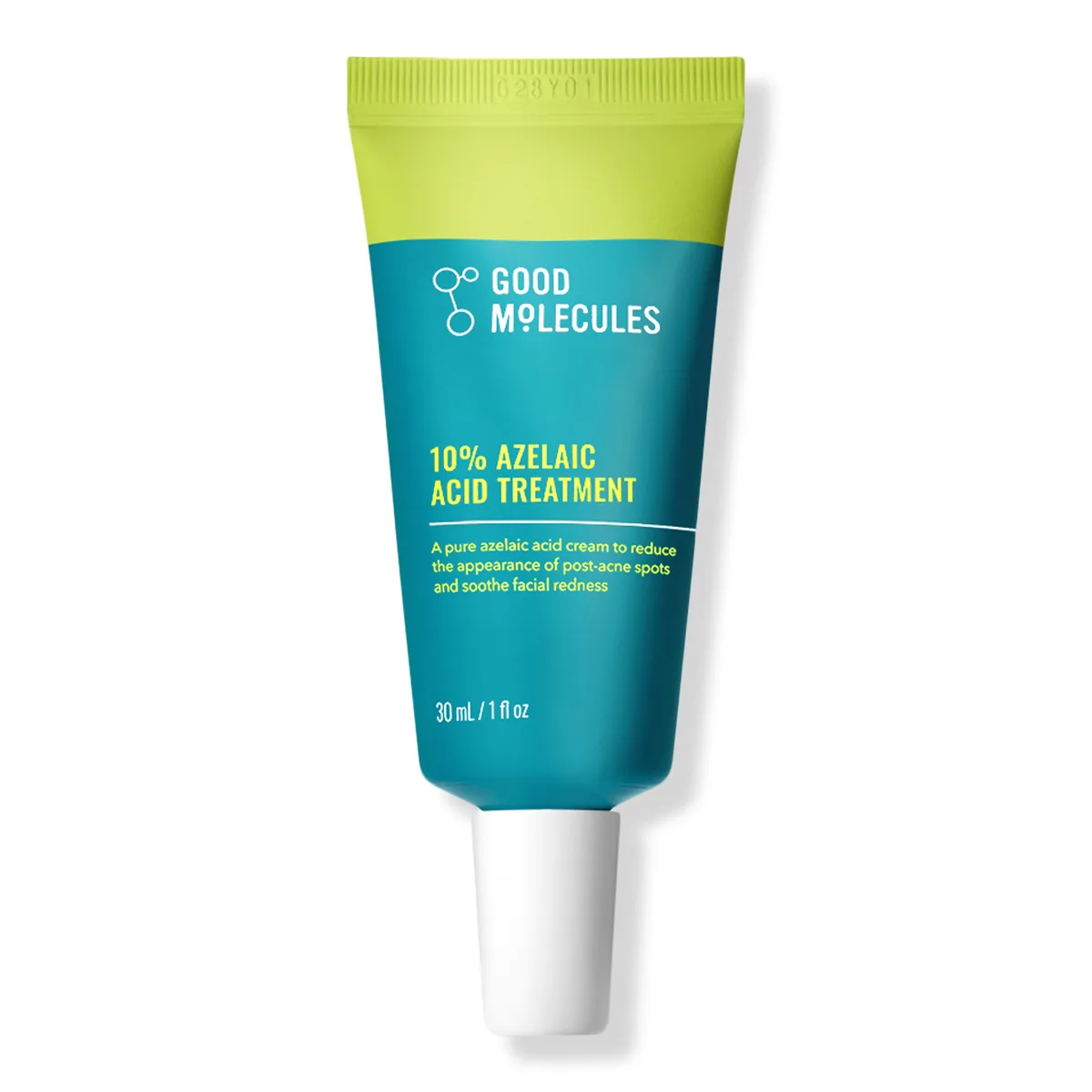
Discoloration Correcting Serum pairs niacinamide with cetyl tranexamate mesylate — a tranexamic acid ester — which is a genuinely current approach to pigment rather than a brightening claim over glycerin. 10% Azelaic Acid Treatment uses azelaic acid itself, high in the ingredient list, which puts it in a different evidential category from the derivative-based alternatives.
And then the outlier. Maximum Strength Acne Gel Cream combines salicylic acid with oleyl adapalenate — a pro-drug of adapalene sold cosmetically as an "adapinoid." It is an odd thing to find in a drugstore acne cream. It is also the only active in this comparison with a published head-to-head trial behind it. In a twelve-week double-blinded randomized trial of forty-eight participants, the pro-drug improved wrinkle severity by 9.45% against 4.11% for retinol at the same strength, a statistically significant separation, while reducing facial erythema and proving better tolerated than the retinol arm. That is a small, single, short study and nobody should treat it as settled — but a cheap acne cream carrying an active with a head-to-head trial behind it is not what the category is supposed to look like.
The honest caveat is consistency. For every formula like those, there is one that is exactly as simple as it appears. Good Molecules rewards buying specific products, not the range.
The overlaps, and how to choose between three versions of the same thing
All three sell a niacinamide serum, an azelaic product, a vitamin C and a retinoid, and the labels invite you to compare by percentage. Resist that, because the numbers are the least informative part.
Niacinamide's human evidence clusters at 5%. Split-face work at that concentration reduced hyperpigmentation in subjects with facial hyperpigmentation, and a separate 12-week study in 50 subjects with photoaged skin found improvements in wrinkles, yellowing and elasticity against vehicle. There is no comparable body of evidence showing that doubling the concentration doubles anything, while higher concentrations raise the incidence of flushing and irritation. Choose the vehicle you like and stop reading the number.
Azelaic is where the labels genuinely diverge. Azelaic acid itself has vehicle-controlled phase 3 data — a foam formulation was tested against vehicle in 961 rosacea patients — whereas potassium azeloyl diglycinate's published support is dominated by in vitro work on inflammatory mediators. The derivative is more elegant to formulate and far more comfortable on the skin. It is not the same claim, and a product that says "derivative complex" on the front is at least telling you so.
Vitamin C splits the same way for a chemical reason: L-ascorbic acid only penetrates when it is formulated below pH 3.5, with absorption maximal around 20%, which is why the serums that use it are acidic, unstable and prone to turning orange. The ethyl ascorbate and other derivatives found in cheaper formulas dodge every one of those problems and inherit a thinner human evidence base. Neither answer is wrong; the choice is stability against evidential weight, and knowing which one you bought is the whole point. The Conflict Checker is worth running once you have picked, because these ranges make it easy to end up with three acids and a retinoid in the same week without noticing.
Where all three run out
Every value range has an edge, and these three share most of theirs. None of them replaces a prescription retinoid: an adapalene pro-drug is an interesting cosmetic hybrid, not tretinoin, and the ceiling of a well-run over-the-counter retinoid routine remains below the floor of a prescription one. None offers meaningful help for inflammatory disease — rosacea, eczema and moderate acne are treatment pathways, not shopping problems.
Sunscreen is the other consistent gap. The coverage across these ranges is patchy and uneven, so whichever brand you build on, expect the daily protection step to come from outside it — and treat that as normal rather than a failure of loyalty.
Which points at the composite. Take the cleanser and anything for the body from the range that gets textures right; take individual molecules — the retinoid position you want, the niche step, the scalp product — from the range with the widest map; take the pigment serum, the true azelaic acid, and the price-sensitive workhorses from the range at the floor. Then buy the sunscreen wherever it is best.
Our Naturium routine, INKEY List routine and Good Molecules routine each show how far a single-brand build gets before it starts asking you to compromise, and the Compare tool and Dupe Finder exist for the moment you are holding three near-identical serums and want to know what actually differs. Nobody at any of these companies is offended by a mixed shelf. It is the shopping strategy the category was designed for, whether or not the marketing says so.
Products mentioned
Independently reviewed and scored — the real products behind this piece.



- Routine Building the Complete Naturium Skincare Routine How far a Naturium-only build goes before it compromises.
- Routine The INKEY List Skincare Routine: Every Step in Plain English The single-active grid assembled into a full routine.
- Routine Good Molecules Routine Guide: Brightening a Full Regimen for Pocket Change The price-floor build, and where it needs help.
References
- The effect of niacinamide on reducing cutaneous pigmentation and suppression of melanosome transfer — British Journal of Dermatology, 2002
- Niacinamide: A B vitamin that improves aging facial skin appearance — Dermatologic Surgery, 2005
- Topical L-ascorbic acid: percutaneous absorption studies — Dermatologic Surgery, 2001
- A prospective, double-blinded, randomized head-to-head clinical trial of topical adapinoid (oleyl adapalenate) versus retinol — Skin Health and Disease, 2024
- Patient-reported outcomes of azelaic acid foam 15% for patients with papulopustular rosacea: secondary efficacy results from a randomized, controlled, double-blind, phase 3 trial — Cutis, 2016
- Azeloglycine and nicotinamide down-regulate pro-inflammatory mediators in vitro — Giornale Italiano di Dermatologia e Venereologia, 2017
Every cited link is verified to resolve to the paper named. Where a source could not be independently confirmed, it is listed without a link rather than pointing you somewhere wrong.
Frequently asked
Is a 12% niacinamide serum better than a 5% one?
There is no good evidence that it is. The clinical work behind niacinamide's reputation for pigmentation and photoaging used 5% in split-face designs, and no comparable body of research shows benefit scaling with concentration. Higher percentages do reliably raise the chance of flushing and irritation, so the sensible tiebreaker between these ranges is which vehicle you enjoy using.
Does an azelaic acid derivative work like real azelaic acid?
Not on the strength of the same evidence. Azelaic acid itself has vehicle-controlled phase 3 data behind it, including a trial in 961 rosacea patients, while potassium azeloyl diglycinate's published support is largely in vitro work on inflammatory mediators. The derivative is gentler and easier to formulate, which is a genuine benefit — it is simply a smaller claim, and a product labelled 'derivative complex' is being straight with you.
Which of these brands should I build a whole routine from?
None of them exclusively, if you can help it. Structurally, one range is best at textures and body formats, one at single actives and unusual categories, and one at price with a handful of unexpectedly sophisticated formulas. A shelf assembled across all three costs about the same as loyalty to one and covers more of the routine properly.
Is the adapalene pro-drug in a cosmetic cream the same as prescription adapalene?
No. Oleyl adapalenate converts to adapalene in the skin and performed well in a small head-to-head against retinol, beating it on wrinkle severity at 12 weeks with better tolerability, but that is one 48-participant study. A cosmetic pro-drug is not a substitute for prescribed adapalene at a defined dose when you are treating acne.
Why does one vitamin C serum sting and another doesn't?
Because they contain different molecules. L-ascorbic acid only crosses into the skin when the formula is held below pH 3.5, and acidity at that level is what you feel — plus the instability that turns the serum orange. Derivatives such as ethyl ascorbate are comfortable and shelf-stable and come with markedly less human data, so the pleasant one is not automatically the better buy.