Your Excision Scar Has a One-Year Story Arc. Here Is the Whole Plot.
It looks worst at week eight, which is exactly when everyone judges it and books a revision consult. Almost nobody is told that the ugly phase is the scar working, not the scar failing.
Read the preview
From the DermApproved blog, in Surgical Dermatology: your scar looks its worst at eight weeks, which is exactly when you judge it. The redness is new blood vessels. The firmness is collagen laid down fast and messy. Construction, not failure — and it improves for a year. One treatment has real evidence, and less than you would think. For the full breakdown, visit dermapproved.com/blog.
The problem is that the worst photo is the one you take
Here is the sequence that plays out in dermatology clinics constantly. A patient has a lesion excised. The wound closes uneventfully. Around week six they start looking at it properly, and what they see is a raised, red, firm, slightly itchy line that looks considerably worse than it did at week two. By week eight they have concluded the surgery went badly, and somewhere between week eight and week twelve they book a consultation about fixing it.
At that appointment they are told to come back in a year.
That advice sounds like a brush-off and it is the opposite: it is the single most useful thing anyone can tell them, and the reason it feels dismissive is that almost nobody explains the underlying arc in advance. A surgical scar is not a static outcome that either turned out well or badly. It is a biological process with distinct phases running over one to two years, and the phase that looks alarming is the phase in which the repair is actively being built.
So this is the whole plot, in order, with the evidence for what genuinely changes the ending and the honest verdict on what does not.
Three phases, in plain language
Inflammatory — roughly days 0 to 5. The wound is red, mildly swollen, sometimes warm, and produces a small amount of clear or blood-tinged fluid. Platelets and immune cells are clearing debris and signalling. This looks like the least attractive part of the process and is the least informative — nothing about this phase predicts the final result.
Proliferative — roughly day 5 to weeks three or four. This is where the misunderstanding lives. Fibroblasts migrate in and lay down new collagen fast, and speed comes at the cost of order: early scar collagen is predominantly type III, deposited in a disorganised mesh rather than the elegant basket-weave of uninjured dermis. Simultaneously, new capillaries grow in to supply the metabolically busy tissue.
Those two facts explain everything you are looking at. The redness is new blood vessels. The firmness and elevation are excess disorganised collagen. The body deliberately over-builds the repair, because a wound that is under-built comes apart. A scar that is red and raised at eight weeks is not a scar that has gone wrong; it is a scar that is at the top of its construction curve.
Remodelling — from around week three to somewhere between twelve and twenty-four months. The slow phase, and the one nobody photographs. Type III collagen is progressively replaced with type I. The fibres reorganise and align along the lines of tension the tissue actually experiences. The surplus capillary network regresses. Redness fades toward the surrounding skin tone, height drops, the tissue softens and the itch settles.
One caveat about the endpoint: a mature scar does not fully regain the tensile strength of skin that was never cut. It gets close enough for ordinary life and it does not get back to baseline. That is a permanent structural fact, not a sign of poor healing.
Why week eight is the worst possible moment to judge
Overlay the phases on the calendar and the trap is obvious. Peak redness and peak firmness arrive at roughly the same time — six to twelve weeks — and that window sits exactly where a patient's attention lands: late enough that the dressing is long gone and the novelty of a healing wound has worn off, early enough that remodelling has barely started.
So the moment of maximum alarm coincides with the moment of minimum information. People take a photograph at week eight, compare it against their memory of unbroken skin, and conclude something is wrong. What they are actually comparing is a scar at the top of its arc against skin that was never injured — a comparison that guarantees disappointment regardless of how well the surgery went.
The correction is embarrassingly simple and almost nobody does it: photograph the scar from the first week, in the same light, from the same angle, at the same distance, once a week. You will not remember what week three looked like when you get to week twenty, and the improvement between any two consecutive weeks is too small to perceive. It is only visible as a sequence. The photo tracker exists for exactly this — a scar is the ideal thing to track because the change is real, slow, and invisible without a baseline.
And the practical payoff is financial as well as psychological. A revision consultation booked at week eight is very often a consultation about a scar that was entirely on schedule, and the intervention that would have been sold at that appointment competes against a process that was going to deliver most of the improvement for free.
What actually has evidence, and how strong it isn't
Now the interventions, graded honestly — including a concession that most articles recommending silicone skip.
The reference point is an international advisory panel that reviewed the clinical literature on scar management and published recommendations in Plastic and Reconstructive Surgery. Its central conclusion was narrow and specific: silicone gel sheeting and intralesional corticosteroids are the only treatments for which sufficient evidence exists to make evidence-based recommendations. A number of other widely used therapies were accepted as standard practice by consensus rather than by evidence — an important distinction that the panel drew explicitly.
That sounds like a strong endorsement of silicone. Here is the counterweight, and we would be doing the same thing we criticise if we left it out. A Cochrane systematic review covering 20 trials and 873 participants found that in prevention studies silicone gel sheeting reduced the incidence of hypertrophic scarring in scar-prone people, with a risk ratio of 0.46 (95% CI 0.21 to 0.98), and in treatment studies produced a reduction in scar thickness and an improvement in colour. It also judged those studies highly susceptible to bias, and its authors' conclusion was that there is weak evidence of benefit and that a great deal of uncertainty prevails.
Both of those things are true at once, and the sensible reading is this: silicone is the best-supported option available, the support is not strong, the downside is close to zero, and everything competing with it is worse-evidenced. That is a reasonable basis for using it and a poor basis for promising anyone a result.
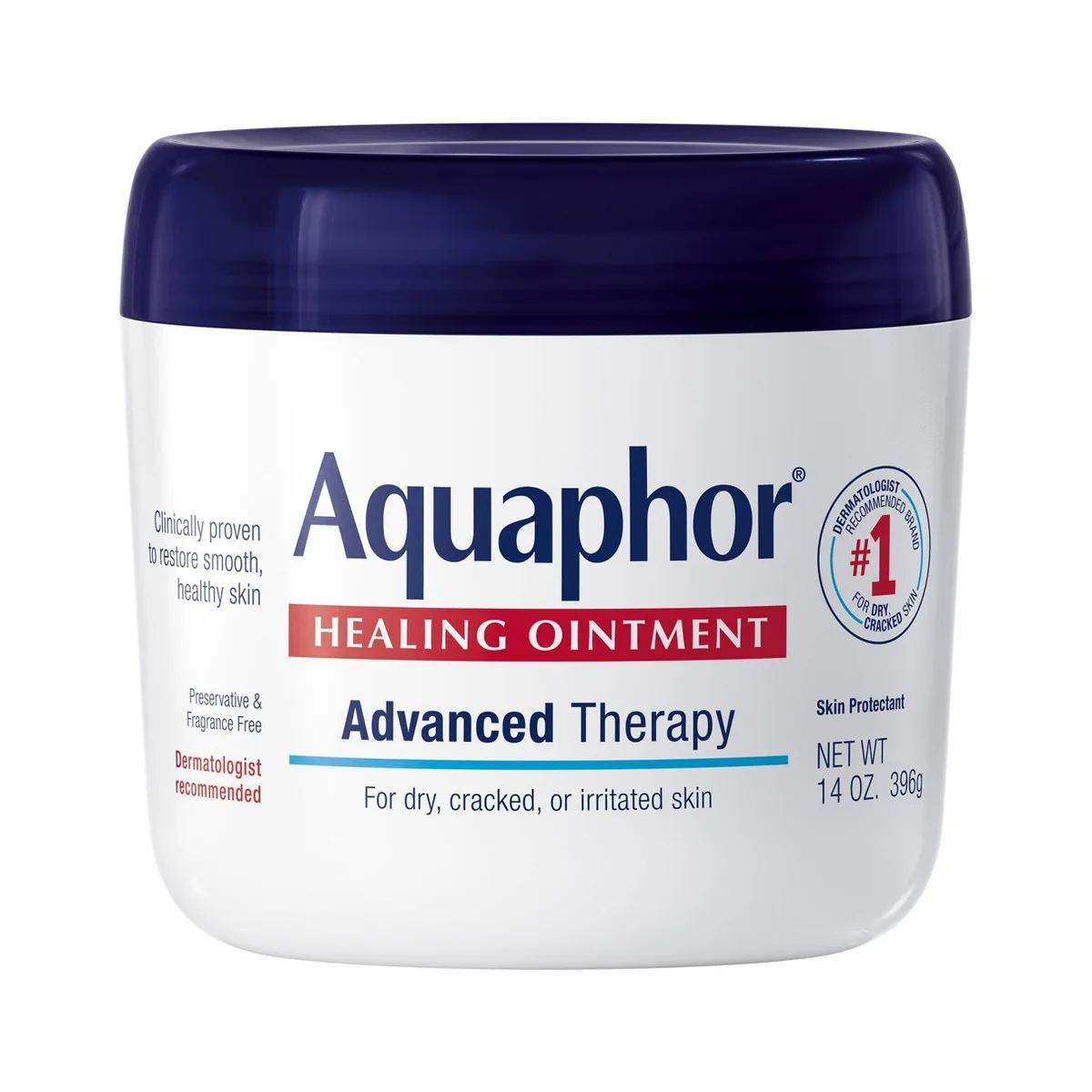
How to use it, since the details decide whether it does anything. Start only once the wound is completely closed — not on an open or scabbed wound. Aim for twelve to twenty-three hours a day, and continue for at least two to three months, longer on high-tension sites. Compliance is the entire game, and it is where sheets fail: an adhesive sheet on a shoulder in summer gets abandoned by week three. Gels are worn far more consistently because they are invisible, which is why a formulation like Ebanel Scar Master Silicone Scar Gel or SkinMedica Scar Recovery Gel often outperforms a technically superior sheet nobody keeps on. In the earliest days, before the wound is closed, the job is simply to keep it moist rather than dry — a plain occlusive such as Aquaphor Healing Ointment does that, and a hard scab is a worse cosmetic outcome than a moist wound bed.
Vitamin E, onion extract, and the shelf-space problem
The two ingredients with the most consumer mindshare in scar care have markedly less behind them than their sales suggest, and one of them has a genuinely negative trial.
Vitamin E. A study at the University of Miami enrolled 15 patients who had undergone skin cancer removal surgery with two-layer primary closure. Each scar was divided in half; patients applied plain Aquaphor to one part and Aquaphor mixed with vitamin E to the other, twice daily for four weeks, in a double-blind design assessed by patients, physicians and a third blinded investigator at weeks one, four and twelve.
The result: in 90% of cases topical vitamin E either had no effect on the cosmetic appearance of the scar or made it worse. Thirty-three percent of participants developed a contact dermatitis to the vitamin E. The authors concluded that its use on surgical wounds should be discouraged.
That was published in 1999. Vitamin E remains one of the most commonly recommended things to put on a healing scar, including by people who ought to know, and it is a good example of how long a plausible folk remedy survives a negative trial.
Onion extract — Allium cepa, the active in the best-selling scar gel category and in products like Derma E Scar Gel — sits in a softer position. It appears as a comparator in the scar literature, it is not harmful, and it has never accumulated the evidence its market share implies. The most likely explanation for the improvement people report is the one the vitamin E study accidentally demonstrated: the control arm was plain Aquaphor, and the plain Aquaphor side did fine. Keeping a scar occluded, moist and protected is doing most of the observable work in nearly every scar product, and the branded active is frequently along for the ride.
None of this makes these products a scam. It makes them oversold, and it means the price premium over an occlusive plus a silicone gel is buying very little.
Sun protection is the most preventable bad outcome
Of everything that can go wrong with a scar over its first year, pigmentation is the most avoidable and the most permanent, and it is the step people most reliably skip.
Immature scar tissue handles ultraviolet exposure badly. Melanocyte activity in and around a healing wound is dysregulated, and UV exposure during the remodelling phase drives post-inflammatory hyperpigmentation that can persist for years after the scar itself has flattened and softened. This is the difference between an outcome most people never notice and a permanent brown line — and unlike redness or height, it does not resolve on its own schedule.
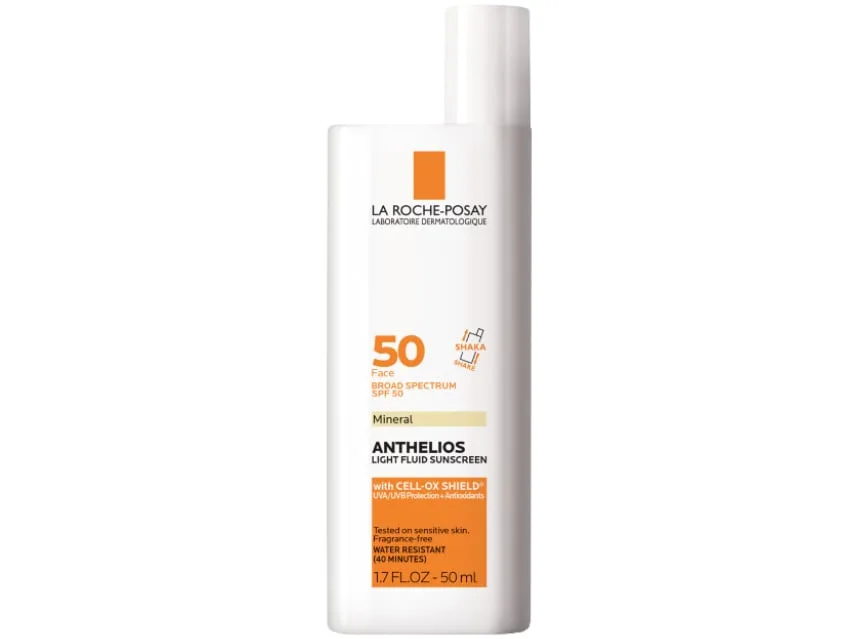
So: cover the scar or block it, for a minimum of six months and preferably the full twelve. On the face that means daily broad-spectrum sunscreen over the scar as a matter of routine — a light fluid such as La Roche-Posay Anthelios Light Fluid SPF 50 is easy enough to apply that it actually gets used. On the trunk and limbs, clothing is more reliable than any product, and it does not need reapplying at the beach. The sun safety tool covers the dose and reapplication questions that determine whether sunscreen does anything at all.
This matters more for deeper skin tones, where post-inflammatory pigmentation is both more likely and longer-lasting — and it is worth knowing that a scar procedure can itself generate new dark marks, which is a live consideration when deciding whether to intervene on a scar that is merely red rather than truly abnormal.
When intervention genuinely enters the conversation
Waiting is the default. It is not the answer in every case, and there are specific signals that should override it.
Growth beyond the original wound margins. This is the distinction that matters most. A hypertrophic scar is raised but stays within the boundary of the original injury and typically improves substantially over the first year. A keloid extends beyond the original margins into surrounding normal skin and does not resolve on its own. Those two behave differently and are managed differently — working out which one you have is the branch point for everything that follows, and it is a question worth asking early rather than at month eleven.
Persistent pain or itch, particularly if it is worsening rather than settling. Restricted movement, if the scar crosses or approaches a joint — a contracture is a functional problem and does not wait for cosmetic timelines. Rapid widening in the first weeks, which is a tension problem rather than a maturation one.
The interventions available: intralesional corticosteroid injection, the second of the two treatments the international panel found sufficient evidence for, used for hypertrophic and keloid scars and generally repeated at intervals. Pulsed-dye laser for erythema that is not settling on schedule. Fractional resurfacing for surface texture, usually later. And surgical revision — which is genuinely useful for a badly oriented or widened scar, and which is nonetheless usually deferred to at least twelve months, because operating on a scar mid-remodelling means discarding improvement that was coming for free and starting a fresh arc from day zero.
A note for anyone reading this because of acne rather than surgery: the arc above is for a linear surgical scar, and atrophic acne scarring follows different rules — whether atrophic scars improve over a first year has a less encouraging answer, and the acne scarring pathway sets out what the options actually are there.
The timeline in one paragraph, to hold onto: red and swollen for a week, quiet for a month, worst at two to three months, visibly better by six, mostly settled at twelve, still refining at eighteen. Photograph it weekly. Silicone once it is closed, for months not weeks. Keep it out of the sun. Skip the vitamin E. And do not judge it, or pay anyone to fix it, before a year has passed.
Products mentioned
Independently reviewed and scored — the real products behind this piece.



- Therapy guide Acne scarring For readers whose scarring is atrophic and acne-related rather than a surgical line.
- Question Is this raised scar a keloid or hypertrophic? The branch point: growth beyond the original margins changes the entire management plan.
- Question Do depressed scars improve at all in the first year? The less encouraging arc for depressed acne scars.
- Question Can a scar procedure leave me with new dark marks? A live consideration before intervening on a scar that is merely red.
References
- International clinical recommendations on scar management — Plastic and Reconstructive Surgery, 2002
- Silicone gel sheeting for preventing and treating hypertrophic and keloid scars — Cochrane Database of Systematic Reviews, 2013
- The effects of topical vitamin E on the cosmetic appearance of scars — Dermatologic Surgery, 1999
Every cited link is verified to resolve to the paper named. Where a source could not be independently confirmed, it is listed without a link rather than pointing you somewhere wrong.
Frequently asked
Why does my scar look worse at two months than it did at two weeks?
Because that is the proliferative phase at its peak. Fibroblasts have laid down a large volume of disorganised type III collagen and new capillaries have grown in to supply it — which is precisely what makes a scar red, raised and firm. The body over-builds the repair on purpose. Remodelling then replaces and reorganises that collagen over the following twelve to twenty-four months.
How long before I can judge the final result?
Twelve months at minimum, and remodelling can continue to twenty-four. This is why surgical revision is usually deferred to at least a year — operating mid-remodelling discards improvement that was arriving anyway and restarts the whole arc. Photograph the scar weekly from the first week instead; the change between consecutive weeks is imperceptible but the sequence is convincing.
Does silicone gel actually work?
It is the best-supported option, and the support is weaker than its reputation. An international expert panel found silicone gel sheeting and intralesional steroids to be the only scar treatments with sufficient evidence for an evidence-based recommendation, while a Cochrane review of 20 trials found benefit but judged the studies highly susceptible to bias. Use it because the downside is negligible, not because it is proven.
Should I put vitamin E on a healing scar?
No. In a double-blind split-scar study of post-surgical patients, topical vitamin E had no effect or actively worsened cosmetic appearance in 90% of cases, and a third of participants developed contact dermatitis to it. The authors concluded its use on surgical wounds should be discouraged. Notably, the control arm — plain emollient ointment — did perfectly well.
How long does a new scar need sun protection?
Six months minimum, twelve is better. Melanocyte activity around healing tissue is dysregulated, and UV exposure during remodelling drives post-inflammatory hyperpigmentation that can outlast the scar's redness and elevation by years. It is the most preventable bad outcome available and the most permanent one if you skip it, particularly in deeper skin tones.