Eyelid Surgery Sits Exactly on the Line Between Medical and Cosmetic. Here Is Where the Line Is.
The same operation, by the same surgeon, on the same morning, can be a covered medical necessity or several thousand dollars of elective spending. What separates them is a test result — and it is a genuinely honest line.
Read the preview
From the DermApproved blog, in Surgical Dermatology: the same eyelid operation, same surgeon, same morning, is either covered healthcare or thousands out of pocket. What separates them is a visual field test, run twice — once with the lid taped up. And the thing most people book this surgery for is the one thing it cannot fix. For the full breakdown, visit dermapproved.com/blog.
Two transactions, one operation
There are very few procedures where the identical operation, performed by the identical surgeon, through the identical incision, on the identical morning, is either fully covered healthcare or a several-thousand-dollar elective purchase depending on a piece of paper. Upper eyelid surgery is one of them.
That makes blepharoplasty unusually instructive, because most of the medical-versus-cosmetic debate in dermatology is conducted in vague terms — is acne 'just cosmetic', is melasma, is rosacea. Eyelid surgery answers the question with a number. The line is not drawn by how much your eyelids bother you, how old you look, or how persuasively you describe it in a consulting room. It is drawn by a measurable loss of visual field, demonstrated on a machine, twice.
Whether that is the right place to draw the line is a genuinely open question — the same one that surfaces every time someone is told a condition affecting their daily life is 'only cosmetic', which is a phrase worth interrogating whether it is applied to melasma or to a fold of skin resting on your eyelashes. But it is at least an honest line, applied consistently, and understanding exactly where it sits tells you a great deal about how this entire field operates.
The test that draws the line
Medicare publishes a local coverage determination for blepharoplasty, blepharoptosis and brow lift, and most commercial insurers follow its logic closely. It asks for two kinds of evidence.
The visual field test, run twice. A superior visual field is measured with the eyelid in its natural resting position, and then measured again with the redundant lid skin taped up out of the way. The standard requires a minimum 12 degree or 30% improvement in the upper field between the two runs.
The elegance of the taped/untaped pair is worth appreciating. A single field test showing a deficit proves only that something is obstructing vision. Repeating it with the lid lifted proves that this specific tissue is the obstruction and that removing it would restore the field. It is a built-in prediction of surgical benefit, generated before the surgery.
Margin reflex distance. MRD1 is the distance from the corneal light reflex — the pinpoint of light reflected off the centre of the cornea — up to the margin of the upper eyelid. A measurement of 2.0 mm or less commonly meets the medical necessity threshold. It is quick, reproducible, and hard to argue with.
Alongside those, the documentation requires photographs demonstrating the eyelid abnormality and a record of symptoms attributable to it: difficulty reading, looking out through the eyelashes, seeing one's own upper eyelid skin in the field of view, and brow fatigue.
That last symptom is the underrated one and it is worth knowing about, because a great many people have it without connecting it to their eyes. When hooding encroaches on the visual axis, people unconsciously compensate by contracting the frontalis muscle to lift the brow — all day, every day. The resulting forehead ache and tension headache is a functional consequence of the eyelids, and patients routinely report it for years while attributing it to screens, stress or posture.
Excess skin is not a drooping lid
Before anything else, an examination should establish which of two entirely different problems is present, because they look similar in a mirror and require different operations.
Dermatochalasis is excess eyelid skin. The lid margin itself sits where it should, but redundant skin above it drapes down over the platform and, in advanced cases, over the lashes and into the field of view. The operation is blepharoplasty: excision of the surplus skin, sometimes with a strip of orbicularis muscle and a small amount of fat.
Ptosis is a low lid margin. The levator mechanism that lifts the eyelid has weakened, stretched or detached, so the whole lid edge sits lower than it should — which is what MRD1 is measuring. The operation is a ptosis repair: levator advancement, or a Müller's muscle-conjunctival resection, working on the lifting mechanism rather than the skin.
You can have either. Many people have both, in which case both are addressed. What does not work is treating one as the other: removing skin from a lid whose margin is sitting too low produces a hollow, over-resected upper lid with the original droop still present — a worse aesthetic result and an unchanged functional one.
This is the strongest practical argument for being assessed by someone who measures rather than looks. MRD1, levator function and field testing take a few minutes and settle the question. An assessment conducted entirely by eye across a desk does not.
Who operates on eyelids
Three specialties legitimately perform blepharoplasty, and excellent surgeons practise in all three. The differences are in what the training was built around.
Oculoplastic surgeons complete an ophthalmology residency and then a fellowship in oculofacial plastic and reconstructive surgery. They trained on the eye first and learned aesthetics on top of it. Plastic surgeons train in general and plastic surgery and operate across the entire body. Facial plastic surgeons come through otolaryngology followed by a facial plastic fellowship.
The reason the oculoplastic pathway exists as a distinct discipline is worth stating plainly, because it is not credential snobbery. The eyelid's primary biological job is protecting the cornea — spreading tear film, closing completely during sleep, maintaining the ocular surface. The complications that matter most after this operation are therefore not aesthetic but ocular. A 2023 review of ophthalmic complications following periorbital and facial aesthetic procedures found that the most common complications after blepharoplasty were dry eye syndrome and diplopia. Take too much skin and the lid cannot close fully at night (lagophthalmos); destabilise the lower lid and it can retract or evert, exposing the ocular surface permanently.
So the questions worth asking are functional ones, and they are the same questions regardless of which specialty is answering: how many of these do you do a year, will you measure my levator function and MRD, how do you assess my brow position first, do you take skin from the lower lid or work transconjunctivally, and what is your approach if I develop dry eye afterwards. The derm visit prep tool is a reasonable way to walk into that appointment with a written list rather than remembering two of your five questions on the drive home, and the general checklist for any cosmetic procedure consult applies here with unusual force.
What each operation does — and the two things neither fixes
Upper blepharoplasty removes the redundant skin, restoring a visible lid platform between the lash line and the crease. The incision sits in the natural upper lid crease, which is why these scars become genuinely inconspicuous: the fold hides the line, and eyelid skin is the thinnest on the body and heals exceptionally well.
Lower blepharoplasty addresses the fat pseudoherniation that produces under-eye bags — orbital fat pushing forward through a weakening septum. It is done either transconjunctivally, through the inside of the lid with no external incision at all, with the fat removed or repositioned into the tear trough; or subciliary, just below the lash line, when skin also needs removing.
Now the part that saves people money and disappointment.
Dark circles are not fixed by eyelid surgery. In most people, under-eye darkness is some combination of pigmentation, skin thin enough to show underlying vasculature and orbicularis muscle, and a tear-trough hollow created by ligament attachment. Removing skin or fat addresses none of those, and taking fat from an already hollow lower lid makes shadowing worse. This is the single most common mismatch between what patients book and what the operation delivers.
Crow's feet are not fixed by eyelid surgery either. Those are dynamic lines produced by orbicularis contraction every time you smile or squint. They are a neuromodulator question, not a surgical one.
And brow descent frequently masquerades as lid hooding. As the brow drops with age, it pushes lid tissue downward, producing an appearance identical to excess eyelid skin. If the true problem is the brow and you remove lid skin, the brow descends further into the space you created and the result looks worse — which is why a surgeon who examines and documents brow position before quoting for the lids is doing the assessment properly.
Recovery, without the soft focus
Eyelid skin bruises spectacularly, and this is the part consultations undersell.
Expect visible bruising for roughly ten to fourteen days, sometimes longer, and sometimes extending down the cheek in colours you were not warned about. Swelling distorts the result for weeks — the lids can look uneven, over-corrected or under-corrected during this period, and none of it is informative. Sutures typically come out around a week. Most people are presentable with makeup at two to three weeks, and 'presentable' is doing real work in that sentence.
The crease scar follows the same maturation arc as any surgical scar: it firms and reddens across weeks six to twelve before remodelling over the following months, which is exactly when patients decide the operation failed. Lower lid swelling persists longer than upper. The final aesthetic result is not fairly assessable for several months, and a revision conversation before then is premature for the same reason it is premature after any excision.
Dry eye is common in the early period and usually temporary. The important predictor is history: if you had dry eye symptoms before surgery, say so at the consultation, because pre-existing dry eye is associated with worse symptoms afterwards and it changes how conservative the surgeon should be about how much skin to take. Nobody has ever regretted mentioning it.
What creams and devices can and cannot do about it
The honest alternative conversation, since most people considering eyelid surgery have first spent a few years buying eye creams.
What topicals genuinely do. Improve skin quality, soften fine lines, hydrate, and — with a retinoid used consistently over years — measurably improve periorbital fine lines and dermal thickness. That is a real benefit and it accumulates. A retinoid formulated for the eye area such as Numbuzin No. 9 NAD+ Retinol Volumetox Eye Cream is a reasonable route, and for skin that will not tolerate one, a bakuchiol-based option like Avène DermAbsolu Soin Regard Combleur is the gentler version of the same intention. For pigment specifically, RoC Multi Correxion Even Tone + Lift combines niacinamide with hexylresorcinol, and pigment is one of the actual causes of dark circles — which makes it one of the few under-eye complaints where a cream is the correct tool.
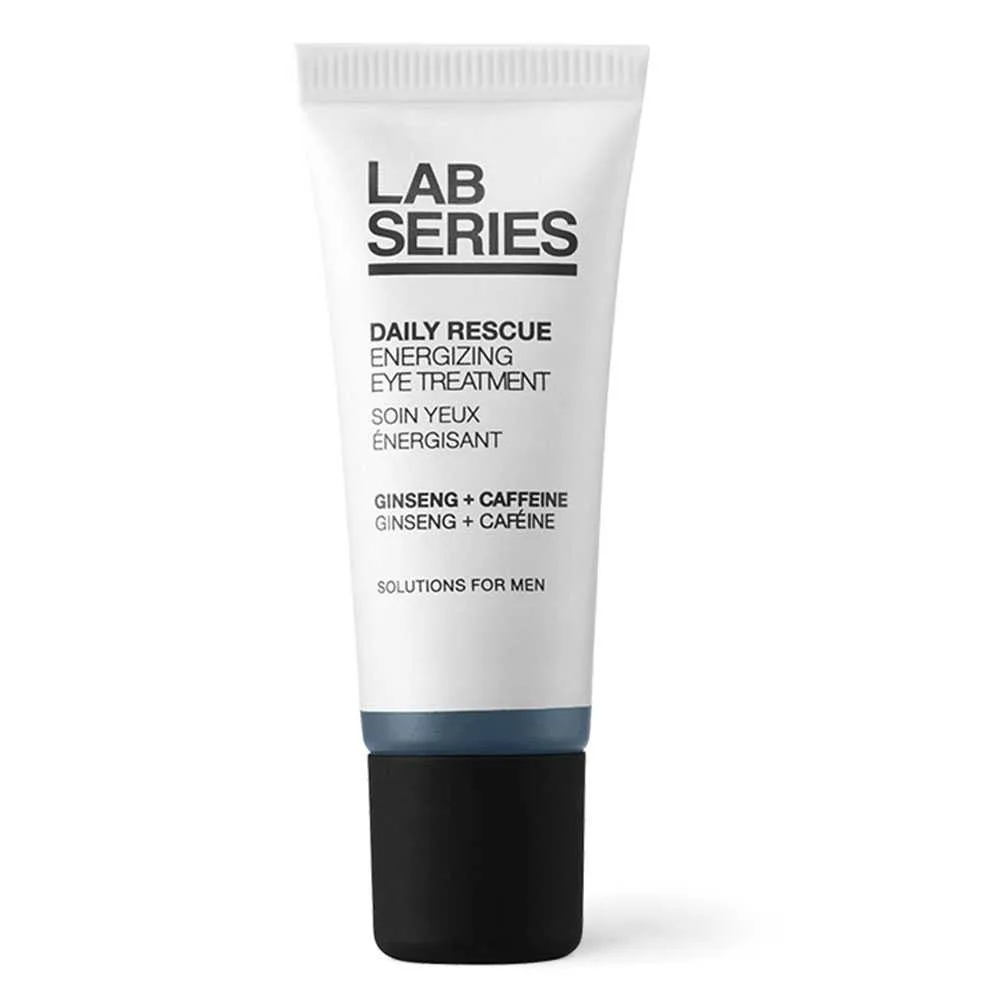
Caffeine is real and temporary. It constricts local vasculature and reduces the morning fluid accumulation that makes lids look puffy — Lab Series Daily Rescue Energizing Eye Treatment is built around it. It works for a few hours. That is the whole claim, and it is a legitimate one as long as nobody extends it into structural change. Simple hydration with something like Eucerin Hyaluron-Filler Eye Cream does the same modest, temporary plumping of fine lines.
What nothing topical does. Remove tissue. Hooding is a physical excess of skin, often compounded by a descended brow, and there is no cream, serum, patch, microcurrent device or radiofrequency wand that excises skin. Devices in this category produce modest, temporary tightening that requires indefinite continued use.
So the sorting rule is simple. If your complaint is fine lines, crepiness, dryness or darkness from pigment, topicals are a genuinely good answer and surgery is the wrong tool. If your complaint is that a fold of skin rests on your lashes, no product addresses it, and the years spent discovering that are the expensive part. Being told otherwise — by a brand, or by anyone selling a device — is where the money goes.
And if a clinician dismisses the whole subject as vanity: functional eyelid obstruction has a measurable definition, and the fact that it also has aesthetic consequences does not disqualify it. That double standard shows up constantly — in whether actinic keratosis treatment counts as cosmetic, in whether rosacea laser is funded, and in being told pigmentation is just cosmetic. Ask for the measurement. It is the one part of this conversation that does not depend on anyone's taste.
Products mentioned
Independently reviewed and scored — the real products behind this piece.



- Question What should I ask before booking a cosmetic procedure? The general consult checklist, which applies here with unusual force.
- Question Is melasma only a cosmetic problem? The same 'only cosmetic' framing, applied elsewhere and worth interrogating.
- Question Is treating these covered, or is it counted as cosmetic? Where the coverage line falls for a condition with visible consequences.
- Question Is laser for rosacea funded or considered cosmetic? Another procedure straddling the same boundary.
- Question I was told it is cosmetic — how do I get taken seriously? The double standard patients meet when a visible condition affects daily life.
References
- LCD - Blepharoplasty, Blepharoptosis and Brow Lift (L34528) — Centers for Medicare & Medicaid Services, Medicare Coverage Database, 2026
- Fact Sheet for Documenting the Need for Functional Blepharoplasty — American Academy of Ophthalmology, EyeNet, 2023
- Ophthalmic Complications of Periorbital and Facial Aesthetic Procedures: A Literature Review — Cureus, 2023
Every cited link is verified to resolve to the paper named. Where a source could not be independently confirmed, it is listed without a link rather than pointing you somewhere wrong.
Frequently asked
How do I know if my eyelid surgery would be covered?
By measurement, not by how it looks. The standard requires a superior visual field test performed both untaped and with the excess lid taped up, showing at least a 12 degree or 30% improvement when taped — plus photographs and documented symptoms. A margin reflex distance of 2.0 mm or less commonly meets the threshold. Ask specifically for those measurements at your assessment.
What is the difference between droopy eyelids and excess eyelid skin?
Dermatochalasis is surplus skin draping over a normally positioned lid margin, treated by blepharoplasty. Ptosis is the lid margin itself sitting too low because the levator mechanism has weakened, treated by a ptosis repair. They can coexist. Removing skin from a ptotic lid leaves the droop unchanged and the upper lid over-hollowed, which is why levator function should be measured beforehand.
Will eyelid surgery get rid of my dark circles?
Almost certainly not. Under-eye darkness is usually pigmentation, skin thin enough to show underlying vessels and muscle, or a tear-trough hollow — none of which are addressed by removing skin, and taking fat from an already hollow lower lid tends to deepen the shadow. This is the most common mismatch between what people book eyelid surgery for and what it delivers.
Who should perform a blepharoplasty?
Oculoplastic surgeons, plastic surgeons and facial plastic surgeons all perform it competently. The reason a separate oculoplastic pathway exists is that the complications that matter are ocular — dry eye and diplopia are the most commonly reported after this operation. Judge on volume, on whether they measure levator function and brow position, and on how they handle dry eye afterwards.
Can any cream or device fix hooded eyelids?
No. Hooding is a physical excess of skin, frequently compounded by brow descent, and nothing topical removes tissue. Retinoids genuinely improve periorbital fine lines and skin quality over years, caffeine reduces morning puffiness for a few hours, and pigment-targeting ingredients help pigmented dark circles. If a fold of skin rests on your lashes, none of that is the relevant tool.