Beta-Glucan Does Niacinamide's Job Without the Marketing Budget
It hydrates, calms, and quietly supports the barrier with one of the better safety records in skincare. So why has almost nobody heard of it?
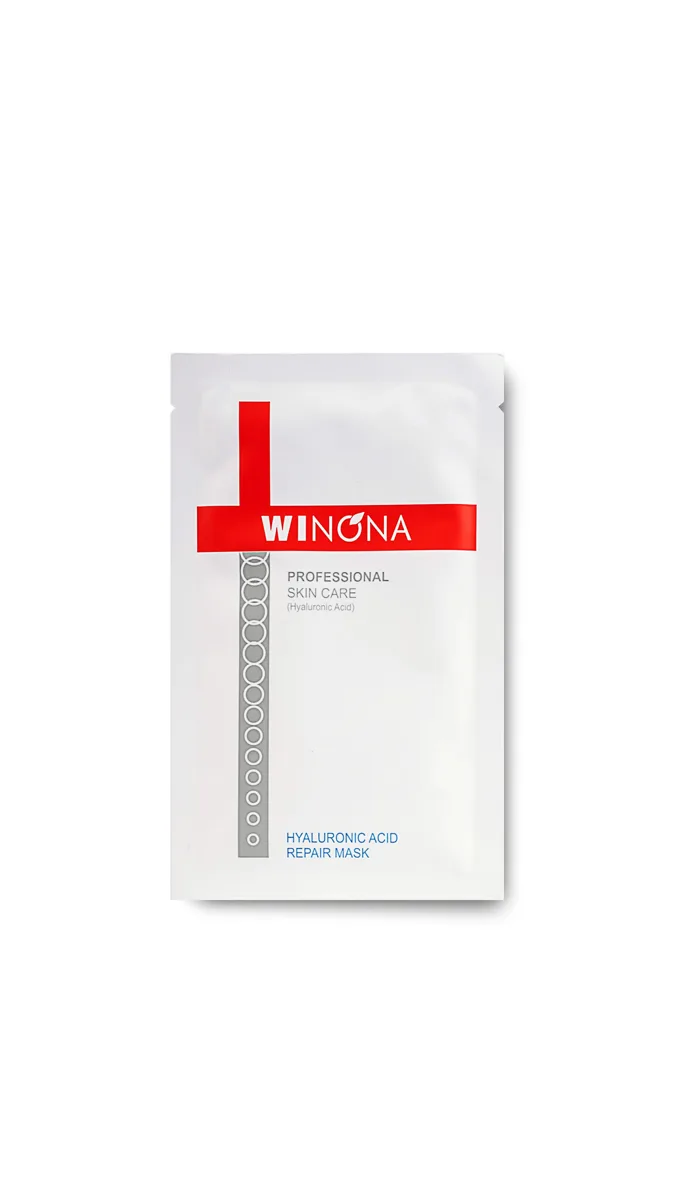
This is not a cosmetic sheet mask that borrowed clinical language. It is registered in China as a Class II medical device dressing, with a composition limited to purified water, high-molecular-weight sodium hyaluronate and pentylene glycol on a non-woven carrier, and its labelled indication is care of non-chronic wounds after facial laser, IPL, microdermabrasion and chemical peels, and of barrier-damaged skin from dermatitis, eczema and steroid-dependent dermatitis. The three-ingredient list is the feature.
Three ingredients, a device registration and a clear job: cool, wet, inert cover for skin that has just been lasered, peeled or is mid-flare. For that job it is excellent and hard to fault. As an everyday hydrating mask it is an expensive way to get what a drugstore sheet delivers, and it does not pretend otherwise.
The dressing's Chinese device registration and its long use in dermatology clinics there establish its composition and safety, but no published trial tests this specific product, and the hyaluronate-dressing evidence cited comes from other formulations. English-language reviews were absent from the brand's storefront in September 2026, so this assessment rests on the disclosed composition, the device labelling and the general literature on hyaluronic acid aftercare.
The case for it
What would change this: A researched evidence row for the lead active would replace this with a verdict.
Same rule for everyone. “Good choice” is the verdict on 1,938 of 45,024 concern verdicts across the catalog; rule F2 decided 1,938 of them. As of September 25, 2026, engine 5.1.1.
Brand or formulator? Disclose a concentration or correct a fact →
The case for it
What would change this: A declared concentration would move this to a firmer reading of the dose.
Same rule for everyone. “Good choice” is the verdict on 9,564 of 45,024 concern verdicts across the catalog; rule R5 decided 9,072 of them. As of September 25, 2026, engine 5.1.1.
Brand or formulator? Disclose a concentration or correct a fact →
The studies behind the evidence row
Also listed for Post-Procedure, Compromised Skin Barrier, Rosacea and Eczema — the actives here (Hyaluronic Acid, Pentylene Glycol) are in our research queue for those concerns; there is no verdict until their evidence rows are written. That is a gap in our table, not a mark against the product.
As a maskNot judged: what a mask is for — works within its wear time, benefit outlasts the mask, comes off cleanly — cannot yet be measured from the ingredient list (only intensity without injury can).
A verdict is DermApproved’s assessment of how well a product’s ingredients fit a concern — never a claim about what the product treats. Evidence dots and collected reviews sit beside it and are never blended in. Rules 0.5.1 · evidence table ev-2026.09-r228 · how we decide
Water, sodium hyaluronate, pentylene glycol. That is the entire list, and the reason it is so short is printed on the box in the form of a registration number: 滇械注准20192140006, a Chinese Class II medical device approval issued in 2019. In China this is not a cosmetic sheet mask. It is a wound dressing, indicated on its label for skin after facial laser, IPL, microdermabrasion and chemical peels, and for barrier-damaged skin from dermatitis, eczema and steroid-dependent dermatitis. Device rules demand a minimal, inert composition and a defined purpose, and the product delivers precisely that. If you have ever wondered what a mask looks like when a regulator, rather than a marketing team, decides what goes in it, this is the answer.
The context is a category that barely exists in Western pharmacies but is a fixture in Chinese dermatology. Clinics there routinely send patients home from a fractional laser or a glycolic peel with a box of hyaluronate dressings, and by the late 2010s that had become a substantial market. Winona, the sensitive-skin brand Yunnan Botanee built from 2008 through exactly those hospital and pharmacy channels, registered its own in 2019 and it became one of the brand's signature items domestically. The English storefront, which opened in 2025, sells it as the Hyaluronic Acid Repair Mask in packs of one, three or six, and quietly drops the device claim, since the Chinese registration means nothing abroad. The composition, though, is the same.
The experience is pleasingly clinical. The sachet holds a dense white non-woven sheet drenched in a clear, slippery, water-thin solution; there is a lot of it, and the sheet stays wet for the thirty to forty minutes the label specifies, which is roughly twice as long as a cosmetic mask is worn. On a face that has just had a laser pass, that duration matters. The cold, wet weight takes the heat and sting out within a couple of minutes, the tightness eases as it sits, and when it comes off the skin looks calmer and hydrated. Nothing tingles, warms or itches, because there is nothing present that could. The film of hyaluronate solution left behind dries down invisibly, and the only thing to do afterwards is apply whatever ointment or bland moisturizer the clinic has approved.
The science behind the format is more solid than the modesty of the list suggests. A moist, protected surface is the standard for wound healing, and hyaluronic acid dressings specifically have been studied after ablative fractional laser: a 2023 systematic review and meta-analysis of randomized trials in Lasers in Medical Science found that adding a hyaluronic acid dressing after fractional CO2 laser for acne scars improved outcomes and reduced adverse effects compared with laser alone, and a 2025 randomized controlled trial in the Journal of Cosmetic Dermatology reported faster recovery with a multi-molecular hyaluronic acid regimen after ablative fractional CO2 resurfacing. Neither study tested Winona's product, and the trial formulations differ, but the mechanism they support is the one this dressing relies on: a large hyaluronate polymer that stays on the surface, holds water, and shields the healing epidermis from airborne irritants. It is worth being precise about what that is not. The hyaluronate here is not chosen to penetrate or plump; it is chosen to sit on top.
The limitations follow directly from the virtues. It hydrates and soothes and protects, and it does nothing else at all. There are no soothing botanicals, no barrier lipids, no ceramides, no niacinamide. On intact, healthy skin the effect is a few hours of surface hydration that a far cheaper sheet would match. The sheet is a single large cut that can gape at the nose and jaw on smaller faces. And the price is unmistakably clinical: nineteen dollars for three sheets, or thirty-nine for six on the brand's site, works out to just over six dollars each. For a product bought by the box after a procedure, once or twice a year, that is reasonable. As a weekly indulgence it is a poor use of money.
There is a broader point here about the word medical-grade, which brands attach to sheet masks with abandon. Here it happens to be literally true, and what it means is restriction rather than potency: a shorter list, a defined indication, a manufacturer that cannot slip in a fashionable extract. That is why the product is safe on a face that has just been ablated and why it is dull on a face that has not. Readers who have been burned by masks that promised repair and delivered fragrance will understand the appeal immediately.
So the recommendation is specific. If you have a laser, peel, microneedling or IPL appointment booked, or you live with eczema or rosacea that makes most sheets sting, keep a box of these in the drawer and use them the way Chinese clinics do: thirty to forty minutes, daily for the first week, then as needed. If you want a mask that does something visible for ordinary skin, this was never designed for you, and its own label says so with admirable economy.
The hero actives that drive this product's performance.
| Ingredient | Function | Evidence |
|---|---|---|
| Sodium Hyaluronate (high molecular weight) | The only active, and deliberately a large-molecule grade: rather than penetrating, it forms a water-holding film over freshly lasered or peeled skin, keeping the surface moist and shielding it from airborne irritants while it re-epithelialises. On this dressing there is nothing else for it to work with, which is exactly the point. | Established mechanism for Dehydration · established mechanism |
| Pentylene Glycol | The sole other ingredient, doing three jobs in one: it keeps the sodium hyaluronate solution microbially stable without a conventional preservative, adds a small humectant boost, and helps the essence wet the non-woven sheet evenly so it drapes over compromised skin without dry patches. | Not yet assessed |
Ingredient standings describe the active at treatment-level doses and vehicles; this product's own condition grades weigh its actual formula.
Water, Sodium Hyaluronate, Pentylene Glycol
treatment
AM & PM
On post-procedure skin, use it alone on a cleansed face, thirty to forty minutes once daily or as the clinic directs, then apply only the bland moisturizer and sunscreen the clinic has approved. On intact but irritated skin, it slots in after cleansing and before serum and moisturizer, and it has nothing in it that needs to be spaced from actives on other days.
Cooling and relief from tightness are immediate and last a few hours after each sheet. On post-laser skin the dressing is used daily through the first week, where its job is comfort and a moist surface for healing rather than any visible change; on a reactive but intact face, a few days of use calms stinging and dryness, and there is no long-term benefit to chase beyond that.
The evidence relevant to this dressing concerns the format rather than any brand-specific test. Moist wound healing under an occlusive or semi-occlusive cover is the accepted standard for superficial wounds, and hyaluronic acid dressings have been specifically evaluated after ablative fractional laser, the setting this product is labelled for. A 2023 systematic review and meta-analysis of randomized controlled trials in Lasers in Medical Science pooled studies of fractional CO2 laser for facial atrophic acne scars with and without a hyaluronic acid dressing and found the combination improved efficacy and reduced adverse effects such as prolonged erythema compared with laser alone. A 2025 prospective randomized controlled trial in the Journal of Cosmetic Dermatology reported that a skincare regimen built on a multi-molecular hyaluronic acid complex accelerated recovery after ablative fractional CO2 resurfacing versus the comparator regimen. Both support the principle at work here: a hydrated, protected surface re-epithelialises faster and with less inflammation.
The composition is designed around that principle. High-molecular-weight sodium hyaluronate does not penetrate intact or healing epidermis; it forms a viscoelastic film that binds many times its weight in water at the surface and acts as a physical barrier to airborne particles and allergens, which is the function Winona's device labelling describes. Pentylene glycol provides antimicrobial protection for the solution and modest humectancy without a conventional preservative, a relevant choice for skin whose barrier is open. What the composition cannot do is contribute barrier lipids, anti-inflammatory botanicals or any active beyond hydration, and no published trial has tested this product against other hyaluronate dressings; its Chinese Class II registration establishes composition and safety, not comparative efficacy.
Post-procedure aftercare in dermatology practice rests on a short list of principles: keep the surface moist, keep it clean, keep it protected from sun and irritants, and add nothing that could sensitise a barrier that is temporarily open. A sterile-packed hyaluronate dressing with a three-ingredient composition satisfies all four, which is why this category is standard issue in Chinese laser clinics and why comparable dressings appear in aesthetic practices elsewhere. The clinical framing worth keeping is that it is a comfort and protection measure that supports healing, not a treatment that changes the outcome of the procedure itself; the sunscreen and the bland emollient that follow are at least as important. For eczema and rosacea patients the same inertness is the attraction, with the caveat that a hydrating dressing does not replace prescribed anti-inflammatory therapy during a flare.
After a procedure, follow the clinic's cleansing instructions, then open a sachet, unfold the sheet and lay it over the face, smoothing it into contact and adjusting the openings; it is a large cut, so folding the edges at the jaw helps. Leave it for thirty to forty minutes, longer than a cosmetic mask, and keep still so it stays in contact. Remove, let the remaining solution dry on the skin without rinsing, and apply the ointment or bland moisturizer the clinic approved, plus mineral sunscreen in daytime. Use once daily through the healing week or as directed. On intact but reactive skin, the same routine works whenever it stings or feels tight, followed by your normal moisturizer.
Nineteen dollars for three sheets, thirty-nine for six, and seven for a single, so a little over six dollars a sheet however it is bought. For a three-ingredient product that is steep by sheet-mask standards, and the value argument rests entirely on context. After a laser, peel or microneedling session, where a week of daily use is the whole purchase and the alternative is a clinic-supplied dressing at similar cost, it is fair; the device-grade composition and heavy saturation are what you are paying for, from an established brand with a decade and a half of dermatology channel history in China. As a routine hydrating mask for intact skin it is poor value, since its only effect there is temporary surface hydration that masks a third of the price deliver. Buy it by the procedure, not by the month.
Anyone with a laser, chemical peel, microneedling, IPL or microdermabrasion appointment who wants an inert, well-saturated dressing for the healing week. People with eczema, rosacea or steroid-damaged skin for whom most sheet masks sting. Readers who value a short, fully disclosed composition over anything a mask claims to add.
People with healthy, intact skin looking for a weekly hydrating or brightening mask; the effect here is brief and cheaper sheets match it. Anyone wanting barrier lipids, ceramides or soothing botanicals in the formula, since there are none. Those who expect a medical registration to mean visible skin change rather than safe, minimal cover.
Ready to try Winona Hyaluronic Acid Repair Mask?
Buy at Amazon ♥A dense white non-woven sheet heavily saturated with a clear, slippery, water-thin hyaluronate solution; it feels cold and wet on contact and stays damp for the whole application.
There is nothing to smell: no fragrance, no botanical extracts, and the two-ingredient essence has no odour of its own.
Individually sealed foil sachets, three or six to a white card box carrying the red Winona cross-band, the Professional Skin Care label and the medical-device registration number.
On post-procedure skin the first sheet feels like relief: the cold, wet dressing takes the heat and sting out of a lasered or peeled face within a minute or two, and the tightness eases as it sits. Nothing tingles, because there is nothing in it that could. The skin looks hydrated and calmer on removal, and that is the whole experience; there is no adjustment period and no cumulative effect to wait for.
A three-sheet pack covers the first three days after a procedure used once daily; the six-sheet box lasts a typical week of post-laser care or six weeks of weekly use on reactive skin.
All Year
Chinese dermatology clinics routinely hand patients a hyaluronate dressing after lasers and peels, and by 2019 that category had grown big enough for Botanee, whose Winona brand already sold through those clinics, to register its own under device rules rather than as a cosmetic. It became one of the brand's best-known items domestically and reached the English storefront in 2025 under the plainer name Hyaluronic Acid Repair Mask.
Winona is the dermatology-led sensitive-skin brand of Yunnan Botanee, founded in 2008 and sold through Chinese hospital dermatology departments and pharmacies as well as online. This particular product is registered in China as a Class II medical device dressing (滇械注准20192140006) rather than as a cosmetic, which subjects its composition and claims to device rules; independent Western evidence on the brand's products remains limited.
Medical-grade on a mask means stronger or more concentrated ingredients.
Here it means the opposite. Device registration requires a minimal, inert composition and a defined use, so this dressing carries only water, sodium hyaluronate and pentylene glycol. It is more restricted than a cosmetic sheet mask, not more potent.
A hyaluronic acid sheet penetrates and plumps skin from within.
The hyaluronate in this dressing is a large polymer chosen to stay on the surface and form a moist protective film, which is what healing skin needs. Any plumping is water held at the surface, and it fades within hours.
In China, yes: it is registered as a Class II medical device dressing under Yunnan registration 20192140006, with a labelled indication for skin after facial laser, IPL, microdermabrasion and chemical peels and for barrier-damaged skin from dermatitis or eczema. Outside China it is sold as a mask, and the device status does not transfer, but the composition is the same.
Only three things: purified water, high-molecular-weight sodium hyaluronate and pentylene glycol, on a non-woven sheet. There are no botanical extracts, fragrance, alcohol, preservatives beyond the pentylene glycol, or any other active, which is what makes it suitable for freshly treated skin.
The label calls for thirty to forty minutes, once a day or as your clinician directs. That is longer than a cosmetic sheet mask because the goal is to keep the healing surface moist and cool for a sustained period, and the heavy saturation means the sheet stays wet for the full time.
Its Chinese indication explicitly includes barrier-damaged skin from dermatitis, eczema and steroid-dependent dermatitis, and its composition has nothing that a flare would react to. It will cool and hydrate; it will not treat the underlying condition, so it belongs alongside, not instead of, prescribed care.
No. Remove the sheet after thirty to forty minutes and let the thin film of hyaluronate solution dry on the skin, then apply whatever moisturizer or ointment your clinic has approved. On intact skin, follow with your normal moisturizer and sunscreen.
Only if your skin is reactive enough that ordinary hydrating sheets sting. For a normal, intact face, a three-ingredient hyaluronate dressing at roughly six dollars a sheet delivers hydration that cheaper masks match; its value is the inertness, which matters most when skin is compromised.
Recurring themes our editors read across retailer reviews of this product — summaries in our words, not quotations, and not a substitute for your own patch test.
Instant cooling relief on stinging, freshly treated skin
Nothing in it to react to
Thick, well-saturated sheet that stays wet for the full 40 minutes
Reduces post-laser tightness and flaking
Expensive per sheet for a three-ingredient product
Does nothing beyond hydrate and soothe
Sheet is a large one-size cut that can gape at the nose and jaw