Niacinamide vs Vitamin C: You're Asking the Wrong Question
They brighten through completely different machinery — which is exactly why the 'pick one' framing is a trap.
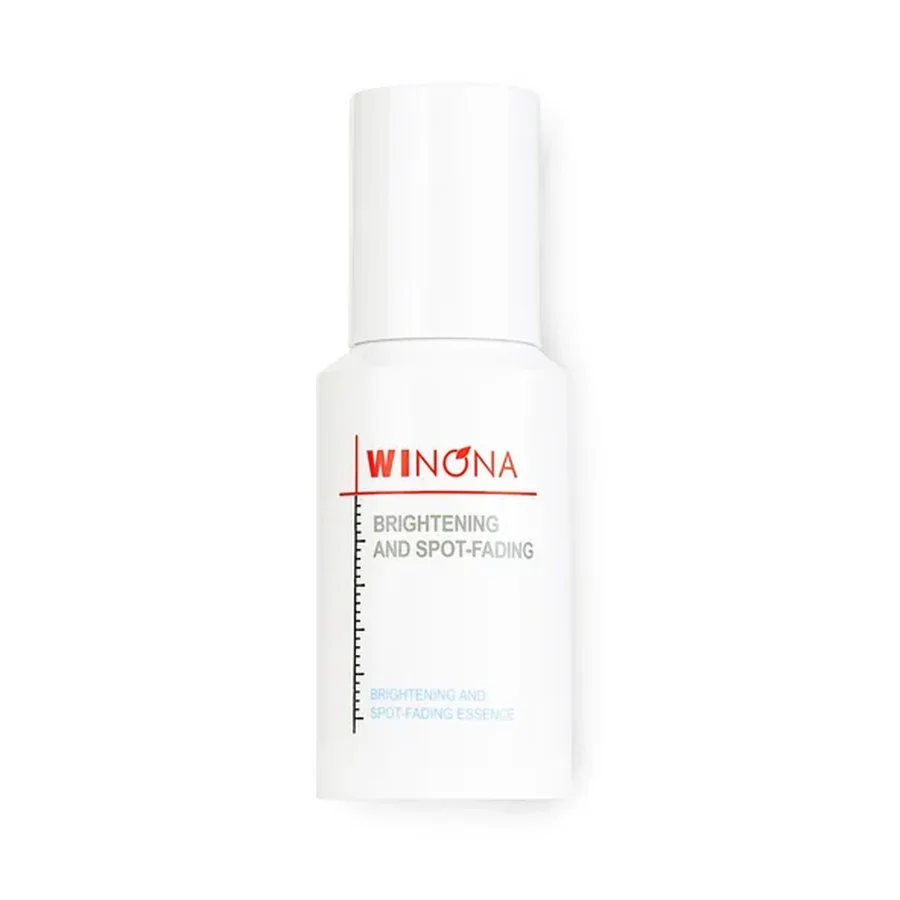
Most three-active brightening serums are formulated for skin that can take them. This one stacks niacinamide, 3-O-ethyl ascorbic acid and N-acetyl glucosamine, a trio with published combination data, on the same purslane, centella and licorice soothing base Winona uses in its clinic-channel repair creams, with no fragrance or alcohol. It is a brightener built by a sensitive-skin brand rather than a sensitive-skin version of a brightener, and the single-dose vial format is unusual for the category.
A brightening serum designed from the sensitive-skin end first: niacinamide, a stable vitamin C ether and N-acetyl glucosamine, a trio with real combination data, on Winona's purslane-and-licorice calming base, with no fragrance or alcohol. Reactive skin that has failed on stinging vitamin C serums finally gets a credible option. Concentrations are undisclosed and the overseas price is steep, so it's a considered buy rather than an obvious one.
Winona's overseas store lists no reviews for this essence and no rated Western retailer listing could be found, so nothing here rests on independent user feedback; the brand's domestic sales are large and its 21-day panel testing is cited on the product page but was not available to examine. The assessment draws on the declared formula, which reproduces a published niacinamide-glucosamine pairing alongside a stable vitamin C ether, and on the brand's clinic-channel standing in China. Active concentrations are undisclosed.
The case for it
What would change this: A declared concentration would move this to a firmer reading of the dose.
Same rule for everyone. “Good choice” is the verdict on 9,564 of 45,024 concern verdicts across the catalog; rule R5 decided 9,072 of them. As of September 25, 2026, engine 5.1.1.
Brand or formulator? Disclose a concentration or correct a fact →
The studies behind the evidence row
The case for it
What would change this: A declared concentration would move this to a firmer reading of the dose.
Same rule for everyone. “Promising” is the verdict on 7,858 of 45,024 concern verdicts across the catalog; rule R9p decided 7,858 of them. As of September 25, 2026, engine 5.1.1.
Brand or formulator? Disclose a concentration or correct a fact →
The studies behind the evidence row
The case for it
What would change this: A declared concentration would move this to a firmer reading of the dose.
Same rule for everyone. “Unproven” is the verdict on 1,111 of 45,024 concern verdicts across the catalog; rule R9 decided 1,111 of them. As of September 25, 2026, engine 5.1.1.
Brand or formulator? Disclose a concentration or correct a fact →
The studies behind the evidence row
The case for it
What would change this: A researched evidence row for the lead active would replace this with a verdict.
Same rule for everyone. “Good choice” is the verdict on 1,938 of 45,024 concern verdicts across the catalog; rule F2 decided 1,938 of them. As of September 25, 2026, engine 5.1.1.
Brand or formulator? Disclose a concentration or correct a fact →
Also listed for Dullness — the actives here (Niacinamide, Vitamin C, Acetyl Glucosamine, Purslane Extract) are in our research queue for that concern; there is no verdict until their evidence rows are written. That is a gap in our table, not a mark against the product.
Where our review and the verdict differ. The review below was written on the formulation and the published trials; the verdicts above apply the stricter standing test in our methodology — an active earns a recommendation only with guideline or regulatory standing for the concern. Where the two disagree, the verdict is DermApproved’s position.
A verdict is DermApproved’s assessment of how well a product’s ingredients fit a concern — never a claim about what the product treats. Evidence dots and collected reviews sit beside it and are never blended in. Rules 0.5.1 · evidence table ev-2026.09-r228 · how we decide
Winona did things in an unusual order. For most of its first decade, the company sold nothing that promised to change how skin looked, only how it behaved: creams and serums for the rosacea-prone, eczema-prone, barrier-wrecked patients that Chinese dermatology departments sent its way. Brightening came late, and when it came it was built on top of that base rather than beside it. The Brightening and Spot-Fading Essence is the clearest expression of that sequence. Read its ingredient list from the bottom up and you find the soothing bench from the brand's hospital-channel repair creams, purslane, centella, panthenol, licorice; read it from the top down and you find a three-active brightening stack that would not look out of place in a far more aggressive serum. The interesting question is whether a brightener built that way works, or whether gentleness has been bought with dose.
The stack itself is well chosen. Niacinamide is fifth on the list, the load-bearing brightener, blocking the transfer of pigment into surface cells and with the deepest trial record of the three. Then 3-O-ethyl ascorbic acid, the stable, water-soluble ether of vitamin C that Winona calls its dual-phase VC, which inhibits tyrosinase and converts to ascorbic acid in the skin without the low pH and sting that pure L-ascorbic acid demands. Then N-acetyl glucosamine, the amino sugar that in the published combination studies with niacinamide outperformed niacinamide alone on hyperpigmentation over eight weeks. The three work at different points in the pigment pathway, production, transfer and clearance, which is what the brand means by multi-pathway melanin control, and it is a sound piece of formulation logic rather than a slogan. Licorice root and ammonium glycyrrhizate add a further tyrosinase brake, and Yunnan camellia, the botanical Winona champions for this line, contributes polyphenol antioxidant support. Fullerene sits at the very end of the list, a laboratory-famous antioxidant present here in a quantity that is best described as decorative.
What the list does not tell you is how much of any of it there is, and that is the honest limit of the review. Winona discloses no percentages. The placement of niacinamide, ethyl ascorbic acid and glucosamine in the top eight, above the thickener and the emollients, argues for meaningful doses, and the brand's own 21-day panel results are consistent with that. But a serum from a company that publishes its clinical work in Chinese-language journals and has only recently opened an overseas store cannot be checked the way a Western dermatology brand can, and it asks to be taken partly on reputation. That reputation is real, in its home market, and it is specifically a reputation for tolerability rather than potency.
In use, tolerability is what you notice. The serum is a clear, lightly viscous water with a faint silicone slip that disappears into the skin in under a minute and leaves nothing behind, no tack, no film, no scent. There is no tingling. People who have thrown out a bottle of L-ascorbic acid after a week of stinging tend to find this one uneventful to the point of doubting it is doing anything, which, as the tingling myth goes, is a sign of the pH, not the dose. The first week brings the plumper, more even-looking surface that humectants and a vitamin C ether reliably deliver. The spot-fading is slower and depends, as it does with every brightening serum ever made, on wearing sunscreen every single morning; without that, the actives are fighting new pigment every day and will lose.
The formats are worth a word. The 30 ml dropper bottle has a graduated scale printed on the side, which is either charming or clinical depending on your mood, and it is the everyday buy. The 1.5 ml single-dose vials, sold singly and in packs of seven and thirty, are unusual for a brightening serum and rather sensible: sealed vitamin C stays fresh, a seven-pack is a genuine trial week for reactive skin, and the thirty-pack is a one-a-day course with no half-used bottle going off on the shelf. Winona advises finishing the bottle within six months of opening, which is standard prudence for a vitamin C derivative and no hardship at three drops twice a day.
The price is the other honest limit. At the brand's overseas store the 30 ml bottle costs the better part of sixty dollars, which is a premium serum price for a brand most Western buyers have never heard of, and a considerable markup on what it costs at home. The formula is good enough to belong in that price bracket on ingredients alone; whether it belongs there on evidence is a fair question, and the answer is that it belongs there on the specific evidence of being a brightener that reactive skin can actually wear. Skin that tolerates any serum has cheaper routes to the same three actives. Skin that doesn't has fewer, and this is one of them.
So the recommendation is precise. If you have sensitive, rosacea-prone or barrier-compromised skin with post-acne marks or uneven tone, and vitamin C serums have burned you, this is a serious, fragrance-free, alcohol-free candidate with a formulation logic that holds up and a soothing base with real pedigree. Pair it with a sunscreen you will wear, give it three months, and use the vials to find out in a week whether your skin agrees. If your skin can take anything and you just want dark spots gone, the price buys you tolerance you don't need, and the money is better spent elsewhere.
The hero actives that drive this product's performance.
| Ingredient | Function | Evidence |
|---|---|---|
| Niacinamide | Fifth on the list, ahead of the vitamin C and the glucosamine, which makes it the load-bearing brightener here: it blocks pigment transfer into surface cells while the two ingredients behind it work on production and turnover, the three-pronged design Winona describes as multi-pathway melanin control. | Emerging for Hyperpigmentation |
| 3-O-Ethyl Ascorbic Acid | The stable, water-soluble vitamin C ether that Winona markets as its 'dual-phase VC', placed high enough to matter; it inhibits tyrosinase and converts to ascorbic acid in skin without the sting or oxidation of the pure acid, which is why it suits a sensitive-skin brightener. | Limited for Hyperpigmentation |
| Acetyl Glucosamine | The N-acetyl glucosamine that gives the essence its 'spot-fading' half, paired with niacinamide as in the published combination studies; it speeds the shedding of already-pigmented cells and slows new melanin, and Winona credits it with the faster 21-day visible result. | Not yet assessed |
| Yunnan Camellia (Camellia Japonica Flower + Leaf Extract) + Licorice Root | The brand's signature botanical pairing for this line: Yunnan camellia extracts with polyphenol antioxidant activity, alongside glabridin-bearing licorice root and ammonium glycyrrhizate, which supply a further tyrosinase brake and the anti-redness support that keeps an active brightener tolerable on reactive skin. | Limited for Hyperpigmentation |
| Portulaca Oleracea (Purslane) + Centella + Panthenol | Winona's soothing bench, carried across from its hospital-channel repair creams so that a serum stacking three brighteners can be worn by the rosacea-prone and barrier-damaged skin the brand exists for. | Not yet assessed |
Ingredient standings describe the active at treatment-level doses and vehicles; this product's own condition grades weigh its actual formula.
Water, Pentylene Glycol, Glycerin, Glycereth-26, Niacinamide, Butylene Glycol, 3-O-Ethyl Ascorbic Acid, Acetyl Glucosamine, Isostearyl Alcohol, Caprylyl Methicone, Ammonium Acryloyldimethyltaurate/VP Copolymer, Hydrogenated Polyisobutene, Panthenol, Prinsepia Utilis Seed Oil, Glycyrrhiza Glabra (Licorice) Root Extract, Squalane, Escin, Panax Notoginseng Root Extract, Citric Acid, Ruscus Aculeatus Root Extract, Portulaca Oleracea Extract, Ammonium Glycyrrhizate, Sodium Citrate, Centella Asiatica Leaf Extract, Hydrolyzed Yeast Protein, Calendula Officinalis Flower Extract, Camellia Japonica Flower Extract, Camellia Japonica Leaf Extract, Fullerene
serum
AM & PM
Press three or four drops onto damp skin after a toner and before moisturizer, morning and night; it sits comfortably under sunscreen, which is the non-negotiable partner for any brightening serum. Introduce a retinoid on alternate nights rather than layering both at once.
Hydration and a slight surface brightness within the first week from the humectants and vitamin C ether. Winona's own testing cites visible tone change at 21 days; independent expectation for a niacinamide, ethyl ascorbic acid and glucosamine serum is fading of post-acne marks over six to eight weeks and stubborn spots over three months, with daily sunscreen.
The three brightening actives here have independent and, in one case, combined trial support. Niacinamide inhibits the transfer of melanosomes from melanocytes to keratinocytes and, at 2 to 5 percent in daily leave-on use, has produced measurable reductions in hyperpigmentation in controlled studies over eight to twelve weeks. N-acetyl glucosamine, an amino sugar precursor of hyaluronic acid, reduces melanin production by interfering with tyrosinase glycosylation, and the best-known evidence for it is the combination work in which niacinamide plus N-acetyl glucosamine outperformed niacinamide alone on facial hyperpigmentation over eight weeks, which is the pairing Winona has reproduced at the top of this formula. 3-O-ethyl ascorbic acid is a stable, water-soluble vitamin C ether that resists oxidation, penetrates at a skin-friendly pH and is converted to ascorbic acid intracellularly; its tyrosinase inhibition and antioxidant activity are documented in vitro and in small clinical studies, though its clinical literature is thinner than that of L-ascorbic acid. Because the three act at different points in the pigment pathway, production, transfer and clearance, the combination is mechanistically complementary rather than redundant, which is the substance behind the brand's multi-pathway claim.
The supporting cast has moderate evidence. Licorice root extract's glabridin and ammonium glycyrrhizate inhibit tyrosinase and reduce inflammation, and glycyrrhizate is a recognised anti-irritant. Portulaca oleracea extract has anti-inflammatory and antioxidant activity in laboratory work and in small sensitive-skin trials, several from groups linked to the brand; centella asiatica's triterpenes and panthenol have established soothing data. Escin and Ruscus aculeatus extract are vascular-tone botanicals with limited skin-specific evidence. Camellia japonica extracts contribute polyphenols with antioxidant activity in vitro, and fullerene, listed last, is a strong antioxidant in the laboratory whose contribution at trace concentration is unknown.
The formulation choices support tolerability: no fragrance, no alcohol, a near-neutral pH implied by the citrate buffer, and a vitamin C ether rather than the acid. The absence of disclosed percentages and of independent Western trials means the specific efficacy rests on ingredient placement and on the brand's own 21-day panel data, which was not available for review.
Combination brightening serums that pair niacinamide with a vitamin C derivative and N-acetyl glucosamine are regarded in dermatology as a reasonable first-line topical approach for post-inflammatory hyperpigmentation and mild uneven tone, particularly where hydroquinone or retinoids are unsuitable, and the published niacinamide-glucosamine work is often cited in that context. For patients with rosacea or a compromised barrier, the usual difficulty is that many brightening serums provoke irritation, which itself drives further pigmentation; a fragrance-free formula using a stable vitamin C ether on a soothing base is the kind of product clinicians tend to prefer for that group. The standard counsel applies without exception: no brightening serum outperforms daily broad-spectrum sunscreen, results take two to three months, and the two should be used together. Clinicians would also note that undisclosed concentrations make it impossible to compare potency with better-documented products, and that the brand's clinical data are largely domestic and not independently reviewed. Patients managing fungal acne would be told the emollient esters are a minor concern.
Twice daily, after cleansing and any toner, dispense three or four drops from the dropper, or one 1.5 ml vial, into the palm and press it over the whole face, concentrating on areas of uneven tone rather than spot-treating, since pigment sits wider than it looks. Let it absorb for a minute, then follow with moisturizer and, in the morning, a broad-spectrum sunscreen without fail. Sensitive skin should start once daily for the first week, ideally with the vials, before moving to twice. Keep a retinoid, if used, on alternate nights at first. Store the bottle capped, out of light and heat, and finish it within six months of opening to keep the vitamin C ether active.
At the brand's overseas store the 30 ml bottle is priced in premium-serum territory, close to sixty dollars, and that is a markup on its domestic price that reflects import costs and a young export operation rather than a change in formula. Per drop it works out to a bottle every six to eight weeks, and the 1.5 ml vials, at a few dollars each or under twenty for a week, are the cheapest way to find out whether your skin agrees before committing. Judged on ingredients, the trio of actives plus the soothing base justifies a mid-to-premium price; judged on evidence, you are paying for a brand whose clinical credibility is real but domestic and whose concentrations are not disclosed. For sensitive skin that cannot use cheaper vitamin C serums the premium buys something specific. For skin that can, it doesn't.
Sensitive, rosacea-prone or barrier-compromised skin with post-acne marks, dark spots or dull, uneven tone, especially anyone whose previous vitamin C serums stung or flared. It suits people willing to commit to three months and daily sunscreen, and who value a trial-vial format before buying a full bottle.
Skin that tolerates ordinary brightening serums, which can get the same three actives for far less. Anyone who wants disclosed concentrations or Western clinical data before spending premium money, and people unwilling to wear sunscreen daily, without which the serum cannot succeed.
Ready to try Winona Brightening and Spot-Fading Essence?
Buy at Amazon ♥A clear, lightly viscous watery serum with a faint silicone slip from the caprylyl methicone; it spreads thin, absorbs in under a minute and leaves a soft, almost dry finish with no tack.
Unfragranced; a faint, clean, slightly herbal note from the botanical extracts on application that is gone within seconds.
A white 30 ml glass bottle with a dropper and a graduated scale printed on the side, plus a 1.5 ml single-dose vial format sold singly and in packs of 7 and 30 for travel or a trial course.
No tingling, no warmth and no purging; the first noticeable change is a plumper, slightly more even-looking surface within a few days. Skin that has reacted to L-ascorbic acid serums generally finds this one uneventful, which is the point.
About six to eight weeks from the 30 ml bottle at three drops twice daily; the 30-vial box covers roughly a month at one vial a day.
All Year
Winona spent its first decade on soothing and barrier repair for the reactive-skin patients its hospital channels serve, and only moved into brightening once it had a base those patients tolerated. This essence, the 'spot-fading' pillar of its Brightening line, was built around Yunnan camellia, a regional botanical the company champions, and became one of the brand's best-known launches at home before the line reached its overseas store in 2025.
Winona, launched by Botanee in 2008 with dermatologist collaboration, is the sensitive-skin brand most often dispensed through Chinese hospital dermatology departments, and it publishes clinical work on its formulas in Chinese-language journals. Its overseas presence dates only from the mid-2020s and independent Western evaluation of its products is limited.
A vitamin C serum that doesn't tingle isn't strong enough to work.
Tingling comes from the low pH pure L-ascorbic acid needs, not from efficacy. 3-O-ethyl ascorbic acid is stable at a skin-friendly pH and converts to ascorbic acid in the skin, so a non-stinging formula like this one is a design choice for sensitive skin, not a sign of a weak dose.
Fullerene at the end of the ingredient list is a meaningful active.
Fullerene is a potent antioxidant in the laboratory, but listed last here it is present in trace amounts. It is a marketing flourish; the brightening work is done by the niacinamide, vitamin C ether and glucosamine listed near the top.
It contains 3-O-ethyl ascorbic acid, a stable ether of vitamin C that converts to ascorbic acid in the skin. Winona calls it dual-phase VC. It doesn't sting or oxidise the way pure L-ascorbic acid does, which is why it can be used on the reactive skin the brand is known for.
Winona's own testing cites visible brightening at 21 days. For a niacinamide, ethyl ascorbic acid and glucosamine serum, a realistic expectation is fading of fresh post-acne marks over six to eight weeks and older spots over about three months, and only with daily sunscreen; without it the actives are working against new pigment every day.
Its actives are niacinamide, a vitamin C derivative, N-acetyl glucosamine and botanical extracts, none of which sits on the usual pregnancy-avoid lists, and there's no retinoid, hydroquinone or fragrance. It's a reasonable pick among brightening serums, though anyone pregnant should still run new products past their own doctor.
Same formula, different dose control. The 30 ml dropper bottle is the everyday buy and the best value per millilitre; the sealed 1.5 ml vials, sold singly and in 7- and 30-packs, keep the vitamin C fresh and are handy for a trial week, travel, or a fixed one-a-day course.
Yes, but on alternate nights while your skin adjusts. Nothing in the essence conflicts chemically with a retinoid, and the purslane and centella base actually helps buffer retinol's dryness, but layering two actives from day one on sensitive skin invites irritation that then triggers more pigment.
Vitamin C derivatives lose potency once the bottle is opened and exposed to air and light, and Winona sets a short period-after-opening to keep the ethyl ascorbic acid effective. At three drops twice a day the 30 ml bottle is finished well inside that window anyway.
Recurring themes our editors read across retailer reviews of this product — summaries in our words, not quotations, and not a substitute for your own patch test.
Tolerated by reactive skin that stings with other vitamin C serums
Light, fast-absorbing texture
Fragrance-free
Expensive per millilitre outside China
No disclosed active concentrations
Results are gradual and depend on daily sunscreen