Hyaluronic Acid Gets the Ad Budget. Glycerin Does the Work.
The cheapest humectant on the ingredient list is also the best-studied, the most reliable in dry air, and the one your favorite moisturizer is quietly built around.
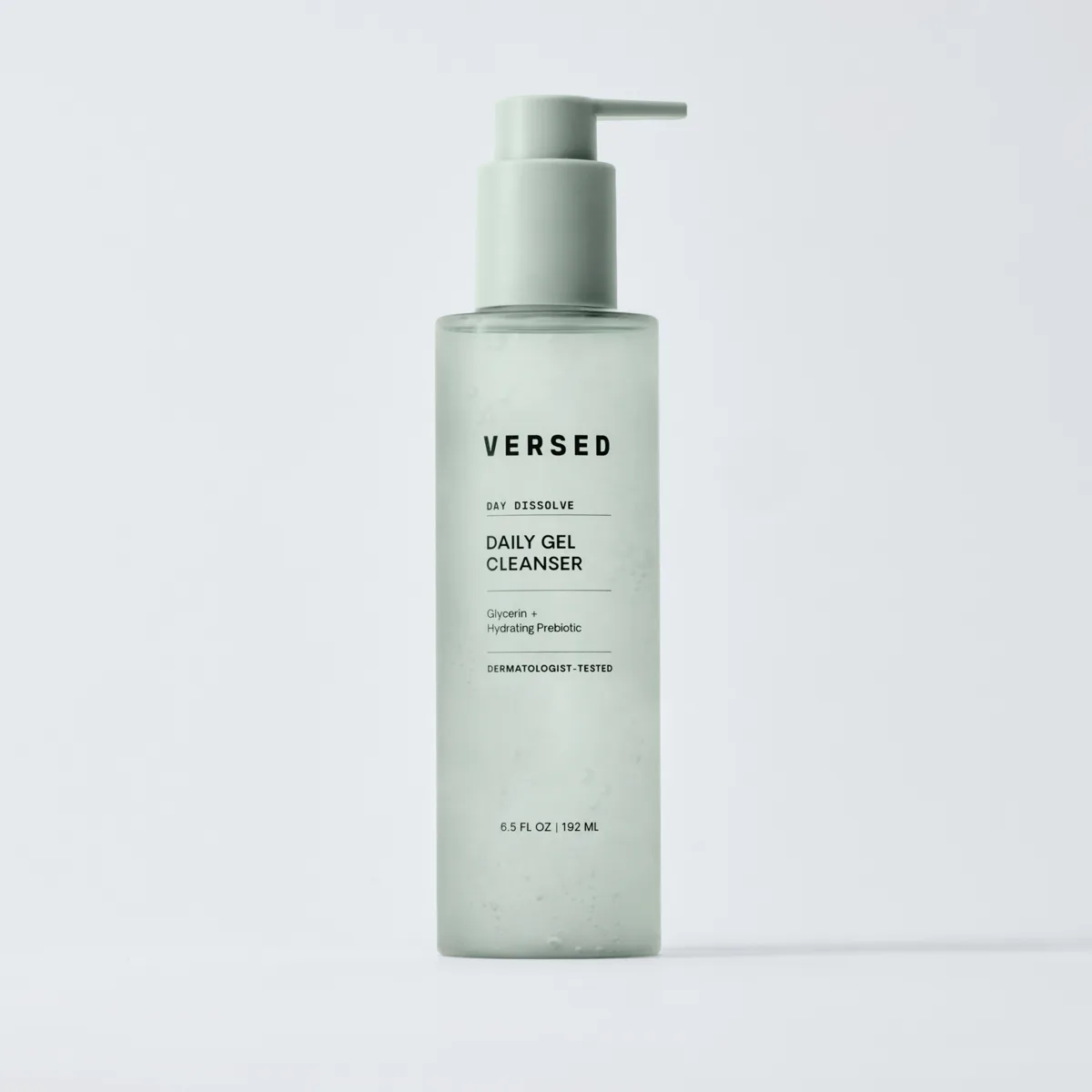
An amino-acid and glucoside gel — the surfactant class usually found in Japanese and Korean cleansers at twice the price — with glycerin placed above both surfactants and a prebiotic-plus-beta-glucan finish, fragrance-free and thirteen dollars at Target. It is Versed's second cleanser under the Day Dissolve name, built as the daily gel counterpart to its cleansing balm rather than a replacement for the older Purist gel.
A mild amino-acid and glucoside gel with glycerin above the surfactants, a soft prebiotic-and-beta-glucan finish and nothing to react to, at thirteen dollars — the kind of cleanser that costs twice as much when it arrives from Seoul or Tokyo. It will not shift heavy makeup alone, its prebiotic billing is decorative in a rinse-off, and it is too new to have a record, but on chemistry and price it is one of the better gentle gels on a drugstore shelf.
Versed released this gel in August 2026 and it had reached Target only weeks before this assessment, so there is no review record to speak of — a handful of early brand-site comments and no retailer pool. What is being judged is a fully published sixteen-ingredient formula whose surfactants and humectants are among the most thoroughly studied in cleanser chemistry; the brand's dermatologist-tested claim describes a tolerability panel, and no independent study of the product exists.
The case for it
What would change this: The same active in a leave-on form would be judged on its evidence rather than its contact time.
Same rule for everyone. “Supporting role” is the verdict on 8,197 of 45,024 concern verdicts across the catalog; rule R6 decided 2,017 of them. As of September 25, 2026, engine 5.1.1.
Brand or formulator? Disclose a concentration or correct a fact →
The studies behind the evidence row
The case for it
What would change this: A researched evidence row for the lead active would replace this with a verdict.
Same rule for everyone. “Good choice” is the verdict on 1,938 of 45,024 concern verdicts across the catalog; rule F2 decided 1,938 of them. As of September 25, 2026, engine 5.1.1.
Brand or formulator? Disclose a concentration or correct a fact →
Does the jobDoes what a cleanser is for: surfactant mildness, rinses clean without stripping. Not measured from the label: pH match to skin.
A verdict is DermApproved’s assessment of how well a product’s ingredients fit a concern — never a claim about what the product treats. Evidence dots and collected reviews sit beside it and are never blended in. Rules 0.5.1 · evidence table ev-2026.09-r228 · how we decide
A cleanser is a surfactant decision with a marketing story attached, and the useful way to read a new one is to skip the story and go to the third line of the ingredient list. On Versed's Day Dissolve Daily Gel Cleanser the third line is sodium cocoyl glutamate, an amino-acid surfactant, and the fourth is coco-glucoside, a sugar-derived one. That pairing is the whole review in miniature. These are the cleansing agents that sit at the mild end of every comparative test — low protein binding, low lipid extraction, low irritation — and they are the reason a gel can produce a creamy lather and leave skin soft rather than squeaky. They are also the surfactants most often found in the Japanese and Korean cleansers that skincare enthusiasts pay twenty-five dollars for, and here they are in a thirteen-dollar bottle at Target. Whatever else the label says, the chemistry is right.
Above the surfactants sits glycerin, second only to water, which is a high placement for a rinse-off and the practical reason the wash does not leave skin tight; it buffers the cleanse and leaves a faint humectant softness behind. Below them comes the story. Inulin, fifth, is the 'hydrating prebiotic' on the front of the bottle — a chicory-derived fructan with supplier data for selectively feeding the skin's resident bacteria, which is a plausible thing to want in a leave-on and a mostly decorative thing in a gel that is on the face for sixty seconds. Its honest contribution here is a small humectant film. Sodium carboxymethyl beta-glucan, sixth, is an oat-derived soother with decent leave-on evidence for calming irritated skin, and in a wash-off it translates to a gentler, softer finish rather than a treatment. Then the formulation's quiet trick: polyquaternium-80 and didecyldimonium chloride, a cationic polymer and a conditioning quat at low levels, which deposit a whisper of smoothness during the rinse so that skin feels conditioned rather than stripped. Lecithin, xanthan gum and an acrylate for texture, methylpropanediol and phenylpropanol with caprylyl glycol for preservation, a chelator and citric acid to set the pH. No fragrance, no essential oil, no sulfate, no silicone, no alcohol, no colour. Sixteen ingredients, and the only one a very reactive face might glance at twice is the didecyldimonium chloride, which is well below the level at which it would matter.
In the hand it is a pale, translucent gel, thin enough to run if the pump is pressed twice, and with a little water it works into a dense, creamy lather that is more generous than amino-acid cleansers usually manage — the glucoside's contribution. It has no scent, does not sting near the eyes, and rinses without residue, leaving skin damp, soft and slightly slick from the glycerin, which is exactly the state a hydrating toner wants to meet. What it does not do is dissolve a full face of foundation or a waterproof mascara on its own; its surfactants are chosen for mildness rather than solvency, and the brand knows it, which is why the gel carries the Day Dissolve name. Versed's Day Dissolve is, first, a cleansing balm — one of its most popular products — and the gel was launched in August 2026 as the balm's daily partner: balm first at night to shift sunscreen and makeup, gel second to clean what is left, and gel alone in the morning. Read that way the pairing makes sense. Read as a standalone makeup remover the gel will disappoint, and the shared name will confuse a few people at the shelf, especially since the brand's older Purist gel cleanser remains on sale at the same price.
That comparison is the one worth making. The Purist is a perfectly good gentle gel; the Day Dissolve gel is a more considered one — the glycerin placed higher, the surfactant pair milder on paper, the beta-glucan and the cationic finish giving it a softer feel after rinsing. It is the better product for dry, dehydrated and reactive skin, and the difference is marginal for oily skin that just wants a clean face. Neither will clear pores or brighten anything; a cleanser that claims to is usually harming the barrier to do it, and the best thing about this one is its restraint.
The record is the one honest gap. The gel reached Versed's own site in mid-August 2026 and Target shelves in the weeks after, and at the time of writing it has a handful of brand-site reviews and no retailer pool. That is not a reason for suspicion — the formula is fully published and built from surfactants whose behaviour is thoroughly documented — but it is a reason the assessment here rests on chemistry rather than on months of faces. Versed describes it as dermatologist-tested, which in the industry's usage means a tolerability panel rather than an efficacy study, and the brand has little independent clinical validation of any of its formulas.
The price is the last word and the strongest one. Thirteen dollars for 192 millilitres, roughly three months of twice-daily use from a pump, for an amino-acid gel that is fragrance-free and built with more care than the number suggests. The premium brands that use this surfactant system charge twice as much and add a botanical roster to justify it; Versed added a prebiotic and a beta-glucan and kept the price. For a gentle daily wash — the second cleanse at night, the only cleanse in the morning — that is a very easy recommendation, and the only real advice is to buy the balm too if there is makeup to remove.
The hero actives that drive this product's performance.
| Ingredient | Function | Evidence |
|---|---|---|
| Sodium Cocoyl Glutamate and Coco-Glucoside | Third and fourth — an amino-acid surfactant paired with a sugar-derived one, which is about as mild a cleansing system as a gel can be built on. The glutamate gives a soft, creamy lather and rinses without the squeak of a sulfate; the glucoside boosts foam and mildness. This pairing is the reason the cleanser can claim a rich lather and a non-stripping finish in the same sentence, and it is the formula's real substance. | Not yet assessed |
| Glycerin | Second in the list, above both surfactants — a high humectant load for a rinse-off that buffers the cleanse and leaves a faint softness behind. It is the 'glycerin' on the front of the bottle and the main reason skin does not feel tight after rinsing. | Established mechanism for Dehydration · established mechanism |
| Inulin | Fifth, the 'hydrating prebiotic' on the label — a chicory-derived fructan that feeds the skin's resident bacteria in supplier studies and doubles as a humectant film-former. In a cleanser that is rinsed off within a minute its prebiotic role is mostly aspirational; its humectant contribution is small and real. | Not yet assessed |
| Sodium Carboxymethyl Beta-Glucan | Sixth, an oat-derived beta-glucan derivative with a soothing, film-forming role that leaves a soft feel on rinsing and supports the barrier claim. Beta-glucans have decent leave-on evidence for calming irritated skin; in a wash-off their contribution is a gentler finish rather than a treatment. | Not yet assessed |
| Polyquaternium-80 and Didecyldimonium Chloride | The cationic pair that deposits a whisper of conditioning polymer on the skin during the rinse — the reason the cleanser leaves skin feeling smooth rather than squeaky. Didecyldimonium chloride is a quat with antimicrobial activity that also helps the preservative system; both are at low levels and are the formulation's quiet trick for a conditioned finish. | Not yet assessed |
Ingredient standings describe the active at treatment-level doses and vehicles; this product's own condition grades weigh its actual formula.
Water (Aqua) (Eau), Glycerin, Sodium Cocoyl Glutamate, Coco-Glucoside, Inulin, Sodium Carboxymethyl Beta-Glucan, Lecithin, Xanthan Gum, Didecyldimonium Chloride, Caprylyl Glycol, Polyquaternium-80, Acrylates/C10-30 Alkyl Acrylate Crosspolymer, Methylpropanediol, Phenylpropanol, Tetrasodium Glutamate Diacetate, Citric Acid
cleanser
AM & PM
A mild amino-acid gel like this is a first-cleanse or a morning wash rather than a heavy-makeup remover — pair it with the brand's Day Dissolve balm at night when there is sunscreen or foundation to shift, and use it alone in the morning. It leaves skin damp and soft, which is the ideal state for a hydrating toner or serum to go straight onto.
The judgment is made in the first minute after rinsing: skin should feel clean and soft rather than tight, and for most people it does from the first wash. Over a couple of weeks of replacing a harsher cleanser, dry or reactive skin tends to feel calmer and less dehydrated — a benefit of restraint rather than any active effect.
The mildness of a cleanser is largely a function of its surfactants' interaction with stratum corneum proteins and lipids, and the two used here are well placed in that literature. Sodium cocoyl glutamate is an acyl glutamate — an amino-acid-based anionic surfactant whose larger, more hydrophilic head group binds less to keratin than the sulfates do, producing lower protein denaturation and lower transepidermal water loss after washing in comparative studies. Coco-glucoside is an alkyl polyglucoside, a non-ionic sugar surfactant that is among the least irritating cleansing agents in patch and in-use testing and that boosts foam volume and stability when combined with an anionic partner. The combination is a standard approach to a mild, high-foaming gel and is common in Asian cleansers marketed to sensitive skin.
Glycerin's role in rinse-off products is documented: humectant-loaded cleansers reduce surfactant-induced dryness and leave a measurable glycerin deposit on the skin after rinsing, improving post-wash hydration relative to the same surfactant system without it. Its placement second in this list is consistent with a meaningful load.
The cationic components — polyquaternium-80 and didecyldimonium chloride — deposit on the negatively charged skin surface during rinsing, a mechanism borrowed from hair conditioning that yields a smoother after-feel; didecyldimonium chloride also has antimicrobial activity that supports the preservative system, and at the low levels used in cleansers it is well tolerated, though quats as a class can irritate at higher concentrations.
Inulin has in-vitro and small in-vivo studies showing selective support for commensal skin bacteria in leave-on formulations; no evidence supports a microbiome effect from a rinse-off product, and its contribution here is as a humectant polysaccharide. Sodium carboxymethyl beta-glucan is a water-soluble oat beta-glucan derivative with leave-on data for soothing and barrier support; in a wash-off its effect is limited to film-forming and after-feel. The formula's absence of fragrance, sulfates and alcohol removes the most common irritants in facial cleansers. No published study of this specific product exists.
Dermatological advice on facial cleansing for sensitive, dry and barrier-prone skin favours mild synthetic detergents over soap and sulfates, used briefly with lukewarm water, and amino-acid and glucoside surfactants are exactly the class clinicians have in mind when they say 'gentle cleanser'. This gel meets that brief closely — mild surfactant system, high glycerin, no fragrance or alcohol, a near-neutral finish — and would be regarded as an appropriate daily wash for atopic-prone, rosacea-prone and retinoid-using patients, and for anyone whose current cleanser leaves them tight. Dermatologists would attach no clinical weight to the prebiotic or beta-glucan content in a rinse-off, and would note that its mildness makes it a poor sole remover of heavy makeup or mineral sunscreen, which is a job for an oil or balm first. The 'dermatologist-tested' label would be understood as a tolerability panel rather than an efficacy claim.
Wet the face with lukewarm water, dispense one pump of gel into the palm and rub briefly with a little water to build the creamy lather, then massage over the face and neck for thirty seconds or so, keeping it out of the eyes as with any cleanser. Rinse thoroughly and pat the skin to damp rather than dry, then apply toner or serum while it is still moist. In the morning it is a complete cleanse on its own; at night, when there is sunscreen or makeup to remove, use a cleansing balm or oil first and this as the second step. It suits twice-daily use on all skin types, and one pump is enough — a second only makes the thin gel run.
Thirteen dollars for 192 millilitres on Versed's site and at Target is drugstore money for a surfactant system that premium Japanese and Korean cleansers charge twenty-five to thirty dollars for, and a single pump twice a day makes the bottle last about three months. There is one size. The price buys a genuinely mild, fragrance-free, well-constructed gel with a couple of feel-good extras that add little in a rinse-off; it does not buy solvency for heavy makeup, which is the brand's balm's job and an extra purchase. Versed is an established value brand with limited clinical validation, and the product is too new to have a record, but on formula per dollar this is among the better gentle gels available in mass retail — and it undercuts the brand's own Purist on construction at the same price.
Anyone who wants a genuinely mild, fragrance-free daily gel at a drugstore price — dry, dehydrated, sensitive and retinoid-using skin especially — and users of Versed's Day Dissolve balm looking for its intended second-cleanse partner. It also suits people moving off foaming sulfate washes who want lather without the tightness.
Anyone expecting a single cleanser to remove waterproof makeup or heavy sunscreen, which this is too gentle to do alone; buyers who want a cleanser to address pores, oil or breakouts with an active; and shoppers who need an established review record before trying a launch only weeks old. Existing Purist users with oily skin will notice little difference.
Ready to try Versed Day Dissolve Daily Gel Cleanser?
Buy at Amazon ♥A pale, translucent gel that turns into a dense, creamy lather with a little water and rinses away cleanly, leaving skin soft and slightly slick from the glycerin
None — fragrance-free, with the faint sweet note of the glucoside surfactant while lathering and nothing afterwards
A frosted sage-green 6.5 fl oz pump bottle in Versed's minimalist style; the pump doses well and the bottle suits a shower shelf, though the gel is thin enough to run if over-pumped
The first wash is the whole product: a rich lather from a single pump, no scent, no sting near the eyes, and skin that feels clean and soft rather than squeaky. There is nothing to adjust to. People used to foaming sulfate washes may find it too gentle for a full face of makeup and reach for a balm first, which is how the brand intends it to be used.
About three months at one pump twice a day; the 192 mL bottle is generously sized for the price
All Year
Versed's Day Dissolve began life as a cleansing balm, one of the brand's most popular products, and in August 2026 the name was extended to a daily gel cleanser designed to follow it as a second cleanse or to stand alone in the morning. The launch came as the brand repositioned around barrier-supporting, prebiotic-led formulas, and the gel's glycerin-plus-inulin billing reflects that shift.
Versed launched in 2019 out of media company Clique Brands as a vegan, drugstore-priced line built on recognisable actives, and is sold at Target and its own site. It publishes full ingredient lists and describes products as dermatologist-tested, but has little independent clinical validation of its own formulas; this cleanser is an August 2026 launch that extends the Day Dissolve name from a cleansing balm to a gel.
A prebiotic in a cleanser rebalances the skin's microbiome.
Inulin has supplier data for selectively feeding resident bacteria in leave-on products; in a gel rinsed off after a minute its contact time is too short for any of that to matter. What it contributes here is a small humectant film and a marketing claim — the cleanser's real virtue is its mild surfactants, not its prebiotic.
A cleanser that lathers this richly must contain sulfates.
The lather comes from sodium cocoyl glutamate and coco-glucoside, an amino-acid and a sugar surfactant that foam well in combination and rank among the mildest cleansing agents in comparative testing. The formula is sulfate-free, and the creamy foam is a feature of the pairing rather than a sign of harshness.
No — they share a name and a routine, not a formula. The balm is an oil-based makeup remover for the first cleanse; the gel, launched in August 2026, is a water-based amino-acid wash meant to follow it at night or to be used alone in the morning.
Both are gentle gels at the same price, but the Day Dissolve gel is built on sodium cocoyl glutamate and coco-glucoside with glycerin placed above the surfactants, plus inulin and a beta-glucan for a softer finish. The Purist remains in the range; this is a newer, more barrier-focused formula rather than a replacement.
Light makeup and everyday sunscreen, yes; waterproof mascara and heavy foundation, not fully. Its amino-acid surfactants are chosen for mildness rather than solvency, which is why Versed positions it as the second step after its cleansing balm at night.
It contains no fragrance, essential oils, sulfates, silicones or alcohol, and its two surfactants are among the mildest available. The only ingredient a very reactive skin might note is didecyldimonium chloride, a cationic conditioner at a low level; most sensitive users will find nothing to react to.
Inulin, the 'hydrating prebiotic' on the label, is a plant sugar with supplier data for feeding beneficial skin bacteria and a genuine humectant effect. In a rinse-off cleanser its microbiome role is mostly a story; its practical contribution is a slightly softer, more hydrated feel after rinsing.
Yes, with the usual care — the amino-acid base and absence of fragrance make it one of the less stinging gels, and it rinses cleanly. It is not designed as an eye-makeup remover, so mascara should come off with the balm or a dedicated remover first.
Recurring themes our editors read across retailer reviews of this product — summaries in our words, not quotations, and not a substitute for your own patch test.
Creamy lather that rinses clean without tightness
No fragrance and no sting around the eyes
Pump bottle is easy to dose
Inexpensive for an amino-acid cleanser
Not enough on its own for waterproof makeup or heavy sunscreen
Confusing to share a name with the Day Dissolve balm
Too new to have a review record
Runny for a gel; can slip through fingers