You Don't Look Tired. You Have Three Separate Things Happening Under Your Eyes.
Blood, pigment and shadow produce almost identical darkness in a bathroom mirror — and only one of them is a skincare problem.
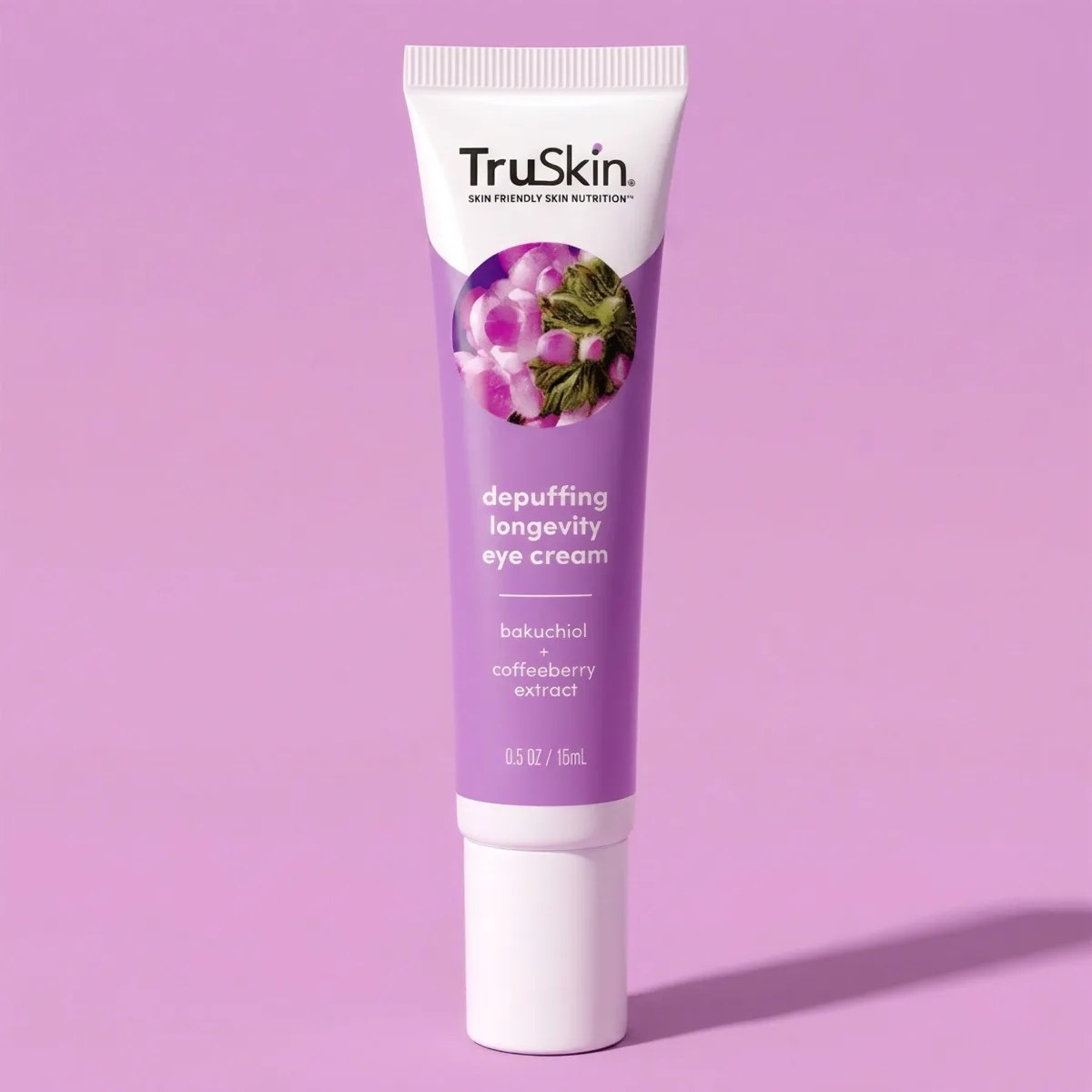
It combines TruSkin's two 2023 bets — bakuchiol as a retinol alternative and caffeine as a depuffer — in one plant-oil eye cream built on coconut alkanes, sweet almond oil and shea rather than the silicone-and-peptide base most drugstore eye creams use. The actives sit deep in the list, so it is a comforting eye moisturizer with a gentle nudge rather than a treatment.
A soft, fragrance-free plant-oil eye cream that dry and retinol-intolerant under-eyes will find genuinely comfortable, with caffeine and bakuchiol placed low enough on the list that 'depuffing' and 'longevity' are gentle nudges rather than results. Pleasant, tolerable and overpriced by the millilitre; TruSkin's own caffeine serum out-depuffs it for less.
Sixty-seven Target reviews at 4.3 stars are the confirmed feedback; Amazon's count for this tube is not readable and TruSkin has published no testing of it. The assessment therefore stands on the ingredient order — the low placement of caffeine and bakuchiol in particular — the bakuchiol trial literature, and the brand's decade of consistent manufacturing rather than a large verified body of user outcomes.
The case for it
What would change this: A declared concentration would move this to a firmer reading of the dose.
Same rule for everyone. “Supporting role” is the verdict on 8,197 of 45,024 concern verdicts across the catalog; rule R8a decided 1,489 of them. As of September 25, 2026, engine 5.1.1.
Brand or formulator? Disclose a concentration or correct a fact →
The studies behind the evidence row
The case for it
What would change this: A declared concentration would move this to a firmer reading of the dose.
Same rule for everyone. “Promising” is the verdict on 7,858 of 45,024 concern verdicts across the catalog; rule R9p decided 7,858 of them. As of September 25, 2026, engine 5.1.1.
Brand or formulator? Disclose a concentration or correct a fact →
The studies behind the evidence row
The case for it
What would change this: A researched evidence row for the lead active would replace this with a verdict.
Same rule for everyone. “Supporting role” is the verdict on 8,197 of 45,024 concern verdicts across the catalog; rule R8 decided 4,250 of them. As of September 25, 2026, engine 5.1.1.
Brand or formulator? Disclose a concentration or correct a fact →
Does the jobDoes what a eye cream is for: safe for eye skin, targets a real eye concern. Not measured from the label: hydrates without heaviness, stays where it's put.
Where our review and the verdict differ. The review below was written on the formulation and the published trials; the verdicts above apply the stricter standing test in our methodology — an active earns a recommendation only with guideline or regulatory standing for the concern. Where the two disagree, the verdict is DermApproved’s position.
A verdict is DermApproved’s assessment of how well a product’s ingredients fit a concern — never a claim about what the product treats. Evidence dots and collected reviews sit beside it and are never blended in. Rules 0.5.1 · evidence table ev-2026.09-r228 · how we decide
There is a useful experiment you can run with TruSkin's own catalogue. On one side, the Caffeine Facial Serum: a declared 5 percent caffeine, water-thin, sixteen dollars for a full ounce, visibly depuffing in twenty minutes. On the other, this Depuffing Longevity Eye Cream: caffeine sixteenth on the list behind the shea and the apple extract, in a rich almond-oil cream, twenty-five dollars for half an ounce. Both are made by the same company for the same tired eyes, and the difference in what you pay for each milligram of the active is the cost of the word 'eye' on a tube. That is not a criticism unique to TruSkin — it is how the whole category works — but it sets the terms for judging this product honestly: as an eye moisturizer with benefits, not as a depuffing treatment.
As an eye moisturizer it is rather good. The base is water, coconut alkanes, caprylic/capric triglyceride, glycerin and aloe juice, then sweet almond oil sixth, with olivate emulsifiers, cetyl alcohol and shea building a soft, slip-heavy cream that spreads over the orbital bone without dragging. There is no fragrance, no essential oil, no alcohol and no silicone; the preservative system is phenoxyethanol and sodium benzoate with a gluconolactone booster. Vegan, Leaping Bunny certified. On dry, crepey, reactive under-eyes it feels cushioning and settles to a satin finish in a few minutes, and it does not sting even when it migrates closer to the lash line than it should. Retinol-intolerant eyes, in particular, get a cream that asks nothing of them.
The actives are where expectations need managing. Green coffee bean extract sits fourteenth, bakuchiol fifteenth, caffeine sixteenth — all after the shea nut extract and the lingonberry and apple fruit extracts. That is maintenance-dose territory. The caffeine and coffee extract produce a mild tightening over the first half hour, more noticeable on a puffy morning than a normal one, and nothing like the fast vasoconstriction of a water-based caffeine gel; oil-rich vehicles slow caffeine's penetration, and there is simply less of it here. The bakuchiol, the ingredient with the single strongest trial behind it in this tube, is low enough that the twelve-week retinol-comparison result should not be expected from the eye cream alone; it is a gentle nudge toward smoother fine lines for skin that cannot use a retinoid at all, which for the periorbital area is a legitimate niche.
The 'longevity' half of the name rests on lingonberry fruit extract — the 'stem cells' of the marketing — and apple fruit extract, both plant-cell antioxidants with supplier data and no independent evidence on eye-area aging. Tocopheryl acetate adds a token antioxidant. None of it is harmful; none of it is why the cream works, to the extent it works, which is mostly by hydrating and occluding thin skin so that it looks smoother and less shadowed.
On that count, the results over a month on dry skin are what a good emollient eye cream delivers: less morning tightness, a softer look to fine lines by lunchtime, concealer that creases less, and a modest, not-quite-reliable reduction in puffiness. Dark circles from pigment or from a hollow under-eye do not change, and the tube does not claim they will. Used at night over the line's Bakuchiol Serum, the pairing makes more sense: the serum carries the dose, the cream carries the comfort, and the eye area gets both without a retinoid anywhere near it. Used alone, it is the comfort without much of the dose. Oily skin is the one group with a real complaint — coconut alkanes, almond oil, shea and cetyl palmitate together are a milia-prone combination, and a few reviewers report exactly that. A rice-grain amount on the orbital bone, not the lid, is the fix.
The feedback picture is small. Target shows sixty-seven reviews at a four-point-three average, praising the gentleness and hydration and grumbling about the mild depuffing and the price; Amazon's count is not readable, and TruSkin, as ever, publishes no clinical data. The brand's decade of consistent manufacturing is the reassurance on quality. Its habit of tagging every product for every skin type — this tube is marked for oily skin — is the thing to ignore.
Which leaves the price. Twenty-four ninety-nine for fifteen millilitres is about a dollar sixty-five per millilitre, ten times the per-millilitre cost of the brand's caffeine serum and comfortably in line with drugstore eye creams that carry peptides or retinol at documented doses. What the money buys here is a well-made, fragrance-free, plant-oil eye moisturizer with a light dusting of two credible actives and a purple tube. For dry, sensitive or retinol-averse under-eyes that want comfort first and a small, slow bonus second, that is a fair enough trade. For puffiness, buy the serum; for lines, buy the serum in the same line and use this over it; and for anyone with oily skin, buy the brand's water-based Eye Gel instead.
The hero actives that drive this product's performance.
| Ingredient | Function | Evidence |
|---|---|---|
| Caffeine + Green Coffee Bean Extract | Caffeine listed sixteenth alongside a green coffee bean extract two places earlier is the depuffing pair — a far lighter caffeine dose than the brand's 5 percent facial serum, delivered here in an oil-rich cream where it penetrates more slowly and works more as a morning tightener than a fast fix. | Limited for Dark Circles |
| Bakuchiol | Fifteenth on the list, after the shea and the botanicals, bakuchiol gives the eye cream its retinol-alternative claim at a maintenance-level dose; the thin under-eye skin is exactly where a gentle non-retinoid earns its place, and this one will not sting. | Limited for Aging |
| Prunus Amygdalus Dulcis (Sweet Almond) Oil | Sixth, ahead of the emulsifiers, sweet almond oil with the coconut alkanes and triglyceride above it is why this reads as a rich, slip-heavy eye cream rather than a gel — good for dry crepey under-eyes, a milia risk for oily ones. | Not yet assessed |
| Vaccinium Vitis-Idaea (Lingonberry) Fruit Extract | The 'lingonberry stem cells' of the copy, sitting thirteenth with the apple fruit extract just above; a plant-cell antioxidant with supplier data, part of the Longevity line's signature rather than a driver of results. | Not yet assessed |
| Aloe Barbadensis Leaf Juice | Fifth, directly after glycerin, aloe juice is the water-phase soother that keeps a plant-oil-heavy eye cream from feeling heavy on the lid and is part of why reactive under-eyes tolerate it. | Not yet assessed |
Ingredient standings describe the active at treatment-level doses and vehicles; this product's own condition grades weigh its actual formula.
Water (Aqua), Coconut Alkanes, Caprylic/Capric Triglyceride, Glycerin, Aloe Barbadensis Leaf Juice, Prunus Amygdalus Dulcis (Sweet Almond) Oil, Cetearyl Olivate, Sorbitan Olivate, Glyceryl Stearates, Cetyl Alcohol, Pyrus Malus (Apple) Fruit Extract, Butyrospermum Parkii (Shea) Nut Extract, Vaccinium Vitis-Idaea Fruit Extract, Green Coffee Bean Extract, Bakuchiol, Caffeine, Cetyl Palmitate, Sorbitan Palmitate, Carbomer, Xanthan Gum, Tocopheryl Acetate, Ethylhexylglycerin, Coco-Caprylate/Caprate, Phenoxyethanol, Sodium Benzoate, Gluconolactone, Calcium Gluconate, Citric Acid, Sodium Hydroxide
moisturizer
AM & PM
Pat a rice-grain amount along the orbital bone after serums and before moisturizer or sunscreen; the oil-rich base means it can double as the only night cream the eye area needs. It layers over a caffeine serum in the morning without conflict.
Softer, less dry under-eyes from the first use; a mild reduction in morning puffiness over the first hour; any softening of fine lines from bakuchiol is a twelve-week proposition at this dose, and dark circles from pigment will not change.
This eye cream's evidence base is split between well-understood emollient benefits and lightly dosed actives. The lipid system — coconut alkanes, caprylic/capric triglyceride, sweet almond oil, shea nut extract and cetyl palmitate — reduces transepidermal water loss from the thin periorbital stratum corneum, which is the mechanism behind the immediate smoothing of fine dehydration lines and the softer look of crepey skin; sweet almond oil is a well-tolerated oleic-and-linoleic emollient with a small literature in xerosis, and shea contributes anti-inflammatory triterpene esters. Caffeine, the depuffing agent, is a vasoconstrictor and phosphodiesterase inhibitor whose topical effects on periorbital edema have been shown in small, mostly uncontrolled studies at concentrations around 3 to 5 percent in aqueous vehicles; its sixteenth-place listing here, inside an oil-rich emulsion that slows its penetration, implies a concentration well below those studies and a correspondingly milder, slower effect. Green coffee bean extract supplies chlorogenic acids and a little additional caffeine with antioxidant activity documented in vitro. Bakuchiol, the anti-aging active, is a meroterpene that modulates retinoid-responsive gene expression without retinoid-receptor binding; its supporting trial — a 2019 randomized, double-blind, twelve-week comparison in the British Journal of Dermatology in which 0.5 percent bakuchiol matched 0.5 percent retinol on wrinkle and pigmentation outcomes with better tolerability — used a facial serum at a defined dose, and the fifteenth-place position here suggests the eye cream falls short of it. The lingonberry (Vaccinium vitis-idaea) and apple fruit extracts are plant-cell-culture antioxidants with supplier data and no independent trials on periorbital aging. Overall, the formula's reliable benefits are emollient, its depuffing is modest, and its anti-aging contribution is a low-dose bakuchiol suited to maintenance rather than correction.
Periorbital skin is where clinicians see the most retinoid intolerance and the most milia, and this cream lands on both sides of that ledger. On the positive side, it is the kind of fragrance-free, non-retinoid, non-acid emollient that dermatologists suggest to patients whose under-eyes flake and sting with prescription or over-the-counter retinoids, and bakuchiol at a low dose is a reasonable gentle alternative for them, with the caveat that its effect is slow and modest. On the cautionary side, the coconut alkane, almond oil, shea and cetyl palmitate base is a recognised milia profile for oily or congestion-prone patients, who are generally steered toward a lighter gel. The depuffing claim is addressed frankly: caffeine works best from an aqueous vehicle at several percent, and this cream offers neither, so patients with true fluid puffiness are pointed to a caffeine serum or to the causes — sleep, salt, allergies — rather than to a cream. Pigmented dark circles and tear-trough hollows are structural and not within any eye cream's reach. As a comfort moisturizer for dry, sensitive under-eyes, it is unobjectionable; as a treatment, it is not positioned to be one.
Squeeze a rice-grain amount onto the ring finger and pat — never rub — along the orbital bone under each eye and out to the outer corner, keeping it below the lash line and off the mobile lid to avoid migration and milia. Allow a few minutes for the rich texture to sink in before concealer or sunscreen. Use morning and evening; in the morning it layers over a caffeine serum without conflict, and at night it can be the last step for the eye area, over the line's Bakuchiol Serum if you use it. Oily or milia-prone skin should use it at night only and reassess after two weeks. Anyone with a tree-nut allergy should note the sweet almond oil before first use.
At $24.99 for 15 millilitres — roughly $1.65 per millilitre — this is priced with mainstream drugstore eye creams that carry peptides or encapsulated retinol at declared doses, and well above what its own ingredient order justifies: caffeine and bakuchiol both sit in the mid-teens of the list, and the money is buying a good emollient base and the Longevity branding. Against TruSkin's own range the contrast is stark — the 5 percent Caffeine Facial Serum is sixteen dollars for twice the volume and does the depuffing job better. The tube lasts around three months at rice-grain doses, which keeps the monthly cost near eight dollars, and the brand's manufacturing record supports consistency. For dry, retinol-averse under-eyes that want comfort with a light bakuchiol bonus, the value is acceptable; for puffiness or wrinkle correction it is a poor spend next to the serums in the same line.
Dry, sensitive or retinol-intolerant under-eyes that want a fragrance-free, cushioning eye cream with a gentle non-retinoid active and a mild morning tightening. It suits people already using TruSkin's Longevity Bakuchiol Serum who want the matching eye step, and anyone whose priority is comfort and tolerability over measurable change.
Oily, congestion-prone or milia-prone skin should choose a lighter gel — the almond-oil-and-shea base is a known trigger. Anyone wanting real depuffing will do better with a water-based caffeine serum, and anyone expecting wrinkle correction from a low-dose bakuchiol eye cream is paying for the tube.
Ready to try TruSkin Depuffing Longevity Eye Cream?
Buy at Amazon ♥A soft, slip-heavy white cream that spreads easily over the orbital bone and takes a few minutes to sink in, leaving a satiny, slightly emollient finish.
Unscented; a barely-there nutty note from the almond oil that vanishes on application.
A 0.5 fl oz white-and-purple squeeze tube with a narrow nozzle and screw cap, the Longevity line's livery, labelled 'bakuchiol + coffeeberry extract'.
The first application feels cushioning and slightly rich, with a mild tightening over the first half hour rather than the sharp cooling of a caffeine gel; there is no tingle and no adjustment period, and oily skin should watch for tiny milia after a couple of weeks.
About three months at a rice-grain amount per eye twice daily from the 15 ml tube.
All Year
The Depuffing Longevity Eye Cream launched in August 2023 as the eye step of TruSkin's Longevity line, the brand's move above its twenty-dollar Amazon tier, and it was later reframed with a 'coffeeberry extract' label to lean into the caffeine story once the brand's separate Caffeine Facial Serum took off in 2024.
TruSkin, a US brand founded in 2015, rose to prominence as one of Amazon's most-reviewed skincare sellers on the back of its vitamin C serum and now retails through Target and Walmart. The Longevity line is its premium tier; formulas are plant-leaning and Leaping Bunny certified, and the brand relies on review volume rather than any published clinical testing.
An eye cream with caffeine works as well as a caffeine serum for puffiness.
Caffeine penetrates faster from a water-based gel than from an oil-rich cream, and here it sits sixteenth against a declared 5 percent in TruSkin's own facial serum; the cream's depuffing is mild and gradual, not the twenty-minute effect of a serum.
'Longevity' ingredients like lingonberry stem cells slow eye-area aging.
Plant-cell-culture extracts have antioxidant data from suppliers and no independent human trials on periorbital aging; the ingredient with real, if modest, evidence in this tube is the bakuchiol.
Mildly. Its caffeine and green coffee bean extract sit deep in the list inside an oil-rich cream, so the tightening is gentle and builds over half an hour rather than the fast effect of a water-based caffeine serum. For a strong morning depuff, TruSkin's own 5 percent Caffeine Facial Serum does more.
No. It contains bakuchiol, the plant-derived retinol alternative, at a maintenance-level dose, and no retinoid, so it causes none of the stinging or flaking a retinol eye cream can on thin under-eye skin.
It can on oily or milia-prone skin. Coconut alkanes, sweet almond oil, shea and cetyl palmitate make it a rich formula, and a few reviewers report tiny white bumps; use a rice-grain amount and keep it on the orbital bone rather than the lid.
The Eye Gel is a lighter, water-based formula with peptides and a cooling feel, better for oily skin and daytime; the Longevity Eye Cream is an emollient plant-oil cream with bakuchiol and caffeine, better for dry, crepey under-eyes and night use.
Yes — no fragrance or essential oils are listed, and the faint nutty smell is the sweet almond oil, which anyone with a tree-nut allergy should note before using.
It has no retinoids, acids or essential oils, and both caffeine at cosmetic levels and bakuchiol are generally considered low concern, though bakuchiol has no pregnancy safety data; a quick check with a clinician is the sensible step.
Recurring themes our editors read across retailer reviews of this product — summaries in our words, not quotations, and not a substitute for your own patch test.
Hydrates dry under-eyes without stinging
Gentle enough for retinol-intolerant eyes
Sits well under concealer once absorbed
Depuffing effect is mild
Pricey for half an ounce
Rich texture can cause milia on oily skin