

Hyaluronic Acid Can Actually Dehydrate Your Skin (Here's When)
The internet's favorite hydrator has a counterintuitive dark side — in dry air, a humectant with nothing to seal it can pull water out of your skin instead of into it.

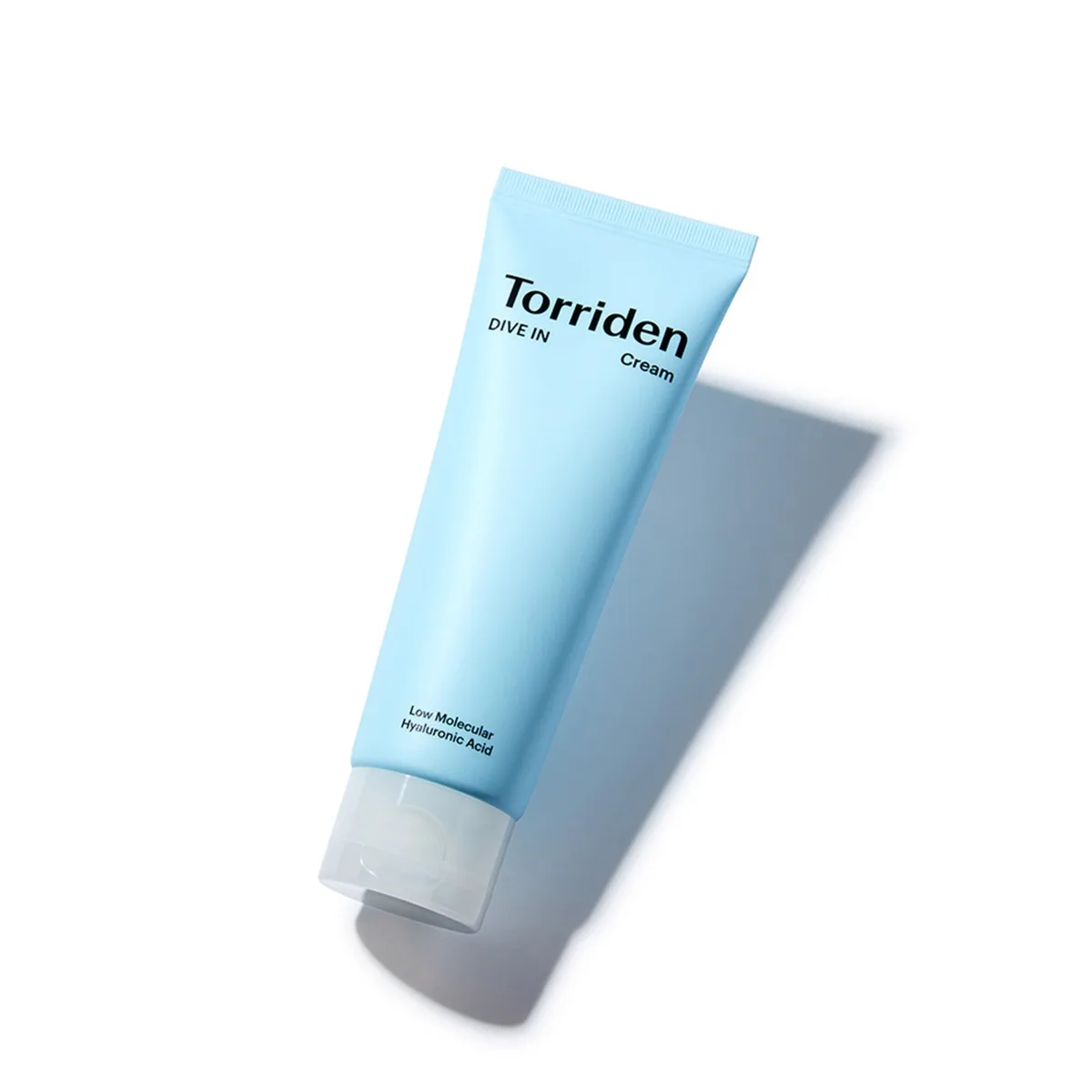
The DIVE-IN line was built around the 5D HA serum in a water base — this Intensive Cream finally adds a barrier-grade lipid chassis underneath it. Where the Soothing Cream emphasizes calming and the Watery Cream stays lightweight, the Intensive Cream commits to a rich-oil base with ceramide, cholesterol, and Sh-Oligopeptide-1, putting it closer in feel to a Western prestige barrier cream at a K-beauty price.
Torriden's DIVE-IN line finally has a real winter cream. The Intensive Cream pairs the 5D hyaluronic acid system with jojoba, macadamia, and argan seed oils plus Ceramide NP, Sh-Oligopeptide-1 and cholesterol — delivering a barrier-rebuild chassis at K-beauty pricing. Best for genuinely dry or compromised skin; oilier complexions should stay with the lighter Watery Cream.
Launched in early 2026 with under fifty independent reviews collected so far across Sephora and direct-from-brand channels. This assessment leans on formula analysis, the DIVE-IN line's existing track record, and the well-validated lipid-architecture template the Intensive Cream is built on, rather than on accumulated longitudinal user feedback. Expect refinements as the first round of winter-season wear data comes in.
The case for it
What would change this: A declared concentration would move this to a firmer reading of the dose.
Same rule for everyone. “Good choice” is the verdict on 9,564 of 45,024 concern verdicts across the catalog; rule R5 decided 9,072 of them. Unchanged since September 5, 2026, engine 5.1.1.
Brand or formulator? Disclose a concentration or correct a fact →
The studies behind the evidence row
The case for it
What would change this: A declared concentration would move this to a firmer reading of the dose.
Same rule for everyone. “Good choice” is the verdict on 9,564 of 45,024 concern verdicts across the catalog; rule R5 decided 9,072 of them. Unchanged since September 5, 2026, engine 5.1.1.
Brand or formulator? Disclose a concentration or correct a fact →
The studies behind the evidence row
The case for it
What would change this: A declared concentration would move this to a firmer reading of the dose.
Same rule for everyone. “Good choice” is the verdict on 9,564 of 45,024 concern verdicts across the catalog; rule R5 decided 9,072 of them. Unchanged since September 5, 2026, engine 5.1.1.
Brand or formulator? Disclose a concentration or correct a fact →
The studies behind the evidence row
The case for it
What would change this: A researched evidence row for the lead active would replace this with a verdict.
Same rule for everyone. “Supporting role” is the verdict on 8,197 of 45,024 concern verdicts across the catalog; rule R8 decided 4,250 of them. Unchanged since September 5, 2026, engine 5.1.1.
Brand or formulator? Disclose a concentration or correct a fact →
Does the jobDoes what a moisturizer is for: supplies barrier lipids, draws in water.
A verdict is DermApproved’s assessment of how well a product’s ingredients fit a concern — never a claim about what the product treats. Evidence dots and collected reviews sit beside it and are never blended in. Rules 0.5.1 · evidence table ev-2026.09-r228 · how we decide
Torriden built its international following on a paradox. The DIVE-IN line was famous for one thing — a serum that put five molecular weights of hyaluronic acid into a barely-there water base — and that weightlessness became the brand's signature. Korean consumers loved it. Combination skin loved it. But anyone with genuinely dry, chronically compromised skin would finish a layer and immediately feel that something heavier needed to come next. The existing creams, Soothing and Watery, both stayed in that lightweight register. There was no DIVE-IN cream for someone getting through a cold winter with a barrier overworked by retinol, exfoliants, or simply life.
The Intensive Cream, launched in early 2026 alongside Torriden's expanded Sephora distribution, is the brand finally answering that. It's also, formula-wise, the most ambitious thing shipped under the DIVE-IN name.
The 5D hyaluronic acid system is still present — sodium hyaluronate, hydrolyzed hyaluronic acid, sodium acetylated hyaluronate, a crosspolymer, and hydrolyzed sodium hyaluronate, each hitting a different depth at a different molecular weight. But it isn't the load-bearing claim here. The real work happens in the architecture built underneath it: jojoba seed oil, the plant lipid that most closely mimics human sebum; macadamia seed oil, rich in palmitoleic acid, the same fatty acid abundant in young skin's sebum; and argan kernel oil for vitamin E and sphingolipids. Ceramide NP sits alongside cholesterol and hydrogenated lecithin, together approximating the ceramide-cholesterol-fatty-acid trio that a healthy stratum corneum actually runs on.
That trio is the whole point, and it's worth understanding why. Barrier research established decades ago that the permeability barrier needs all three lipid classes in roughly equimolar ratio to function — supply ceramides alone, or cholesterol alone, and repair proceeds *worse* than with the complete set. Most "ceramide creams" deliver one leg of a three-legged stool. This one delivers all three, and that structural completeness matters far more than any single marquee ingredient on the label.
Which also resolves the standing complaint that hyaluronic acid creams don't really moisturize dry skin. That critique is fair, and it applies precisely to HA sitting in a light water base with nothing occlusive above it — where the humectant can pull water from the deeper skin and let it evaporate. Pair the same HA with three plant oils and a lipid trio, and you've built the architecture that lets it function as a genuine hydrator rather than a surface trick. The 5D system isn't better here because it changed; it's better because it finally has a roof over it.
Sh-Oligopeptide-1 is what pushes this from a competent barrier cream into something more interesting, and it deserves an honest treatment rather than a breathless one. It's biotechnologically produced epidermal growth factor — the signaling molecule that drives keratinocyte proliferation during barrier renewal. The cellular science is not in dispute, and topical EGF has documented effects on re-epithelialization in wound-healing dermatology. The leap from that clinical context to the concentrations a cosmetic cream can carry is a real one, though, and nobody discloses the concentration. Treat it as a credible, modestly evidenced bonus that compounds slowly on chronically compromised skin — not as the reason to buy the jar. The lipids are doing the heavy lifting.
On the face it reads as a dense, satin cream that spreads further than it looks like it should. There's a brief tackiness that settles into a velvety finish within a minute — not sticky, not heavy. The seed oils integrate cleanly, which is genuine formulation credit. Skin plumps immediately from the HA, and across the following weeks the barrier story unfolds: less reactivity to actives, less midday tightness, less roughness across cheek and forehead. Beta-glucan, allantoin and betaine quietly dial down the low-grade inflammation that chronically dry skin usually carries alongside the dryness.
The limitations land exactly where you'd expect. The oil-rich base is wrong for oily skin in summer humidity — the Watery Cream in this same line is the honest answer there, and there is no point paying for a chassis your barrier doesn't need. It isn't strictly fungal-acne safe either; macadamia, argan and ethylhexyl palmitate sit in the borderline zone, and anyone who has fought malassezia should stay with the lighter option rather than gamble.
The jar is the real formulation critique. Putting EGF and three unsaturated plant oils into an open screw-top pot, where air and fingers arrive daily, is a decision that works against the ingredients you paid for. Airless or pump dispensing exists for exactly this reason, and its absence here is the one place the product argues with itself.
Value is where it becomes genuinely compelling. Twenty-eight dollars for 100ml puts it against Western prestige barrier creams charging two or three times more for the same lipid architecture, and the per-millilitre maths favors Torriden consistently. Five years of formulation discipline across the DIVE-IN line lends credibility that a hype-driven newcomer simply cannot buy.
Apply it to slightly damp skin, an almond-sized amount across face and neck, after your hydrating toner and before sunscreen — and skip the additional facial oil unless conditions are genuinely brutal, because the seed-oil load is already substantial. For chronically dry skin, for retinoid users who want a sealing step that won't fight the active beneath it, and for anyone the lighter DIVE-IN creams quietly let down last winter, this is the one the line was missing.
The hero actives that drive this product's performance.
| Ingredient | Function | Evidence |
|---|---|---|
| 5D Hyaluronic Acid Complex | The five-molecular-weight HA system that defines the DIVE-IN line — Sodium Hyaluronate (mid-weight surface hydration), Hydrolyzed Hyaluronic Acid (low-weight penetrating), Sodium Acetylated Hyaluronate (acetylated for skin-affinity), Sodium Hyaluronate Crosspolymer (water-binding network), and Hydrolyzed Sodium Hyaluronate (lowest weight, deepest delivery). In this Intensive Cream the HA complex now works inside an emollient-rich base rather than the original serum's water base — meaning the moisture pulled in by the HA stays put under the seal of the seed oils. | Established mechanism for Dehydration · established mechanism |
| Jojoba, Macadamia & Argan Seed Oils | Three nutrient-dense plant oils that distinguish the Intensive Cream from its Soothing and Watery siblings. Jojoba most closely mimics human sebum and integrates smoothly; macadamia provides palmitoleic acid (the same fatty acid abundant in young skin sebum); argan adds vitamin E and a sphingolipid contribution. Together they form the occlusive layer that lets the 5D HA actually retain hydration in dry winter conditions. | Established mechanism for Dryness · established mechanism |
| Sh-Oligopeptide-1 (EGF) | A biotechnologically-produced version of human epidermal growth factor — the signaling molecule that drives keratinocyte proliferation and migration during barrier recovery. Its inclusion in a barrier cream is targeted at users whose stratum corneum has been chronically compromised by over-cleansing, harsh actives, or seasonal damage; the EGF nudges the renewal cycle while the lipids and HA support the rebuild. | Not yet assessed |
| Ceramide NP | The most-studied ceramide in cosmetic formulation, included here alongside hydrogenated lecithin and cholesterol to reproduce the lipid trio the stratum corneum runs on. Functionally, the cream gives you a ceramide-cholesterol-fatty-acid lipid system layered on top of the 5D HA, which is closer to a barrier-repair cream than a pure hydrator. | Established mechanism for Dryness · established mechanism |
| Beta-Glucan | A polysaccharide from oat or yeast cell walls that holds water and modulates skin's local immune response. In a barrier-rebuild context it's working alongside allantoin and betaine to dial down low-grade inflammation while the lipids do their structural work — useful for the population this cream is aimed at, whose dry skin is often also low-grade reactive. | Not yet assessed |
Ingredient standings describe the active at treatment-level doses and vehicles; this product's own condition grades weigh its actual formula.
Water, Butylene Glycol, Glycerin, Dipropylene Glycol, Caprylic/Capric Triglyceride, 1,2-Hexanediol, C14-22 Alcohols, Glyceryl Stearate, Ethylhexyl Palmitate, Cetearyl Alcohol, Sodium Hyaluronate, Hydrolyzed Hyaluronic Acid, Sodium Acetylated Hyaluronate, Sodium Hyaluronate Crosspolymer, Hydrolyzed Sodium Hyaluronate, Simmondsia Chinensis Seed Oil, Macadamia Ternifolia Seed Oil, Argania Spinosa Kernel Oil, Trehalose, Sh-Oligopeptide-1, Allantoin, Propanediol, Betaine, Beta-Glucan, Ceramide NP, Hydrogenated Lecithin, Cholesterol, Xanthan Gum, Carbomer, Tromethamine, Ethylhexylglycerin, Tocopherol, Hyaluronic Acid, Sodium Hyaluronate Powder
moisturizer
AM & PM
Use the cream as the sealing step after water-based serums and HA toners. The Sh-Oligopeptide-1 prefers a clean route into the skin, so it deposits best when applied to slightly damp skin after a hydrating toner rather than over a heavy serum stack. Skip the additional facial oil unless you're in extreme dry conditions — the seed-oil load in the cream is substantial on its own.
Immediate plumping and a softer surface feel after the first application thanks to the layered HA system. Barrier-repair benefits from the ceramide-cholesterol-lipid stack appear over 2–3 weeks; the EGF-driven renewal effects show up more subtly across 4–6 weeks of nightly use, with visibly less reactive and more even-toned skin.
The Intensive Cream's load-bearing claim — that it functions as a barrier-rebuild cream, not just a hydrator — rests on three converging evidence bases. The first is the lipid trio research associated with Peter Elias's lab at UCSF in the 1990s and 2000s, which established that the stratum corneum's permeability barrier requires ceramides, cholesterol, and free fatty acids in roughly equimolar ratios to function properly. The cream includes Ceramide NP, cholesterol, and (via the three seed oils and hydrogenated lecithin) the fatty-acid contribution that lets that chemistry work as a system rather than as isolated ingredients.
The 5D hyaluronic acid system is supported by a broad evidence base across cosmetic dermatology. The multi-molecular-weight approach addresses the underlying problem that high-molecular-weight HA stays on the skin surface while only low-molecular-weight fragments penetrate — a single-weight HA formulation maximizes one of these but not both. Mixed-weight systems published across cosmetic-chemistry literature show better hydration retention over an 8-hour window compared to single-weight controls.
The Sh-Oligopeptide-1 inclusion is the most contested element. Biotechnological production of human EGF as a topical ingredient has been studied since the 1990s, with the strongest evidence emerging from wound-healing dermatology rather than cosmetic use. Topical EGF has been documented to accelerate re-epithelialization in chronic ulcers (work published in journals including the British Journal of Dermatology and Journal of Investigative Dermatology), but the leap from that clinical context to the lower concentrations typical in K-beauty cosmetics is significant. Treat the EGF inclusion as a credible but modestly-evidenced bonus rather than the cream's main claim — the lipid chemistry is doing more of the real work.
From a dermatological standpoint, the Intensive Cream slots into the category of formulations dermatologists frequently flag as appropriate for patients with chronically dry or barrier-compromised skin — particularly those on prescription retinoids, those recovering from acne treatments, or those whose seasonal eczema requires consistent lipid support without prescription-tier intervention. Clinical guidance emphasizes that barrier-repair efficacy is more about lipid architecture than individual marquee ingredients, which is exactly what this formula delivers. The EGF inclusion warrants some patient counseling: it isn't a prescription growth-factor treatment and shouldn't be marketed as one, but as a supplementary signal it's reasonable to include in a barrier-rebuild routine. Dermatologists working with K-beauty product recommendations note that Torriden's DIVE-IN line has been a consistent suggestion for younger patients building first routines, and the Intensive Cream extends that recommendation into the dry-skin and post-procedure populations. The standard cautions still apply: patch-test for fungal-acne-prone users, and avoid layering over open or actively inflamed skin.
Apply as the final hydrating step in your routine after cleansing, toning, and serums. Press a roughly almond-sized amount into slightly damp skin across face and neck, allowing the oils to integrate for thirty seconds before any sunscreen or makeup application. For chronically dry skin, use twice daily; for combination skin, evening-only is usually sufficient. The cream layers cleanly under SPF in the morning provided you give it absorption time. As an overnight rescue cream after travel, harsh weather exposure, or aggressive treatments, apply a slightly heavier layer than usual to face, neck, and chest.
At $28 for 100ml from Sephora U.S. (or $23 for 80ml direct from torriden.us), the Intensive Cream is priced as accessible-prestige rather than mass-market. The per-milliliter value beats most Western barrier creams in the comparable ingredient class — La Roche-Posay Lipikar, Avène Cicalfate Restorative Cream, and similar formulations charge meaningfully more for similar lipid architectures. Compared to the cheaper DIVE-IN Watery Cream ($22/80ml), the Intensive justifies its premium through the three plant oils, the Sh-Oligopeptide-1 addition, and the more complete lipid trio. Torriden's subscription program through their direct site drops the price another 10%, which materially improves the value math for users committed to a barrier-rebuild routine. The brand's established track record with the DIVE-IN line — five years of consistent formulation discipline — adds confidence that this isn't a one-time launch quality.
Dry, normal, or sensitive skin types looking for a barrier-rebuild cream at K-beauty pricing rather than Western prestige prices. Particularly recommended for retinoid users, post-procedure recovery, and anyone whose existing DIVE-IN moisturizer felt insufficient in cold weather.
Oily skin in any climate will find this too heavy — the lighter DIVE-IN Watery Cream is the right fit. Confirmed fungal-acne-prone users should avoid the seed-oil load. Anyone whose skin is doing well on a lighter K-beauty moisturizer doesn't need to upgrade to the richer chassis.
Ready to try Torriden DIVE IN 5D Hyaluronic Acid Intensive Cream?
Buy at Amazon ♥Dense but spreadable cream with a satin finish, melts into a yielding emollient layer rather than sitting as a thick film
Faintly herbaceous from the botanical extracts; reads close to fragrance-free without being completely scentless
Standard K-beauty white screw-top jar with the matte Torriden labeling — not airless, which is a fair criticism given the EGF and oil content
On first use the cream feels richer than expected for the DIVE-IN line, with a brief tackiness that settles into a comfortable satin finish within a minute. No tingling or initial reactivity. Users transitioning from the Soothing Cream typically notice the additional weight immediately.
Roughly 3 months applied morning and night face-and-neck use; the larger Sephora 100ml size stretches to about four months for once-daily users
fall winter
Torriden's DIVE-IN line had been growing into a complete routine across cleansers, toners, serums, and lightweight creams, but lacked an answer for users with genuinely dry barriers — particularly Western consumers in cold climates who found the existing creams too light. The Intensive Cream rolled out in early 2026, coinciding with Torriden's expanded Sephora distribution, as the line's response to that gap.
Torriden launched in 2017 and built international reach on the DIVE-IN line's 5-form hyaluronic acid system, picked up by Sephora U.S. in 2024. The Intensive Cream is the dry/barrier-focused third pillar of the line, joining the Soothing Cream (sensitive) and Watery Cream (combination) released earlier — the first DIVE-IN cream to incorporate Sh-Oligopeptide-1 and a three-oil rich-base chassis.
Hyaluronic acid creams don't actually moisturize dry skin — they just sit on the surface.
That critique applies to HA in light water-based serums, where the HA can pull moisture out of skin if there's nothing occlusive to seal it in. This Intensive Cream pairs the 5D HA with three plant oils and a ceramide-cholesterol system, which is exactly the architecture that lets HA function as a true hydrator rather than just a surface humectant.
Sh-Oligopeptide-1 (EGF) in skincare is unproven hype.
EGF's effects on keratinocyte proliferation are well-established at the cellular level, with documented use in wound-healing dermatology. The skincare question is whether the topical concentration is sufficient to drive meaningful surface change — at the typical use levels in K-beauty creams this is modest but real, particularly for chronically compromised barriers.
The Intensive Cream is the rich-and-occlusive variant of the DIVE-IN line — jojoba, macadamia, and argan oils plus Sh-Oligopeptide-1 and Ceramide NP form a barrier-repair chassis the other two creams don't have. Soothing emphasizes allantoin and centella for sensitive skin; Watery uses niacinamide and stays lightweight.
Not as a primary daily moisturizer — the three plant oils and Ethylhexyl Palmitate base are designed for a dry-skin audience and will feel heavy on oilier complexions. The Watery Cream or DIVE-IN gel-based products are a better fit. Oily skin in cold dry winter conditions could use the Intensive Cream as an overnight rescue.
Yes — and the cream is genuinely thoughtful as a retinol partner. The 5D HA system buffers transepidermal water loss that retinol can cause, the ceramides and seed oils support barrier rebuild, and the Sh-Oligopeptide-1 contributes to the keratinocyte renewal that retinol is driving. Layer the retinol first onto clean dry skin, then seal with the cream.
Not strictly. The macadamia and argan oils plus the ethylhexyl palmitate are borderline for malassezia-prone users. If you've struggled with fungal acne, the Watery Cream in this same line is the safer DIVE-IN choice.
At $28 for 100ml on Sephora it's a notable value compared to Western prestige barrier creams in the $50–90 range that use comparable ceramide-cholesterol-plant-oil chassis. Per-milliliter pricing also beats much of the Korean prestige market — the Intensive Cream sits in the accessible-prestige zone.
Sh-Oligopeptide-1 is a biotechnology-produced version of epidermal growth factor used at very low topical concentrations to support natural skin renewal. It's been in K-beauty formulations for over a decade and is generally regarded as safe; the open scientific question is the magnitude of topical effect, not the safety profile.
Recurring themes our editors read across retailer reviews of this product — summaries in our words, not quotations, and not a substitute for your own patch test.
Among the limited reviews available, the rich-but-non-greasy finish gets the most mentions
Several early adopters report it works under makeup despite the oil-rich base
Initial feedback from users with chronically dry skin highlights the difference from the lighter Watery Cream variant
A few users find it too rich for daytime in summer humidity
Some early reviewers note the 80ml direct-from-brand size feels modest compared to the Soothing Cream's 100ml
Initial impressions from oily-skinned users describe the finish as too occlusive