



PDRN: Is the Hottest Skincare Ingredient of 2026 Actually Real?
Salmon-DNA serums flooded every shelf this year promising 'regeneration.' The injectable evidence is genuinely intriguing — the topical evidence is where the story gets slippery.
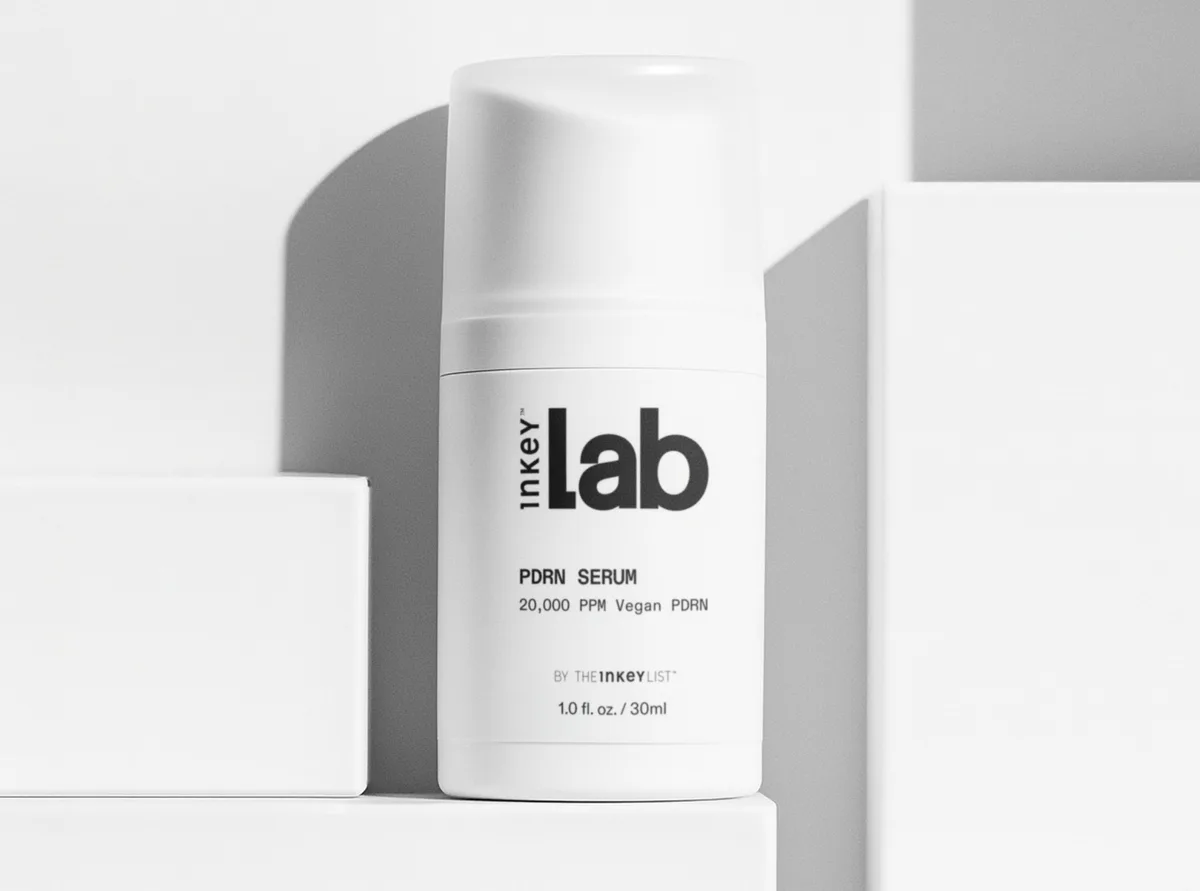
PDRN is traditionally salmon-derived — it is the 'salmon DNA' ingredient. This serum uses a vegan PDRN instead, produced without animal sourcing, at a notably high stated 20,000ppm. It brings the buzzed-about polynucleotide trend to vegan routines, in a simple, gentle, emollient-rich base, at an indie-brand price.
A gentle, fragrance-free PDRN serum with two genuine points of difference — a notably high stated 20,000ppm concentration, and a vegan PDRN rather than the usual salmon-derived kind. The emollient base is comforting and the price refreshingly low; topical PDRN's evidence is still emerging, so buy it informed.
Note: This serum launched in November 2025 and the take here is grounded primarily in formulation, not long-term reports. Our scoring weights ingredient analysis, formulation quality, and early user feedback. The rating should firm up as user feedback keeps coming in.
The case for it
Same rule for everyone. “Good choice” is the verdict on 9,564 of 45,024 concern verdicts across the catalog; rule R5 decided 9,072 of them. Unchanged since September 5, 2026, engine 5.1.1.
Brand or formulator? Disclose a concentration or correct a fact →
The studies behind the evidence row
The case for it
Same rule for everyone. “Good choice” is the verdict on 9,564 of 45,024 concern verdicts across the catalog; rule R5 decided 9,072 of them. Unchanged since September 5, 2026, engine 5.1.1.
Brand or formulator? Disclose a concentration or correct a fact →
The studies behind the evidence row
The case for it
What would change this: A declared concentration would move this to a firmer reading of the dose.
Same rule for everyone. “Unproven” is the verdict on 1,111 of 45,024 concern verdicts across the catalog; rule R9 decided 1,111 of them. Unchanged since September 5, 2026, engine 5.1.1.
Brand or formulator? Disclose a concentration or correct a fact →
The studies behind the evidence row
The case for it
What would change this: Guideline or regulatory standing for the active on this concern would move this from a promising bet to a recommendation.
Same rule for everyone. “Promising” is the verdict on 7,858 of 45,024 concern verdicts across the catalog; rule R9p decided 7,858 of them. Unchanged since September 5, 2026, engine 5.1.1.
Brand or formulator? Disclose a concentration or correct a fact →
The studies behind the evidence row
The case for it
What would change this: A researched evidence row for the lead active would replace this with a verdict.
Same rule for everyone. “Supporting role” is the verdict on 8,197 of 45,024 concern verdicts across the catalog; rule R8 decided 4,250 of them. Unchanged since September 5, 2026, engine 5.1.1.
Brand or formulator? Disclose a concentration or correct a fact →
Where our review and the verdict differ. The review below was written on the formulation and the published trials; the verdicts above apply the stricter standing test in our methodology — an active earns a recommendation only with guideline or regulatory standing for the concern. Where the two disagree, the verdict is DermApproved’s position.
A verdict is DermApproved’s assessment of how well a product’s ingredients fit a concern — never a claim about what the product treats. Evidence dots and collected reviews sit beside it and are never blended in. Rules 0.5.1 · evidence table ev-2026.09-r228 · how we decide
Here is a fact about PDRN that the skincare trend has been quietly polite about: conventional PDRN comes from salmon. Specifically, PDRN, polydeoxyribonucleotide, has traditionally been extracted from salmon DNA, often from salmon sperm. The viral salmon DNA facial name was not a marketing flourish; it was literal. Most PDRN skincare on the shelf today is, at its core, a purified salmon-derived ingredient. For a lot of people that is no problem at all. For others, vegans, vegetarians, anyone simply squeamish about the idea, it is a genuine barrier to trying one of the most-hyped ingredients of the mid-2020s. The INKEY List PDRN Cell Renewal Serum is worth attention because it removes that barrier: it uses a vegan PDRN.
That deserves a clear explanation, because it is the serum's real distinguishing feature. PDRN refers to a class of polynucleotide active, fragments of DNA-type material studied for supporting skin renewal and recovery. Traditionally those fragments are isolated from salmon. A vegan PDRN, as used here and listed on the label as hydrolyzed DNA, is a polynucleotide of the same general type produced without animal sourcing. The functional intent is the same; the origin is not. If you have wanted to try the PDRN trend but balked at putting salmon DNA on your face, or if your routine is vegan by principle, this serum is, genuinely, the product that solves that, and there are not many vegan PDRN options.
The second point in its favor is concentration, and it matters more than it might sound. When the PDRN trend exploded, a great many brands rushed PDRN onto labels, sometimes at vanishingly small, essentially decorative amounts, riding the buzzword. This serum states 20,000ppm of PDRN, which is 2%. That is a notably high, substantive level. It does not prove the serum works miracles, but it does mean that whatever topical PDRN is capable of, this serum is giving it a real, honest chance rather than a token gesture. Paired with a high concentration is INKEY's characteristic price: eighteen dollars. PDRN serums routinely run forty, sixty, ninety dollars and up. An eighteen-dollar serum with a genuine 2% of the trending ingredient is, by the standards of this category, almost startlingly accessible.
Now the honest framing, kept brief because it is the one constant across every PDRN review worth reading. PDRN has real clinical evidence, but predominantly in injectable form, where it is used in aesthetic medicine and reaches the deeper layers of skin directly. Topical PDRN, sitting in a leave-on serum, is a different and less settled proposition; whether these polynucleotide molecules penetrate and act meaningfully from the skin surface is still an emerging research question. So treat the cell renewal promise as plausible-but-unproven for a topical, and set your expectations accordingly: a gradual, supportive benefit, not a dramatic transformation.
What is not in doubt is that this is a pleasant, gentle, well-made serum regardless of the PDRN question. The formula is simple, deliberately so. It is PDRN in a comforting emollient base: glycerin for hydration, shea butter and caprylate esters making up a stated 18% emollient blend, vitamin E, and little else. No fragrance, no alcohol, and the texture is soft and slightly creamy — more light lotion than watery serum, leaving skin cushioned and comfortable. For sensitive, dry, or stressed skin it is a genuinely soothing daily step. The simplicity is honest, there is no filler, no padding, just PDRN delivered comfortably.
There is one more reason the simplicity of this serum works in its favor. Because the formula is short, gentle, and fragrance-free, it slots into almost any routine without conflict, it will not clash with a retinoid used at night, it will not sting layered over an exfoliating toner, and it is unlikely to provoke reactive skin. PDRN itself is studied partly for soothing and recovery, so even setting aside the open question of topical efficacy, the serum functions as a comforting, hydrating step that stressed or recently-treated skin can lean on. That makes it a low-stakes addition: at worst, you are using a pleasant, well-priced emollient serum, and at best, the PDRN delivers the gradual renewal benefit the trend promises. Few new-ingredient experiments come with downside risk this small.
The limitations are the expected ones: the formula is minimal, so if you want a multi-active serum this is not it; the renewal benefits are gradual; it is not fungal-acne safe owing to the emollients; and it is new enough, a late-2025 launch, that long-term real-world data is thin. The bottom line: this is the PDRN serum to reach for if you specifically want a vegan one, or if you have been curious about PDRN but unwilling to pay prestige prices to try it. It is gentle, comforting, honestly formulated, well-dosed, and cheap. Just go in understanding that you are trying a promising, still-being-proven topical ingredient, and that, at eighteen dollars, this is about the lowest-risk, lowest-cost, and most ethically straightforward way to do exactly that.
The hero actives that drive this product's performance.
| Ingredient | Function | Evidence |
|---|---|---|
| Vegan PDRN (Hydrolyzed DNA, 20,000 ppm) (2%) | The serum's reason for being — PDRN, a polynucleotide active, at a stated 20,000ppm (2%). Unusually, it is a vegan PDRN, produced without the salmon sourcing traditional PDRN uses. It is studied for supporting skin renewal and recovery; in a leave-on serum at this notably high level, it is the formula's clear focus. | Not yet assessed |
| Glycerin | Listed fourth, a solid dose of the benchmark humectant — it draws and binds water into the skin, providing the immediate hydration and plumped comfort that surrounds the PDRN. | Established mechanism for Dehydration · established mechanism |
| Shea Butter | A rich emollient within the serum's stated 18% emollient blend — with the caprylate esters and sunflower oil it softens, cushions and conditions the skin, giving this PDRN serum a comforting, nourishing texture rather than a watery one. | Established mechanism for Dryness · established mechanism |
| Vitamin E (Tocopherol) | An antioxidant that protects the skin against free-radical stress and helps stabilize the formula — a small, sensible supporting addition to an otherwise PDRN-and-emollient-focused serum. | Limited for Aging |
Ingredient standings describe the active at treatment-level doses and vehicles; this product's own condition grades weigh its actual formula.
Water, Propylheptyl Caprylate, C8-12 Acid Triglyceride, Glycerin, Propanediol, Tribehenin PEG-20 Esters, Butyrospermum Parkii (Shea) Butter, Butylene Glycol, Phenoxyethanol, Ammonium Acryloyldimethyltaurate/VP Copolymer, Cetearyl Alcohol, Tocopherol, Helianthus Annuus (Sunflower) Seed Oil, Ethylhexylglycerin, Citric Acid, Xanthan Gum, Sodium Stearoyl Glutamate, Trisodium Ethylenediamine Disuccinate, Sodium Lactate, Hydrolyzed DNA
serum
AM & PM
Apply after cleansing and toner, before moisturizer, morning and evening. It layers cleanly under moisturizer and sunscreen. Its emollient texture also makes it comfortable as a soothing step for stressed or post-procedure skin.
Immediate: skin feels hydrated, soft and comfortable. Any renewal or smoothing benefit from the PDRN is gradual and builds over several weeks of consistent use.
This serum centers on PDRN (polydeoxyribonucleotide), a polynucleotide active, here as a vegan-sourced hydrolyzed DNA at a stated 20,000ppm (2%). PDRN has a genuine clinical evidence base, but predominantly in injectable form, where it is used in aesthetic medicine and wound healing, with studies supporting effects on tissue repair and regeneration. The key scientific distinction is route of delivery: injectable PDRN reaches the dermis directly, whereas topical PDRN in a leave-on serum must contend with whether these relatively large molecules penetrate and act meaningfully from the skin surface, an emerging, not established, area of research. The conventional origin of PDRN is salmon-derived DNA; a vegan PDRN is a polynucleotide produced without animal sourcing, functionally analogous in intent.
The stated concentration is relevant: 2% is a substantive level, distinguishing this from PDRN-labeled products containing only trace, effectively decorative amounts. A meaningful dose gives the ingredient a genuine opportunity to perform, though concentration alone does not establish topical efficacy.
The remainder of the formula is well evidenced and straightforward: glycerin is a benchmark humectant, shea butter and the caprylate esters are established emollients (a stated 18% blend), and tocopherol is a recognized antioxidant.
What the evidence supports is that the serum reliably delivers hydration and a comforting, soothing emollient effect, while its headline cell-renewal benefit rests on topical PDRN, which is promising but not yet well established. It is reasonably positioned as a gentle supportive serum rather than a proven renewal treatment.
Dermatology draws a consistent line on PDRN: injectable polynucleotide treatments have genuine clinical evidence for skin regeneration and repair, while topical PDRN in leave-on cosmetics is regarded as promising but unproven, given open questions about whether the molecules penetrate effectively from the skin surface. Clinicians would advise viewing a topical PDRN serum as a supportive, low-risk product rather than equating it with a PDRN procedure. The vegan-sourcing point is one dermatologists would consider relevant for patients who avoid animal-derived ingredients, since conventional PDRN is salmon-derived. The serum's broader formula — glycerin, shea butter, emollients, vitamin E, fragrance-free — is well regarded as gentle and suitable for sensitive, dry and compromised skin, and PDRN itself is studied partly for soothing and recovery. Dermatologists generally frame a product like this as a reasonable, comforting hydrating serum that may offer a gradual supportive benefit, with the standard reminder that a serum complements but does not replace a moisturizer and daily sunscreen, and that evidence-backed renewal still rests on ingredients like retinoids.
Press a few drops over the face after cleansing and any toner, before moisturizer, both morning and evening. It layers cleanly under moisturizer and, in the daytime, under sunscreen, and its soft emollient texture makes it a comfortable soothing step for stressed or recently-treated skin. Seal it in with a moisturizer afterward, and always close a daytime routine with sunscreen.
At around $18 for 30 mL, this serum is excellent value within the PDRN category specifically. PDRN serums commonly run $40 to $90 and well beyond, and many at those prices contain only modest PDRN levels; this one delivers a stated 20,000ppm (2%) at a fraction of the cost, in keeping with The INKEY List's affordable, transparent model. With twice-daily use the bottle lasts roughly two to three months. The value is genuine on two fronts: it is the cheapest credible way to try a well-dosed PDRN serum, and it is a rare vegan option in a salmon-dominated category. The honest caveat on value is the same as on the science — you are paying a low price to try a promising but not-yet-proven topical ingredient. As a low-cost, low-risk entry into PDRN, and as a gentle hydrating serum in its own right, it represents strong value.
A natural fit for anyone curious about the PDRN trend who wants a vegan option, or who would rather not pay prestige prices to try the ingredient. It also works for sensitive, dry, or stressed skin simply as a gentle, comforting, fragrance-free hydrating serum, regardless of any interest in PDRN.
Anyone wanting a proven, evidence-backed renewal or anti-aging treatment should rely on a retinoid instead, since topical PDRN is still emerging. Those who want a multi-active serum will find this too minimal, and a fungal-acne-safe routine calls for a different product.
Ready to try The INKEY List PDRN Cell Renewal Serum?
Buy at Amazon ♥A lightweight, slightly emollient serum that spreads easily and absorbs to a soft, cushioned, non-greasy finish — closer to a light lotion than a watery serum.
Unscented in practice, with a barely-there neutral note.
30 mL bottle in The INKEY List's clean, minimalist design. The dropper or pump allows controlled dosing.
First use feels soft and comforting — the serum has a light, slightly creamy slip, absorbs cleanly, and leaves skin hydrated and cushioned with no sting or scent. The immediate effect is comfort and hydration; any renewal benefit builds quietly over weeks.
Budget two to three months per package morning and evening
All Year
PDRN surged in popularity as a skincare trend in the mid-2020s, almost always sourced from salmon. The INKEY List developed this serum within its INKEY Lab range using a vegan PDRN, making the trending ingredient accessible to vegan routines and at a fraction of the typical PDRN-serum price.
The INKEY List, founded in 2018, is an indie brand built on affordable, ingredient-transparent skincare. It has a multi-year track record and a broad, well-reviewed range, pairing low prices with straightforward formulations.
All PDRN is salmon DNA, so vegans can't use PDRN skincare.
Traditional PDRN is indeed derived from salmon, which is why most PDRN products are not vegan. But PDRN-type polynucleotide actives can be produced without animal sourcing — a 'vegan PDRN,' as used in this serum. It makes the ingredient accessible to vegan routines and to anyone uneasy about salmon-derived skincare.
A high PDRN concentration means dramatic, proven results.
A high stated concentration — here 20,000ppm — means the serum gives topical PDRN a genuine chance to work, unlike products with only trace amounts. But topical PDRN's evidence base is still emerging; most PDRN research involves injectable forms. Concentration is encouraging, not proof of a dramatic effect.
PDRN is a polynucleotide active traditionally derived from salmon — the 'salmon DNA' ingredient. This serum uses a vegan PDRN instead, a polynucleotide produced without animal sourcing, listed as hydrolyzed DNA. It makes the trending ingredient suitable for vegan routines and for anyone uneasy about salmon-derived skincare.
It is a gentle, comforting, hydrating serum with a notably high stated PDRN level. PDRN is studied for supporting skin renewal, though the evidence for topical PDRN — as opposed to injectable forms — is still emerging. Expect a gradual, supportive benefit alongside genuine hydration, rather than a dramatic transformation.
It contains a stated 20,000ppm of PDRN, which is 2% — a notably high concentration for a topical PDRN product, and far more than the trace amounts in some PDRN-labeled products. A meaningful dose gives the ingredient a genuine chance to perform, though it is not proof of a guaranteed effect.
Yes — it is well suited to it. The formula is fragrance-free, alcohol-free, and built on a simple, gentle, emollient base with no harsh actives. PDRN itself is studied partly for soothing and recovery, and the comforting texture makes the serum a reasonable choice for reactive or stressed skin.
Yes — at around $18 for 30 mL, it is one of the most affordable PDRN serums available, since most run $40 to $90 or more. It delivers a high stated PDRN concentration and a vegan formulation at an accessible price, in keeping with The INKEY List's approach.
Recurring themes our editors read across retailer reviews of this product — summaries in our words, not quotations, and not a substitute for your own patch test.
Vegan PDRN — a genuine alternative to salmon-derived versions
High stated PDRN concentration for the price
Gentle, comforting, fragrance-free emollient texture
Far more affordable than most PDRN serums
Topical PDRN's evidence base is still emerging
Simple formula — PDRN plus an emollient base, little else
Renewal benefits are gradual, not dramatic
Too new for long-term real-world data