Octocrylene and Homosalate: The Filters America Is Stuck With
The critics are right about the data gap, and they are right that it took two decades to move. What follows from that is not the conclusion most people draw.
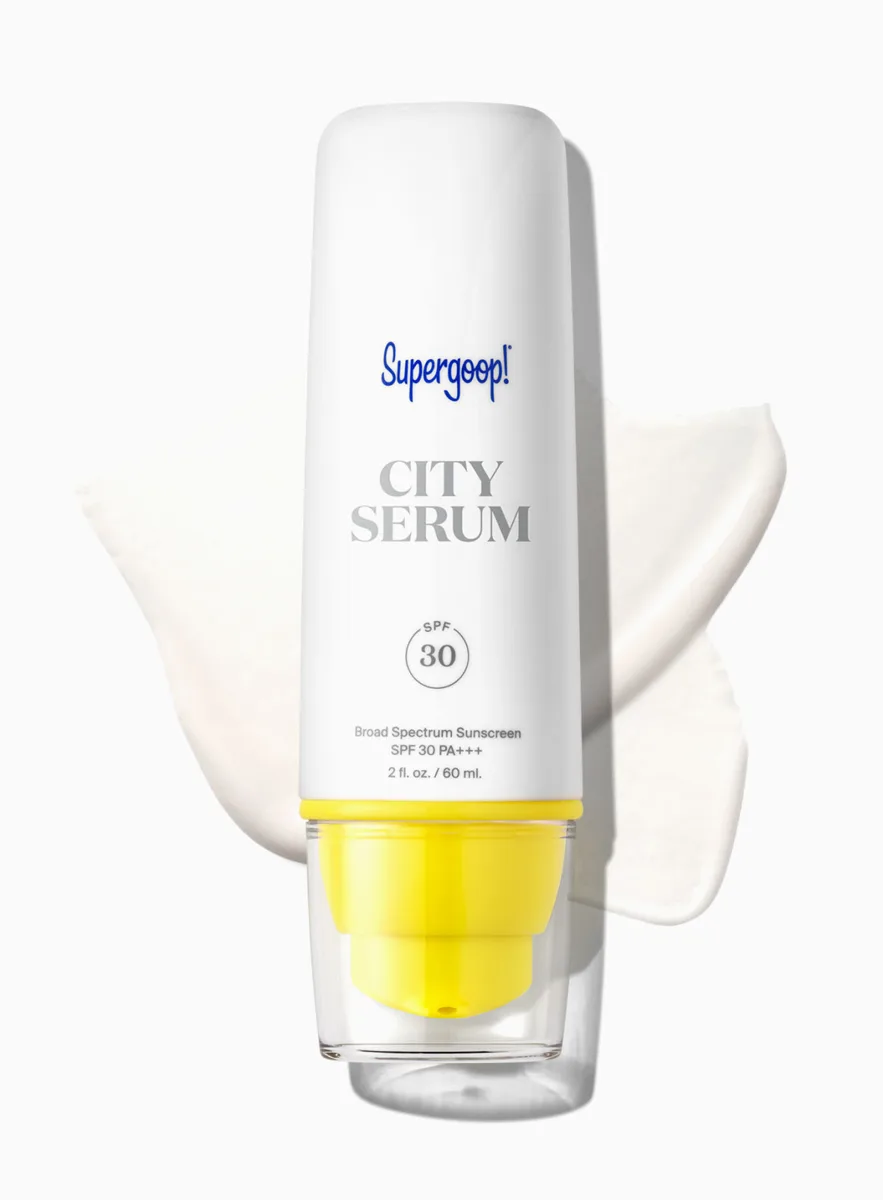
It was one of the first sunscreens sold as a skincare step rather than a beach product — a light, humectant-rich, natural-finish SPF 30 that made the 'daily SPF' habit Supergoop was founded to create feel effortless — and it has kept its 2011 formula while the category grew up around it. That longevity is the appeal and the limitation: a polypropylene microplastic filler and a lightly stabilised avobenzone sit in a bottle that now costs $48.
One of the products that invented the 'SPF as skincare' habit — a watery, humectant-rich SPF 30 lotion with a natural finish that combination skin still loves under makeup fifteen years on. The formula shows its age in a polypropylene filler, a lightly stabilised avobenzone and an infrared claim with nothing behind it, and at $48 for 60 ml the price has outrun the chemistry. A pleasure to wear, worth reapplying properly, and not the brand's best value.
The case for it
Cautions: a photosensitising active — use sun protection.
Same rule for everyone. “Full protection” is the verdict on 2,288 of 45,024 concern verdicts across the catalog; rule P1 decided 2,232 of them. As of September 25, 2026, engine 5.1.1.
Brand or formulator? Disclose a concentration or correct a fact →
The studies behind the evidence row
The case for it
What would change this: A declared concentration would move this to a firmer reading of the dose.
Same rule for everyone. “Good choice” is the verdict on 9,564 of 45,024 concern verdicts across the catalog; rule R5 decided 9,072 of them. As of September 25, 2026, engine 5.1.1.
Brand or formulator? Disclose a concentration or correct a fact →
The studies behind the evidence row
The case for it
Cautions: a photosensitising active — use sun protection.
What would change this: A researched evidence row for the lead active would replace this with a verdict.
Same rule for everyone. “Full protection” is the verdict on 2,288 of 45,024 concern verdicts across the catalog; rule P1 decided 2,232 of them. As of September 25, 2026, engine 5.1.1.
Brand or formulator? Disclose a concentration or correct a fact →
Does the jobDoes what a sunscreen is for: UVA coverage, kind to the skin wearing it. Not measured from the label: pleasant enough to actually use.
A verdict is DermApproved’s assessment of how well a product’s ingredients fit a concern — never a claim about what the product treats. Evidence dots and collected reviews sit beside it and are never blended in. Rules 0.5.1 · evidence table ev-2026.09-r228 · how we decide
Before Unseen and Glowscreen, before Supergoop owned a wall at Sephora, there was this: a thin, milky SPF 30 in a white bottle with a yellow cap that asked to be called a serum. In the early 2010s that was a genuinely new idea. Sunscreen was a beach product that smelled of coconut and turned foundation into paste, and Holly Thaggard's thesis — that people would wear it every day only if it felt like skincare — needed a formula to prove it. City Serum was that proof. It felt like a light hydrating lotion, dried in thirty seconds to a natural finish, took makeup like a primer, and asked nothing of the wearer. A great many people built a daily SPF habit on it, and a fair number are still using it. That history is worth honouring, and it is also the lens through which the formula has to be read, because the bottle on the shelf in 2026 is very nearly the bottle from 2011.
What was ahead of its time still is. Glycerin sits fourth, panthenol appears twice, and in the lower half of the list there is a proper natural-moisturising-factor blend — sodium lactate, lactic acid, serine, urea, sorbitol — that most sunscreens of the era would not have bothered with and that still explains why combination skin feels comfortable rather than coated under it. The filter load is modest and comfortable: homosalate 8%, octisalate 4%, avobenzone 3%, octocrylene 2%, enough for a monograph-tested broad-spectrum SPF 30 without the greasiness of the heavier blends. The texture remains a pleasure — watery, silky, fast-drying, soft-matte — and it primes as well as anything the brand makes. Two hundred and twenty-four reviewers on Supergoop's own site rate it 4.7, and years of Sephora and Ulta feedback say the same thing: light, hydrating, natural, no cast. As a daily face SPF for normal, combination or oily skin that wants some moisture under makeup, it earns its loyalty.
What the category has moved past is written into the same list. Polypropylene sits sixth — a plastic powder used as a soft-focus, oil-absorbing filler, common in 2011 and now largely phased out of clean-beauty formulas as a microplastic; it does nothing wrong on the skin and it is an odd thing to find in a brand that leans on 'clean' language. Octocrylene at only 2% is a light hand for stabilising 3% avobenzone — most formulators use three or more — which does not undermine the SPF test but is a reason to take the two-hour reapplication rule seriously rather than trusting a morning coat through an afternoon outdoors. And the 'helps protect against infrared radiation' line on the label is a 2010s claim that has aged poorly: no filter absorbs infrared, there is no standardised test for it, and what the claim rests on is vitamin E and panthenol quenching some of the free radicals heat generates — modest, plausible, and not protection in any sense a buyer would recognise. None of this makes City Serum a bad sunscreen. It makes it a good sunscreen from a decade ago.
The practical notes are the ones its fans already know. A quarter-teaspoon of a watery lotion looks like too much in the palm, and the serum's lightness makes under-dosing easy — the most common way a good SPF 30 becomes an SPF 10 in use. Dry skin needs a moisturizer underneath; this is a sunscreen with humectants, not a cream with SPF. The finish can turn slightly tacky in humidity. And there is no fragrance, no alcohol and nothing that stings, which for a chemical sunscreen remains a genuine virtue on skin that flushes at the beach-bottle kind.
The price is where the period piece stops being charming. Forty-eight dollars for 60 ml is a prestige figure for an SPF 30 lotion whose ingredients were inexpensive in 2011 and have not become dearer since, and at the correct dose a bottle lasts about six weeks. The brand's newer formulas cost about the same and carry higher SPF or more modern finishes; the drugstore has caught up on light, hydrating chemical SPF 30s at a third of the money. What the premium buys is the texture and the track record — real things, and not $48 of things.
So the recommendation is affectionate and qualified. If City Serum is the sunscreen you have worn every day for years, there is no reason to stop; it is well made, well tolerated and still nicer under makeup than most. If you are choosing a daily SPF fresh in 2026, the same brand and the same shelf offer more modern chemistry for the money, and the drugstore offers the same experience for less. The product that taught people to wear sunscreen daily did its job. The habit it created has better options now than the bottle that started it.
The hero actives that drive this product's performance.
| Ingredient | Function | Evidence |
|---|---|---|
| Homosalate 8% with Octisalate 4% (8% / 4%) | The two salicylate UVB filters that carry most of the SPF 30 — a modest, comfortable load that is why the serum feels like a lotion rather than a sunscreen. Homosalate at 8% sits above the cap the EU has proposed on endocrine grounds, the standing footnote on most US chemical sunscreens, and here it does its job without the greasiness heavier blends bring. | Regulator-approved for Sun Damage · limited certainty |
| Avobenzone 3% with Octocrylene 2% (3% / 2%) | The UVA filter at the US maximum, with octocrylene at an unusually low 2% as its photostabiliser — enough to pass the broad-spectrum test the label carries, and lower than the 3% or more most formulators use to keep avobenzone from degrading over a long afternoon. It is one reason to reapply this serum on schedule rather than trusting a morning coat all day. | Regulator-approved for Sun Damage · emerging certainty |
| Sodium Lactate, Lactic Acid, Serine, Urea and Sorbitol (NMF blend) | A natural-moisturising-factor mimic sitting in the lower half of the list — the amino acid, urea, lactate and sugar alcohol the skin's own outer layer uses to hold water — which is the actual basis for the 'hydrating serum' language. With glycerin fourth, it leaves skin comfortable under makeup in a way most SPF 30 lotions from the same era did not. | Not yet assessed |
| Panthenol with Panthenyl Triacetate and Tocopherol | The 'vitamins E and B5' on the box: pro-vitamin B5 in two forms for soothing and barrier support, and vitamin E as the antioxidant that underwrites the serum's 'helps protect against infrared radiation' claim — a claim with no standardised test behind it, resting on the general idea that antioxidants quench some of the free radicals heat and infrared generate. | Established mechanism for Dehydration · established mechanism |
| Polypropylene with Silica and Cyclomethicone | The texture engineers, and the one line a 2026 reader will stop on: polypropylene at sixth is a plastic powder used as a soft-focus, oil-absorbing filler — a microplastic that clean-beauty brands have largely phased out since this formula was written. Silica and a volatile silicone give the fast-drying, natural finish that made the serum a primer favourite. | Not yet assessed |
Ingredient standings describe the active at treatment-level doses and vehicles; this product's own condition grades weigh its actual formula.
Active Ingredients: Homosalate 8%, Octisalate 4%, Avobenzone 3%, Octocrylene 2%. Inactive Ingredients: Water (Aqua), Cyclomethicone, Isostearyl Neopentanoate, Glycerin, Ceteareth-20, Polypropylene, Cetostearyl Alcohol, Xanthan Gum, D-Panthenol, Octanohydroxamic Acid, Caprylyl Glycol, Silica, Triacontanyl PVP, Cetyl Dimethicone, Ammonium Acryloyldimethyltaurate/VP Copolymer, PEG-40 Stearate, Tocopherol, Disodium EDTA, Pentylene Glycol, Panthenyl Triacetate, Sodium Lactate, Lactic Acid, Serine, Urea, Sorbitol, Sodium Chloride, Allantoin, Oleyl Alcohol, Ethyl Linoleate
sunscreen
AM
Supergoop pitches it as the serum step, but it is a sunscreen and should be treated as one: the last skincare layer in the morning, applied generously — a quarter-teaspoon for the face — over any treatment serum and moisturizer, with thirty seconds to set before makeup. It primes well. It is not a substitute for a moisturizer on dry skin, and it needs reapplying every two hours in real sun; the low octocrylene makes that more than a formality.
Protection is immediate and complete at the labelled dose; skin feels hydrated and looks smooth and natural-finished within a minute. There are no cumulative skincare results beyond the ones daily sunscreen always gives — fewer new spots, slower lines — and the 'serum' name should not raise expectations of any other kind.
The filter system is a conventional US broad-spectrum combination. Homosalate and octisalate absorb UVB; avobenzone at 3% provides UVA1 coverage but is photolabile, and octocrylene is included to stabilise it through excited-state energy transfer. Most stabilised avobenzone systems use octocrylene at 2.5–10%, and the 2% here is at the low end of what is known to maintain avobenzone through prolonged exposure; the product passes broad-spectrum and SPF 30 testing at the labelled dose, but the margin argues for adherence to two-hourly reapplication rather than reliance on a single morning application. Homosalate at 8% sits above the 7.34% ceiling proposed by the EU's Scientific Committee on Consumer Safety on endocrine-activity grounds, a regulatory divergence common to most US chemical sunscreens and not evidence of harm at these exposures.
The skincare base is better than its era suggests. Glycerin, panthenol and panthenyl triacetate supply humectancy and barrier support, and the lower-list blend of sodium lactate, lactic acid, serine, urea and sorbitol reproduces components of the skin's natural moisturising factor, which has good evidence for improving stratum corneum hydration; this is the mechanistic basis for the product's comfort under makeup. Tocopherol provides antioxidant activity. The 'infrared protection' claim rests on the hypothesis that antioxidants attenuate infrared-A-induced free radical formation, for which there is laboratory support with specific antioxidant combinations but no standardised in-vivo test, no regulatory framework and no evidence for this formulation; it should not be equated with UV protection. Polypropylene functions as a soft-focus, sebum-absorbing powder; it is inert on skin and is classed as a microplastic in current environmental regulation, with restrictions phasing in in the EU. Isostearyl neopentanoate is a light ester with moderate comedogenic potential. SPF and broad-spectrum claims are monograph-tested; no independent clinical evaluation of the skincare claims exists.
For daily facial sun protection, dermatologists care about two things above all — that the sunscreen is broad-spectrum SPF 30 or higher, and that it is pleasant enough to be worn every day at the right dose — and City Serum has always scored well on both, which is why it remains a reasonable recommendation for normal, combination and oily skin that struggles with heavier formulas. The advice that accompanies it is standard: a quarter-teaspoon for the face and neck, reapplication every two hours outdoors, and a separate moisturizer for dry skin. Clinicians would treat the infrared claim as marketing and the polypropylene as an environmental rather than dermatological matter. Patients with a history of reactions to avobenzone or octocrylene, or those who prefer to avoid homosalate given its regulatory review, would be pointed to the brand's mineral formulas; for everyone else the formula is regarded as well tolerated and its long track record as reassuring.
As the last step of the morning routine, after any serum and moisturizer have absorbed, pour out a quarter-teaspoon — more than a watery lotion looks like it needs — and spread it evenly over the face, neck and ears, then wait thirty seconds for it to dry to its natural finish before makeup. Do not let its thinness tempt you into a lighter coat; the SPF depends on the full dose. Reapply every two hours in real sun and after sweating or swimming, and sooner rather than later given the light avobenzone stabilisation. Dry skin should use a moisturizer underneath. It contains no fragrance, so patch testing is mainly for anyone with a known chemical-filter sensitivity. Keep the bottle out of a hot car and use within twelve months of opening.
At $48 for 60 ml — eighty cents a millilitre — City Serum is priced with Supergoop's newer prestige formulas and above almost every SPF 30 lotion in the pharmacy, and at the correct quarter-teaspoon dose a bottle lasts around six weeks, which puts the monthly cost near thirty-five dollars. What the money buys is a proven texture, a humectant base that most SPF 30 lotions still lack, fifteen years of reliability; what it does not buy is modern filter chemistry, a higher SPF or an updated ingredient list. Loyal users are paying for something they know works and enjoy; a new buyer would find the brand's own Unseen or Everyday formulas better specified for similar money, and the drugstore's light hydrating SPF 30s a fair imitation at a third of the price.
People with normal, combination or oily skin who want a daily SPF 30 that feels like a light hydrating lotion, dries to a natural finish and primes under makeup — particularly long-time users who have built their sun habit on it and see no reason to change. It suits anyone who finds heavier or matte sunscreens unwearable.
Dry skin will want more moisture than the serum provides; buyers who avoid microplastics, homosalate or lightly stabilised avobenzone on principle have better-specified options in the same range; and value-minded shoppers choosing a daily SPF fresh will find the same experience for far less at the pharmacy.
Ready to try Supergoop! City Sunscreen Serum SPF 30?
Buy at Amazon ♥A watery, milky lotion — thinner than most SPF creams — that spreads with a faint silicone slip, dries in about thirty seconds to a smooth, soft-matte natural finish and leaves skin feeling hydrated rather than coated.
Fragrance-free; a faint, clean sunscreen-lotion note on application that disappears as it dries.
A 60 ml white plastic bottle with a yellow flip-top cap — Supergoop's original livery, light and travel-safe, though a watery lotion is easy to over-pour and hard to dose precisely from a flip cap.
The first morning is a small revelation for anyone used to heavy SPF: it feels like a light hydrating lotion, dries fast, and makeup goes on over it as if over a primer. Nothing stings and nothing pills. What registers over the first weeks is the dosing — a quarter-teaspoon of a watery lotion is more than it looks — and, on dry skin, that it is a sunscreen with humectants rather than a moisturizer with SPF.
About six weeks of daily face-and-neck use at the correct quarter-teaspoon dose, or three months at the lighter amount most people actually apply.
All Year
Holly Thaggard started Supergoop! in 2007 after a friend's skin-cancer diagnosis, and City Sunscreen Serum was among the first products to carry her thesis — that sunscreen would be worn daily only if it felt like skincare. Launched in the early 2010s, it predates Unseen, Glowscreen and the brand's Sephora dominance, and it has stayed on the shelf largely unchanged as a quiet favourite for combination skin under makeup.
Supergoop! was founded in 2007 by Holly Thaggard on a mission to make SPF a daily habit and has grown into the best-selling prestige sunscreen brand in the US, with every product an FDA-monograph OTC sunscreen whose SPF is tested to a regulated standard. City Sunscreen Serum is one of the brand's earliest products, on sale since the early 2010s; it consulted dermatologists in development but is not a dermatologist brand, and its skincare claims beyond SPF rest on the brand's own framing.
A sunscreen 'serum' is a lighter, more concentrated kind of sunscreen.
'Serum' here is a positioning word. City Serum is a light SPF 30 lotion with humectants — no treatment actives, no higher filter concentration — and it must be applied at the same quarter-teaspoon dose as any face sunscreen to deliver its labelled protection. Its lightness makes that dose easy to under-apply.
It protects against infrared radiation the way it protects against UV.
There is no standardised test or regulatory claim for infrared protection, and no sunscreen filter absorbs infrared. The claim rests on antioxidants — vitamin E and panthenol — quenching some of the free radicals that heat generates, which is plausible and modest and not comparable to SPF.
A sunscreen — a broad-spectrum SPF 30 lotion with homosalate, octisalate, avobenzone and octocrylene — sold as the 'serum' step because it is light and hydrating enough to feel like skincare. It has no treatment actives, and it needs the full quarter-teaspoon face dose to deliver SPF 30, however thin it feels.
City Serum is a watery, hydrating SPF 30 lotion with a natural finish and a humectant base; Unseen is a silicone gel SPF 40 with a velvety, invisible, primer-like finish and no moisture to speak of. Combination skin that wants hydration under makeup tends to prefer City Serum; oily skin that wants a matte grip prefers Unseen.
It lists polypropylene sixth — a plastic powder used as a soft-focus, oil-absorbing filler that was common when the formula was written and that many brands have since removed. It is safe on skin and does no harm to the SPF; it is an environmental and 'clean beauty' footnote rather than a health one.
For normal, combination and oily skin, usually yes — glycerin, panthenol and a natural-moisturising-factor blend keep it comfortable all day. Dry skin generally needs a moisturizer underneath; the serum is a sunscreen with humectants, not a cream with SPF.
Only in the loose sense that its antioxidants — vitamin E and panthenol — quench some of the free radicals heat and infrared generate. No sunscreen filter absorbs infrared, and there is no standardised test for the claim; treat it as a skincare bonus rather than protection.
It is fragrance-free and mild for a chemical sunscreen, and most sensitive users tolerate it well. Skin that reacts to avobenzone or octocrylene — the most common chemical-filter allergens — or that flushes with any chemical SPF should patch test or choose one of the brand's mineral formulas.
Recurring themes our editors read across retailer reviews of this product — summaries in our words, not quotations, and not a substitute for your own patch test.
Lightweight, silky and hydrating with a natural finish
Sits well under makeup as a primer
No greasiness or white cast
Expensive for an SPF 30
Not enough moisture on its own for dry skin
Some find the finish slightly tacky in humidity