



Shea Butter Is Doing a Different Job Than You Think
It is sold as deeply nourishing. What it measurably does is seal — and the difference decides whether you should apply it to damp skin or not at all.
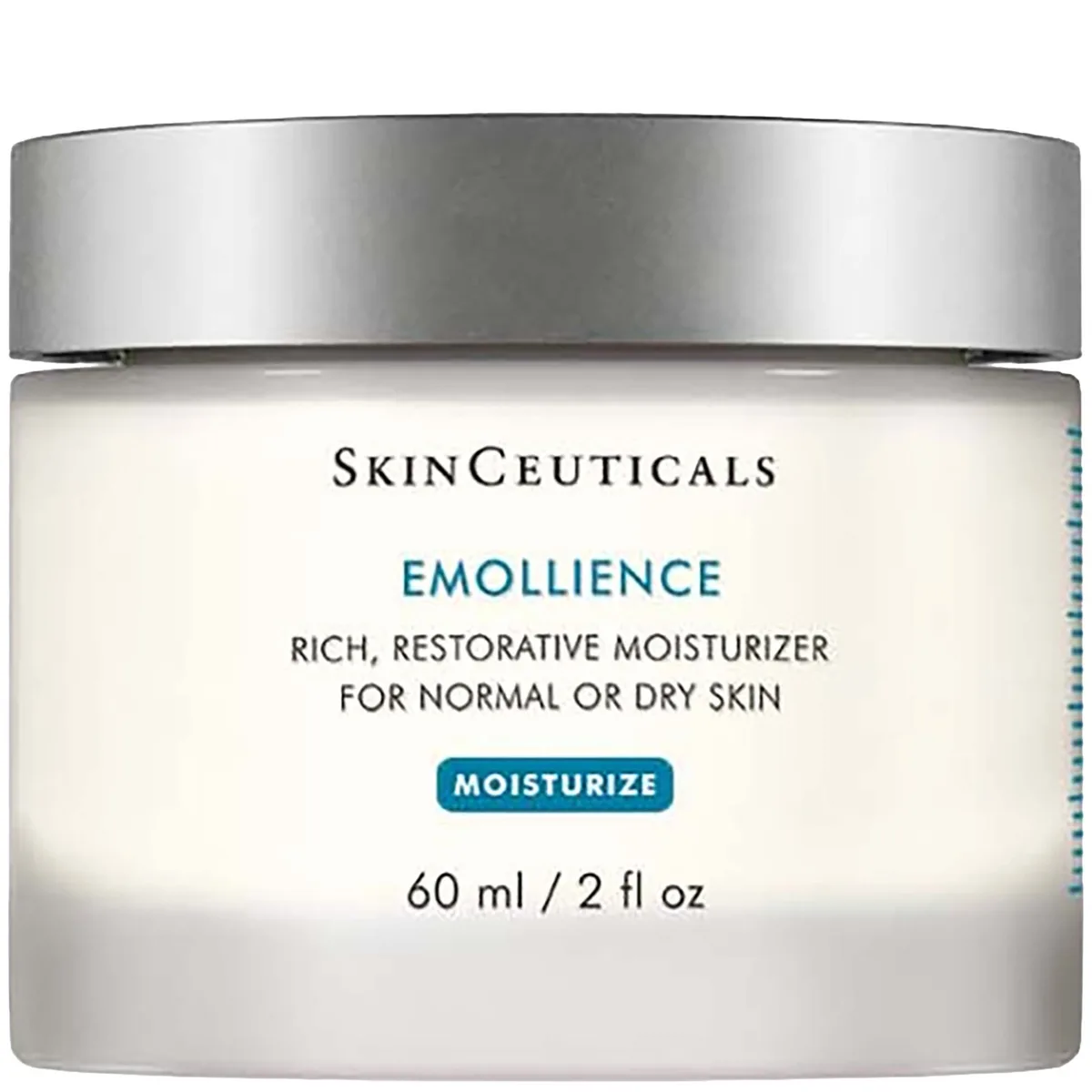
Most clinical-brand rich moisturizers lean on petrolatum and dimethicone; Emollience instead builds its occlusion from plant oils — rose hip, macadamia, borage — plus shea butter and algae. That gives it a warmer, more botanical feel than the typical dermatologist-prescribed barrier cream while still hitting the fragrance-free, actives-friendly brief.
Emollience is SkinCeuticals' quietly reliable rich moisturizer for dry and normal skin — a botanical-oil-based cream that has been the soft half of thousands of derm-office routines for twenty years. It is not the brand's most exciting formula, but it layers beautifully under serums and genuinely calms tight, parched skin.
The case for it
Same rule for everyone. “Good choice” is the verdict on 9,564 of 45,024 concern verdicts across the catalog; rule R5 decided 9,072 of them. Unchanged since September 5, 2026, engine 5.1.1.
Brand or formulator? Disclose a concentration or correct a fact →
The studies behind the evidence row
The case for it
Same rule for everyone. “Good choice” is the verdict on 9,564 of 45,024 concern verdicts across the catalog; rule R5 decided 9,072 of them. Unchanged since September 5, 2026, engine 5.1.1.
Brand or formulator? Disclose a concentration or correct a fact →
The studies behind the evidence row
The case for it
What would change this: A researched evidence row for the lead active would replace this with a verdict.
Same rule for everyone. “Supporting role” is the verdict on 8,197 of 45,024 concern verdicts across the catalog; rule R8 decided 4,250 of them. Unchanged since September 5, 2026, engine 5.1.1.
Brand or formulator? Disclose a concentration or correct a fact →
The case for it
What would change this: A researched evidence row for the lead active would replace this with a verdict.
Same rule for everyone. “Supporting role” is the verdict on 8,197 of 45,024 concern verdicts across the catalog; rule R8 decided 4,250 of them. Unchanged since September 5, 2026, engine 5.1.1.
Brand or formulator? Disclose a concentration or correct a fact →
Does the jobDoes what a moisturizer is for: draws in water, softens and smooths.
A verdict is DermApproved’s assessment of how well a product’s ingredients fit a concern — never a claim about what the product treats. Evidence dots and collected reviews sit beside it and are never blended in. Rules 0.5.1 · evidence table ev-2026.09-r228 · how we decide
Ask a dermatologist's front-desk staff which SkinCeuticals product moves slowest off the shelf for its price bracket, and they will probably name Emollience — not because it is bad, but because it lives permanently in the shadow of CE Ferulic, Triple Lipid Restore, and whatever new launch is having its moment. But pull the jar off that shelf and you will find a cream that has been steadily doing its job since the early 2000s, one reassuring pump at a time.
This is a rich moisturizer built for dry, reactive, or winter-cranky skin. The structure is interesting when you actually read the list: instead of leaning on petrolatum and heavy silicones the way most clinical brands do, SkinCeuticals built Emollience on a base of shea butter, rose hip seed oil, macadamia oil, and borage seed oil, with algae extract and grape seed extract playing supporting roles. Glycerin sits at number two, so there is a real humectant backbone under all those lipids, and squalane appears fourth — a skin-identical lipid that keeps the botanical oils from reading as merely greasy. The result is a cream that feels warmer and more botanical than the typical clinical-brand barrier cream — more "apothecary" than "pharmacy."
The texture is thick but not stiff. It pushes out of the pump as a dense cream that melts into something closer to a cushiony balm once you work it between your fingers. Isohexadecane and a small amount of dimethicone give it that slip; cetyl, stearyl, and cetearyl alcohols give it body. On the skin it absorbs in thirty to forty seconds and leaves a soft velvet finish — the kind of finish where you can still feel the product doing something half an hour later without it actually looking wet or shiny. Skin quite visibly calms down within a few minutes of application, which is what you want from a cream in this category and at this price. Flakiness softens within the first few days; that tight, winter-morning pulling sensation typically stops by the end of week one. Chronically dry skin should give it four to six weeks before passing final judgment on the barrier work.
What Emollience does especially well is behave under other actives. It was designed from day one to be the moisturizer step that follows CE Ferulic or Phloretin CF in a SkinCeuticals routine, and it shows. It does not pill when you layer it over a vitamin C serum that has fully dried — a persistent worry that the formula itself puts to rest, since the oils have no quarrel with ascorbic acid once the serum has set. It does not block retinol absorption. It is fragrance-free and free of most common sensitizers, which is why dermatologists frequently hand it to patients post-procedure — microneedling, light chemical peels, or a run of prescription tretinoin that went too hard.
Where Emollience is less impressive is the value conversation. Sixty-eight dollars for 2.4 ounces of a plant-oil-and-shea-butter cream is a clinical-brand premium, and you are paying for the brand's reputation and distribution network as much as the formulation itself. There are drugstore moisturizers with ceramides, cholesterol, and fatty acids in biomimetic ratios that will do more structurally for a compromised barrier at a quarter of the price. And within the SkinCeuticals catalog itself, Triple Lipid Restore 2:4:2 is arguably the more advanced barrier-repair formula, if you want to stay inside the brand. Emollience's pitch is not "most advanced" — it is "most pleasant to live with when your skin is simply dry and you want something reliable and fragrance-free."
There are a couple of honest caveats. The preservative system still uses methyl- and propylparaben alongside phenoxyethanol and chlorphenesin, which bothers nobody clinically but will irritate shoppers specifically avoiding parabens. The pump packaging looks airless but occasionally gets sticky around the dispenser, a complaint that recurs across the several thousand reviews the cream has collected — worth wiping the tip weekly. And the macadamia oil and shea butter content pushes it firmly into the "not for acne-prone skin" lane, regardless of what the rest of the formula is doing — oily and combination skin should reach for Hydrating B5 Gel or Daily Moisture instead, and anyone managing malassezia should be similarly cautious about the oil load.
One note on personality: Emollience is not a cream that tries to wow you. There is no radiance claim, no tingly peptide moment, no fermented this or encapsulated that. It arrives in beige-and-grey packaging, goes on, and makes your skin comfortable for the next eight hours. In a category increasingly addicted to drama, that kind of quiet competence is genuinely refreshing, even if it makes for boring Instagram content. A 75ml bottle will run three or four months of nightly face-and-neck use, which softens the sticker shock a little, though never entirely.
The people who keep reordering this product are not chasing trends. They are dry-skinned humans in cold climates, post-procedure patients following their derm's instructions, and people who tried fancier moisturizers, found them disappointing or irritating, and eventually came back to the simple botanical cream their aesthetician recommended three years ago. If that sounds like you, Emollience is worth the line item. If you are building an advanced barrier-repair routine from scratch in 2026, you have more formulation-forward options to consider first.
The hero actives that drive this product's performance.
| Ingredient | Function | Evidence |
|---|---|---|
| Rose Hip Oil | A lightweight natural oil rich in linoleic acid and provitamin A that slots in alongside macadamia and borage oils to rebuild lipid content without the heaviness of traditional mineral-oil-based rich creams. | Not yet assessed |
| Algae Extract | Provides marine-derived humectant sugars and trace minerals that help this cream hold water against the skin, supporting the glycerin-shea-oil base rather than adding any exfoliating or actives load. | Not yet assessed |
| Grape Seed Extract | Supplies polyphenol antioxidants that complement the tocopherol here, offering a background layer of free-radical defense for dry, stressed skin that is not wearing a dedicated C+E serum underneath. | Not yet assessed |
| Shea Butter | The emollient backbone of Emollience — it fills rough, dry texture, cushions the other plant oils, and gives the cream its characteristic soft, velvety finish that reads more like a rich night cream than a lotion. | Established mechanism for Dryness · established mechanism |
| Glycerin | Listed second, it is the primary humectant doing the water-binding work; in a lipid-heavy cream like this it keeps the finish from going flat or greasy by pulling hydration into the upper layers. | Established mechanism for Dryness · established mechanism |
Ingredient standings describe the active at treatment-level doses and vehicles; this product's own condition grades weigh its actual formula.
Water, Glycerin, Isohexadecane, Squalane, Butylene Glycol, Glyceryl Stearate, Cetyl Alcohol, PEG-100 Stearate, Butyrospermum Parkii (Shea) Butter, Algae Extract, Vitis Vinifera (Grape) Seed Extract, Rosa Moschata (Rose Hip) Seed Oil, Macadamia Ternifolia Seed Oil, Borago Officinalis Seed Oil, Tocopheryl Acetate, Dimethicone, Stearyl Alcohol, Cetearyl Alcohol, Ceteareth-20, Magnesium Aluminum Silicate, Xanthan Gum, Disodium EDTA, Carbomer, Triethanolamine, Phenoxyethanol, Chlorphenesin, Methylparaben, Propylparaben
moisturizer
AM & PM
Apply to damp skin after your serum — the richer oils spread more evenly and lock in whatever actives you used underneath.
Immediate softness and comfort on first use. Within 1-2 weeks dry patches and flaking should visibly improve. Full barrier recovery for chronically dry skin typically takes 4-6 weeks of nightly use.
The formulation logic here is interesting because it sidesteps the dominant clinical-brand pattern of petrolatum-plus-dimethicone occlusion. Instead, Emollience relies on a cocktail of plant oils — rose hip (Rosa moschata) seed oil, macadamia ternifolia seed oil, and borago officinalis seed oil — combined with shea butter and algae extract. Rose hip seed oil has one of the highest linoleic acid contents of common cosmetic oils (roughly 40-50%), and linoleic acid is known to be incorporated into the skin's ceramide matrix, where it supports barrier recovery. Borage seed oil is notable for its gamma-linolenic acid content, which small dermatology trials have associated with improvements in atopic-dermatitis-like dryness when applied topically, though results are variable and much of the supporting research is older. Shea butter contributes oleic and stearic acids plus minor triterpene fractions that have documented emollient and soothing effects in cosmetic testing. Layered on top of glycerin — the second-listed ingredient — the plant lipids essentially trap humectant-drawn water against the skin rather than sealing with an inert hydrocarbon. Grape seed extract and tocopheryl acetate add a modest antioxidant dimension, which is relevant here because SkinCeuticals designed this cream explicitly to sit on top of its C+E+ferulic serums. There are no trial data specific to Emollience as a finished product, so the evidence base is at the ingredient level rather than the formulation level. That is a fair criticism of any plant-oil-heavy cream at this price, but it is also a reasonable starting point for someone whose primary concern is comfort and barrier support rather than an active-driven outcome.
Dermatology professionals frequently reach for Emollience as the moisturizer they hand patients after in-office procedures — light chemical peels, microneedling, or the initial weeks of prescription tretinoin — precisely because it is fragrance-free, free of common sensitizers, and does not interfere with the actives being used underneath. It is commonly recommended for patients with dry skin who want something richer than a gel or lotion but who react to heavier occlusives like petrolatum. Dermatologists typically note that while it is not a clinically proven barrier-repair cream in the way a ceramide-cholesterol-fatty-acid formulation would be, its real-world tolerability and layering performance make it a practical choice for mature dry skin, post-procedure recovery, and cold-climate winters. Patients with acne-prone, oily, or fungal-acne-susceptible skin are typically redirected to Hydrating B5 Gel or Daily Moisture instead.
Apply a pea-sized amount to slightly damp skin as the final hydration step after your serum, in the morning or evening. In the morning, let it settle for 60 seconds before layering sunscreen on top. In the evening, use it over retinol or a chemical exfoliant once those have absorbed — Emollience is specifically designed not to interfere with overlying actives. For extremely dry or post-procedure skin, you can layer a second thin application at night. Avoid using it on the eye area directly — SkinCeuticals makes dedicated eye creams for that. Keep the pump clean; wipe any sticky residue from the dispenser tip every week.
At $68 for 2.4 ounces, Emollience sits squarely in clinical-brand premium territory, and the value question is real. The formulation is thoughtful but not groundbreaking — you are paying for consistent quality, derm-office distribution, and two decades of reliability rather than a breakthrough on the INCI list. Compared to drugstore ceramide creams like CeraVe or La Roche-Posay Cicaplast, Emollience is objectively more expensive per ounce without delivering meaningfully more barrier-repair data. Compared to Triple Lipid Restore 2:4:2 inside the same brand, it is less advanced but also meaningfully cheaper. The right buyer is someone already committed to SkinCeuticals, using CE Ferulic or Phloretin CF, and wanting a moisturizer that integrates cleanly with the rest of that routine. For anyone else, there are stronger value picks.
Dry, normal, or mature skin types who want a fragrance-free rich cream that layers cleanly under a SkinCeuticals vitamin C serum or a prescription retinoid. Also a strong pick for anyone using it under dermatologist guidance post-procedure. If you already trust the brand and want the comfortable, dependable moisturizer slot filled, Emollience is the one.
Oily, combination, and acne-prone skin should choose Hydrating B5 Gel or Daily Moisture instead — the shea butter and macadamia oil base is too rich here. Shoppers chasing the most ingredient-forward barrier-repair science will get more for their money from Triple Lipid Restore or a well-built ceramide cream. Paraben-avoiders should also look elsewhere.
Ready to try SkinCeuticals Emollience?
Buy at Amazon ♥Thick, cushiony cream that melts into a soft emollient slip on contact
Faintly plant-oil-like but unscented
White and grey airless-style pump bottle
Skin feels immediately softer and better cushioned; most users notice a visible reduction in flakiness and tightness within the first week. No adjustment period — this is a comfort product, not an active.
3-4 months with nightly face-and-neck application
fall winter
Emollience emerged in the early 2000s as SkinCeuticals built out a moisturizer range to sit beneath its famous CE Ferulic. It was designed specifically to be the rich half of a two-moisturizer system — Hydrating B5 Gel for oily skin, Emollience for dry — and has quietly held that slot in derm offices for over twenty years.
SkinCeuticals was founded in 1997 by Dr. Sheldon Pinnell's research at Duke University and is widely used in dermatology and medical spa settings. Its formulations are cited in peer-reviewed literature, particularly around topical antioxidants.
SkinCeuticals Emollience is too occlusive to wear under a vitamin C serum.
It is meant to be layered over CE Ferulic or Phloretin CF — the brand built the product specifically as the moisturizer step in that routine, and the oils do not interfere with ascorbic acid absorption once the serum has dried.
If you have chronically dry or winter-weather-reactive skin and want something that layers under CE Ferulic without pilling or interfering, yes. If you are looking for the most advanced barrier-repair science, Triple Lipid Restore 2:4:2 delivers more for the same brand.
It is not formulated for you — the shea butter and macadamia oil base will likely feel heavy and can trigger breakouts in acne-prone users. SkinCeuticals Hydrating B5 Gel or Daily Moisture is a better match.
Yes — it still uses methylparaben and propylparaben as preservatives. If you prefer paraben-free, SkinCeuticals has reformulated newer launches but this legacy cream retains the original preservative system.
It works both ways on truly dry skin, but most users find it most comfortable at night under a sleep routine. In the morning, you may prefer to mix it with a drop of serum to thin the texture before SPF.
Yes, it contains no added fragrance. There is a subtle plant-oil scent from the rose hip and macadamia but nothing synthetic or allergenic added.
It is commonly recommended by dermatologists post-procedure because it is fragrance-free, lacks acids or retinoids, and provides gentle barrier support. Always follow your provider's specific aftercare instructions.
Recurring themes our editors read across retailer reviews of this product — summaries in our words, not quotations, and not a substitute for your own patch test.
Relieves winter dryness quickly
Non-greasy rich finish
Layers well under makeup
Good for post-procedure skin
Fragrance-free
Expensive for what it is
Pump packaging can clog
Too heavy for combination skin
Contains parabens