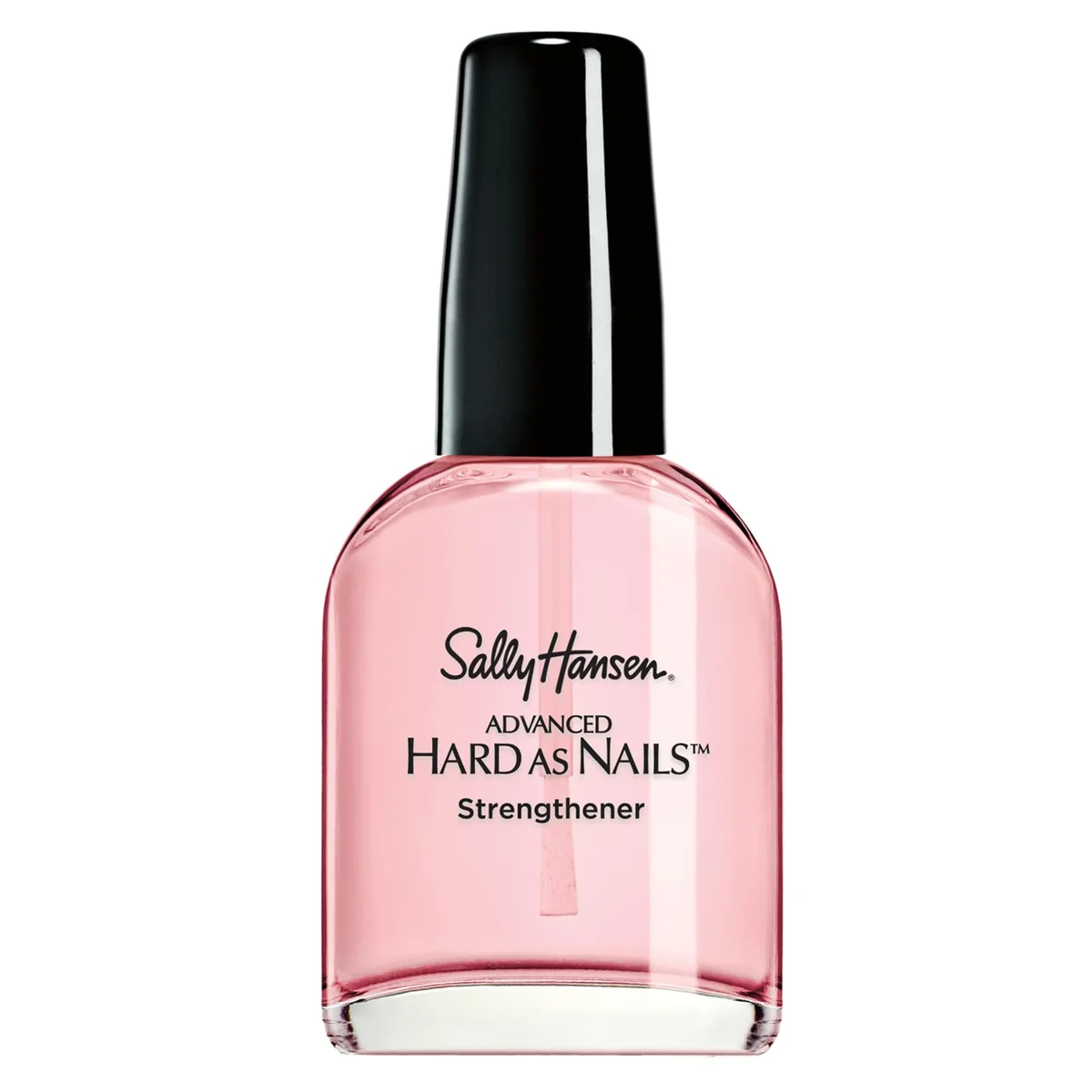
Nylon-12 is the honest upgrade — suspended polymer particles that fill surface ridges and level the nail optically, which the plain version cannot do. The rest of what makes it advanced runs the other way. It reinstates tosylamide/formaldehyde resin and adds triphenyl phosphate, two ingredients the plain formula sold beside it does without, and layers on retinol and seed oils that have no mechanism on a dead nail plate.
nail careliquiddrugstoreFungal Acne SafeNot Cruelty Free
The nylon ridge-filling is real and genuinely impressive — a corrugated nail reads smooth after two coats. But advanced here means reinstating a recognized contact allergen and adding a plasticizer with documented skin absorption, neither of which the twenty-cents-cheaper plain version contains. Buy it for the ridges, knowing what came with them.
A verdict is DermApproved’s assessment of how well a product’s ingredients fit a concern — never a claim about what the product treats. Evidence dots and collected reviews sit beside it and are never blended in.
Rules 0.5.1 · evidence table ev-2026.09-r228 · how we decide
Assessment
Pros & Cons
Pros
✓ Nylon-12 fills surface ridges effectively and immediately
✓ Reduces peeling and splitting within the first week
✓ Gives a polished, finished look worn without color
✓ Under three dollars fifty for months of use
✓ Works as a base coat under colored polish
✓ The ridge-filling effect is visible from the second coat
Cons
✗ Contains tosylamide/formaldehyde resin, a recognized contact allergen
✗ Contains triphenyl phosphate, with documented dermal absorption in humans
✗ Retinol has no mechanism whatsoever on a dead nail plate
✗ Needs two to three coats, so bottles empty faster
✗ The cheaper plain version avoids both problem ingredients
✗ Contains methyl- and propylparaben plus denatured alcohol
Review
Full Review
Two bottles sit next to each other on the same drugstore peg, made by the same company, in near-identical packaging, twenty cents apart. One says Hard As Nails. The other says Advanced Hard As Nails. Almost everyone reaches for the second, because advanced is a word that means better. In this specific case it means older, and the difference is worth twenty cents in the opposite direction from the one you would expect.
Start with what genuinely is an upgrade, because it is real. Nylon-12 sits near the end of the ingredient list, and it is the reason this product exists. Suspended micro-fine polymer particles settle into the longitudinal grooves that appear on nails with age, and level the surface optically. The effect is immediate and honestly quite satisfying — a nail that looked corrugated under a window reads flat and polished after two coats. It is the same principle as a blurring face primer, and like a primer, it works from above. Nobody should undersell this: ridged nails bother people, and this fixes the appearance of them for three dollars and forty-nine cents.
Now the rest. Fifth on the list is tosylamide/formaldehyde resin. It is not free formaldehyde and it does not harden anything — it is an adhesion and gloss resin, and it has been standard in nail lacquer for decades. It is also a recognized contact allergen, carried in standard patch-test series precisely because it turns up often enough to be worth screening for. Its signature presentation is one of the more counterintuitive things in dermatology: the reaction almost never appears on the fingers, because the skin there is thick and resistant. It shows up on the eyelids, the neck, the jaw — wherever thin skin gets touched repeatedly by hands that have lacquer on them. People spend months chasing a mystery eyelid rash through eye creams and pillowcases while the cause is drying on their fingernails. The plain clear version of this product dropped this resin in favor of a modern copolymer. This one kept it.
Eighth is triphenyl phosphate, a plasticizer that keeps the film flexible. This one has better exposure research behind it than any other ingredient in the category, and it is not reassuring reading. Researchers measured the urinary metabolite diphenyl phosphate in participants before and after painting their nails and found it rose close to sevenfold within ten to fourteen hours. More tellingly, when participants wore gloves while polish was applied to synthetic nails, the increase largely disappeared — meaning the absorption route is skin, not nail. What that means for health at these exposures is genuinely unsettled, and it would be overstating things to call this dangerous. But it is a documented absorption event from a cosmetic, it is avoidable, and the cheaper bottle beside it avoids it.
Then there is retinol, thirteenth on the list, and this is where the product stops being defensible and becomes faintly absurd. Retinol is a signalling molecule that works by binding nuclear receptors in living cells and altering gene transcription. The nail plate has no living cells. It has no blood supply, no nuclei, no transcription. And this is a solvent lacquer that seals into an impermeable film within minutes of application, sitting on top of that dead tissue. There is no mechanism here, not a weak one — none. The same applies to the safflower, soybean and linseed oils marketed as omega nourishment, which get locked into the film alongside everything else. These ingredients exist to make a three-dollar lacquer sound like skincare.
So how does it perform? Well, in the narrow way the whole category performs. The film holds splitting layers together, peeling drops off within a week, and nails stop catching and tearing. The ridge-filling is the standout. It needs two to three coats rather than one, which means longer drying and a bottle that empties faster — three to four months rather than four to six. Rush the drying and you get trapped solvent and a soft film that dents against a car key.
My honest read is that this is a decent product carrying two ingredients it does not need. If ridges are your specific complaint, nothing else at this price fills them as well, and for most people, most of the time, the risk profile here is small. But if you have ever had unexplained dermatitis on your eyelids or neck, or you would simply rather not have a documented dermal absorption story attached to your manicure, the plain clear version is right there, is cheaper, and does the structural job just as well. It just will not smooth your ridges.
That is the whole trade, stated plainly, which is more than the front of either bottle will tell you.
A practical note on the ridge-filling, since it is the whole reason to choose this one. The effect depends entirely on the coating staying intact, and nylon-loaded films chip at the free edge sooner than plain ones do, because there is more solid material suspended in them. In practice that means touching up every two or three days rather than the four or five a plain hardener manages. The ridged look returns the moment the layer wears thin at the tip, which is the honest limit of an optical fix. It is doing something real, and it is doing it entirely from above.
Formula
Key Ingredients
The hero actives that drive this product's performance.
Ingredient
Function
Evidence
Nylon-12
The genuine point of difference and the reason this is sold as the upgrade — micro-fine polymer particles that settle into surface ridges and level them optically. It is the same principle a blurring face primer uses, and it works, though what you get is a smoother-looking nail rather than a smoother one.
Not yet assessed
Tosylamide/Formaldehyde Resin
The adhesion and gloss resin sitting fifth, and the ingredient that separates this from the plain version, which dropped it. It is a recognized contact allergen carried in standard patch-test series, and its classic presentation is eyelid or neck dermatitis rather than any reaction on the fingers themselves.
Not yet assessed
Triphenyl Phosphate
A plasticizer at position eight, keeping the film flexible. It is also the ingredient with the most substantial exposure literature attached to any component of nail lacquer, having been shown to be absorbed through skin and to raise a urinary metabolite sharply within hours of application.
Placed thirteenth in a solvent lacquer applied to fully keratinized, non-living tissue, which is about as far from a functional context as retinol can be put. It has no route to the nail matrix and nothing to act on in the plate, making it a label ingredient rather than a working one.
The omega-rich oils the marketing leans on, positioned twelfth, fifteenth and sixteenth. In a lacquer that dries to a sealed film within minutes they are locked into the coating rather than delivered to anything, so their contribution is to the story rather than to the nail.
Not yet assessed
Ingredient standings describe the active at treatment-level doses and
vehicles; this product's own condition grades weigh its actual formula.
The brand direction is two to three coats on bare nails, which is more product than the plain hardener asks for because the nylon needs volume to fill ridges properly. Let each coat dry completely or the layers trap solvent and stay soft for hours. Wearing gloves for wet work afterwards is worth doing here specifically, since the exposure research on this formula's plasticizer points to skin rather than nail as the absorption route.
Results Timeline
Ridges look filled and the surface reads smooth as soon as the second coat dries, which is the effect people notice and repurchase for. Reduced peeling follows within the first week as the film holds the plate together. The nail itself is unchanged throughout, and any real difference in what you grow takes the usual three to six months.
Pairs Well With
colored polish layered on topcuticle oil applied after the lacquer driesgloves worn for washing up
THIS PRODUCT — two to three coats, drying fully between each
Colored polish on top if wanted
Cuticle oil around the nail folds once dry
Sample PM Routine
Touch up chips rather than stripping and reapplying
Hand cream before bed
Evidence
Science & Expert Perspective
The Science
Two ingredients in this formula have substantial published literature attached, and both arguments run against the product rather than for it. Tosylamide/formaldehyde resin is a polycondensate used for adhesion and gloss, and it should not be confused with free formaldehyde, which is a different material with a different problem. The resin's issue is allergic contact dermatitis: it is included in standard patch-test series because it is among the more frequently identified nail-product allergens, and its characteristic clinical picture is ectopic. Reactions appear on eyelids, face, and neck rather than on the fingers, because the thick stratum corneum of the fingertips resists sensitization while thin periocular skin does not, and hands make repeated contact with those areas throughout the day. This pattern is well recognized and is a common explanation for otherwise unexplained facial dermatitis.
Triphenyl phosphate has the better-quantified exposure data. Work published in Environment International in 2016 measured diphenyl phosphate, its principal urinary metabolite, in participants before and after nail polish application, and found concentrations rose approximately sevenfold at ten to fourteen hours post-application. The study also detected the compound at up to 1.68% by weight across sampled polishes, including in two products that did not declare it. Critically, when polish was applied to synthetic nails while participants wore gloves, the urinary increase was substantially attenuated, identifying dermal contact rather than transungual passage as the dominant route. Triphenyl phosphate has been investigated as an endocrine-active compound in laboratory settings, though the human health implications at cosmetic exposure levels remain unresolved — the defensible position is that the absorption is documented and the consequence is not.
The retinol and seed oils require no literature review, only anatomy. The nail plate consists of dead, fully keratinized corneocytes without nuclei, vasculature, or metabolic activity, and retinoids act by binding nuclear receptors to alter gene expression in living cells. No such cells are present. The nail matrix, where keratinization occurs, sits beneath the proximal nail fold and is inaccessible to a lacquer that forms an occlusive film on the plate surface within minutes.
Where nail products come up in clinical practice, it is most often because a patient has presented with dermatitis somewhere other than their hands. Ectopic contact dermatitis from nail lacquer is a well-recognized pattern, with eyelid, periorbital, and neck involvement typical, and tosylamide/formaldehyde resin is among the allergens most frequently implicated — which is why it appears in standard screening series. Patients with confirmed sensitivity are directed toward formulations free of that resin, of which there are now many, including within this same brand's range. Beyond allergy, the guidance offered for brittle or ridged nails is generally conservative: longitudinal ridging is usually a normal feature of aging rather than a deficiency state, and cosmetic ridge-fillers are described as reasonable if the appearance is bothersome, with no expectation of altering the underlying nail. On plasticizer exposure, the usual position is proportionate rather than alarmed — the absorption data for triphenyl phosphate is solid, the health consequences at cosmetic exposure are not established, and patients who wish to minimize exposure are simply pointed toward the substantial number of formulations that omit it.
Guidance
Usage & Recommendations
How to Use
Begin with completely bare nails, free of any oil or hand cream, since lacquer will not adhere over either. Apply two to three thin coats rather than one thick one, allowing each to dry fully before adding the next — trapped solvent between layers keeps the film soft for hours and it will dent against the first hard surface it meets. Concentrate a light pass along the free edge where splits start. Given the exposure research pointing to skin as the absorption route for this formula's plasticizer, wiping away any lacquer that strays onto the surrounding skin is a sensible habit, as is wearing gloves for wet work afterwards. Touch up chips rather than stripping the whole nail, since acetone removal does more damage to the plate than the lacquer does.
Value Assessment
Three dollars and forty-nine cents is trivially cheap, and on price alone this is fine. The complication is that the plain clear hardener sits alongside it at three twenty-nine, delivers the same structural benefit, and contains neither the formaldehyde resin nor the plasticizer. So the twenty-cent premium buys ridge-filling — genuinely worth having if ridges are your complaint — bundled with two ingredients you would not choose if they were listed on the front. This version also needs two to three coats where the plain one needs one, so a bottle lasts three to four months instead of four to six, quietly widening the real cost gap. Sally Hansen's eight decades in this category mean the manufacturing is dependable and the product will behave as expected. What that history does not supply is any reason to think the formulation has been revisited recently, and the ingredient list rather suggests it has not.
Who Should Buy
The case for this over the plain version comes down to one thing: ridges. If your nails have visible longitudinal grooves that bother you, the nylon fills them convincingly and nothing else at this price does it as well. It also works as a base coat under color and delivers the same anti-peeling benefit as its cheaper sibling.
Who Should Skip
Anyone who has had unexplained dermatitis on their eyelids, face, or neck should avoid this and choose a resin-free formula, since that pattern points squarely at the ingredient sitting fifth on this list. Anyone wanting to minimize plasticizer exposure has an easy alternative twenty cents cheaper on the same shelf. And if you are buying for the retinol, it cannot do anything here.
A slightly thicker lacquer than a plain hardener, with visible body from the suspended nylon
Scent
Strong solvent with an alcohol edge, clearing within a few minutes of drying
Packaging
Standard glass lacquer bottle and brush, functional and unremarkable
Finish
satininvisible
What to Expect on First Use
The ridge-filling is the immediate and genuinely impressive part — one coat and a nail surface that looked corrugated reads as level. Drying takes longer than a thin hardener because of the extra coats, and rushing it leaves a soft film that dents against anything. The solvent smell is noticeably sharper than the plain version thanks to the added denatured alcohol.
How Long It Lasts
Roughly 3-4 months, faster than the plain hardener since it takes two to three coats
This arrived as the premium tier above the original hardener, in an era when adding vitamins and oils to everything was the standard route to justifying a higher price. The nylon ridge-filler was a real technical addition. The retinol and omega oils belong to that period's habit of importing skincare language into categories where it does not apply, and the formula has kept both alongside the older resin chemistry that the plain version has since abandoned.
About Sally Hansen Legacy Brand (20+ years)
Sally Hansen has been the dominant name in drugstore nail treatment since 1946 and is now part of Coty, with distribution and manufacturing consistency few competitors match. That commercial record does not extend to formulation research — no trials support these products, and this particular formula retains two ingredients that much of the industry has spent the past decade moving away from.
Brand founded: 1946 · Product launched: 1998
Myth vs. Reality
Common Myths
Myth
Advanced means an improved, safer formula.
Reality
Here it means the opposite in two specific ways. The plain clear hardener uses a modern copolymer resin and contains no triphenyl phosphate; this one uses tosylamide/formaldehyde resin and does contain it. The naming reflects when each product was developed and what it costs, not which is better formulated.
Myth
Retinol and omega oils nourish the nail.
Reality
The nail plate is dead, fully keratinized tissue with no cells and no circulation, and this is a fast-drying solvent lacquer that seals into a film within minutes. There is nothing for retinol to act on and no route to the matrix where growth happens. These are ingredients on a label, not in a mechanism.
Myth
Ridge-filling repairs ridged nails.
Reality
Longitudinal ridges usually reflect age or matrix changes and are structural in the nail as it grows. Nylon-12 sits in the grooves and makes the surface read as level, which is a cosmetic result achieved from above. Remove the lacquer and the ridges are exactly as they were.
FAQ
Frequently Asked Questions
How is Advanced Hard As Nails different from the regular version?
It adds nylon-12 for ridge-filling, which is a real and visible improvement, plus retinol and seed oils that do nothing on a dead nail plate. Less helpfully, it uses tosylamide/formaldehyde resin and triphenyl phosphate, neither of which appears in the plain clear formula.
Does this contain formaldehyde?
It contains tosylamide/formaldehyde resin, which is a polymer rather than free formaldehyde and does not harden the nail — it provides adhesion and gloss. The concern with it is allergic contact dermatitis rather than nail damage, and it appears in standard patch-test series for that reason.
Is triphenyl phosphate in nail polish something to worry about?
It is worth knowing about. Published research found a urinary metabolite of it rose roughly sevenfold within ten to fourteen hours of painting fingernails, with the increase largely eliminated when gloves were worn, indicating skin rather than nail as the absorption route. The health significance at these exposures is not settled, but the exposure itself is documented.
Why do my eyelids react when I use nail products?
This is the classic presentation of nail lacquer allergy, and tosylamide/formaldehyde resin is among the most common culprits. Fingers rarely react because the skin there is thick, while eyelids and neck are thin and get touched constantly. Switching to a resin-free formula usually resolves it.
How many coats does it need?
Two to three on bare nails, since the nylon needs enough volume to settle into ridges and level them. Each coat must dry completely before the next, otherwise solvent gets trapped between layers and the film stays soft and dents easily for hours.
Will it actually fill deep ridges?
It fills them optically and does that well — a corrugated-looking nail reads smooth after two coats. What it does not do is change the ridges themselves, which form in the nail as it grows and usually relate to age or matrix changes. The effect lasts exactly as long as the lacquer stays on.
Is it safe to use in pregnancy?
There is no clear answer, which is why this is worth raising with a doctor rather than settling from a product page. The exposure data on triphenyl phosphate is what makes it a genuine question, and the plain clear version contains neither that nor the formaldehyde resin, so it is the straightforward alternative if you would rather not decide.
Reviews
What Reviewers Tend to Say
Recurring themes our editors read across retailer reviews of this product — summaries in our words, not quotations, and not a substitute for your own patch test.
Common Praise
Users consistently report visibly smoother, less ridged nails
Peeling and splitting reduce within the first week
The nylon finish gives a polished look even without color
Cheap enough to keep several bottles around
Common Complaints
Some users report reactions that are traced back to the resin
Requires two to three coats and long drying time
Nails are unchanged once the coating comes off
Thick formula gets gummy toward the end of a bottle
Notable Endorsements
Long-running line extension of Sally Hansen's original nail hardenerConsistently among the higher-volume drugstore nail treatments
The fourth most frequent positive patch test in North America is an oxidation product of a molecule that occurs naturally in lavender. Nobody synthesised it into your face cream.
Western sensitive skincare works by subtraction — remove the fragrance, remove the alcohol, shorten the list. Japan's answer adds a designed molecule back in, and one of the two bets has a trial literature.
The smallest AHA gets deepest and shows results soonest — which is precisely why routines built around it overshoot, and why the people who do best with it use it least.
Irritant and allergic contact dermatitis can look identical on the arm and take opposite instructions — and the single most common mistake in skincare is applying the tolerance-building logic of one to the immune memory of the other.
Products, answers, therapy guides, tools and articles in one search. Brand names,
slang and abbreviations all work — accutane finds isotretinoin, bacne finds truncal acne.