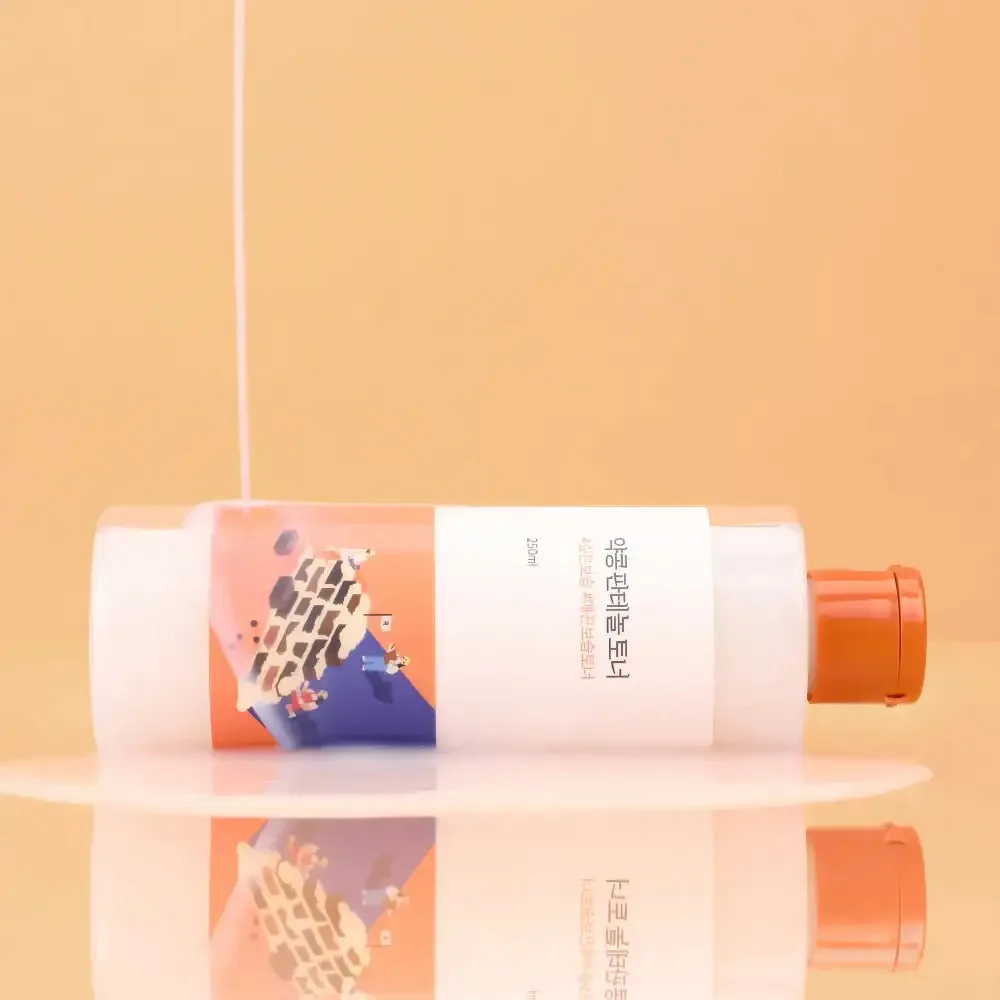
It is a milky toner that carries a full barrier-lipid set, ceramide NP and AP, cholesterol, stearic acid and a phytosphingosine derivative, in a meadowfoam-oil emulsion, alongside a declared half-percent black soybean, phloretin, red clover and a pepper-derived penetration enhancer, fragrance-free. It does the job of a barrier cream at the toner step, and its name credits a panthenol dose the label itself shows to be nominal.
A fragrance-free milky toner built on a real barrier-lipid set, ceramide NP and AP, cholesterol, stearic acid and a phytosphingosine derivative in a meadowfoam emulsion, that calms tight, stripped or reactive skin at the toner step better than a water toner can. Its half-percent black soybean is honest, its panthenol is declared at a twentieth of a working dose, its lipids and a pepper-derived enhancer make it wrong for oily and fungal-acne-prone faces, and it is months old with no record; for dry and sensitive skin at $25 for 200 ml, a well-made lipid toner with a misleading name.
The toner reached the US site in August 2025 and has gathered no reviews and no published testing, leaving it without a record of its own. The assessment rests on the disclosed formula, including the brand's declared soybean and panthenol doses, and on the well-documented behaviour of ceramide-cholesterol-fatty-acid emulsions rather than on any user outcome.
Verdicts
How well it fits each concern
Verdict by concern tap a concern for the case
Good choicefor Compromised Skin BarrierIn your profileYou chose · Ceramides is a reference standard by mechanism for compromised skin barrier; this essence carries it high in the ingredient list.Moderate evidenceGentleNo reviews collected yet
The case for it
Ceramide NP and AP with Cholesterol, Stearic Acid and Tetraacetylphytosphingosine has trial-supported standing for this concern.
It is present at an effective concentration, declared or high in the ingredient list.
The formula carries none of the triggers this concern is sensitive to.
Same rule for everyone. “Good choice” is the verdict on 9,564 of 45,024 concern verdicts across the catalog; rule R5 decided 9,072 of them.
As of September 25, 2026, engine 5.1.1.
R5 — Trial-supported or guideline-supported active, adequately or plausibly dosed. · the full register
Carrying active
Ceramide NP and AP with Cholesterol, Stearic Acid and Tetraacetylphytosphingosine
Standing
supported — its mechanism is established
Form
adequate — studied range 0.5–1%, from the trials on the row; needs leave-on contact; judge it after ~4 weeks
Tolerability
gentle
Row checked
against its sources on July 17, 2026 (evidence table ev-2026.09-r228)
The studies behind the evidence row
Elias PM, Skin Barrier / Coderch et al., ceramides and skin barrier function — ceramides ~50% of SC intercellular lipid mass, essential to the permeability barrier — reference work
Good choicefor DrynessIn your profileYou chose · Ceramides is a reference standard by mechanism for dryness; this essence carries it high in the ingredient list.Moderate evidenceGentleNo reviews collected yet
The case for it
Ceramide NP and AP with Cholesterol, Stearic Acid and Tetraacetylphytosphingosine has trial-supported standing for this concern.
It is present at an effective concentration, declared or high in the ingredient list.
The formula carries none of the triggers this concern is sensitive to.
Same rule for everyone. “Good choice” is the verdict on 9,564 of 45,024 concern verdicts across the catalog; rule R5 decided 9,072 of them.
As of September 25, 2026, engine 5.1.1.
R5 — Trial-supported or guideline-supported active, adequately or plausibly dosed. · the full register
Carrying active
Ceramide NP and AP with Cholesterol, Stearic Acid and Tetraacetylphytosphingosine
Standing
supported — its mechanism is established
Form
adequate
Tolerability
gentle
Row checked
against its sources on July 17, 2026 (evidence table ev-2026.09-r228)
The studies behind the evidence row
Elias PM, Feingold KR (eds), Skin Barrier — stratum corneum ceramides are the principal intercellular lamellar lipid; their depletion is the biochemical signature of dry/xerotic skin — reference work
Supporting rolefor DehydrationIn your profileYou chose · Panthenol (Vitamin B5) is a reference standard by mechanism for dehydration, but this essence carries it below the studied range — a supporting role at best.Moderate evidenceGentleNo reviews collected yet
The case for it
Panthenol 0.051% has trial-supported standing for this concern.
It is present below the studied range.
The formula carries none of the triggers this concern is sensitive to.
What would change this: A concentration inside the studied range would raise this a step.
Same rule for everyone. “Supporting role” is the verdict on 8,197 of 45,024 concern verdicts across the catalog; rule R7 decided 258 of them.
As of September 25, 2026, engine 5.1.1.
R7 — A supported active under-dosed cannot be recommended for the concern; if the category has a supportive job it may still help alongside treatment. · the full register
Carrying active
Panthenol 0.051%
Standing
supported — its mechanism is established
Form
sub threshold (declared 0.051%) — studied range 2.5%, from the trials on the row; needs leave-on contact
Tolerability
gentle
Row checked
against its sources on July 17, 2026 (evidence table ev-2026.09-r228)
The studies behind the evidence row
Cosmetic Ingredient Review assessment of panthenol / dexpanthenol — humectant and moisturizer that raises stratum-corneum water content — reference work
Good choicefor SensitivityIn your profileYou chose · No fragrance, drying alcohol, declarable allergens or sensitising preservatives in this essence — the profile sensitive skin looks for.Not yet assessedGentleNo reviews collected yet
The case for it
Ceramide NP and AP with Cholesterol, Stearic Acid and Tetraacetylphytosphingosine has no evidence row yet for this concern — it is in the research queue.
The formula carries none of the triggers this concern is sensitive to.
What would change this: A researched evidence row for the lead active would replace this with a verdict.
Same rule for everyone. “Good choice” is the verdict on 1,938 of 45,024 concern verdicts across the catalog; rule F2 decided 1,938 of them.
As of September 25, 2026, engine 5.1.1.
Does the jobDoes what a toner is for: not alcohol-driven, adds something real. Not measured from the label: restores skin pH, plays well with what follows.
A verdict is DermApproved’s assessment of how well a product’s ingredients fit a concern — never a claim about what the product treats. Evidence dots and collected reviews sit beside it and are never blended in.
Rules 0.5.1 · evidence table ev-2026.09-r228 · how we decide
Assessment
Pros & Cons
Pros
✓ Ceramide NP and AP, cholesterol, stearic acid and a phytosphingosine derivative in a meadowfoam emulsion
✓ Calms tight, stripped or retinoid-stressed skin at the toner step
✓ Fragrance-free, alcohol-free and dye-free
✓ Black soybean declared at a meaningful half percent
✓ Phloretin, red clover and tocopherol add antioxidant support
✓ Layers well and buffers a retinoid or acid
✓ Fair price for a lipid toner; lasts three to four months
Cons
✗ Panthenol declared at 510 ppm, a twentieth of a working dose, despite the name
✗ Lipid film and Malassezia-feeding esters make it wrong for oily and fungal-acne-prone skin
✗ Tetrahydropiperine penetration enhancer may bother very reactive skin
✗ Antioxidant botanicals and adenosine are furniture at these levels
✗ New in August 2025 with no reviews
✗ Costs more than the brand's water-based toners for a narrower audience
Review
Full Review
Round Lab prints its doses, which is the best thing about the brand and, on this bottle, mildly awkward. The Soybean Panthenol Toner declares its black soybean extract at 5,130 parts per million, about half a percent, which is respectable, and its panthenol at 510 parts per million, about 0.05 percent, which is a twentieth of the concentration at which panthenol's evidence for soothing and barrier recovery begins. The line is named for the ingredient that is nominal. That is worth saying at the top not to scold the brand, which could have hidden the number and did not, but because it tells the buyer whom to thank when the toner works, and it does work: the ingredients doing the calming are the ones between the tenth and seventeenth positions, ceramide NP, stearic acid, cholesterol, tetraacetylphytosphingosine, glycosphingolipids and ceramide AP, the three classes the skin's own barrier is built from, emulsified with meadowfoam seed oil into a thin milk. Those are the ingredients a dermatologist would have put on the front of the bottle, and they are the ones the brand put in the middle of the list.
That lipid set is the reason to buy the bottle. A water toner hydrates and leaves; this one leaves a light film of barrier lipids behind at the first step of the routine, and on skin that is tight after cleansing, stinging from an acid, or stripped by a retinoid, the difference is felt in a minute and seen in a week, as the post-cleanse redness and tightness ease. The humectants are conventional and generous, glycerin, butylene glycol, propanediol and methyl gluceth-20 at the top; the emulsifiers are the gentle olivate and polyglyceryl kind; and the finish is a satin softness rather than the tackiness a hyaluronic toner leaves. There is no fragrance, alcohol or dye. Around the lipids sit the line's antioxidant story: the half-percent black soybean with its isoflavones, a red clover extract with more, phloretin, an apple-derived antioxidant with genuine data in the vitamin C literature, and tocopherol, plus adenosine for the regulatory wrinkle claim and tetrahydropiperine, a black-pepper-derived penetration enhancer that is there to push the rest in and that very reactive skin might notice. Low in the list, gluconolactone and capryloyl salicylic acid add a faint acid note, too little to exfoliate a rough face and enough to keep the lipid film from dulling the skin over weeks of layering.
In use it is a thin milk that spreads easily, absorbs in a minute and leaves the face soft and calm; dry and sensitive skin can layer it two or three times, and it buffers a retinoid well, taking the edge off the first weeks of tretinoin in a way a hyaluronic toner does not. The one caveat is the film: oily, congested or fungal-acne-prone skin will find the meadowfoam oil, triglyceride and glycosphingolipids unwelcome, both in feel and because they feed Malassezia, and combination skin should keep it to the cheeks. The record is empty, the toner having reached the US site in August 2025 with no reviews, and the brand publishes no testing; the formula is legible enough that this matters less than usual, since a ceramide-cholesterol-fatty-acid emulsion behaves the same way in every bottle that has one, and there are many such bottles to compare it with.
The honest limits are two. The toner treats dryness and a stressed barrier and nothing else; the soybean, clover and phloretin are antioxidant furniture at cosmetic levels, the adenosine is a claim rather than an effect, and no toner firms or brightens. And the name promises a vitamin the label shows to be a garnish, which will send some buyers to it for the wrong reason and away from it when the panthenol turns out to be the least of it. A more honest name would have been Soybean Ceramide Toner, and it would have sold to the same people.
On price, $25 for 200 millilitres lasts three to four months at twice-daily use, which is fair for a fragrance-free milky toner with a genuine lipid set from an established brand, and cheaper per use than most ceramide creams; it is not cheap hydration, since the brand's Dokdo toner does the water half for less, and it is dear for anyone who wanted panthenol, which is sold at working doses in far cheaper products from brands that put the percentage on the front.
So the recommendation is precise. Dry, sensitive, normal or barrier-stressed skin that wants a calming, lipid-rich first step, particularly under a retinoid or in winter, will find this a well-built and honest toner once its name is read correctly. Oily and fungal-acne-prone skin should take the Dokdo toner instead, and anyone buying it for the B5 should look at the number the brand kindly printed and thank the ceramides instead.
Formula
Key Ingredients
The hero actives that drive this product's performance.
The barrier set that makes this a milky toner rather than a water: two ceramides, a cholesterol, a fatty acid and a phytosphingosine derivative in the tenth-to-seventeenth positions, the three classes the barrier is built from, emulsified with meadowfoam oil so the toner leaves a light lipid film that a water toner cannot. This is the product's real reason to exist.
Established mechanismfor Compromised Skin Barrier · established mechanism
The line's Jeongseon black soybean declared at 5,130 ppm, seventh, five times the dose in the brand's soybean sheet mask and enough to be more than a label; an isoflavone extract with antioxidant and in vitro collagen-supporting data that gives the toner its identity and a modest antioxidant contribution.
The other half of the line's name, declared at 510 ppm, which is a twentieth of the 1 percent at which panthenol's barrier and soothing evidence begins; the brand prints the number, and the number says the panthenol here is a naming choice rather than a working dose. The ceramides, not the B5, do the barrier work.
Established mechanismfor Dehydration · established mechanism
An apple-derived antioxidant with real data in the vitamin C literature, a clover flower extract rich in isoflavones, and tetrahydropiperine, a black-pepper-derived penetration enhancer, sitting in the middle of the list: the antioxidant story, with the pepper derivative there to push the rest in.
A polyhydroxy acid and a lipophilic salicylic derivative low in the list, at levels that give the toner a faint, barely-there exfoliating note for texture and to keep the lipid film from dulling; too little to exfoliate a rough face, enough to explain why the brand does not call it fragrance-free-and-nothing-else.
Not yet assessed
Ingredient standings describe the active at treatment-level doses and
vehicles; this product's own condition grades weigh its actual formula.
Pat a few drops over the face with the hands after cleansing, morning and night, and follow with serum and cream; on dry or barrier-stressed skin it can be layered two or three times. It sits well under a retinoid or acid as the buffering step, and on very dry skin the brand's Soybean Panthenol Cream over it completes the lipid story.
Results Timeline
Immediate: a milky, cushioned softness and calm on tight or stripped skin, without the tackiness of a water toner. Short-term (1-2 weeks): less tightness, stinging and post-cleanse redness as the ceramide-cholesterol-fatty-acid film accumulates. Long-term (4-8 weeks): a steadier barrier on dry or reactive skin; the soybean and antioxidants add little visible, and it treats nothing beyond dryness.
Pairs Well With
a retinoid or acid it can bufferthe Soybean Panthenol Cream or Ampoulea hyaluronic serum for extra water
The toner's functional core is a physiological lipid emulsion. Ceramide NP and ceramide AP, cholesterol, stearic acid, tetraacetylphytosphingosine and glycosphingolipids supply the three lipid classes of the stratum corneum's intercellular lamellae, and topical mixtures of ceramides, cholesterol and free fatty acids have controlled evidence for improving barrier function, reducing transepidermal water loss and accelerating recovery after surfactant or retinoid damage, with efficacy dependent on ratio and total dose, both undeclared here; delivery in a low-viscosity oil-in-water emulsion with Limnanthes alba (meadowfoam) seed oil, caprylic/capric triglyceride and triethylhexanoin, emulsified by cetearyl olivate, sorbitan olivate, polyglyceryl esters and potassium cetyl phosphate, leaves a light residual lipid film. Glycerin, butylene glycol, propanediol and methyl gluceth-20 provide humectancy. Panthenol is declared at 510 ppm; clinical evidence for its barrier-recovery and anti-irritant effects derives from 1 to 5 percent formulations, so its contribution here is negligible and the toner's soothing effect is attributable to the lipids and humectants.
The antioxidant and adjunct components are at cosmetic levels. Glycine soja seed extract at 5,130 ppm supplies isoflavones with in vitro antioxidant, anti-collagenase and oestrogenic activity; Trifolium pratense flower extract adds further isoflavones; phloretin, a dihydrochalcone from apple, has published data as a topical antioxidant and stabiliser in vitamin C and ferulic acid combinations, though at an undeclared and likely low level here; tocopherol is an antioxidant. Tetrahydropiperine, a hydrogenated piperine derivative from black pepper, is used as a transdermal penetration enhancer and can increase the delivery of co-formulated compounds, which is a consideration for reactive skin. Adenosine permits a Korean functional anti-wrinkle claim on the basis of daily leave-on studies at 0.04 percent. Gluconolactone and capryloyl salicylic acid at low positions contribute minimal desquamation. Diphenyldimethicone adds slip, an acrylate copolymer and xanthan gum thicken, arginine and citrate buffer, and preservation uses 1,2-hexanediol, hydroxyacetophenone and ethylhexylglycerin.
Tolerance is favourable for dry and sensitive skin, with no fragrance, alcohol or common allergens, though soy extract is present for soy-allergic individuals and the penetration enhancer may increase sensitivity to other actives. The meadowfoam oil, triglyceride, triethylhexanoin and glycosphingolipids are Malassezia substrates, so the formula is unsuitable for fungal-acne-prone skin. It is vegan and suitable in pregnancy. No study of the product exists.
Dermatologist Perspective
For dry, atopic or barrier-impaired skin, dermatologists recommend emollients containing physiological lipids, ceramides, cholesterol and fatty acids, in fragrance-free vehicles, and they would recognise this toner as a light version of that advice delivered at an earlier step of the routine, useful for patients whose skin stings after cleansing, who are starting a retinoid, or who over-exfoliate; they would note that the panthenol in the name is declared at a level far below the concentrations studied and that the toner's benefit comes from its lipid set. Patients with oily, acne-prone or Malassezia-prone skin would be steered toward a lipid-free hydrating toner, since occlusive esters and sphingolipids on a congested face are counterproductive. The tetrahydropiperine would be flagged for very reactive patients as a penetration enhancer, and the antioxidant botanicals and adenosine described as cosmetic adjuncts without demonstrated clinical effect at these levels.
Guidance
Usage & Recommendations
How to Use
After cleansing, morning and night, shake the bottle, pour a few drops into the palms and press them gently over the face and neck rather than rubbing, then let it absorb for a minute; on dry, tight or barrier-stressed skin, repeat two or three times before moving on. Follow with serum or a retinoid, which it buffers, and a moisturiser, or the brand's Soybean Panthenol Cream on very dry skin. Combination skin can keep it to the cheeks and use a water toner on the T-zone. Use a cotton pad only if preferred, since it wastes the emulsion. Patch test if the skin is extremely reactive, because of the pepper-derived penetration enhancer, and stop if a brief tightness from the mild acids does not pass within a minute.
Value Assessment
Twenty-five dollars for 200 ml is about $3.70 an ounce and lasts three to four months at twice-daily use, which is fair for a fragrance-free milky toner carrying a genuine ceramide-cholesterol-fatty-acid set and cheaper per use than most ceramide creams; it does part of a barrier cream's work at the toner step. It is not the cheapest hydration, since the brand's Dokdo toner supplies the water half for less, and it is poor value for anyone who wanted panthenol, which is sold at working doses in inexpensive products. Good value for dry and sensitive skin that wants lipids early in the routine.
Who Should Buy
Dry, sensitive, normal or barrier-stressed skin that wants a fragrance-free, lipid-rich first step to calm post-cleanse tightness, buffer a retinoid or carry it through winter, and Soybean Panthenol line users completing the routine. It suits anyone who has found water toners leave their skin comfortable for a minute and tight an hour later.
Who Should Skip
Anyone with oily, acne-prone or fungal-acne-prone skin should choose a lipid-free toner, since the meadowfoam oil, esters and sphingolipids leave a film and feed Malassezia. Anyone buying it for panthenol will find a nominal dose, very reactive skin should note the penetration enhancer, and soy-allergic skin should note the extract.
A thin, milky, faintly slippery essence-toner that spreads easily, absorbs in a minute and leaves a soft, cushioned, satin finish with a light lipid feel rather than a watery dewiness
Scent
None; fragrance-free, with only the faint neutral note of the emulsion
Packaging
A 200 ml frosted plastic bottle with a flip-top cap
Finish
satinvelvety
What to Expect on First Use
The first application feels more like a thin lotion than a toner: milky, soft and immediately calming on skin that is tight or stinging after cleansing, absorbing in a minute to a satin comfort. Dry and reactive skin tends to relax within days; oily skin may find the lipid film more than it wanted. There is no scent, no tingle and no purge, though the faint acid note can be felt on very sensitive faces as a brief tightness that passes.
Round Lab launched the Soybean Panthenol line in 2024 as a barrier-repair sub-range beside its older Soybean Nourishing products, leading with an ampoule and cream, and filled it out through 2025 with a cleanser, cleansing oil, sheet mask and, in August 2025, this toner. The line's positioning follows the Korean 'skin barrier' boom, with ceramide-cholesterol-fatty-acid complexes and declared doses of the two named ingredients.
About ROUND LAB Established Brand (5–20 years)
ROUND LAB launched in South Korea in 2017 and built a US presence at Sephora and Amazon through its Dokdo and Birch ranges before expanding into barrier-focused sub-lines. The Soybean Panthenol line is a 2024-2025 barrier-repair sub-line distinct from the older Soybean Nourishing range, and this toner, added in August 2025, has no US reviews yet; the brand declares its soybean and panthenol doses but publishes no testing.
Brand founded: 2017 · Product launched: 2025
Myth vs. Reality
Common Myths
Myth
A panthenol toner soothes because of its panthenol
Reality
The brand declares the panthenol at 510 ppm, about 0.05 percent, and panthenol's soothing and barrier evidence begins around 1 percent. What calms the skin here is the ceramide, cholesterol and fatty-acid film in a meadowfoam emulsion, which is the toner's genuine strength; the panthenol is the line's name.
Myth
A milky barrier toner suits every skin type
Reality
The lipid film that helps dry and reactive skin is unwelcome on oily, congested or fungal-acne-prone faces, and the toner's triglyceride, meadowfoam oil and glycosphingolipids are Malassezia substrates. The brand's water-based Dokdo toner is the choice for those skins.
FAQ
Frequently Asked Questions
What is the difference between the Round Lab Soybean Panthenol Toner and the Soybean Nourishing Toner?
They are different formulas from two sub-lines. The older Nourishing Toner is a watery essence built on soybean extract, niacinamide, ferments and hyaluronate; the Panthenol Toner is a milky emulsion built on ceramide NP and AP, cholesterol, stearic acid and a phytosphingosine derivative in meadowfoam oil, with a declared 0.5 percent black soybean and phloretin. The Nourishing is the hydrating, brightening one; the Panthenol is the barrier-lipid one.
How much panthenol is in the Soybean Panthenol Toner?
The brand declares 510 ppm, which is about 0.05 percent, a twentieth of the 1 percent at which panthenol's barrier and soothing evidence begins. The toner's calming comes from its ceramides, cholesterol and fatty acids rather than from the vitamin B5 in the name.
Is the Soybean Panthenol Toner good for sensitive or damaged skin?
Yes, it is one of the better barrier toners for it: fragrance-free, alcohol-free, with a full ceramide-cholesterol-fatty-acid set in a milky emulsion that calms tight, stinging or over-exfoliated skin and buffers a retinoid. The mild PHA and salicylic derivative near the end are at levels most sensitive skin will not notice.
Can I use the Soybean Panthenol Toner on oily or acne-prone skin?
It is not the right toner for oily or fungal-acne-prone skin: the meadowfoam oil, triglyceride and glycosphingolipids leave a light lipid film and feed Malassezia, and the brand's water-based Dokdo toner does the hydrating step without them. Combination skin can use it on dry cheeks and skip the T-zone.
Does the Soybean Panthenol Toner exfoliate?
Only faintly. Gluconolactone and capryloyl salicylic acid sit low in the list at levels that keep the lipid film from dulling the skin rather than resurfacing it; very sensitive faces may feel a brief tightness. A rough-textured face needs a dedicated exfoliant on other nights.
Is the Soybean Panthenol Toner worth $25 for 200 ml?
For a fragrance-free milky toner with a genuine ceramide-cholesterol-fatty-acid set it is fair value, lasting three to four months at twice-daily use; it does part of a barrier cream's job at the toner step. It is new and unreviewed, and anyone buying it for the panthenol should know the declared dose is nominal.
Reviews
What Reviewers Tend to Say
Recurring themes our editors read across retailer reviews of this product — summaries in our words, not quotations, and not a substitute for your own patch test.
Topically, the molecule the argument tells you to avoid is one the stratum corneum is structurally built from — and in acne-prone skin the documented finding is a shortage of it.
Western sensitive skincare works by subtraction — remove the fragrance, remove the alcohol, shorten the list. Japan's answer adds a designed molecule back in, and one of the two bets has a trial literature.
A wrecked barrier is the most common self-inflicted skin condition and the one with the clearest fix — the difficulty is that the routine which caused it feels productive and the one that repairs it feels like giving up.
'Barrier damage' has become the internet's all-purpose diagnosis. It's also a real, specific condition with a specific and slightly boring cure: mostly, stop doing things.
May 15, 2026· 5 min
Questions people ask about sensitive skin
Verified answers from our questions library — the nuance a product page cannot carry.
Products, answers, therapy guides, tools and articles in one search. Brand names,
slang and abbreviations all work — accutane finds isotretinoin, bacne finds truncal acne.