





Hyaluronic Acid Can Actually Dehydrate Your Skin (Here's When)
The internet's favorite hydrator has a counterintuitive dark side — in dry air, a humectant with nothing to seal it can pull water out of your skin instead of into it.
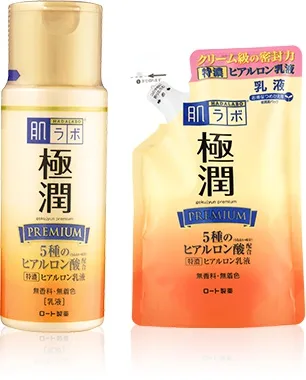
Where most hyaluronic acid products deliver one or two forms of HA in a water-based serum that evaporates in dry climates, this milk stacks five distinct hyaluronic acid variants — each operating at a different depth and binding mechanism — and anchors them with an occlusive squalane-plus-mineral-oil layer. It's a complete hydration system rather than a humectant suspension.
A five-form hyaluronic acid emulsion from Japan's best-selling skincare brand, anchored by a practical squalane-plus-mineral-oil occlusive layer that actually traps what the HA pulls in. It's one of the most cost-effective hydration systems in J-beauty, as long as you're not avoiding parabens or mineral oil on principle.
The case for it
What would change this: A declared concentration would move this to a firmer reading of the dose.
Same rule for everyone. “Good choice” is the verdict on 9,564 of 45,024 concern verdicts across the catalog; rule R5 decided 9,072 of them. Unchanged since September 5, 2026, engine 5.1.1.
Brand or formulator? Disclose a concentration or correct a fact →
The studies behind the evidence row
The case for it
Same rule for everyone. “Strong choice” is the verdict on 1,459 of 45,024 concern verdicts across the catalog; rule R2 decided 892 of them. Unchanged since September 5, 2026, engine 5.1.1.
Brand or formulator? Disclose a concentration or correct a fact →
The studies behind the evidence row
The case for it
What would change this: A researched evidence row for the lead active would replace this with a verdict.
Same rule for everyone. “Supporting role” is the verdict on 8,197 of 45,024 concern verdicts across the catalog; rule R8 decided 4,250 of them. Unchanged since September 5, 2026, engine 5.1.1.
Brand or formulator? Disclose a concentration or correct a fact →
The case for it
What would change this: A researched evidence row for the lead active would replace this with a verdict.
Same rule for everyone. “Good choice” is the verdict on 1,938 of 45,024 concern verdicts across the catalog; rule F2 decided 1,938 of them. Unchanged since September 5, 2026, engine 5.1.1.
Brand or formulator? Disclose a concentration or correct a fact →
The case for it
What would change this: A researched evidence row for the lead active would replace this with a verdict.
Same rule for everyone. “Supporting role” is the verdict on 8,197 of 45,024 concern verdicts across the catalog; rule R8 decided 4,250 of them. Unchanged since September 5, 2026, engine 5.1.1.
Brand or formulator? Disclose a concentration or correct a fact →
Does the jobDoes what a moisturizer is for: seals moisture in, draws in water.
A verdict is DermApproved’s assessment of how well a product’s ingredients fit a concern — never a claim about what the product treats. Evidence dots and collected reviews sit beside it and are never blended in. Rules 0.5.1 · evidence table ev-2026.09-r228 · how we decide
Here's an uncomfortable truth about hyaluronic acid serums. If you apply pure HA in a dry environment — winter indoor heating, airplane cabin, desert climate — it will happily pull moisture out of your skin instead of into it, because humectants are promiscuous about where they get their water. The fix isn't to abandon hyaluronic acid. The fix is to anchor it with something that prevents it from evaporating, and this is the principle that Japanese skincare has been quietly getting right for decades. Hada Labo, the skincare line from Rohto Pharmaceutical (founded in Osaka in 1899 and one of Japan's oldest pharmaceutical companies), built an entire franchise around this idea. The Gokujyun line is arguably the best-selling skincare series in Japan. And the Premium Milk is the sealed, emulsion-based upgrade to the original humectant lotion that made the brand famous.
What's on the INCI list is, for a pharmacy brand moisturizer, genuinely thoughtful. Five types of hyaluronic acid — sodium acetyl-HA, sodium hyaluronate, hydrolyzed HA, hydroxypropyltrimonium HA, and sodium hyaluronate crosspolymer — each operating at a different molecular weight and binding mechanism. The sodium acetyl-HA is the 'super HA' that binds roughly twice as much water as regular sodium hyaluronate. The hydrolyzed HA is very low molecular weight, designed for deeper penetration. The hydroxypropyltrimonium HA carries a positive charge that makes it stick to skin's slightly negative surface. The crosspolymer creates a 3D surface mesh that provides immediate visible plumping. If you've ever wondered why a 'single hyaluronic acid' serum doesn't deliver the results the marketing promised, the answer is that most HA products aren't stacking this kind of complex — they're using one form and hoping it does everything. This one doesn't.
Then there's sakuran, which is the fun one. Sakuran is an exopolysaccharide from Aphanothece sacrum, a rare freshwater algae found almost exclusively in certain Japanese spring environments. Laboratory testing has shown sakuran holds approximately five times more water by weight than hyaluronic acid, which is the kind of claim that normally deserves eye-rolls but in this case is reasonably well-supported by the published research. In this formula, sakuran layers beneath the HA complex as a supporting humectant mesh. Does it single-handedly revolutionize hydration? No. Does it add meaningful water-binding capacity to an already well-stacked formula? Yes. It's one of those ingredients that signals the brand is actually trying rather than just recycling glycerin and calling it innovation.
The real key to why this formula works, though, isn't the humectants. It's the occlusive layer. Squalane, mineral oil, dimethicone, cetyl alcohol, and triethylhexanoin combine to create a lightweight but genuinely effective occlusive film that locks in everything underneath. This is where the Premium Milk differs meaningfully from a pure HA serum and why it makes sense as a complete moisturizer. Apply it on top of the Hada Labo Lotion (or any watery humectant essence) and the squalane-plus-mineral-oil system traps the moisture before it can evaporate. Apply it alone on clean skin and you still get both humectant and occlusive action in one step. The texture is where the formulation gets the texture balance right — it pours like a thin milk, spreads easily, and absorbs to a satin finish within two to three minutes without the greasy feel that heavier oil-based occlusives would produce.
Now the honest parts. The first is that this formula contains methylparaben. Parabens are, based on the current weight of peer-reviewed evidence, perfectly safe preservatives at cosmetic concentrations, but a significant chunk of skincare consumers have decided to avoid them on principle, and if you're in that camp, this product isn't for you. The second is mineral oil. Cosmetic-grade mineral oil is highly refined and has a near-zero comedogenic rating in most controlled testing, but the ingredient still carries cultural baggage in 'clean beauty' circles. The reality is that mineral oil is an excellent inert occlusive that's been used safely in pharmaceutical-grade skincare for a century — it's in Aquaphor, it's in Vaseline, it's in most drugstore moisturizers. But if you're avoiding it, again, this isn't your product. The third caveat is fungal acne. The palmitic acid and cetyl alcohol in the formula could feed Malassezia in susceptible users, so this isn't the moisturizer for anyone actively battling Pityrosporum folliculitis.
What this product does extraordinarily well is the specific job it's designed for: delivering concentrated hyaluronic acid hydration in a format that actually seals it in, at a price that's wildly favorable compared to western equivalents. You can pay $90 for a luxury moisturizer with one form of HA in a glossy jar. Or you can pay $18 for this Japanese pharmacy-brand milk with five forms of HA, sakuran, and a full occlusive system in a utilitarian pump bottle. The aesthetic pitch is different — Hada Labo packaging looks like something you'd find at a Japanese drugstore because that's exactly what it is — but the formulation pitch is better, and that matters more if you're actually using the product rather than photographing it.
One thing worth understanding about the Premium line specifically is that it's different from the Hada Labo that's available at Target and Walmart in the US. The US version is a simpler formulation, adapted for western distribution and with a reformulated INCI that doesn't include the full five-HA complex. The Japanese 'Premium' version, which this review is about, is the upgraded tier sold primarily through Japanese pharmacies and import retailers like Yesstyle. If you want the advanced formulation with sakuran and the five-type HA stack, you have to buy the imported Japanese version, not the westernized US version. That's a nontrivial distinction that's easy to miss.
For users who want deep hydration, don't have fungal acne, and aren't avoiding parabens or mineral oil, this is one of the most effective hydration moisturizers available at any price. The formulation is smart. The texture is well-calibrated. The price is reasonable. And it's the kind of product that quietly works in the background without demanding credit, which is what the best J-beauty tends to do.
The hero actives that drive this product's performance.
| Ingredient | Function | Evidence |
|---|---|---|
| Five-Type Hyaluronic Acid Complex (Sodium Acetyl-HA, Sodium HA, Hydrolyzed HA, Hydroxypropyltrimonium HA, Sodium HA Crosspolymer) | This is what Hada Labo is famous for — a stacked hyaluronic acid complex where each form operates at a different depth. Sodium acetyl-HA (Super HA) binds twice the water of regular HA, hydrolyzed HA penetrates deepest at very low molecular weight, hydroxypropyltrimonium HA is cationically-modified to adhere to skin, and the HA crosspolymer forms a 3D surface mesh that delivers immediate plumping. In this milk, the complex is anchored by occlusives rather than floated in water. | Established mechanism for Dehydration · established mechanism |
| Sakuran (Aphanothece Sacrum Exopolysaccharide) | A rare Japanese freshwater-algae polysaccharide with a molecular structure capable of holding five times more water than hyaluronic acid by weight. In this formulation, it acts as a supporting humectant mesh that layers beneath the HA complex, creating an exceptionally water-retentive surface film. | Not yet assessed |
| Squalane + Mineral Oil + Dimethicone Occlusive Layer | The emulsion format is the entire point here — rather than delivering hyaluronic acid alone (which evaporates if not sealed in humid environments), this milk pairs the HA stack with a layered occlusive system of squalane, mineral oil, and dimethicone that traps the drawn-in moisture. This is what makes it function as a complete moisturizer rather than a humectant serum. | Regulator-approved for Dryness · established mechanism |
| Allantoin | Works alongside arginine as a secondary soothing system for reactive or compromised skin. In this fragrance-free formula, it supports the 'barrier recovery' positioning the brand uses for the Premium line's more concentrated emulsion. | Not yet assessed |
Ingredient standings describe the active at treatment-level doses and vehicles; this product's own condition grades weigh its actual formula.
Water, Glycerin, Dipropylene Glycol, Dimethicone, Mineral Oil, Cetyl Alcohol, Triethylhexanoin, Squalane, Sodium Acetylhyaluronate (Super Hyaluronic Acid), Sodium Hyaluronate, Hydrolyzed Hyaluronic Acid (Nano Hyaluronic Acid), Hydroxypropyltrimonium Hyaluronate, Sodium Hyaluronate Crosspolymer (3D Hyaluronic Acid), Aphanothece Sacrum Exopolysaccharides (Sakuran), Ammonium Acrylates Copolymer, Palmitic Acid, Cetyl Phosphate, Arginine, Allantoin, Hydroxypropyl Methylcellulose, Carbomer, Disodium EDTA, Butylene Glycol, Phenoxyethanol, Methylparaben
moisturizer
AM & PM
Classic J-beauty layering: apply after the Hada Labo Lotion (or any watery essence) and before sunscreen. This milk is designed to seal in humectant-rich layers, not replace them.
Immediate plumping and dewiness on application. Sustained hydration improvement typically visible after 1-2 weeks of twice-daily use, with cumulative barrier recovery over 4-6 weeks.
The formulation's core hydration claim rests on well-documented research into molecular-weight-diversified hyaluronic acid systems. Studies on topical HA have shown that higher molecular weight forms provide surface hydration and visible plumping while lower molecular weight and hydrolyzed forms penetrate the upper stratum corneum more effectively. Stacking multiple HA forms in a single formula is a formulation strategy intended to capture hydration benefits at different skin depths simultaneously, and Hada Labo's approach is one of the more aggressive implementations in the commercial market. Sakuran (Aphanothece sacrum exopolysaccharide) has been studied in Japanese dermatological research for its water-retention properties — laboratory testing has shown it can hold several times more water than hyaluronic acid by weight, though clinical outcomes in humans are less extensively documented than HA itself. The occlusive system of squalane, mineral oil, and dimethicone is supported by decades of research on reducing transepidermal water loss. Cosmetic-grade mineral oil, in particular, has been shown in controlled testing to be effectively non-comedogenic despite persistent consumer concerns.
Dermatologists frequently recommend layered hyaluronic acid moisturizers for patients with dehydrated skin, compromised barriers, and winter dryness. Dermatologists in everyday practice typically acknowledge that hyaluronic acid products work best when paired with an occlusive layer, especially in dry climates — a fact that is built into the J-beauty lotion-plus-milk layering philosophy that this product is part of. Dermatologists also commonly address the mineral oil concern by pointing out that cosmetic-grade mineral oil is highly refined, chemically inert, and has an excellent safety profile in clinical use. For patients avoiding mineral oil, alternative occlusives like petrolatum or squalane alone would be recommended. Hada Labo is commonly referenced in dermatology and skincare circles as an example of a well-formulated drugstore brand from an established pharmaceutical company.
Apply after cleansing and after any watery toners or essences, including the Hada Labo Gokujyun Lotion for the classic layering approach. Dispense 2-3 pumps into the palm, warm briefly, and press into face and neck using gentle upward motions. Allow 1-2 minutes for full absorption before applying sunscreen in the morning. Can be used twice daily, morning and evening. Particularly effective in dry climates and during winter months.
At approximately $18 for 140ml, this moisturizer delivers outstanding value. The five-type HA complex, sakuran inclusion, and layered occlusive system are typically found only in significantly more expensive products from western brands. Compared to luxury moisturizers at $60-$100 with less sophisticated HA delivery, this milk is a far better formulation per dollar. The only caveat is that imported Japanese products can vary in price based on retailer — buying direct from Japan via Yesstyle or similar typically offers the best value, while US-based resellers may add significant markup.
Users with dehydrated, dry, or compromised skin looking for a well-formulated hyaluronic acid moisturizer at a reasonable price. Fans of J-beauty layering systems who want to complete a Hada Labo routine. Anyone seeking a fragrance-free, effective moisturizer backed by a legacy pharmaceutical brand.
Users actively managing fungal acne, those avoiding parabens or mineral oil on principle, and those with extremely oily skin who prefer water-gel moisturizers. Buyers looking for cruelty-free certification (Rohto is not currently certified).
Ready to try Rohto Mentholatum Hada Labo Gokujyun Premium Hyaluronic Acid Milk?
Buy at Amazon ♥Lightweight milky emulsion that pours easily and spreads to a satin finish
Completely fragrance-free — no noticeable odor
White pump bottle with a pharmacy-style clean aesthetic — utilitarian Japanese skincare standard
Expect an immediate plumped, dewy feel on application. The squalane and mineral oil layer may feel slightly heavy to users accustomed to gel-based moisturizers, but it absorbs within 2-3 minutes without a greasy residue. No adjustment period required for most users.
About 3-4 months per unit with twice-a-day use to face and neck
fall winter
Rohto Pharmaceutical, founded in Osaka in 1899, launched the Hada Labo brand in 2004, built around the philosophy that Japanese women's skincare should be minimalist and humectant-driven. The original Gokujyun Lotion became one of Japan's best-selling skincare products of all time. The Premium Milk is part of the line's expanded Premium tier, which upgraded the original formulation with the five-HA complex and added sakuran, a rare Japanese freshwater-algae extract with exceptional water-binding capacity.
Hada Labo launched in 2004 as a skincare line under Rohto Pharmaceutical, a Japanese pharmaceutical company founded in 1899. The brand is one of the most-sold skincare lines in Japan, with deep pharmaceutical credibility and strong dermatological research backing its hyaluronic acid formulations.
Mineral oil clogs pores and causes breakouts
Cosmetic-grade mineral oil used in skincare is highly refined and has a near-zero comedogenic rating in most users. In this formulation, it acts as an effective occlusive that prevents transepidermal water loss without penetrating the skin. The concern around mineral oil is largely inherited from older industrial grades.
The Lotion is a watery humectant essence applied first to deliver hyaluronic acid. The Milk is a lightweight emulsion applied after, providing additional HA plus occlusive lipids (squalane, mineral oil, dimethicone) that seal in the moisture from the Lotion layer. They're designed to work together in the classic J-beauty layering system.
Yes — sodium acetyl-HA, sodium hyaluronate, hydrolyzed HA, hydroxypropyltrimonium HA, and sodium hyaluronate crosspolymer. Each form operates at a different molecular weight and penetration depth, giving the formula both surface plumping and deeper hydration.
Yes — the formula is fragrance-free, alcohol-free, colorant-free, and uses well-tolerated ingredients. The only caveat is methylparaben, which is a safe preservative but some sensitive users choose to avoid parabens. It's otherwise very gentle.
No — the mineral oil and squalane are generally considered Malassezia-safe, but the formula contains palmitic acid and cetyl alcohol which can feed Malassezia. Users with fungal acne should stick to fully vetted alternatives.
Yes. While it's designed to follow the Hada Labo Gokujyun Lotion, it functions as a complete moisturizer on its own. The occlusive layer (squalane, mineral oil, dimethicone) is sufficient to lock in hydration without a second moisturizer.
The US version sold at Target and Walmart has a slightly different formulation than the Japanese 'Premium' version. The Japanese Premium Milk uses the full five-HA complex plus sakuran, while the US formula is simpler. If you want the advanced version, buy from Japanese retailers like Yesstyle or Amazon JP imports.
Yes, the formulation contains no retinoids, salicylic acid, or other pregnancy-restricted actives. Hyaluronic acid, squalane, and the other ingredients are generally considered safe during pregnancy and breastfeeding.
Recurring themes our editors read across retailer reviews of this product — summaries in our words, not quotations, and not a substitute for your own patch test.
Deeply hydrating without feeling heavy
Calms winter dryness fast
Great value for a J-beauty classic
Works well under and over other products
Contains mineral oil (some users prefer to avoid)
Methylparaben in the formula
Bottle design can leak when traveling
Mildly occlusive for hot summer climates
Verified answers from our questions library — the nuance a product page cannot carry.