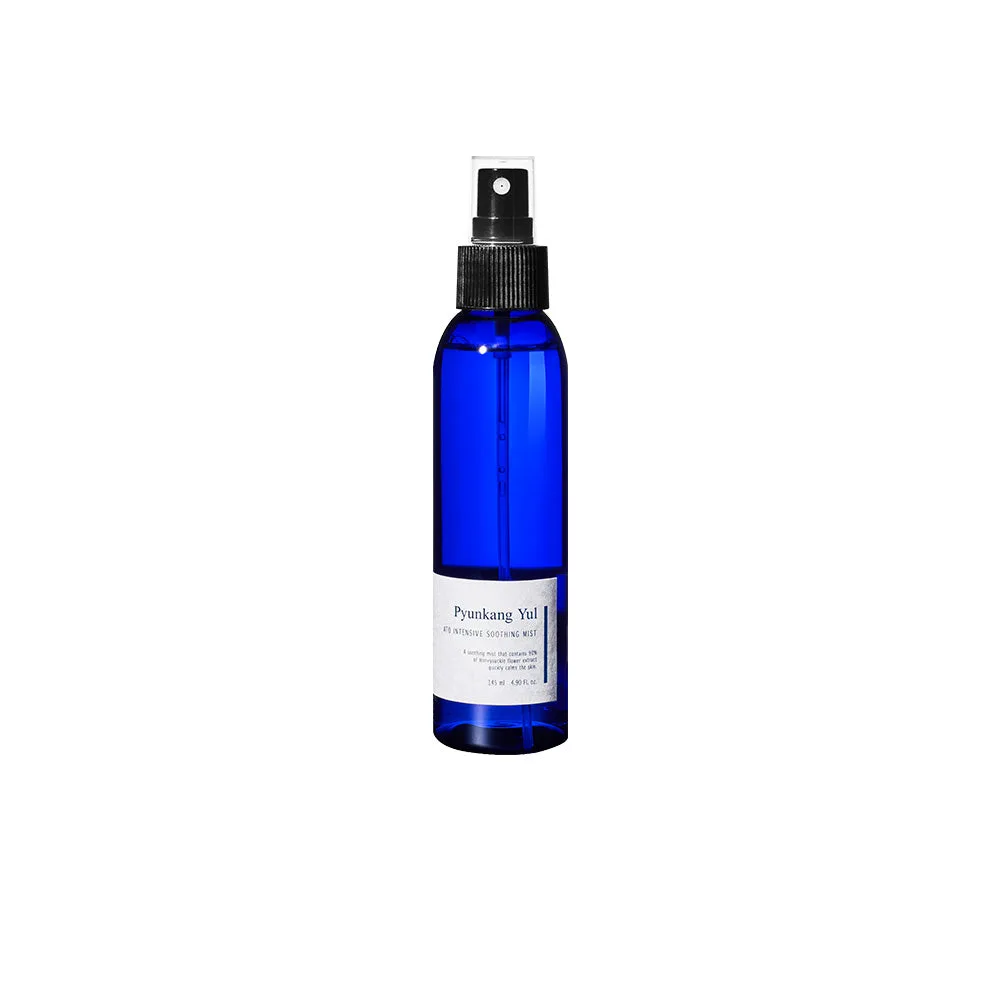
A fragrance-free, alcohol-free mist whose actual soothing agents — panthenol and allantoin — sit high in the list, from a brand that formulates for atopic families first and adult K-beauty shoppers second. The fine atomiser and the safe-for-newborns brief make it one of the few face mists that a parent can spray on a flushed toddler and then on themselves without reading the label twice.
A fragrance-free, alcohol-free calming mist that puts its real soothing agents — panthenol and allantoin — high in the list and its marketing botanicals low, sprays beautifully, and is safe enough to use on an infant. It does what a mist can do, which is to cool, hydrate briefly and set up the moisturiser that follows; it does not do what the copy about resurrection plants and honeysuckle implies. At seventeen dollars it is a sensible buy for reactive skin and for parents, provided nobody expects it to work alone.
The mist has been on international sale since late 2022 with reviews in the hundreds across Amazon, iHerb and K-beauty resellers, and its formula has changed since launch — retailer pages still describe a honeysuckle-first version while the brand's own list is water-first. No clinical study of the product exists, so this assessment draws on the current published ingredient list, the well-documented behaviour of panthenol and humectant leave-ons, and a consistent but modest user record.
Verdicts
How well it fits each concern
Verdict by concern tap a concern for the case
Good choicefor DehydrationIn your profileYou chose · Panthenol (Vitamin B5) is a reference standard by mechanism for dehydration; this mist carries it high in the ingredient list.Moderate evidenceGentleNo reviews collected yet
The case for it
Panthenol has trial-supported standing for this concern.
It is present at an effective concentration, declared or high in the ingredient list.
The formula carries none of the triggers this concern is sensitive to.
Same rule for everyone. “Good choice” is the verdict on 9,564 of 45,024 concern verdicts across the catalog; rule R5 decided 9,072 of them.
As of September 25, 2026, engine 5.1.1.
R5 — Trial-supported or guideline-supported active, adequately or plausibly dosed. · the full register
Carrying active
Panthenol
Standing
supported — its mechanism is established
Form
adequate — studied range 2.5%, from the trials on the row; needs leave-on contact
Tolerability
gentle
Row checked
against its sources on July 17, 2026 (evidence table ev-2026.09-r228)
The studies behind the evidence row
Cosmetic Ingredient Review assessment of panthenol / dexpanthenol — humectant and moisturizer that raises stratum-corneum water content — reference work
Good choicefor SensitivityIn your profileYou chose · No fragrance, drying alcohol, declarable allergens or sensitising preservatives in this mist — the profile sensitive skin looks for.Not yet assessedGentleNo reviews collected yet
The case for it
Panthenol has no evidence row yet for this concern — it is in the research queue.
The formula carries none of the triggers this concern is sensitive to.
What would change this: A researched evidence row for the lead active would replace this with a verdict.
Same rule for everyone. “Good choice” is the verdict on 1,938 of 45,024 concern verdicts across the catalog; rule F2 decided 1,938 of them.
As of September 25, 2026, engine 5.1.1.
Does the jobDoes what a toner is for: not alcohol-driven, adds something real. Not measured from the label: restores skin pH, plays well with what follows.
A verdict is DermApproved’s assessment of how well a product’s ingredients fit a concern — never a claim about what the product treats. Evidence dots and collected reviews sit beside it and are never blended in.
Rules 0.5.1 · evidence table ev-2026.09-r228 · how we decide
Assessment
Pros & Cons
Pros
✓ Panthenol fifth in the list and allantoin twelfth — real anti-irritants, well placed
✓ Fragrance-free, alcohol-free, silicone-free and marketed from newborn age
✓ Exceptionally fine, even atomiser that does not drip or splatter
✓ Cools and stops stinging on flushed or freshly cleansed skin immediately
✓ Trehalose and a five-form hyaluronate film add a light plumpness
✓ Doubles as a body and toddler mist from the same bottle
✓ Around seventeen dollars for 145ml from a brand with a long tolerability record
Cons
✗ Hydration fades within the hour if left to air-dry without a moisturiser over it
✗ Retailer listings still describe a 90 percent honeysuckle formula the label no longer matches
✗ Resurrection plant and honeysuckle are marketing botanicals without clinical evidence
✗ Faintly tacky if allowed to dry completely
✗ Single 145ml size, and the pump can sputter near the end of the bottle
Review
Full Review
Face mists are the most over-promised category in skincare, and the promise is always the same: spray, and be hydrated. The physics say otherwise. A humectant sprayed onto skin and allowed to evaporate in a dry office does not leave water behind — it can pull water outward as it goes, and the face that felt refreshed at two o'clock feels tighter by three. So the fair test of any mist is not whether it hydrates on its own, since none of them reliably do, but whether it is built to work within that limit: to cool, to soothe on contact, and to set up whatever goes over it. Pyunkang Yul's ATO Intensive Soothing Mist is, on its ingredient list, one of the more honest attempts at that, even if its marketing is not.
The list starts with water, then dipropylene glycol and butylene glycol, the humectant base, and the preservative-humectant 1,2-hexanediol. Fifth is panthenol, and its position is the most encouraging thing about the formula. Panthenol is the one ingredient here with a solid record for calming irritated skin — it converts to pantothenic acid, supports the lipid synthesis the barrier depends on, and in leave-on form has been shown to speed recovery of irritated skin and reduce water loss. In a mist that gets reapplied through the day, it accumulates contact time it would never get in a rinse-off, and it is the quiet reason the soothing outlasts the spray. Trehalose follows at sixth, a sugar humectant that binds water and slows evaporation, and a neat thematic fit for a product that also lists a desert plant. Allantoin sits twelfth, a second genuine anti-irritant with a long record in chapped-skin products. Between them, panthenol and allantoin are why this mist calms rather than merely wets.
The herbs are where the story gets interesting, because the story has moved. When the mist launched in late 2022 it was marketed as 90 percent honeysuckle flower extract in place of water, and most retailer pages still describe it that way. The brand's own current ingredient list, on its international store, starts with water and places honeysuckle thirteenth. Same product, same tube, a reformulated base; the brand has not made much of the change, and a careful buyer will notice that the bottle in hand and the listing on screen disagree. It matters less than it sounds. Honeysuckle is a traditional anti-inflammatory herb with laboratory support and no clinical trial on flushed skin at any concentration, so whether it made up most of the formula or a trace of it, the evidence for it does not change — and the panthenol, allantoin and humectants that do the work were in both versions. Anastatica hierochuntica, the resurrection plant that unfurls from a dry ball when wetted, sits in the last quarter of the list as the hydration mascot; its extract carries sugars that plausibly add to the humectant load, and its lore adds nothing. Five hyaluronate species close the list, the brand's standard multi-weight flourish, contributing a faint water-binding film and the slight plumpness the skin has after spraying.
What is absent is as important as what is present. No fragrance, no essential oils, no alcohol, no silicone, no colour, and only a trace of light esters near the end for softness. The brand cites a hypoallergenic determination from a Korean dermatology testing laboratory and markets the mist from newborn age, and the list supports that: there is nothing here for reactive skin to react to. That is the ATO range's whole reason to exist, coming as it does from a hospital that treats atopic dermatitis, and the mist honours it.
In use, the atomiser deserves its own sentence. It produces a genuinely fine, even veil rather than the wet splatter many mists deliver, at most angles, which means it can be sprayed onto a toddler's cheeks from a distance or onto a hand and patted onto an infant's face without a fuss. The spray is cool, unscented and stingless on skin that is hot, tight or freshly cleansed, and the relief is immediate — evaporation cooling, the same mechanism as a cold flannel, with the panthenol softening the surface as the water leaves. Left to dry entirely it goes faintly tacky and, in a dry room, the comfort fades within the hour; used as intended, sprayed after cleansing with a lotion or the brand's ATO gel applied while the skin is still damp, it turns into the wet base that lets the moisturiser spread thinner and hold more. That is the right way to use every mist and this one is at its best used that way.
The price is about seventeen dollars for 145ml on the brand's store, with Amazon, iHerb and the K-beauty resellers a few dollars either side. A bottle lasts two months as a twice-daily facial step and closer to a month if it is sprayed liberally over a child's body through a summer, and there is no larger size. Reviews across those retailers run to the hundreds — modest, and consistent: the spray is fine, it calms stinging, it is safe on babies, and it does not hold moisture on its own, which is the category's honest ceiling rather than a defect of this bottle. Pyunkang Yul is an established sensitive-skin brand with a long tolerability record rather than clinical data, and no trial of the mist has been published.
Judged against what a mist can do, this is a good one: the calming ingredients are where they should be, the irritants are absent, the spray is excellent and the price is fair. Judged against the copy, it is a mist that has a resurrection plant in it and a honeysuckle base that is no longer there. Buy it for the panthenol, the atomiser and the peace of mind, use it under a moisturiser, and treat the rest as the brand's poetry.
Formula
Key Ingredients
The hero actives that drive this product's performance.
Fifth in the list, ahead of every botanical, and the one ingredient in this mist with real evidence for calming irritated skin. As a leave-on that is reapplied through the day, it gets repeated contact time to draw water into the outer skin and support barrier recovery — the quiet reason the mist helps flushed skin beyond the moment of spraying.
Established mechanismfor Dehydration · established mechanism
A sugar humectant sixth in the formula, and a fitting companion to the resurrection-plant story — trehalose is the molecule that lets desiccation-tolerant organisms survive drying out. Here it binds water on the skin surface and slows the evaporation that would otherwise leave a sprayed face drier than before.
The second genuine soothing agent, twelfth in the list, a skin-conditioning compound with a long record in products for irritated and chapped skin. In a fine mist it contributes a mild anti-irritant effect on each application rather than the keratolytic action it has at higher creams-and-ointments levels.
The ATO line's signature herb. Retailer listings for this mist still describe a 90 percent honeysuckle-extract base, but the brand's current ingredient list puts water first and honeysuckle thirteenth, so the marketing and the label have parted ways. It remains a traditional anti-inflammatory with laboratory backing and no clinical trial on flushed skin.
The desert plant that unfurls when wetted, invoked for its 'deep, lasting hydration' and listed in the last quarter of the formula. Its extract carries sugars and trehalose-like compounds that plausibly add to the humectant load, but the hydration a mist can deliver is set by the glycols and panthenol above it.
Five hyaluronate species close the list — sodium salt, hydrolyzed, cationic, crosspolymer and acetylated — which is the brand's standard multi-weight flourish. In a leave-on mist they form a light water-binding film and give the sprayed skin its faint plumpness, though their late position means they are a finish rather than a foundation.
Established mechanismfor Dehydration · established mechanism
Ingredient standings describe the active at treatment-level doses and
vehicles; this product's own condition grades weigh its actual formula.
Use it as the wet layer everything else goes onto — spray after cleansing and apply serum or lotion while the skin is still damp, so the humectants have something to hold. As a midday refresher it works best over bare skin or under a fresh coat of moisturiser; sprayed over a finished face and left to dry on its own, any humectant mist can pull water outward in a dry room.
Results Timeline
Hot, tight or stinging skin feels calmer within a minute of spraying, which is the evaporation and the panthenol doing their immediate work. There is no cumulative change to expect from a mist; over a week or two of using it as the base for a moisturiser, skin that dehydrates easily tends to stay comfortable longer between applications, and that is the extent of it.
Pairs Well With
the brand's ATO gel lotion or balm applied while skin is still damppost-cleanse use before serums and creamsa pump-bottle top-up in a bag for a child's flushed cheeks
The formula can be read as a panthenol-and-humectant leave-on delivered by spray, and the evidence for it follows from those two elements. Dexpanthenol is among the better-studied cosmetic anti-irritants: applied topically it is converted to pantothenic acid, a precursor of coenzyme A that is needed for barrier lipid synthesis, and clinical studies of dexpanthenol-containing leave-on products have shown improved stratum corneum hydration, reduced transepidermal water loss and faster recovery of skin damaged by irritants or dry weather compared with vehicle. Its position fifth in this list, ahead of every extract, is consistent with a functional rather than token level, though the brand does not declare the concentration. Allantoin is a long-established skin-conditioning agent with anti-irritant and mild keratolytic properties, used for decades in preparations for chapped and irritated skin; in a mist its contribution is the former.
The humectant chemistry sets the ceiling. Dipropylene glycol, butylene glycol, trehalose and the hyaluronate complex all bind water on the surface, but humectants cannot retain water against a dry atmosphere without an occlusive layer above them, and studies of humectant-only products in low-humidity conditions have documented increased rather than decreased water loss. This is the mechanistic basis for the practical advice to apply a moisturiser over any mist while the skin is still damp. Trehalose is of some interest beyond simple humectancy: it is the disaccharide that allows desiccation-tolerant organisms to survive drying, and it has been studied as a protective agent for cells and proteins under water stress, though its cosmetic benefit is modest and not clinically distinct from other sugars.
Anastatica hierochuntica, the resurrection plant, has laboratory data on antioxidant and glycation-inhibiting compounds in its extracts and no clinical trials on skin hydration; its extract likely contributes sugars to the humectant pool and little else. Lonicera japonica flower extract has preclinical anti-inflammatory support from chlorogenic acid and flavonoids and no controlled trial on flushed or atopic skin. The absence of fragrance, essential oils and alcohol — the three most common triggers of irritant and allergic reactions to facial mists — is the formula's most clinically meaningful feature.
Dermatologist Perspective
Dermatologists are generally sceptical of facial mists as a hydration strategy and would frame this one accordingly: a useful comfort measure and a good wet base for a moisturiser, not a treatment. Where it earns clinical goodwill is in its composition. A leave-on with panthenol and allantoin, no fragrance, no essential oils and no alcohol is the kind of product a clinic would happily suggest to a patient with reactive, rosacea-prone or atopic skin who wants something to spray on a flushed face, and the newborn-safe brief is consistent with the list. The advice attached would be the standard one: spray after cleansing and seal with an emollient while damp; do not rely on it alone in dry air, where humectant mists can worsen tightness. The honeysuckle and resurrection plant claims would be regarded as inert, and the discrepancy between the older 90 percent honeysuckle marketing and the current water-first label noted as a labelling issue rather than a safety one.
Guidance
Usage & Recommendations
How to Use
Hold the bottle twenty to twenty-five centimetres from the face, close the eyes and spray two or three times in a sweeping motion after cleansing, then — while the skin is still visibly damp — apply serum, lotion or cream so the humectants have water to hold. Through the day it can be sprayed over bare skin or under a fresh layer of moisturiser or sunscreen on flushed, hot or tight patches; avoid letting it air-dry fully in a heated or air-conditioned room. For an infant, spray onto a clean hand and pat onto the cheeks and body rather than misting the face directly. It is suitable for the face and body and for use from newborn age, and works well kept in a bag or a changing kit for summer.
Value Assessment
Seventeen dollars for 145ml puts this in the middle of the face-mist market, below the prestige thermal-water and botanical sprays and above the plain glycerin mists, and for a formula with panthenol and allantoin placed high and nothing irritating anywhere, that is fair. There is one size only; the bottle lasts two months as a facial step and about half that as a family summer mist. Pyunkang Yul's premium over a generic hydrating spray is buying a very good atomiser, a hypoallergenic test cited by the brand and a sensitive-skin pedigree rather than clinical proof — reasonable things to pay for at this price, especially for households that will use one bottle on a toddler and an adult alike. Not a bargain, not a stretch.
Who Should Buy
People with sensitive, reactive or dehydration-prone skin who want a fragrance-free, alcohol-free mist to calm flushing and to use as the wet base under their moisturiser, and parents looking for one spray they can use on a hot, upset toddler and on themselves. It is also a sensible choice for anyone whose skin stings with most mists.
Who Should Skip
Anyone expecting a mist to hydrate on its own through a working day in dry air — no mist does, and this one is no exception. Buyers drawn by the 90 percent honeysuckle claim should know the current formula is water-based, and those who want a mist with active brightening or exfoliating ingredients will find nothing of the kind here.
Ready to try Pyunkang Yul ATO Intensive Soothing Mist?
A very fine, even mist that lands as a cool veil rather than droplets, drying to a barely-there film with a hint of tack if left on its own
Scent
None; a faint neutral wetness on spraying and nothing once it settles
Packaging
A slim 145ml white plastic bottle with a fine-mist pump and the ATO line's blue label — a good atomiser that sprays evenly at most angles and fits a bag or a nappy-changing kit
Finish
dewylightweight
What to Expect on First Use
The first spray is a small relief on hot or tight skin — cool, fine and even, with no sting and no scent — and the panthenol leaves the surface feeling softer once the water has gone. There is nothing to adapt to; the only early lesson is that on dry skin it wants a moisturiser over it while still damp, or the comfort fades within the hour.
How Long It Lasts
About two months at a few sprays twice daily on the face; used liberally as a body and toddler mist through the summer, closer to a month
The ATO range is Pyunkang Yul's atopic-skin line, rooted in Pyunkang Korean Medicine Hospital's decades of treating the condition, and the mist joined it in late 2022 as the range's on-the-go calming step. Its original formulation was built on a claimed 90 percent honeysuckle extract in place of water — the version most retailer pages still describe — before the brand's current list moved to a water-first base with the same actives.
About Pyunkang Yul Established Brand (5–20 years)
Pyunkang Yul is the cosmetic line of a Seoul Korean-medicine hospital that has treated atopic dermatitis since the 1970s, and the ATO range is its most direct expression of that heritage. The brand discloses complete ingredient lists and cites Korean dermatology-lab hypoallergenic testing, but has published no clinical trials of its own products; its standing rests on a decade of restrained, fragrance-free formulation.
Brand founded: 2013 · Product launched: 2022
Myth vs. Reality
Common Myths
Myth
Spraying a hydrating mist through the day keeps skin hydrated.
Reality
A humectant mist left to evaporate in a dry room can draw water outward from the skin and leave it tighter than before. It hydrates when something is put over it while damp — a lotion, a cream, even a fresh layer of sunscreen — and the spray-and-walk-away habit is where face mists earn their reputation for doing nothing.
Myth
This mist is 90 percent honeysuckle extract, so it is mostly herbal medicine.
Reality
That claim describes the original formula and still appears on retailer listings. The brand's current ingredient list starts with water and places honeysuckle thirteenth; the soothing work is done by panthenol, allantoin and the humectants, which were in both versions.
FAQ
Frequently Asked Questions
Is the Pyunkang Yul ATO Intensive Soothing Mist really 90 percent honeysuckle extract?
The original formula was marketed that way and many retailer pages still say so, but the brand's current ingredient list starts with water and places honeysuckle flower extract thirteenth. The actives that matter — panthenol, allantoin, trehalose and the hyaluronates — are present in both versions.
Can I use the ATO Intensive Soothing Mist on a baby?
The brand markets it from newborn age; it is fragrance-free, alcohol-free and cites a Korean dermatology-lab hypoallergenic test. Spray it onto your hand and pat it on for an infant's face rather than misting directly, so nothing goes in the eyes.
How is the ATO Soothing Mist different from Pyunkang Yul's Mist Toner?
The Mist Toner is a facial toner-in-a-spray built around the brand's herbal humectant base for adult skincare routines. The ATO mist is the atopic line's calming spray, with panthenol and allantoin high in the list and a brief that covers children and body skin as well as the face.
Should I let the ATO mist dry on my face or put something over it?
Put something over it. Spray after cleansing, then apply your lotion, cream or sunscreen while the skin is still damp so the glycols and hyaluronates have water to hold. Left to air-dry in a heated or air-conditioned room, any humectant mist can leave skin feeling tighter.
Does the ATO Intensive Soothing Mist contain alcohol or fragrance?
Neither. There is no denatured alcohol, no perfume and no essential oil in the list; the base is water and glycols, and the only lipid content is a trace of light esters near the end, which is why the finish is soft rather than tight.
Is the ATO mist good for sunburn or heat rash?
It is a reasonable comfort measure — the cool spray and the panthenol ease the sting and tightness of mildly overheated skin, and there is nothing in it that will irritate. It is not a treatment for a real burn, and heat rash needs cooling and air more than any product.
Reviews
What Reviewers Tend to Say
Recurring themes our editors read across retailer reviews of this product — summaries in our words, not quotations, and not a substitute for your own patch test.
Common Praise
Ultra-fine spray that does not drip or leave droplets
Calms stinging and heat after cleansing or in the sun
Safe to spray on a baby's face and body
Fragrance-free with nothing to react to
Common Complaints
Hydration fades quickly without a moisturiser over it
Slightly tacky if allowed to dry fully
Pump sometimes sputters when the bottle is near empty
Ingredient list on the box differs from older retailer listings
Notable Endorsements
Brand cites a hypoallergenic determination from a Korean dermatology testing laboratory
Every cica, calming, and barrier product leans on the same three ingredients, and the real mechanisms are far more specific — and more limited — than 'soothing' lets on.
Picking one skin state and selling through hospital dermatology departments is a genuinely smart strategy. Whether the house botanical earns its billing is a separate question, and the answer is not the one either side wants.
That headline is the story every brand tells about trehalose. It is also, as of a 2017 paper in Molecular Cell, not quite true — which turns out to be the most interesting thing about the ingredient.
Products, answers, therapy guides, tools and articles in one search. Brand names,
slang and abbreviations all work — accutane finds isotretinoin, bacne finds truncal acne.