Beta-Glucan Does Niacinamide's Job Without the Marketing Budget
It hydrates, calms, and quietly supports the barrier with one of the better safety records in skincare. So why has almost nobody heard of it?
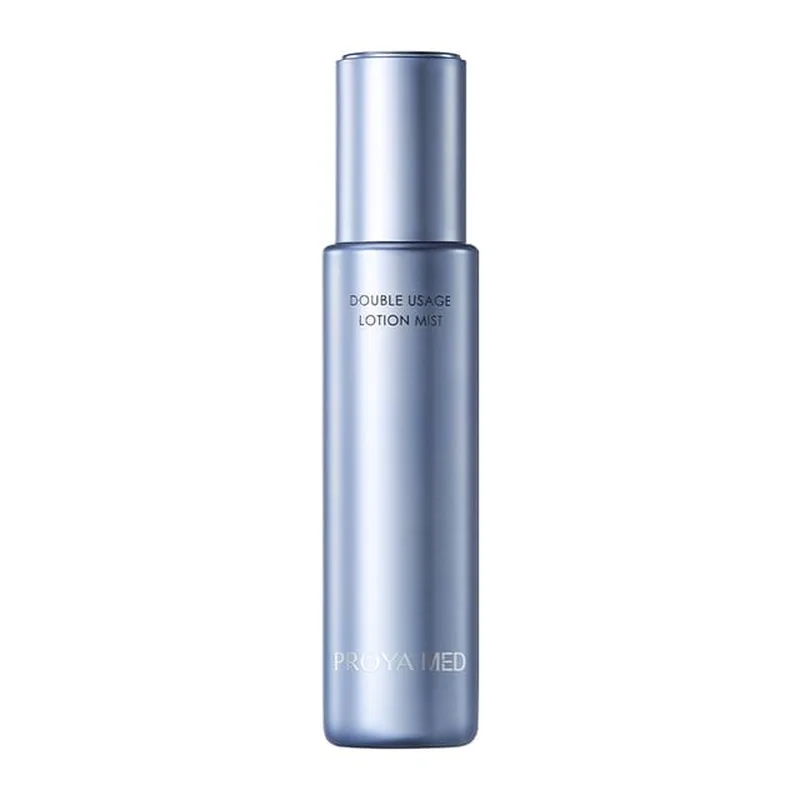
It is a ceramide-and-collagen milk engineered to atomize, so it delivers a lotion's lipids in a mist's no-touch format, and the same pump doubles as a lotion dispenser. It is also the debut of Proya's clinical PROYA MED trademark and the brand's first PDRN formula, contract-made by COSMAX, which makes it a statement product as much as a skincare one.
The best thing about this mist is the least marketed: a fragrance-free ceramide-and-cholesterol milk that atomizes finely enough to calm flushed, reactive skin without a fingertip touching it. The collagen and PDRN headlines are ahead of their evidence, and the export price is steep for 100ml, but as a no-touch barrier layer for sensitive skin it is genuinely well made.
PROYA MED did not exist before mid-2025 and this spray reached export shelves in 2026, so there are only a handful of English-language reviews and no independent efficacy study behind any of its three headline ingredients. The assessment weighs the strong ceramide and niacinamide evidence and the formula's low irritation potential far more than any documented outcome from the product itself.
The case for it
What would change this: A researched evidence row for the lead active would replace this with a verdict.
Same rule for everyone. “Good choice” is the verdict on 1,938 of 45,024 concern verdicts across the catalog; rule F2 decided 1,938 of them. As of September 25, 2026, engine 5.1.1.
Brand or formulator? Disclose a concentration or correct a fact →
The case for it
What would change this: A researched evidence row for the lead active would replace this with a verdict.
Same rule for everyone. “Supporting role” is the verdict on 8,197 of 45,024 concern verdicts across the catalog; rule R8 decided 4,250 of them. As of September 25, 2026, engine 5.1.1.
Brand or formulator? Disclose a concentration or correct a fact →
The case for it
Same rule for everyone. “Good choice” is the verdict on 9,564 of 45,024 concern verdicts across the catalog; rule R5 decided 9,072 of them. As of September 25, 2026, engine 5.1.1.
Brand or formulator? Disclose a concentration or correct a fact →
The studies behind the evidence row
The case for it
What would change this: A declared concentration would move this to a firmer reading of the dose.
Same rule for everyone. “Promising” is the verdict on 7,858 of 45,024 concern verdicts across the catalog; rule R9p decided 7,858 of them. As of September 25, 2026, engine 5.1.1.
Brand or formulator? Disclose a concentration or correct a fact →
The studies behind the evidence row
Does the jobDoes what a toner is for: not alcohol-driven, adds something real. Not measured from the label: restores skin pH, plays well with what follows.
Where our review and the verdict differ. The review below was written on the formulation and the published trials; the verdicts above apply the stricter standing test in our methodology — an active earns a recommendation only with guideline or regulatory standing for the concern. Where the two disagree, the verdict is DermApproved’s position.
A verdict is DermApproved’s assessment of how well a product’s ingredients fit a concern — never a claim about what the product treats. Evidence dots and collected reviews sit beside it and are never blended in. Rules 0.5.1 · evidence table ev-2026.09-r228 · how we decide
In July 2025 Proya filed for a trademark it had never needed in twenty-two years of selling skincare: PROYA MED, registered across cosmetics, pharmaceuticals and medical devices. The company that made encapsulated retinol a mass-market staple in China had decided its repair line needed a white coat. The first product filed under the new mark, in November of that year, was this one, a dual-state essence-milk spray, and it tells you exactly who the badge is aimed at: the sensitive-skin buyer who reads clinic-adjacent language as reassurance and wants a formula that can be applied without touching a face that stings. Whether the mist earns the coat is a fair question, and the answer splits neatly between what it does and what it says.
What it says is collagen, PDRN and gentian. The collagen is Proya's proprietary recombinant humanized type XVII, the anchoring protein of the junction between epidermis and dermis, which the label lists simply as collagen. The PDRN is doubled, a sodium DNA salt and a hydrolyzed DNA, marking the brand's first use of the polydeoxyribonucleotide that Korean clinics popularized in injectable form. The gentian is Gentiana scabra root extract, a bitter-root anti-inflammatory. These three are the whole identity of the MED sub-brand, and they sit together in the middle of the list, behind the emulsifiers, at the concentrations a leave-on spray can carry. That is the honest frame for the science: a sprayed collagen fragment forms a hydrating film and does not rebuild a basement membrane; topical PDRN has laboratory and small cosmetic studies behind it, not the wound-healing data of the injectable; and gentiopicroside from gentian has real anti-inflammatory activity in cell and animal work but thin human evidence at cosmetic doses. None of this is fraud. It is a repair story told at a volume the ingredients cannot quite match.
What it does is more convincing, and it comes from the parts of the list nobody advertises. This is a milk, not a water: sunflower oil, squalane and a dry ester are emulsified into it, along with ceramide EOP, ceramide NP and cholesterol, the lipid classes a stressed barrier is short of. Niacinamide sits ninth, above the emulsifiers, with panthenol, allantoin and dipotassium glycyrrhizate behind it, the conventional barrier-and-calm quartet that has decades of evidence and needs no white coat. The formula is free of fragrance, alcohol, colourants and mineral oil, and the preservation is modern and mild. Contract-manufactured by COSMAX, the Korean giant behind a large share of the world's mist-serums, it has the polish of a category that has been refined for a decade.
The pump is the real innovation, and it is a good one. A full, quick press turns the milk into a fog so fine it seems to vanish before it lands, leaving a soft cushion rather than the cold wet slap of a water mist. A slow partial press releases the same emulsion as a lotion into the palm, for pressing over a flushed cheek or a patch of flaking around the nose. For skin in a reactive phase, when every fingertip feels like sandpaper, the no-touch mode is the point of the product. Flushing visibly settles within minutes of a spray, mostly from the cooling and the glycyrrhizate, and over a week or two of twice-daily use the tight, papery feeling of a compromised barrier eases as the ceramides and humectants do their work. Whether any firmness or texture change follows from the collagen and PDRN is not something a mirror can settle in the eight weeks the brand suggests, and no independent trial has settled it either.
Limitations are mostly practical. The lotion mode needs a light hand until you learn the pump, and early presses can spit rather than pool. Sprayed heavily over makeup it leaves a faint film, so a single pass from a distance is the technique. Willow bark extract contributes trace salicylates that a very salicylate-sensitive user might notice, though for most reactive skin the formula is as gentle as they come. The opaque metallic cylinder gives no clue how much is left, and 100ml goes faster than a water mist because a milk is heavier per spray: six to eight weeks at two full sprays twice a day, less if the lotion mode is used across the whole face.
That brings the price into focus. At around fifty-seven dollars through export retailers, this is expensive for a mist, more than double what comparable Korean ceramide mist-serums cost and well above its likely Chinese shelf price. Proya is an established, deeply researched brand, but PROYA MED is a year old, the product is months old, and its distinguishing ingredients are the least proven ones. The buyer is paying a launch premium for a clever pump and a clinical badge, on top of a good but not exceptional ceramide milk.
For the right person that trade is still worth making. Sensitive, dehydrated or post-procedure skin that wants a fragrance-free barrier layer it can apply without touching, and that values the switch between fog and lotion, will find this genuinely useful and pleasant. Anyone buying it for the collagen or PDRN claims should wait for evidence, and anyone with a budget will find the same ceramide-and-niacinamide comfort for less in a bottle that asks to be rubbed in. The white coat is marketing; the mist underneath is a good one.
The hero actives that drive this product's performance.
| Ingredient | Function | Evidence |
|---|---|---|
| Sodium DNA + Hydrolyzed DNA (dual PDRN) | Proya's first use of polydeoxyribonucleotide, split into a salt form and a hydrolyzed form so that both larger and smaller DNA fragments are present in the mist. The pitch is adenosine-receptor-mediated repair of a stressed barrier; in a spray that can be re-applied through the day, the practical effect is soothing and hydration on skin that resents rubbing. | Not yet assessed |
| Collagen (recombinant humanized Type XVII) | Listed simply as collagen on the label, this is Proya's proprietary recombinant type XVII fragment, the anchoring collagen of the junction between epidermis and dermis. Its role here is film-forming hydration and a repair story; a sprayed protein cannot rebuild that junction, but it does leave a soft, cushioned surface. | Not yet assessed |
| Gentiana Scabra Root Extract | The third of the sub-brand's three headline ingredients, a bitter-root extract rich in gentiopicroside with anti-inflammatory data, placed directly after the collagen to give the mist its calming claim for reactive, flushed skin. | Not yet assessed |
| Ceramide EOP + Ceramide NP + Cholesterol | A two-ceramide-plus-cholesterol lipid set, emulsified into the milk phase that makes this a lotion rather than a water. It is what allows a mist to leave something behind on the barrier instead of evaporating and pulling moisture with it. | Established mechanism for Compromised Skin Barrier · established mechanism |
| Niacinamide + Panthenol + Allantoin | Niacinamide sits ninth, ahead of the emulsifiers, backed by panthenol and allantoin: the conventional barrier-and-calm trio that gives the formula a floor of proven benefit beneath the more novel collagen and PDRN claims. | Established mechanism for Compromised Skin Barrier · established mechanism |
| Artemisia Capillaris + Salix Alba Bark + Tomato Fruit Extracts | A botanical anti-inflammatory bench, capillary wormwood with willow bark and tomato extract, that Proya credits with redness relief; the willow bark contributes trace salicylates, the wormwood and tomato lycopene an antioxidant assist, all at the low doses of a mist. | Not yet assessed |
Ingredient standings describe the active at treatment-level doses and vehicles; this product's own condition grades weigh its actual formula.
Water, Butylene Glycol, Glycerin, Coco-Caprylate/Caprate, Pentylene Glycol, Dipropylene Glycol, Helianthus Annuus (Sunflower) Seed Oil, Isononyl Isononanoate, Niacinamide, Sorbeth-30 Tetraoleate, Diphenylsiloxy Phenyl Trimethicone, Hydroxyacetophenone, Panthenol, Squalane, Sorbitan Sesquiisostearate, Acrylates/Beheneth-25 Methacrylate Copolymer, Arginine, Sorbitan Sesquioleate, Collagen, Gentiana Scabra Root Extract, Ceramide EOP, Ceramide NP, Sodium DNA, Hydrolyzed DNA, Solanum Lycopersicum (Tomato) Fruit Extract, Salix Alba (Willow) Bark Extract, Eucommia Ulmoides Bark Extract, Artemisia Capillaris Extract, Phellodendron Amurense Bark Extract, Theobroma Cacao (Cocoa) Extract, Dipotassium Glycyrrhizate, Adenosine, Allantoin, Ammonium Polyacryloyldimethyl Taurate, Tocopheryl Acetate, Ethylhexylglycerin, Disodium EDTA, Polyglyceryl-10 Stearate, 1,2-Hexanediol, Triethyl Citrate, Polyglyceryl-6 Behenate, Dextrin, Behenic Acid, Cetearyl Alcohol, Cholesterol, Silica, Glyceryl Stearates, Sodium Levulinate, Potassium Sorbate, Citric Acid, Maltodextrin, Sodium Cetearyl Sulfate
toner
AM & PM
Use it as the first layer after cleansing: a full press from about 20cm for a fine mist, or a slow half-press to dispense the milk into the palm for spot-pressing over dry or flushed patches. Follow with serum and moisturizer; it also works as a midday refresher over makeup or as a soothing layer after a peel or laser once the skin is closed.
Immediate cooling and a visible drop in flushing within minutes; a more comfortable, less tight barrier over one to two weeks of twice-daily use; any firmness or texture change from the collagen and PDRN would need eight weeks and is not yet independently documented.
Set the marketing aside and the mist is a sprayable barrier emulsion, and that is where its evidence lives. Ceramide EOP and ceramide NP with cholesterol approximate the lipid classes depleted in sensitive and dehydrated skin, and topical ceramide-cholesterol mixtures are well documented to accelerate barrier recovery and reduce transepidermal water loss. Niacinamide, ninth in the list, increases the skin's own ceramide and fatty acid synthesis and has controlled human data for reducing redness and improving barrier function at two to five percent; panthenol, allantoin and dipotassium glycyrrhizate each have long records as anti-irritant and skin-conditioning agents. Delivering these as an atomized emulsion matters for reactive skin because the friction of application is itself a trigger, and a fine mist removes it.
The three headline ingredients are more speculative. Recombinant humanized type XVII collagen is a fragment of the transmembrane collagen that anchors epidermis to dermis and whose loss with age is associated with epidermal thinning; Proya has published in-house work on it, but a topically applied protein fragment of this size does not cross intact stratum corneum, and its measurable effect in a leave-on is surface hydration and film formation. Polydeoxyribonucleotide, present here as sodium DNA and hydrolyzed DNA, has clinical evidence as an injectable for wound healing and tissue repair via adenosine A2A receptor signalling; topical cosmetic PDRN has small, mostly industry-sponsored studies suggesting improved hydration and reduced irritation, and no trial of a sprayed emulsion. Gentiana scabra root extract contains gentiopicroside and related secoiridoids with anti-inflammatory activity in cell and animal models, and limited human data in cosmetics.
The supporting botanicals, Artemisia capillaris, willow bark, tomato fruit, Eucommia bark, Phellodendron bark and cocoa extract, contribute antioxidants and trace anti-inflammatory compounds at the low doses a mist carries; willow bark supplies small amounts of salicylates that most users will not notice. No independent efficacy study of the finished product has been published, so the formula's credibility rests on ingredient-level evidence for its ceramides, niacinamide and soothers, and on the absence of fragrance, alcohol and colourants.
From a clinical viewpoint the useful thing about this spray is its format: reactive, post-procedure and eczema-prone skin often tolerates a no-touch emulsion better than a rubbed-in cream, and a fragrance-free, alcohol-free ceramide milk is precisely what dermatology nurses tend to reach for as a comfort layer once a treated surface has closed. Its ceramides, niacinamide, panthenol and glycyrrhizate are ingredients with well-documented barrier and anti-irritant effects. Dermatologists would treat the recombinant collagen and topical PDRN claims with reserve; the evidence for PDRN is in its injectable form, and no topical protein fragment has been shown to reach the dermal-epidermal junction. The practical cautions are modest: willow bark extract for the rare salicylate-sensitive patient, and the general advice that any spray used after lasers or peels should wait for the skin to re-epithelialize. As a supportive product for sensitive skin it is reasonable; as a repair treatment it remains unproven.
After cleansing, hold the bottle about 20cm from the face with eyes closed and give one or two full, quick presses to release the fine mist, then let it settle for a few seconds before serum and moisturizer. For dry or flushed patches, press the pump slowly and partially so the milk pools in the palm, then pat it onto the area. Through the day, a single light pass refreshes over makeup; more than that can leave a film. After peels or lasers, use it only once the skin has closed and a clinician has cleared leave-on products. Shake gently before use and wipe the nozzle occasionally to keep the mist fine.
At about $57 for 100ml this is priced like a treatment serum rather than a mist, and a milk that empties in six to eight weeks makes the monthly cost closer to thirty dollars. The delivery system is genuinely clever and the fragrance-free ceramide formula is well built, which supports part of the premium, but the ingredients that justify the price in Proya's telling, collagen, PDRN and gentian, are the least proven ones in the bottle. Proya is an established brand with real research depth, yet PROYA MED is a year-old sub-brand and this product has no independent data, so the buyer is paying a launch premium for a clinical badge. Comparable calming is available for considerably less in conventional bottles; the surcharge buys the no-touch spray. Only the 100ml size exists.
Sensitive, dehydrated or post-procedure skin that wants a fragrance-free ceramide layer applied without any rubbing, and anyone who will actually use the switch between a fine fog and a spot-pressable lotion, particularly in dry offices or on flights where a milk mist outlasts a water one.
Anyone buying for the collagen or PDRN promise, which is not yet supported by independent evidence, and anyone on a budget, since the same ceramide-and-niacinamide comfort costs far less in a conventional bottle. Very salicylate-sensitive users should note the willow bark extract.
Ready to try Proya Med Double Usage Lotion Mist?
Buy at Amazon ♥A milky-white emulsion that atomizes into an almost weightless fog on a full press and pools as a thin lotion on a slow press, settling to a soft, cushioned feel.
Unscented, with only the faint neutral note of the plant oils and extracts.
Silver-grey metallic cylinder with a matching cap in the PROYA MED livery; the pump switches between a fine mist and a lotion dose depending on how fully it is pressed, and the opaque body hides the level.
The first press surprises: a fog fine enough to disappear on contact rather than the wet blast most mists deliver, followed by a soft cushion as the milk settles; there is no sting, and reactive skin usually feels calmer within minutes.
About six to eight weeks at two full sprays twice daily, less if the lotion mode is used regularly over the whole face.
All Year
Proya registered PROYA MED in July 2025 to give its Source Force repair line a clinical, sensitive-skin identity, and the dual-state essence-milk spray was the first new product filed under it in November 2025. It carries the three ingredients the sub-brand was built around, recombinant type XVII collagen, dual PDRN and gentian extract, in a spray-or-lotion pump borrowed from Korean mist-serum design.
Proya, founded in 2003 and now China's largest listed domestic skincare company, launched the PROYA MED trademark in 2025 to reposition its Source Force repair line toward sensitive skin with a clinical framing. The parent brand has a deep sales record and in-house research on its recombinant collagen, but the MED sub-line is under a year old and this mist is contract-manufactured by COSMAX, with no independent efficacy data yet published.
Spraying collagen rebuilds the collagen in your skin.
Collagen fragments, recombinant or otherwise, sit on the surface as a hydrating film; they do not cross intact skin or signal the dermis to build more. The comfort this mist gives comes from its ceramides, humectants and soothers.
PDRN in a mist works like a PDRN injection.
Injectable PDRN has clinical data; topical sodium DNA in a leave-on spray has mostly laboratory and small cosmetic studies behind it. Expect calming and hydration, not the wound-healing effect seen in clinics.
PROYA MED is a trademark Proya launched in 2025 for a clinical, sensitive-skin repositioning of its Source Force repair line. Same company, same labs; the MED products carry a silver-grey livery and are built around recombinant type XVII collagen, PDRN and gentian extract.
A full, quick press atomizes the milk into a fine fog for the whole face; a slow, partial press releases it as a lotion into your palm for pressing over specific dry or flushed areas. It is one formula in two delivery modes.
Yes, in mist mode from about 20cm. The emulsion leaves a faint satin cushion rather than the wetness of a water mist, so a light pass refreshes without disturbing base; a heavy spray can leave a film.
Once the skin surface is closed, its fragrance-free, alcohol-free ceramide milk is the kind of formula commonly used for post-procedure comfort. On open or weeping skin, wait for clinical clearance before applying anything.
The label lists it simply as collagen; Proya identifies it as its proprietary recombinant humanized type XVII fragment. Topically it acts as a hydrating film, and there is no independent evidence that it reaches or rebuilds the dermal-epidermal junction.
Yes. There is no added fragrance, no alcohol, no colourant and no mineral oil; the only scent is a faint neutral note from the plant oils. Willow bark extract is the one ingredient very salicylate-sensitive users might notice.
Recurring themes our editors read across retailer reviews of this product — summaries in our words, not quotations, and not a substitute for your own patch test.
Too few reviews to establish patterns, but initial impressions praise the ultra-fine mist
Early feedback describes flushing calming quickly
The two-mode pump is called genuinely useful
Export price is high for 100ml
Milk mode can dispense unevenly at first
Slight film if sprayed heavily over makeup