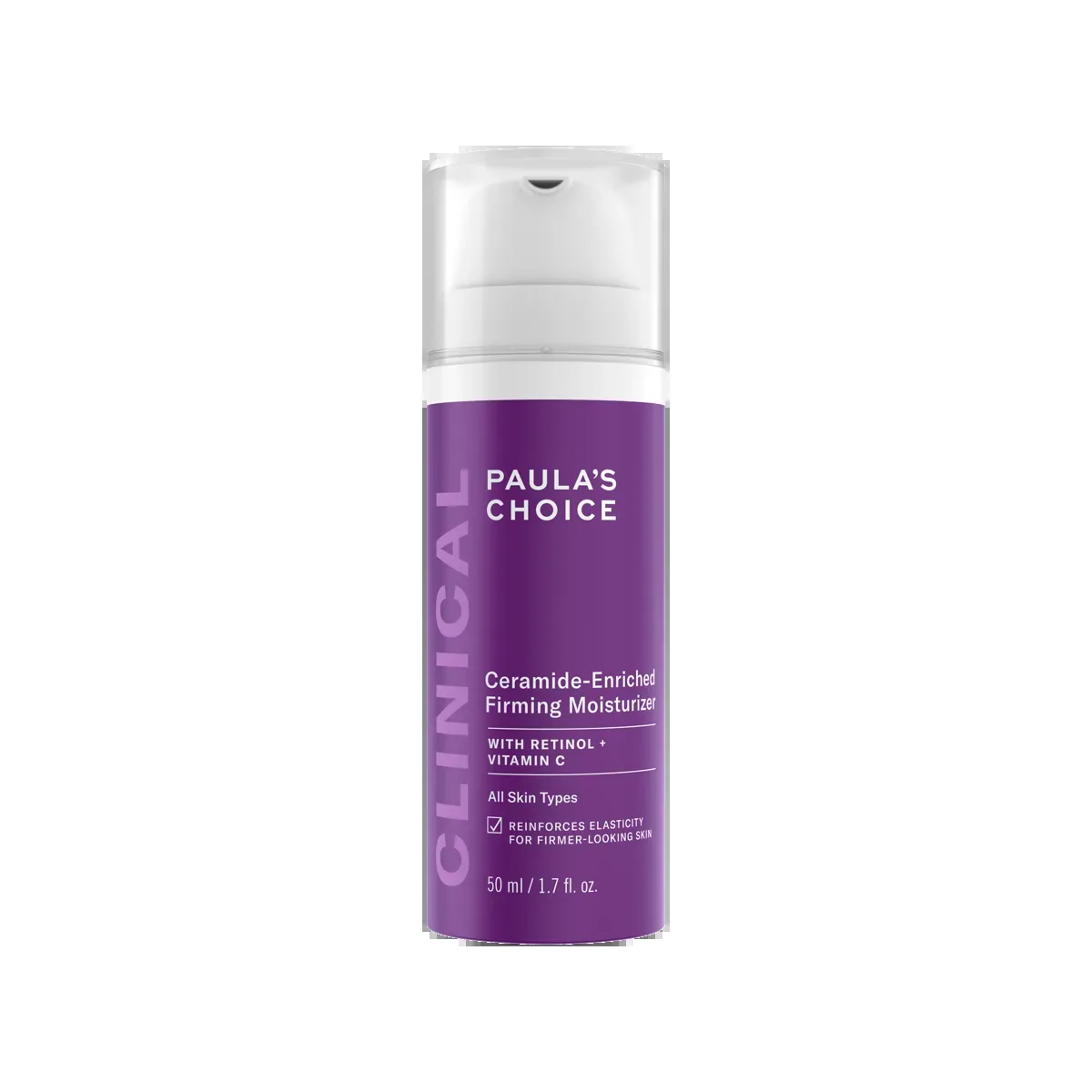
This attempts something ambitious: delivering retinol, two forms of vitamin C, and five ceramides in a single product. Most formulations force you to choose between anti-aging power and barrier support. This tries to be both — an active treatment and a recovery cream in one jar.
An ambitious formula that packs retinol, two vitamin C derivatives, and five ceramides into one jar. The ingredient list reads like a dermatologist's wish list, but the 3.8-star average hints that execution doesn't quite match ambition — the texture and subtle retinol results leave some users wanting more.
Good choicefor AgingIn your profileYou chose · Retinol is a trial-supported active for aging; this cream carries it at 0.1%.Moderate evidenceGentleNo reviews collected yet
The case for it
Retinol has trial-supported standing for this concern.
It is present at an effective concentration, declared or high in the ingredient list.
The formula carries none of the triggers this concern is sensitive to.
Same rule for everyone. “Good choice” is the verdict on 9,564 of 45,024 concern verdicts across the catalog; rule R5 decided 9,072 of them.
Unchanged since September 5, 2026, engine 5.1.1.
Good choicefor DrynessIn your profileYou chose · Squalane is a reference standard by mechanism for dryness; this cream carries it.Moderate evidenceGentleNo reviews collected yet
The case for it
Squalane has trial-supported standing for this concern.
It is plausibly present at a working level, though the concentration is not declared.
The formula carries none of the triggers this concern is sensitive to.
What would change this: A declared concentration would move this to a firmer reading of the dose.
Same rule for everyone. “Good choice” is the verdict on 9,564 of 45,024 concern verdicts across the catalog; rule R5 decided 9,072 of them.
Unchanged since September 5, 2026, engine 5.1.1.
Good choicefor Compromised Skin BarrierIn your profileYou chose · Ceramides is a reference standard by mechanism for compromised skin barrier; this cream carries it.Moderate evidenceGentleNo reviews collected yet
The case for it
Ceramides NP, NS, AP, EOP, EOS has trial-supported standing for this concern.
It is plausibly present at a working level, though the concentration is not declared.
The formula carries none of the triggers this concern is sensitive to.
What would change this: A declared concentration would move this to a firmer reading of the dose.
Same rule for everyone. “Good choice” is the verdict on 9,564 of 45,024 concern verdicts across the catalog; rule R5 decided 9,072 of them.
Unchanged since September 5, 2026, engine 5.1.1.
R5 — Trial-supported or guideline-supported active, adequately or plausibly dosed. · the full register
Carrying active
Ceramides NP, NS, AP, EOP, EOS
Standing
supported — its mechanism is established
Form
plausible — studied range 0.5–1%, from the trials on the row; needs leave-on contact; judge it after ~4 weeks
Tolerability
gentle
Row checked
against its sources on July 17, 2026 (evidence table ev-2026.09-r228)
The studies behind the evidence row
Elias PM, Skin Barrier / Coderch et al., ceramides and skin barrier function — ceramides ~50% of SC intercellular lipid mass, essential to the permeability barrier — reference work
Promisingfor Sun DamageIn your profileYou chose · Retinol has trial-level evidence for sun damage but no guideline or regulatory standing yet — promising, short of a recommendation; the other actives here are not yet assessed for it.Moderate evidenceGentleNo reviews collected yet
The case for it
Retinol has trial-level evidence for this concern but no guideline or regulatory standing yet.
It is present at an effective concentration, declared or high in the ingredient list.
The formula carries none of the triggers this concern is sensitive to.
What would change this: Guideline or regulatory standing for the active on this concern would move this from a promising bet to a recommendation.
Same rule for everyone. “Promising” is the verdict on 7,858 of 45,024 concern verdicts across the catalog; rule R9p decided 7,858 of them.
Unchanged since September 5, 2026, engine 5.1.1.
R9p — 0.5.0: 'Unproven' beside three filled dots read as one question answered twice with opposite words (7,018 rows). The chip measures standing, the dots measure trial volume; where the row carries at least one RCT or a tier-2 source (moderate dots) and the active is present at a working level, the honest word is Promising. Unproven is reserved for plausible-standing rows with limited or weak evidence, or an under-dosed form. Same rank as Unproven — a bet either way; the dots order them. · the full register
Carrying active
Retinol
Standing
plausible — trials support it
Form
adequate (declared 0.1%) — studied range 0.1–0.5%, from the OTC monograph or label; needs leave-on contact; judge it after ~12 weeks
Tolerability
gentle
Row checked
against its sources on July 17, 2026 (evidence table ev-2026.09-r228)
Unprovenfor Dark SpotsIn your profileYou chose · Retinol has early or mechanistic evidence for dark spots — a reasonable bet, not a recommendation; the other actives here are not yet assessed for it.Limited evidenceGentleNo reviews collected yet
The case for it
Retinol has early or mechanistic evidence for this concern, not trial-backed standing.
It is present at an effective concentration, declared or high in the ingredient list.
The formula carries none of the triggers this concern is sensitive to.
What would change this: Trial evidence for the active on this concern would move this from a bet to a recommendation.
Same rule for everyone. “Unproven” is the verdict on 1,111 of 45,024 concern verdicts across the catalog; rule R9 decided 1,111 of them.
Unchanged since September 5, 2026, engine 5.1.1.
R9 — Plausible-tier actives alone do not earn a recommendation, and 'not for this' would overstate the case against them. 'Unproven' with the evidence dots lets the reader judge the bet (added 0.2.0 after the first shadow run put a 10% niacinamide serum at 'not for this' for hyperpigmentation). 0.5.0: the closing clause reads the other heroes — "nothing else here addresses it" only when every other active has a researched 'none' row; "not yet assessed" when that is the truth. Rows whose dots read moderate or better now reach R9p first. · the full register
Carrying active
Retinol
Standing
plausible — trials support it
Form
adequate (declared 0.1%) — studied range 0.1–0.5%, from the OTC monograph or label; needs leave-on contact; judge it after ~12 weeks
Tolerability
gentle
Row checked
against its sources on July 17, 2026 (evidence table ev-2026.09-r228)
Also listed for Dullness — the actives here (Vitamin C, Retinol, Cholesterol, Squalane) are in our research queue for that concern; there is no verdict until their evidence rows are written. That is a gap in our table, not a mark against the product.
Excellent at the jobDoes what a moisturizer is for, on every measure we can take from the label: supplies barrier lipids, draws in water.
Where our review and the verdict differ. The review below was written on the formulation and the published trials; the verdicts above apply the stricter standing test in our methodology — an active earns a recommendation only with guideline or regulatory standing for the concern. Where the two disagree, the verdict is DermApproved’s position.
A verdict is DermApproved’s assessment of how well a product’s ingredients fit a concern — never a claim about what the product treats. Evidence dots and collected reviews sit beside it and are never blended in.
Rules 0.5.1 · evidence table ev-2026.09-r228 · how we decide
Assessment
Pros & Cons
Pros
✓ Combines retinol, two vitamin C forms, and five ceramides in one intelligently designed formula
✓ Low-dose retinol with ceramide buffering makes this genuinely comfortable for retinol beginners
✓ Stabilized vitamin C forms are pH-compatible with retinol — no stability compromise
✓ Fragrance-free, alcohol-free formula suitable for sensitive and reactive skin types
✓ Rich, hydrating texture that treats dry skin while delivering actives
✓ Licorice root and pomegranate extract add targeted brightening support
Cons
✗ 0.1% retinol may be too gentle for users seeking visible anti-aging transformation
✗ Jar packaging raises stability concerns for light- and air-sensitive retinol
✗ $63 price point is steep when separate retinol and ceramide products offer higher concentrations
✗ Texture feels heavy or sticky for some skin types, particularly in warm weather
✗ 3.8-star rating suggests inconsistent user satisfaction with results
Review
Full Review
There's a particular kind of optimism in trying to put everything into one product. It's the skincare equivalent of a Swiss Army knife — theoretically perfect, practically a compromise. Paula's Choice Clinical Ceramide-Enriched Firming Moisturizer is the most ambitious version of this idea the brand has produced, and the ingredient list is legitimately impressive on paper.
Retinol at 0.1%. Stabilized vitamin C in more forms than the marketing bothers to count — sodium ascorbyl phosphate sits second in the entire formula, joined by oil-soluble tetrahexyldecyl ascorbate and a little glyceryl ascorbate. Five ceramides. Cholesterol. Behenic acid, which is the free fatty acid that completes the barrier trio and which most brands forget to include. Squalane, pomegranate, grape seed, licorice root, panthenol, sodium PCA, and carnosine, an antioxidant dipeptide that turns up in serious formulations and almost nowhere else. This is a formula that wants to do everything: turn over cells, brighten skin, fight free radicals, and rebuild the barrier it's disrupting in the process.
The thinking behind this combination is genuinely clever. Retinol is the gold standard for anti-aging, but it temporarily compromises the skin barrier, causing the dryness and peeling that make many people abandon it. By embedding a low-dose retinol within a five-ceramide matrix alongside cholesterol and a fatty acid, this formula attempts to deliver the anti-aging benefits while simultaneously reinforcing what the retinol dismantles. Two caprooyl sphingosine derivatives sit alongside them, helping the lipids organize into lamellae rather than merely coexisting. It's a built-in safety net, and it's engineered rather than gestured at.
The vitamin C component answers an objection you have probably heard as settled fact: that retinol and vitamin C cannot share a jar. That rule is true of L-ascorbic acid, which demands a pH below 3.5 — acidic enough to tear retinol apart. It is not true of stabilized derivatives. Sodium ascorbyl phosphate is happy at the near-neutral pH where retinol is also stable, which is precisely why it's here and pure vitamin C isn't. The incompatibility was never between the two vitamins; it was between two pH requirements, and choosing different molecules dissolves it.
In use, the first thing you notice is the texture. This is thicker than you'd expect from a product with this many water-soluble actives high in the formula. It takes about ninety seconds to absorb, and in humid conditions some report a slight tackiness that never fully dissipates. For dry skin in a cold climate, the richness is welcome. For combination skin in summer, it may feel like wearing a mask to bed.
Results are real but measured. At 0.1% retinol, you're not going to see the dramatic peeling-then-revelation cycle of a 0.5% or 1% serum. What you will see, across eight to twelve weeks of consistent use, is a subtle improvement in texture, a gradual brightening of the complexion, and skin that feels firmer and more resilient. The vitamin C contribution arrives as a general luminosity rather than an overnight transformation.
Whether 0.1% is 'too weak' depends entirely on what you compare it to. Clinical work has found visible improvement in fine lines at concentrations well below this one, given enough months. Low-dose retinol is not a homeopathic gesture; it is a slower road with fewer people abandoning the journey. A gentle retinoid used four nights a week for a year beats a strong one used twice and shelved, and the arithmetic of that is not close.
The 3.8-star average — notably below the brand's usual range — tells a story nonetheless. Among the couple of hundred reviews available, several describe exactly the product it is: a comfortable, non-irritating introduction to retinol with serious ingredient depth. Others report feeling shortchanged by the subtlety, having expected drama from a $63 jar in a line called CLINICAL. The packaging compounds the impression. Retinol degrades on contact with air and light, and a screw-top jar — spatula or no spatula — is the wrong vessel for it. That's a legitimate stability concern, not merely an aesthetic one.
The licorice root and pomegranate extracts deserve a mention as more than filler. Licorice inhibits tyrosinase, arriving at brightening from a different mechanistic direction than vitamin C's melanin suppression. Two pathways toward the same result is how a formulator thinks, and it's consistent with the care evident everywhere else on this list.
Where this product genuinely excels is as a low-commitment entry point for the retinol-curious with dry or normal skin. If you've been afraid of retinol because everything you've read about peeling sounds miserable, this is the gentle on-ramp. The ceramides buffer the retinol, the vitamin C provides ancillary benefit, and the experience is closer to using a nice rich moisturizer than an active treatment. It is fragrance-free, alcohol-free, and forgiving — though the lipid load makes it unsuitable for fungal-acne-prone skin, and the retinol makes it entirely off-limits in pregnancy.
But that same gentleness is its limitation. If you already tolerate retinol well and want visible results, 0.1% may not move the needle. And if you're weighing $63 against a dedicated retinol serum plus a separate ceramide cream, the two-product route usually wins on concentration and on control. What this jar sells is coherence — every ingredient chosen so the others can work — and whether that's worth the premium depends on how much you value not having to think about it.
Formula
Key Ingredients
The hero actives that drive this product's performance.
A low-dose retinol designed for gradual, sustained anti-aging benefit within a moisturizer context. At 0.1%, it promotes cell turnover and collagen synthesis without the aggressive irritation of higher concentrations, making this suitable for retinol-sensitive users or as an introduction to retinoids alongside barrier-strengthening ceramides.
Two stabilized forms of vitamin C that provide antioxidant protection and collagen support from different angles. Sodium ascorbyl phosphate (water-soluble) is listed second in the formula, indicating substantial concentration, while tetrahexyldecyl ascorbate (oil-soluble) penetrates deeper into the lipid layers. Together, they address oxidative damage across both aqueous and lipid phases of the skin.
Five ceramide types that reinforce the skin barrier while the retinol and vitamin C work on cellular renewal. This is the formula's key strategic play — delivering potent anti-aging actives while simultaneously protecting the barrier they can temporarily compromise.
Established mechanismfor Dryness · established mechanism
Completes the ceramide-cholesterol-fatty acid barrier repair system. Without cholesterol, the ceramides cannot properly organize into the lamellar structures that form a functional skin barrier. Its inclusion here is essential, not decorative.
A lightweight plant-derived emollient that mirrors the skin's own squalene. Provides emollient support alongside the ceramides without the heavy, greasy feel that many anti-aging creams rely on. Helps the retinol and vitamin C distribute evenly across the skin.
Established mechanismfor Dryness · established mechanism
Ingredient standings describe the active at treatment-level doses and
vehicles; this product's own condition grades weigh its actual formula.
Apply as your nighttime moisturizer after serums. The retinol content makes this a PM-only product. If you're already using a separate retinol, be cautious about layering — the combined retinol dose may cause irritation. Apply sunscreen the following morning without exception.
Results Timeline
Immediate: skin feels hydrated and plump. 2-4 weeks: skin tone begins to even out, early brightness from vitamin C. 6-12 weeks: fine lines appear softened, texture improves, skin looks firmer and more radiant with consistent nightly use.
This formula combines three of the most evidence-backed anti-aging actives in a single product. Retinol — the most studied over-the-counter anti-aging ingredient — has been shown in numerous clinical trials to increase collagen synthesis, reduce fine lines, and improve skin texture. A 2007 study published in the Archives of Dermatology confirmed that even 0.04% retinol applied three times weekly for 24 weeks produced significant improvement in fine wrinkles and was clinically indistinguishable from 0.1% tretinoin in the same study period.
The dual vitamin C system uses sodium ascorbyl phosphate and tetrahexyldecyl ascorbate, both stabilized derivatives that avoid the rapid oxidation of pure L-ascorbic acid. Sodium ascorbyl phosphate has demonstrated anti-inflammatory and antimicrobial properties alongside its antioxidant function, with a 2005 study in the International Journal of Cosmetic Science showing its efficacy in reducing acne lesions — an unexpected benefit for an anti-aging ingredient. Tetrahexyldecyl ascorbate, being oil-soluble, penetrates more deeply into the dermis, where it has been shown to stimulate collagen synthesis more effectively than water-soluble vitamin C forms in some comparative studies.
The five-ceramide and cholesterol system addresses a well-documented challenge of retinol use: barrier disruption. Retinol accelerates cell turnover, which can temporarily thin the stratum corneum and increase transepidermal water loss. The ceramide-cholesterol-fatty acid matrix in this formula is designed based on research by Elias et al. showing that topical application of these three lipid classes in appropriate ratios accelerates barrier recovery. By embedding retinol within this barrier-repair matrix, the formula attempts to mitigate the very side effects the retinol causes.
Working dermatologists acknowledge the challenge of combining retinol and vitamin C in a stable, effective formula — most advise patients to use them separately. However, dermatologists note that the stabilized vitamin C derivatives in this formula (sodium ascorbyl phosphate and tetrahexyldecyl ascorbate) are compatible with retinol at near-neutral pH, making co-formulation scientifically sound. Dermatologists frequently recommend this type of low-dose retinol product for patients new to retinoids, particularly those with dry or sensitive skin who may not tolerate prescription-strength tretinoin. The ceramide-cholesterol complex is recognized as a smart inclusion that addresses the barrier compromise inherent to retinoid use.
Guidance
Usage & Recommendations
How to Use
Apply as your final moisturizing step at night, after cleansing and any water-based serums. Use a pea-to-nickel-sized amount for the face and neck. Do not use in the morning — the retinol content requires nighttime application. Apply broad-spectrum SPF 30 or higher the following morning. If new to retinol, start every other night for the first two weeks to assess tolerance.
Value Assessment
At $63 for 1.7 ounces, this is the most expensive product in the Paula's Choice moisturizer range. The ingredient list justifies the premium — you're getting retinol, two vitamin C forms, five ceramides, cholesterol, and multiple antioxidant extracts in one product. However, the value proposition weakens when you consider that a dedicated 0.3% retinol serum ($20-30) plus a ceramide moisturizer ($25-42) would deliver higher concentrations of both key actives for a similar total cost. This product's real value is in convenience and gentleness — one jar, one step, minimal irritation risk.
Who Should Buy
Retinol beginners with dry or normal skin who want anti-aging benefits without a complicated multi-product routine. Also ideal for those who've tried stronger retinol products and found them too irritating — the ceramide buffering makes this one of the most comfortable retinol experiences available.
Who Should Skip
Experienced retinol users who want visible, relatively quick results — 0.1% will likely feel too gentle. Hold off, too, if you prefer a lighter texture, have oily skin, or are pregnant (retinol is contraindicated in pregnancy).
Ready to try Paula's Choice Clinical Ceramide-Enriched Firming Moisturizer?
Medium-rich cream with a slightly thick consistency. Takes about 90 seconds to fully absorb. Leaves a subtle dewy finish that some users find sticky in humid conditions.
Scent
No fragrance. Neutral, slightly waxy scent from the base ingredients.
Packaging
Jar with a screw-top lid. Includes a spatula for hygienic dispensing, though the jar format remains a concern for retinol stability, as retinol degrades with exposure to air and light.
Finish
dewysatinvelvety
What to Expect on First Use
No stinging or irritation on first application — the low retinol concentration and ceramide buffering make this very comfortable even for retinol beginners. The texture is richer than expected, requiring a moment to absorb fully. Morning skin looks noticeably plumper after the first night.
How Long It Lasts
Roughly 2-3 months at nightly use to face and neck
Positioned in Paula's Choice CLINICAL line — the brand's premium tier — this moisturizer represents an attempt to create an all-in-one nighttime anti-aging treatment. The thinking is that many consumers want retinol and vitamin C benefits but find multi-step routines with separate products for each active too complicated or expensive.
About Paula's Choice Established Brand (5–20 years)
Paula's Choice was founded in 1995 by Paula Begoun and acquired by Unilever in 2021. The Clinical line represents the brand's most advanced formulations, combining pharmaceutical-grade actives with the brand's signature evidence-based approach.
Brand founded: 1995 · Product launched: 2018
Myth vs. Reality
Common Myths
Myth
Retinol and vitamin C can't be used together
Reality
This formula uses stabilized forms of both that are compatible at its pH. Sodium ascorbyl phosphate is stable at the slightly alkaline pH where retinol is also comfortable, unlike pure L-ascorbic acid which requires a much lower pH that would destabilize retinol.
Myth
0.1% retinol is too weak to make a difference
Reality
Clinical studies show visible improvements in fine lines and skin texture even at 0.025% retinol over 12-24 weeks. At 0.1%, the effect is modest but real — and the low concentration allows daily use with minimal irritation, which often leads to better long-term outcomes than higher concentrations used inconsistently.
FAQ
Frequently Asked Questions
Is 0.1% retinol enough to see anti-aging results?
Yes, though results are gradual. Clinical research shows that even sub-0.1% retinol concentrations can improve fine lines and skin texture with 12-24 weeks of consistent use. The advantage of this low concentration is that it allows nightly use without the irritation that causes many people to abandon higher-strength retinol products.
Can I use this if I'm already using a retinol serum?
Be cautious. Layering this over a separate retinol serum doubles your retinol exposure, which may cause irritation, dryness, or peeling. If you're already on a retinol serum, this moisturizer's main appeal shifts to its ceramide and vitamin C content. Consider using it on nights you skip your retinol serum.
Why is this only recommended for nighttime?
Retinol degrades with UV exposure and can increase photosensitivity. While the vitamin C in this formula provides some antioxidant protection, the retinol component means it performs best when applied at night, with sunscreen applied the following morning.
Is the jar packaging okay for retinol?
Jar packaging is not ideal for retinol, which degrades when exposed to air and light. While Paula's Choice likely uses stabilized retinol that's somewhat more resistant to degradation, a tube or airless pump would better protect the active ingredients. Use the included spatula and close the lid promptly after each use.
Why is the rating lower than other Paula's Choice products?
At 3.8 stars, this product's rating reflects mixed user experiences with the texture (some find it heavy or sticky) and the subtlety of results at 0.1% retinol. Users expecting dramatic retinol-level transformation may find the effects too gradual. The formula is technically excellent, but user satisfaction depends heavily on expectations.
Reviews
What Reviewers Tend to Say
Recurring themes our editors read across retailer reviews of this product — summaries in our words, not quotations, and not a substitute for your own patch test.
Common Praise
Noticeable improvement in skin firmness and radiance over time
Impressive ingredient list at a reasonable price for clinical-grade actives
Good introduction to retinol for sensitive skin types
Skin feels plumper and more hydrated
Common Complaints
Texture can feel heavy or sticky on some skin types
Results are subtle — retinol concentration may be too low for advanced aging concerns
Some users experience breakouts during adjustment
Price is high for a moisturizer from this brand
Notable Endorsements
Featured in anti-aging moisturizer roundups by Dermstore and Byrdie
The fermentation route to skin lipids is real, industrial, and about two decades old — which makes 2026's newest ingredient claim a description of the supply chain most ceramide products already use.
The skin shift blamed on 'just getting older' often starts years before menopause, when fluctuating estrogen triggers adult acne, sudden dryness, and fast collagen loss all at once.
The standard product post opens with a percentage rather than a lifestyle photo, and the regulator makes brands publish their evidence. Both of those are ahead of the West. The metric they created is the problem.
Aug 28, 2026· 8 min
Questions people ask about Hyperpigmentation
Verified answers from our questions library — the nuance a product page cannot carry.
Products, answers, therapy guides, tools and articles in one search. Brand names,
slang and abbreviations all work — accutane finds isotretinoin, bacne finds truncal acne.