It's the old-guard maximum-strength benzoyl peroxide spot treatment — a 10% vanishing cream that dries clear and shrinks pimples fast, at one of the lowest prices around. A touch of purslane soothes, and silica helps it vanish, though the formula shows its age next to fragrance-free, cleaner-preserved modern spot treatments.
A cheap, effective, classic maximum-strength 10% benzoyl peroxide vanishing spot treatment that shrinks individual pimples fast and dries invisibly, from a legacy drugstore acne brand. It does the job reliably for eight dollars — but its older-school formula, with added fragrance and a formaldehyde-releasing preservative, puts it a step behind cleaner, fragrance-free modern spot treatments, and 10% BPO means spot-only use, dryness, and fabric-bleaching.
Strong choicefor AcneIn your profileYou chose · Benzoyl Peroxide is an approved or monograph active for acne; this cream carries it at 10%.Strong evidenceStandard tolerabilityNo reviews collected yet
The case for it
Benzoyl Peroxide 10% is a first-line active — approved, monograph-listed or named in current guidelines — for this concern.
It is present at an effective concentration, declared or high in the ingredient list.
The formula carries no trigger this concern is sensitive to, with the cautions noted.
Cautions: fragrance.
Same rule for everyone. “Strong choice” is the verdict on 1,459 of 45,024 concern verdicts across the catalog; rule R2 decided 892 of them.
Unchanged since September 5, 2026, engine 5.1.1.
R2 — A regulator- or guideline-recognised first-line active, declared at an effective strength, in a form the claim supports. · the full register
Carrying active
Benzoyl Peroxide 10%
Standing
first line — a regulator recognises it for this use; trials support it · per 21 CFR § 333.310 - Acne active ingredients. (US Code of Federal Regulations (Legal Information Institute, Cornell Law School)), opened July 27, 2026
Form
adequate (declared 10%) — studied range 2.5–10%, from the OTC monograph or label; judge it after ~6 weeks
Tolerability
standard — fragrance load
Row checked
against its sources on July 27, 2026 (evidence table ev-2026.09-r228)
Also listed for Blackheads and Excess Oiliness — the actives here (Benzoyl Peroxide, Silica, Purslane Extract) are in our research queue for those concerns; there is no verdict until their evidence rows are written. That is a gap in our table, not a mark against the product.
A verdict is DermApproved’s assessment of how well a product’s ingredients fit a concern — never a claim about what the product treats. Evidence dots and collected reviews sit beside it and are never blended in.
Rules 0.5.1 · evidence table ev-2026.09-r228 · how we decide
Assessment
Pros & Cons
Pros
✓ Maximum-strength 10% benzoyl peroxide shrinks pimples fast
✓ Vanishing cream dries invisibly for discreet use
✓ Purslane adds a touch of soothing
✓ Silica gives a matte, non-cast finish
✓ Extremely cheap and a tube lasts many months
✓ Fungal-acne safe
✓ Decades-long reliable track record
Cons
✗ Added fragrance and a formaldehyde-releasing preservative
✗ Older-school formula behind cleaner modern rivals
✗ Spot-only; 10% BPO is too drying for all-over use
✗ Bleaches colored fabric readily
✗ Too harsh for sensitive skin, and drying generally
Review
Full Review
Before benzoyl peroxide spot treatments came in influencer-friendly packaging with soothing complexes, there was OXY — a drugstore acne mainstay so long-established it's practically synonymous with the ingredient. Its Maximum Strength Rapid Spot Treatment is the classic version of the pre-event pimple fix: a 10% benzoyl peroxide vanishing cream that dries clear and shrinks a blemish fast, for pocket change. It still works, and it's still cheap. The interesting question in 2026 is how the old formula holds up against the newer wave of spot treatments built to the same strength but with more thought behind the base.
The active is unimpeachable. Benzoyl peroxide at 10% is the over-the-counter maximum, and dabbed onto an individual blemish it does exactly what decades of use promise: floods the spot with antibacterial oxygen, kills the acne bacteria, and visibly shrinks the pimple, typically within a day or two. The vanishing-cream base rubs in and dries down invisibly, helped by silica for a matte, discreet finish, and dimethyl isosorbide as a penetration enhancer to drive the active in. There's a touch of purslane extract for soothing. As a fast, targeted pimple zapper, it delivers the goods.
Where it shows its age is the supporting formula, and this is the honest heart of the review. Unlike some newer 10% spot treatments that have gone fragrance-free with gentler preservatives and a fuller soothing complex, OXY's classic base includes added fragrance and diazolidinyl urea — a formaldehyde-releasing preservative. Neither is a problem for most resilient skin dabbing a bit on a spot, but both are recognized potential irritants and allergens, and they're exactly the ingredients modern formulations have been moving away from. The single dab of purslane doesn't fully offset that. So while the active is identical to its cleaner rivals, the base is a notch behind on tolerability, which matters more for sensitive skin than for a tough oily complexion.
Using it correctly means respecting that it's a spot treatment, full stop. At 10% benzoyl peroxide, all-over application causes real dryness, redness, and peeling for no added benefit — this is for individual blemishes, dabbed thinly, with a lower-strength product doing any full-face work. The standard benzoyl peroxide caveats all apply: it's drying, so moisturize around the spot; it bleaches colored fabric readily at 10%, so white pillowcases are a must; it can increase sun sensitivity, so daily sunscreen matters; and its pregnancy safety is debated, so expecting users should check with a doctor. On the plus side, it's fungal-acne safe.
It's worth putting this product's longevity in perspective, because it explains both its virtues and its dated edges. OXY has been on drugstore shelves for generations, and a formula that survives that long does so by being cheap, effective, and reliable — qualities this spot treatment genuinely has. But longevity cuts both ways: the reason the base still contains fragrance and a formaldehyde-releasing preservative is that it's a legacy formula, one that predates the industry's shift toward fragrance-free, gentler-preserved actives, and it hasn't been fully reformulated to match. That's not a scandal — the ingredients are legal, common, and fine for most people using a dab on a spot — but it does mean you're buying a product frozen somewhat in an earlier era of skincare. For a shopper who just wants the cheapest thing that works and has worked for decades, that heritage is reassuring. For a shopper who reads labels and prioritizes a clean, low-sensitizer formula, it's precisely the reason to look at a newer competitor with the same active. Both are reasonable positions; knowing which one you hold makes the choice easy.
What it offers is dependable, dirt-cheap, fast spot treatment with a decades-long track record — the reliability of a product that has zapped generations of pimples. The trade is a formula that hasn't been modernized as thoroughly as some competitors, which is fine for resilient skin and a reason for sensitive skin to look at a fragrance-free alternative.
Value is excellent on price. Seven-fifty for a 1-ounce tube that lasts many months of spot use is about as cheap as effective acne treatment gets, and the vanishing finish adds everyday practicality. The value asterisk is qualitative rather than monetary: for a dollar or two more, a fragrance-free, cleaner-preserved 10% spot treatment offers the same active with better tolerability, so the cheapest option isn't automatically the best one for every skin.
Who should buy it? Resilient oily, combination, or normal skin that wants a fast, ultra-cheap, maximum-strength spot treatment to zap individual pimples and doesn't mind a classic fragranced formula, used strictly on spots. It's a reliable, bargain medicine-cabinet staple. Who should skip: sensitive, rosacea-, and eczema-prone skin (and anyone reactive to fragrance or formaldehyde-releasing preservatives), who should choose a fragrance-free 10% spot treatment; anyone wanting a full-face acne product; those who can't manage fabric-bleaching; and pregnant users pending medical advice. Judged as the classic budget benzoyl peroxide zapper it is, it works — the only real knock is a formula the category has partly moved past.
Formula
Key Ingredients
The hero actives that drive this product's performance.
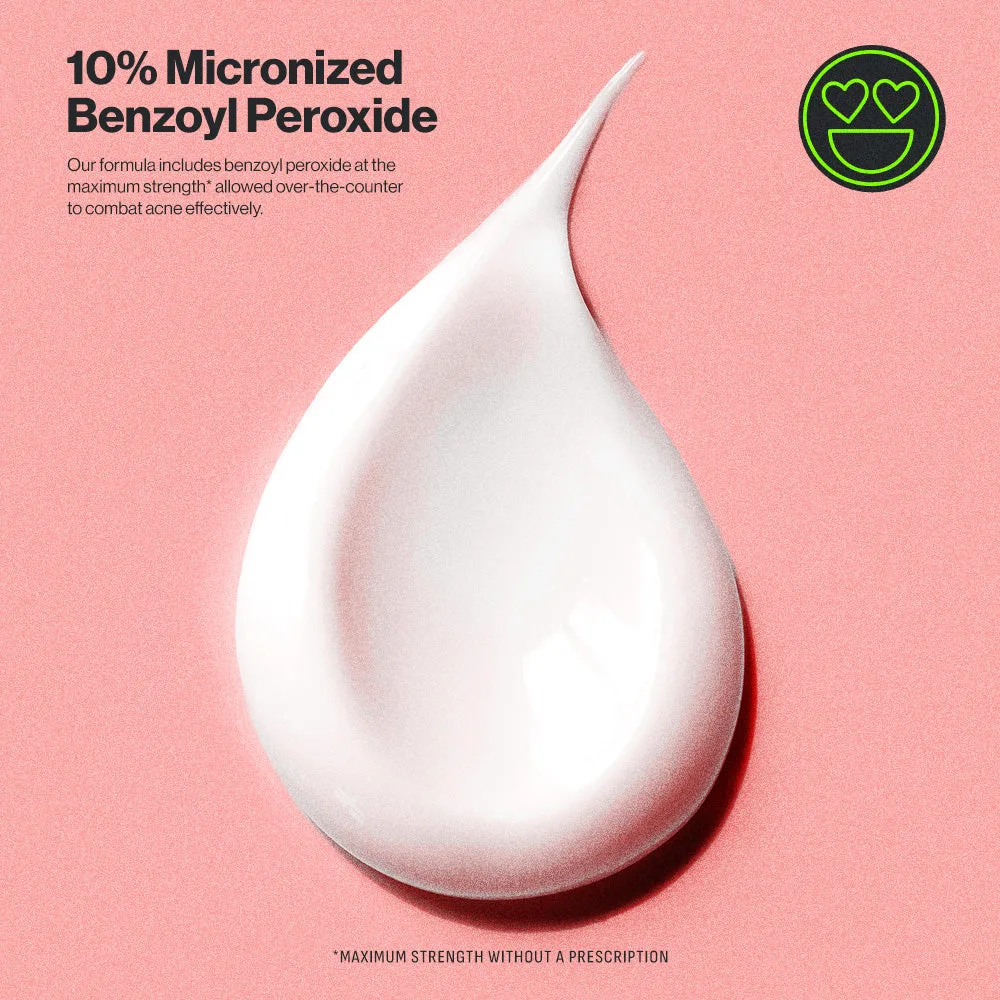
The maximum over-the-counter benzoyl peroxide dose in a leave-on vanishing cream — it floods a blemish with antibacterial oxygen to shrink it quickly, the classic drugstore approach to zapping an individual pimple fast.
Silica mattifies and helps the cream dry down invisibly on the spot, while dimethyl isosorbide is a penetration enhancer that helps the benzoyl peroxide reach into the blemish — together giving the fast-acting, vanishing character.
Not yet assessed
Ingredient standings describe the active at treatment-level doses and
vehicles; this product's own condition grades weigh its actual formula.
Apply a thin layer to individual blemishes only, after cleansing and before moisturizer — at 10% it's a spot treatment, not an all-over product. Don't spread it broadly or stack it with other acids or a retinoid on the same spot. Moisturize around it, use white pillowcases (BPO bleaches fabric), and wear daily sunscreen.
Results Timeline
Individual blemishes often visibly shrink within 24 to 48 hours of spot application as the benzoyl peroxide works. It's a fast, per-blemish treatment for active pimples rather than a preventive routine product.
This is a classic delivery of the strongest over-the-counter acne active. Benzoyl peroxide releases free-radical oxygen in the follicle that is bactericidal against Cutibacterium acnes without driving antibiotic resistance, with mild comedolytic action and decades of first-line evidence. At the 10% maximum, its use is best confined to spot application, since the dose-response literature shows higher concentrations mainly add irritation rather than proportional efficacy for widespread acne. The vanishing-cream base uses silica and methacrylate crosspolymers for an invisible matte dry-down, dimethyl isosorbide as a penetration enhancer to improve benzoyl peroxide delivery into the lesion, and dimethicone-family silicones for slip. Purslane (Portulaca oleracea) extract contributes antioxidant and anti-inflammatory character, and hydrolyzed soy protein adds conditioning. The formulation's dated elements are its preservative and fragrance choices: diazolidinyl urea is a formaldehyde-releasing preservative and recognized contact sensitizer, iodopropynyl butylcarbamate is another preservative allergen, and added fragrance is a further sensitizer — all ingredients that cleaner modern formulations increasingly avoid, and which raise the irritation profile relative to fragrance-free, gentler-preserved 10% spot treatments. The intrinsic benzoyl peroxide caveats also apply: expected dryness on the treated area, fabric-bleaching oxidation, photosensitivity warranting sunscreen, and debated pregnancy safety. The formula is free of fungal-acne triggers.
Dermatologist Perspective
Benzoyl peroxide spot treatments are a mainstream acne tool, and a 10% formulation is appropriate for targeted use on individual, stubborn blemishes rather than widespread application — dermatologists note that higher strengths mostly add irritation for full-face use, and often prefer lower concentrations for facial acne overall. On formula, clinicians would flag this one's diazolidinyl urea (a formaldehyde-releasing preservative) and fragrance as recognized contact sensitizers, making it a less ideal choice for sensitive, allergy-prone, or eczema-prone patients, who are better served by a fragrance-free, gentler-preserved benzoyl peroxide product. For resilient skin dabbing it on a spot, exposure is limited and the active is effective. Standard guidance applies: spot-only application, moisturize the surrounding skin, use daily sunscreen, and use white linens because of fabric-bleaching. Benzoyl peroxide's pregnancy use is debated, warranting physician input. As a fast, cheap spot treatment for occasional blemishes on tolerant skin, it does the job, with the preservative-and-fragrance base the main reason to consider a cleaner alternative.
Guidance
Usage & Recommendations
How to Use
Treat it as a spot product only. After cleansing, dab a thin layer onto individual blemishes — not across large areas — and rub it in; it dries down invisibly. Follow with moisturizer around the treated spots, and wear daily sunscreen since benzoyl peroxide increases sun sensitivity. Use white pillowcases and be careful with clothing, as 10% BPO readily bleaches colored fabric. Don't apply it over broad areas or stack it with other acids or a retinoid on the same spot, start with once-daily application to gauge tolerance, patch test if you're sensitive to fragrance or preservatives, and check with a doctor before use if pregnant.
Value Assessment
At $7.50 for a 1-ounce tube that lasts many months of spot use, this is among the cheapest effective acne treatments available — the cost-per-blemish is negligible, and the vanishing finish adds practical daily value. On pure price, it's hard to beat. The honest value nuance is qualitative: for a dollar or two more, newer 10% benzoyl peroxide spot treatments deliver the identical active in a fragrance-free base with gentler preservatives and more soothing ingredients, which is meaningfully better for tolerability, especially on sensitive skin. So while this is the budget champion on paper, the cheapest option isn't automatically the best value once formula quality is weighed. For resilient skin that just wants a reliable, ultra-cheap zapper and isn't bothered by fragrance, the value is excellent; for anyone prioritizing a clean, low-irritation formula, spending slightly more elsewhere is the smarter buy.
Who Should Buy
Resilient oily, combination, or normal skin that wants a fast, ultra-cheap, maximum-strength spot treatment to zap individual pimples, doesn't mind a classic fragranced formula, and will use it strictly on spots. It's a reliable, bargain medicine-cabinet staple with a long track record.
Who Should Skip
Sensitive, rosacea-, and eczema-prone skin, and anyone reactive to fragrance or formaldehyde-releasing preservatives, should choose a fragrance-free 10% benzoyl peroxide spot treatment instead. Anyone wanting a full-face acne product, those who can't manage fabric-bleaching, and pregnant users pending medical advice should also pass.
Ready to try OXY Maximum Strength Rapid Spot Treatment?
A lightweight vanishing cream that rubs in and dries down invisibly on the blemish.
Scent
A light added fragrance over the benzoyl peroxide base.
Packaging
A 1 oz tube — practical for precise spot application.
Finish
invisible
What to Expect on First Use
Dabbed onto a blemish, it rubs in and dries invisibly with a possible mild tingle from the 10% benzoyl peroxide. There's a light scent. Used on individual spots it's tolerable; applied broadly it dries and irritates. It bleaches colored fabric.
How Long It Lasts
A 1 oz tube lasts many months, since only a dab per blemish is needed.
OXY has been a drugstore acne mainstay for decades, synonymous with benzoyl peroxide. This maximum-strength rapid spot treatment is its classic answer to the individual pimple — a fast, cheap, reliable 10% BPO vanishing cream that generations have kept in the cabinet.
About OXY Legacy Brand (20+ years)
OXY is a long-running drugstore acne brand built on benzoyl peroxide; this maximum-strength 10% BPO vanishing-cream spot treatment is a classic, no-frills option for fast-tracking individual blemishes.
Myth vs. Reality
Common Myths
Myth
A 10% spot treatment can be spread over the whole face for faster clearing.
Reality
At 10% benzoyl peroxide, all-over application causes significant dryness, redness, and peeling. This is a targeted spot treatment for individual blemishes; for full-face acne, use a lower-strength wash or leave-on, and save this for zapping specific pimples.
Myth
All benzoyl peroxide spot treatments are formulated the same.
Reality
The active may be identical, but the base isn't. This classic formula includes fragrance and a formaldehyde-releasing preservative, while some newer 10% spot treatments are fragrance-free with gentler preservatives and more soothers. The active works either way, but the supporting formula affects tolerability.
FAQ
Frequently Asked Questions
How strong is OXY's Rapid Spot Treatment?
It's maximum strength — 10% benzoyl peroxide, the highest over-the-counter concentration — in a leave-on vanishing cream. Dabbed on an individual blemish, it kills acne bacteria and shrinks the pimple fast, typically within a day or two. Because it's so strong, it's meant for spot use, not all-over application.
Can I use it all over my face?
No — at 10% benzoyl peroxide, it's a spot treatment for individual blemishes, and applying it broadly causes significant dryness and irritation. For full-face acne, use a lower-strength cleanser or leave-on treatment, and reserve this for dabbing on specific pimples.
Does it leave a white cast?
No — it's a vanishing cream, meaning it rubs in and dries down invisibly on the skin, with silica helping it mattify. That makes it discreet for daytime spot treatment, unlike thicker or tinted acne products.
Why does benzoyl peroxide bleach fabric?
Benzoyl peroxide is an oxidizer, so it lightens or bleaches colored towels, pillowcases, and clothing on contact, and at 10% it does so readily. Use white pillowcases and be careful with fabric near treated areas — it's harmless to skin but permanent on colored fabric.
Is this formula gentle?
It's a classic, effective formula, but an older-school one — it contains fragrance and diazolidinyl urea, a formaldehyde-releasing preservative, both of which are potential irritants and allergens. It has some purslane to soothe, but sensitive skin may prefer a fragrance-free, cleaner-preserved 10% benzoyl peroxide spot treatment.
Do I need sunscreen with it?
Yes — benzoyl peroxide can increase sun sensitivity, and daily broad-spectrum sunscreen is important with any acne treatment to protect skin and prevent post-acne marks from darkening, especially on a spot that's actively clearing.
Reviews
What Reviewers Tend to Say
Recurring themes our editors read across retailer reviews of this product — summaries in our words, not quotations, and not a substitute for your own patch test.
Common Praise
Shrinks pimples fast
Dries invisibly on the spot
Very cheap and long-lasting
Classic reliable acne fix
Common Complaints
Drying if used over large areas
Fragranced with a formaldehyde-releasing preservative
The strongest counterexample to blanket botanical scepticism is also one of the more common contact allergens — and holding both facts at once is the only honest way to read it.
The average teen routine on TikTok runs eleven active ingredients and $168. The version that actually clears acne is three products, barrier-friendly, and mostly under fifty dollars.
Occupational hand dermatitis is one of the most common work-related diseases on earth, it follows a script, and the cheapest fix works only if you start it before the skin splits.
Aug 28, 2026· 12 min
Questions people ask about Acne
Verified answers from our questions library — the nuance a product page cannot carry.
Products, answers, therapy guides, tools and articles in one search. Brand names,
slang and abbreviations all work — accutane finds isotretinoin, bacne finds truncal acne.