Hyaluronic Acid Can Actually Dehydrate Your Skin (Here's When)
The internet's favorite hydrator has a counterintuitive dark side — in dry air, a humectant with nothing to seal it can pull water out of your skin instead of into it.
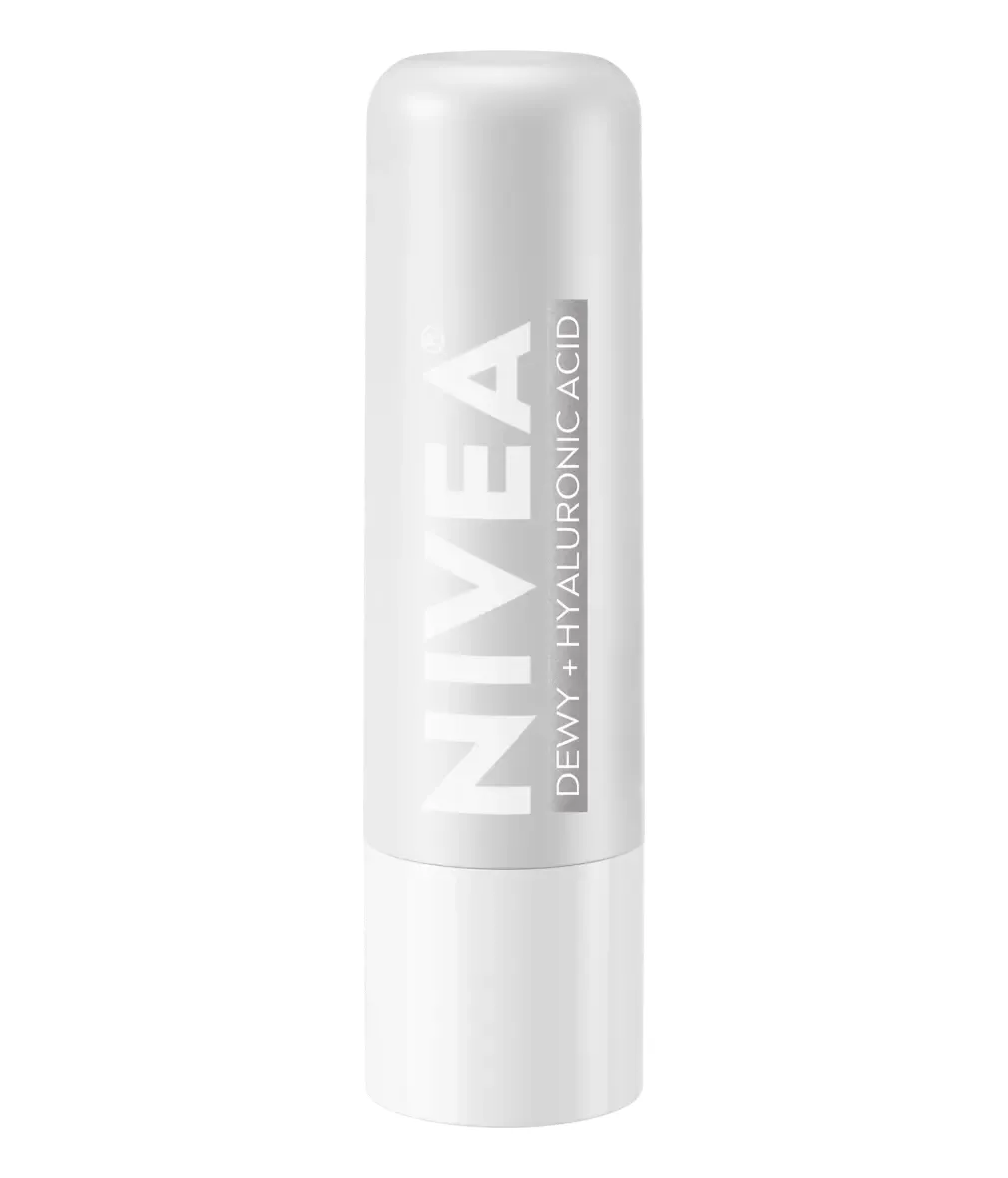
It inverts the usual balm construction: three plant oils lead, glycerin and a small water phase sit inside them with sodium hyaluronate dissolved in it, and the waxes come after, so the stick delivers a humectant along with its lipids and feels like a gloss rather than a wax. Almost no drugstore balm carries a genuine water-in-oil humectant phase, and none at this price with this many ratings.
Nivea's answer to the glossy plumping balms, and a smart one: plant oils first, a real glycerin-and-water humectant phase with hyaluronate dissolved in it, and the waxes last, so lips feel hydrated and look dewy instead of coated, for about three dollars a tube. The film is thin and short-lived, the stick melts in heat and the lip-line claim is a hydration effect that resets when it wears off, but as a daily balm for normal to dry lips it is one of the best things Nivea has put in a tube in years.
The case for it
Same rule for everyone. “Good choice” is the verdict on 9,564 of 45,024 concern verdicts across the catalog; rule R5 decided 9,072 of them. As of September 25, 2026, engine 5.1.1.
Brand or formulator? Disclose a concentration or correct a fact →
The studies behind the evidence row
The case for it
Same rule for everyone. “Good choice” is the verdict on 9,564 of 45,024 concern verdicts across the catalog; rule R5 decided 9,072 of them. As of September 25, 2026, engine 5.1.1.
Brand or formulator? Disclose a concentration or correct a fact →
The studies behind the evidence row
As a lip balmNot judged: what a lip balm is for — seals and protects, sun protection where it matters — cannot yet be measured from the ingredient list (only no sting-and-repeat ingredients, low allergen load can).
A verdict is DermApproved’s assessment of how well a product’s ingredients fit a concern — never a claim about what the product treats. Evidence dots and collected reviews sit beside it and are never blended in. Rules 0.5.1 · evidence table ev-2026.09-r228 · how we decide
Water is fifth on the ingredient list of this lip balm, and that single line is the reason it is worth a review. Almost every lip stick sold at a drugstore is anhydrous, a blend of oils and waxes with no water phase at all, which is why the hyaluronic acid printed on so many of them is decoration: a humectant with nothing to hold. Nivea's Dewy Lip Care is built differently. Sweet almond, castor and coconut oils lead, glycerin sits second, water fifth, and two polyglyceryl emulsifiers hold that small aqueous phase inside the oils, so the sodium hyaluronate at twelfth is dissolved in water where it can actually bind moisture at the lip surface. It is a tiny water-in-oil emulsion pretending to be a balm, and it is a clever thing to have made for three dollars.
The effect is easy to feel. The stick is soft, almost melting, and glides on nearly liquid, then sets to a light, glossy film that feels hydrated rather than sealed, with lips looking a little fuller and smoother for an hour or so. People raised on the firm blue Nivea tube describe the difference in their reviews with something like surprise, and nearly ten thousand of them on Amazon average four and a half stars in under three years, which for a lip balm is a strong record. The flavour is faint and sweet, there is no perfume, the waxes are plant-derived so the formula is labelled vegan, and shea, centella and vitamin E near the end add softening and a soothing note at low doses.
The construction that makes the feel also sets the limits, and they should be stated plainly. Because the waxes, behenyl behenate, sunflower wax and carnauba, come after the oils rather than before them, the film is thin and wears away within an hour or two, faster with coffee or wind; a waxy balm stays put twice as long. Because the structure is lean, the stick softens well below the temperature a classic balm shrugs off, and the most common complaint in the reviews is a tube that arrived slumped in a summer mailbox or went soft in a pocket, which a few hours in the fridge usually fixes. And because the film is light, it does not seal cracked winter lips; on those, it is a pleasant daytime layer and a petrolatum or lanolin ointment on top at night does the actual repair.
The lip-line claim deserves the same plain treatment. Hyaluronate in a water phase holds moisture at the surface, and hydrated lips show fewer fine lines than dehydrated ones, so the balm does make lines look softer while it is on. That is a real, visible, temporary effect that resets when the film goes, and it is not the same as reducing lip lines, which the packaging edges toward. A person who uses it several times a day will have consistently hydrated lips and consistently softer-looking lines, and that is the honest version of the promise.
On the sensitising side there is little to worry about: no perfume, a flavour listed last, no beeswax, no lanolin, no dyes. Sweet almond and coconut oils lead the formula, which is a consideration for anyone with a nut sensitivity or a history of cheilitis, and a patch test on the lip border is sensible for them, but for most people this is one of the less reactive balms on the shelf. It has no SPF, so by day in summer a sunscreen balm belongs over it.
Beiersdorf has sold lip balm since the 1960s and has built its reputation on firm, waxy, dependable sticks, so this 2023 launch is a genuine change of direction, an acknowledgement that the category had moved toward the glossy, plumping balms of indie and K-beauty brands and that the blue tube alone was not going to hold the young end of the market. What is notable is that the response is not a gloss in a tube with a hyaluronic sticker on it but a properly engineered small emulsion, which is the kind of thing a company with a century of emulsion chemistry can do casually and most balm brands cannot.
At around three dollars a tube in the four-pack and a little more singly, lasting four to six weeks of frequent reapplication, it costs the same as the classic Nivea balms and less than the plumping balms it competes with. So read the water on the label as the point. This is a hydrating, glossy, non-waxy daily balm for normal to dry lips that delivers a humectant along with its oils, with a thin film, a heat-sensitive stick and a lip-line claim that is true only while it is on; buy it for the feel and the hydration, keep a heavier balm for winter cracks, and keep the tube out of the sun.
The hero actives that drive this product's performance.
| Ingredient | Function | Evidence |
|---|---|---|
| Sweet Almond Oil + Castor Seed Oil + Coconut Oil | Three plant oils occupy the first, third and fourth positions, which is what makes this balm feel like a gloss rather than a wax: almond and coconut oils for softness and castor for the cushioned shine. They are the dew, and also the reason the stick is softer and melts faster than Nivea's classic tubes. | Not yet assessed |
| Glycerin + Water (Water-in-Oil Structure) | Glycerin second and water fifth in a lip stick is unusual, and it is the formula's real innovation: a small aqueous phase held inside the oils by two polyglyceryl emulsifiers, so the balm delivers a humectant along with the lipids instead of only sealing. It is why lips feel plumped rather than merely coated. | Established mechanism for Dryness · established mechanism |
| Sodium Hyaluronate | The labelled hyaluronic acid, at twelfth, dissolved in that small water phase where it can actually hold moisture at the lip surface; in a conventional anhydrous balm it would be inert. The dose is modest and its effect is a short-lived surface plumping, not the lip-line reduction the packaging implies. | Established mechanism for Dehydration · established mechanism |
| Behenyl Behenate + Sunflower Seed Wax + Carnauba Wax | The lean wax structure, placed after the oils rather than before them as in a classic balm, giving the stick just enough firmness to twist up while leaving the finish glossy and light. It also means the film wears off faster and the stick softens in a warm pocket. | Not yet assessed |
| Shea Butter + Centella Asiatica Extract + Tocopherol | Shea at seventh adds fatty acids that soften chapped lips, while centella and vitamin E near the end supply a soothing and antioxidant note at low doses. They round out a formula whose effect is mainly the oil-and-humectant pairing above them. | Established mechanism for Dryness · established mechanism |
Ingredient standings describe the active at treatment-level doses and vehicles; this product's own condition grades weigh its actual formula.
Prunus Amygdalus Dulcis (Sweet Almond) Oil, Glycerin, Ricinus Communis (Castor) Seed Oil, Cocos Nucifera (Coconut) Oil, Water, Behenyl Behenate, Butyrospermum Parkii (Shea) Butter, Helianthus Annuus (Sunflower) Seed Wax, Diisostearoyl Polyglyceryl-3 Dimer Dilinoleate, Polyglyceryl-4 Diisostearate/Polyhydroxystearate/Sebacate, Copernicia Cerifera (Carnauba) Wax, Sodium Hyaluronate, Helianthus Annuus (Sunflower) Seed Oil, Tocopherol, Ascorbyl Palmitate, Centella Asiatica Extract, Flavor
moisturizer
AM & PM
Use it alone for a glossy daytime finish or over a lip liner; it is too slippery to sit well under a matte lipstick. At night, or on lips that are cracked rather than dry, a heavier petrolatum or lanolin balm on top does the sealing this light gel cannot. Reapply after eating and drinking, since the film is thin.
Lips look glossy and feel plumped within seconds, and the dewy look lasts an hour or two before the oils wear away. Chapping improves over a few days of frequent reapplication; the softening of lip lines is a temporary hydration effect that resets each time the balm wears off.
The formula is a water-in-oil lip emulsion rather than a conventional anhydrous balm, and that structural choice explains its behaviour. Prunus amygdalus dulcis, Ricinus communis and Cocos nucifera oils form the continuous lipid phase, providing emollience and gloss with the modest occlusive effect of plant triglycerides, notably less than petrolatum or a wax-rich stick; glycerin at the second position and water at the fifth constitute a dispersed aqueous phase stabilised by diisostearoyl polyglyceryl-3 dimer dilinoleate and polyglyceryl-4 diisostearate/polyhydroxystearate/sebacate, two polyglyceryl emulsifiers used specifically for water-in-oil lip and colour products. This allows sodium hyaluronate, a high-molecular-weight humectant that is inert without water, to be delivered in solution to the lip surface, where it binds water and produces a measurable short-term increase in surface hydration and a smoothing of fine lines that persists only while the film remains; there is no penetration into the lip tissue and no evidence for a lasting reduction in rhytides from topical hyaluronate at cosmetic doses. Glycerin contributes the larger share of the humectant effect. Behenyl behenate, Helianthus annuus seed wax and Copernicia cerifera wax structure the stick at a low level, which yields the glossy, non-waxy finish and the formula's low softening point and short wear time. Butyrospermum parkii butter adds saturated fatty acids and unsaponifiables with small anti-inflammatory data; Centella asiatica extract carries wound-healing and soothing evidence at concentrations well above the trace present here; tocopherol and ascorbyl palmitate act primarily as antioxidants for the oil phase. The formula is free of perfume, colourants, beeswax and lanolin, with flavour at the last position the main sensitisation consideration and sweet almond and coconut oils relevant to nut-sensitive users; coconut and almond oils are comedogenic on facial skin but this is immaterial on the lip vermilion. Beiersdorf's claims of visibly fewer lip lines derive from in-house self-assessment and instrumental panels; no independent clinical study exists.
For ordinary dry lips, clinicians generally favour whatever balm a person will actually reapply, and a glossy, non-waxy stick that people enjoy using several times a day is a reasonable choice on that basis, particularly one without perfume, dyes, beeswax or lanolin, which removes most of the usual contact-allergy suspects. The emulsified humectant phase is a genuine advantage over anhydrous balms for lips that feel dehydrated rather than chapped, and the temporary smoothing of lip lines can be explained to patients as hydration rather than treatment. The limitations would be discussed with anyone presenting with cracked, fissured or wind-damaged lips, where a thin plant-oil film is insufficient and a petrolatum-based ointment applied frequently, especially at night, remains the standard advice, with this balm as a daytime comfort layer at most. Patients with cheilitis, a nut allergy or a history of reacting to flavoured products would be advised to patch test at the lip border given the almond and coconut oils and the flavour, and everyone would be reminded that the balm carries no sun protection and that the lower lip is a common site of actinic damage.
Twist the stick up only a little, since it is soft, and glide it over clean lips once or twice; it goes on nearly liquid and sets in a moment to a glossy film. Reapply through the day whenever the gloss fades, typically after eating, drinking or an hour or two outdoors, because the light film does not last as long as a waxy balm. Use it alone for a dewy daytime finish or over a lip liner; it is too slippery under a matte lipstick. On very dry or cracked lips, apply a petrolatum or lanolin ointment over it at night. Keep the tube out of heat, since the oil-rich stick softens easily, and firm a slumped tube in the fridge for a few hours. By day in strong sun, layer an SPF lip product on top.
At about three dollars a tube in the four-pack, and a little more sold singly at Walmart and Walgreens, this costs the same as Nivea's classic balms and well under the glossy plumping balms from indie and K-beauty brands it is clearly designed to compete with, most of which run three to five times the price for a comparable oil-gel feel and a hyaluronic acid claim of similar substance. A tube lasts four to six weeks because the light film needs reapplying often, which nudges the running cost up slightly against a waxy stick. What the money buys is a properly engineered small emulsion from a century-old emulsion specialist, nearly ten thousand ratings of evidence that people like it, and a formula free of the usual balm allergens. Its per-tube price here is inferred from the four-pack, since the single-tube listings could not be confirmed live; at anything near it, the value is excellent.
People with normal to dry lips who dislike waxy balms and want a glossy, hydrating, non-sticky stick they will happily reapply all day, and who prefer a formula without perfume, dyes, beeswax or lanolin. It suits anyone drawn to the plumping-balm trend who would rather pay three dollars than fifteen.
Anyone with cracked, fissured or winter-damaged lips needs a heavier occlusive rather than this thin oil film, and people with a nut allergy or a history of lip dermatitis should patch test the almond and coconut oils and the flavour first. Those who want a balm that lasts hours between applications, survives a hot car, or carries SPF should look elsewhere.
A soft, oil-rich gel stick that glides on almost liquid, sets to a light, glossy, non-sticky film rather than a waxy coat, and feels cushioned rather than slick.
A faint, sweet, slightly fruity flavour with no strong perfume, barely noticeable once applied.
A 0.18 oz twist-up tube in pearlescent silver-white with a white base, the Nivea wordmark running vertically beside a grey Dewy + Hyaluronic Acid band; sold singly and in two- and four-packs.
The first swipe surprises people used to the classic blue tube: the stick is soft, almost melting, and lays down a glossy film that feels hydrated rather than sealed, with a faint sweet taste. Lips look fuller for an hour or so. The trade-off shows up the same day: the film is thin and needs reapplying after coffee, and in a warm pocket the stick can go soft.
About four to six weeks of frequent daily reapplication from the 0.18 oz stick.
All Year
Nivea's lip business was built on firm, waxy sticks, and by the early 2020s the category had moved toward glossy, plumping balms from indie and K-beauty brands. Dewy Lip Care, launched in the US in late 2023, was Beiersdorf's response: an oil-gel formula with an emulsified water phase carrying hyaluronic acid, sold on a no-waxy-feel promise and a lip-line claim, and it quickly became one of the brand's best-reviewed lip products in the United States.
Nivea has been Beiersdorf's mass-market skincare brand since 1911 and sells more lip balm than almost any brand in the world, with in-house dermatological testing behind each formula. Dewy Lip Care launched in the US in late 2023 as the brand's first non-waxy, oil-gel lip balm and has gathered nearly ten thousand Amazon ratings since; no independent trial of it exists.
Hyaluronic acid in a lip balm plumps lips and reduces lip lines.
Sodium hyaluronate here sits in a small water phase and holds moisture at the lip surface for as long as the balm is on, which makes lips look smoother and slightly fuller until it wears off. It does not penetrate to plump the tissue or change lip lines; the effect resets each time the film goes, and any lasting improvement comes from keeping the lips hydrated day after day.
A non-waxy balm protects as well as a waxy one.
The waxes in a classic balm are what make its film stay put and resist licking, wind and cold. This oil-gel puts the waxes last and the film is correspondingly thin and short-lived, which is pleasant on a normal day and insufficient on cracked lips in winter, when a heavier occlusive on top is the fix.
Yes, sodium hyaluronate is twelfth in the list, and unusually for a balm it sits in a small emulsified water phase where it can hold moisture at the lip surface. The result is a temporary plumped, smoother look while the balm is on; it does not reduce lip lines permanently.
Because the recipe is inverted: sweet almond, castor and coconut oils lead, glycerin and water follow, and the waxes come after them, whereas the classic stick is wax-first. That gives a soft, glossy, non-waxy film that feels like a gloss, at the cost of a thinner, shorter-lived layer and a stick that softens in heat.
It hydrates well and feels lovely on dry lips, but its light, wax-poor film does not seal cracked winter lips the way a petrolatum or lanolin ointment does. Use it by day for comfort and gloss, and put a heavier balm over it at night until the cracks close.
The formula is oil-led with only a lean wax structure, so it softens well below the temperature a waxy balm tolerates; tubes left in a hot car, a pocket or a summer mailbox can slump. Keep it cool, and if a tube arrives sunk, a few hours in the fridge usually firms it back up.
Nivea labels the formula vegan, with plant waxes in place of beeswax, and there is no perfume beyond a light flavour, which sits last on the list. It is not flavour-free, and it contains sweet almond and coconut oils, so people with a nut sensitivity or a history of lip dermatitis should patch test.
About three dollars a tube in the four-pack that Amazon and other retailers sell, and a little more singly at Walmart and Walgreens, in line with the rest of Nivea's lip range. A tube lasts four to six weeks with frequent reapplication, since the light film needs topping up more often than a waxy balm.
Recurring themes our editors read across retailer reviews of this product — summaries in our words, not quotations, and not a substitute for your own patch test.
Non-waxy, glossy feel that many prefer to classic balms
Lips feel plump and hydrated immediately
Light flavour, not sticky
Cheap in multipacks
Wears off within an hour or two
Stick softens or melts in warm weather
Too light for cracked winter lips
Some tubes arrive sunk or broken