

Hyaluronic Acid Can Actually Dehydrate Your Skin (Here's When)
The internet's favorite hydrator has a counterintuitive dark side — in dry air, a humectant with nothing to seal it can pull water out of your skin instead of into it.
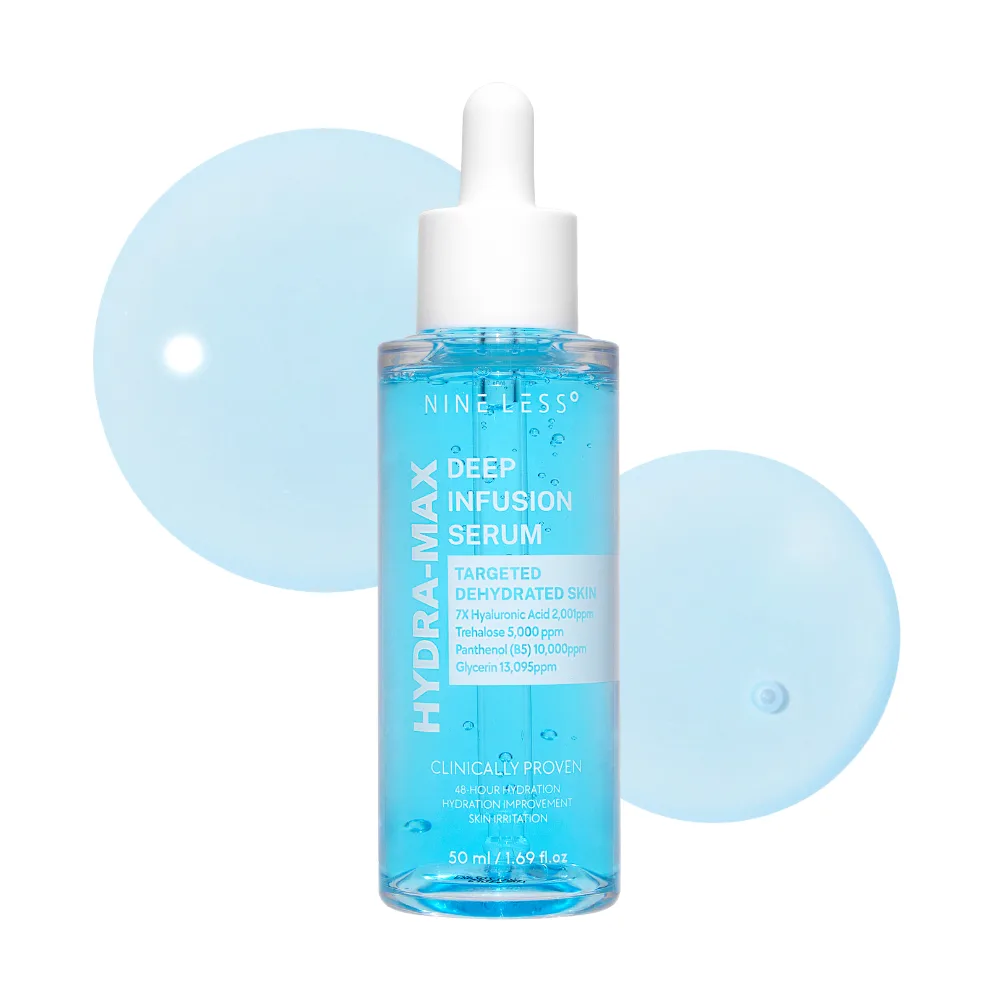
The hydration-serum category is crowded, but few pair a genuine seven-form HA complex with a full five-ceramide-and-cholesterol barrier set in one bottle. Stranger still is the Ayurvedic-leaning botanical blend — neem, holy basil, turmeric, ivy gourd — which gives this an antioxidant, soothing signature you almost never see in a Korean HA serum.
A genuinely well-engineered hydration serum that backs its seven hyaluronic acid forms with a full five-ceramide barrier complex and a surprising Ayurvedic botanical layer. It hydrates deeply and — crucially — seals that moisture in, all in a generous 50ml at a fair price. The fungal-acne crowd should look elsewhere, but for dry, dehydrated, or barrier-stressed skin it's a quiet overachiever.
Because this is a recent release from a small label, independent long-term reviews are still sparse, so the assessment draws on its verified, well-constructed ingredient list and the established science of layered hydration and barrier lipids rather than a large body of user reports. The rating should become more grounded as documented experience accumulates.
The case for it
Same rule for everyone. “Good choice” is the verdict on 9,564 of 45,024 concern verdicts across the catalog; rule R5 decided 9,072 of them. Unchanged since September 5, 2026, engine 5.1.1.
Brand or formulator? Disclose a concentration or correct a fact →
The studies behind the evidence row
The case for it
What would change this: A declared concentration would move this to a firmer reading of the dose.
Same rule for everyone. “Good choice” is the verdict on 9,564 of 45,024 concern verdicts across the catalog; rule R5 decided 9,072 of them. Unchanged since September 5, 2026, engine 5.1.1.
Brand or formulator? Disclose a concentration or correct a fact →
The studies behind the evidence row
The case for it
What would change this: A declared concentration would move this to a firmer reading of the dose.
Same rule for everyone. “Good choice” is the verdict on 9,564 of 45,024 concern verdicts across the catalog; rule R5 decided 9,072 of them. Unchanged since September 5, 2026, engine 5.1.1.
Brand or formulator? Disclose a concentration or correct a fact →
The studies behind the evidence row
The case for it
What would change this: A researched evidence row for the lead active would replace this with a verdict.
Same rule for everyone. “Good choice” is the verdict on 1,938 of 45,024 concern verdicts across the catalog; rule F2 decided 1,938 of them. Unchanged since September 5, 2026, engine 5.1.1.
Brand or formulator? Disclose a concentration or correct a fact →
The case for it
What would change this: Guideline or regulatory standing for the active on this concern would move this from a promising bet to a recommendation.
Same rule for everyone. “Promising” is the verdict on 7,858 of 45,024 concern verdicts across the catalog; rule R9p decided 7,858 of them. Unchanged since September 5, 2026, engine 5.1.1.
Brand or formulator? Disclose a concentration or correct a fact →
The studies behind the evidence row
A verdict is DermApproved’s assessment of how well a product’s ingredients fit a concern — never a claim about what the product treats. Evidence dots and collected reviews sit beside it and are never blended in. Rules 0.5.1 · evidence table ev-2026.09-r228 · how we decide
Read the front of this bottle and you'd expect a by-the-numbers Korean hydration serum: seven hyaluronic acids, five ceramides, the usual K-beauty hydration math. Read the actual ingredient list, though, and something unexpected surfaces about a third of the way down — neem, holy basil (Ocimum sanctum), ivy gourd, turmeric. That's an Ayurvedic herbal roster, the kind you'd sooner find in an Indian botanical formulation than a Seoul lab. It's a quietly fascinating cross-pollination, and it gives this serum a soothing, antioxidant signature that the dozens of plain HA serums on the market simply don't have.
But let's start with the hydration core, because that's what most people are buying it for, and it's done right. 'Seven types of hyaluronic acid' is the kind of claim that usually deserves an eye-roll — marketers love stacking HA derivatives for the count alone. Here, though, the spread is genuine and purposeful: high-molecular sodium hyaluronate (a stated 2,001 ppm) and its crosspolymer for surface plumping and a moisture reservoir, down through acetylated and hydrolyzed fragments and potassium hyaluronate that travel into the upper layers. Different molecular sizes hydrate at different depths, so 'deep infusion' is more than a slogan — it's a coherent reason to use multiple forms rather than one.
Where this serum separates itself from the HA-only pack is the second act. Pure humectant serums have a dirty secret: in dry air, hyaluronic acid can actually pull water out of the deeper skin and let it evaporate, leaving you tighter than before. The fix is lipids, and Nineless brought the full kit — a complete five-ceramide set (NP, NS, AS, AP, EOP) alongside cholesterol and phytosphingosine, the skin-identical trio that real barrier repair depends on. Trehalose, a robust sugar humectant that helps cells weather dehydration stress, and panthenol round out the moisture-binding side. The result is a serum that doesn't just flood skin with water but actually helps hold onto it — a hydrate-and-seal design rather than a hydrate-and-hope one.
Then there's that botanical blend, which is more than decoration. Neem and holy basil are Ayurvedic mainstays with antioxidant and soothing reputations; turmeric (as Curcuma longa root extract) brings its well-known calming, antioxidant curcuminoids; aloe flower and corallina algae extracts add to the comfort layer. None of these are the headline, and the brand wisely doesn't oversell them, but they give the formula a calming, protective character that suits stressed and reactive skin. It's the rare case where the 'extra' botanicals feel intentional rather than label-padding.
In practice, the texture is exactly what a layering serum should be: lightweight, slightly slippy, fast to absorb, leaving skin plump and dewy without tack. It plays well under moisturizer and makeup. The smell is faint and a touch herbal-earthy from the neem — fragrance-free in the no-added-perfume sense — and there's no sting or adjustment period. You feel the cushioned hydration immediately, and it deepens once you seal it.
A few caveats are few but worth naming. First, despite the ceramides, this is still a humectant-forward serum, so in genuinely arid or air-conditioned conditions you must layer a moisturizer on top — skip that and you can undo the benefit. Second, it is not fungal-acne-safe: polysorbate 80, hydrogenated lecithin, and a couple of fatty esters can feed malassezia, so anyone managing that condition should pass. And third, as with everything from an emerging brand, the long-term independent review record is thin; the confidence here comes from the ingredient logic, which is sound, rather than years of crowd feedback.
The botanical blend rewards a closer look, because it's not the usual K-beauty soothing suspects. Neem (Melia azadirachta), in both leaf and flower form, and holy basil (Ocimum sanctum) are pillars of Ayurvedic skincare, traditionally used for their purifying and calming reputations; turmeric brings its well-known antioxidant curcuminoids, and ivy gourd and corallina algae round out a distinctly cross-cultural roster. None of this is doing the headline hydration work, and Nineless wisely doesn't pretend otherwise — but it gives the serum a genuine point of character, a soothing-and-protective overtone you simply won't find in the dozens of interchangeable HA serums on the shelf. It's a reminder that 'hydrating serum' need not mean 'generic.'
In daily practice, the texture is what makes it easy to commit to. It's a lightweight, slightly slippy gel that drinks in within seconds and leaves skin plump but never sticky, so it slots cleanly between toner and moisturizer without complicating a routine. It plays well under sunscreen in the morning and under a richer cream at night. The single most important usage habit is sealing it — humectant-forward serums reward an occlusive layer on top — but beyond that, it's an unfussy, forgiving step that even a minimalist routine can absorb.
For fifty millilitres at twenty-nine dollars, this is a lot of thoughtfully assembled serum. Dry, dehydrated, sensitive, or barrier-compromised skin will get the most from it, but even oily skin that needs water without weight can layer it happily. It doesn't try to be a treatment serum or an anti-aging powerhouse — it's a hydration specialist that understands hydration is only half the job, and seals the other half. That focus, plus the unexpected botanical character, makes it an easy recommendation in a category where it's genuinely hard to stand out.
The hero actives that drive this product's performance.
| Ingredient | Function | Evidence |
|---|---|---|
| 7-Type Hyaluronic Acid Complex (2,001ppm sodium hyaluronate) | Seven distinct hyaluronic acid forms — from high-molecular sodium hyaluronate and its crosspolymer down to hydrolyzed and acetylated fragments — span a range of molecular sizes so hydration is drawn into the skin at multiple depths rather than just pooling on the surface. This layered HA approach is the 'deep infusion' the name refers to. | Established mechanism for Dehydration · established mechanism |
| 5-Ceramide & Cholesterol Complex | A complete five-ceramide set (NP, NS, AS, AP, EOP) with cholesterol and phytosphingosine forms the barrier-sealing half of the serum. Sitting beneath the hyaluronic acids, these lipids are what stop the freshly infused water from simply evaporating, turning a hydration serum into a hydrate-and-hold one. | Established mechanism for Dryness · established mechanism |
| Trehalose | A high-ranking sugar humectant that binds water and helps protect cell structures against dehydration stress. It complements the hyaluronic acids by holding moisture in a more stable, resilient way, which is especially useful in dry or air-conditioned environments. | Not yet assessed |
| Panthenol (Pro-Vitamin B5) | Placed high in the formula, it adds humectant and soothing action, calming the look of dehydration-stressed skin while supporting the barrier work the ceramides are doing. It rounds out a comfort-focused profile that suits compromised or reactive skin. | Established mechanism for Dehydration · established mechanism |
| Ayurvedic Botanical Blend (Neem, Holy Basil, Turmeric) | An unusual-for-K-beauty roster of neem (Melia azadirachta), holy basil (Ocimum sanctum), turmeric and ivy gourd extracts brings antioxidant and soothing support, giving the serum a calming, protective layer atop its hydration core. It's the distinctive botanical signature that sets this apart from a plain HA serum. | Not yet assessed |
Ingredient standings describe the active at treatment-level doses and vehicles; this product's own condition grades weigh its actual formula.
Water, Butylene Glycol, Glycerin, Panthenol, Trehalose, Dipropylene Glycol, Polysorbate 80, Sodium Hyaluronate(2,001ppm), Carbomer, Arginine, 1,2-Hexanediol, Hydroxyacetophenone, Ethylhexylglycerin, Caprylyl Glycol, Caprylhydroxamic Acid, Xanthan Gum, Melia Azadirachta Leaf Extract, Glyceryl Acrylate/Acrylic Acid Copolymer, Melia Azadirachta Flower Extract, Coccinia Indica Fruit Extract, Solanum Melongena (Eggplant) Fruit Extract, Aloe Barbadensis Flower Extract, Hydrogenated Lecithin, Ocimum Sanctum Leaf Extract, Polyglyceryl-6 Caprylate, Polyglyceryl-4 Caprate, Cetearyl Alcohol, Curcuma Longa (Turmeric) Root Extract, Corallina Officinalis Extract, Stearic Acid, Ceramide NP, Ceramide NS, Sodium Hyaluronate Crosspolymer, Sodium Acetylated Hyaluronate, Potassium Hyaluronate, Phytosphingosine, Hydroxypropyltrimonium Hyaluronate, Hydrolyzed Hyaluronic Acid, Hyaluronic Acid, Cholesterol, Ceramide AS, Ceramide AP, Ceramide EOP
serum
AM & PM
Apply to slightly damp skin after toner and before your moisturizer, so the hyaluronic acids have water to bind. Always seal it with a moisturizer or cream, since humectant-heavy serums can pull moisture from the skin if left unsealed in very dry air.
Skin feels plumper and more comfortable from the first use; a steadier improvement in dehydration lines, tightness and barrier resilience builds over 2-4 weeks of consistent twice-daily layering.
This serum is a textbook application of the humectant-plus-lipid hydration model, and the science behind that pairing is solid. Hyaluronic acid is a proven humectant capable of binding many times its weight in water; using multiple molecular weights is supported by the principle that larger forms hydrate and plump the surface while smaller, hydrolyzed fragments penetrate the upper stratum corneum, distributing water more evenly. The critical, often-overlooked piece is occlusion: research on transepidermal water loss shows humectants alone can increase moisture loss in low-humidity conditions, which is precisely why the inclusion of a complete physiological-lipid set matters. The ceramide-cholesterol-fatty-acid model of barrier repair is well established, with studies indicating these lipids restore barrier function most effectively when delivered together in skin-mimicking ratios — and this formula supplies five ceramides with cholesterol and phytosphingosine. Trehalose has documented osmoprotective and water-retention properties. The Ayurvedic botanicals (neem, holy basil, turmeric) carry antioxidant and anti-inflammatory data that is mostly preclinical in the topical-skincare context, so they are best regarded as supportive rather than active claims. The overall construction is evidence-aligned: it hydrates by a validated mechanism and, importantly, addresses the seal that determines whether that hydration lasts.
Clinical guidance on dehydrated and barrier-compromised skin consistently pairs humectants with occlusive or lipid components, since hyaluronic acid applied without a seal can worsen water loss in dry environments. A serum supplying multiple hyaluronic acid molecular weights alongside a full ceramide-cholesterol complex aligns with that two-part strategy and is the kind of formulation often suggested for patients with eczema-prone or compromised barriers. Dermatologists generally regard fragrance-free, lipid-supported hydrators as low-risk and broadly suitable, while cautioning that humectant serums should be followed by a moisturizer for best effect. The botanical additions are viewed as supportive comfort ingredients rather than therapeutic agents, and standard advice is to patch test botanically complex products on reactive skin before regular use.
Smooth a few drops over slightly damp skin after cleansing and toner, pressing gently to help it absorb, and apply before your moisturizer so the hyaluronic acids have water to bind to. Use morning and night. Crucially, always follow with a moisturizer or cream to seal the hydration in, especially in dry or air-conditioned settings. In humid weather, oily skin can sometimes use it as the final hydrating step under sunscreen, but most skin types benefit from a sealing layer.
Fifty millilitres for twenty-nine dollars is fair-to-good value for a serum this well-constructed; many HA serums offer a single hyaluronic acid form and no lipids at a similar or higher price. The generous size encourages the consistent, layered application that hydration genuinely requires, and a bottle lasts three to four months in twice-daily use. There's only the one size, so no bulk discount, and because Nineless is an emerging brand the price reflects formula quality rather than an established-name premium. On a cost-per-feature basis — seven HA forms, five ceramides, trehalose, and a botanical blend — it delivers more than its modest sticker implies.
Reach for this if your skin is dry, dehydrated, sensitive, or recovering from a compromised barrier and you want a hydration serum that actually holds moisture in rather than just adding it briefly. It also suits dehydrated-but-oily skin that wants lightweight water-based layering without a heavy finish.
Anyone actively managing fungal acne should skip it, since polysorbate 80 and lecithin can feed malassezia, and stricter fungal-acne-safe hydrators exist. Those who want a treatment serum with anti-aging or brightening actives, rather than a dedicated hydrator, won't find that here and should pair this with a separate active step.
Ready to try Nineless [HYDRA-MAX] Deep Infusion Serum?
Buy at Amazon ♥Lightweight, slightly slippy gel-serum that spreads easily and sinks in without leaving a sticky film.
Fragrance-free; carries only a mild, faintly herbal-earthy note from the neem and botanical extracts.
50ml bottle, generously sized for a hydrating serum, typically with a pump or dropper for controlled dosing.
First application leaves skin feeling instantly plumper and dewy without a tacky after-feel; there's no tingle or adjustment period, just a soft, cushioned hydration that becomes more noticeable once you seal it with moisturizer.
About 3-4 months applied morning and night of a few drops layered into the routine.
All Year
It anchors the brand's 'Hydra-Max' line, the hydration counterpart to its acne and brightening ranges. The dual hydrate-and-seal logic — humectants on top, skin-identical lipids beneath — mirrors the barrier-repair thinking that has reshaped K-beauty moisturizers over the past several years.
Founded around 2022, the South Korean brand Nineless works from an 'add nine, deduct nine' formulating approach that combines a focused benefit with barrier-supporting ingredients and an exclusion list of common irritants. As an emerging label it has limited long-term independent validation of its individual formulas.
More types of hyaluronic acid automatically means better hydration.
Multiple HA molecular sizes do help water reach different skin depths, but the real key is sealing that water in. This serum works because it pairs the seven HA forms with ceramides and cholesterol — without that lipid layer, even a dozen HAs would let moisture escape.
It blends seven different hyaluronic acid forms across a range of molecular sizes, so water is drawn into the skin at multiple depths rather than just sitting on the surface. A five-ceramide complex then seals that hydration in, which is what makes the moisture last.
Yes. Although the serum contains ceramides, it's still humectant-heavy, and in dry or air-conditioned environments humectants can draw moisture from deeper skin if left exposed. Sealing it with a moisturizer locks the hydration in and prevents that rebound dryness.
It's well suited to it — the combination of skin-identical ceramides, cholesterol, phytosphingosine and panthenol supports barrier repair, while the soothing neem and holy basil extracts calm reactive, dehydrated skin. It's gentle and fragrance-free, which compromised barriers tend to prefer.
Not strictly — it contains polysorbate 80, lecithin and a few fatty components that can feed malassezia, so those managing fungal acne should patch test or choose a stricter fungal-acne-safe option.
Yes — its lightweight, fast-absorbing texture suits oily and combination skin that still needs hydration, and you can use it without a heavy cream on top in humid weather. Dehydrated-but-oily skin in particular benefits from water-based layering like this.
Recurring themes our editors read across retailer reviews of this product — summaries in our words, not quotations, and not a substitute for your own patch test.
Plumping, comfortable hydration
Lightweight and absorbs quickly
Needs a moisturizer on top in very dry climates
Verified answers from our questions library — the nuance a product page cannot carry.