A Realistic Niacinamide Routine (No, You Don't Need 10%)
Nearly every trial that made this ingredient famous ran at 2–5%. The double-digit numbers on the shelf are answering a question the biology never asked.
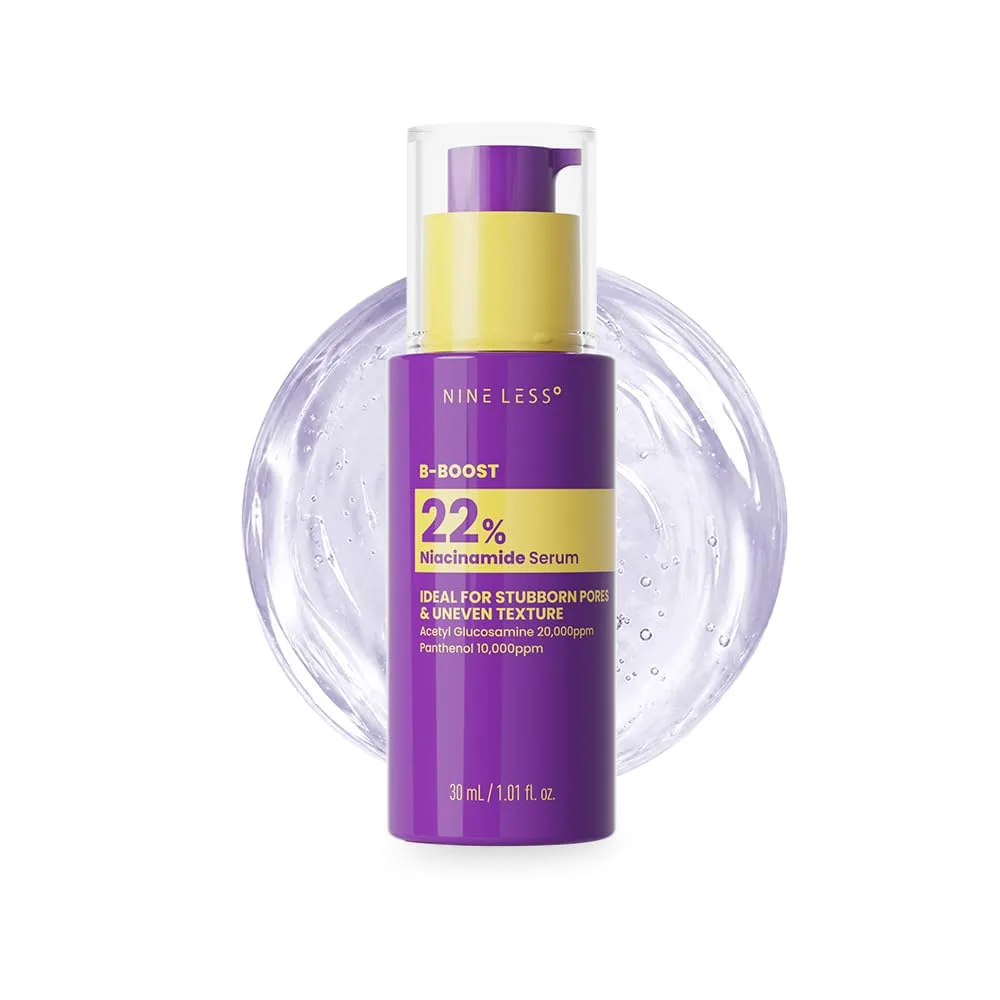
It combines 22% niacinamide with a declared 2% N-acetyl glucosamine and 1% panthenol in a fragrance-free gel. The NAG pairing is the formula's best-evidenced feature for tone, while the unusually high niacinamide targets oil and pores.
A clean, fragrance-free niacinamide serum whose smartest ingredient is not the headline 22% but the declared 2% N-acetyl glucosamine beside it. Oily, resilient skin chasing smaller-looking pores and less shine will get good results; sensitive skin is likely to flush at this strength and is better served by a lower-dose serum.
Released in 2026, this serum has no product-specific review record yet, as Amazon ratings appear pooled across the brand's listings. Our assessment relies on the declared concentrations and published research on niacinamide and NAG rather than on user experience.
The case for it
What would change this: Guideline or regulatory standing for the active on this concern would move this from a promising bet to a recommendation.
Same rule for everyone. “Promising” is the verdict on 7,858 of 45,024 concern verdicts across the catalog; rule R9p decided 7,858 of them. As of September 25, 2026, engine 5.1.1.
Brand or formulator? Disclose a concentration or correct a fact →
The studies behind the evidence row
The case for it
What would change this: Guideline or regulatory standing for the active on this concern would move this from a promising bet to a recommendation.
Same rule for everyone. “Promising” is the verdict on 7,858 of 45,024 concern verdicts across the catalog; rule R9p decided 7,858 of them. As of September 25, 2026, engine 5.1.1.
Brand or formulator? Disclose a concentration or correct a fact →
The studies behind the evidence row
The case for it
Same rule for everyone. “Good choice” is the verdict on 9,564 of 45,024 concern verdicts across the catalog; rule R5 decided 9,072 of them. As of September 25, 2026, engine 5.1.1.
Brand or formulator? Disclose a concentration or correct a fact →
The studies behind the evidence row
Also listed for Rough Texture — the actives here (Niacinamide, Glycerin, Acetyl Glucosamine, Panthenol (Vitamin B5) are in our research queue for that concern; there is no verdict until their evidence rows are written. That is a gap in our table, not a mark against the product.
Where our review and the verdict differ. The review below was written on the formulation and the published trials; the verdicts above apply the stricter standing test in our methodology — an active earns a recommendation only with guideline or regulatory standing for the concern. Where the two disagree, the verdict is DermApproved’s position.
A verdict is DermApproved’s assessment of how well a product’s ingredients fit a concern — never a claim about what the product treats. Evidence dots and collected reviews sit beside it and are never blended in. Rules 0.5.1 · evidence table ev-2026.09-r228 · how we decide
There is an arms race going on in niacinamide serums. A few years ago, 10 percent was considered strong; now bottles advertise 15, 20, even 22 percent. Nineless's B-BOOST 22% Niacinamide Serum sits near the top of that range, and the obvious question is whether more niacinamide means better results. The honest answer is: not necessarily. Most clinical studies of niacinamide have used concentrations between 2 and 5 percent, and those studies show real benefits for pigmentation, redness, oil control and barrier function. There is little evidence that going far higher produces proportionally better results, and some evidence that it makes irritation more likely. So the fairest way to review this serum is to look past the big number and at the formula as a whole.
That formula is thoughtfully put together. After water, niacinamide is the second ingredient, followed by glycerin and a handful of glycols. Then comes the ingredient that deserves more attention than the headline: acetyl glucosamine, or N-acetyl glucosamine (NAG), declared on the bottle at 20,000 parts per million — 2 percent. NAG is an amino sugar that inhibits an early step in melanin production. On its own it is modest, but combined with niacinamide it has something the high-percentage race lacks: controlled trial evidence. Studies pairing 2 percent NAG with 4 percent niacinamide have shown greater reductions in the look of hyperpigmentation than niacinamide alone. That pairing is the strongest, best-evidenced part of this serum.
Panthenol, declared at 10,000 ppm or 1 percent, is the other sensible addition. Provitamin B5 supports hydration and soothes, which matters when you are putting a high concentration of niacinamide on the skin. Three forms of hyaluronic acid, glycerin and glycereth-25 PCA isostearate add further hydration, and there is a small amount of adenosine, Korea's registered anti-wrinkle ingredient, and glucosylrutin, an antioxidant flavonoid, near the end. The formula is fragrance-free, alcohol-free and oil-free — a clean, straightforward design.
Where does the 22 percent come in? The most plausible benefit of a very high niacinamide dose is oil control and the look of pores. Niacinamide has trial evidence for reducing sebum production, and people with very oily skin often report that higher strengths make a more noticeable difference to shine. For that reason, this serum makes most sense for oily and combination skin that has tolerated niacinamide before and wants a stronger effect on pores and texture.
The trade-off is tolerance. Niacinamide can cause flushing, warmth or tingling in some people, particularly at higher concentrations or in formulas with a low pH. At 22 percent, that risk is greater than with a 5 or 10 percent serum. Anyone with sensitive, rosacea-prone or compromised skin should be cautious, and anyone new to niacinamide would be better starting lower. If you do use it, start once a day and increase gradually, always following with a moisturiser.
The texture is a light, clear gel-serum that spreads easily and dries down within a minute to a matte finish. It layers well under moisturiser and sunscreen, and because it contains no oils, it is a reasonable choice for people prone to fungal acne. On very oily skin, some may find it replaces a mattifying primer. It is also worth thinking about how much you apply. With a serum this concentrated, one pump for the whole face is plenty; using two or three to 'speed things up' only increases the chance of flushing without adding benefit. If you already use another niacinamide product — a toner, a moisturiser or a sunscreen that contains it — your total exposure adds up, and it may make sense to drop one of them while using this.
Nineless is a young brand, founded around 2022, and its approach is to print the percentages on the bottle. That transparency is welcome, but the brand has no published clinical trials of its own products, and this serum only reached retailers in 2026. Product-specific reviews are hard to find, because ratings on its Amazon listings appear to be pooled across several products. Its sibling, the 10% Niacinamide Serum, is the gentler option in the same line, pairing niacinamide with tranexamic acid.
At about twenty-six dollars for 30ml on Amazon US, the price is fair for a well-formulated serum with a meaningful NAG and panthenol content. You are not paying a premium for the 22 percent itself, which is worth remembering, since that number is more marketing than proven advantage.
Who should buy it? People with oily or combination skin who have used niacinamide without problems and want a stronger product focused on pores, shine and uneven tone, and who appreciate the NAG pairing for dark spots. With consistent use and daily sunscreen, it should help skin look smoother, clearer and more even over two to three months. Sensitive skin, dry skin and niacinamide newcomers should choose a lower-strength serum. And everyone should remember that in niacinamide, as in many things, more is not automatically better — the quieter ingredient beside it may be doing the smarter work.
The hero actives that drive this product's performance.
| Ingredient | Function | Evidence |
|---|---|---|
| Niacinamide (22%) (22% (brand-stated)) | The headline active at an unusually high 22% — well above the 2–5% where most trial evidence sits — aimed at pores, oil and uneven tone, with a correspondingly higher chance of flushing on reactive skin. | Emerging for Hyperpigmentation |
| Acetyl Glucosamine (2%) (2% (label-declared 20,000 ppm)) | N-acetyl glucosamine at a declared 20,000 ppm is the formula's most evidence-backed pairing: combined with niacinamide it has trial data for reducing the look of hyperpigmentation beyond niacinamide alone. | Not yet assessed |
| Panthenol (1%) (1% (label-declared 10,000 ppm)) | Provitamin B5 at a declared 1%, added to cushion the high niacinamide load and support hydration so the serum is more tolerable. | Not yet assessed |
| Glycerin & Hyaluronic Acid | A humectant base of glycerin and three hyaluronic acid forms that keeps the gel-serum comfortable and offsets any dryness from the high-dose niacinamide. | Not yet assessed |
| Adenosine | Korea's registered anti-wrinkle active, added at a low level to give the serum a secondary texture-and-lines claim. | Not yet assessed |
Ingredient standings describe the active at treatment-level doses and vehicles; this product's own condition grades weigh its actual formula.
Water, Niacinamide, Glycerin, Butylene Glycol, Methylpropanediol, Propanediol, Acetyl Glucosamine, Dipropylene Glycol, Panthenol, 1,2-Hexanediol, Hydroxyacetophenone, Carbomer, Arginine, Glycereth-25 PCA Isostearate, Ethylhexylglycerin, Disodium EDTA, Xanthan Gum, Adenosine, Glucosylrutin, Glyceryl Acrylate/Acrylic Acid Copolymer, PVM/MA Copolymer, Hyaluronic Acid, Hydrolyzed Hyaluronic Acid, Sodium Hyaluronate, Tocopheryl Acetate
serum
AM & PM
Start with a single pump once a day after toner; if there's no flushing after a week, move to twice daily and always follow with moisturiser, plus sunscreen in the morning.
A slightly more matte, refined look can appear within a week or two. Oil control builds over two to four weeks; pore appearance, texture and tone improve gradually over eight to twelve weeks.
Niacinamide is one of the best-studied cosmetic actives. Randomised controlled trials at 2 to 5 percent have shown reductions in hyperpigmentation over four to eight weeks, largely by inhibiting melanosome transfer from melanocytes to keratinocytes, as well as improvements in redness, fine lines and barrier function through increased ceramide synthesis. Studies have also reported reduced sebum excretion with 2 percent niacinamide over several weeks. Evidence for concentrations above about 10 percent is limited; higher doses have not been shown to deliver proportionally greater benefits, while the likelihood of irritation, flushing and discomfort appears to rise, particularly in sensitive skin.
N-acetyl glucosamine (NAG) is an amino sugar precursor of hyaluronic acid that inhibits tyrosinase glycosylation, an early step in melanin synthesis. Its brightening effect alone is modest, but controlled clinical studies combining 2 percent NAG with 4 percent niacinamide have demonstrated greater reductions in facial hyperpigmentation than niacinamide alone over eight weeks. This formula's declared 20,000 ppm (2 percent) NAG matches the concentration used in that research, making the combination its best-evidenced feature.
Panthenol at a declared 1 percent is converted to pantothenic acid in the skin, improving hydration and reducing irritation, which is relevant alongside a high-dose active. Glycerin and hyaluronic acid forms support surface hydration.
Adenosine appears at a low level and has modest evidence for fine-line improvement with prolonged use. Glucosylrutin is a water-soluble antioxidant flavonoid.
The formula is free of fragrance, essential oils and oils, reducing the risk of allergic reactions and making it suitable for skin prone to Malassezia folliculitis.
Niacinamide is widely recommended in clinical practice for oily skin, enlarged-looking pores, mild hyperpigmentation and redness, and it is generally well tolerated at the 2 to 5 percent concentrations used in most studies. Very high concentrations such as 22 percent are a marketing trend rather than an evidence-based step up, and some patients experience flushing or irritation with them. This formula's inclusion of 2 percent N-acetyl glucosamine is clinically sensible, reflecting published data on the combination for pigmentation, and its fragrance-free, oil-free base is appropriate for acne-prone skin. Patients with rosacea, sensitive or compromised skin are usually advised to choose lower concentrations. As with any treatment for pigmentation, daily broad-spectrum sunscreen is essential, and persistent melasma or acne may need prescription options.
After cleansing and toning, apply one pump to the face and press it in, avoiding the eyes and corners of the nose. Begin once a day for the first week; if there is no flushing or stinging, increase to morning and night. Follow with moisturiser, and with broad-spectrum sunscreen in the morning. It can be used with vitamin C, retinoids or exfoliating acids, but introduce new actives one at a time. If redness or discomfort persists, reduce frequency or switch to a lower-strength niacinamide.
At $25.99 for 30ml on Amazon US (and around $20 on sale at Jolse), this is fair value for a well-formulated, fragrance-free serum that includes a meaningful 2 percent NAG and 1 percent panthenol alongside niacinamide. The price is not driven by the 22 percent figure, which is useful to know because the extra concentration has limited evidence behind it. A bottle lasts around two months. Nineless is a young brand without clinical data of its own, so the value rests on the transparent formula rather than proven outcomes.
People with oily or combination skin who already tolerate niacinamide and want a stronger, fragrance-free serum focused on shine, pores and uneven tone, with the added benefit of an evidence-based NAG pairing.
Anyone with sensitive, dry, rosacea-prone or barrier-damaged skin, and anyone new to niacinamide, is likely to find this strength irritating. A lower-dose niacinamide serum will give most of the benefits with less risk.
Ready to try Nineless [B-BOOST] 22% Niacinamide Serum?
Buy at Amazon ♥A clear, slightly bouncy gel-serum that spreads easily and dries down within a minute to a light, faintly tacky, then matte finish.
Fragrance-free, with a faint neutral note typical of high-niacinamide formulas.
A 30ml purple and yellow bottle with an airless-style pump and clear overcap, labelled with the niacinamide, NAG and panthenol levels.
Oily skin tends to look less shiny quickly. Some people experience warmth, redness or tingling in the first week at this concentration — reduce frequency if so.
About two months at one to two pumps twice daily.
All Year
Nineless added the 22% serum to its B-BOOST line in 2026 as a stronger, pore-focused counterpart to the existing 10% Niacinamide Serum, following the trend for ever-higher niacinamide percentages.
Nineless is a young Korean brand, launched around 2022, that markets 'percentage-forward' serums with actives printed on the bottle. It relies on disclosed concentrations and well-known ingredients rather than published clinical trials of its own products.
22% niacinamide works twice as well as 10%.
Most evidence supports 2–5%, and benefits don't scale linearly. Higher doses mainly raise the chance of flushing and irritation.
Niacinamide shrinks pores permanently.
It can reduce oil and make pores look smaller and less congested, but pore size is largely genetic and structural.
Niacinamide can't be used with vitamin C.
Old concerns about the two combining came from high-heat lab conditions; used together in a routine, they are compatible.
For some people, yes. Studies mostly use 2–5%, and higher strengths are more likely to cause flushing or tingling. Start once daily and increase only if your skin tolerates it.
At a declared 2%, NAG pairs with niacinamide; the combination has trial evidence for improving the look of dark spots more than niacinamide alone.
The 10% suits most skin and adds TXA for tone. The 22% targets oil and pores in resilient, oily skin; sensitive skin is better off with the lower strength.
Yes. It contains no added fragrance or essential oils.
Yes, but introduce them separately and consider alternating nights at first, since both can be drying or irritating on sensitive skin.
Niacinamide, NAG and panthenol are generally considered safe in pregnancy. Check with your clinician if you have specific concerns.
Recurring themes our editors read across retailer reviews of this product — summaries in our words, not quotations, and not a substitute for your own patch test.
No review summary for this product yet.