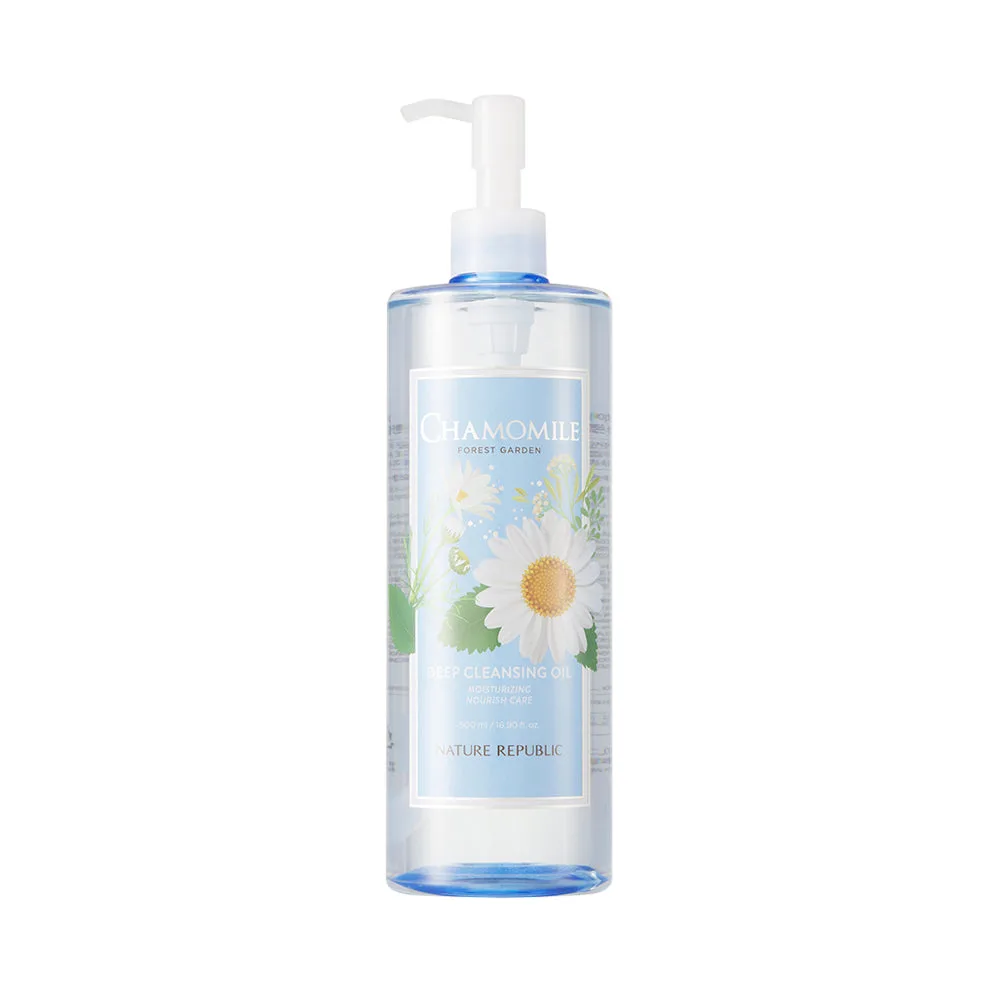
It is one of the few cleansing oils sold in a half-litre pump at a price that works out to about six cents a millilitre, built on the most stable and inert cleansing lipid there is and emulsified generously enough to rinse cleaner than many pricier oils. The chamomile is a flower water tucked ninth in an oil formula — a label, not a mechanism — and the mineral-oil, fragrance and isopropyl myristate choices are what separate it from the clinical oils it undercuts on price.
A half-litre of competent mineral-oil cleansing oil for about six cents a millilitre: it dissolves makeup and sunscreen, emulsifies generously, and does not sting. The chamomile is a flower water tucked ninth in the list, the fragrance and isopropyl myristate are the real story for reactive and breakout-prone skin, and dry-skinned budget shoppers will not care about either.
$32.20
500 mL / 16.9 fl oz (Big Size) · other sizes available
Underpinning this assessment are the oil's complete eighteen-ingredient disclosure, years of sales in Korea and through the brand's US store, and a small, scattered review record with no major-marketplace listing to anchor a count. The makeup-removal, rinse and texture findings are consistent and follow directly from the formula; tolerance on breakout-prone and fragrance-sensitive skin is inferred from the isopropyl myristate and the additives rather than from a large body of user reports.
Verdicts
How well it fits each concern
Verdict by concern tap a concern for the case
Supporting rolefor DrynessIn your profileYou chose · Rinse-off oil: Mineral Oil gets seconds of contact, so this supports a routine for dryness rather than treating it.Moderate evidenceStandard tolerabilityNo reviews collected yet
The case for it
Mineral Oil is a first-line active — approved, monograph-listed or named in current guidelines — for this concern.
It is in a rinse-off product, so it gets seconds of contact rather than the leave-on exposure the evidence assumes.
The formula carries no trigger this concern is sensitive to, with the cautions noted.
Cautions: fragrance.
What would change this: The same active in a leave-on form would be judged on its evidence rather than its contact time.
Same rule for everyone. “Supporting role” is the verdict on 8,197 of 45,024 concern verdicts across the catalog; rule R6 decided 2,017 of them.
As of September 25, 2026, engine 5.1.1.
R6 — Contact time cannot deliver a leave-on claim; the product is judged on its job (cleansing without aggravating). Explicit exceptions (BPO wash, SA cleanser, medicated shampoos) never reach this rule because their rows set rinse_off_ok. · the full register
As a cleanserNot judged: what a cleanser is for — surfactant mildness, pH match to skin, rinses clean without stripping — cannot yet be measured from the ingredient list (only puts something back can).
A verdict is DermApproved’s assessment of how well a product’s ingredients fit a concern — never a claim about what the product treats. Evidence dots and collected reviews sit beside it and are never blended in.
Rules 0.5.1 · evidence table ev-2026.09-r228 · how we decide
Assessment
Pros & Cons
Pros
✓ Inert, non-oxidising mineral-oil base that dissolves sunscreen and makeup and stays stable in a jumbo pump for months
✓ Two PEG emulsifiers placed high in the list — rinses milky and clean, better than most budget oils
✓ Macadamia, safflower and jojoba oils soften the feel and leave dry skin comfortable
✓ Does not sting the eyes; removes everyday mascara in one pass
✓ 500 mL for about thirty-two dollars — roughly six cents a millilitre, six to eight months of nightly use
✓ Silicone-free and vegan with an eighteen-ingredient list
✓ Locking pump keeps a half-litre bottle tidy and hygienic
Cons
✗ Added fragrance, benzyl alcohol and BHT in a product marketed to sensitive skin
✗ Chamomile is a flower water ninth in an oil formula — a label, not a soothing dose
✗ Isopropyl myristate is a classic comedogenic ester; breakout-prone skin should look elsewhere
✗ Mineral-oil base feels heavy and slick on oily skin
✗ Leaves a light film that makes the second cleanse mandatory
✗ Little independent review data despite years on sale
Review
Full Review
Nature Republic's Forest Garden Chamomile Cleansing Oil is named for a flower and made of mineral oil, and everything worth saying about it lives in the gap between those two facts. The front of the bottle promises a gentle, botanical cleanse for sensitive skin. The back of the bottle lists mineral oil first, macadamia oil second, two PEG emulsifiers, a handful of esters, and — ninth, after the water — Roman chamomile flower water, in a formula that is otherwise almost entirely oil. Neither fact makes it a bad product. Together they make it a very specific one.
Start with the mineral oil, because the internet has taught people to flinch at it and the science has not. Cosmetic-grade mineral oil is one of the most refined, inert and thoroughly studied ingredients in skincare: it does not oxidise, it does not sensitise, it is non-comedogenic in standard testing, and it dissolves the oily film of sunscreen and makeup as well as anything on the shelf. For a cleansing oil sold in a 500 mL pump that will sit in a bathroom for six months, it is the sensible base — a plant oil at that volume would go rancid long before the bottle emptied. The plant oils that follow it — macadamia, safflower, jojoba — soften the feel and add a botanical accent; the chamomile flower water adds a name.
The emulsifiers are where the formula shows some care. PEG-20 glyceryl triisostearate and PEG-10 isostearate sit third and fifth, high enough that the oil goes properly milky the moment wet hands touch it and rinses away with the makeup rather than sitting on the skin. A lot of budget cleansing oils skimp here and leave a film that needs scrubbing off; this one rinses cleaner than its price predicts. Isopropyl myristate, isohexadecane and dicaprylyl carbonate thin the mineral oil and speed up the dissolving, which is why foundation, sunscreen and everyday mascara lift in about a minute and why the eyes do not sting.
In practice, on dry or normal skin, it does the job without fuss. Two pumps over a dry face, a minute of massage, a milky rinse, and skin that has spent years being stripped by foaming cleansers feels soft and calm rather than tight. Followed by a gentle water-based cleanser — and it should be, every time — it is a perfectly good first half of a double cleanse. The scent is a light, sweet, slightly floral perfume: pleasant, not chamomile, and noticeable enough that anyone who wants an unfragranced cleanser will notice.
Which brings the honest caveats. For sensitive skin, the ingredients that matter are not the chamomile but the fragrance, the benzyl alcohol used as a preservative and the BHT antioxidant — three common triggers for reactive skin in a product marketed at reactive skin. The formula is gentle in the way all surfactant-free oils are gentle; it is not gentle in the way a fragrance-free clinical cleansing oil is, and eczema-prone or easily flushed faces should treat the chamomile on the label as a mood rather than a promise. For oily and breakout-prone skin, the issue is texture and residue: the mineral-oil base feels heavy and slick, isopropyl myristate is one of the classic comedogenic esters, and the light film that survives the rinse is exactly the thing that turns into a clogged pore when the second cleanse is skipped. This is a cleansing oil for people who need oil in their cleanse, and that mostly means dry skin.
One more practical note: because the base does not spoil, the oil also travels and stores well, and a pump kept by the bathroom sink for the better part of a year will smell and behave on the last night exactly as it did on the first — something a plant-oil cleanser in a half-litre bottle cannot promise.
The value is where it wins, and it wins convincingly. Thirty-two dollars for 500 millilitres is about six cents a millilitre — a sixth to a tenth of what most cleansing oils cost per millilitre — and at two pumps a night the bottle lasts six to eight months. A standard smaller bottle exists, but the big pump is the one to buy: the mineral-oil base means it will not spoil, and the locking pump keeps it tidy. For a student, a family bathroom or anyone who wears sunscreen daily and resents paying serum prices to take it off, the arithmetic is hard to argue with.
So: dry or normal skin, not especially reactive, daily sunscreen or makeup, a tight budget and no objection to a light perfume — buy the big bottle and double cleanse, and it will do what a cleansing oil needs to do for most of a year. Oily, acne-prone or fungal-acne-prone skin should look for a lighter, ester-based oil that emulsifies completely, and genuinely sensitive skin should find one without fragrance. And everyone should read the name for what it is. The forest is mineral oil; the garden is three plant oils; the chamomile is a flower water, ninth on the list, doing the marketing.
Formula
Key Ingredients
The hero actives that drive this product's performance.
The first ingredient and the bulk of the bottle: highly refined mineral oil, the most inert, non-sensitising and best-documented cleansing lipid there is, dissolving sunscreen and makeup by like-with-like without oxidising in a jumbo pump over months. It is why this oil is cheap, stable and gentle — and why it feels heavier and less 'botanical' than the chamomile on the label implies.
Regulator-approvedfor Dryness · established mechanism
The two emulsifiers, third and fifth in the list, are what turn a bottle of oil into a cleanser: they let the mineral oil go milky the moment water hits it and rinse away with the dissolved makeup instead of leaving a film. Their high placement is the reason the oil rinses cleaner than many cheaper competitors.
Three plant oils — macadamia second in the list, safflower and jojoba behind the water — that soften the mineral-oil base, add a little skin-conditioning fatty acid and give the cleanse a smoother, less slippery feel. They are the 'garden' in Forest Garden; the mineral oil is the forest.
The headline botanical, ninth in the list as a flower water in a formula that is otherwise oil — a small aqueous phase carrying the calming chamomile story. In a rinse-off with seconds of contact its soothing effect is nominal; it is the reason the oil is pitched at sensitive skin, not the reason it suits sensitive skin.
Light, dry-feeling esters and a volatile hydrocarbon that thin the mineral oil and help it lift waterproof makeup quickly, then let it rinse without drag. Isopropyl myristate is the one worth noting — a classic comedogenic flag for breakout-prone skin, even in a rinse-off.
Not yet assessed
Ingredient standings describe the active at treatment-level doses and
vehicles; this product's own condition grades weigh its actual formula.
Use it as the first step of an evening double cleanse on dry skin: massage over a dry face, emulsify with wet hands until milky, rinse, and follow with a gentle water-based cleanser to remove any mineral-oil film. Dry, non-reactive skin can use it nightly; combination skin should keep it for heavy makeup or sunscreen days and always double cleanse.
Results Timeline
Immediate: sunscreen, foundation and most mascara dissolve in a minute of massage and rinse milky with a soft, slightly slick after-feel. Short-term (1-2 weeks): dry skin that has been stripped by foaming cleansers feels calmer and softer. Full benefits: there is no further arc — it is a makeup remover, and its effect is complete at each rinse; breakout-prone skin may see the opposite over weeks if the second cleanse is skipped.
The formula's first ingredient is also its most misunderstood, and the evidence deserves stating plainly. Rawlings and Lombard's 2012 review in the International Journal of Cosmetic Science examined the source, structure and dermatological properties of cosmetic mineral oil and concluded that highly refined mineral oil is chemically inert, non-sensitising and non-comedogenic, and that in comparative testing it improved skin softness and suppressed transepidermal water loss more effectively than several other common emollients (Rawlings and Lombard, International Journal of Cosmetic Science, 2012). For a cleansing oil the relevant properties are its solvent power for the lipophilic films of sunscreen and makeup, its stability — it does not oxidise the way plant oils do, which matters in a 500 mL bottle used over months — and its safety record, which is among the best of any cosmetic ingredient. The 'mineral oil clogs pores' belief traces to poorly refined industrial grades and to older comedogenicity assays; it does not apply to cosmetic-grade material.
The cleansing mechanism depends on emulsification, and the formula handles it well. PEG-20 glyceryl triisostearate and PEG-10 isostearate are non-ionic emulsifiers that let an anhydrous oil form a milky oil-in-water emulsion on contact with water, carrying the dissolved makeup away in the rinse; their placement in the top five is why residue is lighter than in many cheap oils. Isohexadecane, dicaprylyl carbonate and isopropyl myristate lower the viscosity and improve spreading and solvency. Isopropyl myristate is the ingredient with a genuine comedogenicity concern — it scores highly in classic rabbit-ear and human follicular assays — and although rinse-off contact reduces the risk, any film left on breakout-prone skin is a plausible contributor to congestion, which is the mechanistic basis for insisting on a second cleanse.
The botanical content is modest. Macadamia, safflower and jojoba oils add fatty acids and a conditioned feel; Anthemis nobilis (Roman chamomile) flower water contributes trace amounts of the plant's flavonoids and esters, which have documented anti-inflammatory activity in concentrated extracts but no meaningful effect at flower-water dilution during a sub-minute rinse-off. The tolerance profile is set by the tail of the list: an undisclosed fragrance, benzyl alcohol as a preservative and BHT as an antioxidant are all recognised, if uncommon, contact allergens, and they — not the chamomile — determine how sensitive skin will respond. None of the ingredients is a pregnancy concern at cosmetic doses.
Oil-based cleansers are a standard recommendation for dry, atopic-prone and mature skin because they remove sunscreen and makeup without the surfactant-driven lipid stripping of foaming washes, and a mineral-oil base is, from a tolerance standpoint, the least reactive choice available — clinicians have long used pure mineral oil as a makeup remover and emollient precisely because it so rarely causes trouble. The reservations here concern the additives rather than the base: an added fragrance, benzyl alcohol and BHT are all documented contact allergens, and a product positioned for sensitive skin would ideally omit them, so patients with a history of cosmetic dermatitis are usually steered toward unfragranced cleansing oils instead. For acne-prone patients the standard advice applies: the isopropyl myristate content and the mineral-oil film argue for a lighter, fully emulsifying cleanser or, at minimum, a rigorous second cleanse. There are no interactions with prescription topicals and no concerns in pregnancy, and for a dry-skinned patient on a budget who double cleanses properly, it is an acceptable first step.
Guidance
Usage & Recommendations
How to Use
In the evening, on a dry face with dry hands, dispense one or two pumps and massage the oil over the whole face for about a minute, working gently over closed eyes and around the nose where sunscreen collects. Wet the hands and keep massaging as the oil turns milky, then rinse thoroughly with lukewarm water. Follow with a gentle water-based cleanser to remove the light mineral-oil film — this second step is not optional on combination or breakout-prone skin. Pat dry and continue with toner and moisturiser. Keep the pump locked between uses and the bottle out of direct sunlight; patch test on the jaw first if fragrance has bothered you before.
Value Assessment
Thirty-two dollars for 500 millilitres — about six cents a millilitre — puts this among the cheapest cleansing oils per use on the market, and the mineral-oil base means the jumbo bottle will not spoil before it is finished, unlike a plant-oil cleanser bought in that volume. Six to eight months of nightly use from one pump bottle is the whole value case, and it is a strong one for dry skin that wears sunscreen daily. A standard smaller bottle exists for those who want to try it first, at a higher cost per millilitre. What the low price does not buy is a fragrance-free or ester-free formula; the additives are the cost-saving and the limitation at once. From a mass-market brand with a long record of unpretentious products and no premium positioning, the number is exactly what it looks like — a budget cleansing oil priced like one.
Who Should Buy
Dry or normal skin that wears sunscreen or makeup daily, is not especially reactive, does not mind a light perfume and wants a cleansing oil that costs pennies per use and lasts most of a year — students, families and anyone tired of paying serum prices for a makeup remover.
Who Should Skip
Oily, acne-prone or fungal-acne-prone skin, which will find the mineral-oil base heavy and the isopropyl myristate a risk; genuinely sensitive, eczema-prone or fragrance-reactive skin, for which the chamomile on the label is no protection against the fragrance, benzyl alcohol and BHT in the list; and anyone who will not follow it with a second cleanse.
Ready to try Nature Republic Forest Garden Chamomile Cleansing Oil?
A medium-weight, clear, slightly slippery oil that spreads easily, turns fully milky with water and rinses to a soft, faintly conditioned feel
Scent
A light, sweet, slightly floral added fragrance — pleasant and not strong, but a perfume rather than a chamomile note
Packaging
A tall, clear 500 mL plastic bottle with a locking pump and a pale green-and-white label
Finish
non-greasylightweight
What to Expect on First Use
The first use is exactly what a budget cleansing oil should be: a pump or two massages over a dry face, foundation and sunscreen loosen within a minute, and the oil turns milky and rinses away with no stinging in the eyes and a soft, lightly slick after-feel that a second cleanser clears. Dry skin registers relief immediately; there is no adjustment period, and any breakouts that follow are the sign to double cleanse more carefully or move on.
How Long It Lasts
Six to eight months of nightly use from the 500 mL pump
Nature Republic's Forest Garden line was built around inexpensive botanical-themed cleansing oils — chamomile for sensitive skin, calendula, and others — as the double-cleanse entry point for its mass-market Korean customers, and the 500 mL 'big size' became the format shoppers actually bought once the standard bottle proved popular. The 2022 redesign kept the formula and the pump and refreshed the label.
About Nature Republic Established Brand (5–20 years)
Nature Republic, founded in 2009, is a mass-market Korean brand whose Forest Garden cleansing oils have been a budget double-cleanse staple in Korea for the better part of a decade, sold in a jumbo 500 mL pump alongside a standard bottle. The brand discloses full ingredient lists but no clinical data; the formula's standing is that of a long-selling, unglamorous mineral-oil cleanser rather than a tested one.
Brand founded: 2009
Myth vs. Reality
Common Myths
Myth
A chamomile cleansing oil soothes sensitive skin while it cleans.
Reality
The chamomile here is a flower water ninth in an oil-based formula, on the skin for under a minute before rinsing. What makes the oil gentle is the inert mineral-oil base and the absence of surfactants, not the chamomile; the added fragrance and benzyl alcohol are the ingredients sensitive skin will actually notice.
Myth
Mineral oil clogs pores and should be avoided in face products.
Reality
Cosmetic-grade mineral oil is highly refined, non-comedogenic in standard testing and one of the least allergenic ingredients in skincare, which is why it makes a good cleansing base. The comedogenic flag in this formula belongs to isopropyl myristate, and the real pore risk is residue left when the oil is not followed by a second cleanse.
FAQ
Frequently Asked Questions
Is the Nature Republic Forest Garden Chamomile Cleansing Oil good for sensitive skin?
It is gentle in the mechanical sense — no surfactants, an inert mineral-oil base, no stinging in the eyes — but it carries an added fragrance, benzyl alcohol and BHT, which are the usual suspects when reactive skin objects to a cleanser. Sensitive skin that tolerates light fragrance will be fine; truly reactive or eczema-prone skin should choose an unfragranced cleansing oil.
Does the Chamomile Cleansing Oil need a second cleanse?
Yes. The two PEG emulsifiers rinse it cleaner than many budget oils, but a mineral-oil base with isopropyl myristate leaves a light film, and on combination or breakout-prone skin that film is the pore risk. Follow it with a gentle water-based cleanser every time.
Will the Forest Garden Chamomile Cleansing Oil remove waterproof makeup?
Most of it. Mineral oil, isohexadecane and isopropyl myristate dissolve foundation, sunscreen and ordinary mascara in about a minute of massage; the most stubborn waterproof mascaras may need a second pass or a dedicated eye remover. It does not sting the eyes.
Is the Nature Republic Chamomile Cleansing Oil suitable for oily or acne-prone skin?
It is not the best choice. The mineral-oil base feels heavy on oily skin, isopropyl myristate is a classic comedogenic ingredient, and skipping the second cleanse leaves a residue that can contribute to breakouts. Oily skin does better with a lighter ester-based cleansing oil or a balm that emulsifies more completely.
How long does the 500 mL Chamomile Cleansing Oil last?
At one or two pumps a night, six to eight months — which is where the value lies. At around thirty-two dollars for the big size it works out to roughly six cents a millilitre, a fraction of the per-millilitre cost of most cleansing oils, and the locking pump keeps it stable in a bathroom for that long.
Is the Forest Garden Chamomile Cleansing Oil safe to use while pregnant?
Yes. It is a rinse-off blend of mineral oil, plant oils, emulsifiers and a light fragrance, with no retinoids, salicylic acid or essential oils, and contact time is under a minute. The fragrance is a comfort consideration only.
Reviews
What Reviewers Tend to Say
Recurring themes our editors read across retailer reviews of this product — summaries in our words, not quotations, and not a substitute for your own patch test.
Common Praise
removes sunscreen and foundation quickly and rinses clean
the 500 mL pump lasts for months and costs very little per use
does not sting the eyes
leaves dry skin soft rather than tight
Common Complaints
mineral-oil base feels heavy and slick on oily skin
the fragrance is noticeable
can leave a film and clog pores without a second cleanse
The strongest counterexample to blanket botanical scepticism is also one of the more common contact allergens — and holding both facts at once is the only honest way to read it.
Essential oils are declared by botanical name rather than as fragrance, which is why the most heavily perfumed products in the natural aisle can carry the reassuring word — and why the bottle gets more sensitising the longer you own it.
Chamomile's active fraction inhibits the same inflammatory pathways a steroid does, at a fraction of the strength — and the version that works best is grubbed out of Brazilian cerrado, while the synthetic substitute is half inactive by construction.
Products, answers, therapy guides, tools and articles in one search. Brand names,
slang and abbreviations all work — accutane finds isotretinoin, bacne finds truncal acne.