Azelaic Acid: The Most Underrated Active in Skincare
It treats acne, rosacea, and dark spots at once, it's pregnancy-safe, and it rarely irritates. So why is almost nobody reaching for it first?
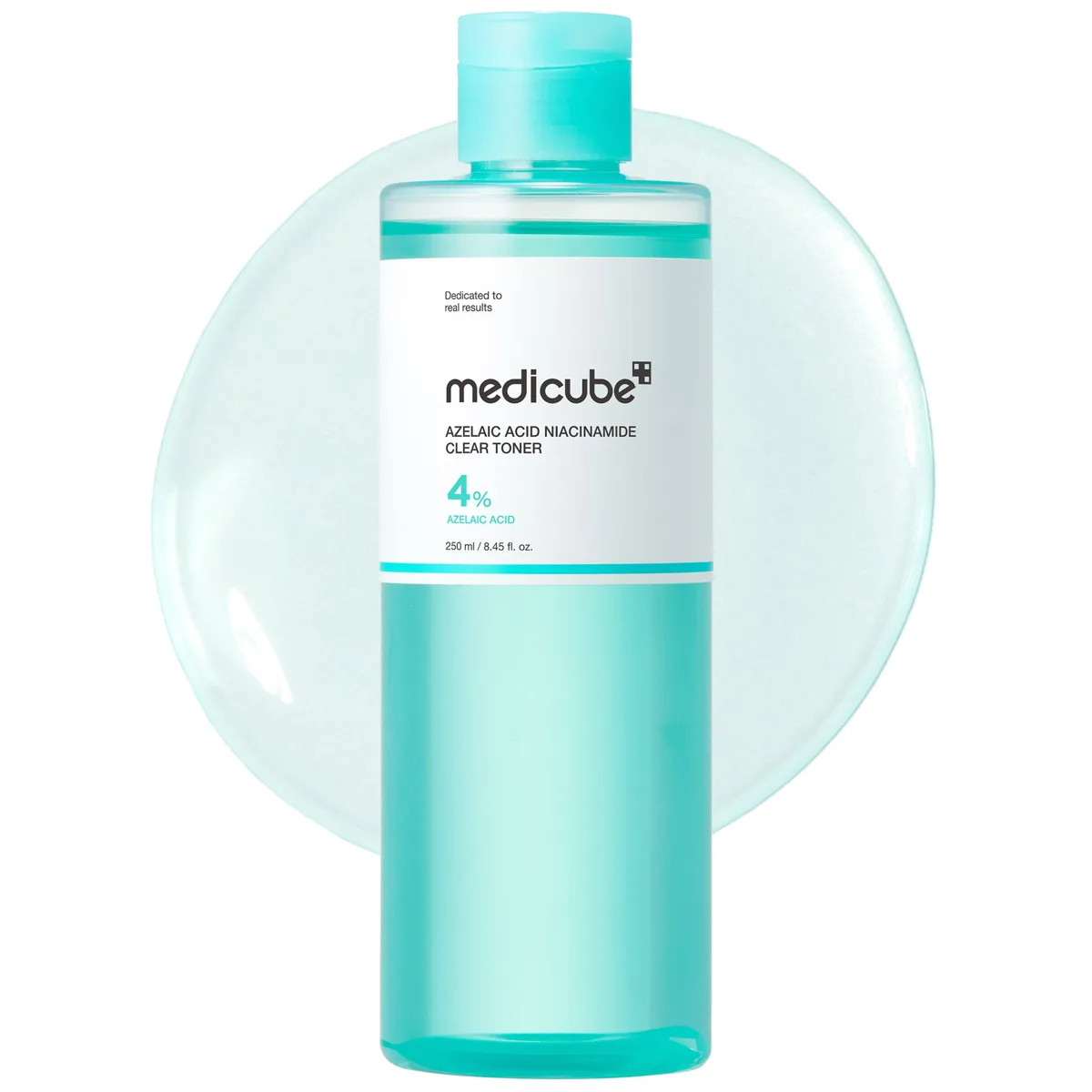
It's the only product in Medicube's azelaic range that actually contains a working dose — 4% azelaic acid with 2% niacinamide — in a fragrance-free, amino-acid-cushioned base, and it does so at the lowest price in the lineup. The honesty of the formulation, in a category full of trace-dosed pretenders, is what sets it apart.
After a run of azelaic products dosed in parts-per-million, here's the one that actually put the ingredient in the bottle: a real 4% azelaic acid with 2% niacinamide, fragrance-free, in a generous 250ml for twenty-two dollars. This is the honest, genuinely useful azelaic product the rest of the line only cosplays. For redness, mild breakouts, and uneven tone, it's a legitimate budget standout — the rare Medicube product I'd recommend for exactly what it says it does.
Launched in May 2026, this toner is still early in its market life with limited independent reviews, so the assessment draws on its disclosed 4% azelaic and 2% niacinamide, the strong published evidence for both actives, and the brand's in-house testing rather than a deep pool of user reports. Long-term tolerance across the widest range of sensitive skin is still accumulating.
The case for it
What would change this: A concentration inside the studied range would raise this a step.
Same rule for everyone. “Good choice” is the verdict on 9,564 of 45,024 concern verdicts across the catalog; rule R4 decided 84 of them. Unchanged since September 5, 2026, engine 5.1.1.
Brand or formulator? Disclose a concentration or correct a fact →
The studies behind the evidence row
The case for it
Cautions: fungal-acne triggers.
What would change this: A concentration inside the studied range would raise this a step.
Same rule for everyone. “Good choice” is the verdict on 9,564 of 45,024 concern verdicts across the catalog; rule R4 decided 84 of them. Unchanged since September 5, 2026, engine 5.1.1.
Brand or formulator? Disclose a concentration or correct a fact →
The studies behind the evidence row
The case for it
Same rule for everyone. “Good choice” is the verdict on 9,564 of 45,024 concern verdicts across the catalog; rule R5 decided 9,072 of them. Unchanged since September 5, 2026, engine 5.1.1.
Brand or formulator? Disclose a concentration or correct a fact →
The studies behind the evidence row
The case for it
Cautions: fungal-acne triggers.
What would change this: Guideline or regulatory standing for the active on this concern would move this from a promising bet to a recommendation.
Same rule for everyone. “Promising” is the verdict on 7,858 of 45,024 concern verdicts across the catalog; rule R9p decided 7,858 of them. Unchanged since September 5, 2026, engine 5.1.1.
Brand or formulator? Disclose a concentration or correct a fact →
The studies behind the evidence row
The case for it
What would change this: A declared concentration would move this to a firmer reading of the dose.
Same rule for everyone. “Good choice” is the verdict on 1,938 of 45,024 concern verdicts across the catalog; rule F2 decided 1,938 of them. Unchanged since September 5, 2026, engine 5.1.1.
Brand or formulator? Disclose a concentration or correct a fact →
The studies behind the evidence row
The case for it
What would change this: A declared concentration would move this to a firmer reading of the dose.
Same rule for everyone. “Unproven” is the verdict on 1,111 of 45,024 concern verdicts across the catalog; rule R9 decided 1,111 of them. Unchanged since September 5, 2026, engine 5.1.1.
Brand or formulator? Disclose a concentration or correct a fact →
The studies behind the evidence row
Also listed for Dullness — the actives here (Azelaic Acid, Niacinamide, Centella Asiatica, Ceramides) are in our research queue for that concern; there is no verdict until their evidence rows are written. That is a gap in our table, not a mark against the product.
Does the jobDoes what a toner is for: not alcohol-driven, adds something real. Not measured from the label: restores skin pH, plays well with what follows.
A verdict is DermApproved’s assessment of how well a product’s ingredients fit a concern — never a claim about what the product treats. Evidence dots and collected reviews sit beside it and are never blended in. Rules 0.5.1 · evidence table ev-2026.09-r228 · how we decide
Having just worked through a cleanser with 31 parts-per-million of azelaic acid and a serum with 100, opening this toner feels like someone finally turned the lights on. Four percent azelaic acid. Two percent niacinamide. Azelaic sitting second on the ingredient list, right after the base and ahead of everything else. This is what a functional azelaic product looks like, and the fact that it's also the least expensive item in the range — $22 for a full 250ml — is either an irony or a quiet admission that the pricier 'azelaic' products in the lineup are selling something other than azelaic. Either way, this is the one to actually buy.
Four percent is a smartly chosen concentration. Prescription azelaic runs 15 to 20 percent and over-the-counter formulas often sit around 10, but those higher levels are also where azelaic's characteristic tingle and dryness show up, and they're leave-on creams you dose deliberately. At 4% in a watery toner swept across the whole face daily, you get a meaningful, cumulative dose of azelaic's real benefits — calming the diffuse redness of rosacea-prone skin, gently discouraging the bacteria and inflammation behind breakouts, and nudging post-acne marks and uneven tone to fade — without the sting that scares people off the stronger stuff. It's the kind of concentration that rewards consistency: not dramatic on day one, but genuinely effective by week four to eight if you use it daily.
The 2% niacinamide is a well-judged partner. Azelaic and niacinamide are a natural pairing for troubled, oil-prone skin — niacinamide reinforces the barrier, helps regulate sebum, and complements azelaic's work on tone and redness, and at 2% it's high enough to contribute without piling on. Around these two actives, Medicube built a soothing, barrier-minded supporting cast: a broad amino-acid complex that mimics the skin's own natural moisturizing factor, ceramide NP, hyaluronic acid, centella, aloe, licorice-derived dipotassium glycyrrhizate, and panthenol precursor. It's a formula clearly designed so the actives do their job while the skin stays calm and hydrated rather than stripped.
And here's the detail that matters most for this particular use case: it's fragrance-free. No essential oils, no citrus, no added perfume. For a product aimed at redness-prone, reactive, breakout-prone skin — exactly the skin that fragrance most often provokes — leaving the scent out isn't a nice-to-have, it's the whole point, and it's genuinely refreshing to see it done right here after several products in this same line that folded irritating oils into calming claims. There's a mild preservative (o-cymen-5-ol) doing gentle antimicrobial duty, and a light roster of botanical extracts — neem, bitter melon, holy basil — leaning into the 'clarifying' positioning, but nothing that undercuts the fundamental gentleness.
The texture is a straightforward watery toner that you can pat in with hands or sweep with a cotton pad, absorbing fast and leaving no residue to interfere with whatever follows. The brand cites its own clinical testing — sebum reduced roughly 12% in two weeks, barrier measures improved after a single use — and while those are in-house numbers to take with the usual grain of salt, they point in a direction entirely consistent with what 4% azelaic and 2% niacinamide should do. You don't need to trust the exact percentages to trust the mechanism.
It's also worth appreciating how this slots into a routine, because a toner is one of the friendliest formats for a slow-building active. Delivered in a thin, whole-face layer rather than a targeted treatment, azelaic gets even coverage across the diffuse redness and scattered marks that don't respect the boundaries of a spot treatment — it treats the whole canvas, which is exactly how rosacea-type redness and post-acne tone unevenness actually present. It also plays well with others: azelaic doesn't clash with retinoids, vitamin C, or most exfoliants the way stronger acids can, so you can build a routine around it without a scheduling headache. The one discipline it asks of you is consistency and patience. This is not a product that transforms your skin over a weekend; it's one that, applied twice a day without drama, leaves you noticing after a month or two that your face is calmer, more even, and breaking out less. That unglamorous reliability is precisely what makes it worth keeping on the shelf.
Value is where this becomes a genuine standout. Two hundred fifty milliliters is a large toner, the actives are real and well-dosed, it's fragrance-free, and it costs $22 — which works out to pennies per use and undercuts plenty of thinner, pricier azelaic products that deliver less. This is what a budget hero looks like: not the cheapest possible thing, but a lot of legitimately effective product for the money. If you've been eyeing azelaic acid and don't want to commit to a prescription or a heavy cream, this is an easy, low-risk, high-value entry point.
Are there caveats? A few small ones. Azelaic acid, even at 4%, can cause a brief tingle on very reactive skin for the first week or two, so ease in every other day if you're cautious. It won't match the punch of a 15% prescription azelaic for stubborn rosacea or moderate acne — this is a maintenance-and-mild-cases tool, not a heavy treatment. And as a toner, it's one step in a routine; it pairs best with a good moisturizer and, non-negotiably, daytime sunscreen, since you're actively working on tone. But those are the ordinary limits of a well-made 4% toner, not flaws. For once in this range, the name on the bottle and the formula inside it tell the same story, and that story is a good one.
The hero actives that drive this product's performance.
| Ingredient | Function | Evidence |
|---|---|---|
| Azelaic Acid (4%) | The real, working dose the rest of the line lacks — at 4% leave-on it calms diffuse redness, discourages breakout-driving inflammation, and fades post-acne marks daily, all with far less sting than prescription-strength azelaic. | Regulator-approved for Rosacea · well-established certainty |
| Niacinamide (2%) | A well-judged partner at 2%, reinforcing the barrier and regulating sebum so it complements azelaic's work on tone and redness without overloading oil-prone, reactive skin. | Emerging for Hyperpigmentation |
| Centella Asiatica | Adds soothing, barrier-supporting action that keeps the azelaic and niacinamide comfortable to use daily, part of a deliberately calming supporting cast. | Limited for Rosacea |
| Ceramide NP | Works with the amino-acid complex and hyaluronic acid to keep the barrier intact while the actives do their job, offsetting any drying from the azelaic. | Not yet assessed |
| Amino Acid Complex | A broad blend of glycine, serine, and other amino acids that mimics the skin's natural moisturizing factor, hydrating and cushioning so the treatment toner never leaves skin stripped. | Not yet assessed |
Ingredient standings describe the active at treatment-level doses and vehicles; this product's own condition grades weigh its actual formula.
Water (Aqua), Propylene Glycol, Azelaic Acid, Niacinamide, Sodium Hydroxide, 1,2-Hexanediol, Diethoxyethyl Succinate, Trehalose, C12-14 Alketh-12, Ethylhexylglycerin, Azadirachta Indica (Neem) Leaf Extract, Azadirachta Indica (Neem) Flower Extract, Momordica Charantia (Bitter Melon) Fruit Extract, Solanum Melongena (Eggplant) Fruit Extract, Aloe Barbadensis Flower Extract, Ocimum Sanctum (Holy Basil) Leaf Extract, Dipeptide-15, Curcuma Longa (Turmeric) Root Extract, Corallina Officinalis Extract, o-Cymen-5-ol, Dipotassium Glycyrrhizate, Pantothenic Acid, Glycerin, Butylene Glycol, Hydrogenated Lecithin, Glycine, Caprylic/Capric Triglyceride, Hydrogenated Phosphatidylcholine, Serine, Glutamic Acid, Centella Asiatica Extract, Sodium Hyaluronate, Sucrose Stearate, Aloe Barbadensis Leaf Extract, Aspartic Acid, Leucine, Cetearyl Alcohol, Polyglyceryl-10 Stearate, Alanine, Lysine, Ceramide NP, Arginine, Tyrosine, Phenylalanine, Valine, Threonine, Proline, Isoleucine, Histidine, Methionine
toner
AM & PM
Sweep or pat over the whole face after cleansing and before serums; ease in every other day at first if reactive, and always follow daytime use with sunscreen.
Mild soothing within the first week; visible improvement in redness, tone, and breakout frequency over 4-8 weeks of daily use, with post-acne marks fading gradually beyond that.
This is the formula in the range where the science and the label finally agree. Azelaic acid is a dicarboxylic acid with a genuinely broad evidence base: it inhibits tyrosinase to fade post-inflammatory pigment, exerts anti-inflammatory and antimicrobial effects useful in rosacea and acne, and normalizes follicular keratinization. Most of that evidence comes from 10-20% leave-on formulations, but 4% applied daily as a leave-on toner sits in a reasonable cosmetic window — enough for cumulative benefit on redness and tone with markedly better tolerability than the higher, tingle-prone concentrations. The 2% niacinamide brings its own well-supported actions: barrier lipid synthesis, sebum regulation, and reduction of erythema, and it pairs logically with azelaic on oil-prone, reactive skin. The supporting amino-acid blend replicates the skin's natural moisturizing factor to offset any drying, while ceramide NP and centella triterpenes reinforce the barrier — a formulation strategy that lets the actives work without compromising comfort. The fragrance-free base is itself evidence-aligned, since minimizing fragrance is a repeatedly-supported way to reduce irritation in the exact populations azelaic targets. The brand's in-house sebum and barrier figures aren't independent trials, but the mechanism they describe is consistent with the established pharmacology of the two actives at these doses.
Azelaic acid holds a well-earned place in clinical practice for rosacea, acne, and post-inflammatory hyperpigmentation, valued for being effective while remaining safe in pregnancy and gentle enough for sensitive skin — so a leave-on 4% toner is a reasonable, accessible way to fold it into a daily routine. Standard guidance positions lower-percentage cosmetic azelaic as maintenance and mild-case care, with prescription strengths reserved for more active disease, which is exactly the niche this toner fills. Pairing azelaic with niacinamide is commonly endorsed for oil-prone, redness-prone skin, and the fragrance-free formulation reflects the usual advice to minimize potential irritants in reactive complexions. Clinicians typically recommend easing into any azelaic product to gauge tolerance and stressing daily sunscreen when treating pigment and tone, both of which apply here.
After cleansing, apply to the whole face by patting in with clean hands or sweeping with a cotton pad, morning and evening, then follow with serum and moisturizer. If your skin is reactive, start every other day for the first week or two to let it adjust to the azelaic, building to daily as tolerated. Because you're actively working on tone and redness, daytime sunscreen is essential. Give it four to eight weeks of consistent use before judging results, and pair it with a good moisturizer to keep the barrier comfortable.
This is where the toner turns from good to genuinely compelling. At $22 for 250ml, you're getting a large volume of a properly-dosed 4% azelaic, 2% niacinamide, fragrance-free formula for a price that works out to pennies per application and undercuts many thinner, costlier azelaic products. As an established brand selling a real active at an accessible price, Medicube isn't leaning on hype here — the value is in the formula, not the marketing. Compared with the pricier azelaic 'cleanser' and 'serum' in the same line that dose the ingredient at parts-per-million, this toner is both cheaper and vastly more functional, which tells you where the actual value in the range sits. For anyone starting with azelaic acid, it's hard to beat as a first purchase.
Anyone with mild rosacea-type redness, occasional breakouts, uneven tone, or oily-but-reactive skin who wants an affordable, well-tolerated way to use azelaic acid daily. If you value a fragrance-free formula with real, sensibly-dosed actives and a low price, this toner is an easy, high-value staple that suits sensitive skin and is pregnancy-compatible.
Those with moderate-to-severe rosacea or persistent acne may need a higher-strength prescription azelaic for adequate results, and anyone wanting an immediate, dramatic change will find this a slow-and-steady maintenance tool. Skin that reacts to even 4% azelaic with lasting irritation should reduce frequency or choose a gentler active.
Ready to try Medicube Azelaic Acid Niacinamide Clarifying Toner?
Buy at Amazon ♥A thin, watery toner that absorbs instantly with no tackiness or residue.
Odorless, with no added fragrance or essential oils.
A large 250ml bottle sized for generous daily use, practical if not luxurious.
The toner feels light and slightly slippery going on, absorbing fast; most skin feels calm immediately, though very reactive users may notice a faint, short-lived azelaic tingle in the first week that fades with acclimation.
Around three to four months with twice-daily whole-face use.
All Year
As azelaic acid surged into mainstream skincare in 2025-2026, Medicube spun up a whole range around it, most of it long on branding. This toner is the one that took the ingredient seriously, dosing it at a genuinely functional 4% and pairing it with niacinamide for daily clarifying care.
Medicube, founded in 2018 under APR Corporation, is known for trend-led launches of variable dosing rigor — but this toner is the range's honest exception, disclosing a functional 4% azelaic acid and 2% niacinamide. It shows the brand can build a genuinely well-dosed, fragrance-free formula when it chooses to.
You need prescription-strength azelaic acid for it to do anything.
While 15-20% is used for active disease, a daily leave-on 4% delivers real cumulative benefits on redness and tone with far better tolerability, making it ideal for maintenance and milder cases.
Azelaic acid isn't safe during pregnancy.
Azelaic acid is one of the actives commonly considered pregnancy-compatible, which is part of why this fragrance-free 4% toner suits a wide range of users — though confirm any product with your provider.
It contains a genuine 4% azelaic acid alongside 2% niacinamide, with azelaic listed second on the ingredient list. That's a functional leave-on dose, unlike the trace amounts in the brand's azelaic cleanser and serum.
Yes, for mild cases and maintenance. A daily 4% leave-on toner delivers meaningful cumulative benefits on redness, tone, and breakouts with far less sting than prescription strengths, though moderate-to-severe cases may need higher-percentage azelaic.
Yes. It has no added fragrance or essential oils and includes soothing centella, ceramides, and an amino-acid complex, making it well-suited to reactive, redness-prone skin. Ease in gradually if you're very sensitive to azelaic.
Its actives — azelaic acid and niacinamide — are generally considered pregnancy-compatible, and the formula is fragrance-free, but you should always confirm any product with your healthcare provider during pregnancy.
It's far better dosed. The cleanser has azelaic at 31ppm and the serum at 100ppm, both effectively trace, while this toner has a real 4%. It's also the cheapest of the three, making it the one worth buying for actual azelaic benefits.
Recurring themes our editors read across retailer reviews of this product — summaries in our words, not quotations, and not a substitute for your own patch test.
Calms redness with daily use
Excellent value for a real azelaic product
Milder than prescription azelaic
Slow, gradual results