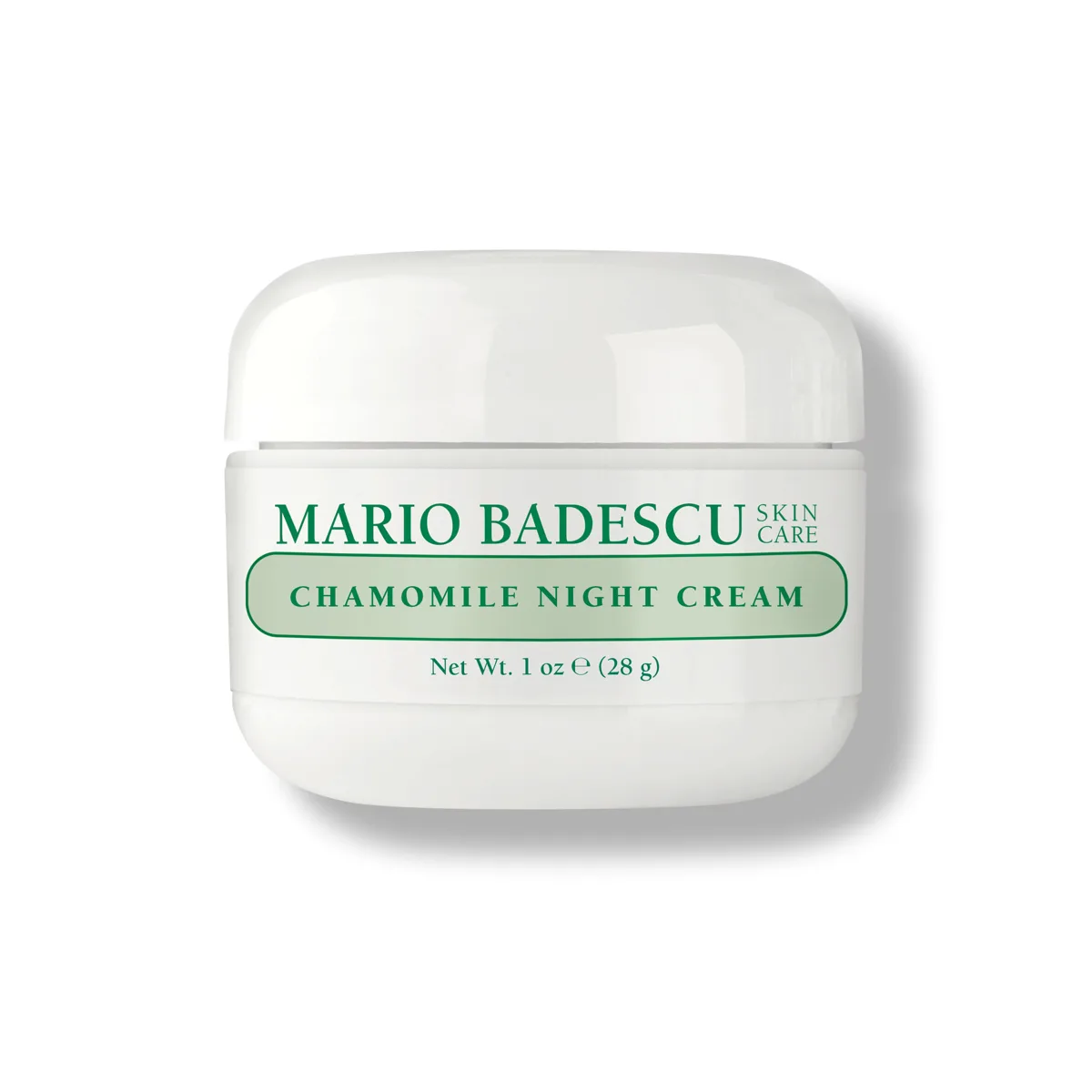
Among the brand's salon-era night creams, the caviar, bee pollen and seaweed jars with their peanut oil, perfume and dyes, this is the plain one: nineteen ingredients, no fragrance, no dyes, no borax, no peanut, a glycerin-and-ester emulsion with a single corn oil, a chamomile extract placed above the preservatives and a trace of retinyl palmitate. It is the brand's rich-cream idea reduced to something a cautious buyer can read in ten seconds.
The plain one in the brand's night-cream range: a fragrance-free, dye-free glycerin-and-ester emulsion with corn oil, a chamomile extract placed above the preservatives and a trace of retinyl palmitate, that hydrates normal and dry skin comfortably for twenty dollars. The isopropyl myristate rules out congestion-prone skin and the formaldehyde-releaser-and-paraben tail dates it; otherwise it is an honest, light, cheap night cream with nothing dramatic to promise or to hide.
About a hundred brand-site reviews and retailer feedback describe the light texture and overnight comfort reliably, but the brand has published no testing and the chamomile and retinyl palmitate doses are undisclosed, so their contributions are assessed from their positions on the list and the literature rather than from data on this cream.
Verdicts
How well it fits each concern
Verdict by concern tap a concern for the case
Good choicefor DrynessIn your profileYou chose · Glycerin is a reference standard by mechanism for dryness; this cream carries it high in the ingredient list.Moderate evidenceStandard tolerabilityNo reviews collected yet
The case for it
Glycerin has trial-supported standing for this concern.
It is present at an effective concentration, declared or high in the ingredient list.
The formula carries no trigger this concern is sensitive to, with the cautions noted.
Same rule for everyone. “Good choice” is the verdict on 9,564 of 45,024 concern verdicts across the catalog; rule R5 decided 9,072 of them.
As of September 25, 2026, engine 5.1.1.
Good choicefor DehydrationIn your profileYou chose · Glycerin is a reference standard by mechanism for dehydration; this cream carries it high in the ingredient list.Moderate evidenceStandard tolerabilityNo reviews collected yet
The case for it
Glycerin has trial-supported standing for this concern.
It is present at an effective concentration, declared or high in the ingredient list.
The formula carries no trigger this concern is sensitive to, with the cautions noted.
Same rule for everyone. “Good choice” is the verdict on 9,564 of 45,024 concern verdicts across the catalog; rule R5 decided 9,072 of them.
As of September 25, 2026, engine 5.1.1.
R5 — Trial-supported or guideline-supported active, adequately or plausibly dosed. · the full register
Carrying active
Glycerin
Standing
supported — its mechanism is established
Form
adequate — studied range 20%, from the trials on the row; needs leave-on contact; judge it after ~1 weeks
Tolerability
standard
Row checked
against its sources on July 17, 2026 (evidence table ev-2026.09-r228)
The studies behind the evidence row
USP glycerin monograph / Fluhr et al., glycerol and the skin (review) — glycerin is the reference humectant, drawing and holding water in the stratum corneum — reference work
Does the jobDoes what a moisturizer is for: draws in water, softens and smooths.
A verdict is DermApproved’s assessment of how well a product’s ingredients fit a concern — never a claim about what the product treats. Evidence dots and collected reviews sit beside it and are never blended in.
Rules 0.5.1 · evidence table ev-2026.09-r228 · how we decide
Assessment
Pros & Cons
Pros
✓ No fragrance, no dyes, no borax, no peanut oil, no beeswax
✓ Glycerin and propylene glycol give real humectant hydration
✓ Light, fast-absorbing texture that sets satin and non-greasy
✓ Chamomile extract placed above the preservatives, unusually for the brand
✓ Makes a reasonable buffer over a retinoid on non-congestion-prone skin
✓ Twenty dollars lasts about two months
Cons
✗ Isopropyl myristate second on the list is a well-documented comedogen
✗ Diazolidinyl urea, a formaldehyde-releasing allergen, plus two parabens
✗ Retinyl palmitate is a trace, so no effect on lines
✗ Too light for very dry skin in winter
✗ Chamomile dose is modest; the calm is mostly the absence of irritants
✗ Jar packaging invites fingers into the cream
Review
Full Review
Nineteen ingredients, no fragrance, no dyes, no borax, no beeswax, no peanut oil. Set beside the brand's other salon-era night creams, the Caviar with its thirty lines and four dyes, the Bee Pollen with its peanut oil and EU-banned perfume, the Chamomile Night Cream reads like the one someone wrote for a customer who reads labels, and it probably was: the salon needed a night cream for the clients its perfumed jars bothered, and this is it. That origin is the whole character of the product. It is light where the others are heavy, unscented where they are perfumed, and plain where they are decorated, and its virtues and limits both follow from that.
The formula is a straightforward light emulsion. Water, isopropyl myristate, stearic acid, glycerin, dimethicone, propylene glycol, cetearyl and cetyl alcohols, corn oil ninth, an emulsifier and triethanolamine, then chamomile extract twelfth, the preservatives, two gellants and retinyl palmitate last. Glycerin fourth and propylene glycol sixth carry the hydration, the myristate gives the silky, fast-absorbing slip, the corn oil is the only real lipid and there is no petrolatum or wax at all. On the face it is a light white cream that spreads easily, sinks in over a minute and sets to a soft, faintly satin finish, and by morning normal and mildly dry skin feels plumped and comfortable, which the hundred-odd brand-site reviews and larger retailer record report along with the two most repeated observations: it is light for a night cream, and there is no smell.
The chamomile is better placed here than in most of the brand's chamomile products, twelfth and above the preservatives rather than a trace at the end, and that is worth saying; it is still a modest dose in a moisturizer, and chamomile's bisabolol and apigenin have their anti-inflammatory data at concentrations a night cream is unlikely to reach. The calm that reactive users report is mostly what the cream lacks, fragrance, dyes and drying alcohol, plus the comfort of a hydrated barrier. The retinyl palmitate last on the list is the gentlest retinoid ester at a trace, too small to convert to anything active; the fine lines the brand mentions are the dry lines that hydration softens overnight, and a real retinoid used underneath is what changes the others. The cream makes a reasonable buffer over one.
The two limitations are the ones the formula predicts. Isopropyl myristate second is what makes the cream light, and it is also among the most comedogenic esters in the classic rabbit-ear data; combination-skinned reviewers who report small bumps along the jaw are describing it, and oily or congestion-prone faces should look elsewhere despite the appealing texture. And the preservative system is the salon-era set: diazolidinyl urea, a formaldehyde-releasing preservative and recognised contact allergen, with methylparaben and propylparaben, the safest items and the most maligned. For resilient normal and dry skin none of it matters. For eczema-prone skin the formaldehyde releaser is the one reason to prefer a cream with modern preservation, and it is a pity, because everything else about this jar is what an eczema-prone buyer wants. Very dry skin in winter will also find it too light and want something richer on top.
It is worth noting how much of the brand's night-cream range this jar quietly makes redundant. The Caviar, Bee Pollen and Seaweed creams each add a luxury story and a longer list of things to react to, and for a customer with normal or mildly dry skin none of them hydrates any better than this one; the extra money in those jars buys vocabulary, and the extra ingredients buy risk. A dry-skinned buyer who wants the brand's rich texture and can tolerate the tail still has reasons to go heavier in winter, but for the rest of the year the plain cream is the better formulation as well as the cheaper one.
On price, twenty dollars for one ounce is twenty dollars an ounce, mid-market for a night cream, and a pea-sized amount nightly stretches the jar to about two months, so the monthly cost is modest. The ingredients are inexpensive, water, an ester, glycerin and a little oil, and the price is fair for a plain, unscented cream from a brand trading on heritage; a fragrance-free glycerin or ceramide night cream with modern preservation at the same price is the safer buy for reactive skin, and for everyone else this does the same job.
So the recommendation is a comfortable, unexciting one. For normal and mildly dry, non-congestion-prone skin that wants a light, unscented, dye-free night cream at a low price, and for anyone shopping the Badescu range who has been put off by the perfume and dyes elsewhere in it, this is the sensible jar. For oily and acne-prone skin the myristate is disqualifying, for eczema-prone skin the preservative is a caution, and for very dry skin it is a summer cream rather than a winter one.
Formula
Key Ingredients
The hero actives that drive this product's performance.
Second on the list, the fast-spreading ester that makes this the lightest of the brand's old night creams and gives it its silky, quick-absorbing feel; also among the most comedogenic esters in the classic rabbit-ear data, which is why congestion-prone skin reports bumps.
Fourth, with propylene glycol sixth, the humectant pair doing the honest hydrating work in a cream whose only oil is corn oil ninth; it is why skin feels plumped rather than merely coated by morning.
Established mechanismfor Dryness · established mechanism
Twelfth, just ahead of the preservatives, the herb in the name at a modest position; chamomile's bisabolol and apigenin have anti-inflammatory data at meaningful doses, and here the extract is closer to a name than a dose, though better placed than in the brand's eye cream.
Ninth, the single plant oil in an ester-and-fatty-alcohol cream, adding linoleic acid and a little richness without the heaviness of the brand's petrolatum balms.
Last on the list, a trace of the gentlest retinoid ester at a dose that cannot convert to anything active; the fine-lines gesture on the label of a cream whose effect is hydration.
Not yet assessed
Ingredient standings describe the active at treatment-level doses and
vehicles; this product's own condition grades weigh its actual formula.
A pea-sized amount as the last step at night over any serum; light enough to use on the whole face, and a reasonable buffer over a retinoid for skin that is not congestion-prone.
Results Timeline
Skin feels soft, hydrated and comfortable by morning from the first night, and mild dryness eases within days. Nothing accumulates beyond that: the chamomile is a modest dose and the retinyl palmitate a trace, so the fine lines the brand mentions are the dry lines that hydration softens, not the ones a retinoid changes.
The evidence for this cream is the evidence for its humectants and its ester. Glycerin and propylene glycol are established humectants that raise stratum corneum water content, and a light emulsion built on them with fatty alcohols and a single linoleic-rich oil hydrates without the occlusive weight of petrolatum, which accounts for both the comfortable morning skin normal and dry users report and the too-light verdict from very dry skin in winter. Chamomile's bisabolol, chamazulene and apigenin have anti-inflammatory activity in laboratory and small clinical studies at meaningful concentrations; at the twelfth position the extract is present at a modest cosmetic level whose contribution is likely small beside the effect of leaving out fragrance and drying alcohol. Retinyl palmitate at the last position is far below the defined concentrations at which the retinol ester has shown modest photoaging benefit after its inefficient two-step conversion.
The ester has a specific record. The 1984 Journal of the American Academy of Dermatology rabbit-ear study that established the comedogenicity scale ranked isopropyl myristate among the most comedogenic cosmetic esters; the model overstates the effect in human skin, but the second-place position here is the plausible basis for the congestion combination-skinned reviewers describe. The tolerance profile is otherwise favourable. The absence of fragrance removes the leading cosmetic contact allergen identified in the 2017 Contact Dermatitis multicentre patch-test study, and the absence of dyes and borax removes two further avoidable components; against that, diazolidinyl urea is a formaldehyde-releasing preservative and established contact sensitiser, the one ingredient a formulator prioritising reactive skin would replace, while the parabens are well studied and safe at cosmetic levels. Chamomile, as an Asteraceae plant, is an occasional allergen in the ragweed-sensitive.
A light, fragrance-free, dye-free humectant cream is the kind of night moisturizer clinicians are happy to see patients using, and this one's short label would draw approval next to the rest of its brand's range; it supports the barrier that retinoids and acids strain without adding irritation of its own, and its absence of scent makes it a candidate for rosacea-prone and reactive patients. Two reservations would follow. Isopropyl myristate high on the list makes it a poor choice for acne-prone and malassezia-prone skin, who are routinely advised to avoid ester-heavy creams, and diazolidinyl urea is a formaldehyde releaser that patch-test clinics identify often enough to prefer newer preservation for patients with eczema or a contact-allergy history. The chamomile would be regarded as a pleasant, modest addition rather than a treatment, and the retinyl palmitate as too small to count as retinoid therapy. For resilient normal and dry skin it raises no concern.
Guidance
Usage & Recommendations
How to Use
At night, after cleansing and any serum or retinoid, take a pea-sized amount from the jar with clean fingers and smooth it over the face and neck, avoiding the eye area, then let it absorb for a minute. Use it nightly on normal and mildly dry skin, keeping it off the T-zone on combination skin, and layer something richer over it if the skin is very dry in winter. It contains no working retinoid, so there is no need to build up or to avoid pairing it with actives; over a retinoid, apply the retinoid first and this on top. Patch-test on the jaw for a few nights first if preservatives have caused reactions before, and keep the lid tight and fingers clean.
Value Assessment
Twenty dollars for one ounce is twenty dollars an ounce, mid-market for a night cream, and a pea-sized nightly dose stretches the jar to about two months, so the monthly cost is modest. The ingredients are inexpensive, water, an ester, glycerin and a single oil, and the price is fair for a plain, unscented, dye-free cream from a brand trading on heritage rather than research; there is no luxury garnish here to inflate the label or the price, which is refreshing within the range. A fragrance-free glycerin or ceramide night cream with modern preservation at the same price is the safer buy for eczema-prone skin, and for resilient normal and dry skin this does the same job for the same money.
Who Should Buy
Normal and mildly dry, non-congestion-prone skin that wants a light, unscented, dye-free night cream at a low price, reactive skin that has been put off by the perfume and dyes elsewhere in the brand's range, and anyone who needs a plain buffer cream over a retinoid. It suits people who value a short label they can read in ten seconds.
Who Should Skip
Skin that clogs easily, whether oily, combination or acne-prone, given the isopropyl myristate second on the list; eczema-prone or contact-allergic skin cautious about a formaldehyde-releasing preservative; very dry skin in winter that needs an occlusive; and anyone expecting the chamomile to treat redness or the retinyl palmitate to soften lines.
A light, white cream with a silky myristate slip that spreads easily, absorbs over a minute and sets to a soft, faintly satin, non-greasy finish.
Scent
Unfragranced; a faint neutral cream smell with a trace of chamomile that disappears on application.
Packaging
The brand's squat white plastic jar with a domed white screw lid and green lettering, 1 oz / 28 g; fingers in the cream, and the light texture means a pea-sized amount covers the face.
Finish
satinlightweight
What to Expect on First Use
A pleasant, unscented, quick-absorbing cream that leaves normal and dry skin soft and comfortable by morning; there is nothing to purge or adjust to, since the retinyl palmitate is a trace. Combination skin may see small bumps within the first couple of weeks from the myristate, and very dry skin in winter may find it too light and layer something richer over it.
How Long It Lasts
About two months at a pea-sized amount nightly on the face and neck.
Mario Badescu's salon offered its sensitive clients a chamomile night cream as the gentle alternative to its heavier, perfumed jars, and this is that cream, formulated light and unscented so the reactive customer had somewhere to go in the range. It has stayed in the line for decades with its preservative system intact, and its plainness, once a limitation, now reads as its main virtue.
About Mario Badescu Legacy Brand (20+ years)
Mario Badescu has sold salon-derived skincare from New York since 1967 and is stocked by Ulta, Nordstrom and its own store. The Chamomile Night Cream is the fragrance-free, lighter night cream of its salon-era range, sold largely unchanged; the brand publishes no clinical testing.
Brand founded: 1967
Myth vs. Reality
Common Myths
Myth
Chamomile night cream soothes redness and sensitivity overnight.
Reality
Chamomile extract sits twelfth here, a better position than in most of the brand's chamomile products but still a modest dose in a moisturizer; its anti-inflammatory compounds have data at meaningful concentrations, and the calm users feel is mostly the absence of fragrance and the comfort of a well-hydrated barrier.
Myth
Light means safe for oily or acne-prone skin.
Reality
The lightness is isopropyl myristate, a thin, fast-absorbing ester that is also among the most comedogenic in the classic rabbit-ear data. The cream suits normal and dry skin; oily and congestion-prone faces should look for an oil-free, ester-light night cream.
FAQ
Frequently Asked Questions
Is the Mario Badescu Chamomile Night Cream fragrance-free?
Yes, and dye-free. Its nineteen ingredients include no fragrance, dye, borax or peanut oil; it does contain methylparaben, propylparaben and diazolidinyl urea.
Is the Mario Badescu Chamomile Night Cream good for acne-prone skin?
Generally not. Isopropyl myristate is second on the list, one of the more comedogenic esters in the classic studies, and combination-skinned reviewers report bumps. It suits normal and dry skin.
How rich is the Mario Badescu Chamomile Night Cream?
It is the lightest of the brand's old night creams, a glycerin-and-ester emulsion with a single corn oil and no petrolatum or wax. Normal and mildly dry skin find it comfortable; very dry skin in winter often wants something heavier.
Does the Mario Badescu Chamomile Night Cream contain retinol?
It lists retinyl palmitate last, a trace of the gentlest retinoid ester at a dose too low to have any retinoid effect. It does not need to be built up and does not conflict with a real retinoid used underneath.
How much chamomile is in the Mario Badescu Chamomile Night Cream?
The extract sits twelfth, just ahead of the preservatives, a better position than in most of the brand's chamomile products but still a modest dose. The cream's calming feel comes mostly from having no fragrance.
What is the difference between the Chamomile Night Cream and the Caviar Night Cream?
The Chamomile is a light, unscented, dye-free glycerin-and-ester cream with a single plant oil; the Caviar is a heavy petrolatum, ceresin and beeswax balm with cocoa butter and four dyes. The Chamomile suits normal to dry skin, the Caviar very dry.
Reviews
What Reviewers Tend to Say
Recurring themes our editors read across retailer reviews of this product — summaries in our words, not quotations, and not a substitute for your own patch test.
Every word on a plant oil label describes what was left in — including the proteins that sensitise and the compounds that go rancid — and the variable that decided the one head-to-head trial isn't printed anywhere.
The strongest counterexample to blanket botanical scepticism is also one of the more common contact allergens — and holding both facts at once is the only honest way to read it.
Essential oils are declared by botanical name rather than as fragrance, which is why the most heavily perfumed products in the natural aisle can carry the reassuring word — and why the bottle gets more sensitising the longer you own it.
Products, answers, therapy guides, tools and articles in one search. Brand names,
slang and abbreviations all work — accutane finds isotretinoin, bacne finds truncal acne.