


What a Long List of Plant Extracts Actually Buys You
Eighteen botanicals reads as generous. Find where the preservative sits on the list and the arithmetic changes considerably.
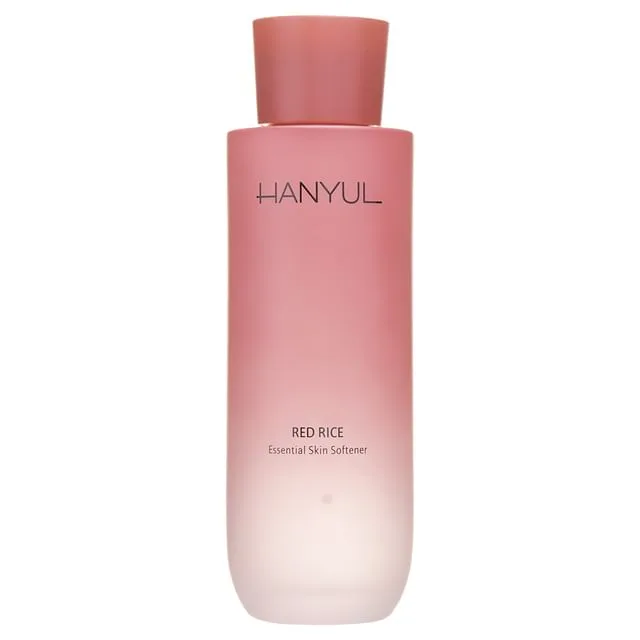
It is the firming, antioxidant-forward sibling of Hanyul's original Rice softener: twice-fermented red rice (richer in anthocyanins) and a slightly more cushioned texture aimed at drier, maturing skin, on a base of effective niacinamide and adenosine. The honest note is that its active list closely mirrors the white-rice version — the real differences are the red rice ferment, the firming framing and the richer feel.
The firming-focused evolution of Hanyul's rice toner: twice-fermented red rice for extra antioxidants, a slightly richer feel for drier skin, and effective levels of niacinamide and adenosine doing the real tone-and-smoothness work. It plumps and brightens nicely. The honest caveats are added fragrance, a moderate alcohol level, and an active base that closely echoes the cheaper original Rice version.
The case for it
What would change this: A concentration inside the studied range would raise this a step.
Same rule for everyone. “Unproven” is the verdict on 1,111 of 45,024 concern verdicts across the catalog; rule R9 decided 1,111 of them. Unchanged since September 5, 2026, engine 5.1.1.
Brand or formulator? Disclose a concentration or correct a fact →
The studies behind the evidence row
The case for it
What would change this: Removing the trigger named above would let the actives be judged on their own.
Same rule for everyone. “Avoid” is the verdict on 1,909 of 45,024 concern verdicts across the catalog; rule R1 decided 1,304 of them. Unchanged since September 5, 2026, engine 5.1.1.
Brand or formulator? Disclose a concentration or correct a fact →
The case for it
What would change this: A concentration inside the studied range would raise this a step.
Same rule for everyone. “Supporting role” is the verdict on 8,197 of 45,024 concern verdicts across the catalog; rule R7 decided 258 of them. Unchanged since September 5, 2026, engine 5.1.1.
Brand or formulator? Disclose a concentration or correct a fact →
The studies behind the evidence row
Also listed for Dullness — the actives here (Niacinamide, Adenosine, Probiotics & Prebiotics, Botanical Extracts) are in our research queue for that concern; there is no verdict until their evidence rows are written. That is a gap in our table, not a mark against the product.
Does the jobDoes what a toner is for: adds something real, not alcohol-driven. Not measured from the label: restores skin pH, plays well with what follows.
Where our review and the verdict differ. The review below was written on the formulation and the published trials; the verdicts above apply the stricter standing test in our methodology — an active earns a recommendation only with guideline or regulatory standing for the concern. Where the two disagree, the verdict is DermApproved’s position.
A verdict is DermApproved’s assessment of how well a product’s ingredients fit a concern — never a claim about what the product treats. Evidence dots and collected reviews sit beside it and are never blended in. Rules 0.5.1 · evidence table ev-2026.09-r228 · how we decide
Red rice is not just white rice with a tan. The deep crimson of its bran comes from anthocyanins, the same family of antioxidant pigments that make blueberries and red cabbage worth eating, and rice cultures have long regarded the red varieties as the more nourishing ones. Hanyul built its Red Rice range on exactly that premise: take the brand's beloved rice toner, swap in an antioxidant-richer red rice ferment, twice-fermented for good measure, and position the result as the firming, elasticity-minded upgrade. The pitch is appealing. The honest job of this review is to weigh whether the upgrade is as substantial as the deeper color suggests.
Start with what is genuinely different and good. The headline is the twice-fermented red rice ferment filtrate, and the logic behind it is sound: red rice bran carries more antioxidant compounds than ordinary white rice, and fermentation breaks the grain down into a filtrate richer in amino acids and bioavailable actives. In the bottle, this translates to a toner with a noticeably more cushioned, slightly viscous feel than a watery essence — not heavy, but substantial enough that drier and maturing skin will appreciate it. It leaves skin plumped and luminous on contact, and that richer texture is a real, felt distinction from the lighter original.
The firming framing leans hardest on adenosine, and here the brand is on solid ground. Adenosine is a Korea-approved anti-wrinkle active, and the disclosed level in this formula falls within the range shown to smooth the appearance of fine and expression lines. Alongside it sits niacinamide at a meaningful cosmetic concentration — between roughly 1.4 and 2.1 percent — doing the dependable work of supporting the barrier and evening out tone, plus paper mulberry for a traditional brightening nudge. This is a well-chosen, genuinely active trio, and over six to eight weeks it delivers gradual improvements in radiance, smoothness, and the look of firmness. Nobody should expect a lift, but the toner earns its 'essential' billing as a real treatment step, not just hydration.
Worth noting how short and legible the rest of the list is. Twenty ingredients, with glycerin, betaine and polyglycerin-3 forming the humectant spine and a single emulsifier keeping the whole thing clear. Tocopherol closes it out as an antioxidant. There is no botanical parade, no filler complex named after a mountain — just a hydrating base carrying three actives and a ferment.
Now the candor the Red Rice line invites. If you put this toner's ingredient list beside Hanyul's original white-rice Rice Essential Skin Softener, they are strikingly similar — the same niacinamide, the same adenosine, the same humectant backbone. The assumption that a red-rice formula must be a fundamentally more powerful one does not survive a look at the INCI. The meaningful differences are the antioxidant-richer red rice ferment, the firming positioning, and that slightly richer texture. It's not a wholesale reformulation dressed up in a new color; it is a thoughtful refinement of a known good base. That matters for your wallet, because the Red Rice version typically carries a premium. You are paying extra for the red rice antioxidants, the firming framing and the more cushioned feel — all real, but incremental. If those things speak to your skin and concerns, the upgrade is justified; if you simply want a glow toner, the original delivers a very similar active payload for less.
The caveats are the same two that follow the whole Rice family. This is not fragrance-free — there is added parfum — and it carries a moderate amount of alcohol denat fairly high in the list. The alcohol gives the toner its clean, quick-settling finish, and most skin tolerates it well, especially when followed by a moisturizer. But fragrance plus a non-trivial alcohol level is precisely the pairing that sensitive, rosacea-prone or very dry skin tends to find drying or irritating, and the richer red rice texture does not change that calculus. For resilient normal-to-dry skin it is a non-issue; for reactive skin it is a reason to look elsewhere in the gentler, fragrance-free direction. Anyone with an actively compromised barrier should sit this one out entirely.
Using it well is uncomplicated. Pat it into cleansed skin with the palms rather than dragging a cotton pad across the face, and on dry days go back for a second thin pass. Always seal it under a moisturizer — the alcohol makes that a matter of arithmetic rather than preference — and wear sunscreen in the morning, since brightening and anti-wrinkle actives are only as good as the UV protection sitting on top of them. Reactive skin should patch test for the fragrance before committing to the bottle.
Value, then, is the one genuinely debatable point. The toner is well-made, the actives are real and disclosed, and the Amorepacific research pedigree is credible — but it sits at a premium over a near-identical-on-paper sibling, so the price is fair only if you specifically want what the red rice version adds. A 150ml bottle runs two to three months at twice-daily use, which keeps the cost-per-use sane whichever version you land on. Across a couple of thousand reviews, the praise and the grumbles arrive with unusual consistency: the finish is lovely, the firming is subtle, and the fragrance divides people.
What it comes down to is this: a lovely, antioxidant-forward firming toner that plumps, brightens and lightly smooths drier and maturing skin, with effective actives and a richer feel than the original. If you want the red rice antioxidants, the firming angle and the cushioned texture, and your skin tolerates fragrance, it is a worthy buy. If you are sensitive, fragrance-averse, or value-driven and happy with a glow toner, the lighter original Rice softener gets you most of the way for less.
The hero actives that drive this product's performance.
| Ingredient | Function | Evidence |
|---|---|---|
| Twice-Fermented Red Rice Ferment Filtrate (0.85-1.25%) | The defining upgrade over the original Rice softener — red rice bran is naturally richer in antioxidant anthocyanins, and the twice-fermentation is meant to concentrate amino acids and antioxidants for the elasticity-and-glow angle this firming-positioned version is built around. | Not yet assessed |
| Niacinamide (1.4-2.1%) | Present at a meaningful cosmetic level, niacinamide does much of the measurable work here — supporting the barrier and evening tone to back the red rice's radiance claim, the most reliably evidenced active in an otherwise hydration-led toner. | Emerging for Hyperpigmentation |
| Adenosine (0.05-0.25%) | A Korea-approved anti-wrinkle active at an effective concentration, adenosine underpins the 'firming' framing of the Red Rice line with evidence for smoothing the appearance of fine and expression lines, lifting this above a simple moisturizing toner. | Limited for Aging |
| Paper Mulberry (Broussonetia Kazinoki) Root Extract | A traditional Korean tone-evening botanical that complements the niacinamide, helping the toner deliver the bright, even complexion that pairs with its firming and antioxidant positioning rather than a hydration role. | Not yet assessed |
Ingredient standings describe the active at treatment-level doses and vehicles; this product's own condition grades weigh its actual formula.
Water, Glycerin, Butylene Glycol, Betaine, Alcohol Denat., 1,2-Hexanediol, Niacinamide, Polyglycerin-3, PPG-13-Decyltetradeceth-24, Rice Ferment Filtrate, Carbomer, Tromethamine, Broussonetia Kazinoki Root Extract, Parfum, Glyceryl Caprylate, Propanediol, Ethylhexylglycerin, Adenosine, Disodium EDTA, Tocopherol
toner
AM & PM
Pat onto cleansed skin before serums; its slightly richer feel suits drier and maturing skin and layers well for added moisture. Seal with a moisturizer to balance the alcohol content.
An immediate plumped, luminous finish; gradual improvement in tone, smoothness and the look of firmness over six to eight weeks of consistent use.
The formula combines a fermented botanical with two well-supported actives. The red rice ferment filtrate is derived from red rice, whose bran contains higher levels of antioxidant anthocyanins than white rice; fermentation yields a filtrate of amino acids, peptides and antioxidants, with promising but not definitive evidence for improving hydration and radiance — the antioxidant edge over white rice is plausible chemically though modestly evidenced in finished products. The strongest data belongs to the disclosed actives: niacinamide at roughly 1.4–2.1% sits comfortably in the range shown to reduce hyperpigmentation, support barrier function and even tone, and adenosine at 0.05–0.25% falls within the concentration band approved and studied in Korea for improving the appearance of wrinkles. Broussonetia kazinoki root extract offers in vitro tyrosinase-inhibiting, tone-evening activity, with limited clinical data. The humectant system — glycerin (4–6.1%), betaine (2.6–3.9%) and polyglycerin-3 — provides solid hydration and contributes to the richer feel versus a watery toner. The evidence-relevant drawbacks mirror the original Rice version: a moderate alcohol denat level that can be drying or barrier-disrupting for already-dry or sensitive skin with heavy use, and added fragrance, a common sensitizer. Functionally the actives, not the rice ferment, drive the measurable tone and wrinkle benefits; the red rice is the antioxidant and marketing differentiator. Evidence is at the ingredient level rather than from trials on the finished softener.
From a clinical standpoint the meaningful actives here are niacinamide and adenosine, both well-regarded by dermatologists — niacinamide for tone, barrier and pigment, and adenosine as an evidence-backed anti-wrinkle ingredient at the concentration used. Fermented red rice extract is viewed as a reasonable antioxidant addition with gentler, supportive benefits. The clinical reservations concern the vehicle rather than the actives: the moderate alcohol denat content can dry or disrupt the barrier in sensitive, rosacea-prone or very dry skin, and the added fragrance is a recognized contact sensitizer. Dermatologists typically advise sealing this kind of toner with a moisturizer and steering reactive or fragrance-allergic patients toward fragrance-free, alcohol-free alternatives. They would also note, pragmatically, that since the active profile resembles the original Rice version, the choice between them is driven more by texture and concern than by a clinically distinct formula.
After cleansing, pat the softener over the face with your palms or a cotton pad, morning and night, letting its slightly richer texture settle before the next step. For more moisture and glow, layer it in a couple of thin passes. Always follow with a serum and moisturizer to seal in hydration and offset the alcohol content, and apply sunscreen in the morning, particularly since you are using brightening and anti-wrinkle actives. If your skin is reactive, patch test first for the fragrance, and ease off if you notice tightness. It is especially comfortable on drier and maturing skin that finds lighter toners insufficient.
Value is the crux with this one. Taken alone, it is a fairly-priced mid-tier firming toner — real, disclosed actives, a credible brand, and a pleasant richer texture. The complication is its near-twin: Hanyul's original Rice softener offers a very similar active base, usually for less. So the premium is justified only if you specifically want the antioxidant red rice ferment, the firming positioning and the more cushioned feel that suits drier, maturing skin. For that buyer it is worth it; for someone who just wants a glow-and-tone toner and is watching cost, the upgrade is hard to justify on actives alone. The 150ml bottle lasts a couple of months of twice-daily use, keeping cost-per-use reasonable either way.
Buy this if you have normal, dry or maturing skin, want a firming-leaning toner with antioxidant red rice plus effective niacinamide and adenosine, and prefer a slightly richer, more cushioned texture. It suits those drawn to the red rice positioning and who tolerate a light fragrance.
Skip it if your skin is sensitive, rosacea-prone, very dry or fragrance-reactive, since the fragrance and moderate alcohol are an irritation risk. Value-focused shoppers happy with a glow toner should also consider the cheaper original Rice version, whose active base is very similar.
Ready to try Hanyul Red Rice Essential Skin Softener?
Buy at Amazon ♥Slightly more viscous, milky-clear liquid that feels a touch richer than a basic toner
Soft, clean fragrance with a faint warmth
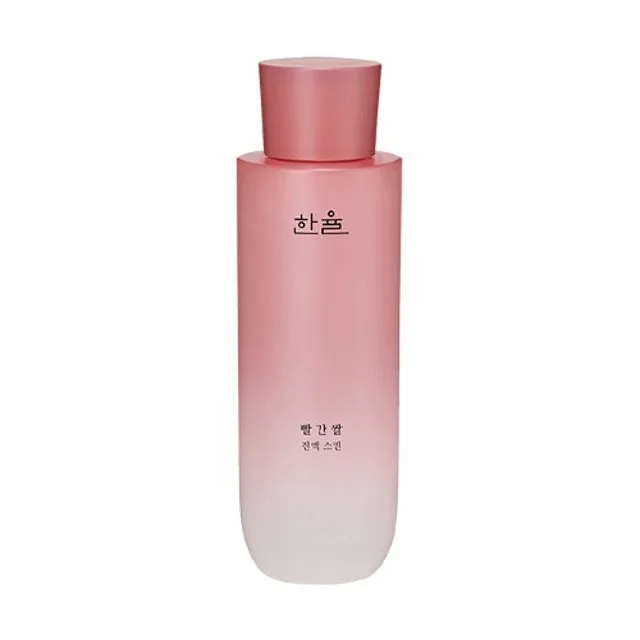
Weighted bottle with a gradient design and flip or screw cap, 150ml
Goes on with a slightly cushioned, more substantial feel than a watery toner, leaving skin plumped and luminous; the light fragrance is noticeable and the modest alcohol gives a clean finish that drier skin should follow with moisturizer.
Around 2–3 months of morning and evening use from the 150ml bottle
fall winter
Hanyul extended its heritage Rice line into the Red Rice range to court firming and elasticity concerns, leaning on red rice's higher antioxidant content and a twice-fermentation process as the story behind a richer, more mature-skin-oriented toner.
Hanyul is an Amorepacific-group Korean brand launched in 2003, rooted in traditional Korean herbal ingredients. The Red Rice range is its firming-focused evolution of the original Rice line, carrying Amorepacific's research backing — more pedigree than a typical indie K-beauty label.
Red rice skincare is a completely different, more powerful formula than white rice versions.
In this case the active list closely mirrors Hanyul's original Rice softener — same niacinamide, adenosine and humectant base. The meaningful differences are the antioxidant-richer red rice ferment, the firming positioning and a slightly richer texture, not a wholesale reformulation.
The active list is very similar — both use niacinamide, adenosine and rice ferment. The Red Rice version uses antioxidant-richer twice-fermented red rice, carries a firming positioning, and has a slightly richer texture better suited to drier, maturing skin.
Its firming claim rests mainly on adenosine, a Korea-approved anti-wrinkle active at an effective level, plus the antioxidant red rice ferment. Expect a gradual, subtle improvement in smoothness and the look of firmness, not a dramatic lift.
No — it contains added fragrance and a moderate amount of alcohol denat. It is pleasant and lightweight but not the right choice for fragrance-sensitive or very reactive skin.
Its slightly richer, more cushioned texture makes it well-suited to normal, dry and maturing skin concerned with radiance and the look of firmness. Oily skin can use it too, though it may prefer the lighter original Rice version.
Only if you specifically want the firming positioning, antioxidant red rice ferment and richer feel — since the active bases are similar, choose based on texture preference and concern rather than expecting a dramatically stronger formula.
Recurring themes our editors read across retailer reviews of this product — summaries in our words, not quotations, and not a substitute for your own patch test.
Plumping, luminous finish
Richer feel suits dry skin
Brightens and smooths over time
Pleasant to layer
Contains fragrance
Has some alcohol
Pricey for a toner
Firming effect is subtle
Verified answers from our questions library — the nuance a product page cannot carry.