Hyaluronic Acid Can Actually Dehydrate Your Skin (Here's When)
The internet's favorite hydrator has a counterintuitive dark side — in dry air, a humectant with nothing to seal it can pull water out of your skin instead of into it.
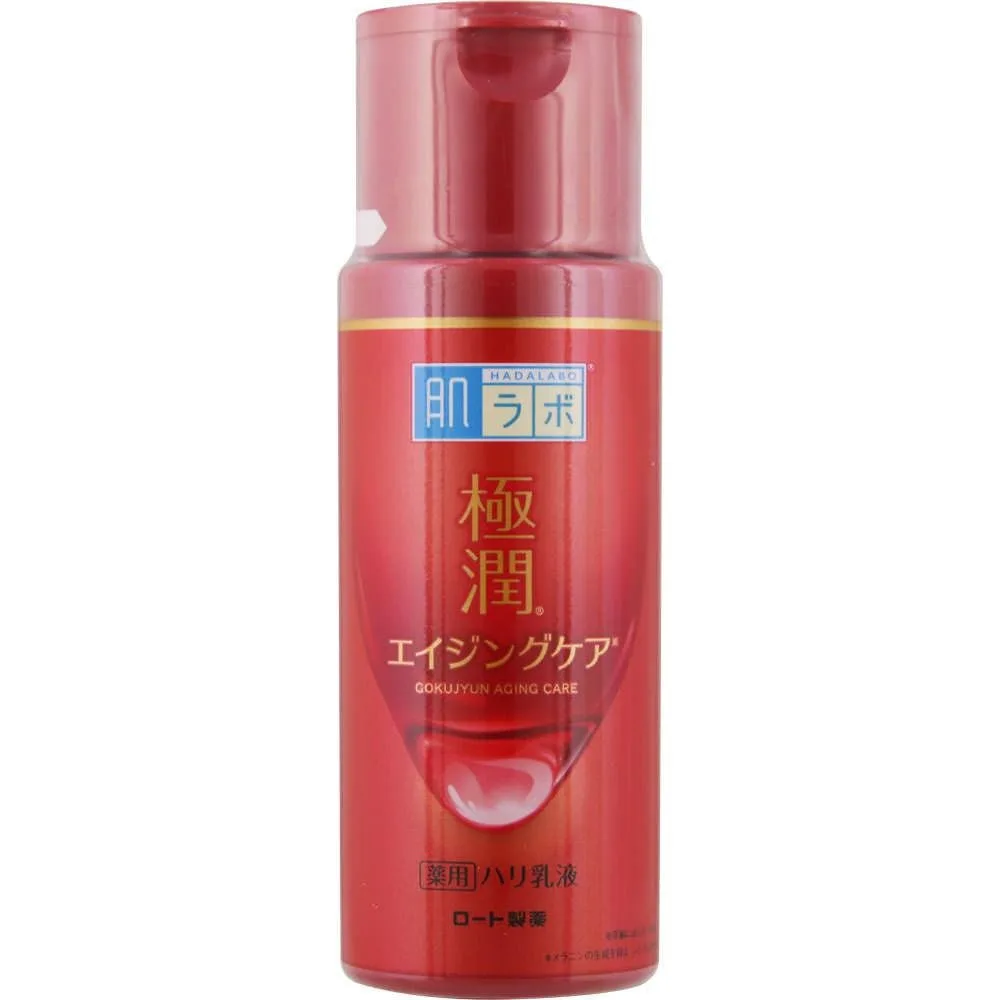
It is a Japanese quasi-drug rather than a cosmetic: Rohto registered niacinamide as the active for both wrinkle improvement and melanin suppression, paired it with acetyl glucosamine, the amino sugar that trials found amplifies niacinamide's effect on spots, and folded both into the Gokujyun three-hyaluronic base with shea, meadowfoam and a Lipidure film. Fragrance-free, alcohol-free, paraben-free and under twenty dollars, it is a pharmaceutical company's idea of anti-ageing, which is to say quiet and well documented.
A pharmaceutical company's anti-ageing milk: niacinamide registered as a quasi-drug active for wrinkles and spots, acetyl glucosamine beside it, three hyaluronic acids, shea and meadowfoam, no fragrance, no alcohol, no parabens, eighteen dollars. It does nothing loudly and everything sensibly, and the only things to hold against it are an undisclosed percentage and a richness that oily skin in summer will notice.
The case for it
What would change this: A declared concentration would move this to a firmer reading of the dose.
Same rule for everyone. “Supporting role” is the verdict on 8,197 of 45,024 concern verdicts across the catalog; rule R8a decided 1,489 of them. As of September 25, 2026, engine 5.1.1.
Brand or formulator? Disclose a concentration or correct a fact →
The studies behind the evidence row
The case for it
What would change this: A declared concentration would move this to a firmer reading of the dose.
Same rule for everyone. “Good choice” is the verdict on 9,564 of 45,024 concern verdicts across the catalog; rule R5 decided 9,072 of them. As of September 25, 2026, engine 5.1.1.
Brand or formulator? Disclose a concentration or correct a fact →
The studies behind the evidence row
The case for it
What would change this: A declared concentration would move this to a firmer reading of the dose.
Same rule for everyone. “Promising” is the verdict on 7,858 of 45,024 concern verdicts across the catalog; rule R9p decided 7,858 of them. As of September 25, 2026, engine 5.1.1.
Brand or formulator? Disclose a concentration or correct a fact →
The studies behind the evidence row
The case for it
What would change this: A declared concentration would move this to a firmer reading of the dose.
Same rule for everyone. “Good choice” is the verdict on 9,564 of 45,024 concern verdicts across the catalog; rule R5 decided 9,072 of them. As of September 25, 2026, engine 5.1.1.
Brand or formulator? Disclose a concentration or correct a fact →
The studies behind the evidence row
Does the jobDoes what a moisturizer is for: draws in water, softens and smooths.
Where our review and the verdict differ. The review below was written on the formulation and the published trials; the verdicts above apply the stricter standing test in our methodology — an active earns a recommendation only with guideline or regulatory standing for the concern. Where the two disagree, the verdict is DermApproved’s position.
A verdict is DermApproved’s assessment of how well a product’s ingredients fit a concern — never a claim about what the product treats. Evidence dots and collected reviews sit beside it and are never blended in. Rules 0.5.1 · evidence table ev-2026.09-r228 · how we decide
In Japan there is a category between cosmetics and medicines called quasi-drugs, and to put a product in it a company has to name an active ingredient that the health ministry has approved for a specific claim, at a recognised concentration, and manufacture to a pharmaceutical standard. Rohto, which is a pharmaceutical company that happens to make skincare, registered the Hada Labo Gokujyun Anti Aging Milky Lotion as a quasi-drug with niacinamide as its active, approved for both wrinkle improvement and melanin suppression. That sentence is the whole review in miniature. It means the milk contains a working dose of the one ingredient with real evidence for its claims, it means a regulator signed off on that dose, and it means the rest of the bottle is a well-made vehicle rather than a story. For eighteen dollars, that is a great deal of honesty.
The ingredient declaration is written the Japanese way, active first and the rest by category rather than in descending order, and it reads like a pharmacist's list. Niacinamide. Then three hyaluronic acids, the ordinary sodium salt, a hydrolysed low-weight fraction and the acetylated form that Rohto developed to cling to the outer skin. Acetyl glucosamine, which is the interesting one. Amur cork tree bark extract as a kampo soothing note. Shea butter and meadowfoam oil as the emollients, glycerin, diglycerin and glycols as the humectants, a hydrogenated olefin and a triglyceride for slip, dimethicone, a pair of mild emulsifiers, Lipidure, a thickener, a chelator, two fatty alcohols and phenoxyethanol. No fragrance, no alcohol, no parabens, no essential oils, no acids. It is the Gokujyun philosophy, which has always been hyaluronic acid and as little else as possible, applied to anti-ageing.
Acetyl glucosamine deserves the paragraph the box does not give it. In 2010 a randomised, double-blind, vehicle-controlled trial in the British Journal of Dermatology tested a moisturiser combining niacinamide with N-acetyl glucosamine against niacinamide alone and against vehicle, and found the combination reduced the appearance of facial hyperpigmentation more than either comparator over eight weeks. That is one of the better pieces of evidence in the whole cosmetic-brightening literature, and it is unusual to see a mass-market milk built on it. Rohto did not have to include the amino sugar to earn its melanin-suppression registration; it did so because the pairing works, and it is the most evidence-literate decision in the formula.
In use the milk is exactly what its name says. It is thick for a Hada Labo product, a pale, cushioned emulsion that pats onto the face with a soft slip and sinks in within a minute, leaving skin supple and faintly dewy with no film and no scent at all. On normal and dry skin it is a complete moisturiser on its own, and Rohto says as much; the Japanese two-step adds the Gokujyun aging-care lotion underneath for extra water, which winter skin will want. The three hyaluronic acids and the Lipidure film keep the plump, moist feel through the day rather than letting it fade by noon, and the shea and meadowfoam give a comfort that the plain Gokujyun milk lacks. It layers under sunscreen without pilling and under a retinoid at night as a cushion, and it does not sting on skin that reacts to most things, which is the constituency Hada Labo has served in Japan for twenty years.
The results, over the eight to twelve weeks the active needs, are the results niacinamide gives. Fine lines soften a little as the skin is better hydrated and the active does its documented work on barrier lipids and dermal signalling; shallow, recent spots fade gradually with daily sunscreen, and deeper or older pigmentation does not. A 2005 Dermatologic Surgery trial of five percent niacinamide found measurable improvements in fine lines, hyperpigmentation and sallowness over twelve weeks, and while Rohto does not print its percentage, the dual quasi-drug approval implies a dose in that working range. It is gradual, undramatic and consistent, which is the correct expectation for the ingredient and the price.
The limitations are real but few. The undisclosed percentage is a genuine irritation for anyone who likes to compare, and it is the one place Rohto's transparency lapses. The milk is rich enough that oily skin in humid weather will find it heavy by afternoon, and the shea butter puts it off the strictest fungal-acne lists. The bottle has a narrow spout rather than a pump, which makes a dime-sized dose a matter of practice. And the import naming is confusing: this current niacinamide formula is still sold abroad under the Anti Aging Milky Lotion name that the older retinol-and-paraben Alpha milk carried, and buyers should check for niacinamide on the label to be sure of what they have.
Five years in this formulation, a quasi-drug registration and a review base that skews Japanese and enthusiastic put it on solid ground. For dry, normal, combination and sensitive skin that wants a fragrance-free anti-ageing moisturiser with a regulator-approved active and no theatre, at a price that makes twice-daily use for a year an easy decision, this is one of the most sensible bottles in Japanese pharmacy skincare. It will never be exciting, and that is the point.
The hero actives that drive this product's performance.
| Ingredient | Function | Evidence |
|---|---|---|
| Niacinamide | The registered active that makes this a Japanese quasi-drug rather than a cosmetic, approved by the health ministry for both wrinkle improvement and melanin suppression; Rohto does not print the percentage, but the dual approval implies a working dose, and it is the single ingredient that separates this milk from the plain Gokujyun emulsion. | Limited for Aging |
| Sodium Hyaluronate, Hydrolyzed Hyaluronic Acid and Sodium Acetylated Hyaluronate | The three hyaluronic acids of the line: a standard surface-filming sodium salt, a low-weight hydrolysed fraction that sits a little deeper, and the acetylated form Rohto developed to cling to the corneum; together they are the humectant heart of every Gokujyun product and the reason the milk feels quenching rather than merely soft. | Established mechanism for Dehydration · established mechanism |
| Acetyl Glucosamine | The amino sugar that a 2010 vehicle-controlled trial paired with niacinamide to reduce facial hyperpigmentation more than either alone; its presence beside the active here is the most evidence-literate choice in the formula and the reason the dark-spot claim has more behind it than the hyaluronic acid does. | Not yet assessed |
| Shea Butter and Meadowfoam Seed Oil | The emollient pair that turns a Hada Labo water into a milk: shea supplies the richer lipid the aging-care line is built around, and meadowfoam a stable, silky long-chain oil that resists rancidity, both at levels that soften without greasing a fragrance-free base. | Established mechanism for Dryness · established mechanism |
| Phellodendron Amurense Bark Extract | Amur cork tree bark, a berberine-rich kampo botanical with anti-inflammatory activity in keratinocyte studies, included as the line's soothing note; a Japanese pharmacy signature rather than a measured contributor. | Not yet assessed |
| Polyquaternium-51 | The phosphorylcholine polymer known as Lipidure, which mimics the cell-membrane surface and forms a water-holding film that Japanese formulators favour for a lasting moist feel; it is why the milk's hydration outlasts the glycerin alone. | Not yet assessed |
Ingredient standings describe the active at treatment-level doses and vehicles; this product's own condition grades weigh its actual formula.
Active Ingredient: Niacinamide. Other Ingredients (Japanese quasi-drug declaration, not in descending order): Sodium Hyaluronate, Hydrolyzed Hyaluronic Acid, Sodium Acetylated Hyaluronate, Acetyl Glucosamine, Phellodendron Amurense Bark Extract, Butyrospermum Parkii (Shea) Butter, Butylene Glycol, Glycerin, Hydrogenated Poly(C6-12 Olefin), Caprylic/Capric Triglyceride, Pentylene Glycol, Diglycerin, Limnanthes Alba (Meadowfoam) Seed Oil, PEG-30, Dimethicone, Glyceryl Stearate, PEG-20 Sorbitan Isostearate, Beheneth-20, Polyquaternium-51, Acrylates/C10-30 Alkyl Acrylate Crosspolymer, Xanthan Gum, Disodium EDTA, Triethanolamine, Cetyl Alcohol, Behenyl Alcohol, Phenoxyethanol
moisturizer
AM & PM
Pat it on after the Gokujyun lotion as the Japanese two-step intends, or straight after cleansing as a standalone moisturiser for normal skin; dry skin can follow with the wrinkle cream at night, and it layers under sunscreen without pilling.
Soft, plumped, comfortably hydrated skin from the first use. The niacinamide's effect on fine lines and shallow spots builds over eight to twelve weeks of twice-daily use with sunscreen, gradually rather than dramatically, as the trials behind the active describe.
This milk's evidence sits in three places, and unusually for a mass-market product, all three are published. First, the active. Niacinamide's effect on ageing skin was tested in a 2005 Dermatologic Surgery trial in which a five percent niacinamide moisturiser, applied to one side of the face against vehicle on the other for twelve weeks, produced measurable improvements in fine lines and wrinkles, hyperpigmentation, red blotchiness, sallowness and elasticity. Japan's health ministry recognises niacinamide as a quasi-drug active for wrinkle improvement and for suppressing melanin production, and registration requires a concentration in the range those approvals were granted at; Rohto does not print the figure, but the dual claim implies a working dose rather than a cosmetic trace.
Second, the pairing. A 2010 randomised, double-blind, vehicle-controlled trial in the British Journal of Dermatology compared a moisturiser containing niacinamide plus N-acetyl glucosamine with niacinamide alone and with vehicle in women with facial hyperpigmentation, and found that the combination reduced the appearance of pigmentation more than either comparator over eight weeks, an effect attributed to the two molecules acting on different steps of melanin production and transfer. Acetyl glucosamine in this milk is the same amino sugar, and its inclusion beside the registered active is the formula's most evidence-directed choice.
Third, the hydration base. Sodium hyaluronate, hydrolysed hyaluronic acid and sodium acetylated hyaluronate are three molecular forms of the same polymer; the acetylated form was developed to increase affinity for the stratum corneum and the hydrolysed fraction penetrates a little further than the native salt, and together with glycerin and diglycerin they provide the humectant load. Polyquaternium-51, a phosphorylcholine polymer, forms a biomimetic water-retaining film with good data for prolonged surface hydration. Shea butter and meadowfoam seed oil supply emollient lipid, and the absence of fragrance, alcohol and parabens removes the three ingredients most often implicated in cosmetic intolerance. Amur cork tree bark extract has keratinocyte studies showing anti-inflammatory activity but no clinical data at cosmetic doses; it is a kampo signature rather than a contributor. The remaining scientific caveat is the one Rohto's label leaves open: without a declared percentage, the niacinamide dose is inferred from the registration rather than read.
Fragrance-free niacinamide moisturisers are among the easiest recommendations in a skincare consultation, and a Japanese quasi-drug version with acetyl glucosamine alongside is a particularly well-founded one: the active has vehicle-controlled evidence for fine lines and pigmentation, the pairing has its own trial, and the base is stripped of the usual irritants. Clinicians would frame expectations around the literature, with gradual softening of fine lines and shallow spots over three months and no effect on deep or dermal pigmentation or on established wrinkles, and would insist on daily sunscreen as the condition that makes any niacinamide result visible. For patients with melasma the milk is an adjunct, not a treatment; for rosacea-prone or eczema-prone skin it is one of the gentler anti-ageing options on the shelf. The undisclosed percentage is noted as a minor transparency gap rather than a concern, since the quasi-drug registration constrains the dose to a recognised range.
Twice a day after cleansing, and after the Gokujyun lotion if you use one, squeeze a dime-sized amount into the palm and press it over the face and neck with the flat of the hands, patting until it disappears rather than rubbing. It absorbs within a minute; in the morning follow with sunscreen, which is what turns the niacinamide into visible results on spots, and at night a retinoid or the matching wrinkle cream can go over it on drier skin. Normal skin needs nothing else. Oily skin in summer can use it at night only. Give it twelve weeks before judging the effect on lines and pigmentation.
Seventeen dollars and ninety-five cents for 140 millilitres, with a refill pouch at around sixteen, puts this milk at the price of a drugstore moisturiser while carrying a regulator-registered active, an evidence-backed pairing ingredient and a three-hyaluronic base that Western brands charge two or three times as much for. Used twice daily it lasts about three months, so a year's supply costs less than a single prestige serum. Rohto's twenty-year record with the Gokujyun line and its pharmaceutical manufacturing standard make the purchase as low-risk as skincare gets, and the refill format lowers the cost further. The only value caution is the confusing import naming, which can land a buyer the older Alpha formula if they do not check for niacinamide on the label. Two formats, bottle and refill.
Dry, normal, combination and sensitive skin that wants a fragrance-free, no-nonsense anti-ageing moisturiser with a regulator-approved niacinamide active and a trial-backed pairing ingredient, at a pharmacy price. It suits anyone building a Japanese two-step routine and anyone who reacts to the perfumed, alcohol-carried anti-ageing products the Western market favours.
Oily skin in humid climates, which will find the shea-and-meadowfoam milk heavy by afternoon, and strict fungal-acne routines that exclude shea. Anyone who wants a declared niacinamide percentage or a dramatic result on deep pigmentation should look to a labelled serum or a prescription agent instead.
Ready to try Hada Labo Gokujyun Anti Aging Milky Lotion?
Buy at Amazon ♥A thick, pale milk that spreads with a soft, cushioned slip and sinks in within a minute to a supple, faintly dewy finish.
None; the base is unscented and smells faintly of shea and nothing else.
A tall, soft plastic bottle in the Gokujyun aging-care line's deep red with gold lettering, a matching red screw cap and a narrow spout; a refill pouch is sold alongside.
The first application is unremarkable in the best way: a cushiony milk that pats in fast, no tingle, no scent, and skin that feels plumper and stays that way until evening. Oily skin may find it a touch rich in summer; everyone else can use it twice daily from day one.
About three months at a dime-sized dose twice a day on the face and neck.
All Year
Hada Labo's aging-care line began as Gokujyun Alpha in the 2010s, a retinol-and-collagen milk in a paraben-preserved base, and in 2021 Rohto rebuilt it around niacinamide, taking advantage of the ingredient's dual Japanese approval for wrinkles and spots to register the milk as a quasi-drug. The reformulation dropped the parabens, added acetyl glucosamine and kept the line's three hyaluronic acids; import retailers still sell it under the older Anti Aging Milky Lotion name.
Hada Labo is Rohto Pharmaceutical's skincare line, launched in Japan in 2004 on the premise of stripping formulas to hyaluronic acid and little else, and its Gokujyun lotion has been one of the country's best-selling toners for two decades. Rohto is a pharmaceutical company and registers products like this one as quasi-drugs with a government-recognised active, which is a regulatory standard rather than an independent trial of the finished formula.
Quasi-drug status means the milk has been clinically proven to reduce wrinkles.
Quasi-drug registration in Japan means the active, niacinamide, is approved by the health ministry for the claim at a recognised concentration; it is a regulatory standard for the ingredient, not a trial of this bottle. Niacinamide does have vehicle-controlled evidence for fine lines and spots, and the registration guarantees a working dose, but the milk itself has not been independently tested.
Three hyaluronic acids hydrate three times deeper than one.
The three forms differ in molecular weight and in how they film and bind at the surface; the acetylated form clings to the corneum and the hydrolysed fraction sits a little lower, but none reaches the dermis. The benefit is a longer-lasting moist feel, which the milk delivers, not depth.
Niacinamide, registered in Japan as the quasi-drug active for both wrinkle improvement and melanin suppression. Rohto does not print the percentage, but Japanese approval for those two claims requires a recognised working dose, and the milk pairs it with acetyl glucosamine and three hyaluronic acids in a fragrance-free base.
It is its successor. The Alpha milk of the 2010s used retinyl palmitate and collagen in a paraben-preserved base; the 2021 reformulation switched the active to niacinamide, added acetyl glucosamine, dropped the parabens and registered the product as a quasi-drug. Import shops still use the Anti Aging Milky Lotion name for the current formula.
Yes. Rohto describes it as usable alone, and for normal and combination skin it is a complete moisturiser with humectants, emollients and the active in one step. The Japanese routine adds the Gokujyun lotion underneath for extra water, which dry skin will appreciate in winter.
It is one of the gentler niacinamide moisturisers available: fragrance-free, alcohol-free, paraben-free, mildly acidic and free of essential oils or acids. Rohto builds the Gokujyun line for reactive Japanese skin, and the only flag is the shea butter for fungal-acne-prone faces.
Gradually, over two to three months. Niacinamide is approved in Japan for melanin suppression and has trial evidence for reducing hyperpigmentation, and the acetyl glucosamine alongside it was shown in a 2010 vehicle-controlled study to improve that effect. Daily sunscreen is essential; without it no niacinamide product fades spots.
Rohto pairs it with the Gokujyun aging-care lotion before and the Anti Aging Wrinkle Cream after, all three sharing the niacinamide active and the three hyaluronic acids. Using all three is the Japanese routine; the milk alone, or lotion plus milk, is enough for most skin.
Recurring themes our editors read across retailer reviews of this product — summaries in our words, not quotations, and not a substitute for your own patch test.
Rich for a milk yet sinks in without greasiness
No scent, no sting, kind to reactive skin
Skin stays plump and comfortable all day
Niacinamide percentage not disclosed
Too rich for oily skin in humid weather
Pump-free bottle is fiddly to dose