Industry & Trends News
Skin Flooding and the Great Barrier Obsession of 2026
Half a genuine correction to the acid-everything era, half a new excuse to sell you five products where two would do.
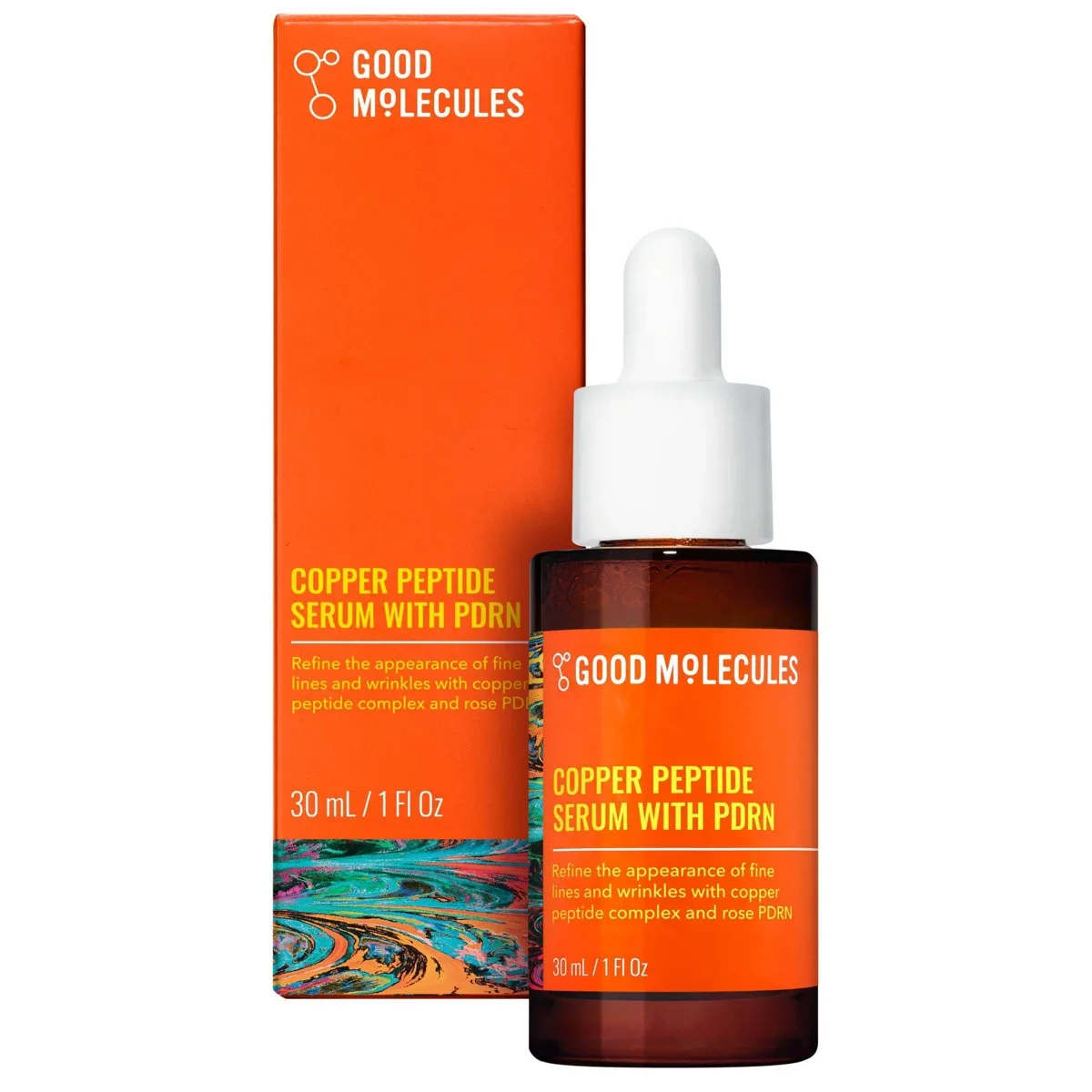
It puts copper tripeptide-1 and a polynucleotide in the same twelve-dollar bottle, which the PDRN trend has otherwise priced at three to five times as much, and it sources the DNA from rose rather than salmon so the formula stays vegan. Both actives sit in the last third of a twenty-ingredient list with no declared dose, and the serum is otherwise a plain, fragrance-free humectant gel, which is the honest description of what most of the bottle is.
A twelve-dollar way to put copper tripeptide-1 and a polynucleotide on your face in a fragrance-free water gel that nobody's skin will object to. The hydration is real and immediate; the firming rests on undeclared, late-list doses and on topical PDRN evidence that does not yet exist, so treat it as a pleasant hydrating peptide serum with an upside, not a treatment. At this price that is a fair deal.
A 2026 launch with only a few dozen reviews across the brand site and Target, so what is written here rests on the published ingredient list, the copper-peptide research base and Good Molecules' record with its earlier peptide serum rather than on real-world outcomes. Whether the rose-derived PDRN adds anything beyond hydration is an open question no study has yet answered, and the firming claims in particular remain untested by users.
The case for it
What would change this: A declared concentration would move this to a firmer reading of the dose.
Same rule for everyone. “Promising” is the verdict on 7,858 of 45,024 concern verdicts across the catalog; rule R9p decided 7,858 of them. As of September 25, 2026, engine 5.1.1.
Brand or formulator? Disclose a concentration or correct a fact →
The studies behind the evidence row
The case for it
What would change this: A declared concentration would move this to a firmer reading of the dose.
Same rule for everyone. “Good choice” is the verdict on 9,564 of 45,024 concern verdicts across the catalog; rule R5 decided 9,072 of them. As of September 25, 2026, engine 5.1.1.
Brand or formulator? Disclose a concentration or correct a fact →
The studies behind the evidence row
The case for it
What would change this: A researched evidence row for the lead active would replace this with a verdict.
Same rule for everyone. “Supporting role” is the verdict on 8,197 of 45,024 concern verdicts across the catalog; rule R8 decided 4,250 of them. As of September 25, 2026, engine 5.1.1.
Brand or formulator? Disclose a concentration or correct a fact →
Where our review and the verdict differ. The review below was written on the formulation and the published trials; the verdicts above apply the stricter standing test in our methodology — an active earns a recommendation only with guideline or regulatory standing for the concern. Where the two disagree, the verdict is DermApproved’s position.
A verdict is DermApproved’s assessment of how well a product’s ingredients fit a concern — never a claim about what the product treats. Evidence dots and collected reviews sit beside it and are never blended in. Rules 0.5.1 · evidence table ev-2026.09-r228 · how we decide
Polynucleotide serums arrived in the West with a clinic's price tag attached. The ingredient came out of Korean dermatology offices, where salmon-derived PDRN is injected, and when it crossed into serums it kept the aura and much of the cost; forty to sixty dollars for thirty millilitres became normal for a bottle whose main active nobody could show absorbing through intact skin. Good Molecules, whose entire business is taking a trending active and selling it for twelve dollars, was always going to answer that, and this is the answer: copper tripeptide-1, the peptide the brand's audience already trusts, paired with sodium DNA sourced from rose so the label can say PDRN and vegan in the same breath.
The formula is twenty ingredients and reads cleanly. Water, propanediol and glycerin lead, then a preservation and pH system, glyceryl glucoside, a gelling copolymer, xanthan, and sodium hyaluronate at thirteenth, just ahead of copper tripeptide-1 at fourteenth. After that come the rose extract, the sodium DNA, caprooyl tetrapeptide-3, a dextran carrier and tridecapeptide-1 to close. No fragrance, no alcohol, no oils, no silicones, nothing that a reactive or fungal-acne-prone face would flag beyond a trace of rose flower extract that is unlikely to matter at that placement. On the skin it is a clear, watery gel from a glass dropper, faintly tacky for a minute and then gone, leaving a smooth, hydrated surface that layers under anything. As a plain hydrating serum it is very good, and that is not a small thing at this price.
The question is what the actives add, and the honest answer has two halves. Copper tripeptide-1 has the better case: decades of wound-healing research, mechanistic work on collagen and matrix remodelling, and a few small human studies showing modest improvement in firmness and fine lines with topical use over months. The dose is undeclared, and fourteenth of twenty behind the hyaluronic acid suggests a modest one, in line with other mass-market copper serums rather than the concentrated versions. It is a plausible active at a plausible level; it is not a guaranteed one. The sodium DNA is where the evidence thins to nothing. Everything that makes PDRN interesting, the tissue-regeneration and wound-healing data, comes from injected salmon polynucleotides reaching the dermis. Topically the molecule is large, sits on the surface, and behaves as a film-forming humectant, which is a fine thing to be but is not regeneration. A rose-derived version has no studies at all, and the brand, to its credit, claims only the appearance of firm, plump, bouncy skin, which a good humectant gel delivers regardless. Dermatology has spent two decades learning that hydration alone accounts for a surprising share of what people perceive as firming and line-softening, and a well-built humectant gel gets that share on day one; the peptide, if it earns anything, earns it slowly and on top.
That honesty is the thing to notice. The label promises to refine the appearance of fine lines, not to rebuild collagen, and the serum does the first through hydration on day one and may do a little of the second through the copper peptide by month three. Users who have reviewed it so far, and there are only a few dozen, describe exactly that: a nice lightweight hydrator, a plumped look, and no dramatic firming, with the price named as the reason they are happy anyway. That is about the right expectation. It is worth pausing on how unusual that restraint is in this category, because most PDRN serums arrive wrapped in language about cellular renewal and skin regeneration borrowed wholesale from the injectable literature, and a twelve-dollar brand choosing to say less than it could is the kind of thing that builds trust over years. The texture helps the case too; a serum this thin disappears under sunscreen in the morning without pilling, and under a heavier cream at night it adds slip rather than layers.
On cost the case is simple. Twelve dollars for thirty millilitres is a quarter to a fifth of what the polynucleotide trend has been charging, and the copper peptide alone would justify the price in a serum this well-behaved. Three drops twice daily empties the bottle in five or six weeks, which is the one real ding; the two- and three-packs on the brand site are the sensible way to buy it if it earns a place. Against the brand's own Super Peptide Serum, the older, better-reviewed sibling at the same price, this one trades a broader peptide blend for the PDRN novelty, and which to pick comes down to whether the polynucleotide angle interests you, because the copper-peptide core is the same. Against the Korean ampoules that started the trend, most of which pair salmon PDRN with a dozen botanicals and a fragrance, this is also the plainer, safer bottle, which for reactive skin is its own argument.
So: buy it as an inexpensive, fragrance-free hydrating serum with a well-researched peptide inside and a fashionable molecule that probably does little beyond hydrating, and it will not disappoint. Buy it expecting clinic-grade PDRN results in a dropper and it will, because those results do not come from any bottle at any price.
The hero actives that drive this product's performance.
| Ingredient | Function | Evidence |
|---|---|---|
| Copper Tripeptide-1 (GHK-Cu) | The headline active, fourteenth on a twenty-ingredient list, a copper-bound tripeptide with a long research trail in wound healing and small studies on firmness and fine lines. In this water-light gel it is the only ingredient with a mechanism beyond hydration, and with no concentration declared its dose is the open question the whole serum turns on. | Not yet assessed |
| Sodium DNA (rose-derived PDRN) | The brand's plant-sourced answer to the salmon-DNA polynucleotides driving the PDRN trend, sitting after the rose extract near the end of the list. Polynucleotide evidence comes almost entirely from injected salmon PDRN; topically, the large molecule mostly acts as a film-forming humectant, and a rose-derived version has no data of its own. | Not yet assessed |
| Caprooyl Tetrapeptide-3 & Tridecapeptide-1 | Two supporting signal peptides closing the list, one marketed for firmness through dermal-matrix support and one for elasticity, that let the label say multi-peptide complex. Both are supplier-studied rather than independently tested, and at final-position placement they are present at trace levels. | Limited for Aging |
| Sodium Hyaluronate | Placed just ahead of the copper peptide, the hydrator that gives the serum its immediate plumping, drawing water into the surface alongside glyceryl glucoside, glycerin and propanediol so the peptides sit on hydrated skin and the serum leaves a light, tacky-then-smooth finish. | Established mechanism for Dehydration · established mechanism |
| Glyceryl Glucoside | A glucose-bound form of glycerin sixth on the list that hydrates more slowly and evenly than plain glycerin and has small studies suggesting it supports water-channel proteins in the skin; here it is the quiet reason the serum feels hydrating without stickiness. | Not yet assessed |
Ingredient standings describe the active at treatment-level doses and vehicles; this product's own condition grades weigh its actual formula.
Aqua/Water/Eau, Propanediol, Glycerin, 1,2-Hexanediol, Sodium Citrate, Glyceryl Glucoside, Pentylene Glycol, Sodium Levulinate, Ammonium Acryloyldimethyltaurate/VP Copolymer, Citric Acid, Xanthan Gum, Sodium Benzoate, Sodium Hyaluronate, Copper Tripeptide-1, Sodium Hydroxide, Rosa Damascena Flower Extract, Sodium DNA, Caprooyl Tetrapeptide-3, Dextran, Tridecapeptide-1
serum
AM & PM
Goes on damp skin after toner and before heavier serums or moisturiser; give it a minute to settle, since the gel tacks briefly. Copper peptides are commonly kept apart from direct acids and pure ascorbic acid in the same layer, so run those in the other half of the day and let a retinoid follow it at night.
Hydration and a smoother, slightly plumped surface show within days from the humectants. Any softening of fine lines from the copper peptide takes eight to twelve weeks of twice-daily use and is subtle; firming is the least certain outcome and should not be expected quickly.
Copper tripeptide-1, glycyl-histidyl-lysine complexed with copper, was identified in human plasma in the 1970s and has since accumulated a substantial mechanistic literature: it stimulates collagen and glycosaminoglycan synthesis in fibroblast cultures, modulates matrix metalloproteinases and their inhibitors, and promotes wound closure in animal and human wound studies. For cosmetic use, small controlled facial studies over eight to twelve weeks have reported improvements in skin density, firmness and fine-line appearance versus vehicle, though the trials are few, short and often supplier-connected. Penetration of the copper complex through intact skin is limited but demonstrable, and effect is dose-dependent; this serum declares no percentage, and its fourteenth-position placement suggests a modest, mass-market level.
Polynucleotides, marketed as PDRN, are DNA fragments originally derived from salmon trout sperm, with clinical evidence for wound healing, tissue repair and dermal quality that comes almost entirely from injected or intradermally delivered preparations, where the fragments act through adenosine A2A receptor signalling. Topical delivery is a different problem: sodium DNA is a large polyanionic polymer with very low skin permeation, and its demonstrated topical role is as a hydrating, film-forming polymer with some in-vitro antioxidant and anti-inflammatory activity. This serum sources its sodium DNA from rose, for which no independent studies exist; the mechanism transferred from salmon PDRN cannot be assumed for a plant-derived polymer of different composition.
The supporting peptides, caprooyl tetrapeptide-3 and tridecapeptide-1, rest on supplier in-vitro and small-panel data suggesting dermal-matrix and elasticity support, and at final-position placement contribute trace amounts. The hydration mechanism is well established and is what a user experiences first: sodium hyaluronate binds surface water, glyceryl glucoside has small studies suggesting it supports aquaporin-3 expression and hydrates more evenly than free glycerin, and propanediol, glycerin and pentylene glycol add humectancy and preservation support. The formula is free of fragrance and alcohol, with Rosa damascena flower extract the sole botanical of note. No clinical study of this product has been published.
In clinical conversation, copper peptides occupy a respectable middle tier: dermatologists generally regard GHK-Cu as one of the few cosmetic peptides with real biological data, while noting that the facial trials are small and short and that results depend on concentration, which most brands, this one included, do not disclose. Polynucleotides are treated with more caution. Clinicians who inject PDRN are usually the first to say that its regenerative effects are a property of the injected route, and that a serum containing sodium DNA is best understood as a hydrating film-former; a plant-derived version simply lacks data either way. What most practitioners would approve of here is the vehicle: a fragrance-free, alcohol-free, oil-free gel that is safe for reactive, acne-prone and barrier-compromised skin and pairs without trouble with retinoids and sunscreen. The standard guidance to a patient would be to use it as an inexpensive hydrator with a plausible long-term peptide benefit, to keep expectations of firming modest, and to spend the money saved on daily sunscreen, which remains the intervention with the evidence.
Dispense two or three drops onto clean, slightly damp skin morning and night, press over the face and neck with fingertips rather than rubbing, and wait about a minute for the gel's brief tack to settle before the next layer. Follow with moisturiser and, by day, sunscreen. Keep it out of the eye area. If pure ascorbic acid or a strong exfoliating acid is part of the routine, use those in the opposite half of the day rather than in the same layer, and let a retinoid go on after this serum at night. Store away from heat and sunlight, since the amber bottle is there to protect the peptides. Allow eight to twelve weeks of consistent use before judging any change in firmness.
At $12 for 30 mL, this is about a quarter of what the polynucleotide trend has charged for comparable single-bottle serums, and the copper peptide alone would justify the price in a formula this clean. Value is high for anyone who wants an affordable, fragrance-free hydrating serum with a credible peptide; it is lower for anyone buying specifically for PDRN, since the rose-derived polymer is the least-evidenced thing in the bottle. The dropper bottle runs out in five to six weeks at the recommended twice-daily dose, so the per-month cost is closer to ten dollars than the sticker suggests; the brand's two- and three-packs bring that down. There is only one size.
Anyone curious about copper peptides or PDRN who does not want to spend forty dollars to find out, and anyone with reactive, oily, acne-prone or fungal-acne-prone skin who needs a hydrating serum with nothing in it to object to. It suits beginners building a first anti-aging routine on a budget.
People who want a declared peptide concentration or evidence-backed firming should look elsewhere, since neither active carries a dose and topical PDRN has no trials. It also has little to offer someone already using a copper-peptide serum they like, and the rose extract, though minimal, may matter to those with a known rose allergy.
Ready to try Good Molecules Copper Peptide Serum with PDRN?
Buy at Amazon ♥A clear, water-thin gel that spreads from two or three drops, feels faintly tacky for about a minute, then dries down to a smooth, nearly weightless finish with no residue.
No added fragrance; a barely detectable clean, watery note from the base, with the rose extract too low to register as a scent.
A 30 mL amber glass bottle with a white bulb glass dropper and an orange label in the brand's block lettering, sold in a matching orange carton with the marbled band that runs across the peptide line.
The first applications give light hydration and a faintly tacky moment that vanishes once it sets; there is no tingle, purging or adjustment. Some people notice a subtle surface smoothness within the first week from the humectants, and nothing else changes for weeks, which is normal for a peptide serum.
Roughly four to six weeks at three drops twice a day, or two to three months once daily.
All Year
Good Molecules built its peptide line on the Super Peptide Serum, a copper-tripeptide blend that became one of its best sellers. When polynucleotides crossed from Korean clinics into mass-market serums in 2025, the brand added this rose-PDRN version as its answer, keeping the twelve-dollar price and pairing it with the copper peptide the audience already knew.
Good Molecules launched in 2019 as Beautylish's house skincare label, built on single-active formulas at drugstore prices and sold through Ulta, Target and its own site. The brand publishes ingredient lists in full and keeps fragrance out of nearly everything, but it runs no clinical trials on its products; its credibility rests on formulation transparency and a large volume of consumer reviews rather than on published data.
PDRN in a serum does what PDRN injections do.
The regenerative evidence for polynucleotides comes from injected salmon-derived PDRN reaching the dermis. The sodium DNA in this serum is a large molecule that stays largely on the surface, where it behaves as a film-forming humectant; there is no clinical data for topical rose-derived PDRN.
Copper peptides must be kept away from vitamin C or they cancel each other out.
The concern is theoretical, that ascorbic acid could reduce the copper complex, and applies only when both are in the same layer at the same time. Using vitamin C in the morning and this serum at night, or letting one absorb fully, avoids the question entirely.
It is sodium DNA, a polynucleotide, sourced from rose rather than the salmon sperm most PDRN products use, which keeps the serum vegan. It sits near the end of the list and acts mainly as a film-forming hydrator on the skin surface; the regenerative claims attached to PDRN come from injected salmon-derived versions.
The brand does not declare a concentration. Copper tripeptide-1 is fourteenth of twenty ingredients, after the hyaluronic acid and before the rose extract, which suggests a modest dose typical of mass-market peptide serums rather than a high-strength treatment.
Yes. It is a gentle, fragrance-free water gel, and it is a good hydrating base under a retinoid at night. Apply the serum first, let it set for a minute, then the retinoid or a retinoid-containing moisturiser.
The list contains no oils, esters, fatty alcohols or polysorbates, so it is generally considered safe for Malassezia-prone skin. The only botanical is a small amount of rose flower extract.
Both are built on copper tripeptide-1 and a supporting peptide blend at twelve dollars. This one swaps in sodium DNA and rose extract as the second headline and uses a slightly simpler humectant base; the Super Peptide Serum has the longer track record and more reviews.
There are no retinoids, salicylic acid, hydroquinone or essential oils in the formula; copper peptides and polynucleotides are not on any avoid list, and the base is a plain fragrance-free humectant gel. It is generally considered fine to use, with the usual advice to check anything new with a clinician.
Recurring themes our editors read across retailer reviews of this product — summaries in our words, not quotations, and not a substitute for your own patch test.
Among the limited reviews available, users like the lightweight, non-sticky feel
Early feedback notes a hydrated, plump look under moisturiser
Price is repeatedly called out as the reason to try it
Too few reviews to establish patterns, but some early users see no visible firming
Slight tack for a minute after application
Small dropper bottle empties in about a month of twice-daily use