'Regenerative' Serums: Growth Factors, Exosomes, and PDRN Meet the 500-Dalton Wall
The language of regenerative medicine has flooded the serum aisle — but most of these molecules are far too big to get through intact skin, and the fine print knows it.
Read the preview
From the DermApproved blog, in Anti-Aging: 'regenerative' skincare — growth factors, exosomes, and PDRN in a bottle. The pitch is irresistible. Take the same regenerative biology reshaping injectable medicine, and just... smear it on at home. Serums are borrowing the language of the clinic, and charging clinic-adjacent prices to match. But there's a wall in the way — a rule about molecule size that these headline ingredients don't just fail, they fail by a spectacular margin. So is any of it real? Some of it genuinely is, in one very specific situation most brands don't put on the front of the box. There's a reason one whole category has no FDA approval. And there's a cheaper, smaller molecule that quietly does what the expensive one only promises. Which serums earn the word 'regenerative,' and which are selling physics they can't deliver — at dermapproved.com/blog.
Borrowed language from the clinic
Something interesting happened as regenerative medicine reshaped the injectable world. Words that used to live in aesthetic clinics and operating theatres — growth factors, exosomes, polynucleotides, PDRN — migrated onto the front of serum boxes, often at eye-watering prices. The pitch is seductive and deliberately blurry: use the same 'regenerative' biology that's transforming injectables, but from the comfort of your bathroom shelf. The implication is that a molecule which rebuilds tissue when a dermatologist delivers it into the skin will do the same when you pat it on top.
That leap is where the trouble starts, because the two situations are not the same situation. In a clinic, these molecules are delivered past the skin's barrier — injected, micro-needled, or laid onto skin whose surface has just been ablated. On a serum, they sit on the outside of a wall specifically evolved to keep large foreign molecules out. Regenerative skincare isn't a scam, exactly, but it is frequently a category selling the destination while quietly omitting the roadblock. Some of it is genuinely promising; a lot of it is a large molecule that can't get where it needs to go. Sorting the two apart starts with one unglamorous concept: size.
The 500-Dalton wall
The single most useful fact for evaluating any 'penetrating' active is the 500-Dalton rule, laid out by Bos and Meinardi in Experimental Dermatology in 2000. The observation: molecules with a molecular weight above roughly 500 Daltons struggle to passively cross the intact stratum corneum, which is why nearly all classic topical drugs come in under that ceiling. It's a rule of thumb, not an iron law — clever delivery systems, penetration enhancers, and damaged skin all move the goalposts — but as a first filter it's ruthlessly clarifying.
Now run the regenerative headliners through it. Epidermal growth factor weighs in around 6,000 Daltons; fibroblast growth factor is roughly 17,000. Exosomes aren't even molecules in this sense — they're membrane-bound vesicles tens of nanometres across, vastly larger than any small drug. These are not borderline cases nudging against a 500-Dalton line; they're one to two orders of magnitude over it. On healthy, intact skin, the default expectation for an unassisted growth factor or exosome is that most of it never reaches living cells at all. That doesn't make a formula worthless — the supporting humectants, peptides, and antioxidants can still do real work — but it means the hero ingredient's headline mechanism is fighting physics. The [ingredient-decoder] is a good sanity check for what else is actually in a pricey 'regenerative' bottle.
PDRN and exosomes: real data, mostly injected
PDRN — polydeoxyribonucleotide, short DNA fragments typically sourced from salmon or trout — is the ingredient with the most compelling regenerative story, and it's instructive precisely because its best evidence lives in a needle. Injected, polynucleotides show genuine effects on inflammation, collagen, and skin quality. But a 2025 systematic review in the Journal of Cosmetic Dermatology on polynucleotides in aesthetic medicine was candid that the evidence base is still inconsistent and under-powered, with a need for more controlled trials — even for the injectable use where absorption isn't in question.
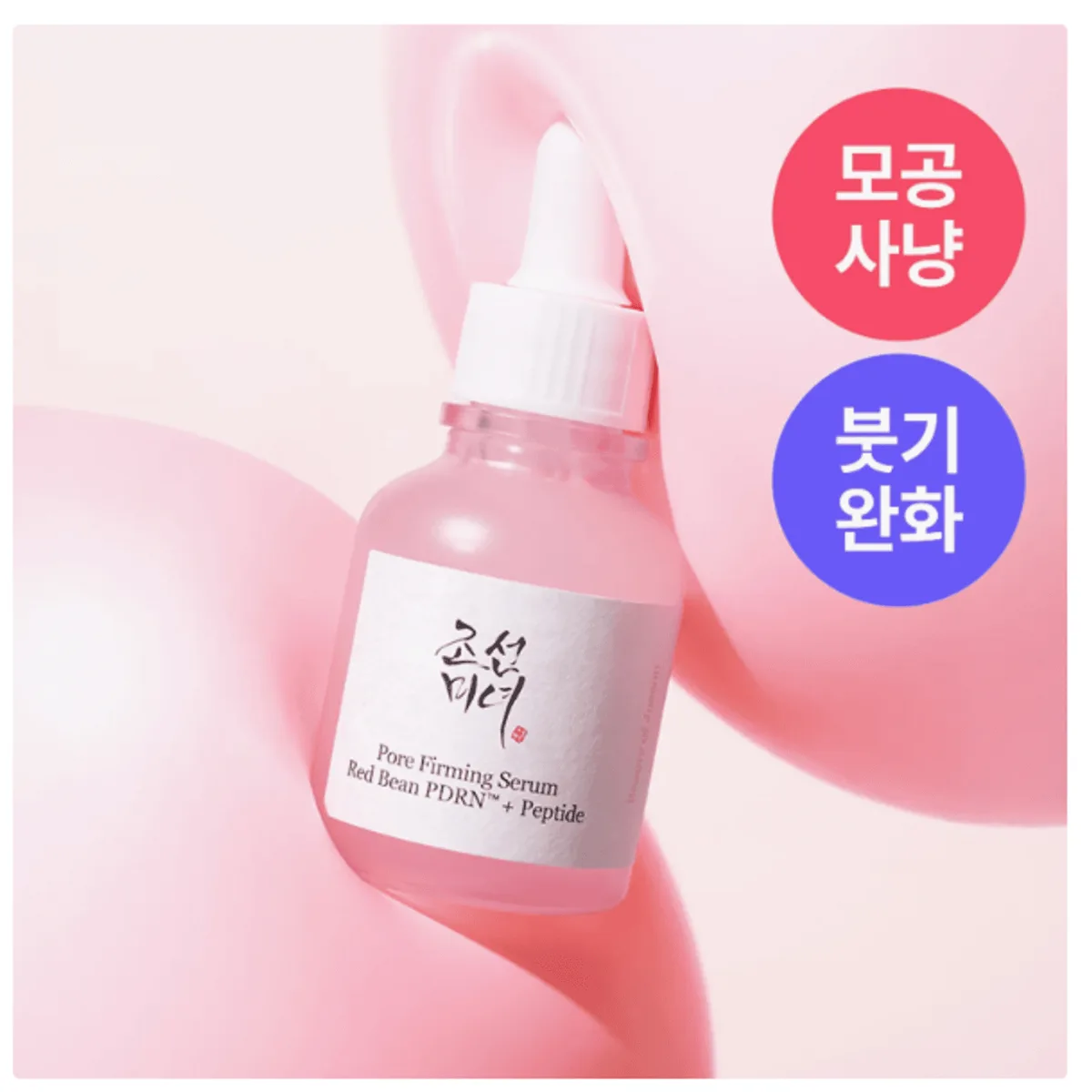
Topically, PDRN faces the same wall as everything else, made worse by its negative charge: it's large and anionic, a poor candidate for crossing a lipid barrier on its own. Research on low-molecular-weight PDRN (one 2025 study derived it from peony and shrank the fragments to improve uptake) is essentially an admission of the problem — you have to re-engineer the molecule smaller or wrap it in a delivery vesicle to get anywhere. That's the honest lens for products in this space. A premium serum like Medik8 Exo-PDRN Prismatic+ Serum pairs exosome and PDRN technology with peptides and niacinamide, and an affordable option such as Beauty of Joseon Pore Firming Serum brings PDRN to a budget price — both are pleasant, well-formulated serums, but the regenerative headline is doing more marketing work than the topical evidence currently supports.
Where topical regenerative claims are actually strongest
There's a scenario where all of this flips from aspirational to plausible: when the barrier is already breached. Immediately after microneedling, fractional laser, or a professional peel, the stratum corneum is temporarily perforated or ablated, and large molecules that would normally bounce off suddenly have a route in. This is exactly the context in which growth factors and exosomes are used in clinical settings — as a post-procedure serum applied to skin whose door has just been propped open. Used that way, and on the clinic's timeline, the mechanism is at least physically possible in a way it isn't over an intact barrier at home.
That post-procedure niche is the defensible heart of the regenerative-topical category, and it's worth noting the regulatory reality alongside it: the FDA has not approved exosome products for aesthetic use, so 'exosome facials' and topical exosome serums are operating in a grey zone rather than an evidence-backed, approved lane. For everyday at-home use on healthy skin, the more grounded route to the same goals — supporting the skin's own collagen and repair — is often a smaller signalling molecule that can actually get in. Peptides are the obvious example, small enough to have a fighting chance and comparatively well-studied. A multi-peptide formula like Naturium Multi-Peptide Rich Cream or a pro-collagen serum such as Geek & Gorgeous 101 Power Peptides is a more evidence-aligned way to spend money than a large molecule betting against the 500-Dalton wall.
How to read a 'regenerative' serum's claims
You don't need a biochemistry degree to pressure-test one of these products — you need three questions. First: is there a real delivery system, or just the big molecule dropped into a nice base? Words like liposomal or encapsulated at least gesture at solving the penetration problem; their absence, next to a growth-factor or exosome headline, is a red flag that the hero ingredient is mostly sitting on the surface. Second: does the claim quietly rest on post-procedure skin? A serum whose evidence comes entirely from use after microneedling is telling you something about what it needs to work. Third: is the human evidence beyond a Petri dish? 'Stimulates collagen' in a cell-culture study says nothing about what happens when the molecule can't reach the cells in the first place.
None of this means walking past the whole category. It means paying for what's real — the elegant formulation, the supporting actives, the post-procedure use where it's justified — rather than for the borrowed glamour of a clinic word. Match the tool to the situation: peptides and retinoids for everyday collagen support on intact skin, and save the growth-factor and exosome serums for the narrow window where the barrier is open and the biology has a route in. The [routine-finder] can help you build the everyday-collagen side of that, and the [conflict-checker] will keep a pricey 'regenerative' serum from clashing with the actives actually doing the work.
Products mentioned
Independently reviewed and scored — the real products behind this piece.



References
- The 500 Dalton rule for the skin penetration of chemical compounds and drugs — Experimental Dermatology, 2000
- The Effectiveness of Polynucleotides in Esthetic Medicine: A Systematic Review — Journal of Cosmetic Dermatology, 2025
- Anti-Aging Efficacy of Low-Molecular-Weight Polydeoxyribonucleotide Derived from Paeonia lactiflora — International Journal of Molecular Sciences, 2025
Every cited link is verified to resolve to the paper named. Where a source could not be independently confirmed, it is listed without a link rather than pointing you somewhere wrong.
Frequently asked
Do topical growth factors actually penetrate the skin?
Mostly not, on intact skin. Growth factors are large proteins — epidermal growth factor is around 6,000 Daltons, fibroblast growth factor roughly 17,000 — far above the ~500-Dalton threshold for passive penetration of the stratum corneum. Without a delivery system or a breached barrier, most of an applied growth factor never reaches living cells. That's the central limitation the marketing tends to skip.
Is PDRN in a serum as good as PDRN injections?
No. PDRN's regenerative evidence comes largely from injected use, where it bypasses the skin barrier. Topically, PDRN is large and negatively charged, so it penetrates poorly without a delivery vehicle, and a 2025 systematic review found even the injectable evidence still inconsistent. A topical PDRN serum can be a nice formulation, but it isn't equivalent to the clinical injectable.
Are exosome skincare products FDA-approved?
No. The FDA has not approved exosome products for aesthetic use, so topical exosome serums and 'exosome facials' operate in a regulatory grey zone rather than an evidence-backed, approved category. Exosomes are also membrane-bound vesicles far too large to cross intact skin on their own, which makes at-home topical claims especially aspirational.
When do regenerative topicals like growth factors actually work?
Their strongest case is immediately after a procedure — microneedling, fractional laser, or a professional peel — when the skin barrier is temporarily perforated and large molecules can actually get in. That post-procedure window is the defensible use. On healthy, intact skin at home, the physics work against them, and smaller molecules like peptides are a more realistic choice.
What should I look for before buying a 'regenerative' serum?
Ask three questions: Is there a real delivery system (liposomal, encapsulated) rather than just a big molecule in a nice base? Does the claim quietly depend on post-procedure skin? And is the human evidence beyond a cell-culture dish? If a growth-factor or exosome headline has no delivery technology and only in-vitro data, you're mostly paying for borrowed clinic language.