Beta-Glucan Does Niacinamide's Job Without the Marketing Budget
It hydrates, calms, and quietly supports the barrier with one of the better safety records in skincare. So why has almost nobody heard of it?
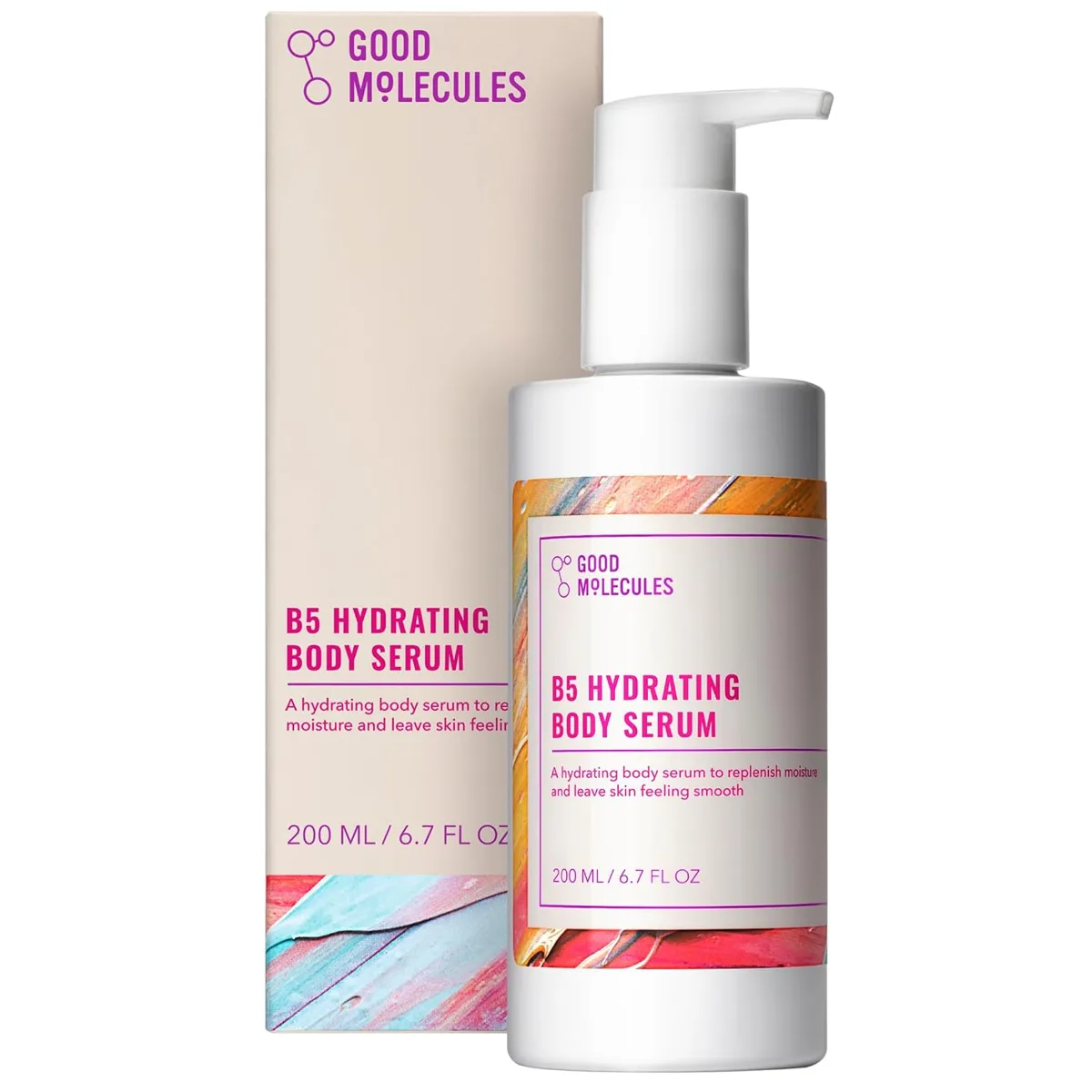
It brings the face-serum idea of a humectant layer to the body, with every percentage printed: 4 percent panthenol, 0.2 percent each of polyglutamic acid and sodium hyaluronate, glyceryl glucoside and glycerin, in a fragrance-free water-gel with a coco-caprylate slip. It is a hydration step rather than a moisturiser, priced at $18 for 200 ml, and honest on the label about exactly what is in it.
A fragrance-free water-gel for the body with every percentage on the label and a genuinely useful 4 percent panthenol at the top of it, backed by polyglutamic acid and hyaluronate for a dewy surface film. It is a hydration layer, not a moisturiser, and the reviews split exactly along that line: a cool, calming, residue-free drink for post-shower skin that normal skin can wear alone and dry skin must top with a lotion. At $18 for 200 ml it is honest, gentle and useful, provided you know which half of the split you are on.
The case for it
Same rule for everyone. “Good choice” is the verdict on 9,564 of 45,024 concern verdicts across the catalog; rule R5 decided 9,072 of them. As of September 25, 2026, engine 5.1.1.
Brand or formulator? Disclose a concentration or correct a fact →
The studies behind the evidence row
The case for it
What would change this: A concentration inside the studied range would raise this a step.
Same rule for everyone. “Supporting role” is the verdict on 8,197 of 45,024 concern verdicts across the catalog; rule R7 decided 258 of them. As of September 25, 2026, engine 5.1.1.
Brand or formulator? Disclose a concentration or correct a fact →
The studies behind the evidence row
The case for it
What would change this: A researched evidence row for the lead active would replace this with a verdict.
Same rule for everyone. “Supporting role” is the verdict on 8,197 of 45,024 concern verdicts across the catalog; rule F3 decided 183 of them. As of September 25, 2026, engine 5.1.1.
Brand or formulator? Disclose a concentration or correct a fact →
As a body productNot judged: what a body product is for — real substance, not just slip, realistic to use daily — cannot yet be measured from the ingredient list (only fragrance load can).
A verdict is DermApproved’s assessment of how well a product’s ingredients fit a concern — never a claim about what the product treats. Evidence dots and collected reviews sit beside it and are never blended in. Rules 0.5.1 · evidence table ev-2026.09-r228 · how we decide
Good Molecules prints its formulas to the hundredth of a percent, and the first line of this one reads Aqua 88.9%. Most brands would rather you did not do that arithmetic on a body product; this one invites it, and the honest response is that 88.9 percent water in a hydrating gel is not a confession but a description of what a hydrating gel is. The question a label like that lets you ask is what the other 11 percent is doing, and here the answer is unusually clear, because every gram of it is declared.
The second line is panthenol at 4 percent, and that is the product. Provitamin B5 at 2 to 5 percent in a leave-on has controlled evidence for raising skin hydration, calming itch and speeding barrier recovery after irritation, which is precisely the state of skin ten minutes after a hot shower, and 4 percent is a generous dose that many face serums do not reach. Under it sit propanediol at 1.9, glycerin at 0.93 and glyceryl glucoside at 0.53 percent, the last a glycerin-sugar conjugate with data for stimulating the skin's own aquaporin water channels; then polyglutamic acid and sodium hyaluronate at 0.2 percent each, two large water-binding polymers that form the surface film responsible for the dewy look the moment the gel dries. Coco-caprylate at 1.5 percent gives a little slip and emollience, a polymer thickens it, hydrogenated lecithin helps the humectants in, and beta-glucan appears at 0.05 percent, which is a token of a soothing ingredient rather than a dose of one. Preservation is caprylhydroxamic acid with caprylyl glyceryl ether and a chelator, and the capryloyl salicylic acid at 0.1 percent belongs to that system rather than to any exfoliating ambition, which matters because its name will mislead anyone hoping for a keratosis pilaris serum. No fragrance, no alcohol, no oils to speak of, nothing that commonly sensitises. It is a clean, deliberate list, and the transparency has a practical use: a buyer can compare the 4 percent panthenol here against the undeclared 'B5' on a competing label and know exactly which one is bluffing.
On the skin it is what the list predicts. Pumped onto damp arms and legs straight from the shower, the clear gel spreads a long way, cools, and vanishes in under a minute into skin that looks dewy and feels calm rather than tight, with no residue for clothes to catch. It is genuinely pleasant in summer and after sun, and on normal, combination or oily body skin it can be the whole moisturiser in warm weather. On dry skin, an hour later, the truth of a humectant layer arrives: it has drawn water in and held it in a thin film, but it has sealed nothing, and shins that were flaking are still flaking, now slightly better hydrated. That is not a fault of the formula; it is what a serum is, and the brand's own instructions say to layer it under a lotion for extra hydration. It is, however, why the Ulta average sits lower than the Amazon one. Users who bought a serum and used it as a serum are pleased; users who bought a bottle of body moisturiser and got a bottle of water-gel are not, and both groups are describing the same product accurately. The brand could head off the second group with a clearer word than 'serum' on the front, but the back of the bottle already says everything.
The value case is straightforward. Eighteen dollars for 200 millilitres is about $2.70 an ounce, and a bottle lasts six to eight weeks applied daily all over or three to four months on arms and legs. There is no clinical study of this product, and none is needed; panthenol's evidence is the evidence, and the label lets you verify the dose. What the money buys is a well-built, fragrance-free hydration layer from a brand whose transparency is its whole credibility, and a way to make a cheap body lotion behave like a better one by giving it water to seal. What it does not buy is a moisturiser, an exfoliant or anything that changes the look of the skin beyond the dewy hour after application, and a three-year record of over a thousand ratings confirms that nobody has found a hidden talent in it since.
So the recommendation is about knowing which product you are buying. For normal to oily skin that wants a light, fragrance-free summer body moisturiser, for sensitive and eczema-prone skin that reacts to perfumed lotions, and for anyone who wants the post-shower tightness gone before a lotion goes on, this is a good, gentle, honest bottle. For dry skin used alone it will disappoint, and for keratosis pilaris it will do nothing the name promises; in both cases the fix is a second product, not a different serum.
The hero actives that drive this product's performance.
| Ingredient | Function | Evidence |
|---|---|---|
| Panthenol 4% (4%) | Second only to water and declared at 4 percent, which is a generous dose for a leave-on and the whole point of the product: provitamin B5 that draws water into the outer skin, calms itch and speeds barrier recovery on shins, arms and anywhere a shower has left the skin tight. | Established mechanism for Dehydration · established mechanism |
| Polyglutamic Acid 0.2% (0.2%) | A large fermented peptide humectant, declared at 0.2 percent, that forms a water-holding film on the surface and is responsible for the dewy, plumped look the moment the gel dries; it works with the 0.2 percent sodium hyaluronate as the serum's two film-forming water binders. | Not yet assessed |
| Glyceryl Glucoside with Glycerin and Propanediol (0.53% / 0.93% / 1.9%) | The humectant trio under the panthenol: glyceryl glucoside, a glycerin-sugar conjugate with data for stimulating aquaporin water channels, plus glycerin and propanediol, which together are why a nearly 90-percent-water gel leaves the skin feeling hydrated rather than merely wet. | Established mechanism for Dehydration · established mechanism |
| Beta-Glucan 0.05% (0.05%) | The soothing polysaccharide, declared at a token 0.05 percent, that lets the brand list 'calming' on the label; it is genuinely calming in the literature at ten times this dose, and here it is a supporting note rather than an active. | Not yet assessed |
| Capryloyl Salicylic Acid 0.1% (0.1%) | A lipophilic salicylic acid derivative at a tenth of a percent, too low to exfoliate and placed here as part of the preservation and skin-feel system alongside caprylyl glyceryl ether; not a treatment for keratosis pilaris, whatever the name suggests. | Not yet assessed |
Ingredient standings describe the active at treatment-level doses and vehicles; this product's own condition grades weigh its actual formula.
Aqua/Water/Eau (88.9%), Panthenol (4.0%), Propanediol (1.9%), Coco-Caprylate/Caprate (1.5%), Glycerin (0.93%), Ammonium Acryloyldimethyltaurate/VP Copolymer (0.65%), Glyceryl Glucoside (0.53%), Caprylyl Glyceryl Ether (0.39%), Glyceryl Stearate SE (0.25%), Hydrogenated Lecithin (0.25%), Polyglutamic Acid (0.20%), Sodium Hyaluronate (0.20%), Caprylhydroxamic Acid (0.11%), Capryloyl Salicylic Acid (0.10%), Beta-Glucan (0.05%), Trisodium Ethylenediamine Disuccinate (0.02%)
moisturizer
AM & PM
Smooth it over damp skin after showering and let it dry for a minute; on normal skin it can stand alone as a light summer moisturiser, and on dry skin it goes under a body lotion or oil, which seals the water it has drawn in. It is bland enough to sit under a lactic or urea lotion on keratosis pilaris nights and over freshly shaved or sun-exposed skin.
Immediate: skin looks dewy and feels cool and hydrated within a minute, without residue. Short-term (1-2 weeks): tight, itchy post-shower skin settles with daily use. Long-term: sustained hydration and less reactivity from the panthenol; it does not soften keratosis pilaris or replace an occlusive on very dry skin.
The serum's hydration mechanism is humectancy plus surface film, with the doses disclosed. Panthenol at 4 percent is converted in skin to pantothenic acid and has controlled evidence at 2 to 5 percent for increasing stratum corneum hydration, reducing transepidermal water loss, calming pruritus and accelerating barrier recovery after surfactant or physical irritation, which makes it well suited to post-cleansing body skin. Glycerin at 0.93 percent and propanediol at 1.9 percent are conventional humectants; glyceryl glucoside at 0.53 percent, a glucose-glycerol conjugate, has in vitro and small clinical data for upregulating aquaporin-3 expression and improving hydration beyond glycerin alone. Polyglutamic acid at 0.2 percent, a fermented gamma-polyglutamate polymer, and sodium hyaluronate at 0.2 percent both form water-retaining films on the surface, accounting for the immediate dewy appearance and a modest, short-lived plumping; polyglutamic acid's higher water-binding capacity relative to hyaluronic acid rests mainly on supplier and in vitro data. Coco-caprylate/caprate at 1.5 percent is a light plant-derived emollient ester that provides slip without meaningful occlusion, so the formula reduces water loss only marginally and depends on a separate lotion or oil for sealing on dry skin.
Beta-glucan at 0.05 percent is an oat- or yeast-derived polysaccharide with evidence for soothing and wound-healing support at concentrations around 0.5 to 1 percent; at a tenth of that it is a supporting ingredient. Capryloyl salicylic acid at 0.1 percent is a lipophilic salicylic acid derivative used as an exfoliant at around 0.5 to 1 percent in facial products; at this level, alongside caprylyl glyceryl ether and caprylhydroxamic acid, it contributes to preservation and skin feel rather than keratolysis. Ammonium acryloyldimethyltaurate/VP copolymer thickens the gel, hydrogenated lecithin aids delivery, and trisodium ethylenediamine disuccinate chelates.
Tolerance is excellent on paper: no fragrance, alcohol, essential oils, dyes or the preservatives most associated with contact allergy, and panthenol itself is a rare sensitiser. The formula is suitable in pregnancy and on eczema-prone skin as a hydrating layer, with the caveat that it does not replace an emollient. No clinical study of the product exists; the brand's full percentage disclosure allows the ingredient evidence to be applied directly.
Clinicians advising on dry or reactive body skin recommend applying a moisturiser to damp skin within minutes of bathing, and they distinguish humectants, which draw water in, from occlusives and emollients, which hold it there; a panthenol-humectant gel like this covers the first function well and the second barely, so it is regarded as an adjunct for dry skin and a sufficient light moisturiser only for normal or oily skin in warm weather. The 4 percent panthenol is a dose clinicians would recognise from wound-care and post-procedure products, and the fragrance-free, allergen-free formula is the kind they are comfortable suggesting for atopic or sensitive patients as a layer under a bland emollient. They would correct two expectations: the product does not treat keratosis pilaris, whose management is keratolytic, and it does not substitute for an emollient in eczema, where the occlusive component is what reduces flares. For after-sun comfort and post-shower tightness it is a reasonable, low-risk choice.
Straight after showering, pat the skin so it is damp rather than dry, pump the gel into the palm and smooth it over arms, legs and torso in long strokes; it spreads far, so one or two pumps cover a limb. Let it absorb for a minute. In warm weather, on normal to oily skin, that can be the whole routine; on dry skin, or in winter, follow with a body lotion, cream or oil to seal in the water the serum has drawn in. It can be used morning and night, over freshly shaved skin, after sun, and as the hydrating layer under a lactic acid or urea lotion on keratosis pilaris nights. Keep it out of the eyes. If the pump is stiff on first use, hold the bottle upright and press firmly a few times to prime it.
Eighteen dollars for 200 ml is about $2.70 an ounce, and a bottle lasts six to eight weeks used daily over the whole body or three to four months on arms and legs; against face serums with the same humectants at ten times the price per ounce it is cheap, and against a body lotion it is a second purchase rather than a replacement for one. The money buys a declared 4 percent panthenol, a fragrance-free and allergen-free formula, full label transparency from a brand that sells near cost, and a hydration layer that makes an inexpensive lotion perform better; it does not buy an occlusive, an exfoliant or any effect beyond hydration. Good value for the right skin and the right expectation, and poor value for a dry-skinned buyer who expected a moisturiser.
Normal, combination, oily or sensitive body skin that wants a fragrance-free, residue-free post-shower hydration step, a light summer body moisturiser or an after-sun soother, and dry skin that wants a humectant layer to make its lotion work harder. It suits label-readers who value declared percentages and eczema-prone skin that reacts to perfumed lotions.
Dry skin looking for a single product to replace a lotion will be under-moisturised, and anyone hoping the salicylic derivative will smooth keratosis pilaris should buy a declared-dose acid or urea lotion instead. People who resent paying for a bottle that is mostly water, or who want any visible change beyond hydration, should spend the $18 on a richer cream.
Ready to try Good Molecules B5 Hydrating Body Serum?
Buy at Amazon ♥A clear, cool, slightly slippery water-gel that spreads a long way over damp skin, absorbs in under a minute and leaves a fresh, dewy, entirely residue-free finish
None; fragrance-free, with no smell beyond a faint clean note from the gel base
A 200 ml lilac plastic bottle with a pump dispenser
The first application out of the shower is a cool, quick drink: the gel vanishes into damp skin in seconds and leaves it looking dewy and feeling calm rather than tight. Dry skin will notice, an hour later, that it wanted a lotion on top; normal and oily skin may find it is all the summer moisturiser needed. There is nothing to react to and no adjustment period.
About 6-8 weeks at one full-body application a day; 3-4 months on arms and legs only
spring summer
Good Molecules built its face line on affordable single-purpose serums with percentages on the label, and in spring 2023 extended the idea below the neck with a small body range; the B5 serum was its hydration layer, designed to be worn alone in warm weather or under a lotion in cold, and pitched at the post-shower tightness a plain lotion does not fully address.
Good Molecules, Beautylish's house brand since 2019, prints full ingredient percentages on every label and sells near cost; its credibility is transparency rather than trials. The B5 Hydrating Body Serum, launched in spring 2023 as one of the brand's first body products, follows that model with a fully disclosed formula and no clinical study of its own.
A body serum replaces a body lotion
This is a water-gel of humectants with almost no occlusive, so it draws water into the skin and holds it in a surface film but does not seal it. Normal skin in summer may manage on it alone; dry skin needs a lotion or oil over it, which the brand's own instructions suggest.
The salicylic acid on the label makes it an exfoliating serum for keratosis pilaris
The ingredient is capryloyl salicylic acid at 0.1 percent, a lipophilic derivative at a level that does not exfoliate; it is part of the preservative and skin-feel system. Keratosis pilaris needs lactic acid, urea or salicylic acid at declared working doses.
It depends on the skin. It is a humectant water-gel with almost no occlusive, so normal, combination and oily skin can wear it alone as a light summer moisturiser, while dry skin should layer a body lotion or oil over it to seal in the water the 4 percent panthenol and polyglutamic acid have drawn in. Most of the lower reviews come from dry-skinned buyers who used it alone.
Four percent, printed on the label, which is a generous leave-on dose; panthenol has controlled evidence for improving hydration, reducing itch and speeding barrier recovery at 2 to 5 percent. It is the second ingredient after water and the reason the serum calms tight post-shower skin.
Yes, it is one of the gentler body products around: fragrance-free, alcohol-free, with no essential oils or common allergens and a soothing dose of panthenol. It will not treat an eczema flare, and very dry eczema-prone skin still needs a rich emollient on top, but as a hydrating layer it is unlikely to sting or react.
Not directly. The capryloyl salicylic acid on the label is at 0.1 percent, far below an exfoliating dose, and the serum has no lactic acid or urea. It can sit under a keratosis pilaris lotion as the hydrating layer, and its panthenol helps the irritation those acids cause, but it will not smooth the bumps by itself.
For what it is, yes: 200 ml of a fully disclosed, fragrance-free panthenol gel at about $2.70 an ounce, lasting six to eight weeks used daily all over or three to four months on arms and legs. It is not a bargain if a lotion would have done the job alone, and it is good value as a summer moisturiser or a layer that makes a cheap lotion work better.
After sun, yes, and it is pleasant for it: cool, fragrance-free and full of panthenol. On the face it is safe but unremarkable, since the brand sells better-targeted facial serums; there is nothing in it that would harm facial skin.
Recurring themes our editors read across retailer reviews of this product — summaries in our words, not quotations, and not a substitute for your own patch test.
cool and refreshing after a shower
absorbs instantly, no stickiness
layers well under lotion
calms itchy, tight skin
fragrance-free and gentle on eczema-prone skin
not moisturising enough on its own for dry skin
pump can be stiff
feels like water
runs out fast used all over
no visible effect beyond hydration