Shea Butter Is Doing a Different Job Than You Think
It is sold as deeply nourishing. What it measurably does is seal — and the difference decides whether you should apply it to damp skin or not at all.
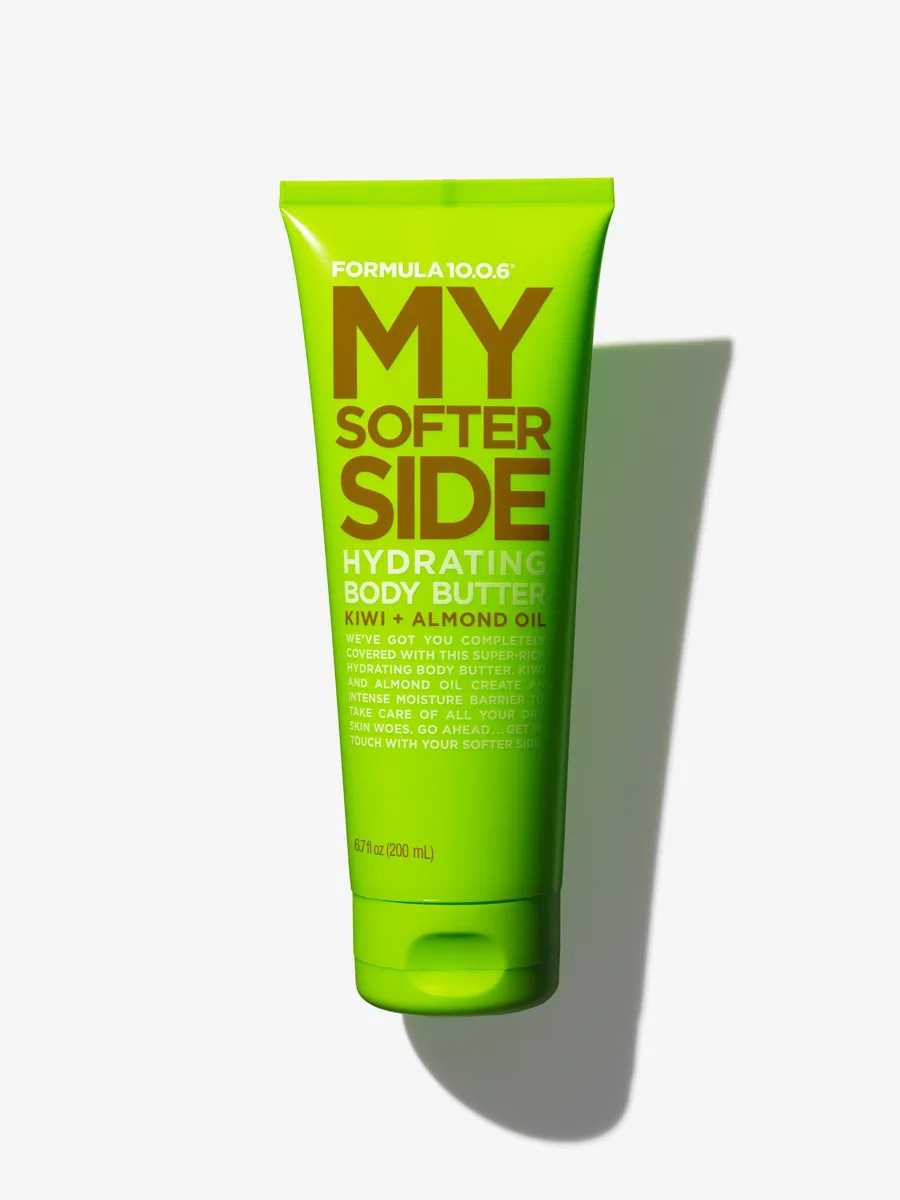
It stacks five butters, cocoa, shea, cupuacu, murumuru and babassu, on top of almond, kiwi, tamanu and coconut oils in a tube that costs eight dollars, which is a lipid roster more typical of indie 'clean' body butters at three times the price. The trick is a fatty-alcohol emulsion with polysorbate 60 that keeps all that fat spreading like a lotion instead of a balm.
A genuinely rich body butter for eight dollars, built on sweet almond oil, cocoa and shea butters and a supporting cast of Amazonian butters, emulsified so it spreads like a lotion and absorbs in a couple of minutes. It softens dry shins, elbows and heels quickly and holds through the day; the almond-monoi fragrance and the oil load make it a poor match for reactive, nut-allergic or breakout-prone skin.
This assessment carries medium confidence for a specific reason: the product has six years of retail distribution behind it but only a modest scatter of ratings across Target, Walmart and Kroger, so the score relies partly on the very well-documented behaviour of almond-cocoa-shea emulsions and partly on that limited but consistently positive feedback.
The case for it
Cautions: fragrance.
What would change this: A declared concentration would move this to a firmer reading of the dose.
Same rule for everyone. “Good choice” is the verdict on 9,564 of 45,024 concern verdicts across the catalog; rule R5 decided 9,072 of them. As of September 25, 2026, engine 5.1.1.
Brand or formulator? Disclose a concentration or correct a fact →
The studies behind the evidence row
Also listed for Winter Skin, Rough Texture and Dehydration — the actives here (Cocoa Butter, Cupuacu Butter, Plant & Seed Oils, Shea Butter) are in our research queue for those concerns; there is no verdict until their evidence rows are written. That is a gap in our table, not a mark against the product.
As a body productNot judged: what a body product is for — real substance, not just slip, realistic to use daily — cannot yet be measured from the ingredient list (only fragrance load can).
A verdict is DermApproved’s assessment of how well a product’s ingredients fit a concern — never a claim about what the product treats. Evidence dots and collected reviews sit beside it and are never blended in. Rules 0.5.1 · evidence table ev-2026.09-r228 · how we decide
Read the back of this tube without looking at the front and you would guess the price wrong by a factor of four. Cocoa butter, shea, cupuacu, murumuru, babassu, sweet almond, kiwi seed, tamanu and coconut oils, allantoin, vitamin E: that is the lipid roster of the whipped body butters sold in glass jars at boutique prices, the ones whose labels say Amazonian and cold-pressed. My Softer Side is the same shopping list in a bright green squeeze tube from a drugstore mask brand, and it costs eight dollars. Working out where the difference comes from tells you most of what you need to know about the product.
Formula 10.0.6 launched it in early 2019, when the brand that had spent a decade selling pun-named peel-off masks decided the same fruit-and-joke formula would sell in the shower. My Softer Side was the moisturizing step of that first body collection, alongside a scrub, a wash and a dry oil, and it has stayed on Target, Walmart and Kroger shelves ever since, largely unchanged from a formula coded to late 2017.
The structure of the formula is what makes it work. Water, then cetearyl and cetyl alcohol, then sweet almond oil in fourth place, glycerin, and a light caprylic/capric triglyceride. That opening is a fatty-alcohol emulsion, the same architecture as a classic pharmacy cream, and it is the reason a product carrying five butters spreads like a lotion instead of dragging like a balm. Cocoa butter and shea follow, then coconut oil, and only after the preservative do the label's stars appear: kiwi seed oil, then allantoin, tamanu, monoi flower extract, babassu, cupuacu, murumuru and vitamin E. The order matters. The almond oil and the two big butters are doing the heavy lifting; the kiwi on the front of the tube is a small omega-3 flourish, and the Amazonian trio are present in the quantities that let a brand list them rather than the quantities that change how a cream behaves.
None of that is a criticism, because the heavy lifters are good ones. Sweet almond is an oleic-rich oil that sinks in readily and gives the cream its slip. Cocoa butter is the high-melting fat that lets the film firm up on the skin and hold water on the shins for hours. Shea brings the softer, triterpene-rich fraction that has some genuine evidence for calming rough, irritated skin. Glycerin pulls water in, the butters keep it there, and allantoin makes the whole thing feel kinder on skin that has been over-washed or wind-bitten. That is the entire mechanism of a good emollient and this tube has all of it.
In use it is a dense, whipped-feeling cream that needs a second of warmth from the palms to move, then melts into a brief oily glide and settles, over a minute or two, into a soft, faintly cushioned finish that does not transfer to clothes. The scent is sweet almond, marzipan-adjacent, with a tropical-flower edge from the monoi, and it is a fragranced product in the honest sense: you will notice it as it absorbs and faintly afterward. On towel-damp skin straight out of the shower it does its best work, the butters trapping the water still on the surface. Rough elbows, knees and heels smooth out within a week, and the effect on shins lasts through a working day, which is the practical test most cheap body creams fail.
So where does the money go, or rather not go? Into the package, first: a plastic tube rather than a glass jar, and a small one at 200 millilitres. Into the absence of any story about sourcing, cold-pressing or the community that harvested the murumuru. Into the doses, second: the exotic butters are here as supporting players rather than the base, and the base is almond, cocoa and shea, all of them inexpensive, all of them effective. And into the preservation and emulsification, which use ordinary, well-proven materials, phenoxyethanol, polysorbate 60, a polyacrylamide thickener, rather than the more fashionable alternatives boutique brands pay extra to list. You are not getting a lesser cream; you are getting the same category of cream without the storytelling and without the jar.
What you are also getting is the compromises of a scented, oil-heavy body product, and they are worth stating plainly. The fragrance and the monoi extract are the ingredients most likely to bother eczema-prone or reactive skin, and during a flare a fragrance-free emollient is the better choice. Sweet almond oil in fourth place is a consideration for anyone with a serious tree-nut allergy, even though refined oil rarely causes trouble. The coconut oil, cocoa butter and almond oil that make the cream so good on legs are precisely what breakout-prone chests, backs and faces tend to dislike, and the polysorbate and fatty esters put it well outside fungal-acne-safe territory. It is a body butter for dry limbs, and it should be kept to them.
The review trail is modest for a product six years into distribution, a few dozen retailer ratings that are strongly positive and say the same things: rich but not greasy, lovely almond scent, skin stays soft all day. The complaints, where they exist, are the mirror image, too rich for oily skin in summer and too scented for the sensitive. Nothing in the feedback contradicts what the ingredient list predicts.
At eight dollars for 200 millilitres, with no larger size and no smaller one, it lasts four to six weeks of daily full-body use, and that is very good value for a cream this lipid-rich. It is the tube to buy for winter shins, post-shower arms and cracked heels under socks, for anyone whose skin is dry rather than reactive and who would rather spend the difference between this and the jar on something else. If your skin flares at fragrance, if nuts are a problem, or if the body skin in question breaks out, the same eight dollars belongs on a plainer, fragrance-free cream.
The hero actives that drive this product's performance.
| Ingredient | Function | Evidence |
|---|---|---|
| Sweet Almond Oil | Fourth on the list and the dominant lipid, an oleic-rich oil that gives the butter its slip and most of its emollience. It is the reason a formula with five butters and oils behind it still spreads like a lotion, and it carries the faint marzipan note that reads as the product's almond scent. | Not yet assessed |
| Cocoa Butter | The first of the solid butters, listed ahead of the shea, supplying the high-melting saturated fats that let the cream firm up on skin and hold moisture on shins and elbows for hours. It is the structural reason the tube can call itself a body butter rather than a lotion. | Not yet assessed |
| Shea Butter | Follows the cocoa butter as the softer, lower-melting partner, adding the unsaponifiable triterpenes that give shea its reputation for calming rough, irritated skin. With cocoa butter it forms a two-butter occlusive layer that the thinner almond and kiwi oils keep from feeling waxy. | Established mechanism for Dryness · established mechanism |
| Kiwi Seed Oil | The label's headline ingredient, though it sits twelfth, behind the preservative. It is one of the richest plant sources of alpha-linolenic acid and is included as a small omega-3 top-up to the linoleic-rich almond, more a point of difference on the tube than a load-bearing component of the formula. | Not yet assessed |
| Cupuacu Seed Butter | One of a trio of Amazonian butters, with murumuru and babassu, added low in the list to round out the lipid profile. Cupuacu is notable for how much water it can hold, and even in a small dose it helps the cream feel hydrating rather than purely greasy as it sets. | Not yet assessed |
Ingredient standings describe the active at treatment-level doses and vehicles; this product's own condition grades weigh its actual formula.
Water, Cetearyl Alcohol, Cetyl Alcohol, Prunus Amygdalus Dulcis (Sweet Almond) Oil, Glycerin, Caprylic/Capric Triglyceride, Polysorbate 60, Theobroma Cacao (Cocoa) Seed Butter, Butyrospermum Parkii (Shea Butter), Cocos Nucifera (Coconut) Oil, Phenoxyethanol, Actinidia Chinensis (Kiwi) Seed Oil, Caprylyl Glycol, Allantoin, Calophyllum Tacamahaca (Tamanu) Seed Oil, Gardenia Tahitensis (Monoi) Flower Extract, Orbignya Oleifera (Babassu) Seed Oil, Theobroma Grandiflorum (Cupuacu) Seed Butter, Astrocaryum Murumuru Seed Butter, Tocopherol, Polyacrylamide, C13-14 Isoparaffin, Fragrance, Laureth-7
moisturizer
AM & PM
Apply straight out of the shower onto towel-damp skin, when the butters can trap the water still sitting on the surface. It layers well over a leave-on body acid or urea lotion once that has absorbed, and it is the natural last step after the brand's own body wash and scrub. Keep it off the face and chest if you break out easily.
Skin feels soft and looks more even within minutes of the first application, and the effect lasts most of a day on shins and arms. Rough elbows, knees and heels smooth out over a week of daily use; it is a maintenance moisturizer, so the benefit holds only as long as the habit does.
The formula is a conventional oil-in-water emulsion whose effect on dry skin comes from the combination of a humectant, glycerin, with a layered set of occlusive and emollient lipids that reduce transepidermal water loss and replace the surface lipids that washing removes. What distinguishes it is the breadth of the lipid set rather than any single active. Sweet almond oil, the dominant oil, is predominantly oleic acid with a meaningful linoleic fraction; cocoa and shea butters supply stearic and oleic triglycerides that are semi-solid at skin temperature, which is what allows the film to persist for hours; kiwi seed oil adds alpha-linolenic acid and tamanu adds a distinctive resinous fraction, both at low doses. A 2017 review in the International Journal of Molecular Sciences surveyed the evidence on topical plant oils and concluded that several, including those rich in linoleic and oleic acids, show anti-inflammatory and barrier-repair effects in human and animal studies, with the balance of fatty acids influencing how an oil interacts with the stratum corneum; oleic-heavy oils such as almond penetrate and soften more readily, while linoleic-rich oils are more closely tied to barrier lipid synthesis. Shea butter's unsaponifiable fraction, rich in triterpene esters, has documented anti-inflammatory activity in experimental models, which supports its long use on rough and irritated skin. Allantoin is a well-established skin-soothing agent, and the fatty-alcohol emulsifiers themselves, cetearyl and cetyl alcohol, are non-irritating structuring agents that also contribute to the film. The counterweights are the added fragrance and the monoi flower extract, both potential contact sensitizers, and the comedogenic potential of coconut oil, cocoa butter and almond oil on follicle-dense skin, which is why the product is best understood as an effective emollient for limbs rather than a whole-body or facial moisturizer.
For ordinary xerosis of the limbs, the advice from dermatology is consistent: a cream or ointment rather than a thin lotion, applied to damp skin after bathing, every day. A butter-based emulsion like this satisfies that guidance and its fatty-alcohol structure is the same one used in many pharmacy emollients, which is a point in its favour. The two reservations a clinician would raise are predictable. Fragrance is the most common cosmetic contact allergen, and patients with atopic dermatitis, hand eczema or a history of reactions are routinely steered to fragrance-free emollients, particularly during flares. And the oil profile, coconut oil, cocoa butter and almond oil, is comedogenic on the face, chest and back, so patients with truncal acne or Malassezia folliculitis are usually told to keep rich butters to the arms and legs. Tree-nut allergy is a smaller consideration, since refined almond oil is low in allergenic protein, but caution is reasonable for anyone with a serious history. For dry, intact skin on the limbs, a cheap emollient that people enjoy using enough to apply daily is exactly what most clinicians hope to see.
Use daily on clean skin, ideally within a few minutes of stepping out of the shower while the skin is still towel-damp. Squeeze a walnut-sized amount into the palms, rub them together briefly to soften the butter, then massage over arms, legs, elbows, knees and hands, adding more to rough patches. Allow a minute or two for the oils to absorb before dressing. For cracked heels, apply a thick layer at bedtime and cover with cotton socks. Keep it off the face and, if breakouts are an issue, off the chest and back. Stop if redness or itching develops, as the formula is fragranced.
Eight dollars for 200 millilitres of a cream carrying cocoa, shea, cupuacu, murumuru and babassu butters plus four plant oils is unusually good value; the same ingredient roster in a boutique jar routinely costs three or four times as much, and the difference is packaging, sourcing narrative and the dose of the exotic butters rather than the quality of the base. The catch is quantity: there is only the one tube size, and daily full-body use empties it in four to six weeks, so for someone moisturizing head to toe every day a larger, plainer tub may work out cheaper per month. Formula 10.0.6 has no brand premium to inflate the price, and the money is going into effective, inexpensive lipids. As a limb-and-heel body butter for dry skin it is a clear win on price.
People with dry, rough or winter-parched skin on the arms, legs, hands and feet who want a rich body butter that absorbs quickly and costs drugstore money. It is a natural choice for anyone who likes a soft almond scent and prefers a tube to a jar, and for anyone who has been paying boutique prices for the same list of butters.
Skin that is eczema-prone, fragrance-reactive or currently flaring should stick to a fragrance-free emollient, and anyone with a serious tree-nut allergy should avoid the almond oil. Oily body skin, humid climates and breakout-prone chests, backs or faces are all poor matches for a cream this rich in coconut oil and cocoa butter.
Ready to try Formula 10.0.6 My Softer Side?
Buy at Amazon ♥A thick, whipped-feeling cream that melts against warm skin into a slip of oil and sinks in over a minute or two, leaving a soft, faintly cushioned finish rather than a slick one.
A gentle sweet-almond note with a hint of tropical flower from the monoi, noticeable while it absorbs and faint on the skin afterward.
A bright green 200 ml squeeze tube with a flip cap, easier to dose and to travel with than the tubs most body butters come in.
Expect a dense cream that needs a moment of warmth to spread, then a brief oily glide before it settles into a soft, dry-touch skin feel. The almond scent is the first thing noticed; by the second or third day the smoother shins and elbows are.
Around four to six weeks of daily full-body use, or two to three months used on arms, legs and hands only.
fall winter
My Softer Side launched in early 2019 as part of Formula 10.0.6's first body-care collection, the moment the mask brand decided its pun-and-fruit formula could sell beyond the face. Its late-2017 formula code suggests it was developed a year or so before the line appeared, and it has stayed on the shelf largely unchanged since.
Formula 10.0.6 carries a 1933 heritage name but is in practice a 2010s drugstore mask brand that has grown a body-care line, stocked by Target, Walmart, Kroger and its own store. It formulates with conventional, widely documented cosmetic ingredients and does not commission clinical testing of its products.
Kiwi oil is the ingredient doing the work in this body butter.
Kiwi seed oil sits twelfth on the list, after the preservative, so it is a small addition. The moisturizing comes from sweet almond oil in fourth place and the cocoa and shea butters behind it; the kiwi is a nice omega-3 flourish and a marketing hook, not the engine.
A body butter is too heavy to use every day.
This one is emulsified with fatty alcohols and a light triglyceride, so it spreads and absorbs like a rich lotion rather than a solid balm. On dry skin daily use is exactly how it works best; the only people who should ration it are those with oily or breakout-prone body skin.
Less than its butter count suggests. The formula is a fatty-alcohol emulsion with a light triglyceride, so it melts into a brief oily slip and then absorbs over a minute or two to a soft, velvety finish. On very oily skin or in humid weather it can still feel like a lot; on dry skin it sits comfortably.
It is not designed for the face, and the coconut oil, cocoa butter and almond oil that make it so good on shins are exactly the ingredients acne-prone facial skin tends to dislike. Dry, non-breakout-prone skin can get away with it in a pinch, but a facial moisturizer is the better tool.
Yes, sweet almond oil is the fourth ingredient. Refined almond oil has very low protein content and topical reactions are uncommon, but anyone with a significant tree-nut allergy should treat it with caution and consider a nut-free body cream instead.
A soft sweet-almond, slightly marzipan note with a faint tropical-flower edge from the monoi extract. It is a fragranced product, noticeable as it absorbs and faint afterward, and it is not the choice for fragrance-sensitive skin.
The butter-and-oil base is helpful for ordinary dry patches, and allantoin adds some comfort, but the added fragrance and floral extract are common triggers for eczema flares. During a flare a fragrance-free emollient is the safer choice; between flares many people tolerate it on the body.
It is a 6.7 fl oz (200 ml) squeeze tube, the only size sold. That is smaller than a typical body butter tub, but the cream is dense and a little covers a lot, so daily full-body use lasts about four to six weeks.
Recurring themes our editors read across retailer reviews of this product — summaries in our words, not quotations, and not a substitute for your own patch test.
Rich but absorbs quickly without greasiness
Soft almond scent that is not overpowering
Skin stays moisturized for hours
Too rich for oily or humid-climate skin
Fragrance is not for the sensitive
Tube is smaller than a typical body butter tub