Industry & Trends News
Skin Flooding and the Great Barrier Obsession of 2026
Half a genuine correction to the acid-everything era, half a new excuse to sell you five products where two would do.
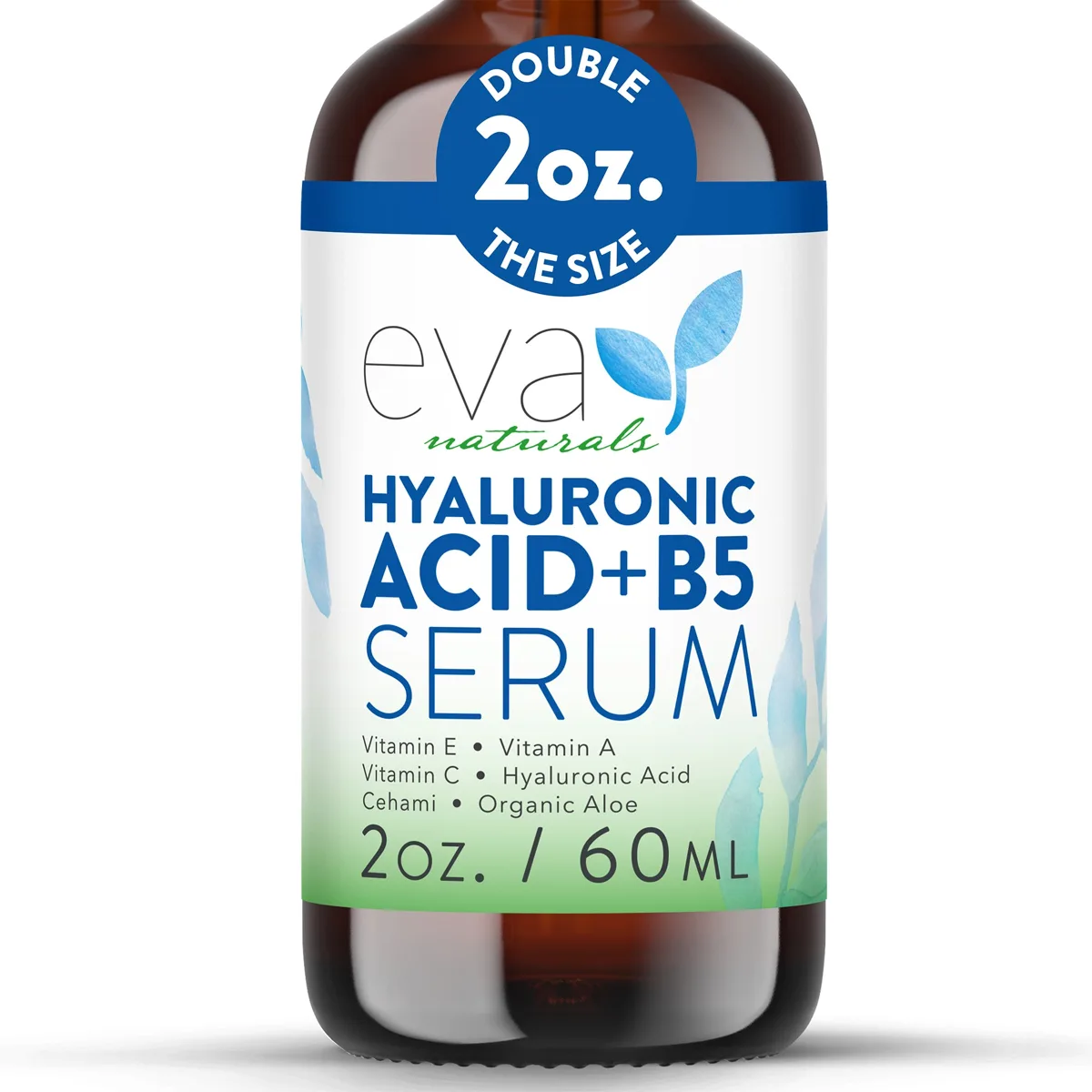
Most budget hyaluronic serums are water, hyaluronate and a preservative. This one puts panthenol above the hyaluronate, adds an algae-and-pullulan film-former for a temporary tightening effect, and wraps it in organic aloe juice rather than plain water, which makes it a better post-retinoid soother than most in its price bracket. It is also the rare Eva Naturals serum where the hyaluronic acid on the label is really hyaluronic acid.
Eva Naturals' better hyaluronic serum: real sodium hyaluronate under a generous dose of panthenol in a fragrance-free aloe gel, 60ml for fifteen dollars. It plumps on contact, soothes a barrier roughed up by retinoids or acids, and asks nothing of sensitive skin. The vitamin complex is decoration and the trace retinyl palmitate is a strange thing to find in a hydrator, but neither spoils it.
The case for it
Same rule for everyone. “Good choice” is the verdict on 9,564 of 45,024 concern verdicts across the catalog; rule R5 decided 9,072 of them. As of September 25, 2026, engine 5.1.1.
Brand or formulator? Disclose a concentration or correct a fact →
The studies behind the evidence row
The case for it
What would change this: A researched evidence row for the lead active would replace this with a verdict.
Same rule for everyone. “Supporting role” is the verdict on 8,197 of 45,024 concern verdicts across the catalog; rule R8 decided 4,250 of them. As of September 25, 2026, engine 5.1.1.
Brand or formulator? Disclose a concentration or correct a fact →
The case for it
What would change this: Guideline or regulatory standing for the active on this concern would move this from a promising bet to a recommendation.
Same rule for everyone. “Promising” is the verdict on 7,858 of 45,024 concern verdicts across the catalog; rule R9p decided 7,858 of them. As of September 25, 2026, engine 5.1.1.
Brand or formulator? Disclose a concentration or correct a fact →
The studies behind the evidence row
A verdict is DermApproved’s assessment of how well a product’s ingredients fit a concern — never a claim about what the product treats. Evidence dots and collected reviews sit beside it and are never blended in. Rules 0.5.1 · evidence table ev-2026.09-r228 · how we decide
Read this label in order and something quietly interesting happens: the vitamin B5 that gets second billing in the name sits third on the ingredient list, and the hyaluronic acid that gets top billing sits fifth. Aloe juice, glycerin, panthenol, a liposomal vitamin blend, and only then sodium hyaluronate. That ordering is not a flaw. It is the reason this serum works better than a plain hyaluronic gel for the people most likely to buy it, because panthenol is the ingredient with the evidence for repairing a stressed barrier, and hyaluronate is the one with the evidence for looking good in the mirror. Eva Naturals has, perhaps without meaning to, built a panthenol serum with hyaluronic acid in it, and it should be judged as one.
The brand needed this product. Its original Hyaluronic Acid Serum, which has been on Amazon for the better part of a decade, carries DMAE, two peptides, lavender oil, a listed fragrance and a colourant alongside its hyaluronic acid, which made it a poor fit for the sensitive, dry, barrier-damaged skin that hyaluronic serums are mostly bought for. This version, launched at the end of 2021, strips all of that out. There is no fragrance, no essential oil, no alcohol, no colourant, no oil of any kind. What remains is organic aloe juice as the base instead of water, glycerin, panthenol, a vitamin blend, sodium hyaluronate, xanthan gum, a microalgae-and-pullulan film-former, an Australian daisy extract called cehami, a chelator, and a gentle preservative system. For a sensitive face it is one of the least provocative ingredient lists at this price.
On skin the experience is what a good humectant gel should be. One pump is more than enough for the face and neck; the aloe gives it more slip than a pure hyaluronic solution, it sinks in within a minute, and skin immediately looks plumper and feels smoother. Then something slightly unusual happens: a faint tightening as the film sets. That is the nannochloropsis and pullulan blend, a well-known cosmetic tightener that contracts a little as it dries, and it is where the firming language in the marketing comes from. It is a surface effect, gone with the next wash, and it is pleasant rather than transformative. Followed by a moisturizer, which it should always be, the whole thing disappears into a soft, hydrated finish.
The panthenol is what makes the serum worth having beyond that first-minute plumpness. Dexpanthenol has decades of clinical work behind it for improving stratum corneum hydration, reducing water loss and accelerating barrier recovery after irritation, and here it is dosed high on the list rather than sprinkled at the end. The practical consequence is that this is a genuinely useful layer on nights when a retinoid or an exfoliating acid has left skin feeling raw: the hyaluronate and glycerin bring water, the panthenol helps the barrier hold onto it, and the aloe and cehami take some heat out. Reviewers describe exactly that, with less stinging from other products after a week or two being a recurring theme among four and a half thousand Amazon ratings.
The vitamin complex is the part to be honest about. It is a liposomal blend of sorbitol, lecithin, vitamin E acetate, two glyceryl fatty esters, retinyl palmitate and sodium ascorbyl phosphate, the same pre-mixed ingredient Eva Naturals uses across several serums, and it exists so the label can list vitamins A, C and E. At this level none of the three does anything measurable. The retinyl palmitate deserves a specific mention because it is an odd thing to find in a product marketed as a gentle hydrator: it is the mildest retinoid ester at a trace dose, harmless in practice, but it means a serum that would otherwise be a textbook pregnancy-safe choice now carries a vitamin A derivative, and someone avoiding all retinoids has to look elsewhere. It is the kind of inclusion a formulator does to fill a label, not to help a face.
The complaints are small and consistent. A minority in very dry climates find the gel tacky or tight if they do not follow it with a cream, which is a property of every humectant serum and is solved by sealing it in. The pump spits as the bottle runs low. And a few people, fairly, feel the retinol on the label sits awkwardly with the hydrating pitch. Nobody reports stinging, breakouts or fragrance headaches, which for a fifteen-dollar serum is notable.
At $14.99 for 60ml direct, and often more from Amazon sellers, one pump twice a day lasts about three months, putting it at five dollars a month for a hyaluronate-and-panthenol gel that also doubles as a post-active soother. The brand's larger review base and decade of sales vouch for consistency rather than clinical proof, but the two lead humectants do not need the brand's proof; they have their own.
Buy it, then, for dry, normal or sensitive skin that wants plumping without perfume, for anyone using retinoids or acids who needs a buffer layer, and for anyone who tried the brand's original hyaluronic serum and found the lavender and DMAE too much. Skip it only if a trace of retinyl palmitate is a hard no. And read the label the right way round: this is a panthenol serum, and a good one.
The hero actives that drive this product's performance.
| Ingredient | Function | Evidence |
|---|---|---|
| Sodium Hyaluronate | Fifth on the label and, unlike the seed gums the brand labels as botanical hyaluronic acid elsewhere, the genuine salt. In an aloe-juice base with glycerin above it, it forms the water-holding surface film that gives this thin gel its instant plumping, with the panthenol underneath doing the slower barrier work. | Established mechanism for Dehydration · established mechanism |
| DL-Panthenol (Vitamin B5) | Third on the list, ahead of the hyaluronate, which makes this as much a panthenol serum as a hyaluronic one. It converts to pantothenic acid in skin, draws water like glycerin, and has trial evidence for speeding barrier recovery and calming irritation, so it is the ingredient that makes the serum useful after retinoids or acids rather than just cosmetic. | Established mechanism for Dehydration · established mechanism |
| Nannochloropsis Oculata Extract (and) Pullulan | A microalgae-and-polysaccharide blend sold to formulators as an instant tightening agent; the pullulan forms a film that contracts slightly on drying, which is the source of the firmed feel the marketing describes. It is a surface effect that lasts until the next wash and pairs neatly with the hyaluronate's plumping. | Not yet assessed |
| Retinyl Palmitate (in liposomal vitamin complex) | Arrives as one part of a liposomal multivitamin blend alongside vitamin E acetate and sodium ascorbyl phosphate. It is a trace of the gentlest retinoid ester, too little to renew skin and just enough to put a vitamin A derivative in what is otherwise an unusually pregnancy-friendly hydrator. | Not yet assessed |
| Centipeda Cunninghamii (Cehami) Extract | An Australian daisy extract with laboratory data for anti-inflammatory and antioxidant activity, listed after the tightening blend and just before the chelator. It is the soothing note in the formula and the reason the brand talks about calming, though at this level its effect is modest. | Not yet assessed |
Ingredient standings describe the active at treatment-level doses and vehicles; this product's own condition grades weigh its actual formula.
Aloe Barbadensis Leaf Juice, Glycerin, DL-Panthenol, Aqua (and) Sorbitol (and) Lecithin (and) Tocopheryl Acetate (and) Glyceryl Linoleate (and) Glyceryl Linolenate (and) Retinyl Palmitate (and) Sodium Ascorbyl Phosphate, Sodium Hyaluronate, Xanthan Gum, Nannochloropsis Oculata Extract (and) Pullulan, Centipeda Cunninghamii (Cehami) Extract, Disodium EDTA, Gluconolactone (and) Sodium Benzoate, Phenoxyethanol
serum
AM & PM
Apply to damp skin straight after cleansing so the hyaluronate and panthenol have water to hold, then seal with a moisturizer within a minute or two; on its own in dry air the humectants can pull the other way. It goes under any active without conflict and is a good buffer layer between a retinoid and the skin on nights when irritation is a worry.
Plumper, smoother-looking skin within minutes of the first use and a slight tightened feel as the algae film dries. The panthenol's effect on a compromised barrier shows over one to two weeks of twice-daily use, with less stinging from other products as the main sign.
The two humectants that lead this formula are among the best-documented in topical dermatology, and their pairing has a rationale that goes beyond marketing. Dexpanthenol, the alcohol form of vitamin B5 listed here as DL-panthenol, converts to pantothenic acid in the skin and acts both as a hygroscopic humectant and as a modulator of barrier repair. A human in vivo study published in Arzneimittelforschung in 2000 applied dexpanthenol to skin for seven days and measured a significant rise in stratum corneum hydration together with a fall in transepidermal water loss compared with vehicle, and a 2017 review in the Journal of Dermatological Treatment marking seventy years of topical dexpanthenol summarised a body of controlled work showing accelerated barrier recovery after surfactant and other irritant challenge, reduced inflammation and improved wound healing, with an excellent tolerability record. Sodium hyaluronate, the salt of hyaluronic acid, binds many times its weight in water and, at the molecular weights typical of cosmetic use, forms a hydrating film at the surface that smooths and plumps the outermost skin within minutes; its effect is immediate and largely superficial, which is why the panthenol underneath matters for anything lasting. Aloe barbadensis leaf juice as the base contributes acemannan polysaccharides with modest humectant and anti-inflammatory properties, and glycerin second on the list is the workhorse humectant with the deepest evidence base of all. The nannochloropsis oculata extract and pullulan blend is a commercial film-former with supplier data showing an instant, measurable but temporary increase in skin firmness as the polysaccharide film contracts on drying; independent clinical data are sparse and the effect should be understood as cosmetic. Centipeda cunninghamii extract has laboratory evidence for anti-inflammatory and antioxidant activity but no controlled trials at cosmetic doses. The liposomal vitamin complex of tocopheryl acetate, retinyl palmitate and sodium ascorbyl phosphate is present at levels that contribute label claims rather than pharmacology; the retinyl palmitate in particular is far below any concentration shown to affect skin. The evidence therefore supports this serum as an effective surface hydrator with a genuine barrier-support component from panthenol, and nothing more ambitious than that.
Panthenol and hyaluronate are the two humectants dermatologists reach for most readily when advising patients whose barrier has been compromised by a retinoid, a course of acids or a procedure, and a fragrance-free gel that leads with both is the kind of product that fits comfortably into standard clinical guidance. Its role in a regimen would be described as a supporting one: applied to damp skin and sealed with an emollient, it improves surface hydration and, through the panthenol, helps the barrier recover faster, which in practice means less stinging from the active being used alongside it. Clinicians generally advise patients not to expect a hyaluronic serum to treat dryness on its own, since humectants without an occlusive can lose water to dry air, and that caveat applies here. The one ingredient a dermatologist would flag is the retinyl palmitate in the vitamin blend; the dose is trivial and not a safety concern for the general population, but for a pregnant patient specifically avoiding vitamin A derivatives it would be reason to suggest a different hydrator. The algae film-former's tightening effect would be explained as temporary and cosmetic. Overall the formula is well suited to sensitive, dry and barrier-stressed skin and unlikely to provoke a reaction.
Straight after washing, while the face is still slightly damp, press one pump of the gel over the face and neck; the aloe base gives it enough slip that one pump covers everything. Let it settle for about a minute, during which the algae film will produce a faint tightening, and follow with a moisturizer to seal the water in, which is the step that stops humectant serums feeling tacky in dry air. Use it morning and night, with sunscreen after the moisturizer in the morning. On nights when a retinoid or an exfoliating acid is used, apply that first, let it dry, then this serum, then the cream; the panthenol makes it a good buffer layer. It needs no patch test for most people and no ramp-up. Keep the amber bottle away from heat and expect the pump to need a firmer press as it empties.
Fifteen dollars for 60ml of a hyaluronate-and-panthenol serum is at the low end of the category, and the price per millilitre falls well below most 30ml hyaluronic serums even before the panthenol is counted. One pump twice daily lasts about three months, so the monthly cost is roughly five dollars, and the bottle also covers the job of a post-active soothing layer that many people buy a separate product for. What the money does not buy is precision: the hyaluronate concentration and molecular weight are undisclosed, and the vitamin complex is padding. Amazon sellers frequently list it several dollars above the brand's own price, so buying direct improves the value further. Eva Naturals brings a large review base and no clinical data, but the two lead ingredients carry their own evidence, which makes this one of the safer budget buys in the brand's range.
Anyone with dry, normal or sensitive skin who wants a fragrance-free hydrating serum that plumps immediately and supports barrier repair through panthenol, and especially people using retinoids or acids who need a gentle layer to calm irritation. Also a clear upgrade for anyone who found the brand's original hyaluronic serum too fragranced.
Anyone pregnant or otherwise avoiding all vitamin A derivatives, because of the trace retinyl palmitate in the vitamin blend, and anyone expecting a hydrating serum to replace a moisturizer in a dry climate, which this humectant gel cannot do on its own.
Ready to try Eva Naturals Hyaluronic Acid with Vitamin B5 Serum?
Buy at Amazon ♥A clear, thin aloe gel with more slip than a pure hyaluronic solution, sinking in within a minute and leaving a faint, smooth, almost tightened surface as the algae film sets.
Nothing added and nothing to notice beyond a whisper of green aloe from the bottle that vanishes on skin.
A 60ml amber glass bottle with a black treatment pump, the blue-and-green label listing vitamins E, A and C, hyaluronic acid, cehami and organic aloe; the pump suits the thin gel but can sputter as the bottle empties.
The first pump feels cool and slightly slippery from the aloe, spreads over the whole face with room to spare, and within a minute skin looks plumper and feels smoother, with a faint tightening from the algae extract. There is no tingle and nothing to adjust to. People with very dry skin sometimes notice a tacky or tight feel if a moisturizer does not follow, which is the humectants asking to be sealed in.
Around three months at one pump twice daily, since the 60ml bottle is generous for a serum this thin.
All Year
Eva Naturals launched this serum around the end of 2021 as a plainer, fragrance-free companion to its original Hyaluronic Acid Serum, which had accumulated a decade of reviews and a formula full of DMAE, peptides, lavender oil and colourant. The new version stripped all that out, promoted vitamin B5 to the name, and kept the brand's signature 60ml bottle at a budget price.
Eva Naturals is a family-run Texas brand selling aloe-based botanical serums through Amazon since 2013, with a large and loyal review base and no published clinical work. This serum is its second hyaluronic acid product, launched in late 2021 as a plainer, fragrance-free alternative to the brand's original.
Hyaluronic acid pulls water up from deep in the skin and dries it out.
In very dry air a humectant can lose water to the atmosphere, which is why this gel feels tight on some faces in winter. Applying it to damp skin and sealing it with a moisturizer within a minute or two prevents that entirely.
The firming this serum gives is the vitamins rebuilding collagen.
The tightened feel comes from a pullulan and microalgae film that contracts slightly as it dries, an effect that lasts until the face is washed. The vitamin complex is at a trace and does not remodel anything.
A hydrating serum has nothing in it that matters for pregnancy.
This one carries a trace of retinyl palmitate inside its vitamin blend. The dose is very small and most clinicians would not be concerned, but anyone avoiding all vitamin A derivatives should know it is there.
The original Hyaluronic Acid Serum contains DMAE, peptides, lavender oil, fragrance and a colourant alongside the hyaluronic acid. This Vitamin B5 version is fragrance-free and colourant-free, puts panthenol third on the label, and adds an algae film-former, making it the gentler choice for sensitive or barrier-damaged skin.
It is one of the least likely serums in its price range to sting: no fragrance, no alcohol, no essential oils, and a base of aloe juice, glycerin and panthenol. The only ingredient worth noting is a trace of retinyl palmitate in the vitamin blend, which is far too low to irritate.
Yes. Sodium hyaluronate is the fifth ingredient, which distinguishes it from several other Eva Naturals serums that list a seed gum as botanical hyaluronic acid. The brand does not disclose the concentration or molecular weight.
It is a good partner for it. Apply the retinoid first and let it dry, then this gel, then moisturizer; the panthenol has trial evidence for speeding barrier recovery and reducing irritation, and there is nothing acidic in the formula to interfere with the retinoid.
Two reasons. The nannochloropsis and pullulan blend forms a film that tightens slightly as it dries, which is by design, and in dry air the humectants can feel tacky if left unsealed. Using it on damp skin and following with a moisturizer within a minute or two solves the second.
Almost everything in it is, but the liposomal vitamin complex includes a trace of retinyl palmitate. Most obstetric dermatologists consider that amount negligible; anyone avoiding all vitamin A derivatives while pregnant should choose a hyaluronic serum without it.
Recurring themes our editors read across retailer reviews of this product — summaries in our words, not quotations, and not a substitute for your own patch test.
Instant plumping and softness
No fragrance, no sting on sensitive skin
Calms tightness after retinol or acids
Large bottle for the price
Absorbs quickly under moisturizer
Slightly tacky if not followed by moisturizer
Tight or drying feel in very dry climates
Pump can spit with the thin gel
Contains a trace of retinol despite the hydrating pitch