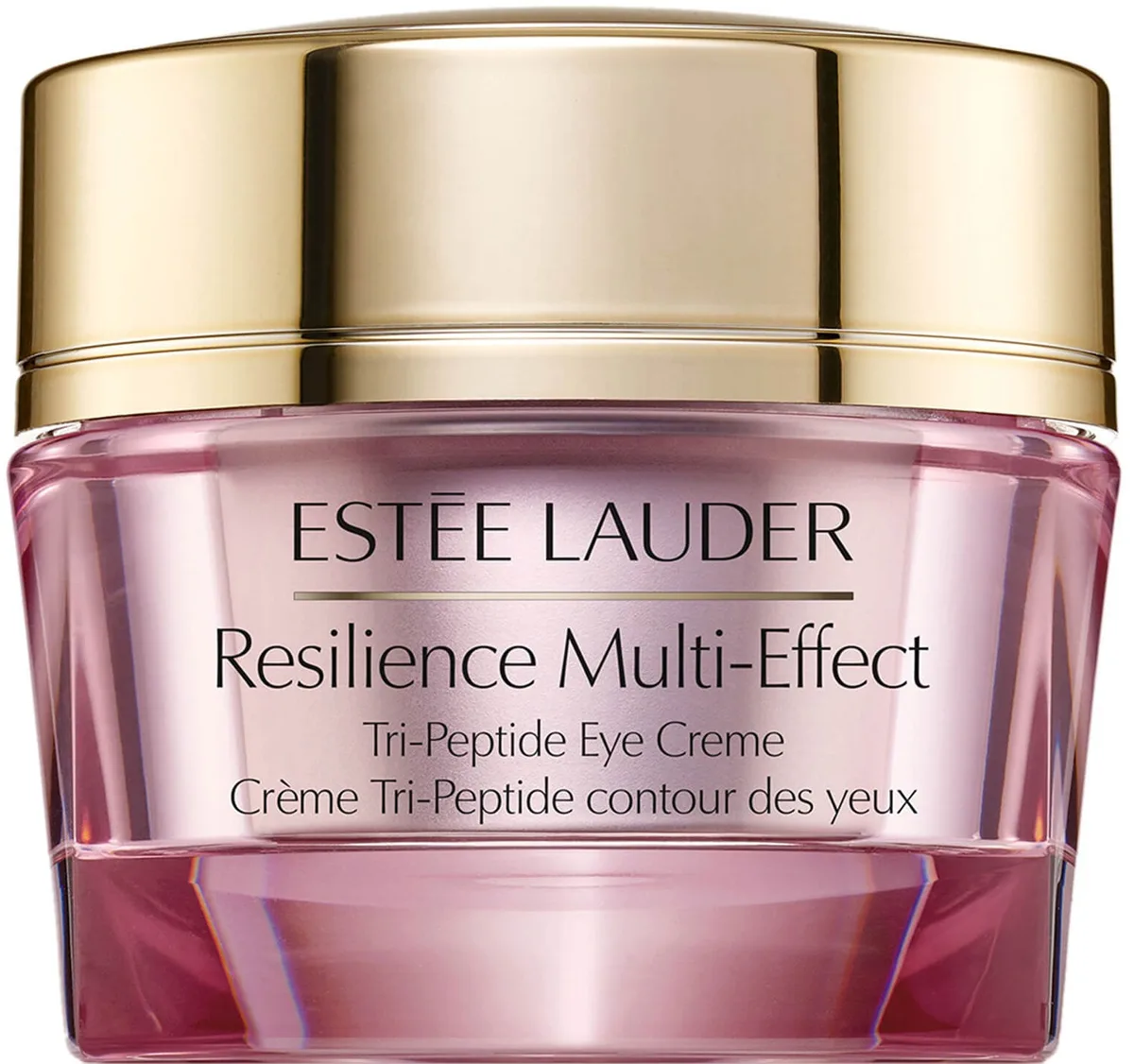
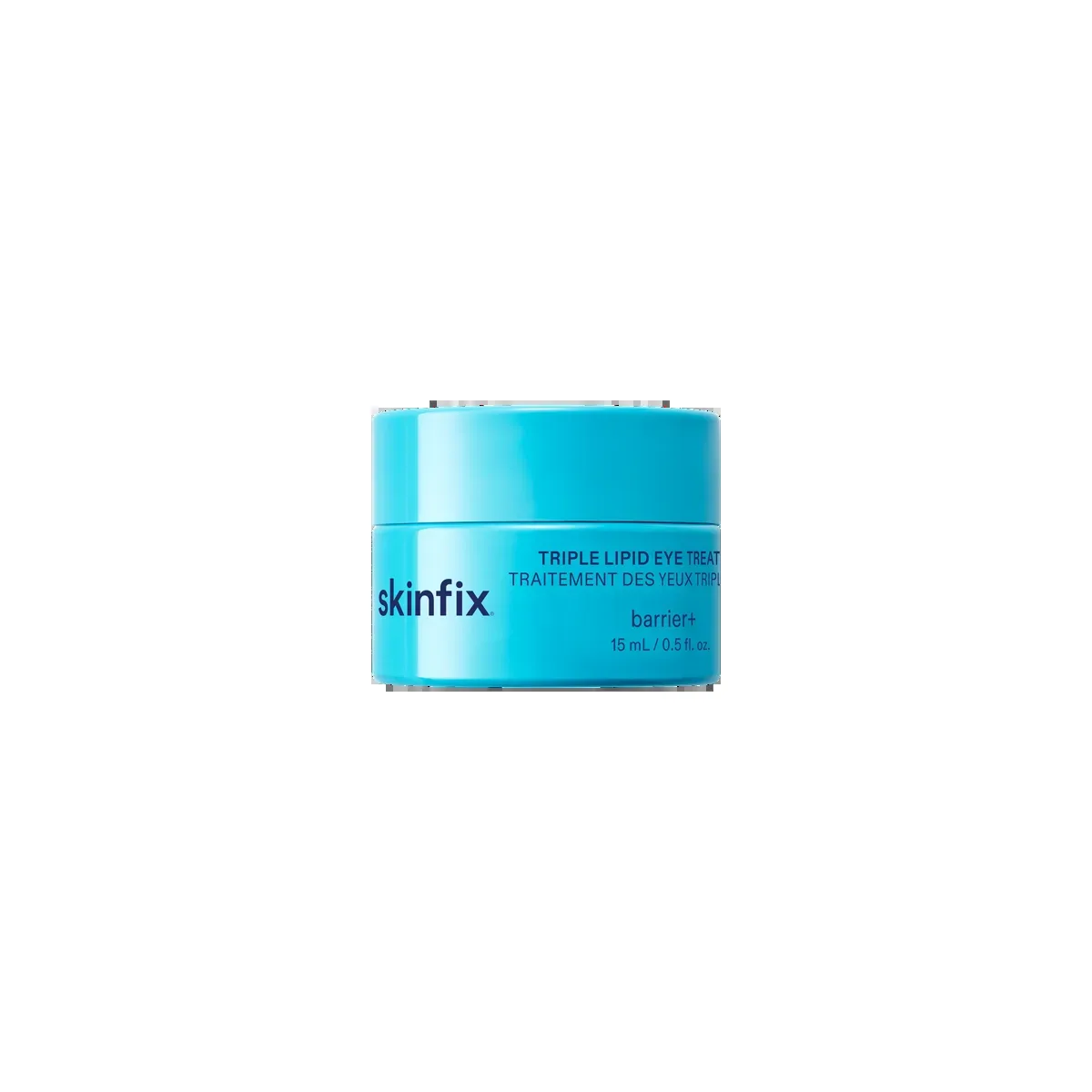
Rather than leaning on a single hero, it stacks a named tri-peptide trio with acetyl glucosamine, stabilized vitamin C, caffeine and soft-focus mineral pigments, so it works on two timelines at once — an instant blurred, de-puffed look and a slower firming play. The cushiony shea-and-avocado base is unusually rich for an eye treatment positioned around peptides.
A plush, multi-tasking prestige eye cream that earns its keep more through instant hydration, soft-focus brightening and reliable comfort than through dramatic firming. The named tri-peptide complex and stabilized vitamin C are genuine, but the small jar at a luxury price asks you to value the experience as much as the actives.
Promisingfor AgingIn your profileYou chose · Peptides has trial-level evidence for aging but no guideline or regulatory standing yet — promising, short of a recommendation; the other actives here are not yet assessed for it.Moderate evidenceGentleNo reviews collected yet
The case for it
Tri-Peptide Complex has trial-level evidence for this concern but no guideline or regulatory standing yet.
It is plausibly present at a working level, though the concentration is not declared.
The formula carries none of the triggers this concern is sensitive to.
What would change this: A declared concentration would move this to a firmer reading of the dose.
Same rule for everyone. “Promising” is the verdict on 7,858 of 45,024 concern verdicts across the catalog; rule R9p decided 7,858 of them.
Unchanged since September 5, 2026, engine 5.1.1.
R9p — 0.5.0: 'Unproven' beside three filled dots read as one question answered twice with opposite words (7,018 rows). The chip measures standing, the dots measure trial volume; where the row carries at least one RCT or a tier-2 source (moderate dots) and the active is present at a working level, the honest word is Promising. Unproven is reserved for plausible-standing rows with limited or weak evidence, or an under-dosed form. Same rank as Unproven — a bet either way; the dots order them. · the full register
Carrying active
Tri-Peptide Complex
Standing
plausible — trials support it
Form
plausible — studied range 0.0003%, from the trials on the row; needs leave-on contact
Tolerability
gentle
Row checked
against its sources on July 17, 2026 (evidence table ev-2026.09-r228)
Good choicefor DrynessIn your profileYou chose · Shea Butter is a reference standard by mechanism for dryness; this cream carries it.Moderate evidenceGentleNo reviews collected yet
The case for it
Shea Butter & Avocado Oil has trial-supported standing for this concern.
It is plausibly present at a working level, though the concentration is not declared.
The formula carries none of the triggers this concern is sensitive to.
What would change this: A declared concentration would move this to a firmer reading of the dose.
Same rule for everyone. “Good choice” is the verdict on 9,564 of 45,024 concern verdicts across the catalog; rule R5 decided 9,072 of them.
Unchanged since September 5, 2026, engine 5.1.1.
Supporting rolefor Dark CirclesIn your profileYou chose · Caffeine has early evidence for dark circles, and hydration of the periorbital area is the recognised companion to treating it — a reasonable supporting choice, short of a recommendation.Moderate evidenceGentleNo reviews collected yet
The case for it
Caffeine has early or mechanistic evidence for this concern, not trial-backed standing.
It is plausibly present at a working level, though the concentration is not declared.
The formula carries none of the triggers this concern is sensitive to.
What would change this: A declared concentration would move this to a firmer reading of the dose.
Same rule for everyone. “Supporting role” is the verdict on 8,197 of 45,024 concern verdicts across the catalog; rule R8a decided 1,489 of them.
Unchanged since September 5, 2026, engine 5.1.1.
R8a — A plausible-tier active in a category with a supportive job: the sentence names the active instead of saying nothing targets the concern (the AmLactin / CeraVe SA case for keratosis pilaris, where no guideline and single trials leave the keratolytics at early evidence). · the full register
Carrying active
Caffeine
Standing
plausible — trials support it
Form
plausible — studied range 1–3%, from the OTC monograph or label; needs leave-on contact
Tolerability
gentle
Row checked
against its sources on July 17, 2026 (evidence table ev-2026.09-r228)
Also listed for Dehydration — the actives here (Acetyl Glucosamine, Caffeine, Vitamin C, Peptides) are in our research queue for that concern; there is no verdict until their evidence rows are written. That is a gap in our table, not a mark against the product.
Does the jobDoes what a eye cream is for: safe for eye skin, targets a real eye concern. Not measured from the label: hydrates without heaviness, stays where it's put.
Where our review and the verdict differ. The review below was written on the formulation and the published trials; the verdicts above apply the stricter standing test in our methodology — an active earns a recommendation only with guideline or regulatory standing for the concern. Where the two disagree, the verdict is DermApproved’s position.
A verdict is DermApproved’s assessment of how well a product’s ingredients fit a concern — never a claim about what the product treats. Evidence dots and collected reviews sit beside it and are never blended in.
Rules 0.5.1 · evidence table ev-2026.09-r228 · how we decide
Assessment
Pros & Cons
Pros
✓ Rich, cushiony texture that hydrates dry under-eyes without tugging
✓ Named tri-peptide complex backed by acetyl glucosamine and vitamin C
✓ Instant soft-focus blur and de-puffing from mica and caffeine
✓ Sits smoothly under concealer without pilling
✓ No added fragrance and a short, gentle preservative system
✓ Backed by Estée Lauder's decades of in-house peptide research
Cons
✗ Steep prestige price for only half an ounce of product
✗ Jar packaging exposes peptides and vitamin C to air and light
✗ Firming results are subtle, not dramatic
✗ Rich base can feel heavy and risk milia for oily eye areas
✗ Long fruit-extract roster can provoke truly reactive eyes
Review
Full Review
Most eye creams sell you a single fantasy: depuffed mornings, or vanished lines, or banished shadows. This one quietly runs two clocks at once, and understanding that is the key to whether it's worth your money. The fast clock ticks the moment you pat it on — caffeine nudges down puffiness, soft-focus mica and a whisper of titanium dioxide and iron oxides blur the crepey shadow under your eye, and the cushiony shea-and-avocado base smooths everything into a satiny, faintly lit finish. The slow clock is the one Estée Lauder wants to talk about: a named tri-peptide complex, acetyl glucosamine, and a stabilized vitamin C derivative working over weeks to support firmness. Both clocks are real. Only one of them is dramatic, and it's not the one on the marketing copy.
Let's start with what's actually in the jar, because the ingredient list is more interesting than the average peptide eye cream. The peptide story is built on acetyl hexapeptide-8 — the molecule better known as Argireline — alongside trifluoroacetyl tripeptide-2 and a carnosine derivative for antioxidant backup. Acetyl hexapeptide-8 is the much-hyped 'topical Botox' peptide, and the honest read on it is that the published evidence shows a measurable but modest softening of expression-line depth with consistent use, hampered by the fact that the molecule struggles to penetrate skin in the first place. So it's not nothing, but it's also not an injection, and anyone framing it that way is selling. What I appreciate here is that the peptides aren't working alone. Acetyl glucosamine supports the skin's own hyaluronic-acid synthesis, sodium hyaluronate and a stack of humectants keep the thin orbital skin plump, and aminopropyl ascorbyl phosphate adds a gentle antioxidant, tone-evening layer. It's a thoughtfully assembled supporting cast rather than a one-trick jar.
The texture is where the prestige positioning genuinely justifies itself. This is a dense, warm-to-melt cream that feels expensive in the way good emollients do — it cushions without dragging, and the high-placed shea butter and avocado oil give it a richness most peptide eye creams skip in favor of a thin gel. If your under-eyes run dry, this is a pleasure. If they run oily or you're prone to milia in that zone, the same richness is a liability, and the isostearyl neopentanoate sitting fairly high won't help. The faint luminous veil it leaves is genuinely flattering under concealer, and it doesn't pill — a small but real win for anyone who's watched an eye cream roll into gummy little balls the second they touch makeup.
Now the honest limitations. The first is the long roster of fruit and botanical extracts — watermelon, lentil, apple, melon, chamomile, narcissus bulb — which sound lovely and photograph beautifully on a press release, but collectively raise the odds of a reaction in genuinely reactive eyes. Most people sail through; sensitive types should patch-test near, not on, the lash line first. The second is packaging: a frosted glass jar is gorgeous and also the worst possible vessel for a peptide-and-vitamin-C formula, since every open exposes light- and air-sensitive actives. A pump or airless tube would have protected the chemistry better; you're paying for the jar's looks at the actives' expense. The third is simply expectation management. The firming is subtle. If you come in expecting a visible lift, you'll be disappointed; if you come in wanting hydration, a smoother optical finish, and slow, gentle support, you'll be happy.
Which brings us to the money. At $56 for half an ounce, this is squarely prestige pricing, and the value math depends entirely on which clock you're buying. As a firming treatment judged against its actives alone, it's expensive — you can find Argireline and acetyl glucosamine in less ornate packaging for far less. As a complete experience — the texture, the instant blur, the reliable comfort, the no-pill finish, the Estée Lauder lab pedigree behind the formulation — it's a defensible splurge for someone who wants a prestige eye cream and will actually use it twice daily. The brand's nearly eight-decade history and serious in-house research mean this isn't a hollow luxury markup the way a brand-new indie charging the same would be; there's real formulation chops here. It's just priced for the franchise as much as the formula.
Who should reach for it? Someone with normal-to-dry, non-reactive under-eyes who wants a rich, hydrating, gently firming cream that makes concealer sit better and doesn't mind paying for the prestige tier. Who should keep walking? Anyone oily or milia-prone in the eye area, anyone with truly reactive skin who'd rather avoid a botanical-heavy formula, and anyone whose primary goal is dramatic, fast firming — no topical peptide cream, this one included, delivers that. Buy it for the comfort, the hydration, and the soft-focus payoff, and treat the firming as a slow, pleasant bonus rather than the headline. On those terms, it's a quietly good jar of cream that happens to wear a designer label.
Formula
Key Ingredients
The hero actives that drive this product's performance.
The named trio of signal and neuro-modulating peptides is the formula's headline act, paired here with acetyl glucosamine and ascorbyl phosphate so the peptides cue collagen-supporting activity while the surrounding humectants keep the thin eye-area skin plump enough to show it.
Sits mid-list as an amino-sugar that supports the skin's own hyaluronic acid production and gives the peptides a more hydrated, resilient substrate to work on in this firming-focused base.
A stable vitamin C derivative tucked low in the list to lend antioxidant and tone-evening support, rounding out the peptide story rather than acting as a standalone brightening dose at this position.
Provides the temporary de-puffing and vasoconstriction the under-eye benefits from, complementing the soft-focus mica and iron-oxide pigments that visually blur shadows on application.
The high-placed shea butter plus avocado oil and cholesterol build the rich emollient cushion that makes this read as a firming cream rather than a lightweight gel, sealing the peptides and humectants against the delicate orbital skin.
Established mechanismfor Dryness · established mechanism
Ingredient standings describe the active at treatment-level doses and
vehicles; this product's own condition grades weigh its actual formula.
Pat a rice-grain amount around the orbital bone after serums and before your face moisturizer. The mica gives a slight luminizing finish, so let it set a minute before concealer.
Results Timeline
A smoother, brighter, less-shadowed look right away from the pigments and caffeine. Peptide-driven firmness, if it materializes, tends to read over four to eight weeks of consistent twice-daily use.
Pairs Well With
Hydrating essencesVitamin C serumsBroad-spectrum sunscreen
The headline actives here are peptides, and the most relevant of them is acetyl hexapeptide-8, marketed as Argireline. A 2025 review in the International Journal of Molecular Sciences gathered the available evidence on this molecule and reached a usefully balanced conclusion: topically applied acetyl hexapeptide-8 can measurably reduce the depth of expression wrinkles and improve elasticity and hydration with consistent twice-daily use, with reported reductions in wrinkle depth around 20 to 30 percent over a few weeks in supplier-funded work — but its real-world ceiling is capped by poor skin permeability, since the peptide does not cross the stratum corneum efficiently on its own. That permeability caveat is exactly why a formula like this matters more than the ingredient label alone: the surrounding emollient base, humectants and penetration-friendly solvents (butylene glycol, hexanediol) are doing quiet work to give the peptides any chance of reaching living tissue. The second pillar is acetyl glucosamine, an amino sugar with reasonable evidence for supporting endogenous hyaluronic-acid synthesis and modestly evening pigmentation, which dovetails with the sodium hyaluronate and PCA-salt humectants to keep the thin orbital skin plump enough to display whatever firming the peptides contribute. Aminopropyl ascorbyl phosphate rounds it out as a stable vitamin C derivative offering antioxidant defense without the instability of L-ascorbic acid in a jar. The takeaway is that this is a credible, mechanistically sensible firming-and-hydration formula whose individual actives are well-characterized; what remains proprietary is how this specific combination performs in head-to-head clinical testing, since the supporting efficacy data is the brand's own rather than independently published.
Within clinical practice, peptide eye creams like this are generally framed as supportive rather than corrective — useful for hydration, comfort and the gradual softening of fine expression lines, but not a substitute for in-office treatments when a patient wants meaningful tightening or volume. Clinicians often note that the under-eye benefits patients perceive most quickly come from the humectants and light-diffusing pigments rather than the peptides themselves. A common piece of guidance is to apply eye products with a gentle patting motion along the orbital bone to avoid dragging the delicate skin, and to pair any firming-oriented routine with daily sunscreen, since UV exposure undoes far more collagen than any peptide can rebuild. For reactive eyes, dermatologists typically advise patch-testing botanical-rich formulas before committing them to the lash line.
Guidance
Usage & Recommendations
How to Use
Use it morning and night after your serums and before your face moisturizer. Dab a rice-grain amount onto your ring finger, warm it briefly, then gently pat — never rub — around the orbital bone, staying clear of the lash line and inner corner. The soft-focus pigments give a faint luminizing finish, so let it set for a minute before applying concealer. In the morning, always follow with a broad-spectrum sunscreen, since sun exposure is the single biggest driver of the very signs this cream targets. A little goes a long way; overapplying the rich base can lead to milia in some people.
Value Assessment
At $56 for 0.5 oz, this lands firmly in prestige territory, and the value verdict splits depending on what you want from it. Judged purely on actives, Argireline, acetyl glucosamine and a vitamin C derivative can be found for considerably less elsewhere, so a value-first shopper will balk. Judged as a complete prestige experience — the rich texture, the instant blur, the no-pill finish, and Estée Lauder's genuine formulation pedigree rather than hollow markup — it's a defensible splurge for someone who will use it consistently. Only the single 0.5 oz size is widely sold, so there's no larger-format saving to chase. Buy it because you want the experience and the firming-hydration combination, not because you expect injectable results on a budget.
Who Should Buy
Reach for this if you have normal-to-dry, non-reactive under-eyes and want a rich, hydrating cream that gently supports firmness while instantly smoothing and brightening the area under concealer. It suits someone who genuinely enjoys a prestige routine and will use it twice daily, and who values texture and finish as much as raw active percentages.
Who Should Skip
Give it a pass if your eye area runs oily or you're prone to milia, since the rich base can be too much. Bargain-focused shoppers will find the same peptides for less, and anyone wanting dramatic, fast firming should look to in-office options instead. Truly reactive skin should patch-test the botanical-heavy formula first.
Ready to try Estée Lauder Resilience Multi-Effect Tri-Peptide Eye Creme?
A dense, satiny cream that warms and melts on contact, leaving a faintly luminous veil rather than a greasy slick.
Scent
No added fragrance; a faint plant-extract note from the fruit and botanical blend that fades on absorption.
Packaging
Frosted glass jar with a screw lid — elegant but exposes the peptides and vitamin C to air and light with each opening.
Finish
satinglowy
What to Expect on First Use
Cushiony and immediately comfortable, with a hint of optical brightness from the soft-focus pigments on the very first use. No tingle or adjustment period for most, though the rich slip means a little goes a long way.
How Long It Lasts
Roughly 3-4 months with a rice-grain amount patted around both eyes morning and night.
It sits within Estée Lauder's long-running Resilience line, the brand's firming franchise, reformulated over the years to carry the company's evolving peptide research into the eye area — a zone where the brand's signature rich-cream philosophy meets its lab's neuro-cosmetic ambitions.
About Estée Lauder Legacy Brand (20+ years)
Estée Lauder, founded in 1946, is one of the oldest and most research-invested prestige skincare houses, with substantial in-house clinical labs and decades of peptide and antioxidant patents. Its efficacy testing is mostly proprietary in-vitro and consumer-panel work rather than independent peer-reviewed trials.
Brand founded: 1946 · Product launched: 2017
Myth vs. Reality
Common Myths
Myth
Topical peptides paralyze the muscle like Botox.
Reality
The acetyl hexapeptide-8 here is marketed as a Botox-style relaxer, but its skin penetration is limited and its effect is a gradual softening of expression-line appearance, not injectable-level muscle paralysis.
Myth
A pricier eye cream must firm dramatically.
Reality
This delivers reliable hydration, a luminous blur and modest firming support, but the visible tightening is subtle — the price reflects the prestige formulation and brand, not a guarantee of injectable-grade lift.
FAQ
Frequently Asked Questions
What does the tri-peptide complex in this eye cream actually do?
The named complex centers on acetyl hexapeptide-8 (Argireline) and a tripeptide that signal collagen-supporting activity and modestly soften the look of expression lines over weeks. Paired with acetyl glucosamine and vitamin C in this formula, the effect is gradual firming support rather than an injectable-level result.
Is the Resilience Tri-Peptide Eye Creme good for dark circles?
It helps the appearance of shadows two ways: caffeine offers temporary de-puffing, and soft-focus mica and mineral pigments visually blur darkness on application. It won't lighten true pigment-based circles, but it does make the area look brighter and smoother right away.
Is this Estée Lauder eye cream safe to use while pregnant?
It contains no retinoids or other commonly flagged actives, so it's generally considered low-risk during pregnancy. As always, run the ingredient list by your own doctor if you have specific concerns, particularly about the botanical extracts.
Will this eye cream cause milia or feel too heavy?
Its shea-and-avocado base is rich, which is wonderful for dry under-eyes but can feel heavy or contribute to milia in oily or milia-prone people. Using only a rice-grain amount and keeping it off the lash line reduces the risk.
Does the jar packaging affect how well it works?
Potentially, yes. Peptides and the vitamin C derivative are sensitive to air and light, and the open jar exposes them with each use. Keep the lid tightly closed, store it away from sunlight, and use clean fingers to get the most from the actives.
How long until I see results from this eye cream?
Hydration, de-puffing and a brighter, smoother look are immediate from the humectants, caffeine and pigments. The peptide-driven firming, if it shows for you, typically reads over four to eight weeks of consistent twice-daily use.
Reviews
What Reviewers Tend to Say
Recurring themes our editors read across retailer reviews of this product — summaries in our words, not quotations, and not a substitute for your own patch test.
The collagen in your 'collagen cream' is far too big to enter skin. But a short list of actives genuinely convinces your skin to build its own — and telling the two apart is the entire game.
The eye-area aisle sells the idea that your under-eyes need their own branch of dermatology. Sometimes that's true. A lot of the time you're paying for the jar.
The trials are real, they are positive, and the pooled effect sizes are moderate. They also average fewer than forty people each, and what they measure is an instrument reading rather than something anyone notices in a mirror.
Products, answers, therapy guides, tools and articles in one search. Brand names,
slang and abbreviations all work — accutane finds isotretinoin, bacne finds truncal acne.