Shampoo Actives: What You're Actually Paying For
Three variables decide whether a shampoo works, and the price on the bottle correlates with none of them.
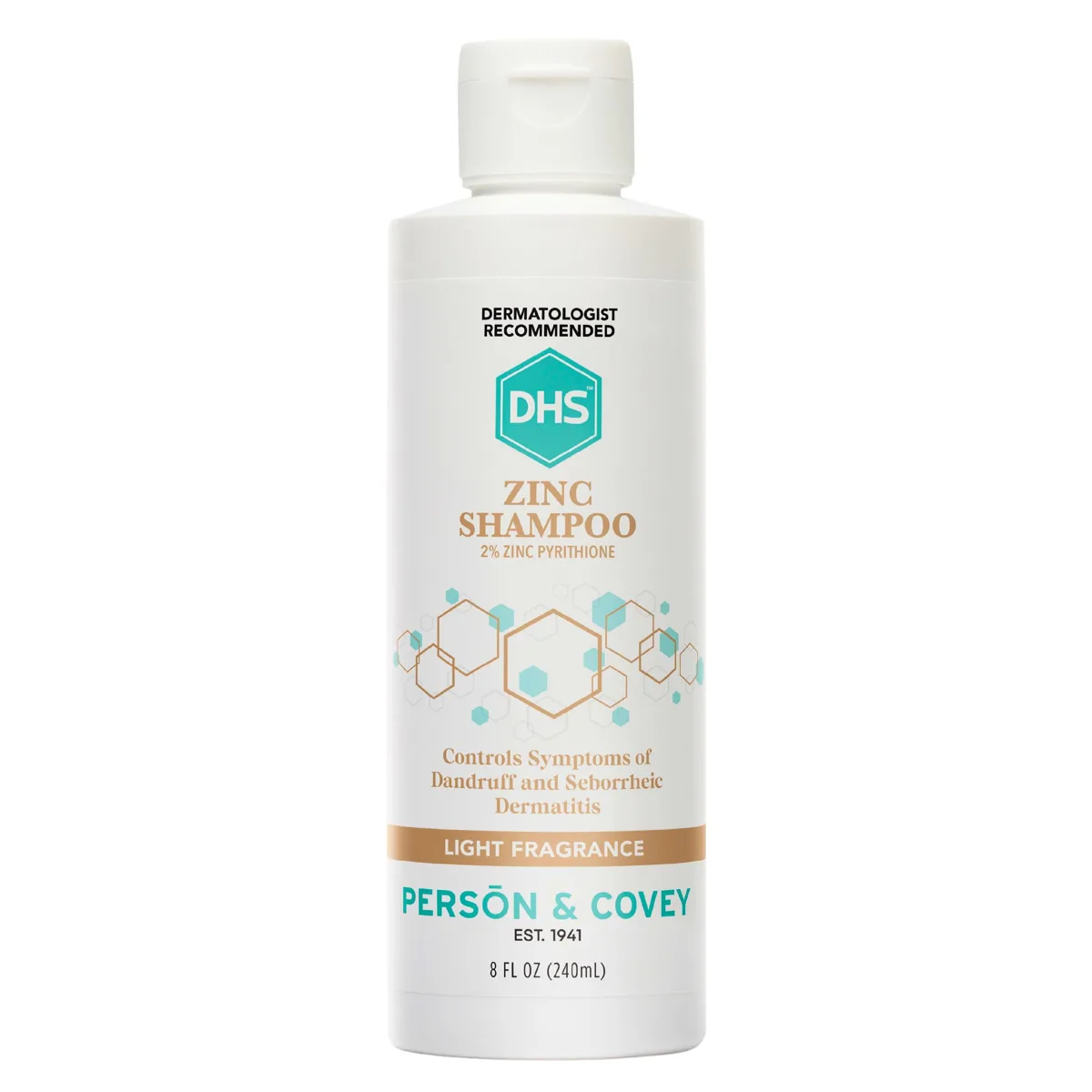
It is a genuinely short formula — eleven ingredients, no preservative system beyond what the surfactants provide, nothing botanical, nothing marketed — carrying the maximum permitted dose of the active. That combination of full strength and near-total absence of extras is why it has stayed in dermatology offices for decades while flashier medicated shampoos came and went.
A dermatology-office fixture that does one thing properly: the maximum permitted 2 percent zinc pyrithione, in a formula short enough to read in a breath. The base is old-fashioned sulfate detergent with a fragrance and an azo dye, which makes the sensitive-skin framing a stretch. For a robust scalp that flakes stubbornly, it is a genuinely effective and unfussy option.
No verified retailer rating or review count could be established for this product, largely because it sells through dermatology offices and direct channels rather than review-heavy marketplaces, so the user experience described here is inferred from the published drug label and the known behaviour of this formula type. Pricing is taken from the manufacturer's own store and may differ through clinical or wholesale channels.
The case for it
Cautions: fragrance.
Same rule for everyone. “Strong choice” is the verdict on 1,459 of 45,024 concern verdicts across the catalog; rule R2 decided 892 of them. Unchanged since September 5, 2026, engine 5.1.1.
Brand or formulator? Disclose a concentration or correct a fact →
The studies behind the evidence row
A verdict is DermApproved’s assessment of how well a product’s ingredients fit a concern — never a claim about what the product treats. Evidence dots and collected reviews sit beside it and are never blended in. Rules 0.5.1 · evidence table ev-2026.09-r228 · how we decide
Persōn & Covey has been making dermatological products in Glendale, California since 1941, when a chemist named Lorne Person started the company, and the DHS line reads exactly like something built for that world: no story, no botanical, no attempt to be liked. It has survived by being the shampoo a dermatologist hands you when the supermarket version has stopped working, and it has survived a long time. There is something admirable in a product whose entire pitch is that it contains almost nothing.
The brand leans on that hard — eleven ingredients, framed as a way to reduce the chance of a reaction. And the count is accurate. The trouble starts when you read which eleven. Water, sodium laureth sulfate, cocamidopropyl hydroxysultaine, PEG-8 distearate, sodium chloride, hydroxypropyl methylcellulose, magnesium aluminum silicate, fragrance, citric acid, FD&C Yellow No. 6, and the active. Two of those eleven exist purely for sensory appeal, and they happen to be a fragrance and a synthetic azo dye — respectively the most common cause of cosmetic contact allergy and a colourant doing nothing but making the liquid amber. In a formula this stripped-back, spending two of your eleven slots that way is a choice worth noticing, and it undercuts the claim the count is meant to support. A longer list without either would be gentler.
What the formula gets unambiguously right is the active and the dose. Zinc pyrithione at 2 percent is the ceiling the US over-the-counter monograph permits for rinse-off products, and double what most mass-market shampoos carry. Dandruff and seborrheic dermatitis are driven by an inflammatory response to Malassezia, a yeast that metabolises scalp sebum into irritating fatty acids, and zinc pyrithione has decades of evidence behind its activity against it. If you have been using a 1 percent formula faithfully and plateaued, moving to the full-strength version is the single most sensible next step before anything more complicated.
The supporting cast is more interesting than it looks. Zinc pyrithione does not dissolve — it sits in the bottle as suspended particles, and magnesium aluminum silicate with a cellulose gum is what keeps them dispersed rather than compacted at the bottom. That is why the very first line of the directions is to shake well, and why ignoring it means underdosing your early washes and overdosing the dregs. The sulfate base, meanwhile, is doing real work in this specific context: an antifungal has to reach scalp skin, and a scalp coated in sebum and styling residue is a poor target. A strong detergent clears the way. It is also the reason the scalp can feel tight afterwards, which is the honest trade this formula makes and the reason it suits a robust scalp better than a reactive one.
The label's other instruction deserves the same respect as the shake. It asks for a lather, several minutes of contact, a rinse, and then a second application. Most people do the first half. The distinction matters because the first wash is largely occupied with cleaning, and the second is the one that puts the active onto clean skin with time to act. A patient double wash with a modest product beats an impatient single wash with an excellent one, every time.
In use it feels like what it is. The lather is dense and generous in a way sulfate-free formulas cannot match, which is genuinely reassuring for anyone who finds low-foam medicated shampoos unconvincing. The fragrance is light and clean rather than aggressively medicinal. Itch tends to settle within the first week of twice-weekly use, with flaking improving over two to four weeks. And then it needs to keep going, because none of this eradicates anything — Malassezia is a permanent resident of every adult scalp, and what a shampoo like this does is hold its population and the inflammation it causes in check. Stop and the symptoms return, usually within a few weeks. That is not a failure of the product; it is the nature of the condition, and it is worth understanding before you conclude a shampoo has stopped working.
A note on where this sits relative to the rest of the DHS shampoo line, since the brand runs four medicated variants and the choice confuses people. Zinc is the general-purpose one — the broadest indication, the mildest smell, the version to start with. The tar formulas target the thicker, more inflamed scaling that shades toward psoriasis, and the salicylic acid version is a keratolytic that lifts adherent scale rather than attacking yeast at all. Picking by strength alone misses the point: these are different mechanisms for different presentations, and the right one depends on whether your problem is flaking, scaling, or both.
On value, thirteen dollars for eight ounces is more than a supermarket shampoo and considerably less than a dermatologist visit, and the sixteen-ounce bottle at under twenty-two dollars is where the real economy lies for something used indefinitely. The awkwardness is distribution — this sells mainly direct and through clinics rather than sitting on a shelf you walk past, which is why plenty of people who would benefit from it have never encountered it.
So: a good, plain, effective shampoo, at the strongest dose available without a prescription, that will suit a hardy scalp with stubborn flaking very well. Just do not buy it because of the ingredient count. Buy it because of the 2 percent.
The hero actives that drive this product's performance.
| Ingredient | Function | Evidence |
|---|---|---|
| Zinc Pyrithione 2% (2%) | The maximum strength the US monograph allows in a rinse-off product, targeting the Malassezia yeast whose sebum metabolism drives the flaking and itch. At double the concentration of most supermarket shampoos, this is the version pharmacists reach for when the ordinary one has stopped working. | Regulator-approved for Dandruff · well-established certainty |
| Sodium Laureth Sulfate | The conventional workhorse detergent, and the choice that defines this formula's character — it strips sebum and styling residue efficiently, which helps an antifungal reach the scalp, but it is also the ingredient most likely to leave an already-irritated scalp feeling tight. | Not yet assessed |
| Cocamidopropyl Hydroxysultaine | A mild amphoteric partner surfactant included to soften the sulfate's edge and build the thick lather the label promises — it does genuinely temper the base, though it cannot make a sulfate system behave like a sulfate-free one. | Not yet assessed |
| Magnesium Aluminum Silicate | Working with the cellulose thickener to hold insoluble zinc pyrithione particles in suspension so the dose stays consistent from the first wash to the last — which is exactly why the label opens with an instruction to shake the bottle. | Not yet assessed |
| FD&C Yellow No. 6 | A synthetic azo dye present purely to give the shampoo its amber colour. It contributes nothing therapeutic and is one of two cosmetic additions in a formula whose main selling point is having only eleven ingredients. | Not yet assessed |
Ingredient standings describe the active at treatment-level doses and vehicles; this product's own condition grades weigh its actual formula.
Active ingredient: Zinc Pyrithione 2%. Inactive ingredients: Water (Aqua), Sodium Laureth Sulfate, Cocamidopropyl Hydroxysultaine, PEG-8 Distearate, Sodium Chloride, Hydroxypropyl Methylcellulose, Magnesium Aluminum Silicate, Fragrance, Citric Acid, FD&C Yellow No. 6
cleanser
AM & PM
The label calls for a double wash — lather, leave it several minutes, rinse, and repeat — which is worth following because the first pass mostly clears buildup and the second is the one doing therapeutic work. Conditioner afterwards belongs on lengths only, well away from the scalp you have just treated.
Itching typically eases within the first week of twice-weekly use, with flaking following over two to four weeks. Because the effect is suppressive rather than curative, most people find they need to keep using it once or twice weekly indefinitely or watch the symptoms drift back.
The case for zinc pyrithione at this concentration rests on a well-mapped mechanism and a long trial record. Malassezia species colonise essentially every adult scalp and hydrolyse sebum triglycerides into free fatty acids; in susceptible people that provokes inflammation and accelerated corneocyte turnover, which is what reaches the shoulders as flakes. Zinc pyrithione disrupts fungal membrane transport and cellular copper homeostasis, reducing that population — and unlike many cosmetic actives its concentration limits are set by regulation rather than marketing, with the US monograph capping rinse-off products at the 2 percent used here. The honest comparative point is that being at the top of the zinc pyrithione range does not make this the strongest option available. A multicentre randomised trial in Skin Pharmacology and Applied Skin Physiology found ketoconazole 2% shampoo outperformed zinc pyrithione 1% in severe dandruff and seborrheic dermatitis, and while the comparison used half this dose, azoles have generally held their edge in subsequent work; a 2025 systematic review and meta-analysis of placebo-controlled seborrheic dermatitis trials confirms multiple topical antifungals beat placebo while showing the gaps between them are narrower than product marketing implies. Two formulation details also carry real evidence weight. Contact time governs how much of the suspended active actually engages the scalp, which is why the several-minute instruction is therapeutic rather than decorative. And surfactant harshness is an independent contributor to scalp irritation, meaning a sulfate-forward base can, in reactive users, produce symptoms that look like the condition failing to respond.
Products like this occupy a specific slot in clinical practice: the step up offered when a patient reports that an ordinary anti-dandruff shampoo has stopped controlling their symptoms. The reasoning is dose rather than novelty — moving from 1 percent to 2 percent zinc pyrithione is the simplest escalation available without a prescription. Alongside it, the counselling tends to focus on technique, because adherence failures usually look like treatment failures: apply to the scalp rather than the hair, leave the lather in place for several minutes, and treat two or three times weekly rather than occasionally. Rotating between actives with different mechanisms is also commonly advised for patients who plateau. Where clinicians would hesitate to recommend a fragranced, dyed formula is in anyone with coexisting scalp eczema, contact dermatitis or a history of cosmetic reactions, since fragrance is a frequent culprit in patch-testing series and removing variables matters when a diagnosis is still open. Sharply demarcated, thickly scaled plaques suggest scalp psoriasis rather than seborrheic dermatitis and call for a different approach altogether.
Shake the bottle thoroughly before every use, since the active settles. Wet hair completely, apply generously, and massage into the scalp rather than the lengths, using fingertips instead of nails. Leave the lather in place for several minutes, rinse well, then repeat the application — the second wash is the therapeutic one and the step most people skip. Use at least twice weekly to gain control, then continue on a maintenance schedule rather than stopping when symptoms clear. Follow with conditioner on mid-lengths and ends only, keeping it off the scalp. If the scalp becomes tight or itchy in a new way, alternate with a gentler non-medicated wash and see a clinician if things do not settle within a month.
Just under fourteen dollars for eight ounces is mid-market for a medicated shampoo — more than a supermarket bottle, less than boutique scalp care — and the sixteen-ounce size at around twenty-two dollars is where the sensible money goes, since this is a product used for years rather than weeks. At twice-weekly use the larger bottle covers roughly four months, which works out to a few dollars a month for full-strength control. The value case is strongest for people whose 1 percent shampoo has plateaued, because the escalation costs very little relative to the alternative of a clinic visit and a prescription. It is weakest for reactive scalps, where the money would be better spent on a fragrance-free, sulfate-free formula carrying the identical active at the identical dose — you would be paying the same for the same 2 percent without the two ingredients most likely to cause you trouble.
Anyone whose flaking has stopped responding to a 1 percent drugstore shampoo and whose scalp tolerates ordinary shampoo without trouble. It also suits people with thick or long hair who find low-foam medicated formulas hard to distribute, and anyone who wants a maintenance product cheap enough to keep using indefinitely.
Reactive scalps should look elsewhere — the fragrance, dye and sulfate base make this the wrong version of an otherwise excellent active. It is also not the answer for thick silvery adherent scale with sharp borders, which points toward scalp psoriasis and a different class of treatment entirely.
Ready to try DHS Zinc Shampoo?
Buy at Amazon ♥A moderately thick amber liquid that pours heavily and whips into a dense, generous lather with very little water
A light clean fragrance in the classic pharmacy register — present, unobtrusive, and clearly there to mask the metallic note of the active
Plain flip-top bottle in 8 oz and 16 oz, recently updated but still resolutely clinical; the larger size is the one to buy once you know it suits you
The lather is the first surprise — dense and abundant in a way that immediately signals a traditional sulfate formula, and reassuring if low-foam medicated shampoos have always felt insubstantial to you. Expect a slightly squeaky scalp after rinsing and possibly some tightness in the first fortnight. Itch relief usually arrives before any visible change in flaking, and the label's instruction to lather twice is worth taking seriously.
Roughly 2 months of twice-weekly use from the 8 oz bottle, or 4 months from the 16 oz
All Year
Persōn & Covey has been making dermatological products in Glendale since a chemist founded it in 1941, and DHS is the shampoo line that grew out of supplying dermatologists directly rather than fighting for supermarket shelf space. That distribution model explains both the formula's plainness and its relative obscurity outside clinical settings.
DHS belongs to Persōn & Covey, a family-owned Glendale, California company started by the chemist Lorne V. Person in 1941 and still supplying dermatology offices with the same unglamorous shampoos and sunscreens generations later. That longevity is its real credential — these are formulas dermatologists have handed out for decades — rather than any published research programme of its own.
A short ingredient list means a product is suitable for sensitive skin.
Count is not the same as content. This formula has eleven ingredients and two of them — a fragrance and an azo dye — are among the more common causes of scalp and facial reactions. A twenty-ingredient formula with neither would be the safer bet for a reactive scalp.
You only need to shampoo once with a medicated product.
The label here specifically calls for a second application, and the reasoning is sound. The first lather is largely occupied lifting sebum and styling residue off the scalp; the second is the one that gets the active into contact with clean skin for the several minutes it needs.
Once dandruff clears you can stop using the shampoo.
Malassezia is a normal resident of the scalp, not an infection that gets eradicated. Antifungal shampoos suppress its population and the inflammation it provokes, so stopping altogether reliably lets both return — usually within a few weeks.
Twice as strong on the active. Most mass-market anti-dandruff shampoos use 1 percent zinc pyrithione; this carries 2 percent, which is the ceiling the US over-the-counter monograph permits for rinse-off products. That gap is the main reason dermatology offices have kept recommending it.
Because the two lathers do different jobs. The first clears sebum and styling residue that would otherwise sit between the active and your scalp; the second delivers the zinc pyrithione onto clean skin, where leaving it several minutes gives it time to work. Skipping the repeat wastes a good part of the dose.
Less than the marketing implies. The eleven-ingredient list is genuinely short, but it includes fragrance and FD&C Yellow No. 6, and the detergent base is sulfate-driven. A scalp that reacts to fragranced products or feels stripped by ordinary shampoo will likely have the same experience here.
Zinc pyrithione is insoluble — it sits as suspended particles held up by a clay thickener and a cellulose gum. Without shaking, the particles gradually settle, which means the top of the bottle underdelivers the active and the bottom over-delivers it.
You can, though most people do not need to. Twice weekly is the label's baseline for control, and daily use mainly increases the chance of scalp dryness from the sulfate base. If you shampoo daily by preference, run this on two or three of those days and something gentler in between.
Only marginally. Zinc pyrithione targets yeast-driven flaking, and scalp psoriasis is an immune-mediated condition producing thicker, more adherent, sharply bordered scale. If the scale peels off in silvery sheets and the patches have defined edges, a keratolytic or tar-based approach — and a clinician's opinion — will serve you better.
Start with the 8 oz to confirm your scalp tolerates the base, then move to the 16 oz, which is substantially better per ounce. Since this is a maintenance product used for years rather than weeks, that per-ounce difference adds up more than it would for a short course.
Recurring themes our editors read across retailer reviews of this product — summaries in our words, not quotations, and not a substitute for your own patch test.
Full 2% dose controls flaking that weaker shampoos miss
Builds a thick lather that spreads easily through long hair
Larger 16 oz size makes long-term use affordable
Straightforward formula with nothing obscure in it
Sulfate base can leave the scalp tight after washing
Contains fragrance and a synthetic dye despite the sensitive-skin framing
Mainly sold direct rather than on drugstore shelves
Symptoms return quickly once you stop