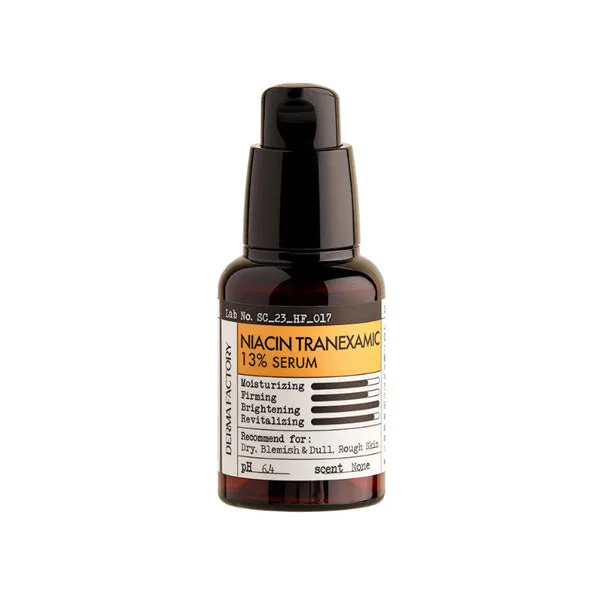
It combines two complementary pigment fighters, 10 percent niacinamide and 3 percent tranexamic acid, with a stable vitamin C derivative in a fragrance-free, sea-buckthorn-water base, at a price lower than most single-active serums. Both key concentrations are printed on the label.
A well-reasoned, gentle and remarkably cheap brightening serum that pairs 10 percent niacinamide with 3 percent tranexamic acid and a stable vitamin C derivative. It suits nearly every skin type and can be worn day or night; the glutathione and botanicals add little, and pigment still fades slowly without rigorous sunscreen.
The score leans on the serum's declared 10 percent niacinamide and 3 percent tranexamic acid and on published research for both, because verified reviews for this specific product are limited. Glutathione and the botanical extracts are undosed, so their effects are treated as minor.
Verdicts
How well it fits each concern
Verdict by concern tap a concern for the case
Good choicefor HyperpigmentationIn your profileYou chose · Niacinamide is a trial-supported active for hyperpigmentation; this serum carries it at 10%.Moderate evidenceGentleNo reviews collected yet
The case for it
Niacinamide has trial-supported standing for this concern.
It is present at an effective concentration, declared or high in the ingredient list.
The formula carries none of the triggers this concern is sensitive to.
Same rule for everyone. “Good choice” is the verdict on 9,564 of 45,024 concern verdicts across the catalog; rule R5 decided 9,072 of them.
As of September 25, 2026, engine 5.1.1.
Promisingfor Dark SpotsIn your profileYou chose · Niacinamide has trial-level evidence for dark spots but no guideline or regulatory standing yet — promising, short of a recommendation; the other actives here are not yet assessed for it.Moderate evidenceGentleNo reviews collected yet
The case for it
Niacinamide has trial-level evidence for this concern but no guideline or regulatory standing yet.
It is present at an effective concentration, declared or high in the ingredient list.
The formula carries none of the triggers this concern is sensitive to.
What would change this: Guideline or regulatory standing for the active on this concern would move this from a promising bet to a recommendation.
Same rule for everyone. “Promising” is the verdict on 7,858 of 45,024 concern verdicts across the catalog; rule R9p decided 7,858 of them.
As of September 25, 2026, engine 5.1.1.
R9p — 0.5.0: 'Unproven' beside three filled dots read as one question answered twice with opposite words (7,018 rows). The chip measures standing, the dots measure trial volume; where the row carries at least one RCT or a tier-2 source (moderate dots) and the active is present at a working level, the honest word is Promising. Unproven is reserved for plausible-standing rows with limited or weak evidence, or an under-dosed form. Same rank as Unproven — a bet either way; the dots order them. · the full register
Carrying active
Niacinamide
Standing
plausible — trials support it
Form
adequate (declared 10%)
Tolerability
gentle
Row checked
against its sources on July 17, 2026 (evidence table ev-2026.09-r228)
Good choicefor MelasmaIn your profileYou chose · Tranexamic Acid is a trial-supported active for melasma; this serum carries it at 3%.Strong evidenceGentleNo reviews collected yet
The case for it
Tranexamic Acid has trial-supported standing for this concern.
It is present at an effective concentration, declared or high in the ingredient list.
The formula carries none of the triggers this concern is sensitive to.
Same rule for everyone. “Good choice” is the verdict on 9,564 of 45,024 concern verdicts across the catalog; rule R5 decided 9,072 of them.
As of September 25, 2026, engine 5.1.1.
Promisingfor DullnessIn your profileYou chose · Hyaluronic Acid has trial-level evidence for dullness but no guideline or regulatory standing yet — promising, short of a recommendation; the other actives here are not yet assessed for it.Moderate evidenceGentleNo reviews collected yet
The case for it
Sodium Hyaluronate has trial-level evidence for this concern but no guideline or regulatory standing yet.
It is plausibly present at a working level, though the concentration is not declared.
The formula carries none of the triggers this concern is sensitive to.
What would change this: A declared concentration would move this to a firmer reading of the dose.
Same rule for everyone. “Promising” is the verdict on 7,858 of 45,024 concern verdicts across the catalog; rule R9p decided 7,858 of them.
As of September 25, 2026, engine 5.1.1.
R9p — 0.5.0: 'Unproven' beside three filled dots read as one question answered twice with opposite words (7,018 rows). The chip measures standing, the dots measure trial volume; where the row carries at least one RCT or a tier-2 source (moderate dots) and the active is present at a working level, the honest word is Promising. Unproven is reserved for plausible-standing rows with limited or weak evidence, or an under-dosed form. Same rank as Unproven — a bet either way; the dots order them. · the full register
Carrying active
Sodium Hyaluronate
Standing
plausible — trials support it
Form
plausible
Tolerability
gentle
Row checked
against its sources on July 17, 2026 (evidence table ev-2026.09-r228)
A verdict is DermApproved’s assessment of how well a product’s ingredients fit a concern — never a claim about what the product treats. Evidence dots and collected reviews sit beside it and are never blended in.
Rules 0.5.1 · evidence table ev-2026.09-r228 · how we decide
Assessment
Pros & Cons
Pros
✓ Pairs 10 percent niacinamide with 3 percent tranexamic acid
✓ Targets pigment upstream and downstream at once
✓ Stable vitamin C derivative adds antioxidant support
✓ Fragrance-free, alcohol-free and fungal-acne friendly
✓ Suitable for daytime use under sunscreen
✓ Exceptionally low price for its actives
Cons
✗ Results take eight to twelve weeks or longer
✗ Glutathione and botanicals add little proven benefit
✗ 10 percent niacinamide may briefly flush some skin
✗ Limited pregnancy data for topical tranexamic acid
✗ Few verified reviews for this specific serum
Review
Full Review
Brightening serums often compete on percentages, and it is easy to assume that bigger numbers mean better results. Derma Factory's Niacin Tranexamic 13% Serum takes a smarter route. Its 13 percent is the sum of 10 percent niacinamide and 3 percent tranexamic acid, two ingredients that fight uneven pigment at different points in the process. That combination, rather than either number on its own, is what makes the serum worth attention.
To understand why, it helps to picture the pigment pathway. UV exposure and inflammation trigger signals in the skin, including through the plasmin system, that tell melanocytes to produce more melanin. The melanocytes make melanin, pack it into melanosomes and hand those packages to the surrounding skin cells. Tranexamic acid works near the start of this chain, damping the plasmin-related signals that stimulate melanocytes. Niacinamide works near the end, reducing the transfer of melanosomes to surface cells. Using both targets pigment upstream and downstream, a strategy dermatologists often favour for stubborn discoloration, including melasma.
The doses are sensible. Ten percent niacinamide is high enough to provide oil control and brightening, while being tolerated by most people better than the 15 to 20 percent formulas that have become fashionable. Three percent tranexamic acid falls within the 2 to 5 percent range studied in topical trials. A third brightening ingredient, ethyl ascorbyl ether, a stable vitamin C derivative recognised in Korea for brightening, adds antioxidant support. Glutathione, delivered with hydrogenated lecithin as a liposome, and a group of botanicals including holy basil, coralline algae, ivy gourd, false daisy, neem and turmeric round out the formula, though their contributions are modest and less well supported.
The base replaces water with sea buckthorn water, marketed as vitamin tree water, which provides a light antioxidant background. The rest of the formula is minimal: humectants, a gentle thickener and preservatives. There is no fragrance, no essential oils, no alcohol, no oils and no silicones. That makes the serum suitable for fragrance-sensitive skin and compatible with fungal-acne routines, and it means there is little in the formula likely to cause problems beyond the niacinamide itself.
One of the serum's practical advantages is that it works in the daytime. Retinoids and some vitamin C serums are best used at night or require careful pairing, but niacinamide and tranexamic acid are not photosensitising. That means this serum can go on every morning under moisturizer and sunscreen, which is when protection against pigment-triggering UV matters most, and again at night alongside a retinoid or azelaic acid if desired.
In use, the serum is unremarkable in the best sense. A light, slightly gelled liquid pumps out cleanly, spreads easily and absorbs quickly without stickiness. It layers under creams and sunscreens without pilling. Most people feel nothing at all; a small number may notice brief warmth or redness from the niacinamide in the first days, which usually settles.
The realistic timeline is the same as for any brightening product. Post-acne marks and sun spots typically start to fade over eight to twelve weeks of consistent use, and melasma often takes longer and may need a broader approach, including tinted sunscreen and professional treatment. Daily broad-spectrum sunscreen is non-negotiable; without it, the serum is fighting a losing battle against continuous UV stimulation.
The serum also makes an interesting counterpart to the brand's own Niacin Alpha-Arbutin 17% Serum. Both lean on niacinamide, but the second active differs: alpha-arbutin blocks the enzyme that makes melanin, while tranexamic acid calms the signals that switch production on. For post-acne marks and sun spots, either works; for melasma, where inflammation and blood-vessel signalling play a larger role, tranexamic acid has the more specific rationale. Using both at once is possible but means stacking 25 percent niacinamide across two products, which is more likely to cause redness than to add benefit. Choosing one, or alternating morning and night, is the more sensible approach.
For people with post-inflammatory marks from acne, there is an extra advantage. Niacinamide also has anti-inflammatory and sebum-regulating effects, so the serum can help calm the redness and oiliness that accompany breakouts while fading the marks they leave behind. It will not replace acne treatments such as benzoyl peroxide, adapalene or azelaic acid, but it sits comfortably alongside them and does not add irritation the way many brightening products do.
A brief note on pregnancy: niacinamide is widely considered safe, but data on topical tranexamic acid during pregnancy are limited, so it is best to discuss use with a clinician first.
Verified reviews for this serum are limited, and the feedback available tends to praise its gentleness, daytime compatibility and price while noting that results take patience. That fits the formula.
The value is exceptional. At around ten dollars for 30ml, lasting roughly two months, it is one of the least expensive ways to combine niacinamide and tranexamic acid, often costing less than serums with only one of those ingredients.
For most skin types dealing with dark spots, post-inflammatory marks or melasma, this serum is an easy, low-risk addition to a routine. Its gentleness makes it particularly suitable for people who have found vitamin C or retinoids irritating. Anyone expecting instant results, or relying on it without sunscreen, will be disappointed, but that is true of every brightening product on the market.
Formula
Key Ingredients
The hero actives that drive this product's performance.
The larger half of the '13%', a 10 percent niacinamide that limits pigment transfer to surface cells, supports the barrier and helps with oil and redness, at a dose most skin tolerates better than 15 to 20 percent.
At 3 percent, tranexamic acid tackles pigment upstream by interrupting the UV- and inflammation-triggered signals that stimulate melanocytes, complementing niacinamide's downstream action.
Apply after toner and before moisturizer, morning and night. It is gentle enough for daytime use under sunscreen and pairs well with a retinoid or azelaic acid at night.
Results Timeline
Skin may look more even and less oily within a few weeks. Fading of dark spots and melasma typically takes eight to twelve weeks or longer, with strict daily sun protection.
Tranexamic acid, a synthetic analogue of lysine, inhibits the conversion of plasminogen to plasmin. In the skin, UV exposure and inflammation increase plasmin activity in keratinocytes, which leads to the release of arachidonic acid and other mediators that stimulate melanocytes. By interrupting this cascade, tranexamic acid reduces melanin production through a mechanism distinct from tyrosinase inhibitors. Topical tranexamic acid at concentrations of about 2 to 5 percent has been studied in melasma and post-inflammatory hyperpigmentation, with several trials reporting significant improvements and good tolerability, though study sizes are modest.
Niacinamide reduces the transfer of melanosomes to keratinocytes, and clinical studies at 2 to 5 percent have shown reductions in hyperpigmentation over eight to twelve weeks, along with improvements in barrier function and redness. Combination studies suggest that niacinamide paired with other brightening agents can improve outcomes compared with single agents.
Ethyl ascorbyl ether is a stable vitamin C derivative that inhibits tyrosinase and provides antioxidant activity. Glutathione is an antioxidant with limited but growing research for topical brightening. The botanical extracts, including holy basil, turmeric and neem, contain antioxidant and anti-inflammatory compounds, but evidence for their effect at these levels is minimal.
Because UV and visible light continuously stimulate melanogenesis, daily broad-spectrum sunscreen, ideally tinted with iron oxides for melasma, is an essential part of any brightening regimen.
Dermatologist Perspective
Dermatologists increasingly use topical tranexamic acid, often combined with niacinamide, for melasma and post-inflammatory hyperpigmentation, particularly for patients who cannot tolerate hydroquinone or strong acids. This serum's combination and moderate doses align with that practice, and its fragrance-free formula is suitable for sensitive skin. Clinicians would emphasise consistent daily use for several months and strict sun protection, often with a tinted sunscreen. For moderate to severe melasma, a dermatologist may add prescription treatments or procedures. Pregnant patients are generally advised to consult before using tranexamic acid, even topically. For acne-prone patients, it can be layered alongside standard acne therapy without adding significant irritation.
Guidance
Usage & Recommendations
How to Use
Once toner has absorbed, pump one or two doses into the palm and press over the face, focusing on dark spots and uneven areas. Follow with moisturizer. In the morning, finish with broad-spectrum sunscreen, ideally tinted for melasma. It can be used twice daily and paired at night with a retinoid or azelaic acid. Start once daily if you are sensitive to niacinamide. Avoid layering other high-strength niacinamide products, and allow eight to twelve weeks before judging results.
Value Assessment
At about ten dollars for 30ml, this serum is outstanding value, combining 10 percent niacinamide, 3 percent tranexamic acid and a vitamin C derivative in a gentle, fragrance-free formula. A bottle lasts around two months. Many serums with just one of these actives cost several times more. There is no clinical testing of this specific product, but its lead actives are well studied and clearly declared. It is sold in a single 30ml size. It is one of the strongest value propositions in the brightening category.
Who Should Buy
Most skin types dealing with dark spots, post-inflammatory marks or melasma, especially those who want a gentle, daytime-friendly brightening serum at a very low price. It suits people who find vitamin C or retinoids irritating and who prefer fragrance-free formulas.
Who Should Skip
Those expecting fast results should adjust expectations, and very reactive skin may need to introduce the niacinamide slowly. Pregnant users should consult a clinician about tranexamic acid, and anyone already using several niacinamide products should avoid stacking them all together.
Ready to try Derma Factory Niacin Tranexamic 13% Serum?
A light, slightly gelled clear serum that spreads easily and absorbs fast with a smooth, non-sticky finish.
Scent
No added fragrance; neutral.
Packaging
A 30ml amber bottle with a pump dispenser.
Finish
naturallightweight
What to Expect on First Use
Most skin tolerates it immediately, with no tingling. At 10 percent niacinamide, a small number of people notice brief warmth or redness in the first days; starting once daily avoids most of that.
How Long It Lasts
About two months with two pumps once or twice daily.
Derma Factory designed this serum for people dealing with blemish marks and melasma-type pigmentation who wanted a gentle, daytime-friendly alternative to vitamin C or retinoids, naming it by adding its two main percentages together.
About Derma Factory Established Brand (5–20 years)
Derma Factory is a Korean budget brand whose lab-style labels declare the concentration of each hero active. It publishes no clinical trials; this serum's '13%' is the sum of 10 percent niacinamide and 3 percent tranexamic acid.
Brand founded: 2019
Myth vs. Reality
Common Myths
Myth
Tranexamic acid is too medical for everyday skincare.
Reality
Tranexamic acid is a prescription drug when taken orally, but topical use at a few percent is widely studied for pigmentation and is generally well tolerated in cosmetic formulas.
Myth
Niacinamide and vitamin C should never be combined.
Reality
The concern came from older studies using pure ingredients under specific conditions. Modern formulas like this one combine niacinamide with a stable vitamin C derivative without problems.
FAQ
Frequently Asked Questions
What does the 13% in the Derma Factory Niacin Tranexamic serum mean?
It is the sum of 10 percent niacinamide and 3 percent tranexamic acid. The serum also contains ethyl ascorbyl ether, a stable vitamin C derivative, and glutathione.
Can I use the Niacin Tranexamic 13% Serum in the morning?
Yes. Niacinamide and tranexamic acid are not photosensitising, so the serum is suitable for daytime use under moisturizer and sunscreen.
Is this serum good for melasma?
Both niacinamide and tranexamic acid have evidence for melasma, making this a reasonable supporting product. Melasma also needs strict sun protection, ideally with a tinted sunscreen, and often dermatologist guidance.
Is the Derma Factory Niacin Tranexamic serum suitable for sensitive skin?
It is fragrance-free and alcohol-free, and 10 percent niacinamide is tolerated by most people. Very reactive skin should start once daily to check for flushing.
Can I use it with an alpha-arbutin or retinol serum?
Yes. It pairs well with alpha-arbutin, azelaic acid or a retinoid. Avoid stacking several high-niacinamide products, which can increase the chance of redness.
Is the Niacin Tranexamic 13% Serum safe while pregnant?
Niacinamide is generally considered safe, but data on topical tranexamic acid in pregnancy are limited. Consult a clinician before using it.
Reviews
What Reviewers Tend to Say
Recurring themes our editors read across retailer reviews of this product — summaries in our words, not quotations, and not a substitute for your own patch test.
Common Praise
Gentle enough for daily and daytime use
Gradually evens skin tone
Excellent price
Common Complaints
Slow visible results
Plain packaging and lab-style label not for everyone
It was invented to stop bleeding during surgery. In 2026 it's in dozens of brightening serums — and the evidence is better than most trend ingredients can claim.
Japan runs a third regulatory tier between cosmetic and pharmaceutical, and once you can see it, the entire J-beauty aisle stops looking modest and starts looking legally precise.
Most heritage claims are unfalsifiable. This one sits on a public regulatory register — which makes it the rare case where you can check what 150 years of institutional research actually bought.
Aug 28, 2026· 7 min
Questions people ask about Hyperpigmentation
Verified answers from our questions library — the nuance a product page cannot carry.
Products, answers, therapy guides, tools and articles in one search. Brand names,
slang and abbreviations all work — accutane finds isotretinoin, bacne finds truncal acne.