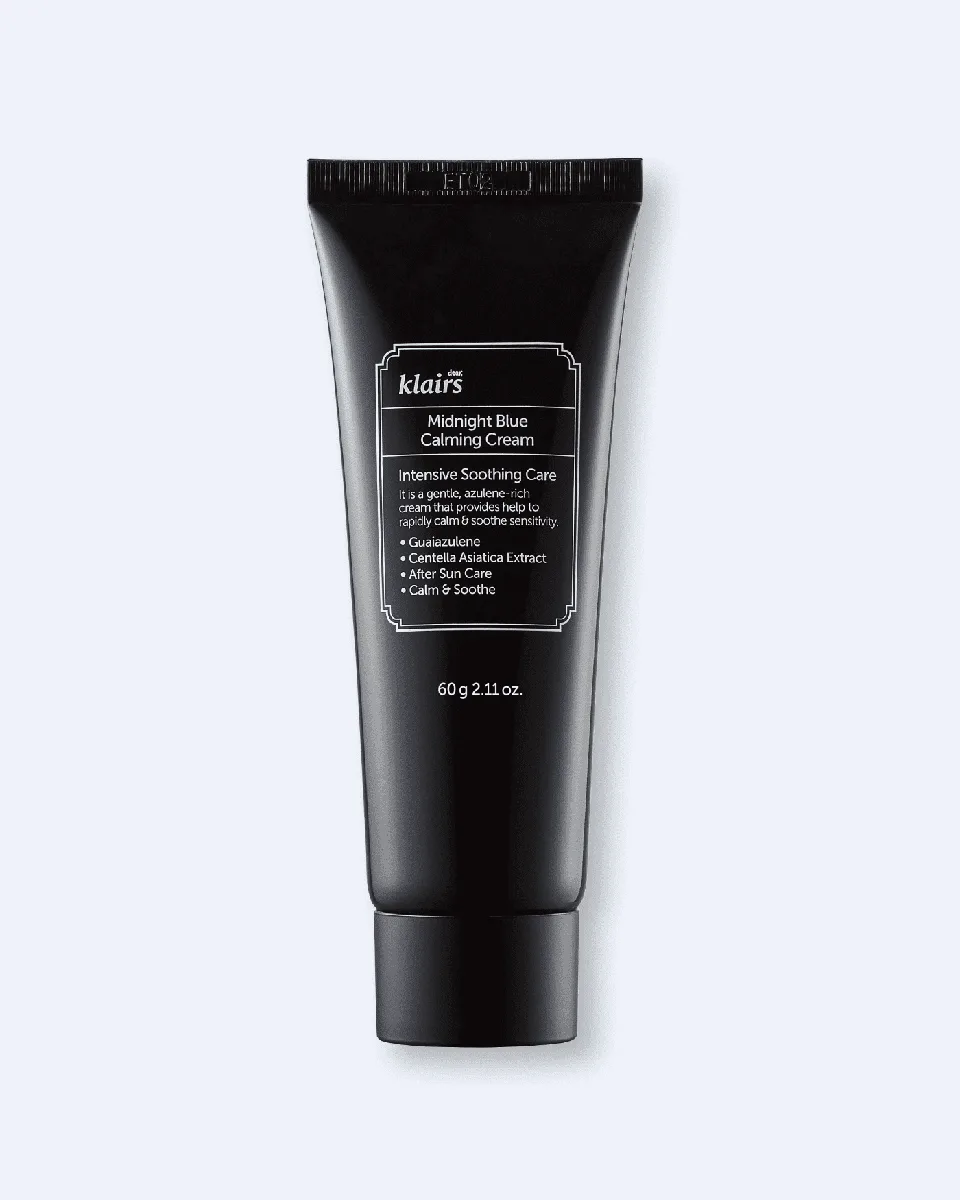
Most calming creams in the K-beauty and Western sensitive-skin categories anchor around centella alone or rely on a generic anti-inflammatory marketing positioning without a visible workhorse active. This formula builds around guaiazulene — a real chamomile-derived azulene compound with a meaningful anti-inflammatory literature behind it — and pairs the deep blue active with centella, ceramide NP, a real peptide complex, and a balanced lipid backbone. The visible blue color is not a marketing flourish; it is the guaiazulene doing its work. Few competing soothing creams put their active so prominently on display.
The rare soothing cream where the visible color is the active doing its work — guaiazulene supplies both the signature deep blue and the meaningful anti-inflammatory backbone, with centella, ceramide NP, and a real peptide complex completing a thoughtful formulation. For reactive, post-procedure, or actives-irritated skin, this is one of the easier recommendations in the K-beauty soothing category.
Good choicefor SensitivityIn your profileYou chose · No fragrance, drying alcohol, declarable allergens or sensitising preservatives in this cream — the profile sensitive skin looks for.Not yet assessedGentleNo reviews collected yet
The case for it
Centella Asiatica Extract has been researched for this concern and the evidence does not support it.
It is plausibly present at a working level, though the concentration is not declared.
The formula carries none of the triggers this concern is sensitive to.
What would change this: A declared concentration would move this to a firmer reading of the dose.
Same rule for everyone. “Good choice” is the verdict on 1,938 of 45,024 concern verdicts across the catalog; rule F2 decided 1,938 of them.
Unchanged since September 5, 2026, engine 5.1.1.
Supporting rolefor RosaceaIn your profileYou chose · Centella Asiatica has early evidence for rosacea, and barrier repair and gentle hydration is the recognised companion to treating it — a reasonable supporting choice, short of a recommendation.Moderate evidenceGentleNo reviews collected yet
The case for it
Centella Asiatica Extract has early or mechanistic evidence for this concern, not trial-backed standing.
It is plausibly present at a working level, though the concentration is not declared.
The formula carries none of the triggers this concern is sensitive to.
What would change this: A declared concentration would move this to a firmer reading of the dose.
Same rule for everyone. “Supporting role” is the verdict on 8,197 of 45,024 concern verdicts across the catalog; rule R8a decided 1,489 of them.
Unchanged since September 5, 2026, engine 5.1.1.
R8a — A plausible-tier active in a category with a supportive job: the sentence names the active instead of saying nothing targets the concern (the AmLactin / CeraVe SA case for keratosis pilaris, where no guideline and single trials leave the keratolytics at early evidence). · the full register
Carrying active
Centella Asiatica Extract
Standing
plausible — trials support it
Form
plausible
Tolerability
gentle
Row checked
against its sources on July 17, 2026 (evidence table ev-2026.09-r228)
Supporting rolefor Post-ProcedureIn your profileYou chose · Centella Asiatica has early evidence for post procedure, and barrier support is the recognised companion to treating it — a reasonable supporting choice, short of a recommendation.Moderate evidenceGentleNo reviews collected yet
The case for it
Centella Asiatica Extract has early or mechanistic evidence for this concern, not trial-backed standing.
It is plausibly present at a working level, though the concentration is not declared.
The formula carries none of the triggers this concern is sensitive to.
What would change this: A declared concentration would move this to a firmer reading of the dose.
Same rule for everyone. “Supporting role” is the verdict on 8,197 of 45,024 concern verdicts across the catalog; rule R8a decided 1,489 of them.
Unchanged since September 5, 2026, engine 5.1.1.
R8a — A plausible-tier active in a category with a supportive job: the sentence names the active instead of saying nothing targets the concern (the AmLactin / CeraVe SA case for keratosis pilaris, where no guideline and single trials leave the keratolytics at early evidence). · the full register
Carrying active
Centella Asiatica Extract
Standing
plausible — trials support it
Form
plausible — studied range 0.05%, from the OTC monograph or label; needs leave-on contact
Tolerability
gentle
Row checked
against its sources on July 17, 2026 (evidence table ev-2026.09-r228)
Good choicefor Compromised Skin BarrierIn your profileYou chose · Ceramides is a reference standard by mechanism for compromised skin barrier; this cream carries it.Moderate evidenceGentleNo reviews collected yet
The case for it
Ceramide NP has trial-supported standing for this concern.
It is plausibly present at a working level, though the concentration is not declared.
The formula carries none of the triggers this concern is sensitive to.
What would change this: A declared concentration would move this to a firmer reading of the dose.
Same rule for everyone. “Good choice” is the verdict on 9,564 of 45,024 concern verdicts across the catalog; rule R5 decided 9,072 of them.
Unchanged since September 5, 2026, engine 5.1.1.
R5 — Trial-supported or guideline-supported active, adequately or plausibly dosed. · the full register
Carrying active
Ceramide NP
Standing
supported — its mechanism is established
Form
plausible — studied range 0.5–1%, from the trials on the row; needs leave-on contact; judge it after ~4 weeks
Tolerability
gentle
Row checked
against its sources on July 17, 2026 (evidence table ev-2026.09-r228)
The studies behind the evidence row
Elias PM, Skin Barrier / Coderch et al., ceramides and skin barrier function — ceramides ~50% of SC intercellular lipid mass, essential to the permeability barrier — reference work
Supporting rolefor EczemaIn your profileYou chose · Centella Asiatica has early evidence for eczema, and emollient therapy is the recognised companion to treating it — a reasonable supporting choice, short of a recommendation.Moderate evidenceGentleNo reviews collected yet
The case for it
Centella Asiatica Extract has early or mechanistic evidence for this concern, not trial-backed standing.
It is plausibly present at a working level, though the concentration is not declared.
The formula carries none of the triggers this concern is sensitive to.
What would change this: A declared concentration would move this to a firmer reading of the dose.
Same rule for everyone. “Supporting role” is the verdict on 8,197 of 45,024 concern verdicts across the catalog; rule R8a decided 1,489 of them.
Unchanged since September 5, 2026, engine 5.1.1.
R8a — A plausible-tier active in a category with a supportive job: the sentence names the active instead of saying nothing targets the concern (the AmLactin / CeraVe SA case for keratosis pilaris, where no guideline and single trials leave the keratolytics at early evidence). · the full register
Carrying active
Centella Asiatica Extract
Standing
plausible — trials support it
Form
plausible
Tolerability
gentle
Row checked
against its sources on July 17, 2026 (evidence table ev-2026.09-r228)
Good choicefor DrynessIn your profileYou chose · Ceramides is a reference standard by mechanism for dryness; this cream carries it.Moderate evidenceGentleNo reviews collected yet
The case for it
Ceramide NP has trial-supported standing for this concern.
It is plausibly present at a working level, though the concentration is not declared.
The formula carries none of the triggers this concern is sensitive to.
What would change this: A declared concentration would move this to a firmer reading of the dose.
Same rule for everyone. “Good choice” is the verdict on 9,564 of 45,024 concern verdicts across the catalog; rule R5 decided 9,072 of them.
Unchanged since September 5, 2026, engine 5.1.1.
R5 — Trial-supported or guideline-supported active, adequately or plausibly dosed. · the full register
Carrying active
Ceramide NP
Standing
supported — its mechanism is established
Form
plausible
Tolerability
gentle
Row checked
against its sources on July 17, 2026 (evidence table ev-2026.09-r228)
The studies behind the evidence row
Elias PM, Feingold KR (eds), Skin Barrier — stratum corneum ceramides are the principal intercellular lamellar lipid; their depletion is the biochemical signature of dry/xerotic skin — reference work
Also listed for Sun Damage — the actives here (Centella Asiatica, Guaiazulene, Ceramides, Argan Oil) are in our research queue for that concern; there is no verdict until their evidence rows are written. That is a gap in our table, not a mark against the product.
Does the jobDoes what a moisturizer is for: draws in water, softens and smooths.
A verdict is DermApproved’s assessment of how well a product’s ingredients fit a concern — never a claim about what the product treats. Evidence dots and collected reviews sit beside it and are never blended in.
Rules 0.5.1 · evidence table ev-2026.09-r228 · how we decide
Assessment
Pros & Cons
Pros
✓ Guaiazulene delivers visible calming on irritated skin within 15–20 minutes
✓ Strong supporting cast of centella, ceramide NP, peptides, and balanced fatty acids
✓ Effective post-procedure for chemical peels, lasers, and microneedling recovery
✓ Buffers retinoid and acid-driven irritation as a follow-up moisturizer
✓ Fragrance-free, alcohol-free, and well-tolerated by reactive skin
✓ Visible blue color genuinely reflects the active ingredient at work
✓ Available in both tube and tin formats for different use preferences
Cons
✗ Small 30 mL tube is limited for daily face use at this price point
✗ Lipid load too rich for oily skin and not fungal-acne safe
✗ Blue color can transfer faintly onto pillowcases until fully absorbed
✗ Texture is more substantial than a typical lightweight K-beauty cream
✗ Not occlusive enough alone for very dry skin in deep winter
Review
Full Review
In 2015, the K-beauty sensitive-skin category was almost entirely defined by two ingredients: centella asiatica and snail mucin. Brand after brand released variations on the same green-tinted, lightly hydrating creams targeted at reactive Korean skin, and the formulations had started to blur together — minor variations on a centella-and-niacinamide-and-glycerin template that worked but offered nothing visually or formulationally distinctive. Klairs went a different direction. The Midnight Blue Calming Cream launched that year as the anchor product of a new sub-line built around guaiazulene, a hydrocarbon compound naturally distilled from chamomile and blue tansy that had been quietly cited in dermatology and aromatherapy literature for decades but had almost no presence in mainstream consumer skincare. The cream's deep, almost startling blue color is not a marketing dye — it is the guaiazulene itself, and the visible color reflects the active doing its work.
The formulation logic around the headline ingredient is what makes this product clinically credible rather than merely memorable. Guaiazulene has a real anti-inflammatory and antimicrobial literature behind it — modest in size compared to ceramides or vitamin C, but meaningful, and its mechanism through inhibition of histamine release and free-radical scavenging is documented in pharmacology research. In this cream it sits alongside a substantial supporting cast: centella asiatica high on the INCI list for fibroblast-supportive dermal repair, ceramide NP for stratum corneum lipid replacement, a balanced fatty acid spectrum of arachidic, palmitic, and oleic acids, a small load of growth-factor-mimetic peptides including sh-Oligopeptide-1 and sh-Polypeptide-1, and the standard Klairs base of glycerin, butylene glycol, and sodium hyaluronate. Shea butter, argan oil, and jojoba supply a face-friendly lipid backbone that pushes the texture toward cushioned-but-not-heavy.
Read further down the deck and the anti-inflammatory theme keeps compounding rather than trailing off into fairy dust. Portulaca oleracea — purslane — is one of the most reliable soothing botanicals in Korean formulation, and it sits right there in the middle of the list. Roman chamomile flower extract reinforces the azulene story from a second direction, since chamomile is where guaiazulene originates in the first place. Broccoli extract contributes sulforaphane and antioxidant support; acetyl glutamine and a Bacillus-and-soybean ferment add amino-acid and postbiotic conditioning. Candelilla wax and hydrogenated lecithin build the structure, tocopheryl acetate protects the oils, and an acrylates crosspolymer neutralized with tromethamine sets the viscosity. Nothing here is decorative. The formula is dense in a way that suggests genuine intent rather than a long list assembled for the label.
The sensorial experience is unusual on first use. Squeezing a bit of deep blue cream onto the back of the hand is briefly startling — most people have never seen a skincare product this color. The texture is more substantial than a typical lightweight Klairs cream, cushioned and warming on contact, absorbing to a soft, slightly tacky finish before drying down completely. The blue disappears into the skin without staining, though a generous application immediately before bed can leave a faint transferable residue on light pillowcases that washes out cleanly; twenty or thirty minutes of absorption time solves it entirely. The scent is fragrance-free with a faint natural plant note from the botanicals — clean, restrained, and exactly what reactive skin needs.
Where this cream genuinely earns its place is in the specific clinical contexts of irritated skin. Applied to a reactive flare from an over-aggressive retinoid night or an acid tonic that went too long, the cushioned blue cream produces visible calming within fifteen or twenty minutes — redness drops, the inflammatory tightness eases, and the skin feels cushioned rather than reactive. Used as a recovery moisturizer after chemical peels, light lasers, microneedling, or microdermabrasion, it accelerates the comfort phase of recovery and supports the barrier-repair work the centella and ceramide combination drives. For chronically rosacea-prone or sensitive skin, daily PM use produces a steadier baseline over four to six weeks — fewer flare-up days, fewer reactive episodes, and noticeably better tolerance of the other treatment products in the routine.
That last effect is the underrated one. A soothing cream does not, on its own, improve your skin. What it does is make the products that *do* improve your skin survivable — and since almost every retinoid and acid failure is a tolerance failure rather than an efficacy failure, a buffer that keeps you on your actives is doing more anti-aging work than its ingredient list suggests. Used that way, this is less a moisturizer than a piece of routine infrastructure.
The mulberry root extract sitting quietly near the guaiazulene is worth a mention for the same reason. It is a mild tyrosinase inhibitor, present in modest amounts, and it will not fade an established dark spot on its own. But post-inflammatory hyperpigmentation is the second act of nearly every irritation event, and a soothing cream that also nudges against pigment is thinking one step further ahead than most of the category.
The limitations are the predictable ones. The 30 mL tube is small for a $23 cream, and the per-month cost adds up if it becomes your primary daily moisturizer rather than a targeted soother — the 60 mL tin is the correct purchase for anyone committing to it long term, and stretches four to five months. The lipid load is rich enough that oily or acne-prone skin may find it too occlusive for daily use, and the caprylic/capric triglyceride content makes it non-fungal-acne-safe, which is a real concern for the Malassezia folliculitis subset who tend to be exactly the people hunting for soothing products. Cetyl alcohol and the fatty acid spectrum are mildly comedogenic for the most breakout-prone facial skin. And in a deep winter, this is soothing rather than maximally occlusive; people in genuinely harsh conditions layer something richer on top of the worst patches.
None of that undermines the central proposition, and the twenty-nine hundred reviewers averaging four and a half stars broadly agree. This is a thoughtfully formulated soothing cream where the visible character of the product reflects a genuine clinical workhorse rather than an aesthetic decision, and where the supporting cast is dense enough to do real barrier-repair and anti-inflammatory work alongside the headline active. For reactive, post-procedure, or actives-irritated skin, it remains one of the most reliable recommendations in the K-beauty soothing category nearly a decade after launch. The bet Klairs made in 2015 — anchoring a sensitive-skin product around guaiazulene rather than copying the centella consensus — has aged remarkably well.
Formula
Key Ingredients
The hero actives that drive this product's performance.
The signature active that gives this cream its distinctive deep blue color, guaiazulene is a hydrocarbon derivative of chamazulene distilled originally from chamomile, yarrow, and blue tansy essential oils. Topically it has a meaningful anti-inflammatory and antimicrobial literature behind it, and in this formulation it does the visible soothing work that the marketing claims center on — calming redness, post-procedure irritation, and reactive flares within the first few applications.
Sitting high on the INCI list as one of the formula's most prominent actives, centella contributes asiaticosides and madecassosides with a well-documented anti-inflammatory and fibroblast-supportive profile. In a soothing cream targeted at irritated skin it does meaningful repair work alongside the guaiazulene — addressing the inflammatory cascade while supporting the dermal regeneration that follows.
A skin-identical ceramide that integrates into the stratum corneum lipid matrix to support barrier repair. In a cream specifically formulated for irritated, sensitized, or compromised skin, the inclusion of ceramide NP alongside the shea butter and fatty acid spectrum gives this product a real barrier-restorative profile rather than functioning only as a calming surface treatment.
Established mechanismfor Compromised Skin Barrier · established mechanism
Three well-studied plant lipids that together carry the oil-soluble actives and supply the emollient backbone for a barrier-supportive cream. Argan oil contributes vitamin E and unsaturated fatty acids; jojoba provides face-friendly liquid wax esters that mimic sebum; shea butter delivers the heavier saturated fatty acids and unsaponifiable anti-inflammatory fraction. Together they make the cream feel cushioned without being heavy.
A traditional Korean botanical with tyrosinase-inhibiting activity that contributes secondary brightening benefits to the formula. In a soothing cream targeted at post-irritation skin — where post-inflammatory hyperpigmentation is a real concern — the inclusion of mulberry root extract addresses both the redness phase and the pigment-correction phase of recovery.
A small load of growth-factor-mimetic and signal peptides including sh-Oligopeptide-1 (an EGF-mimetic), sh-Polypeptide-1 (an FGF-mimetic), and acetyl hexapeptide-8 (argireline). Present at modest concentrations, the complex contributes to the formula's regenerative positioning and reinforces the centella-driven dermal repair messaging that defines this cream's place in the brand's lineup.
Not yet assessed
Ingredient standings describe the active at treatment-level doses and
vehicles; this product's own condition grades weigh its actual formula.
Use at night as the final moisturizer step after cleansing, toner, and any treatment serums. The cream's deep blue color is from the guaiazulene and will rinse off pillowcases without staining. As a targeted soother it can also be used as a spot treatment on irritated patches during the day under sunscreen and makeup. Apply a thin layer first — the cream is more concentrated than a typical daily moisturizer and a small amount goes far. Pairs particularly well after AHA, BHA, or retinoid nights to buffer treatment-driven irritation.
Results Timeline
Immediate: applied to irritated or red skin, the cooling cushioned texture produces visible calming within 10–20 minutes. Short-term (3–7 days): noticeable reduction in chronic redness and reactive flares; faster recovery from active-driven irritation. Full benefits (4–6 weeks): steadier baseline of skin reactivity, fewer flare-up days, and improved tolerance of other treatment products in the routine.
Guaiazulene is a hydrocarbon derivative of chamazulene with a real pharmacology literature behind its anti-inflammatory and antimicrobial activity. It is distilled originally from chamomile (Matricaria recutita), but is also present in yarrow and blue tansy essential oils — and is what gives those oils their distinctive deep blue color. A 2018 review in the journal Antibiotics summarized guaiazulene's antimicrobial activity, and several studies have documented its inhibition of histamine release and free radical scavenging activity in mast cells and inflammatory pathways. The clinical literature on topical guaiazulene in cosmetic skincare is thinner than for ceramides or vitamin C — it sits in the promising rather than well-established tier — but the underlying mechanism is supported and the cosmetic experience consistently reflects the soothing activity the literature describes.
The supporting actives in this formula have stronger and more thoroughly documented evidence bases. Centella asiatica has been extensively studied for its triterpenoid content and fibroblast-supportive activity, with a comprehensive review in the Postepy Dermatologii i Alergologii (2013) summarizing its clinical use in dermatology. Ceramide NP is the most cosmetically common skin-identical ceramide, with a substantial clinical literature documenting its role in barrier repair and the management of chronically dry skin. The peptide complex sits in the more emerging evidence tier — sh-Oligopeptide-1 (EGF-mimetic), sh-Polypeptide-1 (FGF-mimetic), and acetyl hexapeptide-8 (argireline) all have growing clinical literatures behind their use in cosmetic applications, with several studies showing improvements in wound healing, barrier function, and expression-line modulation when used at appropriate concentrations. The mulberry root extract contributes a small tyrosinase-inhibiting component for secondary brightening benefit, important in the post-irritation context where post-inflammatory hyperpigmentation is a real concern.
Antibacterial properties of essential oils, isolated compounds and contaminations in mascara cosmetics — Pharmaceutics (2021)
Dermatologist Perspective
Clinical dermatologists frequently recommend guaiazulene-and-centella soothing creams like this one for patients with rosacea-prone, reactive, or post-procedure skin who need a visible calming product as part of an active recovery phase. Dermatologists also commonly suggest this category of product as a follow-up moisturizer after retinoid or acid nights, where the cushioned lipid backbone and anti-inflammatory active load buffer the inflammatory potential of the treatment without compromising its efficacy. For patients with confirmed melasma or post-inflammatory hyperpigmentation, this cream is often recommended alongside a separate tyrosinase inhibitor — the small mulberry root extract content here is a supportive contributor but not a primary brightening workhorse.
Guidance
Usage & Recommendations
How to Use
Use at night as the final moisturizer step after cleansing, toner, and any treatment serums. Take a small pearl-sized amount, warm between fingertips, and press gently into the skin. The blue color absorbs within a minute and leaves no residue. For irritated patches, apply a slightly thicker layer as a targeted spot treatment. Can be used daytime under sunscreen and makeup for active flares, though the heavier texture may compete with lightweight daytime formulations. Always finish AM use with broad-spectrum SPF since the formula does not provide UV protection. Apply 20–30 minutes before bed if concerned about transfer to pillowcases.
Value Assessment
At $23 for 30 mL, this cream sits in the accessible mid-range of the K-beauty soothing category. The 60 mL aluminum tin format at around $34 offers meaningfully better per-ml value and is the right pick for users planning to use the cream as a primary daily PM moisturizer. For targeted-spot-treatment or post-procedure use, the smaller tube is appropriately sized and lasts several months at modest application frequency. Compared to clinical-brand soothing creams like Avene Cicalfate+ or La Roche-Posay Cicaplast Baume B5+, this cream sits at a similar price point with a different formulation philosophy — more peptide-and-botanical-rich, less rigorously simple. For sensitive skin specifically wanting the guaiazulene profile, the value is fair.
Who Should Buy
Reactive, rosacea-prone, sensitive, or actives-irritated skin looking for a targeted PM soothing cream with real anti-inflammatory activity from guaiazulene. Particularly well-suited to users recovering from chemical peels, light lasers, or microneedling, and to people who layer aggressive treatment products in the AM and need a buffering moisturizer at night. The 60 mL tin is the value pick for committed long-term users.
Who Should Skip
Oily or acne-prone skin will likely find the lipid load too rich for daily use. Confirmed fungal-acne sufferers should avoid the cream because of the caprylic and capric triglyceride content. Users in extreme winter conditions wanting maximum occlusion should layer a richer barrier cream over the top rather than relying on this product alone. People who do not have an active soothing or post-irritation use case can find more cost-effective daily moisturizers elsewhere in the brand's lineup.
Ready to try Dear, Klairs Midnight Blue Calming Cream?
Rich, deep blue cream with a substantial cushioned texture that warms on application and absorbs to a soft, slightly tacky finish.
Scent
Fragrance-free, with a very faint natural plant note from the botanical extracts.
Packaging
30 mL deep blue plastic tube with a screw cap, also available in a 60 mL aluminum tin format. The tube format is more hygienic for shared use; the tin holds more product but requires clean fingers or a spatula.
Finish
satinnon-greasy
What to Expect on First Use
First application is unusual — the deep blue color is striking, almost startling on the skin for a moment before it blends in without leaving residue. The cream has a more substantial texture than a typical lightweight Klairs product and feels cushioned rather than watery. On irritated or reactive skin, the calming effect is genuinely noticeable within the first 15–20 minutes. No tingling, no purging, no adjustment period. The blue color disappears as the cream absorbs.
How Long It Lasts
About 2–3 months of nightly face use of the 30 mL tube; about 4–5 months for the 60 mL tin.
Klairs introduced the Midnight Blue line in 2015 as a deliberate counter-statement in a K-beauty market saturated with snail mucin and centella-only soothing products. Founder Boyoung Choi and the Wishtrend team built the line around guaiazulene because the active had a meaningful anti-inflammatory literature behind it but was almost completely absent from consumer skincare at the time — the dermatology-and-aromatherapy world knew about its chamomile-derived properties but no major brand had centered a product around it. The Midnight Blue Calming Cream became the line's flagship and has been one of the brand's longest-running anchor products since.
About Dear, Klairs Established Brand (5–20 years)
Dear, Klairs launched in 2010 under Wishtrend and has built a long-standing reputation in the sensitive-skin K-beauty category. The Midnight Blue line, anchored by this cream, is one of the most-referenced K-beauty soothing products in international editorial coverage and dermatologist social-media recommendations for irritated, sun-exposed, or post-procedure skin.
Brand founded: 2010 · Product launched: 2015
Myth vs. Reality
Common Myths
Myth
The blue color is just artificial dye for marketing.
Reality
The deep blue color comes from guaiazulene, a real hydrocarbon compound naturally derived from chamomile oil (and also found in yarrow and blue tansy). It is one of the rare cases in skincare where the visible color of the product genuinely reflects the active ingredient at work. The same compound is what gives blue tansy and yarrow essential oils their distinctive color.
Myth
Calming creams are just expensive aloe vera.
Reality
Soothing skincare ranges from simple emollients with surface-level claims to genuinely barrier-supportive formulations like this one, which combines an anti-inflammatory active (guaiazulene), a fibroblast-supportive botanical (centella), a barrier lipid (ceramide NP), and a peptide complex. The category is broader and more clinically diverse than the marketing suggests, and the difference between a $10 aloe gel and a $23 ceramide-and-guaiazulene cream is real.
FAQ
Frequently Asked Questions
Why is the cream blue?
The deep blue color comes from guaiazulene, a hydrocarbon compound naturally distilled from chamomile, yarrow, and blue tansy essential oils. It is one of the rare cases in skincare where the visible color of the product genuinely reflects the active ingredient — the same compound gives blue tansy essential oil its characteristic deep blue tint. The color disappears as the cream absorbs into the skin.
Can it be used after chemical peels or laser treatments?
Yes — this is one of the more common use cases. The guaiazulene-and-centella combination is well-suited to post-procedure recovery, and many estheticians and patients use this cream specifically as a recovery moisturizer after chemical peels, light lasers, microneedling, and microdermabrasion. Always wait for the practitioner's all-clear before introducing any product post-procedure, and patch-test if you have not used the cream before.
Is it heavy enough as a winter moisturizer?
For sensitive or normal skin in moderate winter conditions, yes. For very dry skin in extreme winter, the cream is more soothing-focused than deeply occlusive, and many users layer a richer barrier cream or facial oil over the top. The product is best understood as a calming-and-repair cream rather than a maximum-occlusion winter cream — its job is to address reactivity and barrier compromise rather than to deliver heavyweight emollience.
Will the blue color stain my pillowcase?
Temporarily, the blue may transfer slightly to light-colored pillowcases if applied generously immediately before sleep. The guaiazulene washes out cleanly in normal laundry without leaving a permanent stain. For users concerned about transfer, applying the cream 20–30 minutes before bed and letting it fully absorb is the practical workaround.
Is Midnight Blue Calming Cream considered safe for pregnant users?
Yes — there are no retinoids, salicylic acid, or other commonly avoided actives. Guaiazulene, centella, and the supporting botanical extracts are all considered pregnancy-safe at the concentrations used here, and the fragrance-free profile is helpful for the heightened scent sensitivity common in the first trimester. It is a common recommendation for pregnant patients with reactive or rosacea-prone skin.
Can I use it as a daily morning moisturizer?
It works but is more concentrated than a typical daily AM moisturizer. Many users prefer to use a lighter daily moisturizer in the AM and reserve this cream for PM use after treatment serums, or as a targeted spot cream on irritated patches during the day. For sensitive or reactive skin in active flare, daily AM use is a reasonable choice — apply a thin layer and follow with sunscreen.
How is it different from the Midnight Blue Clearing Water Cream?
The Calming Cream is the richer, more occlusive sibling — built for irritated, reactive, or post-procedure skin where you want a soothing-and-repair moisturizer. The Clearing Water Cream is the lighter, gel-cream version targeted at oily or acne-prone skin that still wants the soothing benefits without the heavier lipid load. Choose based on skin type and the kind of weight you want on top of your treatment routine.
Reviews
What Reviewers Tend to Say
Recurring themes our editors read across retailer reviews of this product — summaries in our words, not quotations, and not a substitute for your own patch test.
Common Praise
Visibly calms redness and irritation within a single application
Distinctive deep blue color is genuinely from the guaiazulene active
Effective post-procedure for chemical peels, lasers, and microneedling
Buffers retinoid and acid irritation when used as a follow-up moisturizer
Fragrance-free formula safe for highly reactive skin
Pairs well with the Klairs Vitamin Drop in a complementary AM/PM routine
Common Complaints
Small 30 mL tube and tin sizes feel limited for daily face use
Texture is heavier than expected and can feel rich on oily skin
Blue color can transfer onto pillowcases or light clothing temporarily
Cetyl alcohol and fatty acid load can clog very acne-prone skin
Not technically fungal-acne safe due to the lipid complex
Skin runs on a circadian rhythm: repair after dark, defense by day. Shift work and chronic short sleep invert that schedule, and it surfaces as dullness, slower healing, and breakouts you can't quite explain.
Western sensitive skincare works by subtraction — remove the fragrance, remove the alcohol, shorten the list. Japan's answer adds a designed molecule back in, and one of the two bets has a trial literature.
Serums, masks, and peptide 'treatments' replaced the waxy balm this year. Some of it is real barrier science; some is a controlled irritant that stings your lips into looking fuller for an hour.
Topically, the molecule the argument tells you to avoid is one the stratum corneum is structurally built from — and in acne-prone skin the documented finding is a shortage of it.
Aug 28, 2026· 8 min
Questions people ask about sensitive skin
Verified answers from our questions library — the nuance a product page cannot carry.
Products, answers, therapy guides, tools and articles in one search. Brand names,
slang and abbreviations all work — accutane finds isotretinoin, bacne finds truncal acne.