


Peptides: Signal, Carrier, Copper — Which Ones Actually Do Anything?
'Peptides' is one word standing in for a dozen unrelated molecules with wildly different evidence — most serums are hope in a bottle, but a few classes earn their place.
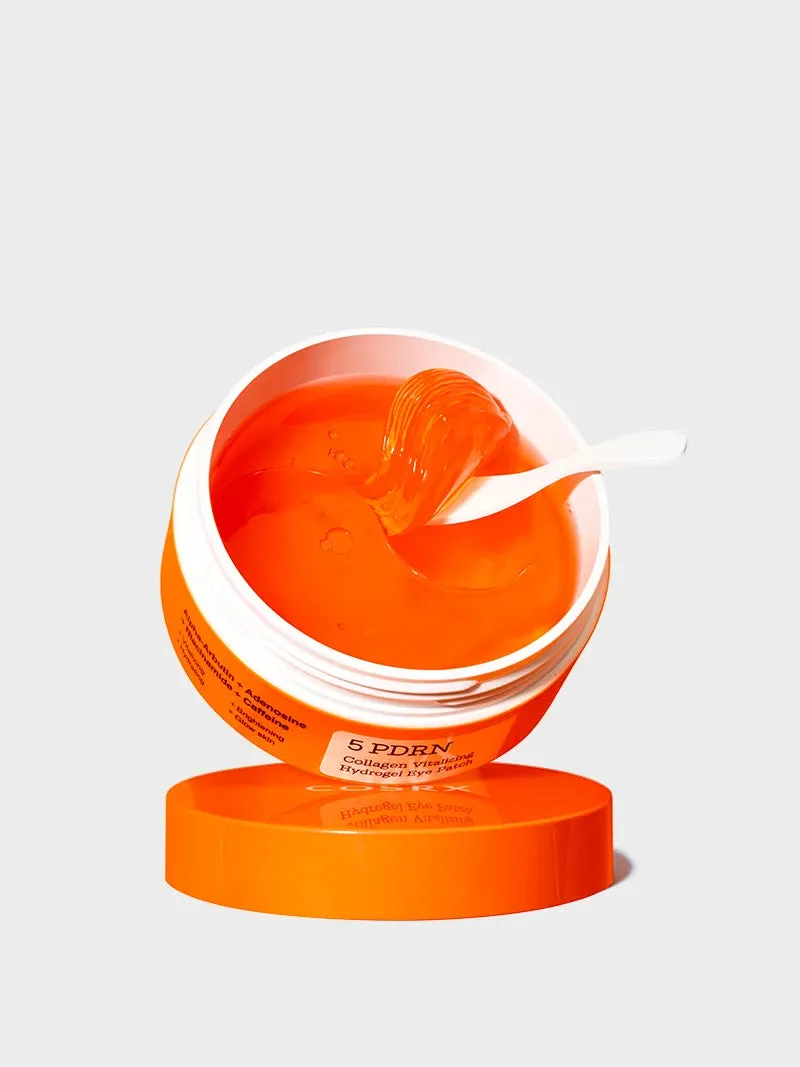
Most PDRN eye patches use single-source salmon DNA chemistry. COSRX's 5-source PDRN approach combines salmon DNA with Centella, rice, Lactobacillus ferment, and Caulerpa (sea grape) extracts — a more thorough approach that addresses multiple aspects of the PDRN positioning through complementary chemistry. The combination with low-molecular collagen, multi-HA stack, caffeine, and the brightening trio (glutathione + vitamin C + B12) makes this one of the most ingredient-dense K-beauty eye patches at this price tier.
COSRX's 2026 hydrogel eye patch expansion of the brand's viral 5 PDRN line — multi-source PDRN chemistry plus low-molecular collagen, 5-form HA stack, caffeine depuffing, and a brightening trio (glutathione + vitamin C + B12). Ingredient-dense for the K-beauty eye-patch category at $23 for 60 patches.
COSRX 5 PDRN Eye Patch launched in early 2026 with limited cumulative review data (approximately 300 cumulative reviews across English-language platforms in the first few months). The score draws on the documented chemistry of each component (PDRN, hyaluronic acid stack, caffeine, glutathione, vitamin C) and COSRX's broader brand reformulation track record. Expect this assessment to gain confidence as cumulative review volumes grow.
The case for it
What would change this: A researched evidence row for the lead active would replace this with a verdict.
Same rule for everyone. “Supporting role” is the verdict on 8,197 of 45,024 concern verdicts across the catalog; rule R8 decided 4,250 of them. Unchanged since September 5, 2026, engine 5.1.1.
Brand or formulator? Disclose a concentration or correct a fact →
The case for it
What would change this: A declared concentration would move this to a firmer reading of the dose.
Same rule for everyone. “Not for this” is the verdict on 488 of 45,024 concern verdicts across the catalog; rule R10 decided 488 of them. Unchanged since September 5, 2026, engine 5.1.1.
Brand or formulator? Disclose a concentration or correct a fact →
The case for it
What would change this: A declared concentration would move this to a firmer reading of the dose.
Same rule for everyone. “Good choice” is the verdict on 9,564 of 45,024 concern verdicts across the catalog; rule R5 decided 9,072 of them. Unchanged since September 5, 2026, engine 5.1.1.
Brand or formulator? Disclose a concentration or correct a fact →
The studies behind the evidence row
The case for it
What would change this: A declared concentration would move this to a firmer reading of the dose.
Same rule for everyone. “Promising” is the verdict on 7,858 of 45,024 concern verdicts across the catalog; rule R9p decided 7,858 of them. Unchanged since September 5, 2026, engine 5.1.1.
Brand or formulator? Disclose a concentration or correct a fact →
The studies behind the evidence row
Does the jobDoes what a eye cream is for: safe for eye skin, targets a real eye concern. Not measured from the label: hydrates without heaviness, stays where it's put.
A verdict is DermApproved’s assessment of how well a product’s ingredients fit a concern — never a claim about what the product treats. Evidence dots and collected reviews sit beside it and are never blended in. Rules 0.5.1 · evidence table ev-2026.09-r228 · how we decide
The PDRN trend tore through K-beauty across 2024 and 2025, with brand after brand rushing to bolt salmon-derived DNA chemistry onto their lineups in the wake of injectable PDRN treatments becoming a fixture in Korean dermatology offices. The standard playbook is simple: one PDRN active, sodium DNA from salmon, marketed hard around regenerative positioning. The honest reality of topical PDRN is more modest than the injectable hype — the molecules are too large to penetrate skin in the quantities that produce the dramatic clinical effects of an in-office treatment — but the surface humectant and skin-conditioning contribution is genuinely real. What makes COSRX's hydrogel eye patch worth a closer look is that it refuses the single-source shortcut and takes a noticeably more thorough approach instead.
Rather than one PDRN source, this formula combines five different PDRN-related chemistries: salmon-derived sodium DNA, plant DNA from rice extract, Centella asiatica leaf extract with its triterpenoid cica chemistry, Lactobacillus ferment lysate supplying postbiotic peptides, and Caulerpa lentillifera — sea grape — extract contributing antioxidant sulfated polysaccharides. It's worth being candid that the 'PDRN' framing is loose for the non-salmon members of that group; most don't contain polydeoxyribonucleotide in the strict molecular sense, and the marketing leans on the trend's buzz. But the combined cast delivers more thorough skin-conditioning and brightening than a salmon-DNA-only patch would, and applied in a hydrogel format with ten-plus minutes of skin contact, that breadth actually has time to work. The salmon sourcing also means these aren't vegan-suitable, a detail worth flagging early for anyone it concerns.
The supporting formulation is unusually dense for the price, which is the real story here. A 100-Dalton low-molecular-weight collagen sits in the mix for surface skin-conditioning — and the review should be straight that the dermal collagen-stimulation claims attached to topical collagen are overstated at any molecular weight, so treat this as a humectant-and-conditioning ingredient, not a structural rebuilder. Five hyaluronic acid forms stack together for genuine multi-molecular-weight humectant action, which is exactly the kind of layered hydration that pays off during an extended patch wear. Caffeine brings documented under-eye depuffing through vasoconstriction and lymphatic support, the most immediately visible effect of the whole product. Acetyl hexapeptide-8 (Argireline) adds surface skin-conditioning with real research behind it, even if the 'topical Botox' framing is marketing exaggeration. And a brightening trio — glutathione, ascorbic acid, and vitamin B12 — targets dark-circle appearance through three complementary antioxidant and conditioning pathways over consistent use.
The chassis is well-engineered for the format. Carob gum, carrageenan, algin, and cellulose gum build a hydrogel matrix that stays moisture-saturated through the wear time instead of drying out and pulling at the skin, which is the failure mode of cheaper patches. Niacinamide sits high in the INCI for brightening and barrier support, panthenol adds conditioning, dipotassium glycyrrhizate contributes licorice-derived anti-inflammatory balance, and gardenia fruit extract supplies the distinctive orange tint that gives the patches their visual signature. In use, they feel cool on contact and contour closely to the under-eye without slipping, and the ten-minute minimum is productive rather than arbitrary — the matrix releases moisture and active chemistry continuously, and leftover serum massages cleanly into the surrounding skin afterward.
Its limitations are about expectation and time rather than formulation gaps. Topical PDRN's effects on dark circles are gradual and modest compared to the clinical injectable treatments the trend borrows its glamour from, and no patch closes that gap. The ten-plus minute wear is longer than many quick-fix eye patches, which is a feature for efficacy but a friction for anyone in a hurry. Dark-circle results genuinely depend on cause — patches help dehydration-driven and some pigmentation-related circles far more than vascular or structural ones, so the cause of your circles will shape your satisfaction. And as a 2026 launch, the cumulative real-world review data is still limited, which is reflected in the medium data confidence; the immediate depuffing and cooling are reliable, but the longer-term dark-circle and texture improvements build over roughly four to six weeks and rest more on ingredient logic than on years of user history.
Value, on the other hand, is where this genuinely shines. At twenty-three dollars for sixty patches, the per-patch cost lands around thirty-eight cents, and at daily use the jar stretches across one to two months. The ingredient density — five-source PDRN, a five-form HA stack, caffeine, Argireline, and a three-active brightening trio — is well above what most K-beauty eye patches in this range deliver, and the raw-material cost of that combination is real, not just label decoration. Fragrance-free and gentle enough for daily use, it suits normal, dry, combination, and even sensitive skin (the ascorbic acid is the only notable irritation flag, and a mild one), and it pairs naturally with the rest of COSRX's 5 PDRN line. For anyone wanting accessible K-beauty PDRN positioning in an eye patch, with realistic expectations about gradual results and a clear understanding that topical isn't injectable, this is among the strongest value picks the category currently offers. There's also a practical usage angle worth spelling out, because eye patches reward technique. The most effective approach is to apply them to clean, slightly damp skin and leave them on for the full ten-plus minutes rather than the rushed two-minute version people often default to, since the hydrogel needs that time to release its moisture and active load. The leftover serum that pools in the jar and on the patches isn't waste — patting it into the surrounding eye area, brows, and even the smile lines extends the value of every patch and is part of why the per-use economics work out so well. They also make a genuinely good pre-makeup step, since the cool depuffing and hydration give concealer a smoother surface to sit on, which is a small but real everyday benefit that the more clinical framing tends to undersell. As for who should skip it: anyone whose dark circles are primarily vascular or structural rather than dehydration- or pigment-driven will see less dramatic change and may be disappointed if they expect the patches to erase what is essentially anatomy, and strict vegans are ruled out by the salmon sourcing. But for the broad middle — people with tired, dehydrated, slightly dull under-eyes who want an affordable, ingredient-rich daily ritual from a brand with real established credibility — COSRX has built something that punches well above its price, and the multi-source approach is a meaningful step up from the salmon-only patches crowding the same shelf.
The hero actives that drive this product's performance.
| Ingredient | Function | Evidence |
|---|---|---|
| 5-Source PDRN Complex (Salmon DNA + Centella + Rice + Lactobacillus + Sea Grape) | COSRX's signature multi-source PDRN approach — Sodium DNA (salmon-derived polydeoxyribonucleotide chemistry), Centella asiatica leaf extract, Oryza sativa (rice) extract, Lactobacillus ferment lysate, and Caulerpa lentillifera (sea grape) extract combined together. The 5-source approach is meaningfully more thorough than typical single-source salmon PDRN products. | Not yet assessed |
| Low-Molecular Collagen (100 Dalton) | Marketed as 100-Dalton ultra-low-molecular-weight collagen designed for improved penetration to the under-eye area — the published research on small-molecule collagen documents surface skin-conditioning benefits while the deeper dermal collagen-stimulation claims remain overstated for topical collagen at typical concentrations. | No qualifying study for Aging |
| 5-Form Hyaluronic Acid Stack | Five hyaluronic acid forms (sodium hyaluronate, hydrolyzed hyaluronic acid, hyaluronic acid, potassium hyaluronate, hydrolyzed sodium hyaluronate) for comprehensive multi-MW humectant action — providing both surface humectant action and deeper-penetrating chemistry. Particularly relevant in an eye-patch context where the leave-on contact time is 10+ minutes. | Established mechanism for Dehydration · established mechanism |
| Caffeine + Acetyl Hexapeptide-8 (Argireline) | Caffeine for documented under-eye depuffing through vasoconstriction; Acetyl Hexapeptide-8 (Argireline) for documented surface skin-conditioning effects sometimes positioned as 'topical Botox' (though the dermal-level claims are overstated). Together they support the brightening and firming positioning the patches market. | Not yet assessed |
| Glutathione + Ascorbic Acid + Vitamin B12 (Brightening Stack) | Three brightening actives layered together — glutathione for documented antioxidant and modest melanin-suppression chemistry, ascorbic acid (vitamin C) for antioxidant brightening, and cyanocobalamin (vitamin B12) for skin-conditioning. The combined approach supports the dark-circle reduction positioning over consistent use. | Not yet assessed |
Ingredient standings describe the active at treatment-level doses and vehicles; this product's own condition grades weigh its actual formula.
Water, Glycerin, Dipropylene Glycol, Niacinamide, Ceratonia Siliqua (Carob) Gum, Methylpropanediol, Chondrus Crispus Powder, Chondrus Crispus, Cellulose Gum, Hydroxyacetophenone, Panthenol, Algin, Caprylyl Glycol, Potassium Chloride, Sucrose, Ethylhexylglycerin, Sodium Polyacrylate, Adenosine, Polyglyceryl-10 Laurate, Polyglyceryl-10 Myristate, Butylene Glycol, Gardenia Florida Fruit Extract, 1,2-Hexanediol, Sodium DNA, Caffeine, Maltodextrin, Allantoin, Collagen, Dextrin, Pantolactone, Cyanocobalamin, Dipotassium Glycyrrhizate, Ascorbic Acid, Sodium Hyaluronate, Glutathione, Oryza Sativa (Rice) Extract, Coptis Japonica Root Extract, Caulerpa Lentillifera Extract, Hydrolyzed Hyaluronic Acid, Hyaluronic Acid, Potassium Hyaluronate, Hydrolyzed Sodium Hyaluronate, Acetyl Hexapeptide-8, Lactobacillus Ferment Lysate, Hydrolyzed Rice Protein, Centella Asiatica Leaf Extract, Disodium EDTA
treatment
AM & PM
Apply hydrogel patches to clean, dry under-eye area after cleansing and toner. Leave for 10-15 minutes (the brand's recommended minimum is 10), then massage remaining serum into skin. Use 2-3 times weekly initially; build to daily use as desired. The hydrogel patches contour closely and don't slip during wear.
Immediate depuffing from the caffeine chemistry; subtle brightening from the cool gel contact. Cumulative improvements in dark-circle appearance and under-eye texture build over 4-6 weeks of consistent use.
The 5-source PDRN chemistry deserves understanding ingredient by ingredient. Sodium DNA (sourced from salmon) is the actual PDRN chemistry — polydeoxyribonucleotide molecules with documented surface humectant and skin-conditioning effects in topical formulations. The published research on topical salmon PDRN is smaller than the clinical injectable research but supports gentle skin-conditioning at cosmetic concentrations.
Oryza sativa (rice) extract contributes plant DNA chemistry along with ferulic acid antioxidants and inositol humectant chemistry. Lactobacillus ferment lysate is a postbiotic ingredient with documented humectant and anti-inflammatory effects. Caulerpa lentillifera (sea grape) extract is a Pacific-grown alga with documented antioxidant chemistry from its sulfated polysaccharide content. Centella asiatica leaf extract provides the four-active triterpenoid chemistry documented across the K-beauty 'cica' category.
100-Dalton low-molecular collagen is marketed for improved penetration to the under-eye area. The published research on small-molecule collagen documents surface humectant and skin-conditioning effects; the dermal collagen-stimulation claims sometimes attached to topical collagen are not well-supported at any molecular weight.
The five hyaluronic acid forms (sodium hyaluronate, hydrolyzed hyaluronic acid, hyaluronic acid, potassium hyaluronate, hydrolyzed sodium hyaluronate) provide multi-MW humectant action — surface humectant from higher-MW forms, deeper penetration from hydrolyzed/lower-MW forms.
Caffeine at trace concentrations provides documented under-eye depuffing through vasoconstriction and lymphatic drainage support. Acetyl hexapeptide-8 (Argireline) is a peptide with documented surface skin-conditioning effects through neurotransmitter pathway modulation; the 'topical Botox' framing is marketing exaggeration but the surface skin-conditioning contribution is real.
Glutathione (a tripeptide antioxidant) has documented melanogenesis-inhibiting and antioxidant effects. Ascorbic acid (vitamin C) provides additional antioxidant brightening. Cyanocobalamin (vitamin B12) contributes skin-conditioning effects. The combined brightening stack supports the dark-circle reduction positioning over consistent use.
Dipotassium glycyrrhizate is the licorice-derivative anti-inflammatory active counterbalancing the brightening chemistry. Allantoin and panthenol provide skin-conditioning support. The hydrogel matrix (carob gum + carrageenan + algin + cellulose gum) maintains moisture saturation through the wear time.
Dermatologists evaluating PDRN-positioned topical skincare typically take a cautious view — the dramatic regenerative chemistry that drives clinical PDRN injectable treatments doesn't translate cleanly to topical cosmetic concentrations. Topical PDRN provides surface humectant and skin-conditioning effects that are real but modest. COSRX's 5-source PDRN approach is taken as a credible multi-active chemistry choice rather than as a stronger PDRN delivery — the additional sources contribute their own documented skin-conditioning effects beyond just the PDRN positioning. For patients with under-eye concerns, the combination of caffeine depuffing, multi-HA hydration, and the brightening stack is genuinely useful at the price tier. The standard caveat is the salmon-derived chemistry for vegan-preference patients.
Apply hydrogel patches to clean, dry under-eye area after cleansing and toner. Leave on for 10-15 minutes minimum; can be worn up to 30 minutes for sustained contact. Massage remaining serum into surrounding skin after removal. Follow with eye cream, moisturizer, and SPF (in the morning). Use 2-3 times weekly initially; build to daily use as desired. Store the jar tightly sealed to prevent the remaining patches from drying out.
At $23 for 60 patches through COSRX's direct distribution, the per-patch cost is roughly $0.38 — among the strongest values in the K-beauty hydrogel eye patch category. The 60-patch jar stretches 1-2 months at daily use, putting the per-month cost at $12-23. Compared to other K-beauty PDRN eye patches (Medicube PDRN Pink Collagen at $30-40 for 30 patches, MEDIHEAL Wateractive Healing Aqua at $20-25 for 30 patches), COSRX delivers more comprehensive multi-active chemistry at competitive pricing. The 5-source PDRN + multi-HA + brightening trio combination represents excellent per-dollar formulation density.
Users with dehydration-driven dark circles, under-eye crepiness, or general under-eye dullness who want K-beauty multi-active eye patch chemistry at accessible pricing. Best for users committed to consistent use over 4-6 weeks to see cumulative results, and for COSRX brand loyalists building out the brand's 5 PDRN line.
Vegan-preference users (salmon-derived sodium DNA isn't vegan), users with primarily pigmentation-driven or vascular dark circles (topical patches won't change those significantly), users wanting dramatic immediate results (the cumulative effects build over weeks), and users who can't commit to the 10+ minute wear time.
Ready to try COSRX 5 PDRN Collagen Vitalizing Hydrogel Eye Patch?
Buy at Amazon ♥Soft, orange-tinted hydrogel patches that contour closely to the under-eye area — cooling on application and slip-resistant during wear.
Genuinely fragrance-free.
White jar with the brand's signature green-and-white COSRX label — utilitarian K-beauty packaging.
First-use impression is the orange-tinted hydrogel that cools on contact and contours closely to the under-eye contour. The 10+ minute wear time is longer than typical eye patches but the gel stays in place. After removal, the leftover serum massages cleanly into the surrounding skin.
Roughly 1-2 months at daily use for the 60-patch jar; 4-6 months at 2-3x weekly use.
All Year
COSRX expanded the 5 PDRN line in 2026 to include hydrogel eye patches following the success of the original 5 PDRN Vital Soothing Toner and 5 PDRN Collagen Intense Vitalizing Serum (both already in catalog). The 5-source PDRN approach reflects COSRX's broader formulation evolution toward multi-active complexes that address the brand's positioning more comprehensively than single-active alternatives.
COSRX's 5 PDRN line is the brand's 2024-2025 expansion into the viral K-beauty PDRN (polydeoxyribonucleotide) trend — multi-source PDRN combining salmon, plant, and microorganism-derived chemistry. The Collagen Vitalizing Hydrogel Eye Patch applies this 5 PDRN positioning to a hydrogel patch format for targeted under-eye treatment, anchored in COSRX's broader brand credibility and accessible K-beauty pricing.
PDRN in skincare works the same as injectable PDRN treatments at clinics.
No. Injectable PDRN treatments deliver polydeoxyribonucleotide chemistry into the dermis at concentrations that drive documented tissue regeneration and collagen synthesis effects. Topical PDRN at cosmetic concentrations can't replicate this — the molecules are too large to penetrate skin in sufficient quantity. Topical PDRN products contribute surface humectant-and-skin-conditioning effects more than the dramatic regenerative results clinical PDRN treatments produce.
Multi-source PDRN is just marketing — salmon PDRN alone is the proven active.
Salmon PDRN has the most published clinical evidence behind it (driven by Korean clinical research on injectable PDRN). The other sources in COSRX's 5-source complex (plant DNA from rice, Centella triterpenoids, Lactobacillus postbiotic peptides, sea grape polysaccharides) have separate documented skin-conditioning effects. The 'PDRN' framing for non-salmon sources is loose, but the combined chemistry is genuinely supportive of the broader skin-conditioning and brightening positioning.
Single-source salmon PDRN products use sodium DNA (polydeoxyribonucleotide) derived from salmon as the active. COSRX's 5-source approach adds plant DNA from rice, Centella triterpenoids, Lactobacillus ferment lysate (postbiotic peptides), and Caulerpa lentillifera (sea grape) extract. The 'PDRN' framing is loose for the non-salmon sources, but the combined chemistry produces more thorough skin-conditioning and brightening effects.
Yes, modestly and gradually. The caffeine provides immediate depuffing through vasoconstriction; the brightening stack (glutathione + vitamin C + B12) contributes cumulative dark-circle reduction over 4-6 weeks. For dehydration-driven dark circles, the multi-HA chemistry helps. For pigmentation-driven or vascular dark circles, results are more limited; for structural anatomy-driven dark circles, topical products don't change the appearance.
Minimum 10 minutes per the brand's instructions; can be worn up to 30 minutes for sustained contact. The hydrogel format stays moisture-saturated longer than fabric eye patches, so the longer wear time is genuinely productive rather than just letting them dry out. Massage the remaining serum into the surrounding skin after removal.
Yes — the formula is gentle enough for daily use after a 1-2 week acclimation period. For users wanting to extend the jar's duration, 2-3 times weekly use is also effective. The 60-patch jar lasts 1-2 months at daily use or 4-6 months at 2-3x weekly use.
Yes — the formula contains no retinoids, salicylates, or pregnancy-restricted ingredients. The PDRN chemistry, hyaluronic acid stack, caffeine at trace amounts, and brightening actives are all considered pregnancy-safe at cosmetic concentrations. The fragrance-free formulation is a plus for pregnancy-sensitive skin.
No — the formula contains Sodium DNA derived from salmon and Hydrolyzed Rice Protein. For vegan-preference users, plant-based PDRN alternatives (some Anua products) are the better fit; for users without dietary restrictions on cosmetic ingredients, the salmon DNA inclusion is the active chemistry that gives the formula its PDRN positioning.
Recurring themes our editors read across retailer reviews of this product — summaries in our words, not quotations, and not a substitute for your own patch test.
Hydrogel format contours closely without slipping
5-source PDRN approach is more thorough than salmon-only alternatives
Immediate depuffing and cooling sensation
Excellent value at 60 patches for $23
Orange tint from gardenia extract is visually distinctive
10+ minute wear time is longer than typical eye patches
Cumulative results require consistent use over 4-6 weeks
PDRN chemistry effects on dark circles are gradual
Salmon-derived chemistry not vegan-suitable