Glycolic vs Lactic Acid: Which AHA Is Actually Right for You
Glycolic gets the hype and the higher numbers. But lactic acid does something glycolic can't — and for a lot of skin, that changes the whole calculation.
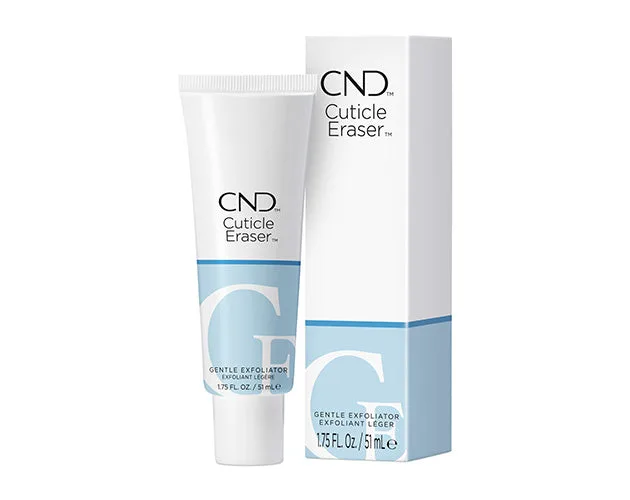
Most cuticle removers are high-pH alkaline gels that dissolve keratin fast and burn skin if you forget them for five minutes. This takes the opposite route — a buffered multi-acid blend inside a rich emollient cream, so it softens gradually with no timer and no risk of the tissue damage that makes aggressive removers a recurring salon problem.
The name oversells and the formula undersells, which is a better problem than the reverse. Four buffered acids ride inside a genuinely rich almond-and-panthenol cream, softening cuticle buildup over days rather than dissolving it in seconds. Slow, forgiving, and much harder to hurt yourself with than the caustic removers it replaces — though heavy buildup will test your patience.
Ninety retail ratings is a workable but slim base for a product that has been in salon distribution for years, so user patterns described here are indicative rather than firmly established. No concentrations are published for the acid blend either, which means its position in the ingredient list — well below the emollients — is doing real work in this assessment and would be worth revisiting if the brand ever discloses figures.
The case for it
What would change this: A declared concentration would move this to a firmer reading of the dose.
Same rule for everyone. “Good choice” is the verdict on 9,564 of 45,024 concern verdicts across the catalog; rule R5 decided 9,072 of them. Unchanged since September 5, 2026, engine 5.1.1.
Brand or formulator? Disclose a concentration or correct a fact →
The studies behind the evidence row
Also listed for Dryness — the actives here (Allantoin, Panthenol (Vitamin B5) are in our research queue for that concern; there is no verdict until their evidence rows are written. That is a gap in our table, not a mark against the product.
A verdict is DermApproved’s assessment of how well a product’s ingredients fit a concern — never a claim about what the product treats. Evidence dots and collected reviews sit beside it and are never blended in. Rules 0.5.1 · evidence table ev-2026.09-r228 · how we decide
Almost every argument about cuticle care is really a vocabulary problem. The word covers two entirely different tissues: the eponychium, which is the living fold of skin at the base of your nail, and the true cuticle, a thin film of dead cells that fuses to the nail plate and gets dragged up it as the nail grows. The first one is a seal protecting the matrix where your nail is manufactured, and cutting it is how people acquire inflamed, infection-prone nail folds. The second is genuinely debris, and clearing it is what makes a manicure look clean. The entire problem with the aggressive cuticle removers that dominated salons for decades is that a high-pH gel dissolving keratin in forty seconds has no way to distinguish between them.
This is CND's answer to that, and the answer is essentially: slow down. Instead of an alkaline remover, it uses a blend of glycolic, citric, malic and lactic acids — plus sugar cane extract, which is where a portion of those acids naturally originate — buffered with sodium hydroxide and suspended in a rich cream. The result behaves nothing like a remover. There is no tingle, no fizz, no timer, and nothing visibly sloughs off. What happens instead is that after a few minutes the tissue at the base of the nail simply stops resisting, and a soft pusher moves it back without the tearing sensation that makes people flinch.
Read the ingredient list in order and the formula's real priorities become clear. Water, then sweet almond oil, then an emollient ester, then cetearyl alcohol — you are three ingredients deep into what is functionally a hand cream before anything else appears. The four acids sit well down the list, below the chamomile and aloe, alongside allantoin and panthenol. That ordering is a choice, and it is the right one for a product meant to be used on the same square centimetre of skin several times a week. Panthenol pulls water into the softened tissue so it becomes pliable rather than merely loosened; allantoin keeps a fold that people habitually pick at from getting angry about the acids. The gentleness is engineered, not accidental.
It does mean managing expectations. Anyone arriving with months of accumulated buildup, hoping for the dramatic before-and-after that alkaline removers deliver in a single sitting, will find the first use anticlimactic to the point of suspicion. This is maintenance chemistry. Use it two or three times a week for a fortnight and your nail folds look consistently tidy; use it once and judge, and you will conclude it does nothing. A useful mental model is that it keeps cuticles from needing correction rather than performing the correction itself — which, if you have ever watched someone's nail fold go red and swollen after an over-enthusiastic manicure, is the trade you want.
One piece of the marketing deserves a mild eyebrow. Sugar cane extract appears in the list and is routinely described as a natural source of alpha hydroxy acids, which is true and also slightly beside the point, because glycolic, citric, malic and lactic acids are all named separately right below it. The acids doing the work are the acids on the label, not a botanical standing in for them. That is not deception so much as a habit the whole category shares, and it is worth noticing mainly because it can lead people to assume the formula is milder than it is, or gentler in some way that nature confers. The gentleness here comes from buffering and from burying the acids under an emollient load, both of which are chemistry decisions rather than botanical ones.
The practical details are simple and mostly about sequence. It goes on dry nails, before oil, because an occlusive film underneath would keep the acids from reaching the tissue they are meant to work on. A pea-sized amount genuinely covers all ten fingers; the pot is small but the usage rate is smaller, and four to six months from a single one is realistic. Leave it a few minutes, push back gently with something soft, then seal with oil and hand cream. The pushing is the part to ration — twice a week at most, because that is mechanical work on living skin, and the product being gentle does not make a pusher gentle.
The irritations, such as they are, are minor but worth naming. There is a declared fragrance, applied to skin that in the target user is frequently split or picked at, and the fragrance earns nothing functional. Sweet almond oil sits second in the list, which puts this off-limits for tree nut allergies — a recurring theme in this brand's line and a genuine limitation rather than a footnote. Chamomile is a mild consideration for anyone reactive to the daisy family. And the pot requires fingers, which is unhygienic in a salon context and mildly annoying at home with wet hands.
Twelve dollars is fair. It is more than a drugstore cuticle remover and less than most salon-brand treatments, and the low usage rate means the cost per month is trivial. What you are paying for is a formulation approach that removes the main way people damage their own nail folds — namely, using something strong and then getting distracted. The acids here are not powerful, and after a week of use that stops feeling like a shortcoming and starts feeling like the entire design brief. Just do not buy it expecting an eraser. Buy it expecting a cream that makes the cutting unnecessary, which is a better outcome anyway.
The hero actives that drive this product's performance.
| Ingredient | Function | Evidence |
|---|---|---|
| Alpha Hydroxy Acid Blend (Glycolic Acid, Citric Acid, Malic Acid, Lactic Acid) | Four acids sharing the work of loosening the thin film of dead tissue that creeps up the nail plate, which is what makes cuticles look ragged. They sit low in the list and are buffered with sodium hydroxide, so this softens over days of use rather than dissolving anything in one sitting. | Established mechanism for Rough Texture · established mechanism |
| Sweet Almond Oil (Prunus Amygdalus Dulcis) | Second on the list, immediately after water, and the reason this reads as a hand cream that happens to exfoliate — the emollient load is high enough to offset the acids entirely, which is a deliberate choice for skin that gets acid-treated daily. | Not yet assessed |
| Allantoin | The quiet soother that earns its place in an acid product used on skin people habitually pick at — it keeps the nail fold calm and helps rough, split edges settle rather than inflame under repeated exfoliation. | Not yet assessed |
| Panthenol | Pulls water into the softened cuticle and holds it there, which is what actually makes the tissue pliable enough to push back without tearing — the difference between a cuticle that yields and one that shreds. | Not yet assessed |
| Chamomile Extract (Chamomilla Recutita) | A traditional anti-irritant included alongside the aloe to take the edge off the acid blend, contributing more to how gentle the cream feels in use than to any measurable change in the nail fold. | Not yet assessed |
Ingredient standings describe the active at treatment-level doses and vehicles; this product's own condition grades weigh its actual formula.
Aqua (Water) (Eau), Prunus Amygdalus Dulcis (Sweet Almond) Oil, PPG-2 Myristyl Ether Propionate, Cetearyl Alcohol, Parfum (Fragrance), Sorbitan Oleate, Glycerin, Tocopheryl Acetate, Chamomilla Recutita (Matricaria) Flower Extract, Saccharum Officinarum (Sugar Cane) Extract, Aloe Barbadensis Leaf Juice, Glycolic Acid, Citric Acid, Malic Acid, Lactic Acid, Allantoin, Panthenol, Polysorbate 60, Cetyl Alcohol, Glyceryl Stearate SE, Ceteareth-20, Propylene Glycol, Xanthan Gum, Sodium Hydroxide, Potassium Sorbate
treatment
PM
Use it on dry hands before any oil — an occlusive film over the top blocks the acids from reaching the tissue they are meant to soften. Give it a few minutes and a gentle push-back, then follow with cuticle oil or hand cream as the sealing step. It does not need to be rinsed.
The cuticle feels softer and pushes back more willingly after a single application left on for a few minutes. Genuinely tidier nail folds that stop building up ragged tissue take about a week of nightly use, and the effect holds only with regular reapplication — it is grooming maintenance rather than a one-time correction.
Alpha hydroxy acids are among the best-characterised ingredients in dermatology, and the mechanism at work here is the same one that underpins their use on the face: at low pH they weaken the ionic and hydrogen bonding between corneocytes, loosening the cohesion that keeps dead cells adhered in sheets. On a nail fold that means the dead film fused to the plate detaches with less mechanical force, which is the whole objective. What is specific to this formula is how deliberately the effect has been throttled. Sodium hydroxide appears near the end of the list as a neutraliser, the four acids sit below the botanical extracts, and the whole thing is delivered in an oil-in-water emulsion whose second ingredient is a fatty oil — every one of those choices reduces free acid availability and slows penetration. Chemically this is a formulation optimised against over-exfoliation rather than for potency, which is a defensible priority for tissue that will be treated several times a week indefinitely. The supporting cast is better evidenced than the acids' concentration here: allantoin has a long record as a soothing agent and mild keratolytic in its own right, and panthenol converts to pantothenic acid in skin, where it has reasonable evidence for improving stratum corneum hydration and supporting barrier repair — relevant because pliability, not just loosening, determines whether a cuticle pushes back or tears. Chamomile and aloe are traditional anti-irritants with modest supporting data and are best understood as contributing to how the cream feels rather than to a measurable endpoint. No published research exists on this specific combination for periungual use.
The consistent message from clinical practice is that cuticles should be left largely alone. The eponychium forms a physical seal between the nail fold and the matrix beneath it, and breaching that seal — by cutting, by aggressive pushing, or by chemical removers left on too long — is a well-recognised route to acute paronychia, the painful bacterial infection that accounts for a sizeable share of nail complaints. Guidance for salon clients is typically to decline cuticle cutting outright and to accept gentle pushing of softened tissue at most. Where softening agents are concerned, clinicians tend to be agnostic about the specific chemistry while noting that gentler, buffered formulations reduce the risk of the chemical irritant dermatitis that stronger alkaline removers can cause. Anyone with hand eczema is generally advised to skip exfoliating steps around the nails during a flare, since the periungual skin is thin and already compromised. Redness, swelling, throbbing or pus at a nail fold is the point at which this stops being a grooming question.
Work on clean, dry nails with no oil or polish on the plate. Take a small amount — a pea covers both hands — and massage it into the base of each nail and along the side walls, paying attention to where the tissue creeps up the plate. Leave it for three to five minutes; there is no upper limit, and it can simply stay on overnight. Once or twice a week, follow with a soft wooden or rubber-tipped pusher, working gently and stopping the moment there is resistance rather than forcing the tissue. Never cut what has been softened. Finish with cuticle oil and then hand cream, in that order, to seal the softened fold. On the other nights, the cream alone is fine.
Twelve dollars sits between drugstore removers and the rest of the salon shelf, and the economics beat the sticker because the usage rate is so low — a pea covers ten nails, and a 0.5 oz pot realistically runs four to six months. Call it a couple of dollars a month for something that plausibly replaces both a harsh remover and the nipping that follows it. The 1.75 oz professional size cuts the per-gram cost substantially and suits anyone treating more than one pair of hands, though it is more than a single household will finish before the fragrance and oil fraction age. The caveat is that the acid content is modest, so the value rests on months of consistent use rather than one session.
Anyone whose cuticles look ragged and overgrown between manicures, and anyone who has been talked into cutting them and wants a way to stop. It is particularly well suited to people with sensitive or frequently picked nail folds, since the buffered acid approach is far more forgiving than a caustic remover.
Tree nut allergies rule it out — almond oil is second in the list. Anyone with active hand eczema or badly broken skin around the nails should wait for calm before adding acids and fragrance to the area, and anyone with heavy, hardened buildup looking for a single dramatic session will get more from a professional manicure first.
Ready to try CND Cuticle Eraser?
Buy at Amazon ♥A thick, opaque cream with a slight slip that melts down under a fingertip and disappears without needing to be wiped off
A clean, soapy floral — light, distinctly salon, and gone within a few minutes
A small screw-top pot that requires fingers to dispense, which is hygienic enough for personal use and awkward mid-manicure with wet hands
There is no sensation to speak of — no tingle, no warmth, nothing that signals an acid is present, which throws people expecting a cuticle remover to announce itself. Left on for a few minutes, the tissue at the base of the nail turns noticeably more pliable, and a soft pusher moves it without resistance or tearing. Anyone used to strong alkaline removers will find the first use underwhelming until they compare the state of their nail folds after a week.
4 to 6 months of two-to-three times weekly use on all ten nails
All Year
It exists because of what technicians were doing before it: reaching for caustic removers or, worse, nippers, both of which produce the ragged regrowth and inflamed folds that bring clients back complaining. Building the acids into a conditioning cream was a way to make daily cuticle maintenance something a client could safely do at home between appointments rather than a procedure performed on them.
Nearly five decades of formulating for salon professionals gives CND an unusual vantage point on nails: its customers are technicians performing the same service forty times a week, which tends to filter out products that only work in photographs. The trade-off is that its evidence base is trade research and practitioner feedback rather than dermatological literature, and its claims are written for a salon counter.
Cuticles should be removed at every manicure.
Two different tissues get called the cuticle and only one should go. The eponychium — the living fold of skin at the base — seals the nail matrix against bacteria and should never be cut. The true cuticle is the thin dead film that fuses to the plate and travels up it, and that is what a product like this loosens.
Stronger cuticle removers give better results.
The high-pH removers that dissolve tissue in seconds do not distinguish between dead film and living skin, which is why leaving them on too long leaves the fold red, thin and prone to hangnails. Slower acid softening in an emollient base produces tidier nails over a week and far fewer casualties.
Hangnails are torn cuticles that need trimming back further.
They are splits in dry skin at the side walls, and cutting deeper reliably makes the next one worse. Keeping that skin soft and pliable is what actually prevents them — one reason this cream leads with almond oil, glycerin and panthenol rather than with its acids.
A softener, and the distinction matters. Traditional removers use high-pH alkalis to dissolve keratin in under a minute; this uses a buffered blend of glycolic, lactic, malic and citric acids inside a cream to gradually loosen dead tissue. Nothing sloughs away dramatically — the cuticle simply stops resisting a pusher.
A few minutes is plenty, and unlike alkaline removers there is no timer to fear. Because it is formulated as a leave-on cream, forgetting about it does not cause harm — many people simply massage it in at night and let it stay. Rinsing is unnecessary either way.
The cream itself is mild enough for nightly use. What should not be daily is the pushing back — that is mechanical work on living tissue, and once or twice a week is plenty. Overworking the fold is how people end up with the inflamed, ragged cuticles they were trying to fix.
No, and anyone expecting that will be disappointed. The acids sit below the emollients in the list, which makes this a maintenance product rather than a corrective one. Heavy buildup that has been accumulating for months needs a week or two of consistent use, or a professional manicure to reset before this keeps it in check.
Rarely, thanks to the buffering and the allantoin and chamomile in the base — most users report no sensation at all. That said, broken skin plus acids plus fragrance is never a combination to be casual about, so let a torn hangnail close before applying it directly to the site.
Both, in the right order. This goes on dry nails first, because an oil layer underneath would block the acids from reaching the tissue. Once you have softened and pushed back, oil is the sealing step that keeps the fold pliable — the two products are doing different jobs.
Treat it cautiously. Acids and a declared fragrance on skin that is already barrier-compromised is a plausible route to a flare, even though this formula is mild by category standards. A plain occlusive on the nail folds is the safer route during an active flare, with exfoliation reserved for calm periods.
Recurring themes our editors read across retailer reviews of this product — summaries in our words, not quotations, and not a substitute for your own patch test.
Cuticles push back easily without cutting
Feels like a rich cream rather than a harsh remover
A pea-sized amount treats all ten nails
No stinging even on picked-at skin
Too gentle for heavy cuticle buildup
Needs repeated use rather than one dramatic result
Fragranced, which not everyone wants near hangnails
Small pot for the price if used generously