The Ingrown Hair Is a Physics Problem, Not a Hygiene Problem
Body grooming produces the same four complications in the same order, in a predictable population — and almost every fix is upstream of the razor rather than downstream of it.
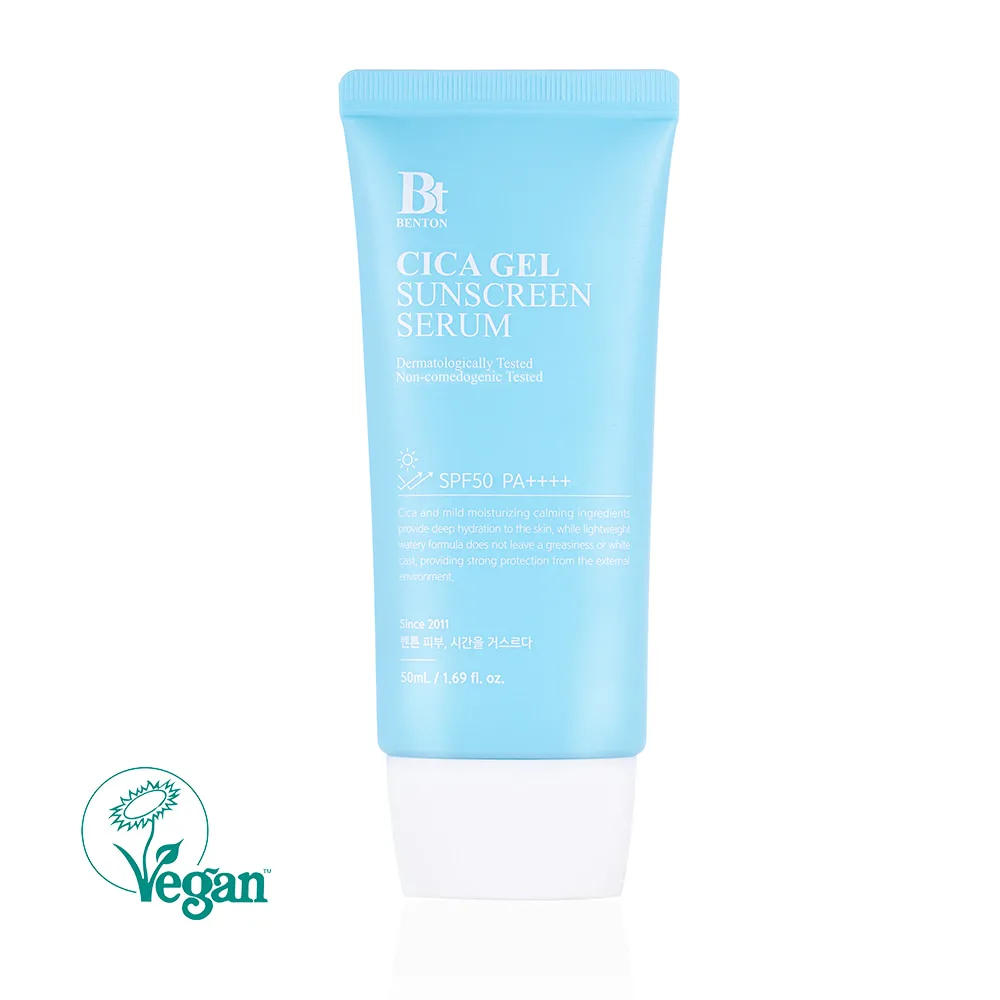
Its four filters, DHHB, ethylhexyl triazone, bisoctrizole and iscotrizinol, are the European-Asian generation of UV absorbers that American drugstore sunscreens were built without until 2026, and they let a light gel serum reach SPF 50 and PA++++ with no avobenzone, octocrylene or homosalate at all. The 'cica' in the name is a 100 ppm garnish; the filters are the story.
A light, fragrance-free gel sunscreen built on four modern European-Asian filters that give it SPF 50 and top-tier UVA coverage with no cast and no avobenzone drama. The cica on the label is a hundred-parts-per-million garnish and there is no water resistance, but as a daily under-makeup sunscreen for combination and sensitive skin it is very good; the only real hesitations are its import-only US status and pricing that swings from twenty-four dollars to clearance.
Fewer than fifty reviews across two Korean exporters and no US retail presence make this a formulation-led assessment: the filter set is judged on its long European and Asian record, and Benton's declared doses and brand-commissioned tests fill in the rest. What the record does not yet show is how the gel holds up across a full year of wear, whether the deep discounting seen in 2026 preceded a reformulation, and how consistent the imported stock's shelf life is.
The case for it
What would change this: A declared concentration would move this to a firmer reading of the dose.
Same rule for everyone. “Full protection” is the verdict on 2,288 of 45,024 concern verdicts across the catalog; rule P1 decided 2,232 of them. As of September 25, 2026, engine 5.1.1.
Brand or formulator? Disclose a concentration or correct a fact →
The studies behind the evidence row
The case for it
What would change this: A researched evidence row for the lead active would replace this with a verdict.
Same rule for everyone. “Full protection” is the verdict on 2,288 of 45,024 concern verdicts across the catalog; rule P1 decided 2,232 of them. As of September 25, 2026, engine 5.1.1.
Brand or formulator? Disclose a concentration or correct a fact →
The case for it
Same rule for everyone. “Good choice” is the verdict on 1,938 of 45,024 concern verdicts across the catalog; rule F2 decided 1,938 of them. As of September 25, 2026, engine 5.1.1.
Brand or formulator? Disclose a concentration or correct a fact →
The studies behind the evidence row
The case for it
What would change this: A declared concentration would move this to a firmer reading of the dose.
Same rule for everyone. “Good choice” is the verdict on 9,564 of 45,024 concern verdicts across the catalog; rule R5 decided 9,072 of them. As of September 25, 2026, engine 5.1.1.
Brand or formulator? Disclose a concentration or correct a fact →
The studies behind the evidence row
The case for it
What would change this: A researched evidence row for the lead active would replace this with a verdict.
Same rule for everyone. “Full protection” is the verdict on 2,288 of 45,024 concern verdicts across the catalog; rule P1 decided 2,232 of them. As of September 25, 2026, engine 5.1.1.
Brand or formulator? Disclose a concentration or correct a fact →
Does the jobDoes what a sunscreen is for: UVA coverage, kind to the skin wearing it. Not measured from the label: pleasant enough to actually use.
A verdict is DermApproved’s assessment of how well a product’s ingredients fit a concern — never a claim about what the product treats. Evidence dots and collected reviews sit beside it and are never blended in. Rules 0.5.1 · evidence table ev-2026.09-r228 · how we decide
The name says cica and serum, and both are true in the narrowest possible sense: there is centella in it, at a declared one hundred parts per million, and it is thin enough to pass for a serum. Neither is the reason to buy it. The reason sits at positions four, six, seven and nine of the ingredient list, where diethylamino hydroxybenzoyl hexyl benzoate, ethylhexyl triazone, bisoctrizole and diethylhexyl butamido triazone appear, four UV filters that European and Asian sunscreens have relied on for the better part of two decades and that American drugstore sunscreens were built without until the FDA began admitting modern filters in mid-2026. That is what a Korean sunscreen has meant to an American buyer for years, and Benton's is a well-made example of it.
The filter design deserves the attention the marketing does not give it. DHHB, sold as Uvinul A Plus, is a photostable long-wave UVA absorber, which means the formula does not need octocrylene to babysit an avobenzone that would otherwise degrade in the sun; this is why the gel can run on a light ester like dibutyl adipate instead of a heavy oil phase. Ethylhexyl triazone is among the most efficient UVB absorbers per gram that exists, and diethylhexyl butamido triazone backs it up, which is how a formula this thin reaches SPF 50. Bisoctrizole, a micronised hybrid that scatters as well as absorbs and is too large to enter the skin, broadens the UVA coverage and earns the PA++++. Four filters, no homosalate, no octocrylene, no oxybenzone, and no zinc to cast. It is a cleaner filter story than almost anything on an American drugstore shelf, and it should be said plainly.
On the face it lives up to the serum half of the name. It is a soft, translucent gel-cream that spreads thin, cools a little and disappears inside a minute, setting to a hydrated, faintly dewy finish with no residue. Propanediol, glycerin, three weights of hyaluronic acid and saccharide isomerate are what the tube means by a moisture serum, and on combination skin they let the sunscreen stand in for the morning moisturiser. There is no cast on deep skin, no fragrance, no alcohol, and for most wearers no eye-stinging, which is a real advantage of this filter set over the salicylate-and-avobenzone formulas that make eyes stream in heat. The few dozen reviews on Korean exporters repeat the same points: invisible, comfortable, sits under makeup.
The cica needs deflating and Benton, to its credit, half-deflates it on the label by printing the dose. One hundred parts per million is a hundredth of a percent. The triterpenes listed beside it are in the same range, and the ceramide NP, allantoin and ectoin further down are the brand's house courtesy rather than an active dose. The comfort this sunscreen offers sensitive skin is real, but it comes from what is absent, fragrance, alcohol, harsh filters, and from the humectants, not from the plant on the front of the tube. A reader with rosacea should buy it for the gentle filter set, not for the soothing claim.
Two honest limits. The first is water: no resistance is claimed and the light ester base will not hold through sweat or a swim, so this is a desk-and-city sunscreen, and a day outdoors wants something built to stay put. The second is the pilling that acrylate-thickened gels are prone to; rubbed over a serum that is still damp, this one can roll, and the fix is the usual two minutes of patience before applying.
The regulatory question also deserves a straight answer rather than a shrug. None of these four filters is on the US sunscreen monograph, which means the product cannot be marketed as a sunscreen through FDA-regulated retail and reaches Americans through K-beauty exporters; the FDA's list froze in 1999 and only added its first modern filter, bemotrizinol, in June 2026. That gap is a fact about American regulatory process, not about these molecules, which have large human-use records in Europe, Australia and Asia, and the dermatology literature spent 2026 saying exactly this. But an import route also means no US labelling oversight, no FDA-witnessed SPF test, and a supply chain where a tube may have sat in a warehouse for a while, which brings up the third thing a careful buyer should notice: pricing. Benton's own site lists it at twenty-four dollars; in September 2026 one exporter had it at eleven and a European retailer at a quarter of list with a short-shelf-life note. That pattern usually means a batch selling through ahead of a revision, and it is worth checking the expiry on any deeply discounted tube.
Benton has been doing this since 2011, short fragrance-free formulas, brand-commissioned Intertek tests published on every product page, and this sunscreen is in character. At full price it is fairly valued for what the filters deliver and a little small at 50 mL for a daily sunscreen. At clearance it is one of the best-protected daily gels a few dollars can buy, expiry permitting. Combination, normal and sensitive skin that wants an invisible, comfortable SPF 50 with the modern filter set should try it; anyone who needs water resistance, or who wants an FDA-regulated label, has reasons to look elsewhere, and neither of those is a criticism of what is in the tube.
The hero actives that drive this product's performance.
| Ingredient | Function | Evidence |
|---|---|---|
| Diethylamino Hydroxybenzoyl Hexyl Benzoate | The UVA anchor, fourth in the list and the filter that gives this gel its PA++++ rating: a photostable long-wave absorber that needs no octocrylene or bemotrizinol to prop it up, which is why the formula can run on a light ester like dibutyl adipate rather than a heavy oil phase. | Regulator-approved for Sun Damage · limited certainty |
| Ethylhexyl Triazone + Diethylhexyl Butamido Triazone | Two oil-soluble triazine UVB filters that are among the most efficient absorbers per gram available, which is how the gel reaches SPF 50 without homosalate or octocrylene; both are approved across Europe and Asia and neither has yet been admitted to the US sunscreen monograph. | Regulator-approved for Sun Damage · limited certainty |
| Methylene Bis-Benzotriazolyl Tetramethylbutylphenol | Bisoctrizole, the micronised hybrid filter that scatters as well as absorbs across UVB and UVA and does not penetrate skin; in this formula it broadens the UVA coverage the DHHB provides and is the ingredient responsible for the faint whitish tone in the tube that disappears on the skin. | Regulator-approved for Sun Damage · limited certainty |
| Centella Asiatica Extract + Asiaticoside + Madecassic Acid + Asiatic Acid (100 ppm (extract)) | The cica of the name, declared on the label at 100 ppm for the whole-plant extract with three isolated triterpenes beside it; that is a token dose in a leave-on, enough to justify the soothing claim on paper and not enough to expect the calming a centella serum delivers. | Not applicable for Sensitivity |
| Sodium Hyaluronate + Hyaluronic Acid + Saccharide Isomerate | Three humectants of different weights that make up the 'moisture serum' half of the pitch, sitting alongside propanediol and glycerin to give the gel a hydrating, non-tacky set that suits a bare-faced morning rather than a beach one. | Established mechanism for Dehydration · established mechanism |
| Dibutyl Adipate | The light ester in third place that dissolves the three oil-soluble filters and keeps the finish thin; it is the reason a chemical sunscreen with this much filter can feel like a gel serum rather than a lotion, and part of why it is not labelled water resistant. | Not yet assessed |
Ingredient standings describe the active at treatment-level doses and vehicles; this product's own condition grades weigh its actual formula.
Water, Propanediol, Dibutyl Adipate, Diethylamino Hydroxybenzoyl Hexyl Benzoate, Silica, Ethylhexyl Triazone, Methylene Bis-Benzotriazolyl Tetramethylbutylphenol, Caprylyl Methicone, Diethylhexyl Butamido Triazone, Coco-Caprylate/Caprate, 1,2-Hexanediol, Polyglyceryl-3 Methylglucose Distearate, Saccharide Isomerate, Pentylene Glycol, Panthenol, Caprylic/Capric Triglyceride, Decyl Glucoside, Behenyl Alcohol, Acrylates/C10-30 Alkyl Acrylate Crosspolymer, Betaine, Sodium Acrylate/Acryloyldimethyltaurate/Dimethylacrylamide Crosspolymer, Polyisobutene, Hydrogenated Poly(C6-20 Olefin), Glycerin, Dipotassium Glycyrrhizate, Poly C10-30 Alkyl Acrylate, Butylene Glycol, HDI/Trimethylol Hexyllactone Crosspolymer, Sodium Hyaluronate, Sodium Hyaluronate Crosspolymer, Hyaluronic Acid, Vincetoxicum Atratum Extract, Biosaccharide Gum-1, Caprylyl/Capryl Glucoside, Glycine Soja (Soybean) Seed Extract, Sorbitan Oleate, Centella Asiatica Extract, Tocopherol, Althaea Rosea Flower Extract, Allantoin, Ectoin, Candida Bombicola/Glucose/Methyl Rapeseedate Ferment, Asiaticoside, Madecassic Acid, Vitis Vinifera (Grape) Seed Oil, Asiatic Acid, Centella Asiatica Leaf Extract, Fructan, Ceramide NP, Hydrogenated Lecithin, Hydroxyacetophenone, Tromethamine, Sodium Phytate, Xanthan Gum, Acetyl Glucosamine, Citric Acid, Sodium Citrate, Octanediol, Ethylhexylglycerin, Caprylyl Glycol, Helianthus Annuus (Sunflower) Seed Oil
sunscreen
AM
Last step of the morning routine over a moisturiser that has fully absorbed; on combination skin it can stand in for the moisturiser itself. Give it a couple of minutes to set before makeup. It carries no water-resistance claim, so treat it as a daily-wear sunscreen and switch to a water-resistant formula for sport, sweat or swimming.
Protection begins once the film sets, about fifteen minutes after applying; the hydrated, cast-free finish is immediate. The centella and ceramide are at levels that make any calming effect cosmetic, and the real long-term payoff is the fewer new dark spots and slower photo-ageing that come from wearing a well-filtered SPF 50 every day.
The formulation logic here is that photostable filters let you build a light vehicle. In a typical US chemical sunscreen the avobenzone needed for UVA degrades under irradiation and must be paired with a stabiliser such as octocrylene, and the whole oil phase is designed around that pairing. Diethylamino hydroxybenzoyl hexyl benzoate absorbs across the UVA range with a maximum near 354 nm and does not degrade appreciably in sunlight, so the formulator can dissolve it in a low-viscosity ester like dibutyl adipate and keep the finish thin. Ethylhexyl triazone and diethylhexyl butamido triazone are triazine UVB absorbers with very high specific extinction, which is why comparatively small doses deliver a high SPF, and both are likewise photostable. Bisoctrizole is a micronised organic particle, roughly 100 to 200 nm, that both absorbs and scatters across UVB and UVA; its size means it stays on the surface rather than penetrating, which is part of why it has attracted less absorption scrutiny than the smaller salicylate and dibenzoylmethane filters used in the US.
All four filters have been permitted in the European Union and much of Asia since the early 2000s. They were absent from the US market not because of adverse findings but because the FDA's over-the-counter monograph closed its filter list in 1999 and the 2014 Sunscreen Innovation Act failed to move the applications forward; a 2026 review in JAAD International of the regulatory change that finally admitted bemotrizinol describes that history and its consequences for American photoprotection. The practical implication for this product is that it has not undergone an FDA-witnessed SPF or broad-spectrum test, and its SPF 50 and PA++++ ratings rest on Korean and ISO methods, which are internationally standard but not US-regulated.
The cosmetic actives are dosed as decoration. Centella asiatica extract is declared at 100 ppm, far below the 0.5 to 1 percent range in which topical centella and its triterpenes have shown wound-healing and anti-inflammatory effects in the literature; sodium hyaluronate, glycerin and propanediol account for the measurable hydration.
Clinicians have spent years fielding the question of whether imported Korean and European sunscreens are worth the trouble, and the answer that has settled in is a qualified yes: the filter sets are photostable, cover long-wave UVA better than avobenzone-based formulas, and are tolerated by patients whose eyes and skin react to US salicylate and octocrylene systems, which matters for adherence in rosacea, melasma and post-inflammatory hyperpigmentation where UVA drives the pigment. The qualifications are the ones this product carries. There is no FDA-witnessed SPF test, so the rating is taken on trust in Korean and ISO methods; there is no water resistance, so it is counselled as an everyday face sunscreen rather than an outdoor one; and a gel this light is under-applied by almost everyone, so the quarter-teaspoon rule and a midday reapplication are the practical advice. The centella content is too low to factor into a treatment plan, and patients who flush should not expect it to calm anything the filters and the fragrance-free base do not already avoid. For pregnant patients, practitioners tend to note that bisoctrizole's size limits absorption while the other three filters have less human pharmacokinetic data than a mineral sunscreen, and default to zinc oxide where the patient prefers the most conservative option.
Apply as the final morning step, after moisturiser has fully absorbed, using roughly a quarter-teaspoon for face and neck; the gel spreads easily, so measure by amount rather than by feel. Press it on in two passes rather than rubbing, wait a minute or two for it to set, then apply makeup if wearing any. Reapply every two hours in direct sun and after any heavy sweating, because no water resistance is claimed. Remove in the evening with a cleansing oil or balm followed by a gentle cleanser; the acrylate film comes off more cleanly that way than with a foaming wash alone.
At Benton's own twenty-four dollars for 50 mL this is priced like a mid-range Korean gel sunscreen, and for the filter quality that is fair while the tube size, five to six weeks of daily use, keeps it from being generous. The picture is complicated by discounting: in September 2026 one major exporter had it at eleven dollars and a European retailer at a quarter of list with a short-shelf-life note, which makes it a bargain for anyone who checks the expiry and a warning sign that a revision may be coming. Benton's fifteen years and published third-party testing are worth something for a brand you are buying without US regulatory oversight. Compared with a US drugstore chemical sunscreen the value is in the filters; compared with other modern-filter Korean gels it is competitive at full price and a steal on clearance.
Combination, normal and sensitive skin looking for an invisible daily SPF 50 with modern, photostable filters and no fragrance, particularly people whose eyes or skin react to American avobenzone-and-salicylate sunscreens, and anyone with melasma or dark spots who wants strong long-wave UVA coverage under makeup. Deep skin tones tired of mineral casts will also like it.
Anyone who needs water resistance for sport, sweat or swimming, buyers who want an FDA-regulated label and a US-witnessed SPF test, and skin that congests from light esters and plant oils. Those hoping for a centella treatment in sunscreen form should look at the dose on the label and adjust their expectations.
Ready to try Benton CICA Gel Sunscreen Serum SPF50/PA++++?
Buy at Amazon ♥A soft, translucent off-white gel-cream that spreads thinly, absorbs in under a minute and sets to a hydrated, faintly dewy finish with no residue or cast.
Nothing added; a very faint filter smell at the moment of application that is gone once it sets.
A slim 50 mL squeeze tube with a narrow nozzle that doses cleanly and travels well; the tube is printed with Benton's usual full ingredient list and test claims.
It applies like a gel serum, cools slightly and disappears, which is the first-morning surprise for people used to lotion sunscreens. There is no cast on any tone, no eye-stinging for most wearers and no adjustment period; the one early lesson is to let serums dry fully underneath, as the acrylate thickeners can pill if rubbed over a wet layer.
About five to six weeks of once-daily face-and-neck use at the labelled dose; a small tube for a daily sunscreen.
All Year
Benton's earlier sun products were the Air Fit and Skin Fit creams and a mineral stick; the CICA Gel Sunscreen Serum arrived in 2024 as the brand's entry into the hydrating gel-serum format that Korean sun care had shifted toward, combining the moisture-serum positioning of its Guava and Aloe lines with the brand's fragrance-free house rules. By 2026 it was turning up at deep clearance on some exporters while remaining at full price on the brand's own site, which usually signals a batch sell-through or an imminent revision.
Benton has formulated fragrance-free, short-list skincare in Seoul since 2011 and publishes brand-commissioned Korea Intertek safety and efficacy tests for each launch. Its sun range uses the modern European and Asian filter set that the US monograph only began admitting in 2026, which means its sunscreens reach American buyers through importers rather than FDA-regulated retail.
A 'sunscreen serum' with cica is half skincare, so a small amount is enough.
It is a full SPF 50 sunscreen and needs the same quarter-teaspoon for the face as any other, because the protection was measured at that dose. The serum feel is the vehicle, not a reason to under-apply, and the centella is a token dose that does nothing to make thin coverage safer.
Because the filters are not FDA-listed, they are unsafe or untested.
DHHB, ethylhexyl triazone, bisoctrizole and iscotrizinol have been approved and used across Europe, Australia and Asia for around two decades with large human-use records. The US monograph froze in 1999 and only began adding modern filters in 2026, so absence from the US list is a statement about American regulatory process, not about the molecules; it does mean the product cannot be sold as a sunscreen through FDA-regulated retail.
'Reef safe' on the tube means the formula has no environmental footprint.
The claim means it avoids oxybenzone and octinoxate, the two filters banned in Hawaii. It still contains organic UV filters and the term has no regulatory definition anywhere; treat it as a narrow statement about two specific ingredients rather than an ecological guarantee.
Four organic filters: diethylamino hydroxybenzoyl hexyl benzoate (Uvinul A Plus) for long-wave UVA, ethylhexyl triazone and diethylhexyl butamido triazone for UVB, and bisoctrizole, a broad-spectrum hybrid. There is no avobenzone, octocrylene, homosalate, oxybenzone, zinc oxide or titanium dioxide.
It can be bought and used, but its filters are not on the FDA sunscreen monograph, so it cannot be marketed as a sunscreen through US-regulated retail and reaches American customers via K-beauty exporters and importers. That is a regulatory-process issue rather than a safety finding; the same filters have two decades of use in Europe and Asia.
No. It contains no mineral filters, and although bisoctrizole is a micronised particle it is used at a level that dries clear on every skin tone. The finish is faintly dewy rather than matte.
No water-resistance claim is made, and the light ester base is not designed to survive sweat or swimming. It is a daily-wear face sunscreen; for sport or the beach choose a formula that states water resistance and reapply this one after any heavy sweating.
Benton declares the centella asiatica extract at 100 ppm, which is 0.01 percent, with asiaticoside, madecassic acid and asiatic acid listed near it in similarly small amounts. That is enough to justify the name and not enough to treat redness; the soothing feel of the product comes mainly from its humectants and the absence of fragrance and alcohol.
Most acne-prone reviewers tolerate it well since it is fragrance-free, alcohol-free and light, but it does contain coco-caprylate/caprate and a small amount of sunflower and grape seed oil, so skin that congests easily should patch-test along the jaw for a week before committing to daily use.
Recurring themes our editors read across retailer reviews of this product — summaries in our words, not quotations, and not a substitute for your own patch test.
No white cast and no greasy film on combination skin
Feels like a hydrating gel serum rather than a sunscreen
Fragrance-free and does not sting the eyes for most wearers
Layers well under makeup
Can pill over layered serums
Not water resistant, so it needs reapplying after sweat
Slight dewiness on very oily skin by afternoon
Small 50 mL tube for the price at full retail