Hyaluronic Acid Can Actually Dehydrate Your Skin (Here's When)
The internet's favorite hydrator has a counterintuitive dark side — in dry air, a humectant with nothing to seal it can pull water out of your skin instead of into it.
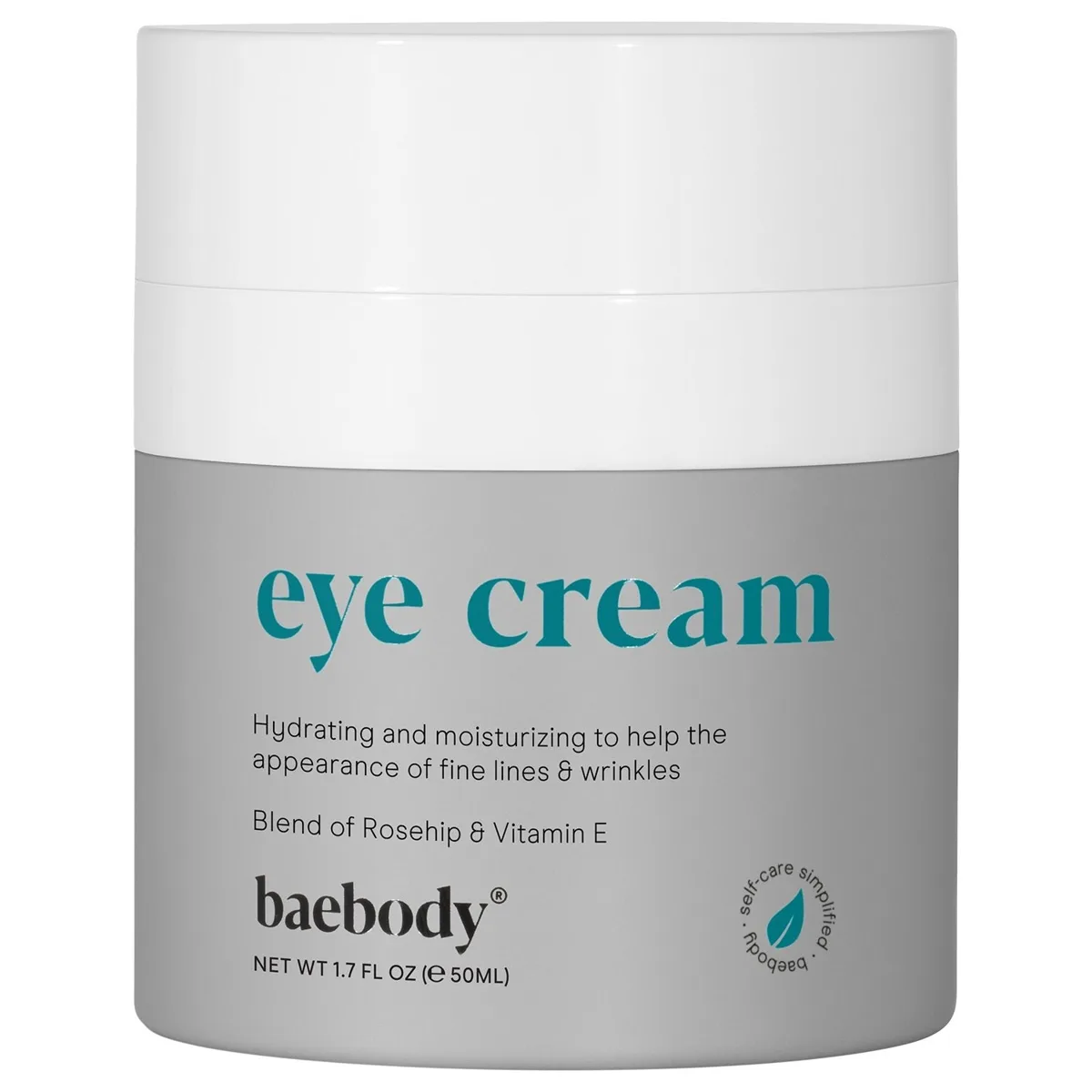
It's the rich, botanical-nourishing counterpart to Baebody's famous eye gel — a rosehip, hibiscus, and shea cream for dry under-eyes. Where the gel offers real peptides in a light texture, this cream trades those for a richer, more emollient feel, making the two brand eye products a texture-and-goal choice rather than duplicates.
The rich, rosehip-and-hibiscus counterpart to Baebody's famous eye gel — a nourishing botanical eye cream that's genuinely comforting for dry under-eyes and overnight use. But it's the plainer of the brand's two eye products: it lacks the gel's real peptide complex and any dedicated caffeine, and its 'botanical hyaluronic acid' is tara gum, not true HA. As a rich eye-area moisturizer it does its job; as a treatment for dark circles or puffiness, it falls short. Buy it for hydration on dry skin, and reach for the gel or a caffeine product if you want targeted results.
The case for it
What would change this: A declared concentration would move this to a firmer reading of the dose.
Same rule for everyone. “Good choice” is the verdict on 9,564 of 45,024 concern verdicts across the catalog; rule R5 decided 9,072 of them. Unchanged since September 5, 2026, engine 5.1.1.
Brand or formulator? Disclose a concentration or correct a fact →
The studies behind the evidence row
The case for it
What would change this: A declared concentration would move this to a firmer reading of the dose.
Same rule for everyone. “Good choice” is the verdict on 9,564 of 45,024 concern verdicts across the catalog; rule R5 decided 9,072 of them. Unchanged since September 5, 2026, engine 5.1.1.
Brand or formulator? Disclose a concentration or correct a fact →
The studies behind the evidence row
The case for it
What would change this: A declared concentration would move this to a firmer reading of the dose.
Same rule for everyone. “Promising” is the verdict on 7,858 of 45,024 concern verdicts across the catalog; rule R9p decided 7,858 of them. Unchanged since September 5, 2026, engine 5.1.1.
Brand or formulator? Disclose a concentration or correct a fact →
The studies behind the evidence row
Also listed for Aging — the actives here (Green Tea Extract, Hyaluronic Acid, Rosehip Oil, Shea Butter) are in our research queue for that concern; there is no verdict until their evidence rows are written. That is a gap in our table, not a mark against the product.
Does the jobDoes what a eye cream is for: safe for eye skin, targets a real eye concern. Not measured from the label: hydrates without heaviness, stays where it's put.
Where our review and the verdict differ. The review below was written on the formulation and the published trials; the verdicts above apply the stricter standing test in our methodology — an active earns a recommendation only with guideline or regulatory standing for the concern. Where the two disagree, the verdict is DermApproved’s position.
A verdict is DermApproved’s assessment of how well a product’s ingredients fit a concern — never a claim about what the product treats. Evidence dots and collected reviews sit beside it and are never blended in. Rules 0.5.1 · evidence table ev-2026.09-r228 · how we decide
Baebody made its name on an eye gel, so it's easy to assume its eye cream is just the same thing in a thicker format. It isn't, and the difference is the most useful thing to understand before buying. These are two genuinely different products aimed at different skin and different goals, and picking the right one comes down to knowing what each actually contains — a small exercise in reading past the shared brand name to the formulas underneath.
This cream's identity is richness. It's built on organic rosehip seed oil — high in linoleic acid and natural provitamin A — with shea butter, jojoba, and sunflower oil for genuinely nourishing emollient hydration, plus hibiscus, green tea, gotu kola, and panthenol for antioxidant soothing. The result is a cushiony cream that melts into the under-eye and leaves it richly moisturized, soft, and smoother-looking. For dry under-eyes, especially overnight, that comfort is real and welcome, and it's noticeably more nourishing than the brand's lighter, watery gel. As a rich eye moisturizer, it's pleasant and does exactly what a good emollient should.
But here's the honest catch, and it's the crux of choosing between the two Baebody eye products: this cream lacks the gel's best feature. The eye gel contains a real peptide complex — three signal peptides that genuinely support the look of firmness. This cream doesn't. What it offers instead is botanical nourishment and hydration, which is lovely but isn't a targeted anti-aging or de-puffing action. It also has no dedicated caffeine, so despite the usual eye-cream reputation, it won't meaningfully de-puff, and it can't touch structural dark circles from hollows, thin skin, or pigmentation. The 'botanical hyaluronic acid' on the label, as with so many natural-brand eye products, is really caesalpinia spinosa (tara) gum — a hydrating plant polysaccharide, not the hyaluronic acid molecule it's named after. None of this makes it a bad cream; it makes it a moisturizer rather than a treatment, and one lighter on real actives than its own sibling.
So the practical guidance writes itself. Choose this cream if your under-eyes are dry and you want rich, comforting hydration, particularly at night — it's the more emollient, soothing option. Choose the brand's eye gel instead if you want the peptides and a lighter texture, better for oily or normal skin and for firming the look of the area. Neither is simply better; they're a texture-and-goal decision, and buying the cream expecting the gel's firming benefits (or vice versa) is how people end up disappointed with a perfectly fine product. If genuine puffiness or dark circles are your concern, honestly, neither is ideal — a dedicated caffeine eye product would out-target both.
There's a wider pattern worth naming here, because Baebody's two eye products illustrate it cleanly. Brands frequently sell a 'gel' and a 'cream' version of the same concept and let shoppers assume the cream is the richer, more premium upgrade — heavier must mean better, more must mean stronger. But texture and active content are independent variables. Here the lighter gel actually carries the more compelling active (the peptides), while the richer cream is the plainer, more emollient formula. That inversion is common across the industry, and it's a good reminder that 'richer' describes how a product feels, not how much it does. If you want the firming actives, you may have to accept a lighter texture; if you want the rich cushiony feel, you may be trading away some of the actives. Knowing which you're prioritizing — feel or function — is the real decision, and it's one only the ingredient list can settle. On value, it's reasonable. At around $23 for a generous 1.7 oz bottle that lasts several months, it's an affordable rich eye moisturizer, in line with the brand's accessible pricing. You're paying a fair price for nourishing oils and soothing botanicals, though not for cutting-edge actives — the value is in comfort and hydration, not in treatment power. The main tolerance note is the wild geranium extract, a fragrant botanical that can bother reactive or rosacea-prone skin, and the plant oils that make it not fungal-acne safe.
Who should buy it? People with dry under-eyes wanting rich, gentle, botanical hydration — especially for overnight use — who understand it's a nourishing moisturizer, not a de-puffing or firming treatment. Who should skip it? Anyone wanting targeted results on puffiness, dark circles, or fine lines, who should choose the brand's peptide eye gel or a dedicated caffeine product; oily skin that finds rich creams too heavy; fragrance- or geranium-sensitive and rosacea-prone skin; and fungal-acne-prone skin (the oils). Taken for what it honestly is — a rich, nourishing rosehip eye cream that's the moisturizing half of Baebody's eye duo — it's a comfortable, fair-value pick, provided you choose it for its hydration and not for actives it doesn't contain.
The hero actives that drive this product's performance.
| Ingredient | Function | Evidence |
|---|---|---|
| Rosehip Seed Oil | An organic oil rich in linoleic acid and natural provitamin A that nourishes and conditions the delicate under-eye skin — the botanical centerpiece and the richest, most active-adjacent ingredient in this gentle cream. | Not yet assessed |
| Hibiscus & Green Tea Extracts | Antioxidant botanicals that add mild soothing and free-radical protection around the eyes, defining this cream's plant-forward character alongside the rosehip. | Not yet assessed |
| Shea Butter, Jojoba & Panthenol | Shea butter, jojoba, and panthenol provide rich emollient hydration and barrier support — the cream's genuine strength, making it a nourishing moisturizer for dry under-eyes. | Established mechanism for Dryness · established mechanism |
| Tara Gum ('Botanical Hyaluronic Acid') | Labeled 'botanical hyaluronic acid' but actually caesalpinia spinosa (tara) gum — a plant polysaccharide that adds slip and surface hydration, though it isn't true hyaluronic acid. | Established mechanism for Dehydration · established mechanism |
Ingredient standings describe the active at treatment-level doses and vehicles; this product's own condition grades weigh its actual formula.
Aloe Barbadensis Leaf Juice (Organic Aloe), Rosa Canina (Rosehip) Seed Oil (Organic), Simmondsia Chinensis (Jojoba) Seed Oil (Organic), Helianthus Annuus (Sunflower) Seed Oil, Glyceryl Stearate, Cetyl Alcohol, Glycerin (Vegetable), Butyrospermum Parkii (Shea) Butter, Stearic Acid, Tocopheryl Acetate (Vitamin E), Hibiscus Sabdariffa Flower Extract, Caesalpinia Spinosa Gum (Tara, labeled 'Botanical Hyaluronic Acid'), Camellia Sinensis (Green Tea) Leaf Extract, Centella Asiatica (Gotu Kola) Extract, Equisetum Arvense (Horsetail) Extract, Geranium Maculatum (Wild Geranium) Extract, Taraxacum Officinale (Dandelion) Extract, Panthenol (Vitamin B5), Xanthan Gum, Phenoxyethanol, Ethylhexylglycerin
treatment
AM & PM
Pat a small amount around the orbital bone with your ring finger, morning and night, before moisturizer. Its richer, oilier texture suits dry under-eyes especially well overnight. If puffiness or dark circles are your real focus, the brand's peptide eye gel is more targeted; this is the nourishing option. Keep it out of the eyes.
Immediate rich hydration and a softer, smoother look; benefits stay in the realm of moisture and comfort rather than measurable change to puffiness or dark circles.
This is a hydration-focused eye cream whose evidence base supports nourishment over correction. Its emollient core — rosehip seed oil (a source of linoleic acid and small amounts of natural provitamin A), shea butter, jojoba and sunflower oils — reduces transepidermal water loss and conditions the thin periorbital skin, while glycerin and tara gum add humectant slip and panthenol supports the barrier; hibiscus, green tea, and gotu kola contribute mild antioxidant and soothing activity. The relevant gap is against the concerns eye creams typically advertise: the formula contains no dedicated caffeine (the vasoconstrictor evidenced for transient de-puffing), no peptides (present, notably, in the brand's own eye gel) for the appearance of firmness, and no retinoid for fine lines, so its measurable benefit is hydration, which softens dryness-related crepiness but does not address vascular, structural, or pigmentary causes of dark circles and puffiness. The 'botanical hyaluronic acid' is caesalpinia spinosa (tara) gum, a hydrating polysaccharide rather than hyaluronic acid. Tolerance caveats: wild geranium extract is a potential fragrance sensitizer, and the plant oils make it unsuitable for Malassezia (fungal) acne. Overall, the science frames this as an effective rich eye moisturizer, appropriately chosen for dry under-eyes, with the caveat that its puffiness and dark-circle implications exceed what the ingredients deliver.
Clinically, this is a gentle, emollient eye moisturizer best understood as a hydrator rather than a targeted treatment. Its rosehip, shea, and jojoba oils, along with glycerin and panthenol, effectively moisturize the delicate periorbital skin and improve the look of dryness-related crepiness, making it a reasonable choice for dry under-eyes, particularly overnight. However, it lacks the ingredients dermatologists associate with the concerns eye creams are marketed for — caffeine for transient puffiness and peptides or retinoids for the appearance of firmness and fine lines — and notably contains fewer targeted actives than the brand's own peptide-containing eye gel. Patients troubled by genuine puffiness or dark circles should understand that hydration alone will not correct vascular pooling, tear-trough hollowing, or pigmentation, which respond to targeted topicals or procedures. It is well-tolerated and pregnancy-appropriate, though the wild geranium extract is a potential sensitizer for reactive or rosacea-prone skin, and the oil content makes it less suitable for fungal-acne-prone individuals. Standard guidance is to apply a small amount gently around the orbital bone, avoid the lash line, and pair daytime care with sun protection.
Pat a small amount around the orbital bone with your ring finger, morning and night, before your moisturizer, keeping it out of the eyes. Its richer texture makes it especially comfortable for dry under-eyes and overnight use. Being retinol-free, it's fine for daytime under makeup, though the gel absorbs lighter if you prefer that. Pair daytime use with sun protection and sunglasses, and if puffiness or dark circles are your focus, consider the brand's peptide eye gel or a dedicated caffeine product instead.
At roughly $23 for a generous 1.7 oz bottle that lasts several months, this is an affordable rich eye moisturizer, consistent with Baebody's accessible pricing. The value is fair but specific: you're paying a reasonable price for nourishing oils and soothing botanicals, not for advanced actives, so the worth lies in comfort and hydration rather than treatment power. For someone with dry under-eyes who simply wants gentle, rich moisture, that's a sensible spend. The value weakens if you're expecting targeted results — buyers after firming or de-puffing would get more from the brand's peptide eye gel (similarly priced) or a dedicated caffeine product, making even this modest outlay better directed elsewhere for those goals. Judged as a nourishing eye cream for dry skin, it earns its price; judged as an anti-aging or de-puffing treatment, it's the wrong tool regardless of cost. Choose it deliberately for hydration and it's a fair-value pick.
People with dry under-eyes wanting rich, gentle, botanical hydration — especially for overnight use — who understand it's a nourishing moisturizer rather than a de-puffing or firming treatment. It's a comfortable, affordable option for dry, non-reactive skin that finds lighter eye gels insufficient.
Anyone wanting targeted results on puffiness, dark circles, or fine lines should choose the brand's peptide eye gel or a caffeine product instead, and oily skin may find the rich cream too heavy. Fragrance- or geranium-sensitive, rosacea-, and fungal-acne-prone skin should also look elsewhere.
Ready to try Baebody Eye Cream?
Buy at Amazon ♥A rich, cushiony cream that melts into a soft, nourished finish.
A light botanical scent.
A 1.7 oz pump bottle.
Melts into the under-eye leaving it richly hydrated, soft, and smoother-looking — noticeably more nourishing than the brand's lighter gel. Gentle for most; the wild geranium is the main thing reactive skin should note. Its benefit is comfort and moisture, not visible change to dark circles or puffiness.
A 1.7 oz bottle lasts roughly four to six months with twice-daily eye-area use.
All Year
Baebody paired its bestselling eye gel with this richer eye cream to cover dry under-eyes, building the eye-care line around botanical hydration — rosehip and hibiscus — rather than a single format.
Baebody is an Amazon-native 'natural' skincare brand launched around 2015, known for its bestselling eye products. This eye cream is the rich, rosehip-and-hibiscus counterpart to the brand's famous eye gel — a nourishing botanical moisturizer for the eye area, though it lacks the gel's peptide complex and any dedicated caffeine, and its 'botanical hyaluronic acid' is tara gum, not true HA.
This eye cream and the Baebody eye gel are basically the same.
They're not — and the differences guide which to choose. The gel is a light, watery texture with a real peptide complex, better for firming the look of the area and for oily or normal skin. This cream is richer and more emollient, built on rosehip and shea for dry under-eyes, but it lacks the gel's peptides. So it's a texture-and-goal decision: pick the cream for rich hydration on dry skin, the gel for lightweight peptide support. Neither is a straight upgrade; they suit different needs.
A nourishing eye cream will fix dark circles and puffiness.
This one won't, meaningfully. It's a rich, comforting moisturizer that softens the look of dryness-related crepiness, but it contains no dedicated caffeine to de-puff and no peptides or retinol to firm or smooth lines. It can't correct structural dark circles from hollows, thin skin, or pigmentation. What it does is hydrate the under-eye beautifully, which makes the area look fresher — real, but limited. For targeted puffiness or dark-circle work, a caffeine or peptide product is the better tool.
It's a rich, nourishing rosehip-and-hibiscus eye cream — the more emollient counterpart to Baebody's bestselling eye gel. Built on organic rosehip seed oil, shea butter, jojoba, and antioxidant botanicals, it hydrates and softens the delicate under-eye skin, making it well-suited to dry under-eyes and overnight use. It's a comforting moisturizer for the eye area rather than a targeted treatment, since it lacks the peptides and dedicated actives that address specific concerns like puffiness or fine lines.
Texture and actives. The eye gel is light and watery with a real peptide complex, better for firming the look of the area and for oily or normal skin. This eye cream is richer and more emollient, built on rosehip and shea for dry under-eyes, but it lacks the gel's peptides. Choose the cream for rich hydration on dry skin, the gel for lightweight peptide support. They're designed for different textures and goals, not as duplicates or one being simply better.
Only in the limited sense that hydration makes the under-eye look fresher. The cream has no dedicated caffeine to de-puff and no peptides or retinol to firm or smooth, so it won't meaningfully change dark circles or bags, and it can't correct structural circles from hollows or pigmentation. Its real benefit is rich moisture that softens dryness-related crepiness. For targeted puffiness or dark-circle results, the brand's peptide eye gel or a dedicated caffeine product would serve you better.
Not true hyaluronic acid. The ingredient labeled 'botanical hyaluronic acid' is caesalpinia spinosa (tara) gum, a plant polysaccharide that adds slip and light surface hydration but isn't the specific hyaluronic acid molecule. It's a marketing rename of a plant gum. The cream still hydrates well, mostly through its rich oils, shea, and glycerin, but if you specifically want real hyaluronic acid, this isn't your source. As always, the INCI tells the true story.
Largely yes — it's a gentle, retinol-free cream with soothing aloe, green tea, gotu kola, and panthenol, so most people tolerate it well. The main caveat is the wild geranium extract, a fragrant botanical that can bother very reactive or rosacea-prone skin, so patch test if that's you. The rosehip, jojoba, and sunflower oils also mean it isn't fungal-acne safe. For dry, non-reactive skin wanting rich eye-area moisture, it's comfortable.
Yes — it's retinol-free and contains no actives typically restricted in pregnancy, so it's a reasonable pregnancy-friendly eye moisturizer. The only note is the wild geranium botanical, which some prefer to patch test or avoid during pregnancy. As always, confirm with your doctor, but this gentle, hydrating botanical formula has nothing that usually raises pregnancy concerns, and rich under-eye moisture can be welcome when skin feels drier.
Recurring themes our editors read across retailer reviews of this product — summaries in our words, not quotations, and not a substitute for your own patch test.
Rich and nourishing
Good for dry under-eyes
Soothing botanical formula
Affordable
No peptides or caffeine (unlike the gel)
'Botanical HA' is tara gum, not real HA
Little effect on dark circles
Contains fragrant geranium