Cutting the Leaf Yourself Gets You a Latex Problem the Bottle Already Solved
Aloe has the best clinical case of any kitchen remedy — and the fresh-leaf version puts a manual processing step between you and the part that works.
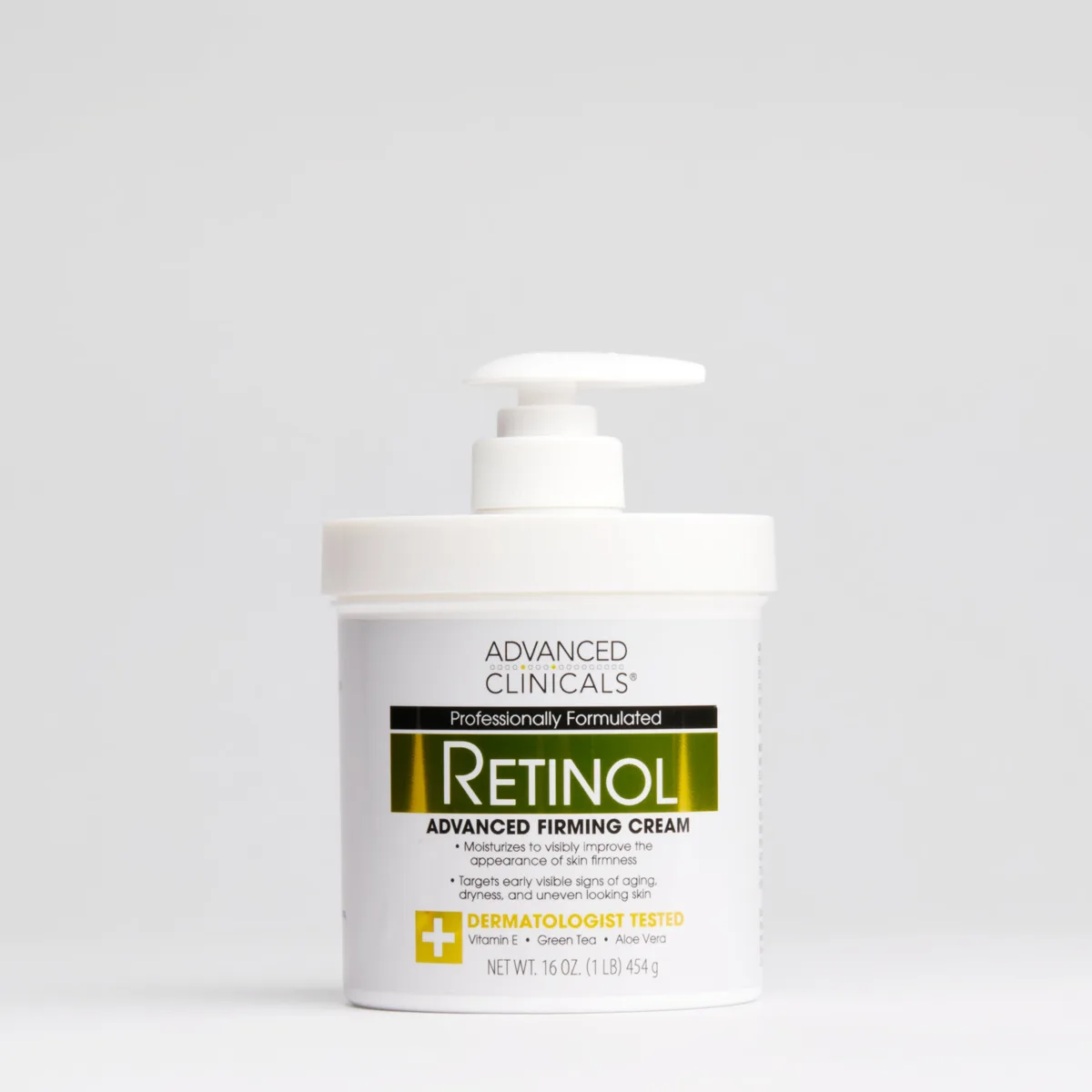
It is the retinol body cream most people have actually used: nearly seventeen thousand ratings, a decade on sale, and a formula that puts retinol tenth in a fragrance-free mineral-oil-and-glycerin base with aloe, green tea and chamomile immediately behind it. Nothing about the list is sophisticated, but a pound of unscented buffered retinol for eighteen dollars is a proposition few dermatology brands attempt, and the review record shows it works for the crepey-arm, rough-texture complaints it is bought for.
The most-used retinol body cream in the mass market, and its list explains why: retinol tenth in a buffering, fragrance-free mineral-oil-and-glycerin base, a pound for eighteen dollars. It softens crepey arms, sun-thickened chests and rough, bumpy skin over months, and seventeen thousand reviewers broadly agree. The undisclosed percentage and the wide-mouth jar, which lets the retinol fade, are the two honest reasons to want more for the money.
The case for it
What would change this: A declared concentration would move this to a firmer reading of the dose.
Same rule for everyone. “Good choice” is the verdict on 9,564 of 45,024 concern verdicts across the catalog; rule R5 decided 9,072 of them. As of September 25, 2026, engine 5.1.1.
Brand or formulator? Disclose a concentration or correct a fact →
The studies behind the evidence row
The case for it
What would change this: A declared concentration would move this to a firmer reading of the dose.
Same rule for everyone. “Promising” is the verdict on 7,858 of 45,024 concern verdicts across the catalog; rule R9p decided 7,858 of them. As of September 25, 2026, engine 5.1.1.
Brand or formulator? Disclose a concentration or correct a fact →
The studies behind the evidence row
The case for it
Same rule for everyone. “Strong choice” is the verdict on 1,459 of 45,024 concern verdicts across the catalog; rule R2 decided 892 of them. As of September 25, 2026, engine 5.1.1.
Brand or formulator? Disclose a concentration or correct a fact →
The studies behind the evidence row
The case for it
What would change this: A researched evidence row for the lead active would replace this with a verdict.
Same rule for everyone. “Supporting role” is the verdict on 8,197 of 45,024 concern verdicts across the catalog; rule R8 decided 4,250 of them. As of September 25, 2026, engine 5.1.1.
Brand or formulator? Disclose a concentration or correct a fact →
Also listed for Rough Texture — the actives here (Mineral Oil, Glycerin, Retinol, Aloe Vera) are in our research queue for that concern; there is no verdict until their evidence rows are written. That is a gap in our table, not a mark against the product.
As a body productNot judged: what a body product is for — real substance, not just slip, realistic to use daily — cannot yet be measured from the ingredient list (only fragrance load can).
A verdict is DermApproved’s assessment of how well a product’s ingredients fit a concern — never a claim about what the product treats. Evidence dots and collected reviews sit beside it and are never blended in. Rules 0.5.1 · evidence table ev-2026.09-r228 · how we decide
Nearly seventeen thousand Amazon ratings, averaging four point four stars, make this the most-reviewed retinol body cream on the market, and not one of those reviewers knows how much retinol is in it. Advanced Clinicals has never said. That combination, a very deep record of real-world use and a missing number at the centre of it, is what makes the jar worth thinking about carefully, because the record can tell you a great deal about tolerance, texture and the kind of change people see, and nothing at all about dose.
The brand's story explains the format. Advanced Clinicals, founded in 2004 and formulated in the Midwest, built itself on sixteen-ounce jars of single-hero body cream sold through off-price stores and Amazon, and this jar, launched around 2013 as the Retinol Advanced Firming Cream, was its flagship almost immediately. It arrived when retinol for the body was barely a category at drugstore prices, and it has stayed there, renamed the Retinol Body Cream and reformulated without added fragrance. The list is short. Water, mineral oil, cetearyl alcohol, glyceryl stearate, isopropyl myristate, glycerin, butylene glycol, an emulsifier and a triglyceride form the cream; then retinol at tenth, aloe juice, green tea, chamomile, a gelling polymer, a chelator, maltodextrin, and a preservative system of phenoxyethanol, iodopropynyl butylcarbamate and caprylyl glycol. Twenty ingredients, no parfum, no colour.
The retinol placement is the honest heart of the product. Tenth, after the emollient base and ahead of every botanical, is where a functional dose sits in a cream like this; a token dose would be down among the preservatives. The evidence for retinol itself is not in doubt. Kafi and colleagues, in a 2007 randomized, vehicle-controlled trial in Archives of Dermatology, applied 0.4 percent retinol to the arms of elderly subjects up to three times a week for 24 weeks and found significant improvement in fine wrinkling with increased collagen production in biopsies, which is, incidentally, a body-skin study. Kikuchi and colleagues reported similar improvement in photoaged skin in a 2009 vehicle-controlled trial. What this jar delivers depends on an undisclosed number, and the seventeen-thousand-review record suggests the dose is enough to do something and low enough to be tolerated across large areas by most people: the common arc is soft skin at once, some flaking in weeks two to four for a minority, and visibly smoother crepey arms, chests and rough-textured legs by two to six months.
The base deserves credit for that tolerance. Mineral oil is an inert, non-comedogenic occlusive with a long safety record, reviewed in the International Journal of Cosmetic Science in 2012, and glycerin beneath it is the reference humectant; together they moisturize well and, more to the point, they buffer the retinoid, slowing its release and offsetting its dryness. Aloe, green tea and chamomile placed straight after the retinol are the only calming agents in a fragrance-free formula, and the choice to drop parfum from this jar, alone in the brand's body range, is the right one for a retinoid product used nightly over a wide area.
The deductions are real and specific. The percentage matters, and its absence means a reader cannot compare this with a product stating 0.1 or 0.3 percent, nor know whether a plateau after three months means the dose has done all it can. The jar is the wrong container for retinol: wide-mouthed, opened nightly for months, admitting light and air with every scoop, and the green tea can only do so much, so the cream is stronger early and weaker at the bottom. Iodopropynyl butylcarbamate is a documented contact allergen with a small sensitisation rate, and chamomile is a daisy-family sensitiser, which together make this a poor choice for eczema-prone skin despite the unscented base. Isopropyl myristate at fifth argues against using it on the face or an acne-prone back, whatever the retail listings say. And retinol excludes pregnancy and breastfeeding, over a larger area than any facial product.
At eighteen dollars for a pound, with a two-ounce tube for trial, the value is hard to dispute. Dermatology brands selling body retinol charge three to six times as much for a fraction of the volume, and while they disclose their percentage and sometimes carry testing, the arithmetic for treating two arms and a chest nightly for six months favours this jar overwhelmingly. Used steadily rather than stretched out, stored in a cupboard, and applied at night with sunscreen on treated areas by day, it does the job it is bought for at a cost that makes the job possible.
The recommendation is confident within limits. For dry, normal or combination body skin with crepiness, sun damage or rough, bumpy texture, this is the mass-market retinol body cream to try first, and its record is as close to a trial as an untested product gets. For sensitive or eczema-prone skin, for anyone who needs a stated strength, for the face, or in pregnancy, it is the wrong jar. Buy it, use it up in three months, and judge it at six.
The hero actives that drive this product's performance.
| Ingredient | Function | Evidence |
|---|---|---|
| Retinol | Tenth on the list, the first ingredient after the emollient base and ahead of every botanical, which is a genuine placement for a body product at this price. The percentage is undisclosed and, in a wide-mouth jar exposed to air and light with every use, some of it will degrade over the months the jar lasts; what remains works slowly on crepey, sun-thickened skin on arms, chest and legs. | Emerging for Aging |
| Mineral Oil | Second, the inert occlusive that both moisturizes and buffers the retinol, slowing its release and offsetting the dryness a retinoid causes. On body skin, where retinol irritation is less common than on the face, this cushion is what makes nightly use across large areas tolerable. | Regulator-approved for Dryness · established mechanism |
| Glycerin | Sixth, the humectant that holds water in the outer skin under the mineral oil seal. Retinoids work better and irritate less on hydrated skin, so the glycerin is doing two jobs: it is the moisturizer and the tolerance aid. | Established mechanism for Dryness · established mechanism |
| Aloe Barbadensis Leaf Juice & Anthemis Nobilis (Chamomile) Flower Extract | Eleventh and thirteenth, a pair of soothing botanicals positioned immediately after the retinol to take the edge off it. Their contribution is modest at these levels, and the chamomile is a consideration for anyone with a daisy-family allergy, but in a fragrance-free formula they are the only calming agents and the placement is deliberate. | Not yet assessed |
| Camellia Sinensis (Green Tea) Leaf Extract | Twelfth, a polyphenol antioxidant that in principle helps protect the retinol from oxidation and adds a little antioxidant activity on the skin. At this level it is a supporting note; the practical protection for the retinol would come from a tube, which the jar does not provide. | Not yet assessed |
Ingredient standings describe the active at treatment-level doses and vehicles; this product's own condition grades weigh its actual formula.
Water (Aqua), Mineral Oil, Cetearyl Alcohol, Glyceryl Stearate SE, Isopropyl Myristate, Glycerin, Butylene Glycol, Ceteareth-20, Caprylic/Capric Triglyceride, Retinol, Aloe Barbadensis Leaf Juice, Camellia Sinensis Leaf Extract, Anthemis Nobilis Flower Extract, Acrylates/C10-30 Alkyl Acrylate Crosspolymer, Disodium EDTA, Maltodextrin, Phenoxyethanol, Iodopropynyl Butylcarbamate, Caprylyl Glycol, Sodium Hydroxide
treatment
PM
A night-time body cream, applied after showering to the arms, chest, legs or wherever skin is crepey or sun-thickened, starting two or three nights a week and building to nightly. The brand advises against pairing it with benzoyl peroxide or vitamin C on the same skin, and exfoliating body lotions with lactic or glycolic acid should be used on the off nights rather than layered. Daytime sunscreen on treated areas matters more than usual, because retinol raises sun sensitivity.
The mineral oil and glycerin make skin softer immediately and hold that overnight. Retinol works on a slower clock: some smoothing of rough texture and keratosis pilaris bumps by four to six weeks, and softening of crepey, sun-damaged skin on the arms, chest and décolletage over three to six months of consistent use. Mild dryness or flaking in the first few weeks is the retinol adjusting and usually settles with alternate-night use.
Retinol's effect on aged and photodamaged skin is among the best-documented in cosmetic dermatology, and the relevant trials happen to include body skin. Kafi and colleagues published a randomized, double-blind, vehicle-controlled trial in Archives of Dermatology in 2007 in which 0.4 percent retinol lotion was applied to one upper inner arm of elderly subjects up to three times weekly for 24 weeks; the treated arms showed significant improvement in fine wrinkling versus vehicle, with biopsies demonstrating increased glycosaminoglycan expression and procollagen I synthesis. Kikuchi and colleagues reported in a 2009 vehicle-controlled, double-blind study in the Journal of Dermatological Treatment that topical retinol improved photoaged facial skin in middle-aged Japanese women. Both establish that retinol, at a defined concentration and with consistent use over months, thickens the epidermis, stimulates dermal collagen and softens fine lines; neither can be extrapolated to an undisclosed dose, and this cream's tenth-place retinol in a rich base is consistent with a low-to-moderate cosmetic level whose effects would be slower than the trial concentrations and, on the strength of the review record, tolerable across large areas.
The vehicle is doing evidence-based work of its own. Mineral oil, reviewed by Rawlings and Lombard in the International Journal of Cosmetic Science in 2012, is an inert, non-comedogenic occlusive that reduces transepidermal water loss without sensitisation, and glycerin is the reference humectant; hydrated, occluded skin tolerates retinoids better and shows less of the dryness and scaling that drive discontinuation. Retinol's instability is the counterweight: it degrades on exposure to light and oxygen, and a wide-mouth jar opened repeatedly over months is the least protective format for it, so potency should be assumed to fall across the life of the jar despite the green tea polyphenols present at twelfth. Iodopropynyl butylcarbamate, the secondary preservative, carries a small but documented contact-sensitisation rate in patch-test series, and chamomile extract is a recognised Asteraceae allergen, which is the basis for cautioning eczema-prone users even though the formula is fragrance-free.
Retinoids for the body come up in clinic for crepey upper arms, photodamaged chests and keratosis pilaris, and the usual advice is a low-concentration retinol in a moisturizing base, used at night, built up gradually, with daytime sunscreen on the treated areas. A fragrance-free mineral-oil-and-glycerin cream with retinol placed above its botanicals fits that description and is the sort of product a dermatologist would be content to see a patient try before a prescription, with two caveats they would voice: the percentage is unknown, so progress cannot be benchmarked, and the jar format means the retinol is degrading as the months pass. Patients with atopic skin would be warned about the iodopropynyl butylcarbamate and chamomile, those with truncal acne about the isopropyl myristate, and anyone pregnant or breastfeeding would be told to set retinoids aside entirely, this one included.
At night, after a shower, apply a modest amount to the areas you want to treat, typically the upper arms, chest, décolletage and legs, and massage in until absorbed. Begin with two or three nights a week for the first fortnight, then move to nightly if there is no flaking or stinging, and drop back if there is. Use a bland moisturizer on the rest of the body and on treated areas on the nights off. Keep it off the face and off an acne-prone back, and do not layer it with benzoyl peroxide, vitamin C or exfoliating acids on the same skin the same night. Apply sunscreen to treated areas in the daytime, since retinol increases sun sensitivity. Store the jar closed in a dark cupboard and aim to finish it within three months, before the retinol has faded. Do not use during pregnancy or breastfeeding.
Eighteen dollars for sixteen ounces is roughly a dollar an ounce for a retinol cream, which is a fraction of what dermatology and prestige brands charge for body retinol, often thirty to sixty dollars for six or eight ounces. Those products state their percentage and sometimes carry product testing, which this does not, and that is the real trade: information for volume. For the areas retinol body creams are bought for, two arms, a chest and perhaps the legs, nightly for six months, the arithmetic favours this jar by a wide margin, and its decade-long, seventeen-thousand-review record substitutes for the testing an established mass-market brand like this never commissions. The two-ounce tube allows a cheap trial. Excellent value for tolerant, dry-to-normal body skin; not the right purchase for sensitive skin or for anyone who needs a number on the label.
People with dry, normal or combination body skin who want to treat crepey arms, sun-damaged chests or rough, bumpy texture with a retinoid and need it to be affordable over months. Anyone who wants a fragrance-free body retinol with a long real-world track record. Readers happy to trade a stated percentage for a pound of cream at eighteen dollars.
Pregnant or breastfeeding readers, and anyone with eczema-prone, rosacea-prone or very sensitive skin, given the retinol, chamomile and iodopropynyl butylcarbamate. People who need a disclosed retinol strength to benchmark progress. Those wanting a facial retinol or a cream for an acne-prone back, where the isopropyl myristate is a liability.
Ready to try Advanced Clinicals Retinol Body Cream?
Buy at Amazon ♥A medium-weight white cream with a smooth, slightly slick spread from the isopropyl myristate; it absorbs within a minute or two to a soft, faintly conditioned finish with no tack or shine.
No added fragrance, and the label says so; there is only a faint, neutral raw-material smell that disappears as the cream absorbs.
The brand's sixteen-ounce wide-mouth white jar with a screw lid, plus a two-ounce travel tube; the jar is generous and convenient for large areas, and the wrong container for a light- and air-sensitive retinoid.
The first week feels like using a plain, unscented body cream: soft skin, no sting, nothing to notice. In weeks two to four a minority see light flaking on the arms or décolletage as the retinol takes hold, and easing off to alternate nights settles it. The change worth waiting for is gradual: rough texture and small bumps smoothing by six weeks, crepey skin softening over months.
About three months applied nightly to arms, chest and legs; six months or more for a single area such as the décolletage.
All Year
The Retinol Advanced Firming Cream, as it was first sold around 2013, was among the earliest of Advanced Clinicals' sixteen-ounce hero-ingredient jars and quickly became its flagship, riding a wave of interest in retinol for the body that dermatology brands were slow to serve at a mass price. It has since been renamed the Retinol Body Cream and reformulated without added fragrance, and it remains the brand's best-known product.
Advanced Clinicals is a US value brand founded in 2004, formulated in the Midwest and sold through TJX stores, Walmart and Amazon, where its sixteen-ounce retinol jar has been one of the best-selling body creams for over a decade. Its standing is built on that volume rather than on research; it publishes no trials and does not disclose the retinol percentage.
A retinol body cream in a jar delivers its full strength for the life of the jar.
Retinol degrades with light and air, and a wide-mouth jar opened nightly for three months exposes it to both. The green tea antioxidant helps a little; the honest expectation is that the cream is strongest early and weaker by the bottom of the jar, which is a reason to use it steadily rather than stretch it out.
Retinol cannot be used on the body because the skin there is too thick to respond.
Body skin responds to retinoids much as facial skin does, only more slowly, and it tolerates them better because it is thicker and less sebaceous. Crepey upper arms, sun-damaged chests and keratosis pilaris on the arms are among the best-documented body uses, and this cream's review record reflects exactly those.
The brand does not disclose it. Retinol is the tenth ingredient, placed ahead of all the botanicals and just after the emollient base, which suggests a low, body-appropriate dose rather than a token one, but there is no number to compare with products that state theirs.
Crepey upper arms and sun-damaged chests are the most common reasons people buy it, and the long review record supports gradual improvement over two to six months of nightly use. Retinol's effect on fine wrinkling and skin thickness is well documented in vehicle-controlled trials; the pace with this cream depends on the undisclosed dose.
It is sold as a body and face moisturizer on some retail listings, but it is better kept to the body. Isopropyl myristate at fifth is a pore-clogger, the base is heavier than facial skin needs, and the retinol dose is set for body use; a dedicated facial retinol is the safer choice.
Yes. The current formula lists no parfum and the label states no added fragrances, which makes it the only unscented jar in the brand's body range and the one to choose if fragrance is a problem. It does contain chamomile extract and the preservative iodopropynyl butylcarbamate, both of which a minority react to.
No. Topical retinoids, including retinol, are advised against in pregnancy and breastfeeding as a precaution, and applying one over large areas of the body is a larger exposure than a facial product. Choose a retinol-free body cream, such as the brand's aloe or coconut jars, until afterward.
Because the sixteen-ounce jar is the brand's signature format and what makes the price possible. It is not ideal for retinol, which loses potency with light and air; using the jar steadily over three months rather than stretching it out, keeping the lid closed and storing it in a dark cupboard all help.
Recurring themes our editors read across retailer reviews of this product — summaries in our words, not quotations, and not a substitute for your own patch test.
Visibly smoother crepey arms and chest after a couple of months
No fragrance and no sting for most users
Softens keratosis pilaris bumps
A pound of retinol cream for under twenty dollars
Retinol percentage is not disclosed
Mild peeling or dryness in the first weeks
Jar format exposes the retinol to air and light
Results are gradual and easy to miss