Melasyl
Products with Melasyl
 Next-Gen Brightening Pioneer
 LiftActiv B3 Dark Spot Serum
A genuinely innovative brightening serum that earns its place through L'Oréal's proprietary Melasyl molecule — something no competitor can replicate — combined with a five-pathway approach to hyperpigmentation that delivers visible results within a month. At $45, it punches well above typical pharmacy-brand pricing but justifies it with pharmaceutical-grade research depth.
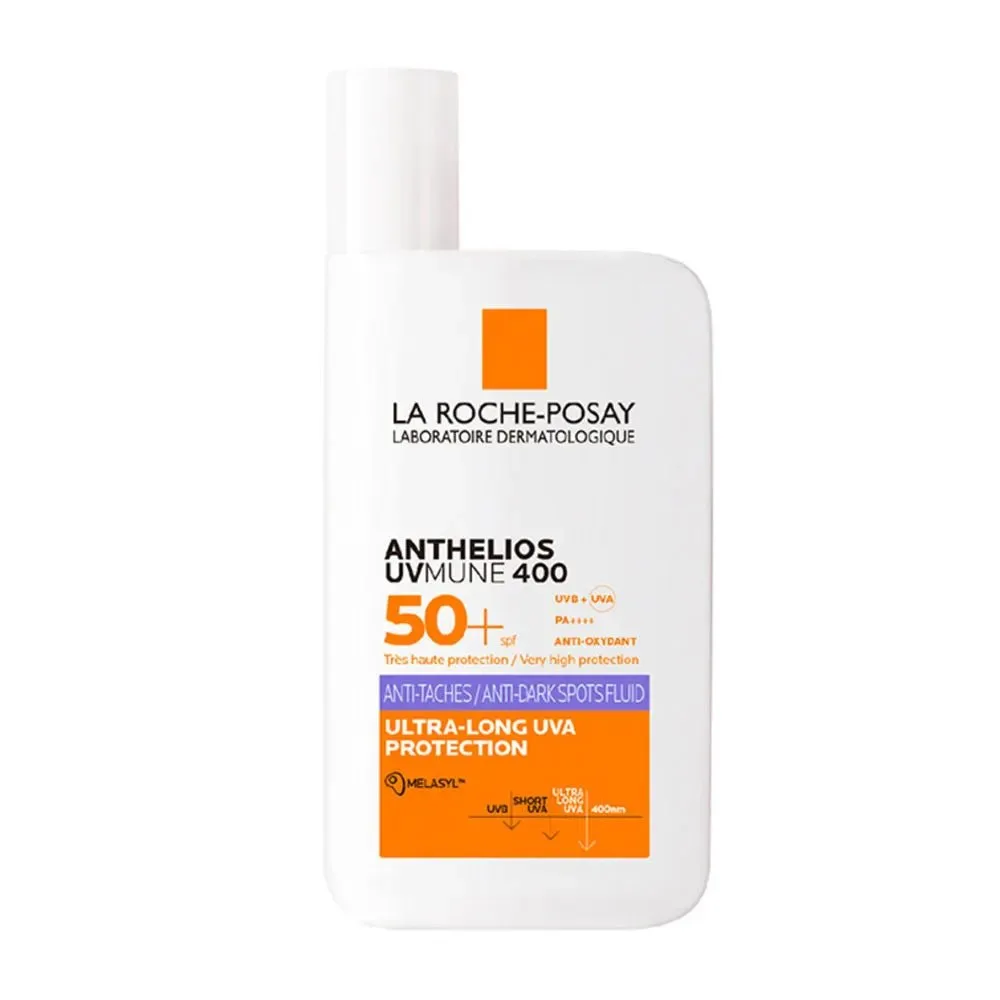 Dark-Spot Defense Pick
 Anthelios UVMune 400 Anti-Dark Spots Fluid SPF 50+
A sunscreen that takes the dark-spot problem seriously from both directions. The UVMune 400 filter system blocks the long-UVA that drives pigmentation, while the Melasyl active works to fade existing marks. The lightweight fluid wears beautifully, though denatured alcohol makes it better suited to combination and oily skin than dry. For pigmentation-prone skin, it's an excellent daily anchor.
 Drugstore Pigment Pick
 Vitamin C Brightening Serum
An ambitious drugstore brightening serum built around Melasyl, L'Oréal's patented pigment molecule, plus niacinamide, a vitamin C derivative, and salicylic acid. The multi-pathway approach to dark spots is genuinely interesting at this price. The added fragrance, denatured alcohol, and cosmetic dyes are the cost-cutting compromises that hold it back.
 Multi-Pathway Pharmacy Brightener
 Mela B3 Dark Spot Serum
Mela B3 is the rare pharmacy-channel brightening serum that earns its $50 tag through formulation, not marketing. It pairs 10% niacinamide with Melasyl, L'Oréal's 18-years-in-development pigment-precursor blocker, plus gentle exfoliation and a soothing buffer. It works slowly and steadily on mild-to-moderate discoloration. The added fragrance and trace retinyl palmitate are the only real caveats.
 Pigment Plus Anti-Aging Stack
 Mela B3 Double Dose Discoloration Treatment
A serious upgrade to the Mela B3 platform that earns the 'Double Dose' name through actual mechanism stacking — 1% Melasyl, 10% niacinamide, and Proxylane working on three different aspects of pigmented, aging skin. Held back from a top-tier score by the fragrance and alcohol-denat on what's otherwise a thoughtful sensitive-skin-adjacent formula, and by a $55 price that lands at the upper edge of pharmacy.
The full melasyl guide
Nearly every brightening ingredient you have met attacks the same target: tyrosinase, the enzyme that starts melanin production.
Melasyl was designed to work one step later and on a different principle — letting the enzyme run, then intercepting the intermediates it produces before they can be assembled into pigment. It is a genuinely novel idea, and it arrives wrapped in a development story so impressive that it is easy to mistake the story for the evidence.
How it's regulated in the US
FDA does not classify ingredients — it classifies products, by what they are sold to do. The same molecule can be a drug active in one product and a cosmetic ingredient in the next, and only the claim on the label decides which. What follows is a statement about that legal standing, not about whether it works — the evidence question is answered separately above.
Cosmetic Melasyl is a cosmetic ingredient in the US: no OTC monograph covers it and it is not an active in any FDA-approved drug, so a product built around it is a cosmetic rather than a drug.
The molecule is 2-mercaptonicotinoyl glycine, patented by L'Oreal and introduced in La Roche-Posay's Mela B3 line. The mechanism is specific and checkable: 2-MNG is described as binding and inactivating melanin precursors including L-DOPA, DHI and DHICA, intervening after tyrosinase has acted but before those intermediates polymerise into melanin. The manufacturer reports clinical testing across the full Fitzpatrick range and a targeted effect on existing hyperpigmentation without the broad melanocyte suppression that creates depigmentation risk on deeper skin tones. Every piece of that comes from L'Oreal or from publications carrying its material, and independent replication does not yet exist. The development figures widely quoted — eighteen years of research, more than 100,000 molecules screened — describe effort, not outcome, and no amount of screening substitutes for a randomized comparison against an established agent. For contrast, thiamidol emerged from a similar corporate research pipeline and has since accumulated published trials including head-to-head work against hydroquinone. Melasyl has not reached that point.
How it works
Melanin synthesis is a relay, not a single step. Tyrosinase converts tyrosine to L-DOPA and onward to dopaquinone, which then passes through a series of intermediates — DHI and DHICA among them — that are finally polymerised into the melanin pigment packaged into melanosomes and handed to surrounding keratinocytes. Almost all brightening actives interrupt the first step by inhibiting tyrosinase. That works, and it has a structural drawback: tyrosinase inhibition suppresses melanin production generally rather than selectively, which is why potent agents in this class carry a risk of lightening skin you did not intend to lighten — a more serious concern on deeper skin tones, where an over-corrected patch is more visible and harder to reverse. 2-MNG takes the later exit. Rather than switching off the enzyme, it is described as binding the downstream precursors and inactivating them, so the intermediates that would have become pigment are removed from the pathway. The proposition is that this addresses the excess pigment being made in a spot while leaving normal baseline melanin production largely alone. Whether that translates into better outcomes on a face than a well-formulated tyrosinase inhibitor is a separate question from whether the chemistry is elegant, and it is the question the published record cannot yet answer.
Key benefits
- Intercepts melanin precursors rather than inhibiting tyrosinase upstream
- Designed to avoid the broad melanocyte suppression of older agents
- Manufacturer testing spans the full Fitzpatrick range including deeper tones
- Formulated at cosmetic pH with no irritation or photosensitivity burden
- Compatible with retinoids, acids and niacinamide in the same routine
Concentration & usage
No effective concentration has been published, and there is no independent dose-finding work to reference — the practical route to it is the branded formulations, where the level is set by the manufacturer and not disclosed on the label. On an INCI list, look for 2-Mercaptonicotinoyl Glycine; Melasyl is the trade name and appears in marketing rather than in the ingredient list. It is typically formulated alongside niacinamide at a substantial percentage, which matters when interpreting results, because niacinamide has its own respectable evidence for pigment and tone. Attributing a good outcome from a combination product to the newest ingredient in it is the standard error with launches like this one.
Who it's for & who should be cautious
Who it's for
It is a sensible option for someone with post-inflammatory hyperpigmentation or general unevenness who has tolerated or reacted badly to tyrosinase inhibitors, and who wants something gentle to use continuously rather than in supervised courses. The design intent — avoiding indiscriminate melanocyte suppression — makes it particularly worth considering on deeper skin tones, where the risk of over-lightening is the thing people are most reasonably wary of. It layers easily and adds nothing to the irritation load, which suits skin already using a retinoid or acids.
Who should be cautious
Anyone with established melasma should not make this their primary treatment yet. Melasma is stubborn, relapsing and well studied, and the agents with real endpoint evidence — hydroquinone in supervised courses, the triple combination cream, azelaic acid, tranexamic acid, thiamidol — are where the burden of proof has already been met. Melasyl has not been compared against any of them in published independent work. Skip it too if the premium is displacing daily sunscreen from your budget, since without rigorous photoprotection every pigment active is fighting a losing battle. There is no safety signal to report and no known irritation profile, so this is a caution about evidence and cost rather than risk. Pregnancy data are absent, which is a reason to defer an optional cosmetic active rather than an alarm.
Pairs with & conflicts
Myths & facts
Myth: Eighteen years of research and 100,000 molecules screened means it is exceptionally well proven.
Reality: Those numbers describe how much work went into finding the molecule, not what the molecule was then shown to do. A long discovery programme is a reason to take a candidate seriously and is not itself efficacy data. The evidence that would justify the confidence — independent randomized trials, and comparisons against hydroquinone, azelaic acid or thiamidol — is what is missing, and screening effort cannot stand in for it.
Myth: Because it does not inhibit tyrosinase, it cannot cause any unwanted lightening.
Reality: That is the design rationale and it is a reasonable one, but it is a mechanistic argument rather than a demonstrated long-term outcome. The manufacturer's testing supports the claim; independent long-term use data across skin tones do not yet exist. Treat it as a well-motivated advantage that has not been externally verified, which is a fair description of the whole ingredient at this stage.
Myth: Results from Mela B3 prove Melasyl works.
Reality: The serum pairs it with niacinamide at a meaningful concentration, and niacinamide has its own established evidence for pigment and tone. A combination product's performance cannot be assigned to its newest component without a study designed to separate them. This is the same reasoning that applies to any multi-active launch, and it applies no less because the mechanism is interesting.
Frequently asked questions
What is Melasyl actually made of?
It is 2-mercaptonicotinoyl glycine, a patented small molecule developed by L'Oreal. On an ingredient list it appears under that chemical name rather than as Melasyl, which is a trade name used in marketing. Knowing the INCI name is the only way to check whether a product genuinely contains it.
How is it different from thiamidol or alpha arbutin?
Those inhibit tyrosinase, the enzyme at the head of the pigment pathway. Melasyl is described as acting later, binding melanin precursors such as L-DOPA, DHI and DHICA so they cannot be assembled into pigment. The practical difference claimed is selectivity — addressing excess pigment without suppressing normal melanin production broadly.
Is it safe for deeper skin tones?
That is its central design claim, and the manufacturer reports testing across the full Fitzpatrick range with targeted action rather than general melanocyte suppression. Independent long-term data on deeper tones are not yet available. The mechanistic argument is sound and the external verification is pending, which is a reasonable position to hold both parts of at once.
How long before I should expect to see anything?
Pigment work is slow regardless of the mechanism, because existing pigment has to leave with the skin cells carrying it. Three months of consistent daily use plus disciplined sun protection is a fair test for any brightening active. Photograph the area in fixed lighting at the start, since gradual change is exactly what memory reconstructs unreliably.
Can I use it with retinoids or exfoliating acids?
Yes. It is formulated at cosmetic pH, adds no photosensitivity and carries no irritation burden, so it layers without any interaction to manage. If anything, pairing a gentle pigment active with a retinoid is a sensible combination, since increased cell turnover helps clear pigmented cells faster.