Vegan, Cruelty-Free and Leaping Bunny Are Three Different Claims. Only One Is Audited.
A lip balm can be certified cruelty-free and made largely of sheep wool grease and beeswax. Both statements are true, both are on the packaging, and most people buying it think they cancel out.
Read the preview
From the DermApproved blog, in Clean Beauty and Marketing: vegan and cruelty-free answer different questions, and neither word means anything in US law. A certified cruelty-free lip balm can be made largely of sheep wool grease. Only one mark involves an actual audit — and a 2021 rule change quietly redrew who can claim what. For the full breakdown, visit dermapproved.com/blog.
Three claims, one shelf, and no overlap between them
Take a single product and read it carefully. Glossier Balm Dotcom carries Leaping Bunny certification, and its formula is built on petrolatum, lanolin and beeswax. Lanolin is the grease rendered from sheep's wool. Beeswax is exactly what it sounds like. So this is a certified cruelty-free product that is emphatically not vegan, and there is nothing contradictory or dishonest about that — it is simply two different facts about two different things.
Here is the separation, stated once so it can be applied everywhere.
Vegan is a claim about composition: no animal-derived ingredients in the formula. It is a question you can answer by reading an INCI list.
Cruelty-free is a claim about testing: no animal testing of the finished product or its ingredients, by the company, its suppliers, or anyone commissioned on its behalf. It is a question about a supply chain and a set of corporate decisions, and you cannot answer it by reading a label.
Leaping Bunny is not a third category. It is an audited certification of the second claim, and it is silent on the first.
The critical piece of context: in the United States, neither 'vegan' nor 'cruelty-free' is defined in law. The FDA does not regulate either term for cosmetics. A brand may print a rabbit outline of its own design, in its own house font, meeting no standard whatsoever, and this is entirely legal. That is why the distinction between a word and a certification mark issued by a named body is the whole ballgame in this category — and why a product can truthfully be vegan and animal-tested, or certified cruelty-free and made of wool grease.
What Leaping Bunny actually asks of a company
The Corporate Standard of Compassion for Animals is a supply-chain document rather than a pledge, and its individual requirements are worth knowing because they show what a serious version of this claim looks like.
The centrepiece is the fixed cut-off date. A certifying company must set a date after which neither it nor anyone in its supply chain has conducted or commissioned animal testing for any ingredient or product; companies are encouraged to use 11 March 2013, the day the European Union's full ban on animal testing for cosmetics came into force. The elegance of this device is that it closes the loophole every other version of the claim leaves open. Without a date, a company can rely indefinitely on historical animal data while truthfully saying it does not test today. With one, the line is fixed in time and cannot be quietly moved.
The second requirement is a Supplier Monitoring System. The company must monitor its third-party manufacturers and suppliers at least once a year, and must obtain and provide to the certifier written Declarations of Product Compliance and Declarations of Raw Material Compliance from each of them, kept on file at its principal place of business. This is where the real work sits, because a cosmetic company does not manufacture its own raw materials and the testing question mostly lives upstream of it.
Third, independent audit. The standard provides for a company's monitoring system to be submitted for audit by an accredited firm, with the arrangement scaled by size: a company under ten million dollars in gross annual sales must agree to an audit commissioned by the certifier, while a company at or above that threshold commissions the audit itself using a firm the certifier provides.
And fourth, annual recommitment — the certification is not permanent and must be renewed.
Add those together and you have something structurally different from a marketing claim: a dated line, documented upstream declarations, an audit mechanism, and an expiry. Paula's Choice Lip & Body Treatment Balm carries that certification — and also contains lanolin, which is the point of the previous section restated in a second product.
PETA's list, and why 'weaker evidence' is not 'worthless'
The other mark you will see most often works differently, and describing that difference fairly matters more than scoring a point off it.
PETA's Beauty Without Bunnies programme operates on a signed statement of assurance. The organisation's own site is explicit about the mechanism when explaining why a company might be missing from the database: it may be absent because it 'claims that it doesn't test on animals but has not yet signed our statement of assurance.' The programme covers companies selling in eligible regions, and a signature — not a supplier audit trail — is the qualifying act.
That is a genuinely lower evidential bar than Leaping Bunny's, and pretending otherwise would be dishonest. It is also not nothing. A signed, public, organisation-held commitment carries real reputational and legal exposure if it turns out to be false, and companies do get removed. It is a declaration with consequences rather than an unverified boast on a carton.
The corresponding advantage is coverage and speed. An audited supply-chain standard is slow and expensive, which systematically favours companies with the administrative capacity to complete it and disadvantages very small ones. A signature-based list can include far more brands and update far faster. If you are standing in a shop wanting to know whether a company has made any formal commitment at all, the larger list answers that question and the smaller one does not.
So use them for what each is: the audited mark for the strongest available assurance, the signed list for breadth. Both are more informative than an uncertified rabbit drawn by a design agency, which remains the most common thing on the shelf.
The parent-company argument, taken seriously in both directions
This is where the conversation usually degenerates, so it is worth setting out honestly, because both sides have a real case and the disagreement is not actually about facts.
The argument for extending the question up the ownership chain: money is fungible. Buying a certified subsidiary sends profit to a parent group that may sell into markets requiring animal testing, and a consumer who cares about outcomes rather than labels can reasonably decline to fund that. On this view, certifying a subsidiary while its parent tests elsewhere lets a corporate group buy an ethical veneer for a fraction of its revenue.
The argument against: the certification is a precise statement about a defined entity — this brand, these products, these suppliers, after this date — and it is accurate. The certifier verified what it can verify. Refusing to recognise a compliant subsidiary also removes the strongest commercial incentive a large group has to bring more of its portfolio into compliance, which is the mechanism by which the industry has actually changed.
Our position is that this is an ethical judgement, not a factual dispute, and the two should not be dressed as each other. Where a brand's own certification is genuine, saying so is simply accurate. Whether you extend your purchasing to its owner is yours to decide, and neither choice is uninformed.
What we will not do is treat corporate ownership as a defect of a formula. A cream is not worse at repairing a barrier because of who holds the equity, and any review that lists a parent company among a product's shortcomings has confused two separate assessments — the same error, in the opposite direction, as assuming a certification covers everything.
The animal-derived ingredients almost everyone misses
If vegan is the claim you care about, the ingredient list is the only place to settle it, and the catch is how many of these are not obviously animal-derived from the name.
The bee family is the largest source of confusion, because it turns up in some of the best-regarded soothing formulas. Honey, propolis — the resin bees use to seal a hive — royal jelly and beeswax are all animal products, and they frequently appear together: COSRX Full Fit Propolis Light Cream carries propolis, honey and royal jelly in a single formula. Nothing is being hidden; the words are simply not read as animal-derived by most shoppers.
Lanolin is sheep wool grease and one of the most effective occlusives in existence. Carmine is a red pigment made from cochineal insects and appears throughout colour cosmetics under CI 75470. **Snail mucin** is exactly what it says, and is the basis of an entire category — COSRX Advanced Snail Mucin Gel Cleanser among many. **Goat milk** and colostrum sit at the centre of several gentle-moisturiser ranges, including Beekman 1802 Bloom Cream and Kate Somerville Goat Milk Moisturizing Cream — both of which are cruelty-free and neither of which is vegan. Add collagen, elastin, keratin, silk protein and sericin, shellac, and tallow, and the list of things a careful vegan shopper has to recognise is longer than most guides admit.
Then there are the two that catch nearly everyone, both because the answer used to be different.
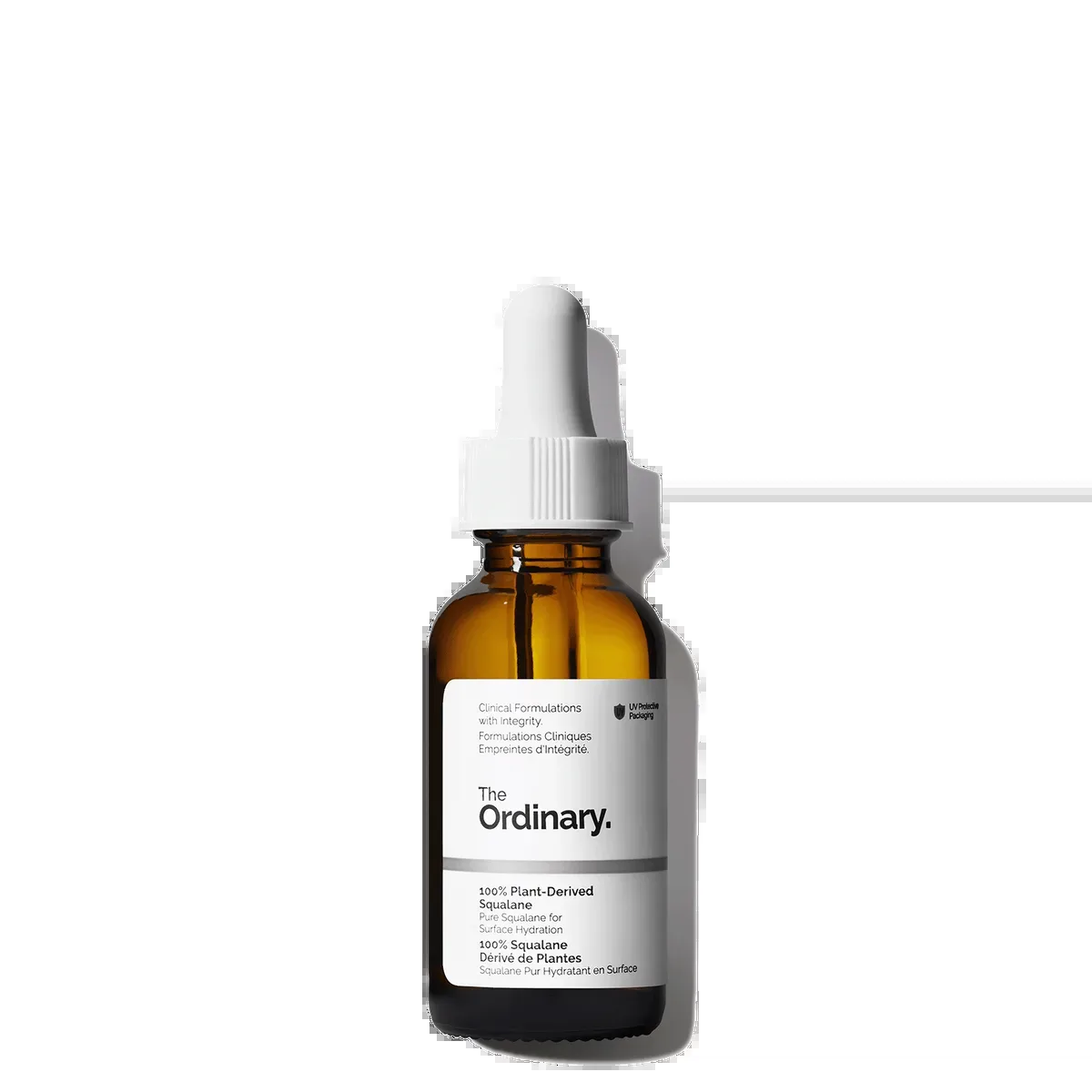
**Squalane** shares its carbon skeleton with squalene, which was historically harvested from shark liver oil. Today the overwhelming majority in skincare is derived from olive or sugarcane — which is precisely why so many labels specify the origin rather than just the name, as The Ordinary 100% Plant-Derived Squalane does on the front of the bottle. The molecule is identical either way, so the source is a sourcing disclosure, not a chemistry one.
Hyaluronic acid was originally extracted from rooster combs. Essentially all cosmetic hyaluronic acid is now produced by bacterial fermentation, and has been for years — so the widely repeated warning about it is a decade or more out of date. If an INCI list is opaque on any of this, the ingredient decoder will resolve what each entry is and where it comes from.
The 2021 rule change that quietly redrew the map
One regulatory shift did more to change which brands can hold a cruelty-free certification than a decade of campaigning, and a great many published lists have not caught up.
Until recently, importing a cosmetic into mainland China generally triggered mandatory pre-market animal testing. That single requirement was why so many global brands could not be certified: not because they wanted to test, but because a market they sold into required it. From 1 May 2021, imported general cosmetics — the everyday category covering things like cleansers, moisturisers, shampoos and most colour cosmetics — can be exempted from that pre-market testing, provided the company holds a recognised quality certificate from its home regulator and submits a safety assessment that does not rely on animal data.
That is a real animal-welfare win, and it is worth naming who produced it: sustained external pressure from advocacy organisations and from brands that refused to enter the market, over many years, against an industry consensus that the requirement was immovable. It moved.
But the change is narrower than the headlines suggested, and the caveats decide individual cases. The exemption applies to general cosmetics only. Special categories — hair dyes, bleaching products, freckle-removal and whitening products, sunscreens and hair-loss products — were not included, and continue to face testing requirements. So the same company can be in a position to certify its moisturiser while its sunscreen sits in a category the exemption never touched. Post-market testing can also still occur where a regulator investigates a product.
The practical consequence for a reader is unglamorous but decisive: check the date on any cruelty-free list you consult. A brand's status may have changed in either direction since 2021, lists compiled before then are describing a world that no longer exists, and lists that treat 'sells in China' as an automatic disqualification are now working from an obsolete rule.
Which reduces the whole subject to three separate reads of the same package. For vegan, read the INCI list yourself, because that is the only place the answer lives. For testing, find a certification mark and the name of the body that issued it, and prefer the audited one. And for anything involving a corporate group, recognise that you have left the territory of verifiable claims and entered the territory of your own judgement — which is a perfectly good place to be, as long as you know you are there.
Products mentioned
Independently reviewed and scored — the real products behind this piece.


- Ingredient Honey (Mel) An animal product that reads as a botanical to most shoppers.
- Ingredient Propolis (Bee Propolis) Hive resin — one of three bee-derived ingredients that often appear together.
- Ingredient Snail Mucin (Snail Secretion Filtrate) Names its own origin, and still surprises people asking about vegan status.
- Ingredient Goat Milk (Caprae Lac) Central to several gentle-moisturiser ranges that are cruelty-free but not vegan.
- Ingredient Squalane Identical molecule from shark liver or olive — which is why labels specify the source.
- Question What does 'fragrance-free' legally mean on a label? The same problem in a different label word — what a term means legally versus in marketing.
References
- The Corporate Standard of Compassion for Animals ("The Standard") — Leaping Bunny Program, Coalition for Consumer Information on Cosmetics, 2015
- PETA's Ultimate Cruelty-Free List — Beauty Without Bunnies programme — People for the Ethical Treatment of Animals, 2026
- New Regulations in China Allow for Cruelty-Free Cosmetics — PETA, 2021
- China Cosmetic Animal Testing Regulation — ChemLinked Cosmepedia, 2026
- "Organic" Cosmetics — Cosmetics Labeling Claims — U.S. Food and Drug Administration, 2022
Every cited link is verified to resolve to the paper named. Where a source could not be independently confirmed, it is listed without a link rather than pointing you somewhere wrong.
Frequently asked
Can a product be cruelty-free but not vegan?
Routinely, and some of the best-known certified products are exactly that. Cruelty-free concerns whether the product or its ingredients were tested on animals; vegan concerns whether animal-derived materials are in the formula. A Leaping Bunny certified lip balm containing lanolin and beeswax satisfies the first claim completely and fails the second completely, with no contradiction between them.
What does Leaping Bunny require that a self-declared cruelty-free label does not?
A fixed cut-off date after which no animal testing occurred anywhere in the supply chain; annual monitoring of third-party manufacturers and suppliers; written Declarations of Product and Raw Material Compliance from each of them held on file; provision for independent audit by an accredited firm; and annual recommitment. A self-declared claim requires none of these, because neither term is defined in US law.
Is PETA's cruelty-free list less reliable than Leaping Bunny?
It rests on weaker evidence — a signed statement of assurance rather than a supply-chain audit — but it is not merely a marketing claim, since it is a public commitment held by a third party with real consequences for breaking it. The trade-off is coverage: a signature-based programme lists far more companies and updates faster, which is genuinely useful when the alternative is an uncertified logo.
Which common skincare ingredients are animal-derived?
Lanolin from sheep wool, beeswax, honey, propolis and royal jelly, carmine from cochineal insects, snail mucin, goat milk and colostrum, collagen, elastin, keratin, silk protein, shellac and tallow. Squalane may be plant or shark-derived, which is why labels specify. Hyaluronic acid was once from rooster combs but is now essentially all bacterial fermentation.
Does selling in China still mean a brand cannot be cruelty-free?
No longer automatically. Since 1 May 2021, imported general cosmetics can be exempted from China's pre-market animal testing if the company holds a recognised quality certificate from its home regulator and submits a safety assessment without animal data. Special categories — sunscreens, hair dyes, whitening and hair-loss products — were not covered, so check the date on any list you consult.