Goat Milk (Caprae Lac)
Products with Goat Milk (Caprae Lac)
 Sensitive Skin Daily Cleanser
Goat Milk Face Wash
A genuinely gentle goat milk face wash built on a mild isethionate surfactant system rather than the soap chemistry most goat milk cleansers use — fragrance-free, sensitive-skin-friendly, and one of the cleanest daily cleanser options in the goat milk niche. The small 2 oz size at $16 is the main drawback, but the formulation work justifies the per-ml price.
 Microbiome-Friendly Daily
Bloom Cream Daily Face Moisturizer
A gentle, fragrance-free daily moisturizer that leans on goat milk, colostrum and Bifida ferment as its distinctive formulation signature rather than the usual ceramide-glycerin playbook. Sensitive skin types will find it genuinely pleasant, but at roughly $42 for 50ml the value proposition asks you to buy into the microbiome story rather than just the fundamentals.
 Bi-Phase Microbiome Refresher
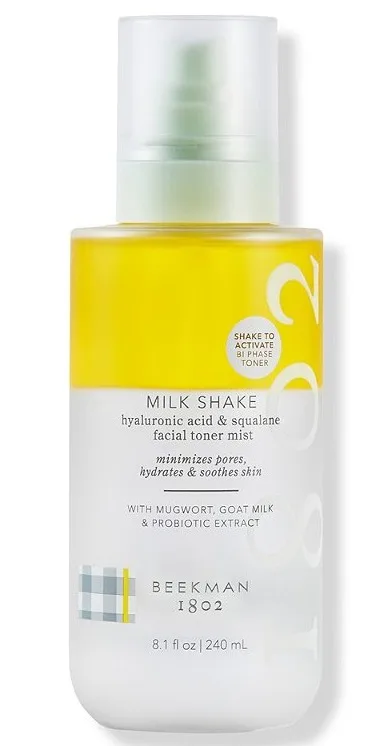
Milk Shake Hyaluronic Acid Toner Mist
A well-made bi-phase hydrating mist with a distinctive goat-milk, colostrum and Bifida ferment signature that sets it apart from the usual hyaluronic acid sprays on the market. Pleasant to use, gentle on reactive skin, and arguably overpriced for what is fundamentally a humectant-plus-oil mist — but the brand story and tolerability make it a convincing pick for the right buyer.
 Award-Winning Bi-Phase Mist
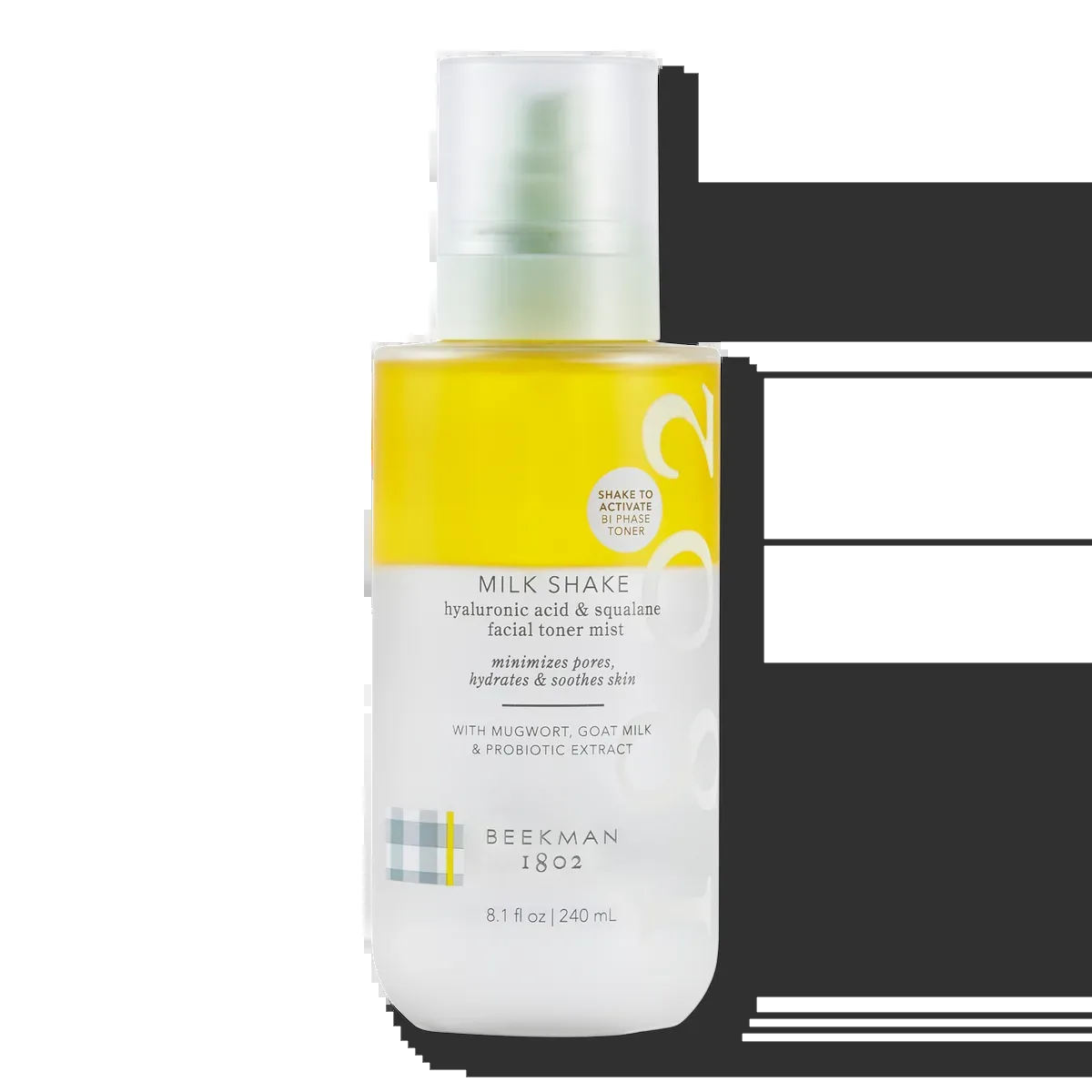
Milk Shake Toner Mist
A genuine bi-phase facial mist with real lipid content, not just water and glycerin — Beekman built theirs around goat milk, hyaluronic acid, squalane, and a thoughtful soothing botanical roster. Worth it if you want a hydrating toner-mist hybrid that actually delivers, especially for sensitive or dehydrated skin. The bi-phase shake-before-use format is the only friction.
 Gentle Goat-Milk Soap
Goat Milk Face & Body Bar
The gentlest, most moisturizing bar in Ambi's soap range: goat milk's conditioning fats and lactic acid soften a saponified soap base into a mild, comforting cleanse that suits drier and more delicate skin, with a pleasant lychee scent, for around four dollars. It's a genuinely nice budget soap — just know it's still a true higher-pH soap, it's fragranced, and the goat milk means it isn't vegan.
 Sensitive-Skin Eye Serum
Dewy Eyed Illuminating & Depuffing Eye Serum
Beekman skips the standard caffeine-and-rollerball playbook and builds a depuffing eye serum around Persian silk tree extract, goat milk, colostrum, and Bifida ferment lysate — fragrance-free, sensitive-skin-friendly, and coherent with the brand's microbiome positioning. Worth it if you want a gentler, more interesting depuffing serum than the usual options; the small size at $44 is the main drag.
 Indie Iconic Goat Milk Serum
Milk Drops Ceramide Serum
Beekman 1802 iconic Milk Drops serum combining goat milk + colostrum + dairy pool + ceramide NP + dual ferment pool + multi-component humectant pool + CoQ10 + 11+ botanical pool. Fragrance-free + alcohol-free formulation. Exceptional suitability breadth across skin types. Milk-allergy + honey-allergy contraindications limit specific routines.
 Dry Skin Devotee's Cleanser
Goat Milk Moisturizing Cleanser
A genuinely hydrating cream cleanser that makes washing your face feel like an act of kindness toward dry skin. The oil-enriched, goat-milk formula earns its bestseller status for dry and sensitive types, though the premium price and non-vegan ingredients narrow its audience.
 Multi-Acid Resurfacing Cleanser
Milk Wash Exfoliating Jelly Cleanser
Beekman's most clinical cleanser — a multi-acid exfoliating jelly that transforms into a milk on contact with water, built around lactic, glycolic, and salicylic acids supported by a goat milk and Bifida ferment lysate backbone. Worth it for users with congestion, dullness, or texture issues who want chemical exfoliation in a cleanser format. Use 1-3 times per week, never daily.
 Indie Goat Milk Dual Eye Treatment
Milk RX Advanced Better Aging Dual Eye Treatments
Beekman 1802 indie brand dual-application eye treatment combining goat milk + Nicotiana Benthamiana hexapeptide + tetrapeptide-1 + tripeptide-29 + 5-ceramide pool + bifida ferment lysate + niacinamide + multi-component supporting matrix. Substantive multi-active loading especially in the eye serum. Dual eyelid + under-eye application format is distinctive. Goat milk excludes vegan + milk-allergy routines.
 Sensitive Skin Soother
Goat Milk Moisturizing Cream
A gentle, fragrance-free moisturizer with a unique goat milk base and rich botanical oil blend that genuinely soothes reactive skin. The formula delivers comfort and hydration reliably, though the $84 price for 1.7 oz asks a lot for an ingredient list that, while pleasant, is not exceptional.
 Indie Goat Milk Anti-Aging Cream
Milk RX Cream
Beekman 1802 indie brand anti-aging cream with goat milk signature platform + substantial 5-ceramide + cholesterol pool + Nicotiana Benthamiana hexapeptide + bifida ferment lysate + niacinamide + multi-emollient pool. Substantive multi-active loading especially the 5-ceramide depth. Milk-allergy + bergamot oil + multi-comedogenic emollients limit some demographics.
The full goat milk (caprae lac) guide
Long before alpha-hydroxy acids became a lab staple, people were washing their faces with goat milk — and the biochemistry behind that tradition is more interesting than its pastoral image suggests.
A single ingredient delivers lactic acid, medium-chain fatty acids, bioactive proteins, and trace micronutrients, which is why it turns up in everything from gentle cleansers to calming creams. The honest caveat: the clinical evidence on finished goat milk skincare hasn't yet caught up to the marketing enthusiasm, so it's a plausible, gentle option rather than a proven hero.
How it's regulated in the US
FDA does not classify ingredients — it classifies products, by what they are sold to do. The same molecule can be a drug active in one product and a cosmetic ingredient in the next, and only the claim on the label decides which. What follows is a statement about that legal standing, not about whether it works — the evidence question is answered separately above.
Cosmetic Goat Milk (Caprae Lac) is a cosmetic ingredient in the US: no OTC monograph covers it and it is not an active in any FDA-approved drug, so a product built around it is a cosmetic rather than a drug.
Goat milk's appeal rests on its individual components — lactic acid, medium-chain fatty acids, lactoferrin, and lysozyme — each of which has independent research behind its role in mild exfoliation, barrier support, or antimicrobial activity. A 2025 narrative review in the International Journal of Molecular Sciences (PMC11817167) mapped genes such as LTF, LYZ, and CSN2 to goat milk's antimicrobial, immunomodulatory, and anti-inflammatory potential, giving genomic context to longstanding traditional use. What's missing is direct validation: controlled trials on finished topical goat milk formulations are scarce. A 2024 analysis in the Journal of Integrative Dermatology found that U.S. Google searches for goat milk soap nearly doubled between 2018 and 2023 — driven by eczema and sensitive-skin interest — while explicitly noting a lack of comparative clinical evidence for the marketed benefits. (Separately, the GIraFFE randomized trial studies dietary goat milk infant formula and eczema, not topical use, so it doesn't speak to skincare claims.) The fair summary: the biochemical rationale is sound and constituent-level research is solid, but ingredient-level efficacy in skincare has not been confirmed by head-to-head topical trials. Promising, not proven.
How it works
Goat milk works through several modest, converging mechanisms rather than one standout active. The most functional is lactic acid, a naturally occurring alpha-hydroxy acid that loosens the bonds between dead surface cells and nudges along skin renewal. In whole goat milk that lactic acid is dilute compared with a dedicated 5–12% treatment, so the exfoliation is genuinely gentle and unlikely to sting — but it also won't deliver the texture or tone changes a targeted AHA produces. The medium-chain fatty acids — capric, caprylic, and caproic — are structurally close to the skin's own barrier lipids. Applied topically they help fill gaps in the stratum corneum, softening the surface and curbing transepidermal water loss; these fats also carry mild antimicrobial and soothing properties in the broader fatty-acid literature. Goat milk additionally supplies lactoferrin and lysozyme, milk proteins with well-documented antimicrobial and immunomodulatory activity. The 2025 genomic review links the genes encoding these proteins (LTF, LYZ) to barrier-supportive and anti-inflammatory effects in skin, though that's mechanistic rationale rather than topical proof. Finally, goat milk's natural pH of roughly 6.1–6.4 sits closer to skin's slightly acidic surface (around 4.5–5.5) than strongly alkaline soaps do, making it a gentler cleansing base that's less likely to strip the acid mantle. That pH compatibility is one of its more concrete, real-world formulation advantages.
Key benefits
- Gentle, naturally occurring lactic acid supports surface renewal without the sting of concentrated AHAs
- Medium-chain fatty acids echo skin's own lipids, helping soften the surface and limit water loss
- Lactoferrin and lysozyme contribute antimicrobial activity that may suit irritation-prone skin
- A pH near 6.1–6.4 makes it a kinder cleansing base than strongly alkaline traditional soaps
- Delivers light hydration from a mix of proteins, lipids, and micronutrients working together
- Lower αS1-casein than cow milk means some sensitive-skin users tolerate it more comfortably
Concentration & usage
On a label, look for CAPRAE LAC (whole goat milk), Caprae Lac Extract (a hydrophilic extract), or Goat Milk Powder (dehydrated and reconstituted into the formula). Goat milk usually sits in the lower-mid portion of an INCI list, after primary humectants like glycerin or butylene glycol, which points to typical leave-on usage somewhere in the 1–10% range. Rinse-off cleansers and bar soaps often carry higher loads, but short contact time limits how much of the more fragile proteins actually reach the skin. There's no established standardized efficacy concentration for finished goat milk formulas — unlike isolated lactic acid, which is well characterized at 5–12%. The most useful clue is placement: goat milk listed ahead of the main humectants signals a more substantive inclusion, while an appearance near the preservatives usually means it's present below 1% and acting more as a label claim than a functional contributor.
Who it's for & who should be cautious
Who it's for
Dry, sensitive, or barrier-compromised skin is the natural fit here — the combination of mild exfoliation, skin-like fatty acids, and a near-neutral pH works without the harshness of stronger actives. It also suits anyone who wants a low-key, naturalistic everyday option, particularly in a cleanser or light moisturizer, and people who've reacted to synthetic fragrance or aggressive surfactants, since goat-milk products often keep the rest of the formula simple and short.
Who should be cautious
A confirmed milk protein allergy — casein or whey sensitivity in particular — is a reason to steer clear of topical goat milk, since cow-and-goat allergen cross-reactivity is documented and milk proteins can provoke contact reactions in sensitized skin. If you're after real exfoliation, recognize that goat milk's lactic acid is too dilute to function as an AHA treatment; it won't replace a dedicated exfoliant and stacking it under one adds little. And anyone managing an active eczema flare should check with a dermatologist before adding a new animal-derived topical, because reactions to milk proteins on already-inflamed skin are unpredictable.
Pairs with & conflicts
Pairs well with: Honey (Mel), Ceramides, Colloidal Oatmeal, Glycerin, Panthenol (Pro-Vitamin B5), Shea Butter, Lactic Acid, Probiotics & Prebiotics
Myths & facts
Myth: Goat milk is a meaningful exfoliant that can replace your AHA serum.
Reality: The lactic acid in whole goat milk sits at a very low concentration — enough to nudge along gentle surface renewal, but nowhere near the 5–12% range where exfoliation effects on texture and tone are consistently demonstrated. It can complement an exfoliating routine, not stand in for one.
Myth: Any milk allergy automatically rules out goat milk skincare.
Reality: Goat milk is lower in αS1-casein than cow milk — the protein fraction most often implicated in dairy reactions — so some people who react to cow milk topicals tolerate it. That's not universal, though: anyone with a confirmed milk protein allergy should patch-test carefully and check with an allergist rather than assume either safety or equivalence.
Myth: Its popularity means goat milk skincare is clinically validated.
Reality: A 2024 Journal of Integrative Dermatology analysis found U.S. searches for goat milk soap nearly doubled from 2018 to 2023, largely on sensitive-skin and eczema interest — while flagging a lack of controlled trials behind the marketing. Cultural momentum and biochemical plausibility are real, but they aren't randomized-trial evidence.
Frequently asked questions
Is goat milk skincare really different from cow milk products?
Meaningfully, yes. Goat milk has more medium-chain fats like capric and caprylic acid and notably less αS1-casein, the protein fraction behind many dairy sensitivities — which is why some sensitive-skin users tolerate it better. Goat milk's pH (around 6.1–6.4) also sits a bit closer to skin's, making it a slightly gentler base than typical cow-milk soap.
Can a goat milk product actually help eczema?
The case is promising but unproven for topical use. Components like fatty acids, lactoferrin, and anti-inflammatory milk proteins have mechanisms relevant to barrier repair, yet controlled topical eczema trials are lacking and the National Eczema Association does not endorse it as a validated treatment. It may ease mild dryness but shouldn't replace prescribed eczema care.
How can I tell from the label whether there's enough goat milk to matter?
Find CAPRAE LAC or Caprae Lac Extract and note its position. Ingredients are listed in descending order, so goat milk ahead of humectants like glycerin signals a meaningful amount. When it shows up near the end, just before preservatives and fragrance, it's probably below 1% — more of a marketing flourish than a functional dose.
Is goat milk safe to use on skin during pregnancy?
Topical goat milk itself is generally low-risk in pregnancy, with no known teratogenic components. The bigger question is what surrounds it: some goat milk soaps and cleansers add essential oils, fragrance, or specific preservatives worth scrutinizing while pregnant. Read the full INCI list rather than judging by the hero ingredient alone.
Will goat milk break me out if my skin is oily or acne-prone?
Goat milk on its own isn't especially pore-clogging — its medium-chain fats are lighter than many heavy plant oils and differ from the oleic-acid-rich oils linked to congestion. That said, richer goat milk creams can feel heavier than oily skin prefers, so cleansers and toners tend to be the more comfortable format for oilier types.
Does heat or processing change how active the goat milk is?
It can — heat denatures proteins, which lowers the bioavailability of lactoferrin, lysozyme, and some milk peptides. In theory, raw or minimally processed goat milk preserves more of that protein fraction than reconstituted powder, but a label rarely reveals how a given brand processed its milk, so it's hard to verify from packaging alone.