Five Minutes Is Enough. You're Just Cutting the Wrong Two Things.
Time is why routines get abandoned — but the steps people compress first are the only two that don't survive compression.
Read the preview
From the DermApproved blog, in Building a Routine: the five-minute routine. Monitored adherence collapses within weeks — and climbs back only around a doctor's appointment. So the real problem isn't which serum. It's which steps survive a rushed morning. Two of them can't be shortened at all, and they're the two everyone shortens first. For the full breakdown, visit dermapproved.com/blog.
The failure mode is not ignorance
When a routine stops working it is rarely because someone chose the wrong serum. It is because they stopped doing it, and the evidence on that is unusually unsentimental because it does not rely on asking people.
Electronic monitors — a microprocessor in the cap that timestamps every opening — have been used in dermatology for over two decades precisely because self-reported adherence is unreliable. What they record is a steady collapse. Across an acne treatment course, monitored adherence fell from 85% to 42%. In psoriasis, from 84.6% to 51% over eight weeks. And the pattern within that decline is telling: usage spikes in the days around a scheduled appointment and decays immediately afterwards, a phenomenon the literature calls white-coat adherence. People are not confused about what to do. They are doing it when someone is about to check.
The design conclusion follows directly. A routine's value is its efficacy multiplied by the probability you actually perform it, and the second term is doing most of the work. A randomised trial in topical acne treatment made this concrete: simplifying the regimen produced both better adherence and better outcomes — the same actives, fewer applications, more skin improvement. Complexity is not neutral. It is a cost paid in weeks eleven and twelve, when the thing was finally about to work.
Where the five minutes actually go
Time an ordinary routine and the surprise is how little of it is spent applying anything. Cleansing is under a minute. Each leave-on step is a few seconds of dispensing and fifteen of spreading. Six products is maybe ninety seconds of contact.
The minutes disappear into waiting. Somewhere in the last decade a set of per-step absorption times — a minute after the serum, two or three after the moisturiser, five after the eye cream — became received wisdom, and they are not derived from controlled evidence. They are a plausible-sounding number repeated until it acquired authority. What actually happens when you layer promptly is that a water-phase product still on the surface gets partially mixed into the next one, which changes nothing meaningful for a humectant and almost nothing for most actives.
There is one wait with a real basis and it is at the end. A sunscreen has to set into a continuous film to deliver the protection it was tested for, which is why the label instruction is to apply it before exposure rather than as you step outside. That is not a wait you stand at the sink for — it is the time you spend finding your keys. The Routine Order tool distinguishes the intervals that matter from the ones that do not, sorts your actual products into sequence, and splits retinoid and acid nights automatically, which removes the other quiet time-sink: standing in a bathroom deciding what goes on next.
Multi-taskers: one honest combine, one bad one
Combining steps is the obvious lever, and it works in exactly one direction reliably.
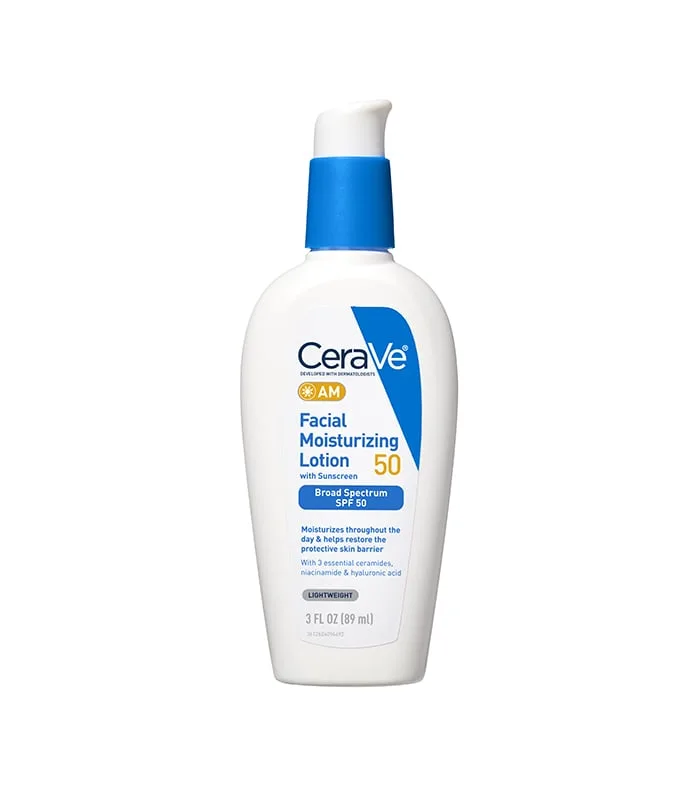
The legitimate combine is moisturiser and sunscreen. Both are leave-on, both go on the same surface at the same moment, and a well-built combined product like CeraVe AM Facial Moisturizing Lotion SPF 50 is a real sunscreen with humectants and ceramides in the base rather than a moisturiser with a filter gesture. The catch is behavioural and it is severe: a combined product only works if you apply it at sunscreen quantity, and everything about the word moisturiser tells your hand to use less. If you are going to use one, the discipline is to dispense the sunscreen amount and treat the hydration as a bonus, not the reverse.
The bad combine is cleanser plus active. A salicylic acid or benzoyl peroxide cleanser has the contact time of a rinse — tens of seconds against the minutes or hours a leave-on gets — and the active largely leaves with the water. That is not always wrong; a benzoyl peroxide wash on a back is a sensible use of a format that reaches where a gel cannot. But swapping a leave-on treatment for a wash is a downgrade disguised as efficiency, and it is the most common way a five-minute routine quietly becomes a two-step routine with no treatment in it.
Serum-into-moisturiser is the ambiguous middle. If your moisturiser already carries niacinamide and humectants — La Roche-Posay Toleriane Double Repair does — a separate hydrating serum underneath it is largely duplicated effort. If your serum carries a genuine active you want at a known concentration, keep it separate.
The two things that don't survive compression
Everything above is negotiable except two steps, and those are the ones people cut first.
The first is sunscreen quantity, and the arithmetic is brutal. Sun protection factor is measured at an application density of 2 mg/cm². Real-world application runs between 0.5 and 1.0 mg/cm² — a quarter to a half of what was tested. The relationship is not proportional: at 1 mg/cm² a labelled SPF 16 behaves closer to SPF 4, roughly the square root, and at 0.5 mg/cm² closer to SPF 2, the fourth root. That relationship appears to hold most strongly for high-SPF products, which is to say precisely the ones people buy. You are not getting eighty percent of the protection by using eighty percent of the amount; you are getting a fraction of it.
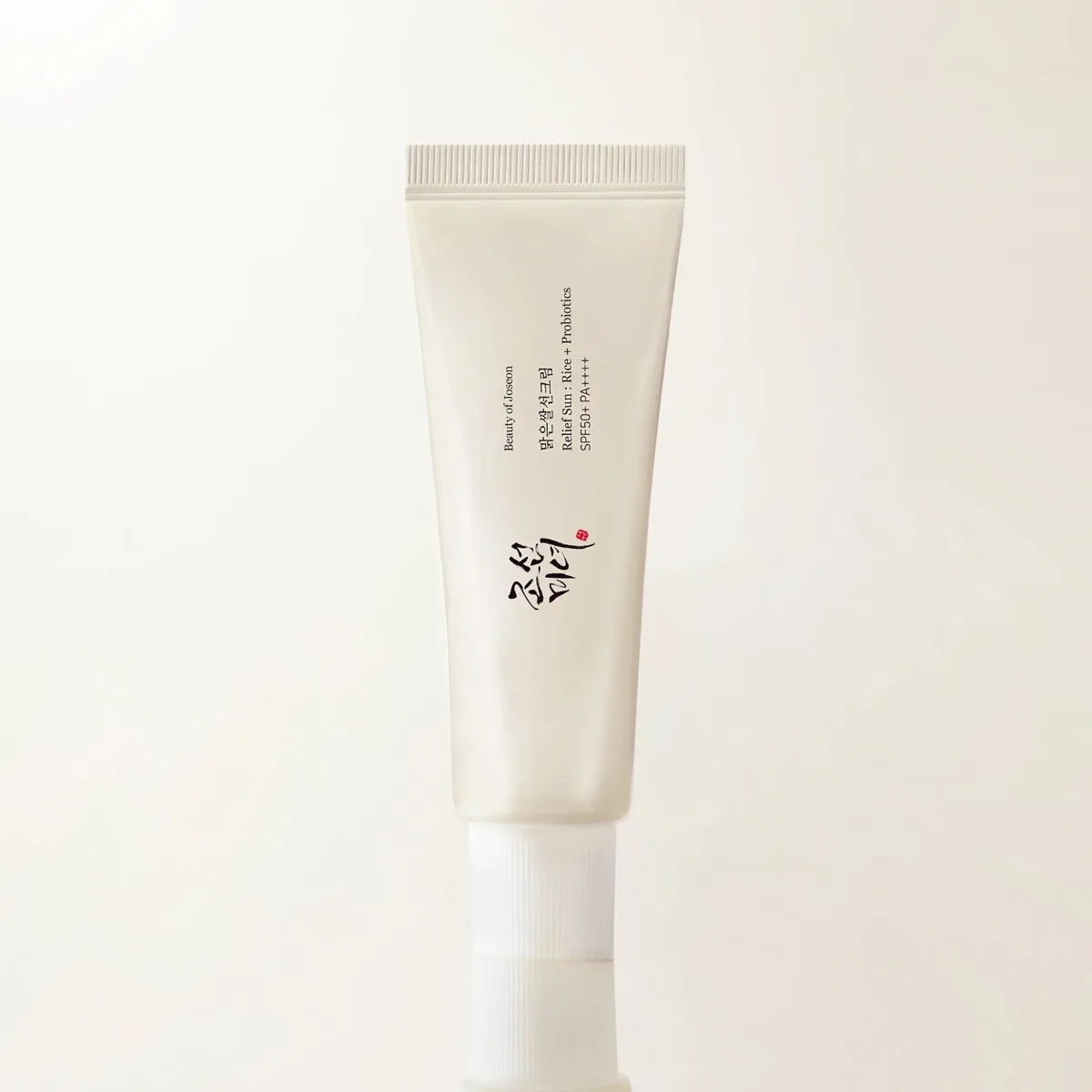
The fix costs no time at all, only calibration. The teaspoon rule and its practical descendant, the two-finger rule — two full strips squeezed along the index and middle fingers, roughly a quarter teaspoon for a face — exist so you can hit the tested density without measuring anything. Dispensing the right amount of Beauty of Joseon Relief Sun or La Roche-Posay Anthelios UVMune 400 takes exactly as long as dispensing the wrong amount. What it costs is the cosmetic compromise of a heavier layer, which is the real reason people under-apply and the real thing worth solving by choosing a texture you can bear at full dose.
The second non-negotiable is retinoid frequency. Retinoids work through cumulative change in follicular keratinisation and dermal remodelling, and the variable that drives the result is how many nights you actually applied it — not the concentration. A modest adapalene gel used five nights a week outperforms a high-strength retinol used when you remember, and the tolerability of the modest one is what makes the five nights happen. If your evening is compressed, this is the step that stays and the essence that goes.
What you can cut without losing anything
The corollary is a permission list, and it is longer than most routines assume.
Toners and essences go first. A hydrating toner delivers humectants that your moisturiser also delivers, in a thinner vehicle that evaporates faster; unless it carries an active you specifically want, it is a texture preference rather than a step. Morning cleansing with a foaming cleanser goes next for most people — skin that was cleansed eight hours ago and slept on a pillow is not soiled, and water alone or a brief pass with something like CeraVe Hydrating Facial Cleanser is sufficient. Double cleansing belongs to evenings with sunscreen or makeup on the face, not to mornings.
Separate eye creams are the most defensible cut of all. The periorbital skin is thinner and needs gentler handling, but a fragrance-free facial moisturiser applied lightly around the orbital rim does the same job as most eye creams, which are frequently the same base in a smaller jar. Standalone hyaluronic acid serums under a moisturiser containing glycerin and hyaluronic acid are the same duplication in a different position.
And the biggest one: not every active needs its own nightly slot. Rotating them across the week rather than stacking them on one evening lowers both time and irritation, which is the entire logic of skin cycling. The Skin Cycling Planner builds the exfoliate-retinoid-recover rotation as a printable calendar tuned to how much your skin tolerates, which is a more useful answer to "I don't have time for all this" than dropping actives entirely.
The sequence, out loud
Assembled, the morning is four steps and under two minutes. Rinse or a brief cleanse. One leave-on active if you use one in daylight. Moisturiser. Sunscreen at the two-finger dose, applied before you leave rather than as you leave — and if you are using a combined SPF moisturiser, that dose replaces both of the last two steps rather than shrinking to the size of one.
The evening is three steps and under three minutes. Cleanse properly, because this is the one that has actual work to do. Apply your treatment — retinoid most nights, an exfoliant on its rotation night, nothing at all on recovery nights. Moisturise, and use more of it on the nights you used the retinoid.
That is it. Seven steps across a day, none of them waiting, all of the compression taken out of the places where compression is free. Our five-minute routine page gives the version with real product slots filled in, and the minimalist routine strips it further for anyone who wants the shortest defensible list rather than the fastest complete one. If you would rather have it built around your own skin and concerns than adapted from a template, the Routine Finder produces the AM/PM version from a short quiz.
Our position, stated plainly: the routine that fits your life beats the routine that impresses a comment section, and the evidence on adherence says the gap is not close. But "simplified" has to mean fewer steps, not thinner ones. Cutting the essence saves you forty seconds and costs nothing. Cutting the sunscreen dose saves you four seconds and costs most of the protection you thought you had.
Products mentioned
Independently reviewed and scored — the real products behind this piece.




- Routine A 5-Minute Skincare Routine That Doesn't Cut Corners The same sequence with real product slots filled in.
- Routine The Minimalist 3-Step Skincare Routine, Backed by Evidence The shorter version for anyone who wants the smallest defensible list.
- Ingredient Ceramides What makes a combined SPF moisturiser worth using as the single leave-on step.
- Ingredient Retinol Frequency-versus-strength context for the evening treatment step.
References
- Electronic monitoring of medication adherence in skin disease: results of a pilot study — Journal of the American Academy of Dermatology, 2003
- Timing of office visits can be a powerful tool to improve adherence in the treatment of dermatologic conditions — Journal of Dermatological Treatment, 2013
- Simplifying regimens promotes greater adherence and outcomes with topical acne medications: a randomized controlled trial — Cutis, 2010
- Application of sunscreen--theory and reality — Photodermatology, Photoimmunology & Photomedicine, 2014
- Teaspoon rule revisited: proper amount of sunscreen application — Photodermatology, Photoimmunology & Photomedicine, 2013
Every cited link is verified to resolve to the paper named. Where a source could not be independently confirmed, it is listed without a link rather than pointing you somewhere wrong.
Frequently asked
Do I really have to wait between skincare steps?
For most steps, no — the per-step absorption times circulating online are not derived from controlled evidence. A water-phase product that partially mixes into the next one changes very little. The exception worth respecting is sunscreen, which needs to set into a continuous film before exposure, so apply it before you leave rather than on the doorstep.
Is an SPF moisturiser good enough to replace separate sunscreen?
It can be, provided you apply it at sunscreen quantity rather than moisturiser quantity. The formula is usually a genuine sunscreen with humectants in the base; the failure is behavioural, because the word moisturiser cues a smaller dose. If you use one, dispense the two-finger amount and let the hydration be the extra.
How much sunscreen is actually enough for a face?
Roughly a quarter teaspoon, or two full strips squeezed along the index and middle fingers. SPF is measured at 2 mg/cm² and most people apply a quarter to a half of that, which drops a labelled SPF 16 to somewhere around SPF 4 at half dose and SPF 2 at quarter dose. The relationship is not proportional.
Which steps can I drop without losing results?
Hydrating toners and essences, standalone humectant serums under a moisturiser that already contains them, separate eye creams, and morning double-cleansing. None of those carry a unique mechanism your other steps don't. What cannot go is the sunscreen dose and the number of nights you use your retinoid.
Is a weaker retinoid used often better than a strong one used occasionally?
Generally yes, because the outcome tracks cumulative exposure rather than peak concentration. A tolerable strength you apply five nights a week produces more change than a high-strength product you abandon after a week of flaking — and tolerability is precisely what determines whether those five nights happen.