Heartleaf Went Mainstream in Two Years. The Human Evidence Did Not Keep Up.
The soothing plant on every K-beauty label has real anti-inflammatory pharmacology — and one human trial, in which it was one of four herbs in the same bottle.
Read the preview
From the DermApproved blog, in Natural and Botanical: heartleaf went from Korean folk remedy to every K-beauty shelf in about two years. The lab work is real — mice, keratinocytes, a proper pathway. The one human trial everyone cites tested four herbs at once. Then there's that big number on the bottle. Not a dose. For the full breakdown, visit dermapproved.com/blog.
Two years from herbal decoction to bathroom shelf
Houttuynia cordata is not new. It has been eaten and brewed across East and Southeast Asia for a very long time, has a fish-like smell that gives it one of its common names, and occupies a place in Korean folk medicine roughly where chamomile sits in European tradition. What is new is the speed with which it colonised the Western skincare shelf — riding the barrier-repair wave that made "calming" a category rather than a claim, and arriving with a marketing number attached to the front of every bottle.
So the fair question is not whether heartleaf does anything. It is whether the evidence supports what the labels imply, and the honest answer is that there is a real gap between the pharmacology and the claim — which is more interesting than either the hype or the dismissal.
The mechanism is genuine and it is mostly not in humans
The preclinical work is not hand-waving. In a 2025 study, Houttuynia cordata polysaccharides were tested in a mouse model of atopic dermatitis and in cultured human keratinocytes stimulated with tumour necrosis factor alpha and interferon gamma. The extract reduced epidermal thickening, mast cell infiltration and inflammatory cytokines in the mice; suppressed cytokine and chemokine output via the MAPK signalling pathway in cells; restored barrier proteins; and shifted lipid metabolism back toward normal.
That is a specific, plausible, multi-step mechanism — considerably more detailed than most botanicals manage. It is also mice and cell culture, and the history of dermatology is littered with compounds that quieted a keratinocyte and did nothing measurable on a face.
The human data is where the gap opens. The closest thing to a clinical trial is an eight-week, double-blinded, randomised, vehicle-controlled study in 60 patients with mild-to-moderate acne, run out of Seoul National University. Both inflammatory and non-inflammatory lesion counts fell significantly against vehicle, and biopsies showed reduced IL-1α, IL-8 and keratin 16. Encouraging — and the treatment was a blend of four herbal extracts: mangosteen, Lithospermum, Tribulus terrestris and Houttuynia cordata.
You cannot pull one thread out of that result. The trial supports the blend. It says nothing about what heartleaf alone would have done, and citing it as heartleaf evidence — which happens constantly — is exactly the kind of indirectness that separates a real citation from a decorative one.
Centella is the fair comparator, and its evidence is thinner than people assume
Heartleaf is usually positioned against centella asiatica, the other calming botanical, on the grounds that centella is the established one. That framing is right about the ranking and wrong about the magnitude.
Centella does have human trials. In a split-face, double-blind, placebo-controlled study, 30 people had facial acne scars treated with an Er:YAG laser, then applied a standardised centella extract gel to one side and placebo to the other. The treated side showed a statistically significant reduction in erythema index across follow-up — with a confidence interval that only just cleared zero — plus blinded physician assessments favouring it on days two, four and seven for redness, crusting and general wound appearance. Skin biophysics measures showed no difference between sides.
That is a real, honest, small result: helpful after a controlled injury, modest in size, in thirty people. It is the good end of botanical evidence, and it is still a long way from what "clinically proven to calm redness" implies. In our own evidence table, centella's rows for rosacea, post-procedure and eczema sit in the lower tiers, because one small trial is one small trial. Heartleaf does not have a row at all — which in that system means it contributes nothing to any claim's evidence, rather than that it has been judged and found wanting.
The number on the front of the bottle is not a dose
Every heartleaf product leads with a percentage, and they are large: seventy, seventy-seven, eighty-eight. It reads like a concentration. It is not one.
What that figure almost always describes is how much of the formula's water phase has been replaced by an extract-bearing liquid — heartleaf water, a ferment filtrate, a decoction. A product that is 77% "Houttuynia cordata extract" by that convention is mostly water in which heartleaf has been steeped, and the quantity of any specific constituent in it is unstated and unregulated. Two products carrying the same headline number can differ by an order of magnitude in what they actually deliver.
This is not fraud, and it is not unique to heartleaf — the same convention governs rice water, birch sap, mugwort and green tea products. But it does mean the number tells you about the vehicle rather than the dose, and comparing bottles on it is meaningless. Our ingredient-decoder tool reads where an ingredient actually sits in the INCI list, which is a far better signal than the front of the box. The broader version of this question — whether more active is always better — has the same answer here as everywhere: not if you cannot tell how much you are getting.
So should reactive skin use it?
Yes, quite possibly — for reasons that have little to do with the plant.
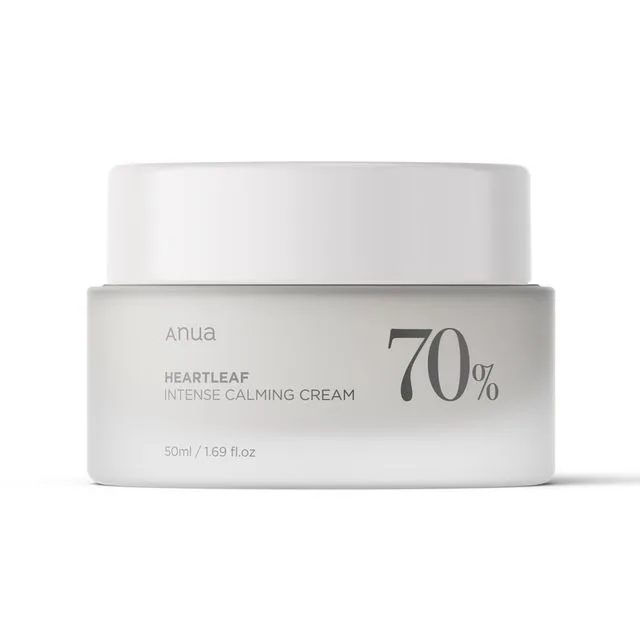
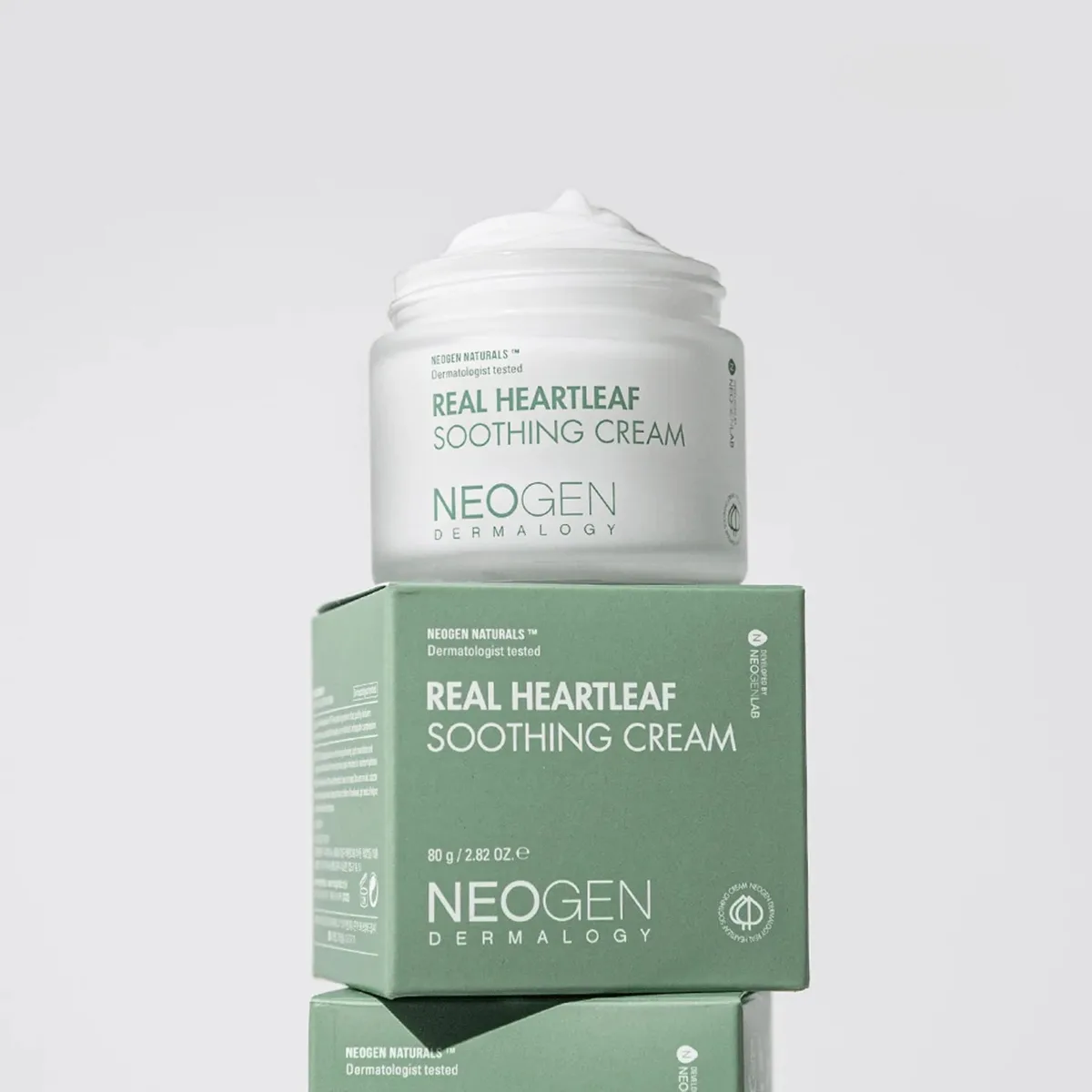
Heartleaf formulas cluster in a category that is doing several sensible things at once. Anua Heartleaf 77% Soothing Toner and Anua Heartleaf 70% Daily Relief Lotion are built around panthenol, ceramides, beta-glucan and squalane, with the fragrance and drying alcohol that provoke reactive skin conspicuously absent. Neogen Real Heartleaf Soothing Cream adds niacinamide, and Benton Heartleaf Cream leans on ceramides. Those are the ingredients with the evidence, in formulas designed not to irritate. If your skin calms down on one of them, the botanical may well be contributing — but the barrier lipids and the absent irritants are doing verifiable work.
The caveat that matters is the one that applies to every botanical: plant extracts are chemically complex and are a more common source of contact allergy than the synthetic humectants they are marketed against. "Natural" is not a tolerability guarantee, and a reactive face is precisely the wrong place to find that out across your whole cheek. Patch test a new botanical formula on a small area for a fortnight — our patch-test tool structures it — before committing.
The verdict, then, is a modest one, and modest is not the same as negative. Heartleaf is a plausible anti-inflammatory with genuine preclinical mechanism, no isolated human trial, and a marketing number that means less than it looks like it does. Buy the formula, not the plant.
Products mentioned
Independently reviewed and scored — the real products behind this piece.


References
- Clinical efficacy of herbal extracts in treatment of mild to moderate acne vulgaris: an 8-week, double-blinded, randomized, controlled trial — Journal of Dermatological Treatment, 2021
- Houttuynia cordata polysaccharides ameliorate atopic dermatitis in mice through modulation of skin immune barrier and lipid metabolism — International Journal of Biological Macromolecules, 2025
- The Effects of a Standardized Extract of Centella asiatica on Postlaser Resurfacing Wound Healing on the Face: A Split-Face, Double-Blind, Randomized, Placebo-Controlled Trial — Journal of Alternative and Complementary Medicine, 2020
- Clinical, biometric and structural evaluation of the long-term effects of a topical treatment with ascorbic acid and madecassoside in photoaged human skin — Experimental Dermatology, 2008
Every cited link is verified to resolve to the paper named. Where a source could not be independently confirmed, it is listed without a link rather than pointing you somewhere wrong.
Frequently asked
Is there any human evidence that heartleaf calms skin?
Not for heartleaf on its own. The one randomised, vehicle-controlled human trial that included Houttuynia cordata tested it as part of a four-herb blend in 60 acne patients, so the result belongs to the combination. The detailed anti-inflammatory findings — MAPK pathway suppression, restored barrier proteins — come from mice and cultured keratinocytes.
What does 77% heartleaf actually mean on a label?
Usually that 77% of the formula's water phase has been replaced by a heartleaf-bearing liquid such as an extract or ferment filtrate. It is a statement about the vehicle, not about active concentration, and two products with the same number can deliver very different amounts of anything. Where the ingredient sits in the INCI list is more informative.
Is heartleaf better than centella for redness?
Centella has more human data, though less than its reputation suggests — its best post-procedure trial involved thirty people and found a small, statistically significant reduction in erythema. Heartleaf has no equivalent isolated trial. On current evidence centella is the safer bet, and neither is a substitute for a formula built to avoid irritants.
Can a botanical formula irritate reactive skin?
Yes, and plant extracts are a more frequent source of contact allergy than the synthetic humectants they are often marketed against. Chemical complexity is exactly what makes a botanical interesting pharmacologically and unpredictable dermatologically. Test any new botanical product on a small area for around two weeks before applying it broadly.