Glutathione: The Brightening Molecule With an Injection Problem
The evidence runs backwards. Topical and oral glutathione have small randomised trials behind them; the intravenous version — the most expensive, most heavily promoted route — has none at all.
Read the preview
From the DermApproved blog, in Brightening and Pigment Actives: glutathione's evidence runs backwards. The cream and the capsule have small randomised trials. The intravenous drip — the most expensive, most heavily promoted version — has none at all for lightening. And there is a second mechanism nobody mentions, because it complicates the story. For the full breakdown, visit dermapproved.com/blog.
An ingredient whose evidence runs backwards
Most ingredients follow a familiar pattern: the more invasive the delivery, the better the evidence, because nobody submits to an injection without a trial behind it.
Glutathione inverts that completely. Applied topically, it has a handful of small randomised controlled trials. Taken orally, it has a few more. Delivered intravenously — the version that costs the most, is promoted hardest across several markets, and is administered in clinics and increasingly in non-clinical settings — it has, for skin lightening, none.
That inversion is the single most useful thing to know about this molecule, and it is the structure of everything that follows: what the evidence actually shows at each route, where it stops entirely, and who is being sold the version that has none.
What it does to melanin, including the part usually omitted
Glutathione is a low-molecular-weight thiol tripeptide with a central role in maintaining intracellular redox balance — a genuine and important piece of cell biology, present in every cell you have, and not an exotic import.
Its antimelanogenic effect works through two mechanisms. The first is inhibition of tyrosinase, the rate-limiting enzyme in melanin synthesis, both directly and indirectly. That is the same target hit by most established pigment actives and it is uncontroversial.
The second is a switch from eumelanin to pheomelanin production. Eumelanin is the brown-black pigment; pheomelanin is the yellow-red one. Shifting the ratio toward pheomelanin lightens the visible result.
It also does something else that consumer coverage almost never mentions: eumelanin is substantially more photoprotective than pheomelanin. A mechanism that lightens skin by moving production toward the less protective pigment is, in principle, trading a cosmetic outcome for a photobiological one. Nobody has quantified that trade-off in humans using these products, and the honest position is that this is an open question rather than a demonstrated harm. But it belongs in the discussion, and its consistent absence from marketing material is not an accident — it complicates the story.
The oral trials, read carefully
There are real randomised trials here, and reading them properly is more useful than either dismissing or overselling them.
The 2012 trial, at a teaching hospital in Bangkok, randomised 60 healthy medical students to 500 mg of oral glutathione daily in two divided doses or placebo, for four weeks, with melanin indices measured at six sites. Melanin index decreased consistently at all six sites in the glutathione group — but the reduction was statistically significantly greater than placebo at only two of the six: the right side of the face and the sun-exposed left forearm. Both arms were very well tolerated. The authors' own conclusion was that oral glutathione produces lightening 'in a small number of subjects', and that long-term safety has not been established.
A 2017 three-arm trial compared 250 mg/day of reduced glutathione, 250 mg/day of the oxidised form, and placebo over 12 weeks in healthy women. Melanin index and UV spots at all sites 'tended to be lower' than placebo — note the hedge, which is the investigators' own. There was a significant reduction in wrinkles at some sites on the reduced form, and a trend toward increased elasticity. No serious adverse effects.
A 2021 trial in 46 participants tested topical plus oral glutathione against monotherapy, over eight weeks, and found the combination produced a significantly lower melanin index and L* score than placebo.
So: three or four small studies, running four to twelve weeks, with samples in the forties to sixties, largely in Southeast Asian populations, producing effects that are statistically detectable at some measured sites and are described by the researchers themselves in carefully hedged language.
That is genuinely not nothing — it is more evidence than most cosmetic actives ever accumulate. It is also nowhere near what the category is sold on. A 2016 review counted three randomised controlled trials supporting topical and oral use and noted that the key questions — duration of treatment, longevity of any effect, and maintenance protocols — remain unanswered. That is still broadly true, and it is the difference between 'this molecule does something measurable' and 'here is a treatment plan'.
Topical: a delivery problem, not a potency one
Glutathione's difficulty on the skin is not that it lacks activity. It is that it is a hydrophilic tripeptide that oxidises readily, which creates two independent obstacles before any of the biology matters.
Stability in the bottle. Reduced glutathione converts to its oxidised form on exposure to air, and a formulation has to prevent that across manufacture, shipping and months of use. This is a solvable problem, and it is why formulators increasingly use the oxidised form or stabilised derivatives rather than fighting the chemistry.
Getting through the stratum corneum. A hydrophilic peptide is not what the skin barrier is built to admit, and penetration in an active form at a meaningful concentration is a real formulation challenge rather than a marketing footnote.
The practical consequence is visible in the products themselves. Glutathione typically appears mid-list, as a supporting antioxidant, alongside actives with substantially deeper pigment evidence — COSRX The Vitamin C 13 Serum pairs it with vitamin C and niacinamide, Murad Vita-C Glycolic Brightening Serum with vitamin C, glycolic acid and hexylresorcinol, Klairs TXA Supple Tone Up Sun Essence with tranexamic acid and niacinamide inside a sunscreen base, and COSRX Advanced Snail Radiance Dual Essence with niacinamide.
Those are frequently good products. The question worth asking before paying a premium for the glutathione claim is which entry on the list has the evidence — and the ingredient decoder will resolve where a given ingredient sits and what it is actually doing there. In most of these formulas, the answer is that glutathione is a passenger in a car driven by niacinamide, vitamin C or tranexamic acid.
The drips: where the evidence stops
Intravenous glutathione for skin lightening is the most commercially successful format of this molecule and the one with the least behind it.
The 2016 review states the position without hedging: although the use of intravenous glutathione injections is popular, there is no evidence to prove its efficacy. There are no published clinical trials evaluating injectable glutathione for skin lightening, and consequently no published guidance on dosing regimen or duration — which means a clinic selling a 'course' of ten drips has invented that number, because there is no source it could have come from.
The adverse effects reported have been sufficient to prompt regulatory action. The Philippine FDA issued a public advisory on the unsafe use of glutathione as a skin-lightening agent, and the risks documented in that context include toxic effects on the thyroid, liver, kidneys and nervous system; Stevens-Johnson syndrome and toxic epidermal necrolysis, which are life-threatening; and — where administration takes place outside a sterile clinical setting, which is increasingly common — transmission of bloodborne infections including HIV and hepatitis B and C. Where the drip is combined with high-dose intravenous vitamin C, as it frequently is, there is an added risk of kidney stones.
One nuance matters for credibility, and it is the reason this is not a scare piece. Injectable glutathione is not a banned or fringe substance. It is an approved product in the Philippines — for use as an adjunct in cisplatin chemotherapy, an entirely different indication with an entirely different risk-benefit calculation. The molecule is legitimate. What is unapproved is the cosmetic use: unlicensed for that purpose, without an established dose, without a trial, and increasingly delivered by people who are not administering it in a clinical environment.
The market this serves, said plainly
It would be incomplete to audit this ingredient without naming the industry around it, and dishonest to pretend the audit is neutral.
Skin lightening is a very large global market, concentrated in South and Southeast Asia, parts of Africa, and the Caribbean and their diasporas. Demand for it is shaped by colourism — the social advantage attached to lighter skin within a population, reinforced across generations by advertising, by marriage markets, by casting and by hiring. That is a real structure with real consequences for people's income and prospects, and it is not the fault of anyone navigating it.
So this is not a lecture about wanting lighter skin. People make rational decisions inside the incentives they actually face, and a website telling them their preference is the problem would be both useless and presumptuous.
What is useful is separating the products that work and are safe from the ones that are neither — because the population most heavily marketed to is the same population most exposed to the unregulated end of this category, and intravenous glutathione is the most expensive and least evidenced option in it. That asymmetry is worth being angry about in a way that has nothing to do with the consumer.
One clinical distinction gets deliberately blurred by the marketing and is worth un-blurring. Treating discrete hyperpigmentation is a different goal from lightening overall complexion. Melasma, post-inflammatory marks and sun spots are conditions with defined targets, real treatments and measurable endpoints. Global depigmentation is not a dermatological objective and has no established safe protocol. The first is medicine. The second is an industry that borrows medicine's vocabulary.
What actually moves pigment
If the goal is discrete pigmentation — spots, marks, patches — the evidence base is far better than anything above, and none of it requires a needle.
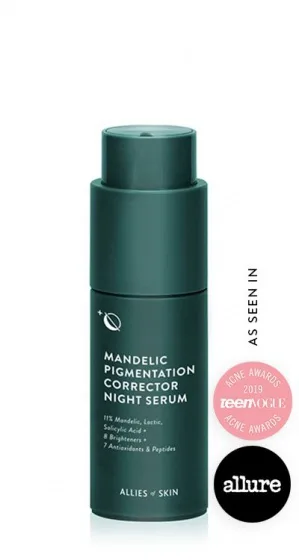
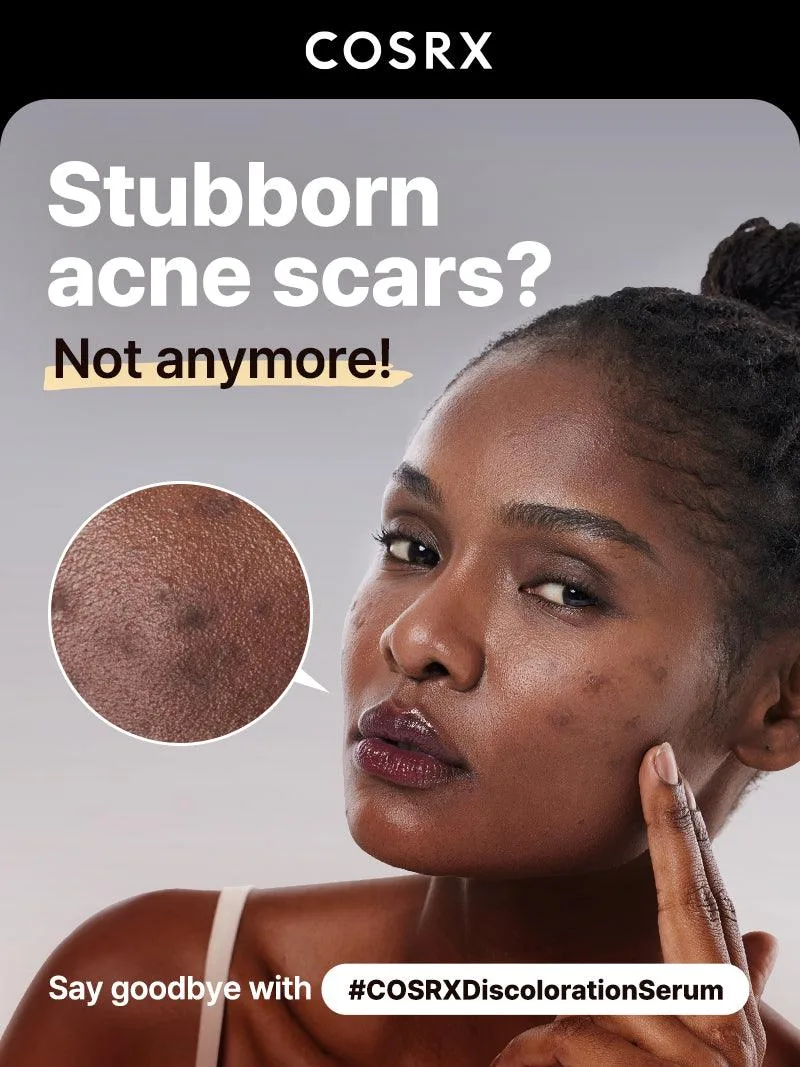
**Vitamin C** inhibits tyrosinase and adds antioxidant protection against the UV that drives pigment in the first place; Skinfix Brighten + Firm 15% Vitamin C Serum and Goodal Green Tangerine Vita C Dark Spot Care Serum Alpha are straightforward routes in. **Niacinamide** interrupts the transfer of melanosomes from melanocyte to keratinocyte — a different point in the pathway, which is why it combines well. **Tranexamic acid** has become a mainstay particularly in melasma, working upstream on the plasmin pathway; Allies of Skin Mandelic Pigmentation Corrector Night Serum stacks it with mandelic and azelaic acids. Alpha arbutin is another tyrosinase route — COSRX The Alpha-Arbutin 2 Discoloration Care Serum pairs it with niacinamide and tranexamic acid.
Two rules that matter more than the choice between them.
Sun protection is not optional here, it is the active step. Every pigment treatment in the list above is working against continuous re-stimulation, and without daily protection you are treating and re-triggering simultaneously. This is the single commonest reason a pigment routine fails.
Do not stack everything at once. More brightening actives applied together does not fade pigment faster — layering several brightening actives mostly raises irritation, and irritation causes post-inflammatory pigmentation, which is the thing you were trying to remove.
And set the clock correctly before you start: how long a brightening active takes to show anything is measured in months, not weeks. The my-skin profile is a reasonable place to record what you are using and when you started, because the honest answer to 'is it working' requires knowing how long it has actually been — and most people underestimate that by half.
Products mentioned
Independently reviewed and scored — the real products behind this piece.


- Ingredient Glutathione (GSH) Real mechanism, small trials, and an evidence base that thins as the delivery gets more invasive.
- Ingredient Vitamin C (L-Ascorbic Acid) Tyrosinase inhibition plus antioxidant cover against the UV that drives pigment.
- Ingredient Niacinamide (Vitamin B3) Blocks melanosome transfer — a different step, which is why it combines well.
- Ingredient Tranexamic Acid Works upstream on the plasmin pathway; a mainstay in melasma.
- Question Should I layer several brightening actives at once? Stacking raises irritation, and irritation makes pigment.
- Question How long before a brightening product shows anything? Months, not weeks — set the clock before judging the result.
References
- Glutathione as a skin whitening agent: Facts, myths, evidence and controversies — Indian Journal of Dermatology, Venereology and Leprology, 2016
- Glutathione as an oral whitening agent: a randomized, double-blind, placebo-controlled study — Journal of Dermatological Treatment, 2012
- Glutathione and its antiaging and antimelanogenic effects — Clinical, Cosmetic and Investigational Dermatology, 2017
- Combination of topical and oral glutathione as a skin-whitening agent: a double-blind randomized controlled clinical trial — International Journal of Dermatology, 2021
- FDA Advisory No. 2019-182: Unsafe Use of Glutathione as Skin Lightening Agent — Food and Drug Administration, Republic of the Philippines, 2019
Every cited link is verified to resolve to the paper named. Where a source could not be independently confirmed, it is listed without a link rather than pointing you somewhere wrong.
Frequently asked
Does oral glutathione actually lighten skin?
Modestly, in small short trials. The best-known study gave 60 people 500 mg daily for four weeks and found melanin index fell at all six measured sites, but significantly more than placebo at only two of them; the authors described lightening 'in a small number of subjects'. A later trial found melanin index 'tended to be lower' on 250 mg. Real, measurable, and far smaller than the marketing implies.
Is IV glutathione safe for skin whitening?
There is no published trial of injectable glutathione for skin lightening, no established dose and no published guidance on duration. The Philippine FDA issued a public advisory against the practice, citing toxic effects on thyroid, liver, kidney and nervous system, Stevens-Johnson syndrome and toxic epidermal necrolysis, plus bloodborne infection risk where administration is not sterile.
If there's no evidence, why is injectable glutathione legal?
Because the molecule has a legitimate approved use that has nothing to do with skin. In the Philippines, injectable glutathione is approved as an adjunct in cisplatin chemotherapy. The cosmetic application is off-label: unapproved for that purpose, without a trialled dose, and increasingly administered outside clinical settings. Legal availability of a drug is not endorsement of every use it gets put to.
Why doesn't glutathione work well in a cream?
Delivery, not potency. It is a hydrophilic tripeptide that oxidises readily, so it has to survive in the bottle and then cross a barrier built to exclude exactly that kind of molecule. This is why formulations often use the oxidised form or derivatives, and why glutathione usually appears mid-list as a supporting antioxidant beside actives doing the real pigment work.
What should I use for dark spots instead?
Vitamin C, niacinamide, tranexamic acid, azelaic acid and alpha arbutin all have deeper evidence, and they hit different points in the melanin pathway so they combine sensibly. The non-negotiable is daily sun protection — every one of them is working against continuous re-stimulation without it. Expect months rather than weeks, and avoid stacking everything at once, since irritation itself generates pigment.