


Glycolic Is the Fastest Acid. That's Its Design Flaw.
The smallest AHA gets deepest and shows results soonest — which is precisely why routines built around it overshoot, and why the people who do best with it use it least.
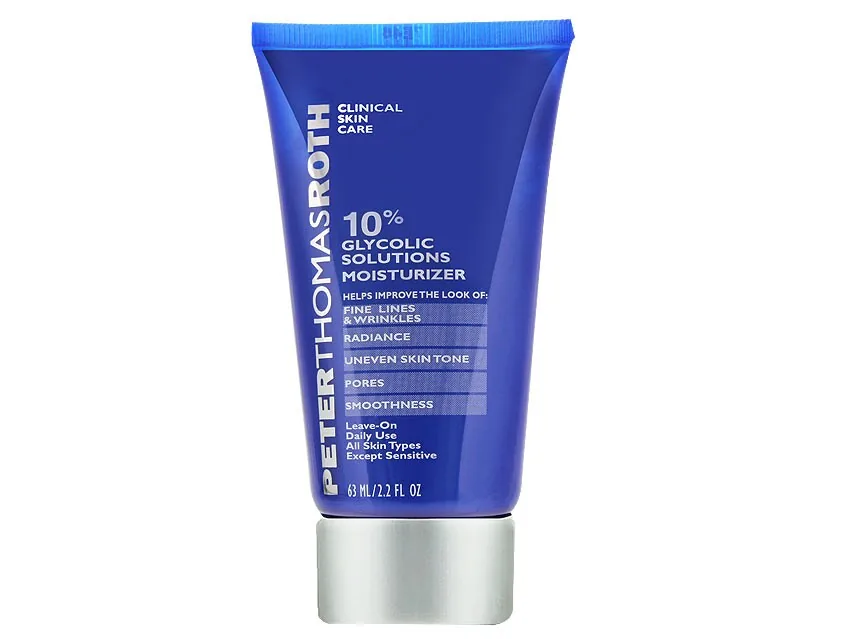
A 10% glycolic acid leave-on moisturizer — most glycolic moisturizers cap at 5-8%, making this one of the strongest available without a prescription. The time-released delivery system and arginine buffering make the high concentration more tolerable than the number suggests. Peter Thomas Roth was one of the first clinical brands to put this concentration in a daily-use format.
A clinical-grade 10% glycolic acid leave-on moisturizer from the brand that helped pioneer AHA skincare in the 1990s. Now discontinued, it remains a reference point for potent yet wearable glycolic acid treatment — effective for texture, fine lines, and dullness, with good supporting ingredients to mitigate the high acid concentration. A loss for the glycolic acid devotees who relied on it.
The case for it
Cautions: a photosensitising active — use sun protection.
What would change this: Guideline or regulatory standing for the active on this concern would move this from a promising bet to a recommendation.
Same rule for everyone. “Promising” is the verdict on 7,858 of 45,024 concern verdicts across the catalog; rule R9p decided 7,858 of them. Unchanged since September 5, 2026, engine 5.1.1.
Brand or formulator? Disclose a concentration or correct a fact →
The studies behind the evidence row
The case for it
Same rule for everyone. “Good choice” is the verdict on 9,564 of 45,024 concern verdicts across the catalog; rule R5 decided 9,072 of them. Unchanged since September 5, 2026, engine 5.1.1.
Brand or formulator? Disclose a concentration or correct a fact →
The studies behind the evidence row
The case for it
Same rule for everyone. “Good choice” is the verdict on 9,564 of 45,024 concern verdicts across the catalog; rule R5 decided 9,072 of them. Unchanged since September 5, 2026, engine 5.1.1.
Brand or formulator? Disclose a concentration or correct a fact →
The studies behind the evidence row
The case for it
Cautions: a photosensitising active — use sun protection.
What would change this: Guideline or regulatory standing for the active on this concern would move this from a promising bet to a recommendation.
Same rule for everyone. “Promising” is the verdict on 7,858 of 45,024 concern verdicts across the catalog; rule R9p decided 7,858 of them. Unchanged since September 5, 2026, engine 5.1.1.
Brand or formulator? Disclose a concentration or correct a fact →
The studies behind the evidence row
The case for it
Cautions: a photosensitising active — use sun protection.
What would change this: Trial evidence for the active on this concern would move this from a bet to a recommendation.
Same rule for everyone. “Unproven” is the verdict on 1,111 of 45,024 concern verdicts across the catalog; rule R9 decided 1,111 of them. Unchanged since September 5, 2026, engine 5.1.1.
Brand or formulator? Disclose a concentration or correct a fact →
The studies behind the evidence row
The case for it
Same rule for everyone. “Not for this” is the verdict on 488 of 45,024 concern verdicts across the catalog; rule R10 decided 488 of them. Unchanged since September 5, 2026, engine 5.1.1.
Brand or formulator? Disclose a concentration or correct a fact →
The studies behind the evidence row
Where our review and the verdict differ. The review below was written on the formulation and the published trials; the verdicts above apply the stricter standing test in our methodology — an active earns a recommendation only with guideline or regulatory standing for the concern. Where the two disagree, the verdict is DermApproved’s position.
A verdict is DermApproved’s assessment of how well a product’s ingredients fit a concern — never a claim about what the product treats. Evidence dots and collected reviews sit beside it and are never blended in. Rules 0.5.1 · evidence table ev-2026.09-r228 · how we decide
Peter Thomas Roth grew up around his grandparents' Hungarian spa resorts, watching guests emerge from mineral-rich treatments with visibly transformed skin. That childhood exposure to the power of topical chemistry eventually led him to found a skincare brand in 1993 that would become one of the largest privately-owned skincare companies in America — and a champion of putting professional-grade actives in consumer products. The 10% Glycolic Solutions Moisturizer embodies that philosophy: a concentration once reserved for in-office peels, delivered in a daily-use cream.
Ten percent glycolic acid in a leave-on format is not subtle. This is the strongest AHA concentration commonly found in daily-use moisturizers — most competitors cap at 5-8%. Glycolic acid, the smallest AHA molecule at just 76 daltons, penetrates the stratum corneum more deeply than any other alpha-hydroxy acid, dissolving the intercellular bonds that hold dead cells to the surface. The result is accelerated exfoliation that reveals smoother, brighter, more even-toned skin underneath.
The time-released delivery system is what makes 10% glycolic acid wearable as a daily moisturizer. Rather than dumping the full acid concentration onto the skin at once, the formula gradually releases glycolic acid over hours, spreading the exfoliating action across the night and reducing the peak irritation that immediate-release formulations cause. This is the technology that distinguishes a well-formulated high-percentage AHA from a crude acid solution.
Arginine serves as a pH buffer and amino acid humectant, modulating the glycolic acid's acidity to reduce stinging and irritation. It's a clever formulation choice — arginine interacts with glycolic acid at the molecular level to create a partial neutralization that lowers the 'free acid' available at any given moment, while still allowing therapeutic exfoliation to occur over time.
The moisturizing base is respectable. Aloe vera juice sits high in the formula, providing anti-inflammatory and soothing support critical for a high-acid product. Squalane and safflower seed oil deliver emollient moisture. Dimethicone creates a light occlusive seal. Glycerin provides humectant hydration. Together, these prevent the dry, tight, stripped feeling that many potent AHA products cause.
Retinyl palmitate and ascorbyl palmitate (vitamins A and E derivatives) add antioxidant support and mild additional anti-aging action. While retinyl palmitate is a weak retinoid compared to retinol or tretinoin, its inclusion alongside the glycolic acid provides a gentle collagen-stimulating complement without the irritation of layering a stronger retinoid over a 10% AHA.
The fragrance-free formulation is appreciated in a product this active. At 10% glycolic acid, the skin barrier is being deliberately compromised for therapeutic benefit — adding fragrance allergens on top would be irresponsible. Peter Thomas Roth made the right call here, letting the acid work without adding unnecessary irritation.
The initial experience involves a mild tingling that glycolic acid veterans will recognize — a gentle warmth that tells you the acid is active. New users should absolutely start every other night and build tolerance over two weeks. Mild peeling during the first week is normal and expected. By week three, most skin types adjust, and the benefits begin compounding: smoother texture, brighter tone, visibly refined pores, and gradually diminishing fine lines.
The phospholipids in the formula serve as delivery vehicles for fat-soluble actives, potentially enhancing the penetration of retinyl palmitate and squalane into the skin. This is a sophisticated formulation detail that reflects the clinical expertise behind the product.
Results build gradually but visibly. The first week brings a subtle brightening — the 'glycolic glow' that comes from removing the dull surface layer of dead cells. By week four, fine lines begin softening and pore texture refines. At the eight-week mark, hyperpigmentation and age spots show measurable fading as the accelerated cell turnover replaces pigmented cells with fresh ones. At twelve weeks, the cumulative effects create what many users describe as 'my skin but better' — a clarity and smoothness that looks natural rather than treated.
The product's discontinuation is a genuine loss for the glycolic acid community. Over its roughly two-decade run, it built a loyal following among users who appreciated a potent, no-nonsense AHA treatment from a brand with clinical credibility. Finding a direct replacement at the same concentration and in the same moisturizer format isn't straightforward — most brands have moved toward lower concentrations or serum formats.
At $45 for 2.2 ounces, the value was moderate for a clinical-grade AHA treatment. The tube lasted three to four months with nightly use. Compared to professional glycolic peels ($100-200 per session), a potent leave-on AHA at this price represented significant savings for comparable long-term results.
For anyone who can still find this product, it remains one of the most effective OTC glycolic acid treatments ever formulated. For those who can't, the market gap it leaves — a 10% glycolic acid leave-on moisturizer with time-release technology and good supporting ingredients — is worth filling. Someone should.
For glycolic acid devotees who can still find it, the Peter Thomas Roth 10% Glycolic Solutions Moisturizer remains a benchmark for what a clinical AHA moisturizer can achieve. Its legacy is the proof that professional-grade concentrations can work safely and effectively in daily home use — a conviction that Peter Thomas Roth has championed since day one.
The hero actives that drive this product's performance.
| Ingredient | Function | Evidence |
|---|---|---|
| Glycolic Acid (10%) | At 10%, this is a potent leave-on AHA concentration — significantly stronger than most glycolic acid moisturizers (which typically range 5-8%). The time-released delivery system gradually dispenses the acid to reduce irritation while providing sustained exfoliation overnight. Dissolves dead cell bonds on the skin surface for smoother, brighter, more even-toned skin. | Established mechanism for Rough Texture · established mechanism |
| Arginine | An amino acid that serves dual purpose: as a pH buffer to modulate glycolic acid's acidity and reduce irritation, and as a natural moisturizing factor component that helps offset the drying potential of 10% glycolic acid. | Not yet assessed |
| Squalane | Provides lightweight emollient moisture that counterbalances the glycolic acid's exfoliation. Works alongside safflower seed oil and dimethicone to create a moisturizing base that prevents the stripped, dry feeling a 10% acid could otherwise cause. | Not yet assessed |
| Retinyl Palmitate | A gentle vitamin A derivative that supports the glycolic acid's cell-turnover effects. While less potent than retinol, retinyl palmitate provides complementary anti-aging support and helps maintain the accelerated renewal the glycolic acid initiates. | Not yet assessed |
| Aloe Barbadensis Leaf Juice | Listed fourth, indicating a meaningful concentration. Provides anti-inflammatory and soothing benefits critical in a formula with 10% glycolic acid. Helps calm the skin and reduce the redness and irritation that potent AHA treatments can cause. | Not yet assessed |
Ingredient standings describe the active at treatment-level doses and vehicles; this product's own condition grades weigh its actual formula.
Water/Aqua/Eau, Glycolic Acid, Glycerin, Aloe Barbadensis Leaf Juice, Butylene Glycol, Caprylic/Capric Triglyceride, Glyceryl Stearate, PEG-100 Stearate, Carthamus Tinctorius (Safflower) Seed Oil, Sodium Hydroxide, Cetearyl Alcohol, Arginine, Cyclodextrin, Dimethicone, Squalane, Tocopheryl Acetate, Ascorbyl Palmitate, Retinyl Palmitate, Phospholipids, Leuconostoc/Radish Root Ferment Filtrate, Citric Acid, Ethoxylated Sorbitan Ester, Disodium EDTA, Polysorbate 20, Oleth-2, Potassium Sorbate, Sodium Benzoate, Phenoxyethanol
moisturizer
PM
Save this for the last step of your PM routine on clean, dry skin. Do not layer with other exfoliating acids or retinol. Always use SPF 30+ the following morning — glycolic acid significantly increases photosensitivity.
Smoother texture and subtle glow within 3-5 days. Visible improvement in fine lines and dark spots at 4-6 weeks. Significant refinement of pores and overall skin clarity at 8-12 weeks.
Glycolic acid at 10% represents a potent leave-on AHA concentration with extensive clinical validation. Work appearing in the Journal of the American Academy of Dermatology (1996) by Ditre et al. demonstrated that glycolic acid at 8-15% concentrations significantly increased epidermal thickness, dermal collagen density, and glycosaminoglycan content after 6 months of daily application. The mechanism involves disruption of corneodesmosomes in the stratum corneum, accelerating desquamation and stimulating the underlying epidermis to produce new cells.
The time-released delivery mechanism used in this formula — likely based on cyclodextrin encapsulation (cyclodextrin is listed in the ingredients) — creates a gradual release profile that maintains therapeutic AHA levels over hours rather than delivering a bolus dose. Research in the International Journal of Pharmaceutics has demonstrated that cyclodextrin complexes with AHAs reduce peak skin concentration while extending the duration of acid activity, improving both tolerability and cumulative efficacy.
Arginine's role as a pH modulator is supported by formulation chemistry research showing that amino acid buffers can maintain glycolic acid's exfoliating activity while reducing the 'free acid' concentration responsible for stinging and irritation. This allows a 10% total glycolic acid formula to behave more like a 6-7% free acid formula in terms of tolerability, while maintaining a higher total acid reservoir for sustained release.
Practitioners view 10% glycolic acid as an effective concentration for treating photoaging, melasma, and textural irregularities. Dermatologists note that the time-release and arginine buffering in this formula make it more tolerable than an unbuffered 10% solution, though they still advise gradual introduction and mandatory daily sunscreen. The discontinued status is noted as a loss — dermatologists sometimes struggle to find well-formulated, high-percentage glycolic acid moisturizers to recommend. Patients are advised to use remaining stock within the recommended shelf life.
Apply a pea-sized amount to clean, dry skin as the final PM step, 2-3 nights per week initially. Build to nightly use over 2-3 weeks if tolerated. Avoid the eye area and lips. Do not use with other exfoliating acids or retinol products. Apply SPF 30+ every morning without exception — glycolic acid dramatically increases photosensitivity. Discontinue if persistent redness, burning, or excessive peeling occurs.
At $45 for 2.2 oz ($20.45/oz), this was reasonably priced for a clinical-grade leave-on AHA treatment. Professional glycolic peels cost $100-200 per session, making a nightly-use 10% glycolic cream a cost-effective alternative for long-term skin renewal. With the product now discontinued, remaining stock should be evaluated for freshness before purchase — glycolic acid's efficacy can decrease over time.
Experienced AHA users with normal to combination skin seeking a potent leave-on glycolic acid treatment for texture, fine lines, dullness, and hyperpigmentation. Best for those who've built tolerance with lower-percentage glycolic products.
Glycolic acid beginners, sensitive or rosacea-prone skin, dry skin types, anyone unable to commit to daily sunscreen, and those who need reliable ongoing product availability (given the discontinuation).
Ready to try Peter Thomas Roth 10% Glycolic Solutions Moisturizer?
Buy at Amazon ♥Medium-weight cream with a smooth, easily spreadable consistency. Not heavy or greasy — absorbs well.
Fragrance-free. Faint acidic/clinical scent that dissipates quickly.
Tube packaging protects the glycolic acid from air exposure. Opaque to protect antioxidant ingredients from light.
Mild tingling or warming sensation during the first few applications — normal for 10% glycolic acid. Skin feels smooth and slightly taut after absorption. Start every other night to assess tolerance. Possible mild peeling during the first 1-2 weeks as the acid accelerates cell turnover.
About 3-4 months per unit with nightly application to the face
fall winter
Peter Thomas Roth has been a champion of glycolic acid since the brand's early days in the 1990s, when AHAs were revolutionizing anti-aging skincare. This 10% moisturizer was one of the brand's signature products for over two decades — a testament to the founder's belief that professional-grade concentrations belong in home skincare. While now discontinued, it remains a reference point for clinical glycolic acid moisturizers.
Peter Thomas Roth was founded in 1993 by its Hungarian-born namesake, inspired by his grandparents' spa resorts. The brand remains one of the few privately-owned luxury skincare companies, available at Sephora, Ulta, and high-end spas globally. Known for potent, clinical-grade formulations.
10% glycolic acid is too strong for home use
While 10% is at the higher end of OTC concentrations, it's well within the safe range for leave-on products when properly formulated with pH adjustment and buffering agents. This formula uses arginine as a buffer and time-release technology to moderate the acid's impact. Professional peels use 20-70% concentrations.
Glycolic acid thins the skin
Glycolic acid removes dead cells from the stratum corneum (which is constantly being replaced), but it actually thickens the living epidermis and dermis by stimulating collagen production. Regular use results in thicker, healthier skin — the opposite of the 'thinning' myth.
Yes — this product has been discontinued by Peter Thomas Roth. It may still be available through some retailers clearing remaining stock. If you're looking for a similar 10% glycolic leave-on treatment, consider alternatives from brands like Alpha Skincare or Sunday Riley.
Start with every other night for the first 2 weeks to assess your skin's tolerance. If no excessive redness, peeling, or irritation occurs, you can increase to nightly use. Always use SPF 30+ the following morning — glycolic acid significantly increases UV sensitivity.
Glycolic acid helps with acne indirectly by accelerating cell turnover and preventing dead cell buildup that clogs pores. However, salicylic acid (BHA) is more directly effective for acne as it penetrates into pores. This product is better suited for texture, dullness, and anti-aging.
Not recommended — 10% glycolic acid and retinol together would likely cause excessive irritation. The formula already contains retinyl palmitate (a mild retinoid). If you want to use a stronger retinol, alternate nights rather than combining.
This is a leave-on daily moisturizer at 10% glycolic acid, designed for gradual results over weeks. Chemical peels use 20-70% glycolic acid for dramatic, immediate results with longer recovery. This product provides the benefits of professional AHA treatment at a lower intensity suitable for regular home use.
Recurring themes our editors read across retailer reviews of this product — summaries in our words, not quotations, and not a substitute for your own patch test.
Noticeably smoother skin texture within days
Effective at reducing fine lines and dullness
Not excessively drying for a 10% AHA
Gives skin a healthy glow
Can cause redness and irritation on sensitive skin
Some users saw no improvement after weeks of use
May not be moisturizing enough for dry skin types
Now discontinued — limited availability
Verified answers from our questions library — the nuance a product page cannot carry.