Industry & Trends News
The Collagen Supplement Question: Does Drinking It Actually Do Anything?
Your stomach dismantles collagen into rubble before it reaches your skin — so why do the human trials keep finding a small, real effect?
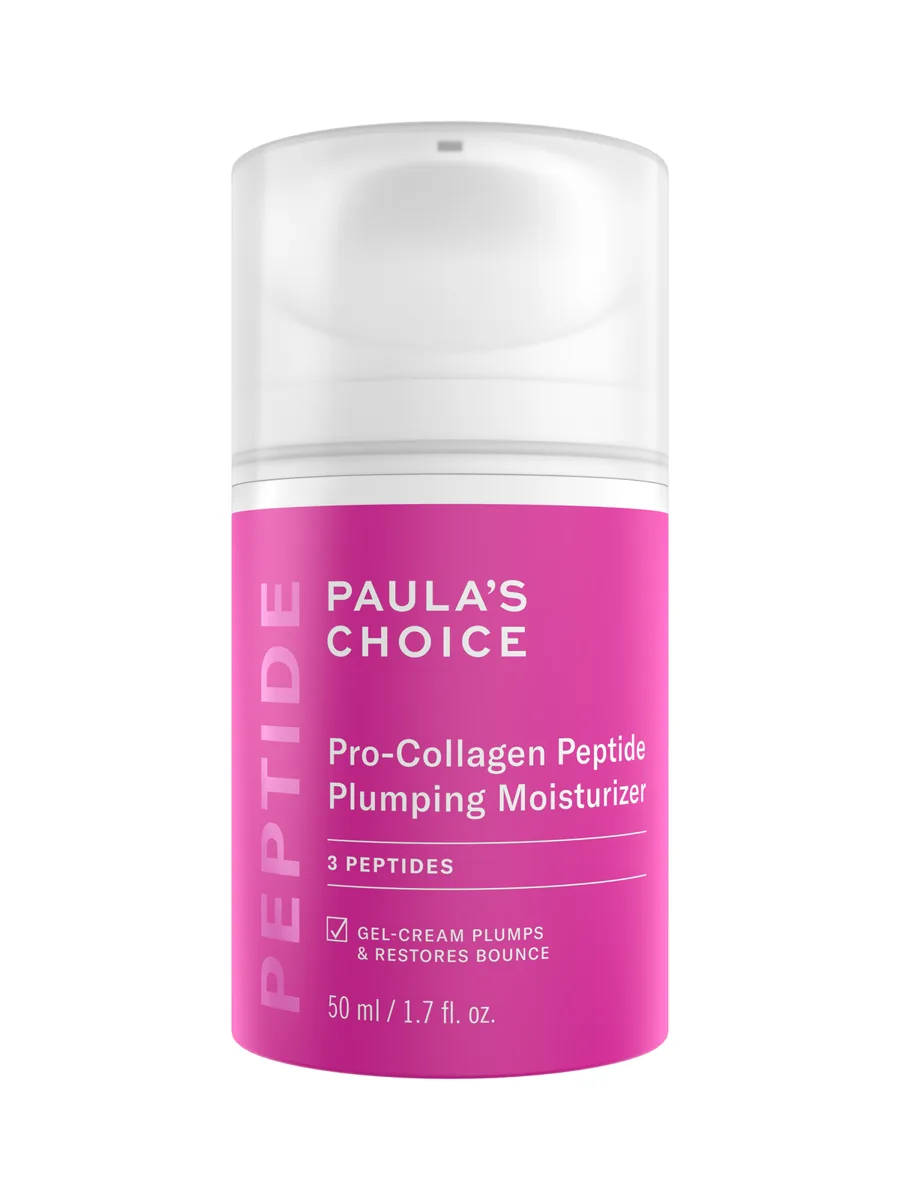
A gel-cream that puts three named collagen-signalling peptides — a hexapeptide, a tridecapeptide and a growth-factor-derived oligopeptide — into a fragrance-free, dimethicone-and-squalane base light enough for oily skin and calm enough for redness-prone skin, tinted pink by vitamin B12 rather than dye. Most peptide moisturisers are rich creams for mature dry skin; this is one built for the combination face that wants the peptides without the weight.
A cool, fragrance-free gel-cream that hydrates combination and oily skin well, layers under anything without pilling, and carries a trio of collagen-signalling peptides whose evidence is promising rather than proven. The plumping you see in the mirror is dimethicone and glycerin doing their instant work; the peptides are a slow, uncertain bet on top. Excellent tolerability and a lovely texture, priced like a serum for a moisturiser that is mostly water, silicone and squalane.
Twenty-two months on sale have produced 817 reviews at 4.6 stars on paulaschoice.com plus Sephora and Amazon pools and several editorial trials, which is a sound tolerability record but not efficacy evidence. The 'clinically proven' claim refers to unpublished in-house consumer testing, the peptides are supported by supplier studies rather than peer-reviewed trials, and their doses are undisclosed, so this assessment leans on the formula's well-understood base chemistry and user feedback more than on proof of the peptide claims.
The case for it
Same rule for everyone. “Good choice” is the verdict on 9,564 of 45,024 concern verdicts across the catalog; rule R5 decided 9,072 of them. As of September 25, 2026, engine 5.1.1.
Brand or formulator? Disclose a concentration or correct a fact →
The studies behind the evidence row
The case for it
What would change this: A declared concentration would move this to a firmer reading of the dose.
Same rule for everyone. “Supporting role” is the verdict on 8,197 of 45,024 concern verdicts across the catalog; rule R8a decided 1,489 of them. As of September 25, 2026, engine 5.1.1.
Brand or formulator? Disclose a concentration or correct a fact →
The studies behind the evidence row
Also listed for Large Pores — the actives here (Dimethicone, Squalane, Glycerin, Hyaluronic Acid) are in our research queue for that concern; there is no verdict until their evidence rows are written. That is a gap in our table, not a mark against the product.
Does the jobDoes what a moisturizer is for: draws in water, softens and smooths.
A verdict is DermApproved’s assessment of how well a product’s ingredients fit a concern — never a claim about what the product treats. Evidence dots and collected reviews sit beside it and are never blended in. Rules 0.5.1 · evidence table ev-2026.09-r228 · how we decide
There are two kinds of plumping in Paula's Choice's Pro-Collagen Peptide Plumping Moisturizer, and it is worth being clear about which one you are looking at. The first happens in the mirror thirty seconds after application: skin looks smoother, lines look softer, the surface has a bounce it did not have a minute ago. The second is the one on the label — collagen support, firmness, resilience over the long term — and it happens, if it happens, over months and below the surface. The first kind is real, immediate and mostly silicone. The second kind is the reason the jar costs forty-nine dollars. A fair review has to give each its due.
The instant kind is easy to explain from the list. Dimethicone is the second ingredient, ahead of the squalane and the glycerin, and dimethicone is the best surface-smoother in cosmetics: it fills the micro-texture of the skin, forms a thin flexible film, and scatters light in a way that reads as 'plumped'. Add glycerin, apple fruit extract, two glycols and a cationic hyaluronate derivative — a humectant-heavy build — and you get the plump-on-contact effect that the brand's consumer panel reports as instant. It is also why the cream sits so well under makeup and sunscreen without pilling, why it sets to a dry-touch finish within a minute, and why oily and combination skin, which usually treat peptide creams with suspicion, take to this one. Squalane, third in the list, is the only real lipid, a light skin-identical hydrocarbon that keeps the gel from being a gel. It is enough for a combination face in any season and a normal face most of the year. For genuinely dry skin in January it is not, and the brand's own positioning — 'especially ideal for normal, oily and combination skin' — quietly agrees.
The promised kind lives at positions fourteen, fifteen and sixteen: acetyl SH-hexapeptide-5 amide acetate, tridecapeptide-1 and oligopeptide-1. Their placement after the gelling polymers is normal — peptides work at parts-per-million and never sit high on a list — and the brand assigns each a job: the hexapeptide for moisture balance and bounce, the tridecapeptide for visibly smoothing expression lines, the oligopeptide, a growth-factor-derived sequence, for supporting natural collagen. Each of these has supplier data behind it, typically small panels measuring firmness or wrinkle depth over eight to twelve weeks against a placebo, and that data is the honest basis for calling them promising. What none of them has is an independent, peer-reviewed trial in this formula, at these undisclosed doses, on real faces over months. Paula's Choice says 'clinically proven' on the page and means its own consumer testing, which it has not published in detail. For a brand that spent three decades telling readers to distrust exactly that phrase, it is a phrase worth reading closely.
This is not to say the peptides do nothing. Signal peptides that nudge fibroblasts toward collagen production are a plausible class with a growing literature, and the three here are a thoughtful selection covering different mechanisms rather than three versions of the same one. It is to say that their effect, if present, is the slow and subtle kind, and that anyone who reports firmer skin after a fortnight is reporting the silicone. Independent testers who used the cream for three weeks describe softer texture and a good base for makeup and no dramatic change, which is precisely what the mechanism predicts. The brand's own timeline for the peptide benefits is two to three months. Judge accordingly.
What the formula does unambiguously well is behave. There is no fragrance, no essential oil, no alcohol, no dye — the pink comes from a trace of vitamin B12, which the brand's FAQ admits is a visual and not an active, and which is the kind of honesty its readers expect. It is preserved with hydroxyacetophenone, hexanediol and phenoxyethanol, conventionally and gently. It goes over retinoids and acids without stinging and under sunscreen without pilling, and its record — 817 reviews at 4.6 stars on the brand's site after about twenty-two months, with warm receptions from editorial testers on launch — is a tolerability record first and foremost. Redness-prone and acne-prone skin are explicitly invited, and the reviews suggest the invitation is safe to accept.
Then the price. Forty-nine dollars for 50 mL is peptide-serum money, and the jar is a moisturiser whose bulk is water, dimethicone, squalane and glycerin. The peptides are what you are paying for, and the peptides are a bet. The gel-cream that carries them is very good — as good as any fragrance-free gel-cream at half the price — and the honest way to buy it is as a very good gel-cream with an optional upside, not as a collagen treatment. Used twice a day, the opaque jar lasts about two months and gives no warning before it runs out, which is a small irritation the reviews mention often.
So, two plumpings. The first is real and you can see it today; it will also be there tomorrow, because it is a film. The second is a well-chosen, plausible, unproven trio of peptides that might, over a season, make a modest difference to firmness, and might not. For a combination or oily face that wants a fragrance-free moisturiser with a beautiful texture and a chance at more, this is an easy recommendation at the price of a nice gel-cream. At the price of a peptide treatment, it asks for more faith than the evidence has yet earned.
The hero actives that drive this product's performance.
| Ingredient | Function | Evidence |
|---|---|---|
| Pro-Collagen Peptide Trio (Acetyl SH-Hexapeptide-5, Tridecapeptide-1, Oligopeptide-1) | Fourteenth to sixteenth in a twenty-two-ingredient list — after the gelling polymers, before the preservative — which is a normal placement for peptides, since they work at parts-per-million, and also a reminder that they are not the bulk of this cream. Each has supplier data behind a different claim: the hexapeptide for moisture and 'bounce', tridecapeptide-1 for smoothing expression lines, oligopeptide-1 (a growth-factor-derived sequence) for supporting collagen. None has an independent trial on this formula. | Limited for Aging |
| Dimethicone | Second in the list, above the squalane and the glycerin — the immediate 'plumping' and the makeup-friendly, no-pill finish are largely this silicone filling surface texture and forming a smooth, semi-occlusive film. It is why the cream reads as instantly smoothing, and why some users who expect a peptide effect are actually feeling a silicone one. | Not yet assessed |
| Squalane | Third, the formula's only real emollient lipid — a light, skin-identical hydrocarbon that keeps a gel-cream from feeling like a gel and gives it enough slip to spread on dry patches without the heaviness of oils or butters. It is the reason combination and oily skin get on with this so well, and the reason very dry skin finds it thin. | Not yet assessed |
| Glycerin and Apple Fruit Extract | Fourth and fifth — glycerin carries the 24-hour hydration claim in the way it does in every moisturiser, and the apple fruit extract, unusually high in the list, is a sugar-and-polyphenol humectant that gives the brand a botanical to name. Together with pentylene glycol and butylene glycol they make this a humectant-heavy gel that rewards application on damp skin. | Established mechanism for Dehydration · established mechanism |
| Hydroxypropyltrimonium Hyaluronate | A cationic, low-molecular-weight hyaluronic acid derivative near the end of the list, chosen because its positive charge helps it adhere to the skin surface rather than rinse or wear off. The brand credits it with the lasting hydration; its late position suggests a supporting rather than starring role, but it is a smarter form than plain sodium hyaluronate for a film-forming gel. | Established mechanism for Dehydration · established mechanism |
| Cyanocobalamin (Vitamin B12) | The second-last ingredient and the reason the cream is pink — vitamin B12 is intensely coloured, so a trace tints the whole jar. The brand calls it soothing; topical B12 has a small body of evidence in eczema creams at far higher concentrations. Here it is a colourant with a good story, and an honest one, since the FAQ says as much. | Not yet assessed |
Ingredient standings describe the active at treatment-level doses and vehicles; this product's own condition grades weigh its actual formula.
Aqua/Water/Eau, Dimethicone, Squalane, Glycerin, Pyrus Malus (Apple) Fruit Extract, Pentylene Glycol, 1,2-Hexanediol, Ammonium Acryloyldimethyltaurate/VP Copolymer, Butylene Glycol, Hydroxyacetophenone, Sodium Acrylates Copolymer, Acrylates/C10-30 Alkyl Acrylate Crosspolymer, Gigartina Stellata Extract, Acetyl SH-Hexapeptide-5 Amide Acetate, Tridecapeptide-1, Oligopeptide-1, Sodium Phytate, Propanediol, Lecithin, Hydroxypropyltrimonium Hyaluronate, Cyanocobalamin, Phenoxyethanol
moisturizer
AM & PM
It sits happily as the last step before sunscreen or makeup, and its silicone-and-humectant build means it goes over retinoids, vitamin C and acids without stinging or pilling. Apply to skin that is still slightly damp from a toner or essence for the fullest hydration; on dry skin in winter, a drop of facial oil pressed over the top or a richer cream at night fills the gap the squalane leaves.
The plumped, smoothed look is immediate and largely the silicone and humectants at work; hydration holds through the day on combination skin. Any peptide-driven change in firmness or expression lines is the slow kind — the brand's own timeline is eight to twelve weeks — and independent reviewers at three weeks report softer texture but no dramatic change, which is what the mechanism would predict.
The evidence for this moisturiser divides between its base, which is well understood, and its peptides, which are not yet. The base delivers hydration by the standard humectant-plus-film route: glycerin, pentylene and butylene glycols and apple fruit sugars bind water in the stratum corneum, dimethicone lays a semi-occlusive film that slows its loss and optically smooths the surface, and squalane supplies a skin-identical emollient. Hydroxypropyltrimonium hyaluronate is a quaternised, low-molecular-weight hyaluronic acid whose positive charge gives it substantivity to the negatively charged skin surface; it has been shown in supplier and small independent studies to persist on skin longer than sodium hyaluronate, which supports the brand's durable-hydration positioning. The immediate improvement in skin appearance that users and the brand's consumer panel report is fully accounted for by these mechanisms.
The peptides are signal peptides — short amino acid sequences intended to be recognised by fibroblast receptors and to upregulate extracellular matrix synthesis. Acetyl SH-hexapeptide-5 amide acetate and tridecapeptide-1 are proprietary supplier peptides with in-vitro data on collagen and hyaluronan gene expression and small vehicle-controlled panels reporting improvements in elasticity or wrinkle parameters over eight to twelve weeks. Oligopeptide-1 is a sequence derived from epidermal growth factor, one of the more studied cosmetic peptides, with laboratory evidence of fibroblast stimulation and a longer history in Korean and Western cosmetics. The general class of signal peptides has supportive clinical literature, but effect sizes are modest, doses in finished products are rarely disclosed — as here — and penetration of peptides of this size through intact stratum corneum remains a debated question. No peer-reviewed trial of this specific formula exists.
Cyanocobalamin has a small clinical literature in atopic dermatitis at 0.07 percent in a barrier cream; at the trace level used to tint this gel-cream it should be regarded as a colourant. The formula's absence of fragrance, essential oils and denatured alcohol is its most clinically consequential feature for the sensitive and acne-prone users the brand targets.
Dermatologists tend to place peptide moisturisers in the 'reasonable, unproven' category: unlike retinoids, which have decades of controlled evidence for collagen induction, signal peptides have supplier studies and a plausible mechanism, and clinicians generally present them as a gentle option for patients who cannot tolerate retinoids rather than as an equivalent. On that basis this product would be regarded as a well-made, low-risk moisturiser whose peptide claims should be held lightly. Its stronger clinical merit is what it leaves out — fragrance, alcohol, essential oils — and its gel-cream texture, which makes it a practical daytime moisturiser under sunscreen for oily, combination and acne-prone patients, including those on topical acne prescriptions, where a heavy cream would be a problem. For mature dry skin seeking firming, most clinicians would still point first to a retinoid at night and a richer emollient, and treat this as an adjunct rather than a substitute.
After cleansing and any serums, scoop a small amount — about a pea and a half — with a clean fingertip and smooth it over the face and neck while the skin is still slightly damp from toner or essence, so the humectants have water to bind. It sets to a dry-touch finish within a minute; follow with sunscreen in the morning or, at night, leave it as the final step. It layers cleanly over retinoids, vitamin C and exfoliating acids and does not pill under makeup. Dry skin in cold weather should press a drop of facial oil over it or use a richer cream at night. Twice daily is the intended cadence, and the brand's timeline for any peptide-related change is eight to twelve weeks of consistent use.
At forty-nine dollars for 50 mL on the brand's site and at Sephora, this costs what a peptide serum costs and more than most fragrance-free gel-creams of comparable build, and there is only one size. What the money buys with confidence is a superb texture, a fragrance-free, near-irritant-free formula, a cationic hyaluronate and Paula's Choice's three-decade tolerability record; what it buys on faith is a trio of peptides with supplier data and no independent trial. The jar lasts about two months at twice-daily use. For a combination or oily face that wants a daily moisturiser with a possible upside, the price is tolerable; for anyone buying it as a collagen treatment, the evidence does not yet justify the premium over the brand's own cheaper hydrators.
People with combination, oily, normal or acne-prone skin who want a fragrance-free daily moisturiser that feels cool, sets dry and sits perfectly under sunscreen and makeup, with a well-chosen peptide trio as a possible bonus. It also suits redness-prone skin and anyone on a retinoid or acne prescription who needs a calm, non-greasy moisturiser over it.
Dry or very dry skin expecting a moisturiser to carry it through winter alone, anyone buying primarily for firming results who would be better served by a retinoid, and strict silicone-avoiders — dimethicone is the second ingredient. Budget-minded shoppers who want the same texture without the peptide premium have cheaper gel-cream options, including within Paula's Choice's own range.
Ready to try Paula's Choice Pro-Collagen Peptide Plumping Moisturizer?
Buy at Amazon ♥A cushiony, pale-pink gel-cream that feels cool on contact, spreads with a silky silicone slip and sets to a soft, dry-touch finish within a minute
None — fragrance-free and essential-oil-free, with only the faint neutral note of a silicone gel
An opaque 50 mL jar in the Pro-Collagen line's blush-and-white livery, with a screw lid and no spatula; hygienic enough for a gel, though the opacity means the end sneaks up on you
The first application is pleasant and a little deceptive: the gel is cool, it disappears in seconds, and skin looks smoother and plumper in the mirror straight away — the silicone and humectants doing their work. Makeup goes over it cleanly. There is no tingle, no purge and nothing to adjust to; the only early realisation for dry skin is that it wants something richer over it by the second week of winter.
About two months at twice-daily use with the pea-and-a-half the texture invites; closer to three if used once a day under sunscreen
All Year
Paula's Choice launched the Pro-Collagen Peptide line in late 2024 as its answer to the peptide boom, pairing this moisturiser with a firming eye serum and, later, a booster, all around the same three-peptide complex. It marked a shift for a brand long associated with acids and retinol toward the 'collagen support' positioning that had become the prestige category's centre of gravity, and it was received warmly by editorial testers on launch.
Paula's Choice, founded in 1995 by consumer advocate Paula Begoun and owned by Unilever since 2021, built a three-decade reputation on fragrance-free, research-literate formulas and on calling out marketing it considered unsupported. The Pro-Collagen line, launched in late 2024, trades on that reputation with peptide science that is real but early — the brand's own claims here lean on in-house consumer testing rather than published trials.
Peptides in a moisturiser rebuild collagen like a retinoid does.
Signal peptides may nudge fibroblasts toward collagen production, and supplier studies on these three show modest improvements in firmness measures over weeks. But the evidence is far thinner than for retinoids, the doses are undisclosed, and the immediate plumping people notice here is dimethicone and humectants, not new collagen — which takes months, if it happens at all.
The pink colour means it contains a brightening or soothing active dose.
The tint comes from a trace of cyanocobalamin, vitamin B12, which is so intensely coloured that a fraction of a percent turns the whole jar pink. The brand's own FAQ says it imparts no colour to skin; topical B12 has a small evidence base in eczema at far higher doses than a colourant level.
Acetyl SH-hexapeptide-5 amide acetate, tridecapeptide-1 and oligopeptide-1. The brand assigns each a role — moisture and bounce, smoothing expression lines, and supporting collagen — based on supplier data; there is no independent published trial of the trio in this formula.
Yes, it is one of its best uses. The gel-cream is oil-free apart from squalane, fragrance-free, non-occlusive and sets to a dry-touch finish, and the brand states it has no contraindications with topical acne prescriptions. It is the peptide moisturiser for people who find peptide creams too rich.
A trace of cyanocobalamin — vitamin B12 — which is intensely coloured. It is there partly for the visual and partly as a nod to B12's soothing reputation; it does not tint the skin and is not present at an active dose.
Yes — dimethicone is the second ingredient. It is the source of the instant smoothing, the makeup-friendly finish and the no-pill layering, and it is the reason the cream is not marketed as silicone-free, as the brand's own FAQ notes.
On its own, usually not in cold or dry weather. Squalane is its only lipid, so it hydrates well with glycerin and hyaluronate but does not seal. Dry skin does best using it as a hydrating layer under a richer night cream or with a facial oil pressed over the top.
Plumping and smoothing are immediate but temporary — that is the silicone and humectants. Any firming from the peptides is a matter of eight to twelve weeks at least, and independent testers at three weeks reported softer texture without dramatic change, which fits the mechanism.
Recurring themes our editors read across retailer reviews of this product — summaries in our words, not quotations, and not a substitute for your own patch test.
Cooling gel-cream that sinks in fast and never feels greasy
Sits perfectly under makeup and sunscreen without pilling
Skin looks plumper and smoother right after application
Fragrance-free and gentle enough for redness-prone skin
Not hydrating enough on its own for dry skin in winter
Plumping is temporary and no firming change after weeks
Expensive for a gel-cream
Opaque jar makes it impossible to see how much is left