


Bakuchiol: Is It Really 'Nature's Retinol'?
It's a legitimately useful antioxidant with real anti-aging data — but 'nature's retinol' oversells a thin evidence base, and it isn't a retinoid at all.
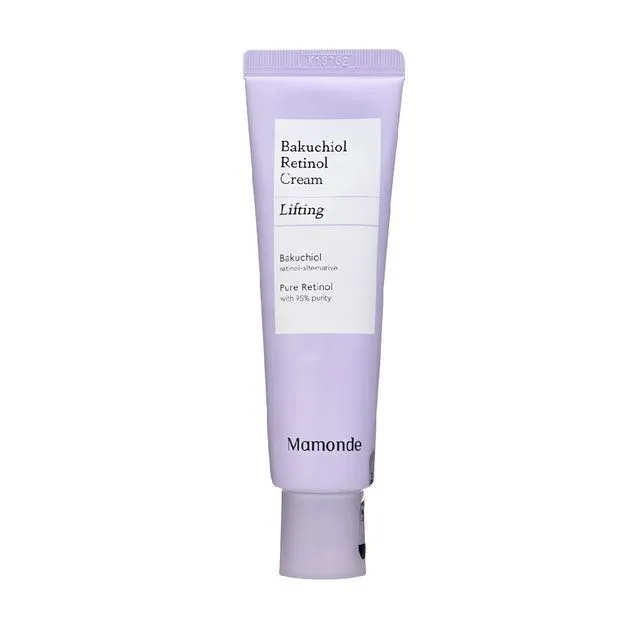
Instead of chasing a high retinol percentage, it stacks a low ~0.01% retinol with bakuchiol and adenosine — three complementary anti-aging pathways — and buffers them with panthenol, collagen, and plant oils in a fully fragrance-free base. It's engineered as the gentlest possible on-ramp to retinoids rather than a potent treatment.
A genuinely gentle, fragrance-free on-ramp to retinoids: about 0.01% retinol stacked with bakuchiol and adenosine, buffered by panthenol and collagen so retinol-nervous skin can ease in without the classic flaking. The low dose means subtle, gradual results rather than dramatic resurfacing, and the retinol rules out daytime and pregnancy use — but as a beginner retinol at around $36, it's a sensible, well-judged pick.
Available since 2023 with a few hundred reviews across Amazon and K-beauty retailers, the cream has enough feedback to confirm its low-irritation, beginner-friendly positioning, so this medium-confidence score blends that with its disclosed low-dose retinol-plus-bakuchiol formula and Mamonde's track record with gentle actives. How its subtle results read for specific aging concerns over months will sharpen as more long-term reviews accumulate.
The case for it
Same rule for everyone. “Good choice” is the verdict on 9,564 of 45,024 concern verdicts across the catalog; rule R5 decided 9,072 of them. Unchanged since September 5, 2026, engine 5.1.1.
Brand or formulator? Disclose a concentration or correct a fact →
The studies behind the evidence row
The case for it
What would change this: Guideline or regulatory standing for the active on this concern would move this from a promising bet to a recommendation.
Same rule for everyone. “Promising” is the verdict on 7,858 of 45,024 concern verdicts across the catalog; rule R9p decided 7,858 of them. Unchanged since September 5, 2026, engine 5.1.1.
Brand or formulator? Disclose a concentration or correct a fact →
The studies behind the evidence row
Also listed for Rough Texture and Dullness — the actives here (Panthenol (Vitamin B5) are in our research queue for those concerns; there is no verdict until their evidence rows are written. That is a gap in our table, not a mark against the product.
Falls shortJudged as a moisturizer, it comes up short on: seals moisture in, supplies barrier lipids.
Where our review and the verdict differ. The review below was written on the formulation and the published trials; the verdicts above apply the stricter standing test in our methodology — an active earns a recommendation only with guideline or regulatory standing for the concern. Where the two disagree, the verdict is DermApproved’s position.
A verdict is DermApproved’s assessment of how well a product’s ingredients fit a concern — never a claim about what the product treats. Evidence dots and collected reviews sit beside it and are never blended in. Rules 0.5.1 · evidence table ev-2026.09-r228 · how we decide
In 2018, a small but widely cited double-blind study put bakuchiol head-to-head with retinol and found the plant-derived ingredient delivered comparable improvements in photoaging with noticeably better tolerance — less of the redness, stinging, and peeling that scares people away from vitamin A. That single paper launched a thousand bakuchiol products, most of them positioning the ingredient as a retinol replacement. Mamonde took a more interesting route: instead of choosing one or the other, it put both in the same cream — a low dose of actual retinol plus bakuchiol — betting that two gentle anti-aging pathways working together beat either one alone. The result is a product whose entire design philosophy is 'effective but as un-scary as possible,' and on that specific goal it largely succeeds.
The key number to understand is the retinol strength, because it explains everything else about the cream. At 330 IU — roughly 0.01% — this is a genuinely low dose, the kind of starter concentration meant for people who have never used a retinoid or who have tried and bailed because of irritation. Paired with bakuchiol at 100 ppm (also about 0.01%) and adenosine, Korea's regulator-recognized anti-wrinkle active, you get three complementary smoothing mechanisms, none of them aggressive. That's the cream's identity: not a potent treatment that forces fast turnover, but a low-and-slow formula engineered for tolerance. If you walk in understanding that, you'll be happy; if you walk in expecting a prescription-strength resurfacing, you'll find it underwhelming, and that mismatch is the single most important thing to get right before buying.
What makes the gentleness real rather than marketing is the supporting formula. Panthenol sits high on the list to soothe and reinforce the barrier, hydrolyzed collagen and sodium hyaluronate add immediate surface plumping and hydration, and a blend of sunflower and soybean oils keeps the cream comforting rather than drying — the opposite of the stripped, tight feeling cheap retinol creams often leave. Crucially, the whole thing is fragrance-free, which for a retinol product aimed at sensitive and beginner users is exactly the right call; fragrance plus active vitamin A is a common irritation trap, and Mamonde avoided it. The texture is a medium-weight cream that absorbs to a soft, cushioned, non-greasy finish, and the opaque tube sensibly protects the light- and air-sensitive retinol.
The trade-offs are mostly the flip side of the gentleness. The low dose means results are subtle and patient: expect immediate softness from the humectants, smoother texture and refined-looking pores over four to eight weeks, and any real fine-line improvement on retinol's usual three-month-plus horizon. This isn't a cream that transforms skin quickly, and people accustomed to stronger retinoids may find it does too little. There are also two specific ingredients to flag. Decyl cocoate, a coconut-derived emollient, can be mildly comedogenic, making this a slightly riskier pick for very acne-prone skin. And Artemisia argyi (mugwort) leaf oil, while soothing for most, is a known sensitizer for a small subset of people — ironic in an otherwise gentleness-focused formula — so a patch test is genuinely worth doing here.
The non-negotiable caveats are the ones that come with any retinol. This is a nighttime product, full stop — retinol degrades in light and increases sun sensitivity, so it goes on as the final PM step and must be paired with diligent morning sunscreen. It's also not pregnancy-safe; retinol is a vitamin A derivative generally advised against in pregnancy and breastfeeding, so anyone in that window who wants the anti-aging angle should look to a bakuchiol-only formula instead. And while the low dose makes harsh purging unlikely, you should still introduce it gradually — two or three nights a week to start — rather than diving into nightly use.
On value, it's reasonable. At around $36 for 60 ml, you're paying a fair price for a fragrance-free, multi-pathway anti-aging cream from a brand with real formulation pedigree — more than a bare drugstore retinol, but with better buffering and a thoughtful actives stack. A tube should last about three months at near-nightly use. It's not the cheapest beginner retinol out there, but the bakuchiol-plus-adenosine combination and the genuinely gentle base justify the modest premium for the right buyer.
Who should buy it? Retinol beginners, fragrance-averse skin, and anyone who has found conventional retinol too harsh and wants to build tolerance slowly — for that group this is one of the more thoughtfully gentle options available. Normal, dry, and combination skin will get the most from it. The people who should skip it are anyone pregnant or breastfeeding, anyone wanting fast or dramatic resurfacing, very oily or strongly acne-prone skin wary of the coconut-derived emollient, and the small group sensitive to mugwort. For the large, underserved market of people who want retinoid benefits without the drama, though, it's a smart, well-built starting point.
The hero actives that drive this product's performance.
| Ingredient | Function | Evidence |
|---|---|---|
| Retinol (330 IU) (330 IU (~0.01%)) | A deliberately low retinol dose — roughly 0.01% — meant as a gentle, beginner-level vitamin A that nudges cell turnover and fine-line smoothing without the peeling a higher strength brings, buffered here by panthenol, collagen, and plant oils. | Emerging for Aging |
| Bakuchiol (100 ppm) (100 ppm (0.01%)) | A plant-derived retinol alternative that works alongside the low-dose retinol, layering a second, non-irritating anti-aging pathway so the cream can claim retinoid-style benefits while keeping the overall irritation low. | Limited for Aging |
| Adenosine | Korea's MFDS-recognized anti-wrinkle active, adding a third, regulator-backed smoothing mechanism that reinforces the retinol-and-bakuchiol firming story without raising irritation. | Limited for Aging |
| Hydrolyzed Collagen | A film-forming humectant that smooths and plumps the surface, giving an immediate softening effect that complements the slower turnover work of the retinol and bakuchiol. | Not yet assessed |
| Panthenol | Pro-vitamin B5 placed high on the list to soothe and support the barrier, the main reason this retinol cream stays gentle enough for near-daily beginner use. | Not yet assessed |
Ingredient standings describe the active at treatment-level doses and vehicles; this product's own condition grades weigh its actual formula.
Water, Propanediol, Glycerin, Caprylic/Capric Triglyceride, Methyl Trimethicone, Cetearyl Alcohol, Decyl Cocoate, Glyceryl Stearate Citrate, Octyldodecyl Myristate, 1,2-Hexanediol, Panthenol, Polyglyceryl-3 Methylglucose Distearate, Bentonite, Hydrolyzed Collagen, Hydroxyethyl Acrylate/Sodium Acryloyldimethyl Taurate Copolymer, Helianthus Annuus (Sunflower) Seed Oil, Glyceryl Caprylate, Glycine Soja (Soybean) Oil, Disodium EDTA, Ethylhexylglycerin, Daucus Carota Sativa (Carrot) Root Extract, Adenosine, Butylene Glycol, Sorbitan Isostearate, Sodium Hyaluronate, Retinol (330 IU), Bakuchiol (100 ppm), Artemisia Argyi Leaf Oil, Beta-Carotene, BHT, Tocopherol
moisturizer
PM
Use as the final PM step after serums; start two to three nights a week and build up, and always pair with morning sunscreen since retinol increases sun sensitivity.
Immediate softness from the humectants; smoother texture and refined pores over 4-8 weeks, with fine-line improvement on the retinol's usual 12-week-plus horizon.
The formula reflects current thinking on gentle retinization. Retinol itself is among the best-evidenced cosmetic anti-aging actives, with strong support for improving fine lines, texture, and tone by promoting cell turnover and collagen synthesis; at roughly 0.01% (330 IU) the dose here is low, favoring tolerance over speed, which is appropriate for beginners but caps the magnitude and pace of results. Bakuchiol is the more novel inclusion: the frequently cited 2019 study in the British Journal of Dermatology (Dhaliwal et al.) found 0.5% bakuchiol comparable to 0.5% retinol for improving photoaging with less scaling and stinging, supporting its role as a well-tolerated retinol-adjacent active, though its concentration here is modest. Combining the two offers complementary mechanisms, and pairing actives with adenosine — which carries formal MFDS anti-wrinkle recognition — adds a third, regulator-backed smoothing pathway. The buffering cast is well chosen: panthenol has solid evidence for barrier support and reducing irritation, while hydrolyzed collagen and sodium hyaluronate provide immediate surface smoothing and hydration. Beta-carotene and tocopherol add antioxidant support, and BHT stabilizes the oxidation-prone retinol. The honest synthesis: the anti-aging mechanisms are well grounded, but the deliberately low active doses mean this is a tolerance-first, gradual-results formula rather than a high-efficacy treatment.
Low-dose retinol formulas buffered with soothing ingredients are commonly recommended in clinical practice as an entry point for patients new to retinoids or those who have struggled with irritation, and pairing retinol with bakuchiol is increasingly viewed as a reasonable way to extend tolerance. The fragrance-free base here aligns with standard guidance for minimizing irritation with active products. Clinicians consistently emphasize that retinol should be used at night, introduced gradually, and always accompanied by daytime sunscreen because of increased photosensitivity, and that retinol-containing products are generally avoided during pregnancy and breastfeeding. The mugwort leaf oil is worth noting as a potential sensitizer for predisposed individuals, so a patch test is prudent. For appropriate candidates seeking a gentle, gradual anti-aging step, the formula is consistent with a tolerance-first approach, with realistic expectations that visible change develops over weeks to months rather than quickly.
Use it only at night, as the final step of your routine after cleansing and any hydrating serums or essences. Start with two to three nights a week, applying a moderate amount spread evenly over the whole face along your skin's texture, and build up toward nightly use as your skin adjusts. Because retinol increases sun sensitivity, daily morning sunscreen is essential. Avoid pairing it in the same routine with strong acids or vitamin C while you build tolerance, and patch test first given the mugwort oil. Do not use during pregnancy or breastfeeding.
At around $36 for 60 ml, this sits at a fair mid-range price for a fragrance-free, multi-active anti-aging cream. You're paying more than a bare drugstore retinol, but the bakuchiol-and-adenosine pairing, the soothing buffer system, and the brand's formulation pedigree justify the modest premium for someone who specifically wants a gentle introduction to retinoids. A tube should last about three months at near-nightly use, keeping the per-use cost reasonable. It isn't the cheapest beginner retinol available, and value-focused shoppers can find low-dose retinol for less, but few do it this gently or this thoughtfully buffered. For the tolerance-first buyer it targets, the price is well matched to what you get.
Retinol beginners, fragrance-averse skin, and anyone who has found conventional retinol too harsh and wants to build tolerance slowly. Normal, dry, and combination skin seeking gradual smoothing and pore refinement from a gentle, well-buffered formula will get the most from it.
Anyone pregnant or breastfeeding should skip it because of the retinol, as should those wanting fast, dramatic resurfacing. Very oily or strongly acne-prone skin should weigh the coconut-derived emollient, and the small group sensitive to mugwort oil should patch test or avoid it.
Ready to try Mamonde Bakuchiol Retinol Cream?
Buy at Amazon ♥A medium-weight cream that spreads smoothly and absorbs to a soft, slightly cushioned finish — richer than a lotion but not heavy.
Effectively fragrance-free; only a faint natural note from the plant oils and mugwort.
Opaque 60 ml tube that protects the light-sensitive retinol from air and UV.
First use feels soft and comforting rather than active — there's no tingle or sting from the low retinol dose, so even retinoid-nervous users can usually start without the classic adjustment flaking, though slow introduction is still wise.
About 3 months with nightly or near-nightly use of the 60 ml tube.
All Year
Mamonde built this around the 2018 research showing bakuchiol can rival retinol with better tolerance, pairing the two to offer retinoid benefits to the large group of Korean and global users who find conventional retinol too harsh.
Mamonde is a flower-focused Korean brand launched in 1991 under Amorepacific; this cream pairs a low, beginner-friendly retinol dose with bakuchiol, reflecting the brand's lean toward gentle, botanical-buffered actives rather than high-strength clinical formulas.
A retinol and bakuchiol cream will resurface skin fast.
At roughly 0.01% retinol and 0.01% bakuchiol, this is a low-and-slow formula; it builds gradual smoothing over weeks to months and is designed for tolerance, not the rapid turnover of a prescription retinoid.
It's a low dose — 330 IU, roughly 0.01% retinol — deliberately chosen for gentleness. That makes it a good entry point for retinol beginners, but it also means results are gradual and subtle rather than the rapid change of a higher-strength or prescription retinoid.
Bakuchiol is a plant-derived ingredient shown to deliver retinol-like anti-aging benefits with better tolerance. Pairing it with a low retinol dose lets the cream offer two complementary anti-aging pathways while keeping overall irritation low, which is the whole point of this formula.
No. It contains retinol, a vitamin A derivative generally advised against during pregnancy and breastfeeding. If you want a bakuchiol-only alternative for that period, choose a product without any retinol.
Largely yes — it's fragrance-free, low-dose, and buffered with panthenol and collagen, so most sensitive skin tolerates it with slow introduction. The one caveat is the mugwort (Artemisia) leaf oil, which is a sensitizer for a small number of people, so patch test first.
Yes, absolutely. Retinol increases sun sensitivity, so daily morning sunscreen is essential when using this cream, and the cream itself should be used at night as the final step of your routine.
Recurring themes our editors read across retailer reviews of this product — summaries in our words, not quotations, and not a substitute for your own patch test.
Gentle enough for retinol beginners
Fragrance-free and non-stinging
Smoother, softer skin over time
Low retinol dose means subtle results
Slightly rich for oily skin
Mugwort oil is a sensitizer for a few